How to Grow and Care for Philodendron Imperial Red
Learn how to care for Philodendron Imperial Red with light, watering, soil, humidity, feeding, repotting, propagation, and pet-safety advice for home growers.
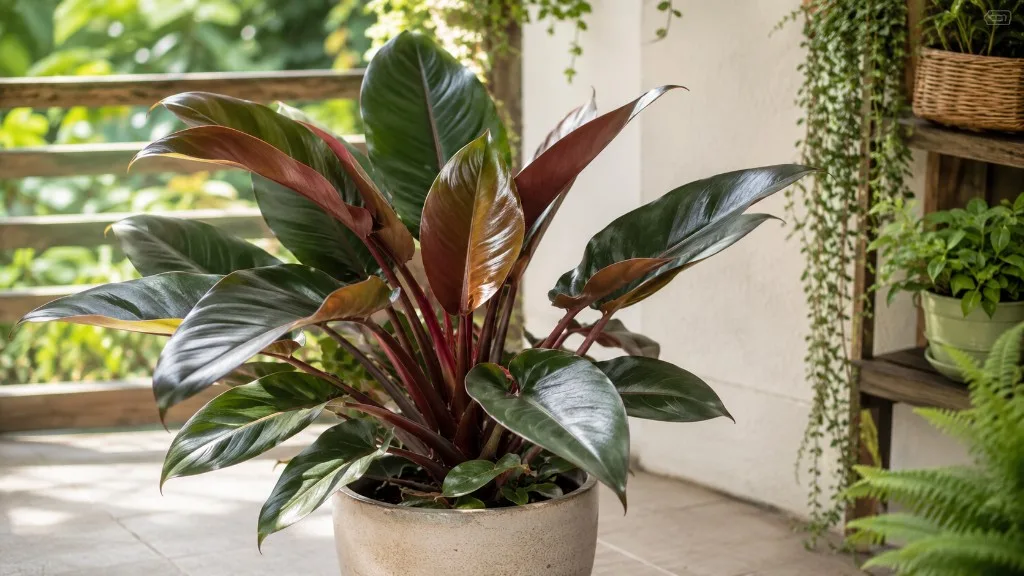
Philodendron Imperial Red is easiest to keep attractive when you manage two different zones: the leafy crown above the pot and the root ball underneath it. The crown needs enough filtered light to produce well-colored new leaves; the root ball needs an airy mix that can stay lightly moist without remaining waterlogged. Treat it like a trailing philodendron and you may add a support it does not need. Water it by calendar and you can keep a wet pocket beneath a crown that shades the soil.
For a quick identification and care overview, see the Philodendron Imperial Red plant profile.
A reliable indoor baseline is bright indirect light, a draining potting mix, a thorough soak only after the top 3–5 cm (1–2 inches) of mix dries, warm room temperatures, and light feeding only while it is growing. The intervals below are starting points, not a schedule to follow blindly. A plant in a sunny, warm room and a small pot will dry faster than one in a cool, dim room or a large cachepot.
In LeafyPixels observations, a 14–16 cm (5.5–6.5 inch) pot filled with standard indoor mix amended with about 20–25% perlite reached the finger-check dry point in roughly 7–9 days beside a bright east window during warm weather. A similar pot in a cooler, darker interior location took 11–14 days or longer. Those are observations for one setup, not a promise for every Imperial Red; use the pot’s weight and the soil at root depth to decide when yours is ready.
Start With the Plant’s Architecture and Color Cycle
The name on the tag describes a cultivar of Philodendron erubescens, a tropical plant in the arum family, Araceae. The species is commonly grown as a climber, but Imperial Red was selected as a compact, upright rosette. The US Plant Patent for the cultivar describes a self-heading plant with brown-maroon immature leaves that transition toward deep green-maroon as they mature, alongside close, symmetrical internodes and dark green petioles with red-purple sheaths. (US Plant Patent 6,337)
That color sequence matters when you judge whether a plant is healthy. Imperial Red’s new leaf is the colorful stage; a leaf that has been open for months will naturally deepen toward dark green-maroon. It does not have to remain scarlet, and an older leaf will not recolor if you move the pot. A plant with mostly mature foliage may look greener than it did at the nursery even when it is growing well.
Red Is a Phase, Not the Mature Leaf Color
The patent describes immature leaves as brown-maroon, not a permanent bright red, and mature leaves as dark green-maroon. In practice, fresh leaves can look burgundy, copper, wine-red, or reddish brown depending on the plant, light, leaf age, and room. Color names are approximate; look at the newest unfurling leaf rather than expecting every leaf to match a photo.
A real warning sign is repeated new foliage that opens small, weak, or plain olive green, especially when petioles lengthen and the plant leans toward a window. That combination points first to insufficient light. If the mature leaves are dark green but the new ones unfurl bronze or burgundy and then deepen over time, the color change is normal.
Imperial Red Is Self-Heading, Unlike Its Climbing Parent
Imperial Red grows from a central crown, with leaves arising in a dense clump instead of long trailing stems. Clemson Extension distinguishes self-heading philodendrons from the more common vining types and notes that self-heading plants need room around their base; the cultivar patent confirms the rosette form. (Clemson Extension’s philodendron guide)
A moss pole is not part of the normal care setup. If the plant leans, first even out the light and rotate the pot periodically. Long weak petioles, small leaves, and an off-center crown suggest low light; a pole cannot repair that growth pattern. The large leaf stalks can also be brittle, so choose a stable surface away from doorways, pets, and places where people brush past.
Find Light That Supports New Growth Without Scorch
Give Imperial Red a bright spot where the foliage receives plenty of ambient daylight but not prolonged, hot midday sun. NC State Extension recommends partial shade or dappled light for P. erubescens and advises against direct sunlight indoors; the Royal Horticultural Society gives philodendrons a bright but indirect position. (NC State Extension, RHS)
An east-facing window is a useful starting point because it usually brings gentler morning light. A south- or west-facing window can work if the plant sits back from the glass or behind a sheer curtain during strong sun. These distances vary with latitude, season, glazing, and nearby buildings, so watch the leaves rather than treating a measurement as universal. In a dim north room, consider a full-spectrum grow light over the canopy for roughly 10–12 hours as a starting routine, then adjust if growth remains stretched or the leaves bleach.
Use a Window Test, Not a Fixed Distance
Look at the plant through the brightest part of the day. If sunlight makes a hard-edged patch across the leaf for hours and the exposed side develops pale, tan, or crispy spots, move the pot farther back or filter that window. Brief soft morning sun is often less intense than afternoon sun, but warm glass can still magnify stress in summer.
If new leaves lose their maroon phase, shift the plant brighter in small steps over a week rather than moving it from a dark corner into harsh sunlight overnight. Let the plant produce its next two leaves before judging the change; existing foliage will not recolor. Rotate the pot a quarter turn every week or two if the crown leans, and wipe dust from broad leaves so light reaches the surface.
Build a Root Zone That Holds Moisture and Drains
The best potting mix for Imperial Red is not a particular branded “aroid” bag; it is a mix that holds some moisture around the roots while letting excess water move through. NC State describes the species as preferring moist, well-drained soil rich in organic matter, and RHS recommends a loose, free-draining compost for philodendrons. (NC State Extension, RHS philodendron growing guide)
A practical starting blend is a standard indoor potting mix with about 20–25% perlite by volume. If your existing mix stays wet for many days, amend it with more perlite or a small amount of orchid bark; if it dries almost immediately and pulls away from the pot, keep more of the moisture-holding base mix. The goal is a springy, crumbly texture, not a rigid recipe. A commercial aroid mix can work if it drains well but does not leave the roots bone-dry a day after watering.
Choose Pot Size and Container by the Roots
Use a pot with open drainage holes. A decorative cachepot without holes is safe as a sleeve only if you lift out the grow pot to water, let it drain, and empty the cachepot before returning the plant. A layer of gravel at the bottom does not replace a drainage hole or correct a dense mix.
Choose a container only modestly wider than the root ball. If the new pot surrounds a small root mass with a large volume of fresh mix, that unrooted soil can remain wet long after the roots have used the water. RHS notes that oversized containers stay wet longer and raise the risk of root trouble. A snug pot is not a problem by itself if roots can still move and water exits freely.
Water When the Root Zone Is Ready
Check the mix before watering. When the top 3–5 cm (1–2 inches) feel dry and the pot is lighter than it was just after a soak, water thoroughly until it drains from the bottom. Let the water run away, then empty the saucer or cachepot. RHS advises allowing compost to dry slightly between waterings and not leaving philodendrons in standing water; Clemson’s indoor plant guidance also favors a thorough soak followed by appropriate dry-down rather than repeated sips. (RHS, Clemson indoor watering guidance)
A finger is usually enough for a small pot, but a wooden skewer or chopstick can check deeper mix when the crown blocks your view. Push it into the mix near the edge of the pot, wait briefly, and pull it out. If it comes out cool and damp with particles clinging to it, wait; if the upper depth is dry and the pot feels noticeably lighter, water. This two-check method is more reliable than a fixed weekday, especially when the dense foliage shades the soil surface.
The interval changes with light, temperature, pot size, soil texture, and season. For one 14–16 cm Imperial Red in a warm east-window spot, LeafyPixels notes put that check near every 7–9 days; in a cooler and darker position, it stretched closer to 11–14 days. Joy Us Garden also describes shorter warm-season intervals and longer winter intervals for its own plant, while emphasizing that room and pot conditions change the timing. (Joy Us Garden’s Imperial Red care notes) Use these as examples only. When growth slows in a darker winter, the same pot may stay damp for several extra days.
For a general method that applies across indoor containers, see this guide to watering indoor plants.
Read Wilt, Yellowing, and Browning Together
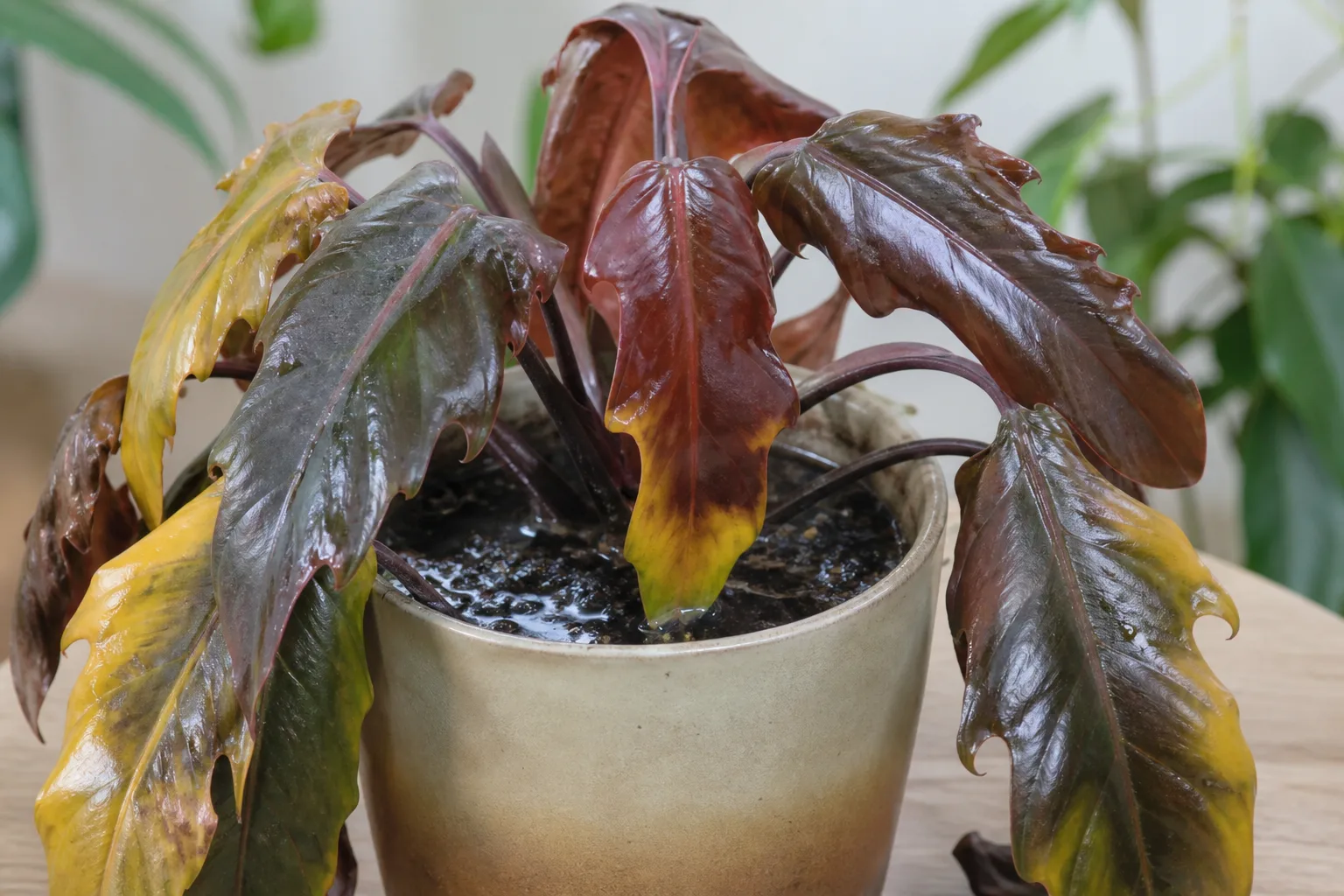
A single old lower leaf yellowing is not automatically a crisis. Several lower leaves yellowing together, soft petioles, a drooping crown, a sour smell, and a pot that stays heavy point more strongly toward saturated roots. Waterlogged roots lose access to oxygen and can decay; Missouri Botanical Garden explains this mechanism in its overwatering guidance. Pause watering, empty standing water, and let the mix dry to the usual check point. If the plant continues declining in wet mix, inspect the root ball and remove only soft, dark, dead roots before repotting into fresh, airy mix. (Missouri Botanical Garden)
For a step-by-step plant-specific recovery check, see the Imperial Red overwatering guide.
Thirst looks different: the pot is light, the mix is dry well below the surface, and leaves or edges may feel crisp. Water slowly in two passes if a very dry root ball sheds water down the sides instead of absorbing it. Do not try to solve wet-soil wilt with more water just because the leaves droop; check the pot first.
Keep Warmth Steady and Treat Humidity Modestly
Philodendron Imperial Red is a tropical houseplant that grows best in warm indoor conditions. NC State gives P. erubescens a preferred range around 18–29°C (65–85°F) and recommends protection from cold drafts; RHS advises keeping philodendrons above about 15°C (59°F). Keep the plant away from air-conditioning outlets, chilly window glass in winter, and hot radiator blasts. (NC State Extension, RHS)
Humidity is less complicated than many care labels suggest. Higher humidity can support tropical foliage, but RHS says philodendrons tolerate the lower humidity found in many homes, and experienced grower Nell Foster reports growing Imperial Red in a dry Arizona home. If the plant is otherwise healthy, you do not need to mist it several times a day or keep wet gravel under the pot. (RHS, Joy Us Garden)
If brown tips persist after you rule out a dry root ball, salt accumulation, and scorching, a room humidifier can help more consistently than misting. A pebble tray has only a modest local effect; if you use one, set the pot above the water line so the drainage holes and roots never sit in water. In dry homes, also allow air to move around the crown so extra moisture does not linger on the leaves.
See the plant-specific guides to low humidity and brown tips for additional symptom checks.
Feed With Restraint During Active Growth
Feed during the period when the plant is producing new leaves, usually spring through summer in a temperate home. A balanced liquid houseplant fertilizer diluted to about half the label strength once a month is a reasonable starting routine for an actively growing plant. Clemson recommends regular dilute water-soluble fertilizer for philodendrons, and RHS likewise advises feeding during the growing season. If the plant grows in a warm, bright climate for more of the year, follow its visible growth rather than a temperate calendar.
Skip fertilizer when the mix is bone-dry or waterlogged, after a stressful move, or when growth has stalled. Fertilizer cannot create burgundy leaves in low light or repair roots that are rotting. If the plant was just moved into fresh potting mix, wait until it settles and resumes growth instead of stacking fresh nutrients onto a stressed root system.
Crispy tips or margins together with a white crust on the mix or pot can point to accumulated fertilizer salts, especially if you fertilize often but rarely get drainage runoff. Penn State Extension notes that over-fertilizing container plants can injure roots and burn leaf edges. Pause feeding and, if drainage is good, water through the mix so excess salts run out; resume more lightly only after the plant produces healthy growth. (Penn State Extension)
Repot When the Root Ball Needs Room
Repot because the root ball or mix gives you a reason, not because a certain number of months has passed. Roots emerging from several drainage holes, a root mass circling the pot, mix that has collapsed into fine dense material, or water running straight through an old root-bound ball are useful signals. One yellowing leaf or a plant that has not grown for a few weeks is not enough by itself.
Spring or early summer is a comfortable time to repot because growth is restarting and the plant has warmth and light to recover. Move up by one modest pot size, loosen only the outer roots that are tightly circling, and replace the mix with a fresh airy blend. Water once to settle the mix, drain it well, then return to checking soil depth before watering again. A larger pot can hold wet mix under the crown for longer, so resist giving a small root system a much bigger container.
Not every plant needs repotting every two years. In the Joy Us Garden grower’s experience, an Imperial Red stayed in the same pot for several years; growth rate, pot material, and mix condition explain much of that variation. A stable plant can stay snug if its water still drains and the mix has not broken down. (Joy Us Garden)
Prune and Propagate Around the Crown
Imperial Red needs little shaping. Remove yellow or badly damaged leaves at the base of the petiole with clean shears, and take care not to nick the central growing point or pull the leaf sheath apart. A few older leaves can be removed as new growth appears, but stripping the plant to make it symmetrical removes the foliage it needs to keep growing. Wipe dust off leaves with a damp cloth; avoid oily shine products that can coat the leaf surface.
Divide a Rooted Offset, Not the Crown
The most reliable home method is dividing an offset that already has both roots and its own growing point. Commercial producers also propagate this cultivar through tissue culture, as described in the cultivar patent. A leaf without a node, or a loose section of petiole, is not the same as a rooted plantlet and will not reliably create a new crown. (US Plant Patent 6,337)
Wait until an offset is large enough to handle without tearing. Remove the plant from its pot during an appropriate repotting, loosen mix from the roots, and look for a natural connection between the mother plant and the offshoot. If the offset has its own roots and a visible growth point, separate it with a clean blade, pot it in a small draining container, and keep it in bright indirect light. Keep the mix lightly moist as roots settle, not constantly wet.
If the plant has no rooted offsets, leave the central crown intact instead of forcing a division. Some philodendrons are propagated from node-bearing stem cuttings, but Imperial Red’s tight self-heading form does not always offer an obvious vine segment with a viable node. Wait for an offset or get cultivar-specific guidance before cutting into the main crown; a single damaged growing point can set back the whole plant.
Diagnose Common Leaf and Growth Problems
Treat the pattern, not one leaf. Look at which leaves are affected, whether the pot feels wet or light, how new growth looks, and whether the mark is on the sunny side. Then change one major condition and watch the next leaf rather than moving the pot, changing soil, fertilizing, and spraying all at once.
| What you see | Check first | Useful first move |
|---|---|---|
| New leaves open weak green and stretch toward a window | Recent light level and crown lean | Increase filtered light gradually and judge the next two leaves |
| Several lower leaves yellow while the pot stays heavy | Soil depth, drainage, petiole firmness | Empty runoff and pause watering; inspect roots if decline continues |
| Pale or tan patches on the window-facing side | Direct sun or hot glass | Filter the window or move the plant back |
| Brown tips plus a light pot and very dry mix | Root-ball moisture | Water thoroughly, then wait for the next dry-depth check |
| Brown margins plus white crust on the mix | Recent fertilizer and runoff | Pause feeding and flush only if drainage is open |
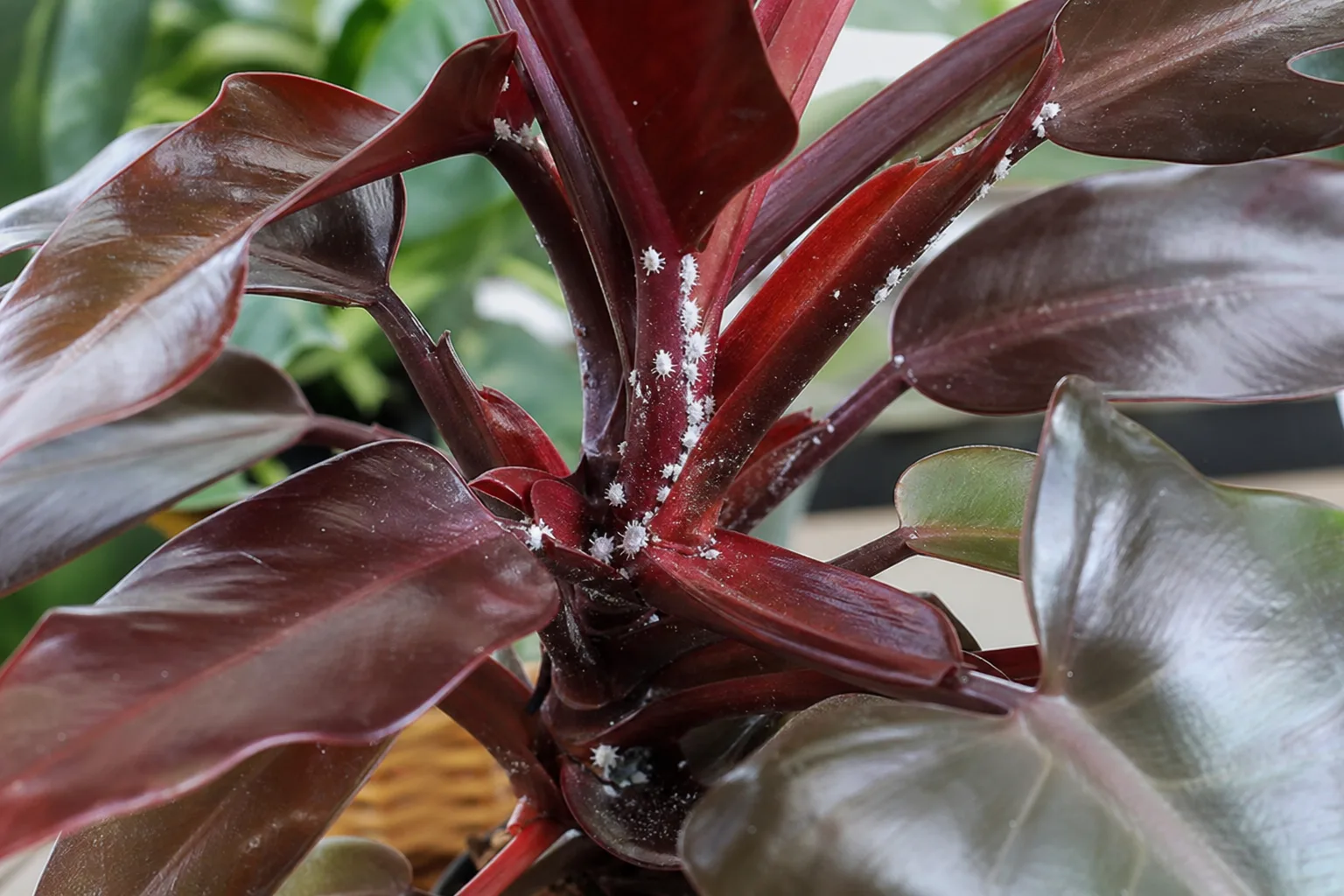
| Sticky residue, cottony flecks, fine webbing | Leaf undersides and petiole joints | Isolate the plant and identify the pest before treatment |
Normal leaf aging usually affects one or two of the oldest leaves at a time while the crown continues producing firm new growth. A nutrient problem is not the first explanation for every yellow leaf; wet roots, low light, cold drafts, and pest damage are often more likely and need different fixes. If a leaf has a small cosmetic scar but the plant is otherwise firm and growing, leave it in place until it yellows naturally.
If several leaves yellow or the pattern continues, use the yellow-leaf troubleshooting guide to compare the likely causes.
Check for Pests Before Treating
Newly purchased plants can bring pests into a collection. Quarantine a new Imperial Red away from other plants for about three weeks, then inspect the undersides of leaves, petiole joints, and the tight center of the crown. NC State lists spider mites, mealybugs, aphids, and scale among pests of P. erubescens; Clemson also names those common philodendron pests. (NC State Extension, Clemson Extension)
Mealybugs can hide as white cottony clusters where leaves meet the crown; scale may look like small fixed bumps; spider mites leave fine webbing or stippled leaves; aphids often gather on tender new growth. Isolate the plant as soon as you find a likely pest. A rinse can dislodge some exposed insects, while persistent infestations may need a product labeled for indoor ornamental plants. Colorado State University Extension advises quarantining incoming plants and following pesticide labels; avoid assuming dish soap is harmless or using a yard product indoors. (Colorado State University Extension)
For a closer identification and response plan, see the guide to mealybugs on Imperial Red.
Keep Imperial Red Away From Pets and Children
Treat Philodendron Imperial Red as toxic if chewed. Clemson Extension says all parts of philodendrons contain calcium oxalate crystals that can irritate the mouth and throat, cause drooling or vomiting, and make swallowing difficult. ASPCA’s listing for heartleaf philodendron identifies insoluble calcium oxalates and similar signs; Imperial Red is another philodendron, so keep it out of reach rather than relying on the exact cultivar name being absent from a pet-safety list. (Clemson Extension, ASPCA heartleaf philodendron listing)
Wear gloves if pruning sap irritates your skin, wash hands and tools after cutting, and pick up fallen leaf pieces where children or pets can reach them. If a pet may have chewed the plant, contact a veterinarian or the ASPCA Animal Poison Control Center at (888) 426-4435 promptly. The ASPCA notes that its plant list is not all-inclusive and recommends contacting a veterinarian or poison-control service when ingestion is suspected. For homes where a plant must be accessible at floor level, choose from a verified list of pet-safe houseplants instead.
For more on calcium oxalate exposure and plant safety, read the Philodendron toxicity guide.
Use a Simple Seasonal Maintenance Loop
Check the plant every week or two, but do not automatically water or feed on those days. Look at the newest leaf, feel the top few centimeters of mix, lift the pot, and scan the crown for insects. Dust leaves when needed and rotate the pot if the crown has begun to lean.
During bright warm growth, the mix will usually dry sooner and the plant may produce leaves more quickly. In winter or during a prolonged cloudy spell, growth and water use often slow; lengthen the check interval and pause fertilizer if no new growth is appearing. If you move the plant outdoors for summer in a warm climate, acclimate it gradually to shaded outdoor light, keep it away from harsh afternoon sun, and inspect it for pests before bringing it back inside.
A useful rule is to change one input at a time. If the next leaf opens green, brighten the placement and wait for another flush. If the pot stays heavy and leaves soften, address the root zone before adding humidity or fertilizer. That small pause makes cause and effect easier to read and keeps a normal color transition from turning into unnecessary repotting.
Conclusion
Philodendron Imperial Red is a self-heading plant with maroon new leaves that mature into dark green-maroon foliage. Give it bright filtered light, an airy organic mix in a draining pot, warm conditions, and water only after the upper root zone dries. Keep fertilizer modest, repot when the roots or mix call for it, divide only rooted offsets, and diagnose leaf changes with both the pot and the crown in view. Most of all, do not chase a fixed schedule or expect old leaves to turn red again: judge care by the plant’s next healthy growth.



