Low Humidity on Philodendron Imperial Red: Causes, Checks &
Quick answer
Low humidity on Philodendron Imperial Red shows up as brown tips, crispy leaf edges, and slowed new growth when indoor air drops below 50% RH-common near heating vents and AC. First step: move the plant away from drafts and run a humidifier targeting 50–60% at crown height.
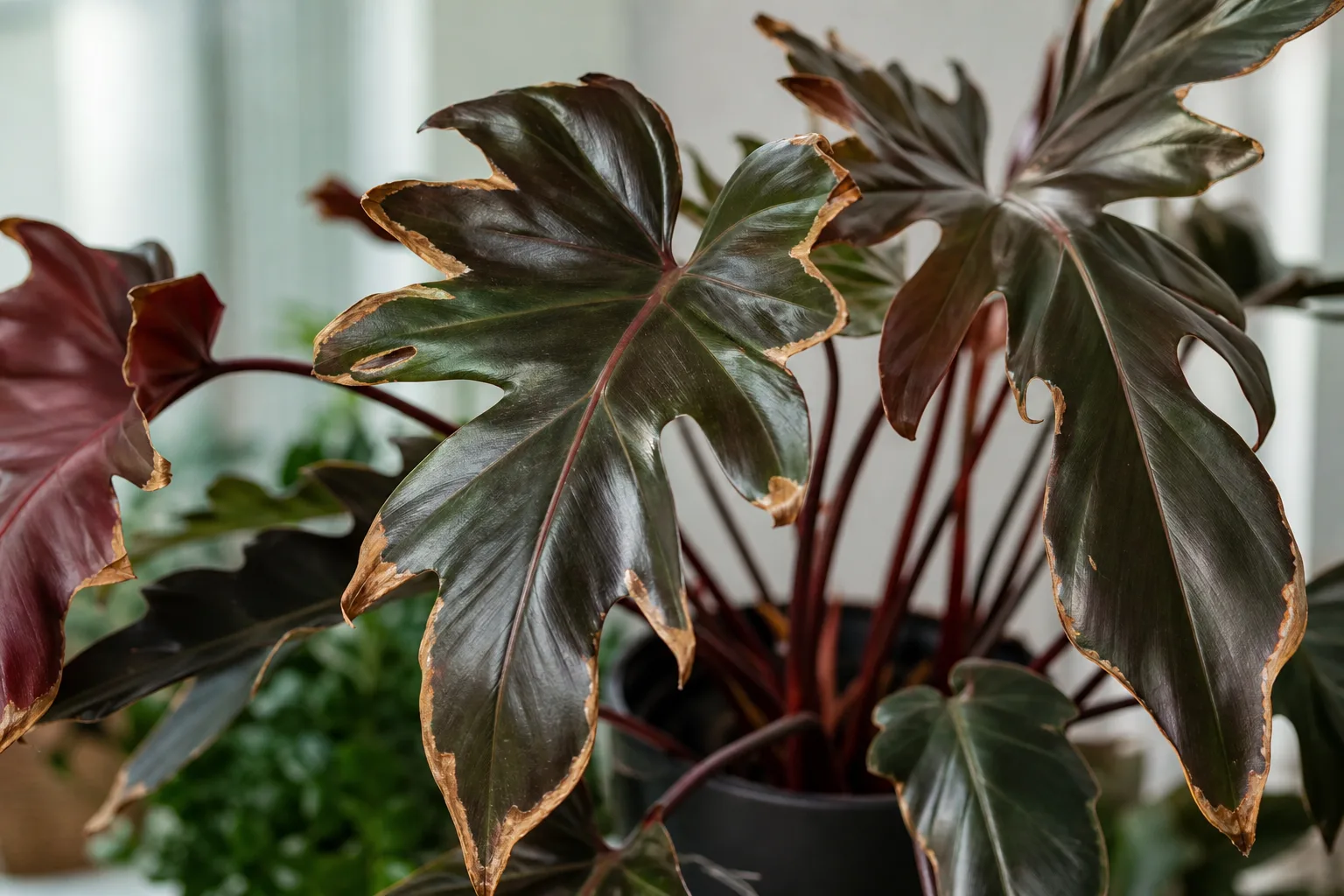
Low Humidity on Philodendron Imperial Red: Causes, Checks & Fixes
This guide covers low humidity on Philodendron Imperial Red. See also the general Low Humidity guide, watering, and light pages for this plant.
Low Humidity on Philodendron Imperial Red: Causes, Checks & Fixes
Quick answer
Low humidity on Philodendron Imperial Red shows up as brown tips, crispy leaf edges, and slowed new growth when indoor air drops below 50% RH-common near heating vents and AC. First step: move the plant away from drafts and run a humidifier targeting 50–60% at crown height.
Philodendron erubescens ‘Imperial Red’ is a self-heading philodendron with thick, glossy leaves that unfurl burgundy-red and mature darker. Those broad blades transpire heavily through large surface area, and the thin leaf margins lose moisture fastest when the air is dry. Unlike a drought-tolerant succulent, this tropical aroid slows leaf expansion and hardens off new growth poorly when humidity stays low for weeks-especially on the showy red foliage at the crown.
Why Philodendron Imperial Red struggles in dry air
The parent species Philodendron erubescens prefers warm temperatures and high humidity in its native Colombian rainforest. Imperial Red inherits that preference even though it grows as a compact rosette rather than a climber. Penn State Extension notes that during the heating season, indoor relative humidity can easily fall below 30%-well below the 50–60% this cultivar handles best indoors.
Self-heading growth adds a specific vulnerability. Imperial Red holds many large leaves close together in one crown, which can trap a little moisture locally-but only if room air is not actively stripped by HVAC. Radiators, forced-air vents, fireplaces, and frequently opened exterior doors create microclimates where RH near the plant stays far lower than a wall hygrometer across the room suggests. The burgundy new leaves are the first to show stress: wide surfaces transpire heavily, margins desiccate, and unfurling slows when the air is too dry.
Seasonal patterns make the problem predictable. Autumn through spring, when heating systems run, is when most Imperial Red owners first notice crispy edges and stalled red new growth. Summer air conditioning can produce the same dry blast near return vents. Clemson Extension notes philodendrons generally prefer moderately humid air and that excess fertilizer or salt buildup can mimic tip damage-so dry air is not the only cause, but it is the most common one on large-leaved aroids in heated homes.
Other factors compound low humidity without replacing it:
- Underwatering - Crispy edges with a light pot and dusty dry mix throughout point to root-zone drought, not air moisture alone.
- Salt or fertilizer burn - Clemson Extension warns that too much fertilizer can cause tips of leaves to curl and brown; white crust on the soil surface supports this pattern.
- Tap water minerals - Repeated watering with hard tap water can crisp margins on sensitive aroids. RHS recommends rainwater or filtered water when possible.
- Direct sun - Bright filtered light supports red new growth, but afternoon sun on glossy leaves produces tan scorch patches, not symmetrical margin crisping on every leaf.
- Spider mites - Penn State Extension lists spider mites as a common houseplant pest that causes stippling and bronzing; severe cases add fine webbing on leaf undersides.
What low humidity looks like on Philodendron Imperial Red
Dry air damage on this cultivar usually follows a recognizable pattern across the rosette:
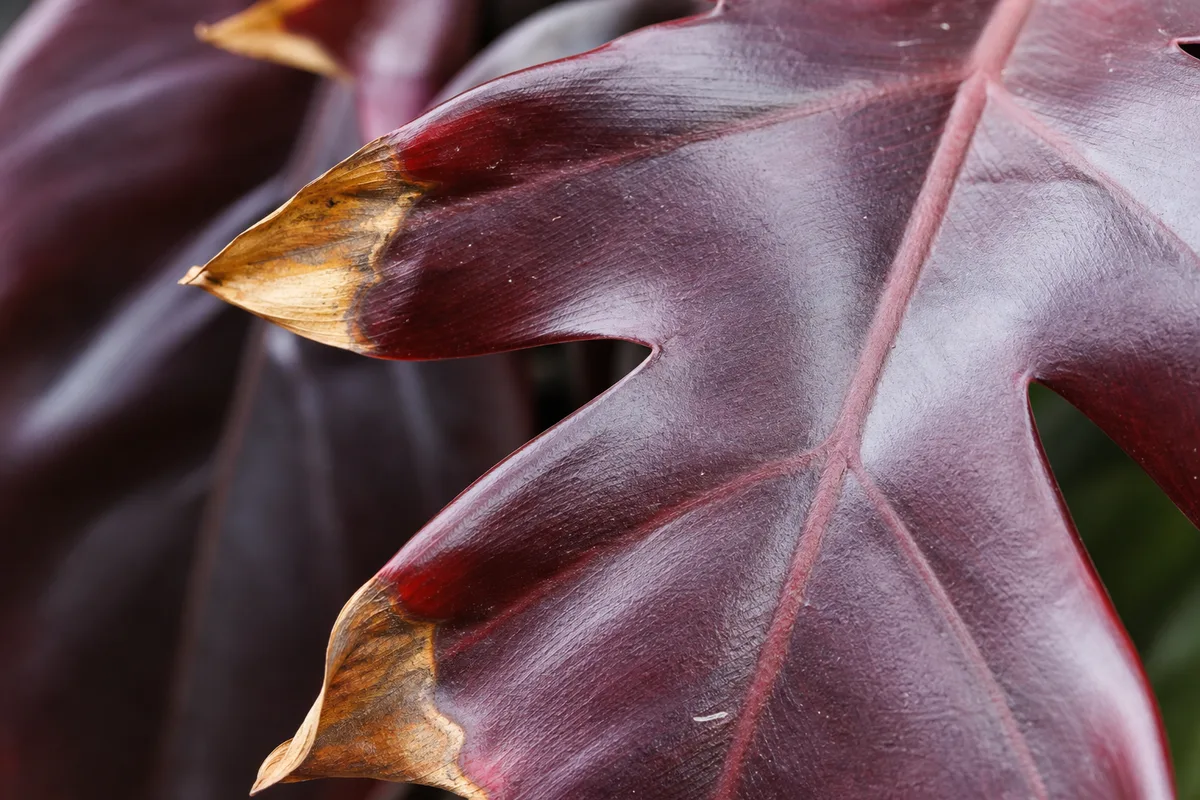
Low Humidity symptoms on Philodendron Imperial Red - compare with healthy tissue on the same plant.
- Brown tips and crispy margins on Philodendron Imperial Red - Tan to dark brown tissue that feels dry and papery, often on multiple leaves at different ages at once
- Slowed new growth - Red-bronze leaves take longer to unfurl, emerge smaller, or stall with brown edges before hardening off
- Firm burgundy petioles - Unlike overwatering, low humidity rarely softens the crown; petioles stay upright while margins crisp
- Seasonal timing - Symptoms cluster after heating or AC season starts, or after moving the plant near a new vent
- No sour soil smell - Wet, anaerobic mix odor points to root stress, not humidity alone
Do not confuse normal color change with humidity damage. Mature Imperial Red leaves naturally shift from burgundy toward dark green-that is expected ontogenetic color change. Humidity stress shows as sharply dead tissue at tips and margins, not a gradual loss of red pigment across the whole blade.
How to confirm the cause
Do not mist once and assume the problem is solved. Use this inspection order:
- Hygrometer reading - Place a small hygrometer at crown height for 24–48 hours. Readings consistently below 40% strongly support low humidity; above 55% suggests another cause.
- Draft and heat sources - Note proximity to radiators, HVAC vents, fireplaces, and single-pane windows. Imperial Red near a heating vent often crisps margins in winter even when room-average humidity looks acceptable.
- Pot weight and soil moisture - Lift the pot. Light and dry with crispy edges points to underwatering. Heavy and damp with limp petioles suggests root stress overlapping with tip symptoms.
- Growth rate check - Compare how long new red leaves take to unfurl now versus last summer. Slowed expansion with dry margins fits chronic low humidity.
- Water and feeding history - Recent heavy fertilizer, white crust on soil, or exclusive use of hard tap water raises salt or fluoride suspicion.
- Leaf undersides - Look for webbing, stippling, or sticky residue that would implicate spider mites instead of dry air.
Penn State Extension lists low humidity conditions among causes of poor leaf size and health on houseplants, while noting dead tips and margins can also stem from overfertilization, underwatering, or pesticide damage. Match the full pattern-not one browned leaf in isolation.
Lookalike symptoms to rule out
Underwatering produces light pots, dusty dry mix throughout, and sometimes slightly drooped petioles-but roots stay firm and there is no sour smell. Overwatering causes yellow lower leaves and limp burgundy petioles with wet, heavy soil; tips may brown secondarily but mushy tissue at the base is the bigger clue. Normal aging affects one or two oldest lowest leaves at a time while new red growth stays clean. Sunburn shows bleached or tan patches on the side facing the window, not symmetrical margin death on every leaf at once.
First fix for Philodendron Imperial Red
Raise humidity around the plant-not just in the rest of the room. Move Imperial Red away from heating vents and drafty doors, group it with other plants to increase local moisture slightly, and run a portable humidifier nearby targeting 50–60% RH at crown height.
Penn State Extension is clear that daily misting and pebble trays do not meaningfully raise humidity for long enough to help most houseplants. A humidifier, plant grouping, or a clear cloche over a small specimen are more reliable first steps on Imperial Red.
Make one correction at a time. Do not simultaneously repot, fertilize, and move the plant to a new window while adding humidity-you need to see whether margin crisping stops and new growth speeds up over the next two weeks.
Step-by-step humidity recovery
After repositioning and starting a humidifier:
- Set the humidifier on a timer or hygrometer-controlled output so RH near the plant stays roughly 50–60% through the day.
- Keep the existing Philodendron Imperial Red watering guide-water when the top 3–5 cm of perlite-amended mix is dry, then empty the saucer. Do not compensate for dry air by watering more often; wet roots plus dry air still produce edge burn and can stall growth.
- Maintain medium to Philodendron Imperial Red light guide so the plant can transpire at a normal rate without scorching the glossy leaves.
- Trim only fully dead margin tissue with clean scissors if the brown is purely cosmetic-cut just inside healthy green tissue.
- Watch the next two new red-bronze leaves. Clean margins and normal unfurling speed confirm the fix; continued crisping means humidity is still too low or a secondary cause remains.
If white salt crust is visible on the soil surface, leach the pot once: water thoroughly several times in succession, letting excess drain fully each time, before returning to normal feeding at half strength during the growing season.
Recovery timeline
Mild humidity stress often stabilizes within one to two weeks once RH stays above 50% near the crown. Existing crispy tips and margins will not revert to green-you are waiting for new leaves to emerge clean and unfurl at a normal pace. Moderate cases with several affected leaves and slowed growth may need three to four weeks and one full flush of new red-bronze foliage before you can judge success.
If margins keep crisping despite a hygrometer reading above 55%, revisit watering depth, fertilizer history, and tap water quality before assuming the plant is permanently unhappy.
What not to do
- Do not rely on daily misting as your main humidity fix-it evaporates in minutes and can leave spots on glossy Imperial Red leaves.
- Do not increase watering frequency because edges look dry; soggy mix with dry air worsens root stress and still slows growth.
- Do not fertilize a humidity-stressed plant hoping to push new leaves-Clemson Extension links excess fertilizer directly to browning leaf tips.
- Do not place Imperial Red in direct sun to compensate for slow growth-that scorches the burgundy new leaves you are trying to preserve.
- Do not repot into a much larger container as a humidity fix; extra wet soil volume does not raise air moisture.
- Do not trim living green tissue chasing a perfect silhouette; remove only fully dead brown material.
How to prevent low humidity problems next time
Target 50–60% humidity year-round, with extra attention from autumn through spring when heating systems run. Keep Imperial Red in medium to bright indirect light, use standard potting mix amended with 20–25% perlite, and water only when the top 3–5 cm is dry. RHS notes philodendrons prefer moderately humid air and tolerate average home conditions better when watering and light are correct-humidity still matters for margin quality and unfurling speed on large-leaved cultivars like Imperial Red.
Run a humidifier on a hygrometer-controlled setting through heating season. Keep the plant off radiator shelves and away from forced-air vents. A weekly glance at a hygrometer near the crown catches dry air before multiple leaves crisp and new growth stalls.
When to worry
Chronic low humidity on otherwise firm Imperial Red leaves is medium urgency-not a rescue emergency. Escalate if:
- Browning races down margins on most leaves within a week
- Petioles go limp while soil stays wet-possible root rot on Philodendron Imperial Red overlapping with dry-air symptoms
- Fine webbing, stippling, or sticky residue appears on leaf undersides
- New red leaves emerge stunted, torn, or mostly brown before hardening off
- Several lower leaves yellow and drop while margins crisp-watering or root stress may be primary
If humidity is corrected and the next two new leaves open clean at a normal pace, older margin damage is cosmetic and can be trimmed or left in place.
Conclusion
Low humidity on Philodendron Imperial Red is a predictable indoor problem, not a mystery disease. Confirm with dry crispy margins, slowed red new growth, firm petioles, low hygrometer readings, and no wet-soil smell; fix by raising RH to 50–60% with a humidifier and better placement away from heat sources. Rule out salt buildup, underwatering, and direct sun before Philodendron Imperial Red repotting guide or feeding. Judge success by new burgundy leaves unfurling cleanly at a normal speed-not by old margins turning green again.
When to use this page vs other Philodendron Imperial Red guides
- Philodendron Imperial Red watering guide - Use for routine moisture checks before assuming low humidity is the main issue.
- Philodendron Imperial Red problems hub - Browse all 10 common issues on this species.
- Brown Tips on Philodendron Imperial Red - Different entry point when symptoms overlap with low humidity.
- Leaf Drop on Philodendron Imperial Red - Different entry point when symptoms overlap with low humidity.