Are Philodendrons Safe for Pets? Toxicity, Symptoms, and First Aid for Dog and Cat Owners
Philodendrons are toxic to cats and dogs. Learn the symptoms of philodendron poisoning, what to do if your pet eats one, and pet-safe alternatives that look just as good.
If you just watched your cat chew a philodendron leaf and you are frantically searching for answers, here is the short version: philodendrons are toxic to both cats and dogs. The immediate symptoms — drooling, pawing at the mouth, and vomiting — are uncomfortable but rarely life-threatening. Do not induce vomiting. Rinse your pet’s mouth with cool water, and call your veterinarian or the ASPCA Poison Control Center at (888) 426-4435 if symptoms worsen or if you notice any swelling around the mouth or throat.
Most pets recover fully within 24 hours with basic supportive care. The real conversation — which varieties are dangerous, why the plant causes pain, what happens at the vet, and how to keep both your plants and your pets — is what this guide covers in full.
What This Guide Covers
This guide explains everything a pet owner needs to know about philodendron toxicity. You will learn what makes the plant toxic, which symptoms to watch for in dogs versus cats, exactly what to do in the first few minutes after ingestion, and when you need to get to a veterinarian. It also covers how philodendron compares to other common toxic houseplants like pothos and peace lily, whether a philodendron can ever be fatal, and which pet-safe plants can give you the same lush, trailing look without the risk.
If you are looking for general houseplant safety tips or a full list of every toxic plant, this guide focuses specifically on philodendrons. For broader lists, the ASPCA maintains a searchable database of toxic and non-toxic plants covering hundreds of species.
Why Philodendrons Are Toxic to Pets
Every species in the philodendron genus contains insoluble calcium oxalate crystals. These are microscopic, needle-shaped structures packed inside the plant’s cells. They are present in all parts of the plant — leaves, stems, roots, and sap — so there is no “safe” part of a philodendron for a pet to chew.
According to the ASPCA’s poison control database, both heartleaf philodendron (Philodendron hederaceum) and cutleaf philodendron (Monstera deliciosa, frequently called split-leaf philodendron) are listed as toxic to dogs and cats. The Pet Poison Helpline confirms that philodendron “contains microscopic crystals within the plant structure” and that chewing releases these crystals, causing immediate irritation and pain. Iowa State University Extension states plainly that philodendrons and closely related species “contain calcium oxalate crystals which are toxic to humans, dogs, cats, and other animals.”
This is not a mild stomach upset like eating too much grass. The reaction is mechanical — physical damage to soft tissue — and it starts the moment a pet bites down.
How Calcium Oxalate Crystals Work
When a dog or cat chews a philodendron leaf, the plant cells rupture and release bundles of needle-shaped crystals called raphides. These crystals are sharp at the microscopic level and physically embed themselves into the soft tissues of the tongue, gums, lips, and throat. Colorado State University’s Guide to Poisonous Plants explains that “the raphides once embedded in the mucous membranes of the mouth cause intense irritation and inflammation.” The crystals do not dissolve in saliva or stomach acid — they are insoluble, which is why they cause sustained irritation rather than a brief sting.
Beyond the mechanical damage, CSU notes that evidence suggests the oxalate crystals act as a delivery mechanism for other irritating compounds naturally present in the plant, including prostaglandins, histamine, and proteolytic enzymes. These compounds amplify the inflammatory response, which is why the pain and swelling extend beyond what you would expect from simple cuts alone. The UF/IFAS Extension publication on poisonous houseplants identifies proteolytic enzymes specifically as contributing factors in philodendron toxicity, alongside the calcium oxalate crystals.
The effect is immediate. Most pets react within seconds of biting — shaking their head, pawing at their face, and drooling heavily. The sensation has been compared to chewing on fiberglass or crushed glass, and the pain is usually severe enough that the pet stops chewing after the first taste.
Why the Pain Is Protective
The instant pain from calcium oxalate crystals is actually the plant’s best defense — and, in a strange way, the pet’s best protection against severe poisoning. Because chewing hurts immediately, most dogs and cats spit out the leaf and stop after a single bite. This greatly limits the amount of plant material swallowed.
The Pet Poison Helpline notes that drooling, gagging, and vomiting are the most common clinical signs. Severe throat swelling that interferes with breathing is described as occurring only “in rare instances.” Most cases involve oral irritation and gastrointestinal upset that resolve on their own, precisely because the pain mechanism prevents large ingestions.
This does not mean the risk is trivial, but it does mean that the terrifying scene of a cat foaming at the mouth after biting a leaf — while genuinely distressing to witness — usually represents the full extent of the exposure rather than the beginning of a worsening crisis.
Which Philodendron Varieties Are Unsafe
All philodendron varieties are toxic to pets. The mechanism — insoluble calcium oxalate crystals — is present in every species and cultivar, without exception. Leaf shape, color, size, and growth habit vary widely across the genus, but the toxic principle does not.
The most common philodendrons found in homes include heartleaf philodendron (Philodendron hederaceum, also sold as sweetheart plant or cordatum), split-leaf philodendron (which is botanically Monstera deliciosa but is widely called philodendron and listed by the ASPCA under cutleaf philodendron), Philodendron Brasil with its lime-green variegation, Philodendron Micans with its velvety dark leaves, Philodendron Birkin with white pinstripes, and Philodendron Pink Princess with its sought-after pink variegation. All of these and every other philodendron cultivar carry the same crystals and the same risk.
The amount of plant a pet chews matters more than the variety. A large split-leaf philodendron with broad, accessible leaves presents a bigger target for a curious pet than a small heartleaf in a hanging basket, but the toxic agent is identical. Assume any plant labeled as a philodendron is unsafe for pets.
One critical clarification: the plant commonly called split-leaf philodendron is botanically Monstera deliciosa, not a true Philodendron. However, it is listed in the ASPCA toxic plant database under “cutleaf philodendron” and contains the same insoluble calcium oxalates. Whether you call it a monstera or a philodendron, it is toxic to dogs and cats.
Symptoms of Toxicity in Dogs
Dogs who chew philodendron leaves show symptoms quickly. The onset is typically within minutes, and the signs are unmistakable.
The primary symptoms in dogs are oral pain and irritation, which manifest as pawing at the mouth, head shaking, and rubbing the face against surfaces. Excessive drooling or foaming at the mouth follows almost immediately. According to FirstVet, clinical signs also include swelling of the lips, tongue, and other parts of the mouth, along with difficulty swallowing. Vomiting usually begins within 15 minutes to 2 hours after ingestion.
Additional signs include decreased appetite, visible discomfort when trying to eat or drink, and in some cases, vocalization from pain. If plant sap or plant material gets into the eyes — which can happen if a dog rubs its face after chewing — symptoms include excessive tearing, swelling around the eyes, squinting, and in severe cases, corneal ulcers.
Dogs of any size can be affected, but smaller breeds may show more pronounced symptoms from the same amount of plant material simply because of body mass. A dachshund or chihuahua that chews a large leaf will likely have a rougher time than a Labrador that took the same bite, though neither is immune. The key variable is how much was actually swallowed versus how much was chewed and spat out.
Symptoms of Toxicity in Cats
Cats display a similar symptom profile but with some behavioral differences worth noting. Because cats tend to be more fastidious and less likely to gulp down large amounts of plant material, their exposure is often limited to a bite or two. The symptoms, however, are immediate and obvious.
The first sign in cats is usually pawing at the mouth or face, often accompanied by hiding behavior — cats in pain frequently withdraw rather than seeking comfort. Drooling, lip licking, and foaming at the mouth appear within minutes of chewing. Unlike dogs, cats may also show rapid-onset food refusal, sometimes refusing even water because of the oral pain. Vomiting can follow within the first two hours.
The UF/IFAS Extension publication EP639 notes that heartleaf philodendron toxicity can “severely affect the digestive tract, skin, kidneys, and lungs” and states that it “can result in lethal poisoning in cats.” This is an important distinction — while most cases are mild and self-limiting, the potential for severe outcomes exists, and cat owners should take any ingestion seriously even if the initial symptoms seem manageable.
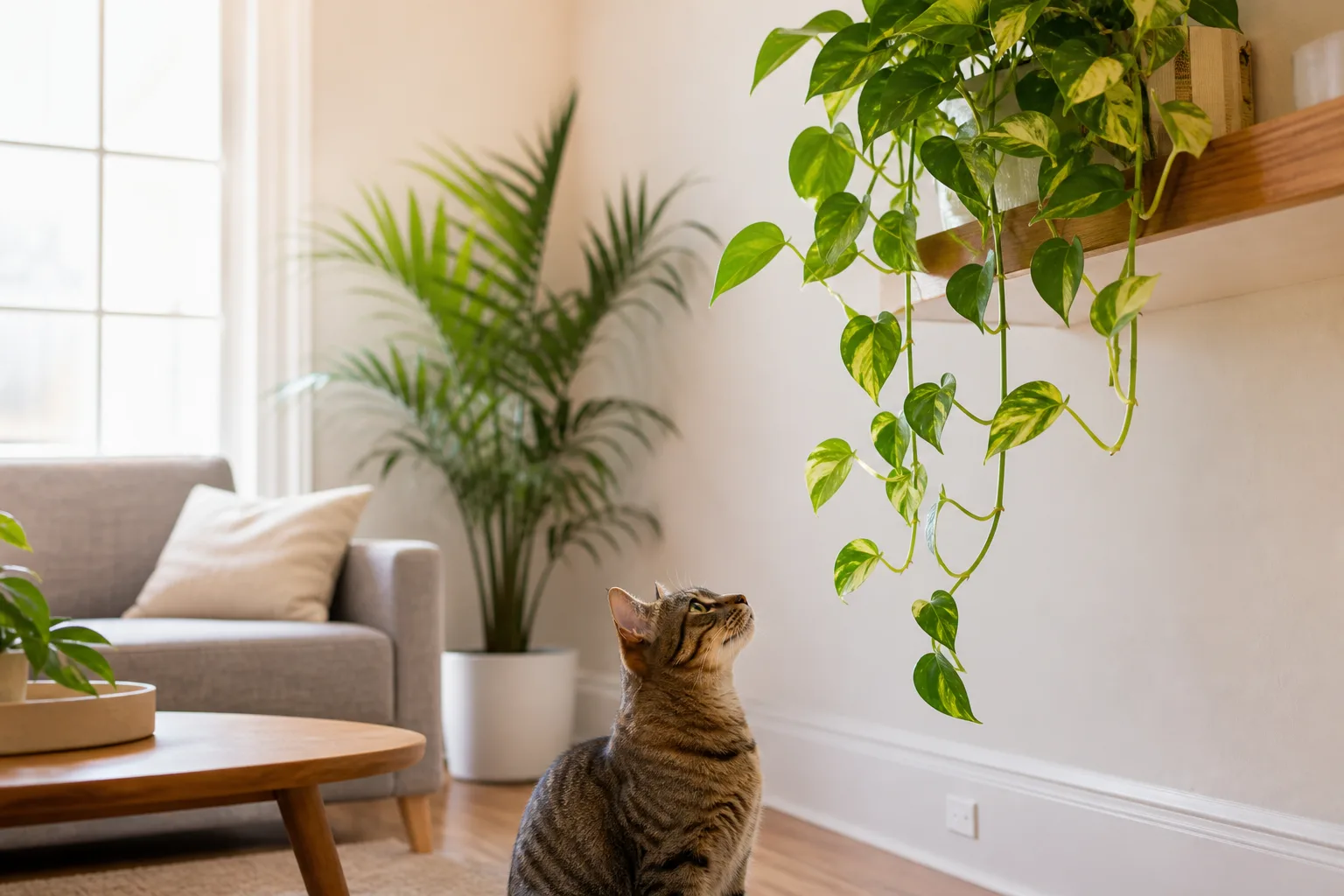
Cats are also more likely than dogs to access philodendrons through climbing. A trailing heartleaf philodendron on a shelf is essentially an invitation to a curious cat, and cats are more prone to nibble leaves out of boredom or attraction to movement. This behavioral difference means cats are statistically more likely to be the pet in the household that samples a philodendron.
The First 24 Hours: Timeline and What to Expect
Understanding how symptoms typically progress helps owners distinguish between a uncomfortable-but-temporary reaction and a situation that needs veterinary intervention. Here is what most cases look like over the first day.
0 to 15 minutes: Immediate oral irritation begins. The pet may shake its head, paw frantically at the mouth, drool heavily, or produce foam. This is the most visually dramatic phase and the one most owners find alarming.
15 minutes to 2 hours: Vomiting may begin if plant material was swallowed. The pet will likely refuse food and may be reluctant to drink water. Drooling typically continues but may start to ease slightly as the initial burst of crystal release subsides.
2 to 6 hours: In mild cases, symptoms begin to settle. Drooling decreases, the pet may show interest in water, and the visible distress starts to fade. If vomiting continues beyond the 2-hour mark, or if the pet seems unusually lethargic or withdrawn, this is the point where a veterinary call becomes important.
6 to 12 hours: Most mild cases show significant improvement. The pet may still have reduced appetite but should be more comfortable and more responsive. If symptoms are not improving by this stage, or if new symptoms like swelling or breathing difficulty appear, get veterinary help.
12 to 24 hours: The large majority of mild cases have largely resolved. A pet that is still vomiting, still refusing food and water, or showing any respiratory symptoms at the 24-hour mark needs to see a vet. Symptoms persisting beyond 24 hours are atypical and warrant investigation.
The key decision rule is simple: improving symptoms are reassuring. Static symptoms, worsening symptoms, or any sign of breathing difficulty mean a veterinary assessment is necessary, not optional.
Immediate Steps After Ingestion
If you see your pet chewing a philodendron or find evidence that it has happened, follow these steps in order. Speed matters more than perfection.
Remove any visible plant material from the mouth. Use your fingers to sweep out leaf fragments if you can do so safely and without getting bitten. Do not force this if the pet resists aggressively — the priority is removing what you can reach without causing additional stress or injury.
Rinse the mouth gently with cool water. Use a small stream of water — a sports bottle or a syringe without a needle works well — directed at the side of the mouth. Let it run out naturally rather than forcing the pet to swallow. The goal is to physically flush out any remaining crystal residue from the oral surfaces. Do this for 10 to 15 seconds if the pet tolerates it.
Offer a small amount of milk or plain yogurt if the pet is willing to drink. The calcium in dairy products can bind to oxalate crystals and reduce further irritation. This recommendation comes from VCA Animal Hospitals, which notes that dairy products help bind the oxalate crystals in the mouth and throat. Offer only a small amount — a few tablespoons for a cat or small dog, up to a quarter cup for a large dog. Do not force it.
Remove the plant from the area permanently. Even if the pet seems to have learned its lesson, do not assume it will not go back for another taste. Move the philodendron to a closed room or an area the pet cannot access.
Watch closely for the next several hours. Monitor for worsening symptoms, particularly any swelling of the lips, tongue, or throat, any change in breathing, or continued vomiting beyond the initial episode.
What Never to Do
The most important rule, and the one most often violated in a panic, is straightforward: do not induce vomiting. Forcing a pet to vomit after eating philodendron pushes the calcium oxalate crystals back up through the esophagus and mouth, causing a second round of irritation and inflammation on tissues that are already painful and swollen. The Pet Poison Helpline and the ASPCA both explicitly advise against it.
FirstVet explains that if a veterinarian determines that vomiting is medically necessary, they can give medications that coat and protect the mouth and gastrointestinal tract before inducing it — protection that cannot be replicated at home. What makes sense in a clinical setting under controlled conditions is dangerous as a DIY response.
Also avoid the following:
- Do not give hydrogen peroxide to induce vomiting unless specifically instructed to do so by a veterinarian or poison control specialist.
- Do not attempt to neutralize the crystals with home remedies not recommended by veterinary sources — bread, oil, peanut butter, or other food items do not help and may complicate the situation.
- Do not assume the pet is fine because symptoms seem mild in the first few minutes. Oral pain and drooling are the minimum response; monitor for at least several hours before concluding the incident is over.
- Do not wait to call the vet if the pet shows any sign of breathing difficulty, throat swelling, or extreme lethargy. These are emergency signs, not “watch and wait” signs.
When to Call the Vet or Poison Control
Many philodendron ingestion cases resolve at home without a vet visit. But there are clear thresholds where professional help becomes necessary.
Call your veterinarian or an animal poison control hotline if any of the following apply:
- Vomiting persists beyond 2 hours or is severe enough to risk dehydration.
- There is visible swelling of the lips, tongue, or throat.
- The pet shows any sign of breathing difficulty, including open-mouth breathing, wheezing, or exaggerated chest movements.
- The pet stops drinking water entirely for more than 6 hours.
- The pet becomes unusually lethargic, unresponsive, or collapses.
- You know or suspect a large amount of plant material was swallowed.
For situations where you are unsure whether the symptoms warrant a vet visit, the poison control hotlines exist for exactly this purpose. Both services charge a consultation fee but provide immediate, expert guidance on whether an in-person visit is necessary.
- ASPCA Animal Poison Control Center: (888) 426-4435 (consultation fee may apply)
- ASPCA Animal Poison Control Center: (888) 426-4435 (consultation fee may apply)
- Pet Poison Helpline: (855) 764-7661 (consultation fee may apply)
Have the plant name ready, an estimate of how much was chewed or swallowed, your pet’s approximate weight, and a clear description of current symptoms. That information lets the toxicologist give you a specific recommendation instead of a generic one.
What Happens at the Veterinary Clinic
If you do go to the vet, treatment for philodendron toxicity is supportive. There is no antidote that dissolves calcium oxalate crystals or reverses the mechanical damage they cause. The clinic focuses on comfort, hydration, and ruling out airway compromise.
Typical care includes rinsing the mouth and throat to remove residual plant material, anti-nausea medication if vomiting is persistent, and fluids if the pet is dehydrated or refusing to drink. Soft food for 24 to 48 hours reduces further irritation to inflamed oral tissue. In more severe cases, the vet may use topical oral anesthetics for pain relief and monitor for swelling that could affect breathing.
Prognosis is excellent for the large majority of household exposures. Most pets improve within 24 hours, and long-term complications are uncommon when airway swelling and dehydration are managed promptly. The Merck Veterinary Manual frames treatment for insoluble calcium oxalate plants in the Araceae family as supportive rather than antidote-based, which matches what clinics actually do for philodendron cases.
How Philodendrons Compare to Other Toxic Houseplants
Philodendrons sit in the same toxicity family as several other popular houseplants. Understanding the comparisons helps you prioritize which plants to move, replace, or keep with stricter placement rules.
| Plant | Toxic principle | Typical severity | Notes |
|---|---|---|---|
| Philodendron | Insoluble calcium oxalate | Mild to moderate oral irritation | Immediate pain usually limits how much is eaten |
| Pothos (Epipremnum aureum) | Insoluble calcium oxalate | Mild to moderate oral irritation | Nearly identical mechanism and symptom profile |
| Peace lily (Spathiphyllum) | Insoluble calcium oxalate | Mild to moderate oral irritation | Not a true lily; does not cause kidney failure like Lilium species |
| Dieffenbachia (dumb cane) | Insoluble calcium oxalate | Often more intense oral swelling | Historically associated with more dramatic mouth and throat swelling |
| True lilies (Lilium, Hemerocallis) | Different toxins | Potentially fatal in cats | Kidney failure risk — far more dangerous than philodendron |
Philodendron vs. Pothos: Is One Worse?
For practical pet-safety decisions, philodendron and pothos are in the same risk category. Both are aroids that pack insoluble calcium oxalate crystals into leaf and stem tissue. Both cause immediate oral pain, drooling, and possible vomiting. Both are rarely life-threatening at normal household exposure levels.
The bigger difference is access, not chemistry. Trailing heartleaf philodendron and trailing pothos both dangle into cat-jumping range. A large split-leaf plant (Monstera deliciosa, often sold as split-leaf philodendron) presents bigger leaves and a bigger target. If you already manage pothos carefully around pets, apply the same placement rules to philodendrons. For a full pothos-specific triage guide, see pothos toxicity.
Can a Philodendron Kill a Dog or Cat?
Fatal outcomes from philodendron chewing alone are uncommon. The pain response usually stops pets after a bite or two, which limits how much plant material is swallowed. Most cases resolve with home monitoring or basic supportive veterinary care.
That said, “rarely fatal” is not the same as “harmless.” UF/IFAS Extension notes that heartleaf philodendron toxicity can severely affect the digestive tract and, in serious cases, can result in lethal poisoning in cats. The realistic danger pathways are airway swelling that interferes with breathing, and dehydration from prolonged vomiting — both treatable when caught early, both dangerous when ignored.
Treat every ingestion as worth monitoring. Escalate immediately for breathing difficulty, expanding facial or throat swelling, persistent vomiting, collapse, or symptoms that are not improving within several hours.
Living With Philodendrons and Pets
You do not automatically have to discard every philodendron. You do need placement discipline, because trailing vines and low shelves put toxic leaves exactly where curious mouths go.
Put philodendrons on high shelves, in hanging planters, or in rooms pets cannot access. Trim trailing stems so tips stay above jumping range. Keep pruned cuttings and propagation jars out of reach — cut stems still contain crystals, and open water jars can attract cats. Do not rely on training alone if your pet is a compulsive plant chewer; physical separation is more reliable.
If your household includes a kitten, puppy, or a pet that samples every plant, the safer long-term choice is often a non-toxic substitute rather than constant management.
Pet-Safe Plants That Look Like Philodendrons
If you want the lush, trailing, or broad-leaf look without calcium oxalate risk, these ASPCA-listed non-toxic options are strong swaps:
| Look you want | Pet-safe swap | Why it works |
|---|---|---|
| Trailing heartleaf vibe | Swedish ivy (Plectranthus australis) | Fast trailing habit, easy care, glossy leaves |
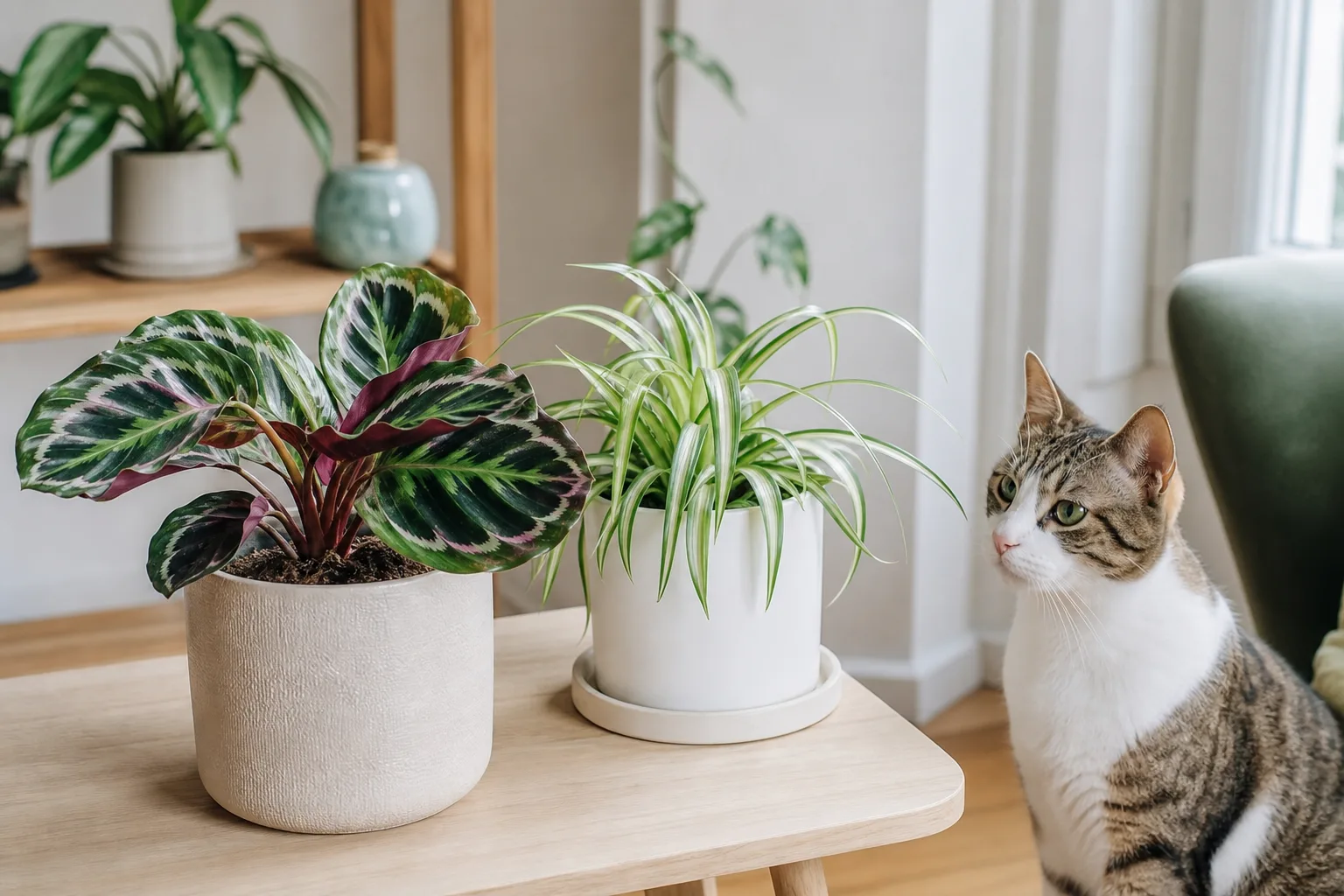
| Cascading greenery | Spider plant (Chlorophytum comosum) | Extremely forgiving; arching stems with plantlets |
| Full hanging basket | Boston fern (Nephrolepis exaltata) | Lush fronds; needs more humidity than philodendron |
| Compact glossy leaves | Peperomia | Smaller footprint; many cultivars |
| Upright architectural form | Cast iron plant (Aspidistra elatior) | Tough, low-light tolerant, non-toxic |
| Soft tropical foliage | Prayer plant (Maranta) | Colorful leaves; prefers higher humidity |
| Palm-like structure | Parlor palm (Chamaedorea elegans) | Soft fronds; good for floors without toxicity risk |
Swedish ivy is usually the closest everyday replacement for a trailing heartleaf philodendron. Spider plant is the better choice if you want maximum hardiness. For broader pet-safe shopping lists, see pet-safe houseplants, non-toxic plants for cats, and non-toxic plants for dogs.
Conclusion
Philodendrons are toxic to cats and dogs because every part of the plant contains insoluble calcium oxalate crystals. Chewing releases those crystals into the mouth and throat, causing immediate pain, drooling, and often vomiting. Most household exposures are uncomfortable rather than life-threatening, but airway swelling and dehydration are the complications that turn a mild incident into an emergency.
If your pet just chewed a philodendron: remove plant material, rinse the mouth with cool water, do not induce vomiting, offer a small amount of milk or plain yogurt if tolerated, and monitor closely. Call your veterinarian or a poison control hotline if symptoms worsen, breathing changes, or improvement stalls. Long term, either keep philodendrons strictly out of reach or replace them with ASPCA-verified non-toxic plants that give you the same look without the risk.
This guide is informational and is not a substitute for veterinary advice. If your pet has ingested a plant and you are unsure about severity, contact a veterinarian or poison control promptly.