Non-Toxic Plants for Dogs — 15 Safe Indoor Picks for a Risk-Aware Home
15 indoor plants verified non-toxic to dogs by the ASPCA, with practical placement tips, care notes, and safety limits every dog owner should know.
Quick Answer: Can You Have Plants and a Dog at Home?
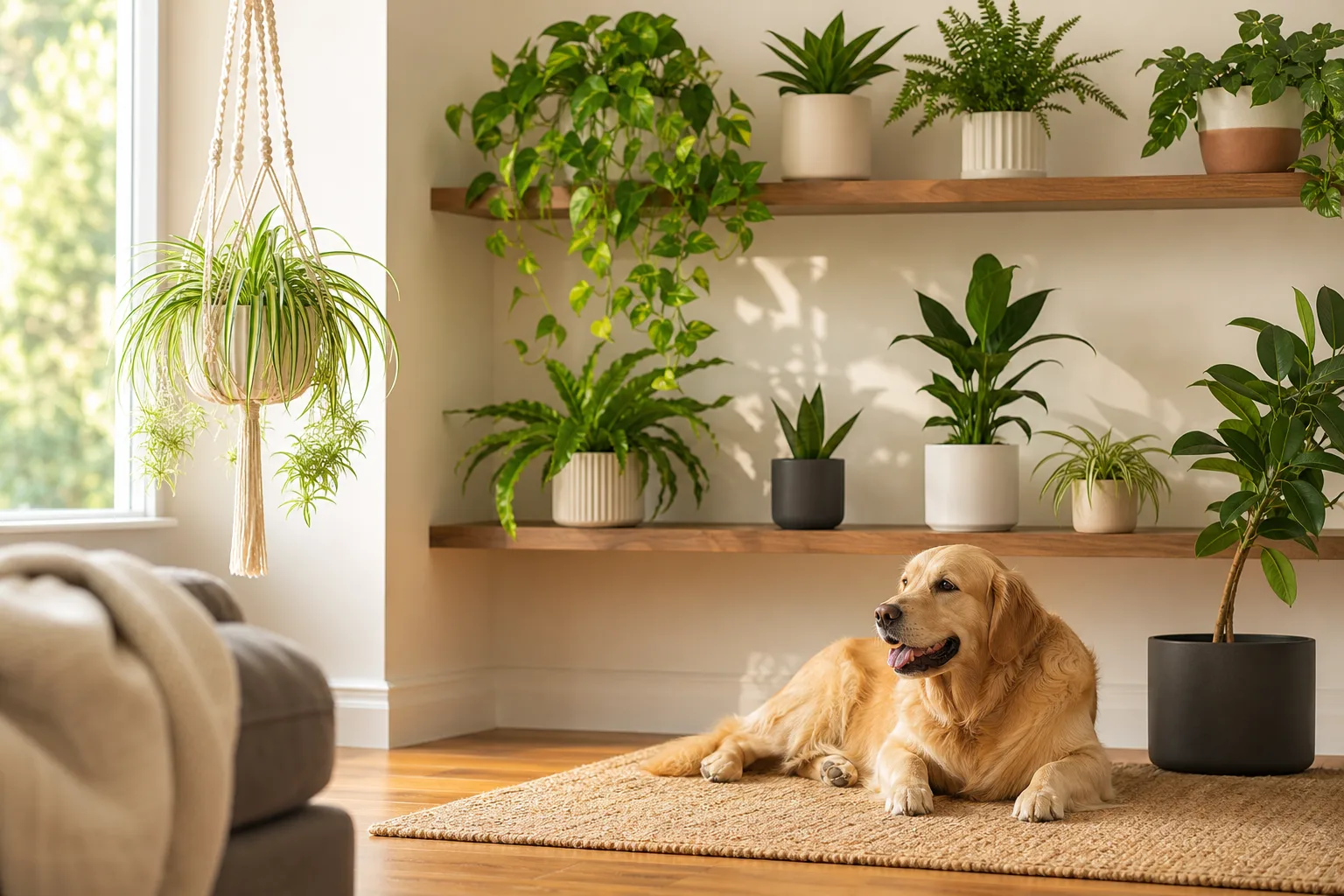
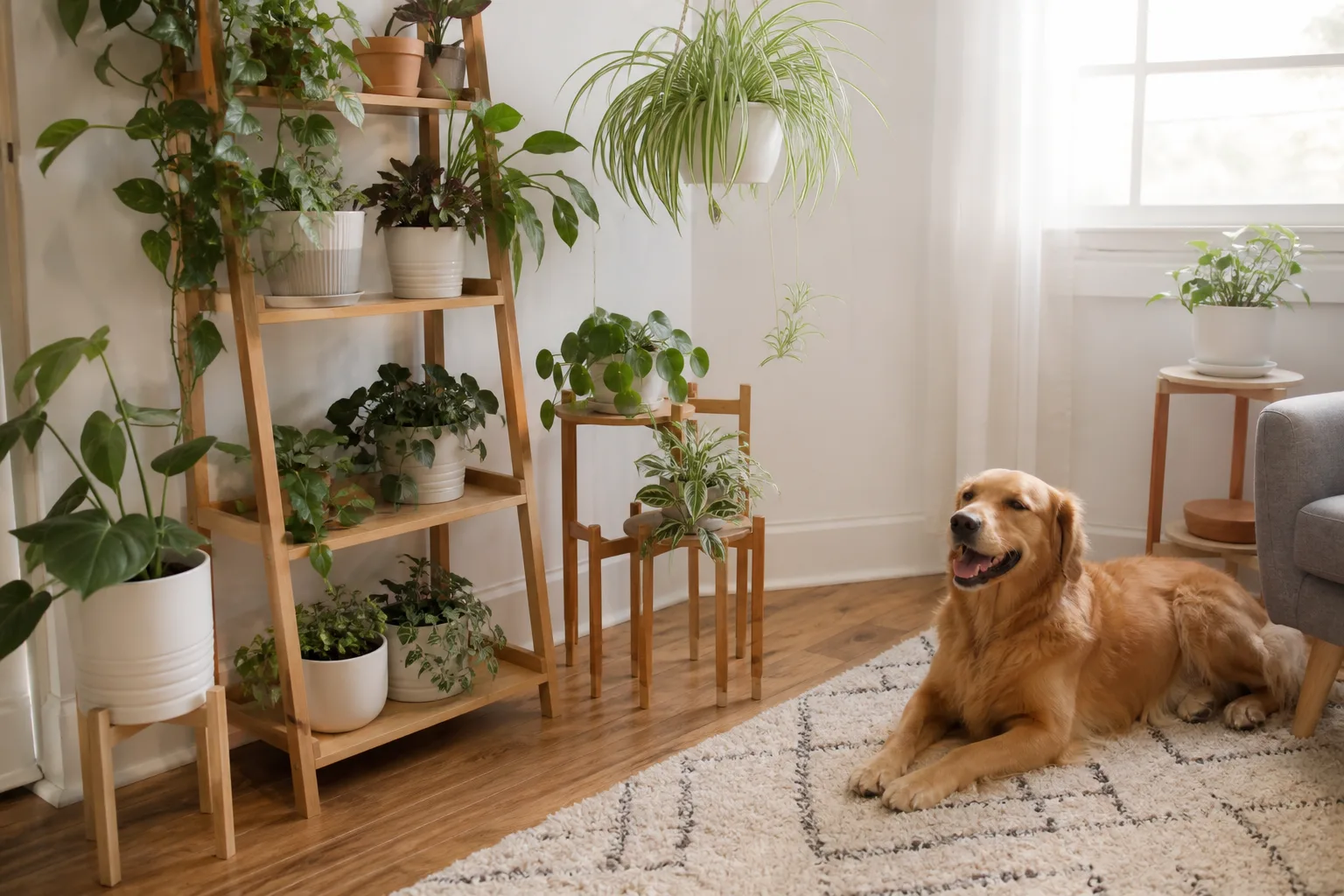
Yes — if you choose plants verified as non-toxic to dogs and place them where your dog cannot chew, dig, or knock them over.
The key word is verified. A plant labelled “pet-friendly” at a big-box nursery means nothing without a botanical name you can cross-check against the ASPCA toxic and non-toxic plant database. Common names mislead. “Fern” might be a dog-safe Boston fern — or a toxic asparagus fern that is not a true fern at all.
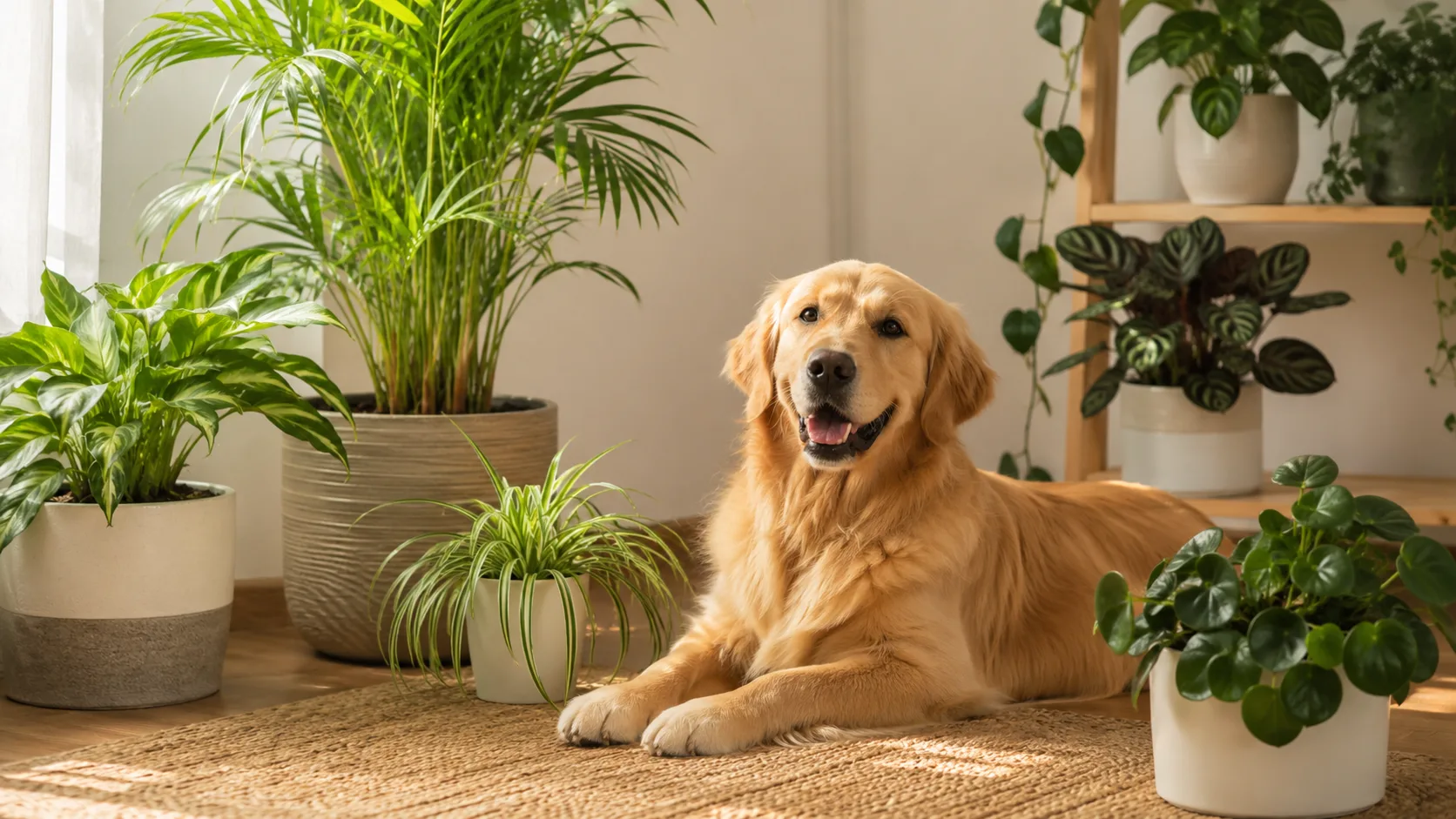
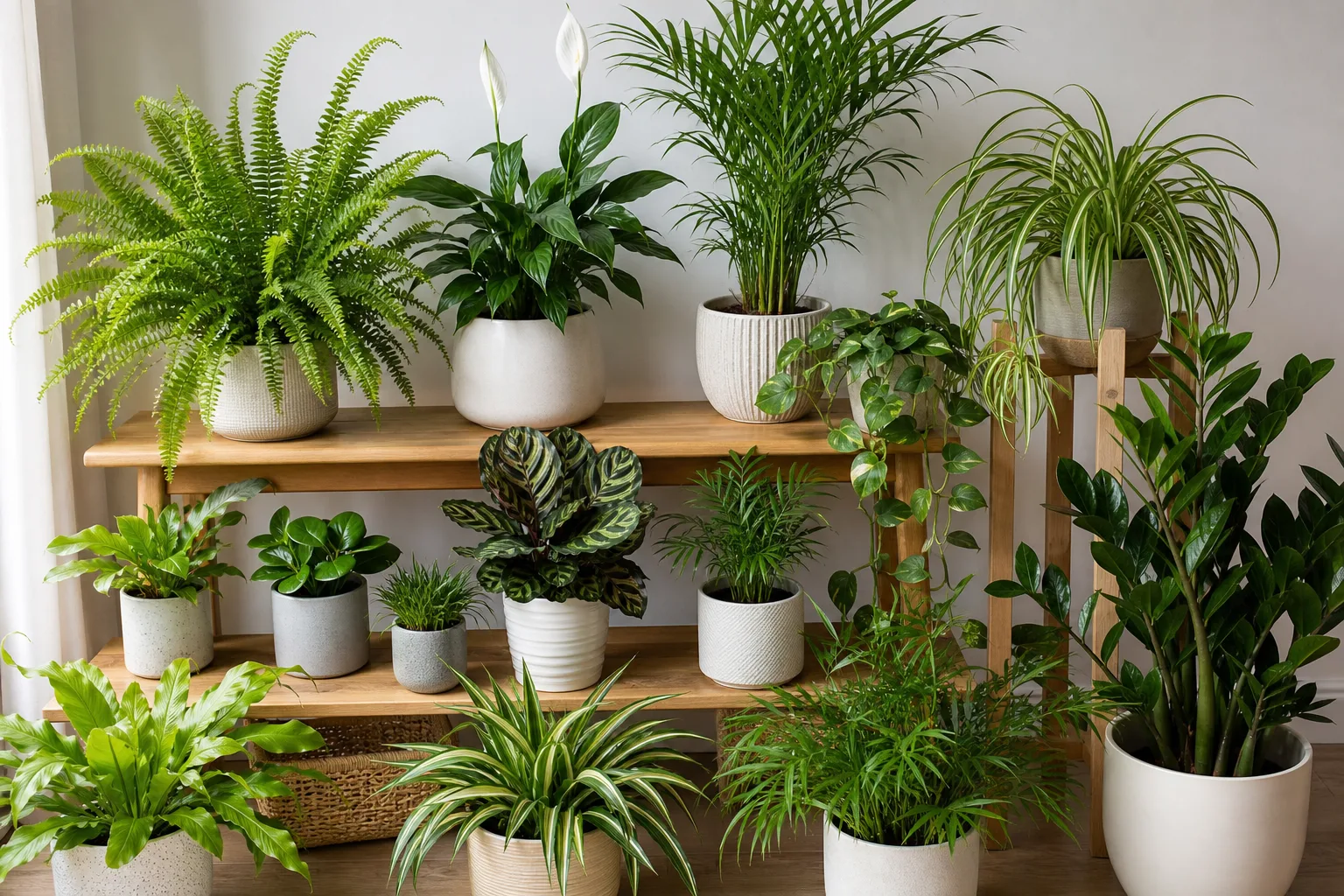
This guide covers 15 indoor plants verified as non-toxic to dogs, drawn from the ASPCA non-toxic plant list, with placement tips that account for wagging tails, counter-surfing noses, and the fact that some dogs treat potting soil like a snack tray.
What “Non-Toxic to Dogs” Actually Means
“Non-toxic” in the ASPCA database means the plant does not contain compounds known to cause systemic poisoning in dogs — no organ failure, no neurological damage, no life-threatening reactions at typical ingestion levels.
It does not mean:
- Your dog can eat the plant freely without any reaction
- The potting soil, fertilizer, or pesticide on the plant is safe
- A dog that shreds six leaves won’t vomit
- The plant is safe for every dog regardless of size, age, or health status
The Merck Veterinary Manual notes that gastrointestinal upset — vomiting, diarrhea, drooling — can occur after ingestion of any plant material, even from non-toxic species, and the ASPCA states plainly that “the consumption of any plant material may cause vomiting and gastrointestinal upset for dogs and cats.” Mechanical irritation from fibrous leaves, reactions to soil microbes, and fertilizer residue are all independent of the plant’s toxicity classification.
Dog owners should also account for:
- Tail-knock risk: Tall floor plants in narrow walkways get knocked over. Broken pots mean scattered soil, exposed roots, and a curious dog investigating the mess.
- Digging behavior: Some dogs dig in large pots. Even non-toxic plants become a problem when the dog is eating soil that may contain fertilizer salts, mold, or pest-control residue.
- Dropped leaves: Plants that naturally drop leaves (like ficus, which is actually toxic anyway) create floor-level temptations. Even non-toxic dropped leaves can cause vomiting if eaten in quantity.
Quick Comparison Table: 15 Dog-Safe Indoor Plants
| Plant | Best For | Light | Watering | Difficulty | Key Risk |
|---|---|---|---|---|---|
| Spider Plant | Hanging baskets, shelves | Bright indirect | Weekly | Easy | Cats may overeat it |
| Boston Fern | Humid bathrooms | Indirect, no direct sun | Keep soil moist | Medium | Leaf drop if air is dry |
| Areca Palm | Floor plant, bright rooms | Bright indirect | When top inch dries | Easy to medium | Leaf tip burn from tap water |
| Parlor Palm | Low-light corners | Low to medium indirect | When top inch dries | Easy | Slow grower, needs patience |
| Calathea | Statement foliage, medium light | Medium indirect, no direct sun | Keep evenly moist | Medium | Crispy edges if water or humidity is off |
| Prayer Plant | Shelves, trailing display | Medium indirect | Keep lightly moist | Medium | Leaves curl and crisp without humidity |
| Haworthia | Desks, small shelves | Bright indirect | Every 2–3 weeks | Very easy | Rot from overwatering |
| Burro’s Tail | Hanging pots, high shelves | Bright light, some direct sun | Every 2–3 weeks | Easy | Leaves detach if bumped |
| Christmas Cactus | Blooming winter interest | Bright indirect | When top inch dries | Easy | Bud drop from drafts or moving |
| African Violet | Windowsills, compact spaces | Bright indirect, no direct sun | Bottom-water, avoid wet leaves | Medium | Crown rot from overhead watering |
| Hoya Carnosa | Hanging baskets, trellises | Bright indirect | When soil dries out | Easy | Slow to bloom unless root-bound |
| Bird’s Nest Fern | Bathrooms, kitchens | Low to medium indirect | Keep soil lightly moist | Easy to medium | Brown fronds from dry air or sun |
| Pilea Peperomioides | Desks, tabletops | Bright indirect | When top inch dries | Easy | Lopsided growth without rotation |
| Money Tree | Floor plants, entryways | Medium to bright indirect | When top 2 inches dry | Easy | Overwatering causes leaf drop |
| Peperomia | Small shelves, variety collector | Medium to bright indirect | When soil dries out | Easy | Overwatering rots shallow roots |
 |
1. Spider Plant
Best for: Hanging baskets, high shelves, forgetful waterers
Difficulty: Easy
Light: Bright indirect light, tolerates lower light
Water: Once a week, forgiving if you miss a few days
Safety status: Non-toxic to dogs per ASPCA
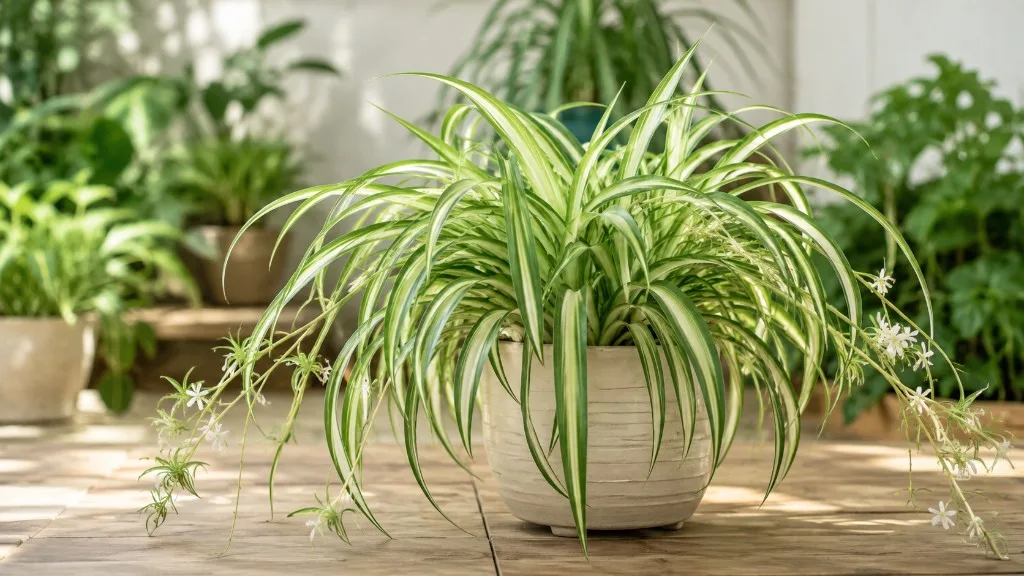
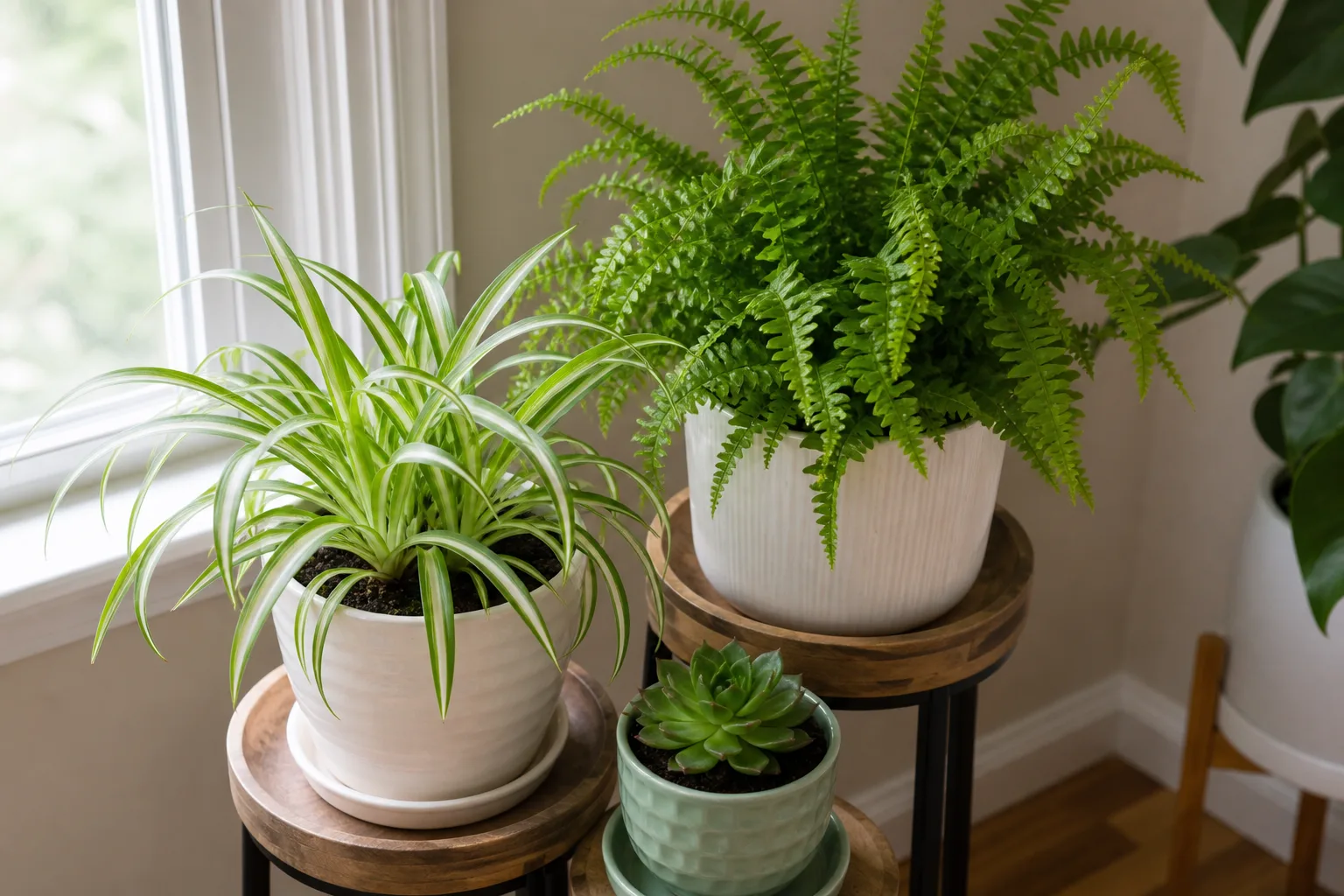
The spider plant is one of the most forgiving houseplants you can own, and it happens to be dog-safe. It produces arching green-and-white striped leaves and sends out trailing runners with baby plantlets — perfect for hanging baskets where a dog’s nose cannot reach.
Spider plants are non-toxic to dogs, but they are mildly hallucinogenic to cats due to compounds related to opium. For dogs, the risk is mostly mechanical: eating fibrous leaves may cause mild vomiting or diarrhea. Hang it high if your dog is a determined chewer, and watch for dropped plantlets that might land at nose height.
Why it works for dog homes: Grows best elevated in hanging planters, which keeps it out of reach naturally.
Care tip: Brown tips on spider plant leaves usually come from fluoride or chlorine in tap water. Use filtered water or let tap water sit overnight before watering.
Common mistake: Overwatering. Spider plants have tuberous roots that store water and rot in soggy soil. Let the top inch of soil dry out between waterings.
Avoid this plant if: Your dog jumps onto furniture near hanging plants and could pull down the entire planter.
Useful care guides:
- Spider Plant care guide
- Spider Plant watering guide
- Spider Plant light guide
- Spider Plant propagation guide
- Spider Plant problems guide
2. Boston Fern
Best for: Bathrooms, humid rooms, hanging baskets
Difficulty: Medium
Light: Bright indirect light, no direct sun
Water: Keep soil consistently moist, do not let it dry out
Safety status: Non-toxic to dogs per ASPCA
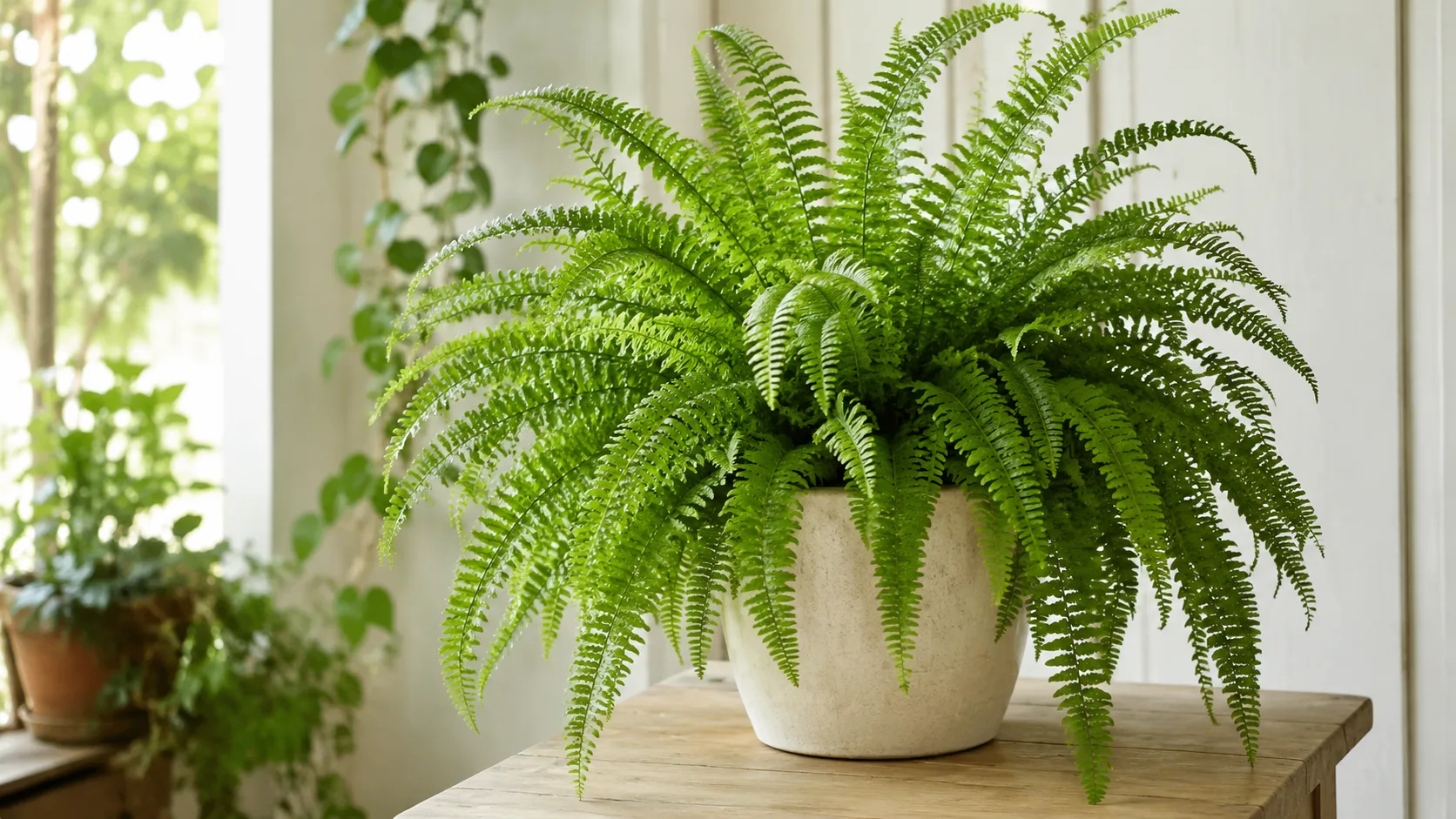
Boston ferns bring lush, feathery greenery to a room and are among the safest plants for dog homes. Unlike asparagus ferns — which are not true ferns and are toxic — the Boston fern (Nephrolepis exaltata) is a true fern with no toxic compounds for dogs.
The catch is commitment. Boston ferns drop leaflets when the air is too dry, and a stressed fern shedding foliage onto the floor creates a mess a dog might investigate. Place them in naturally humid rooms like bathrooms or kitchens, or run a small humidifier nearby.
Why it works for dog homes: True fern, not a toxic imposter. The fronds are soft and unlikely to cause mechanical injury even if mouthed.
Care tip: Mist the fronds daily or place the pot on a pebble tray with water to maintain humidity. Dry air is the number one reason Boston ferns fail indoors.
Common mistake: Confusing Boston fern with asparagus fern at the nursery. Always check the label for the botanical name Nephrolepis exaltata.
Avoid this plant if: You cannot provide consistent humidity. A constantly shedding fern is a floor-level temptation for dogs.
Useful care guides:
- Boston Fern care guide
- Boston Fern watering guide
- Boston Fern light guide
- Boston Fern propagation guide
- Boston Fern problems guide
3. Areca Palm
Best for: Floor display, bright living rooms, dog-friendly corners
Difficulty: Easy to medium
Light: Bright indirect light
Water: When the top inch of soil dries out
Safety status: Non-toxic to dogs per ASPCA
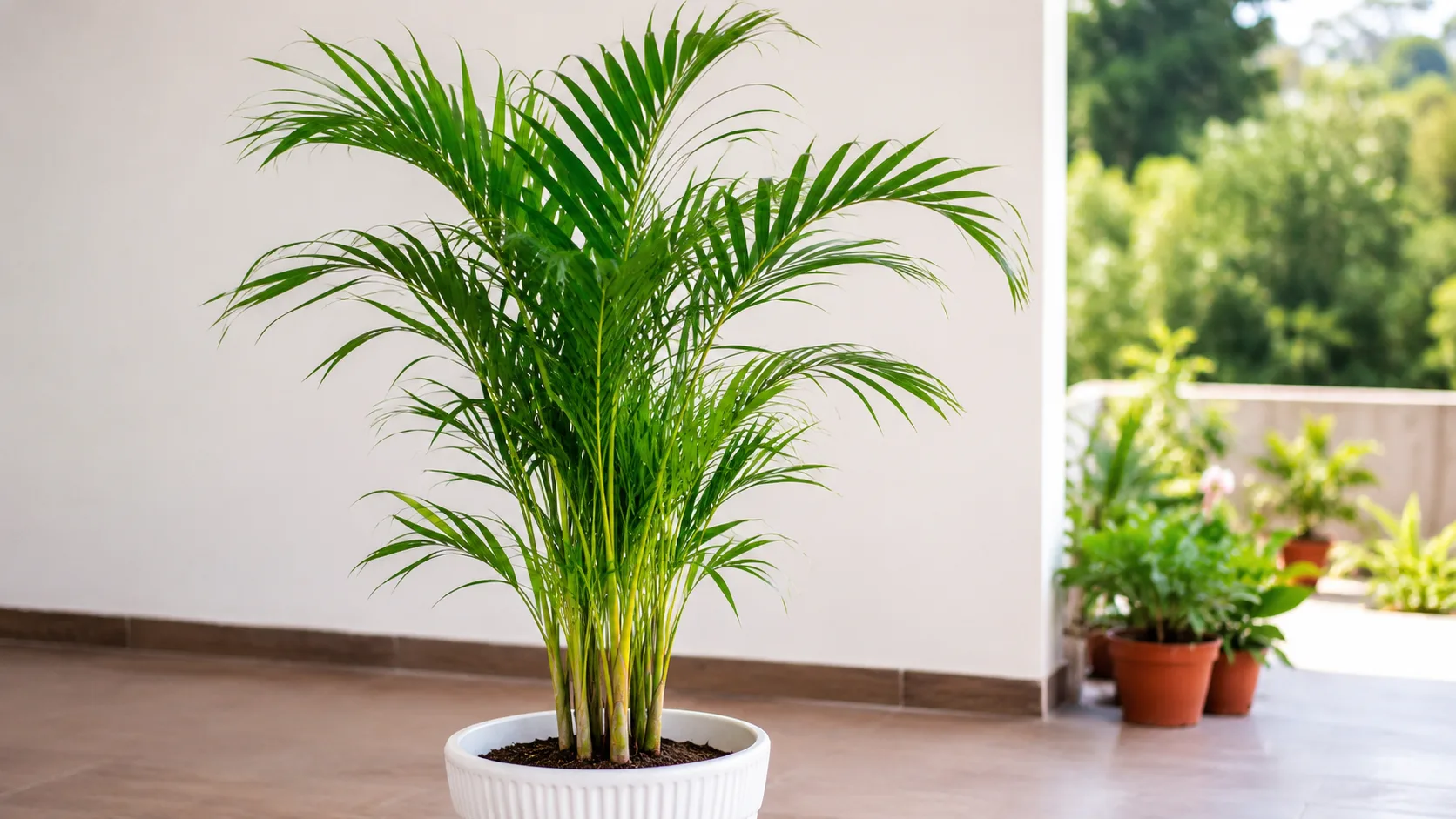
The areca palm (Dypsis lutescens) grows into a graceful, feathery floor plant that adds height without adding risk. It is non-toxic to dogs and cats and large enough that most dogs treat it as furniture rather than food.
Floor placement is a double-edged sword. An areca palm’s tall, swaying fronds are fun for a dog to nose or bat, but the plant itself will not poison them. The real danger is the pot: a large terracotta or ceramic container at tail height can tip, crack, and spill soil if a dog bumps it hard enough. Use a heavy, wide-based pot or place the palm in a corner where traffic is minimal.
Why it works for dog homes: Tall, non-toxic, and not tempting as a chew target for most dogs. Makes a strong visual statement without hidden danger.
Care tip: Areca palms are sensitive to fluoride and salts in tap water. Brown leaf tips are almost always a water-quality issue. Use filtered or distilled water.
Common mistake: Letting the soil dry out completely. Areca palms prefer consistent moisture and will drop fronds if left dry for too long.
Avoid this plant if: Your dog runs through the house at speed near floor plants. A toppled palm makes a huge mess.
Useful care guides:
- Areca Palm care guide
- Areca Palm watering guide
- Areca Palm light guide
- Areca Palm soil guide
- Areca Palm problems guide
4. Parlor Palm
Best for: Low-light rooms, offices, corners away from windows
Difficulty: Easy
Light: Low to medium indirect light
Water: When the top inch of soil dries out
Safety status: Non-toxic to dogs per ASPCA
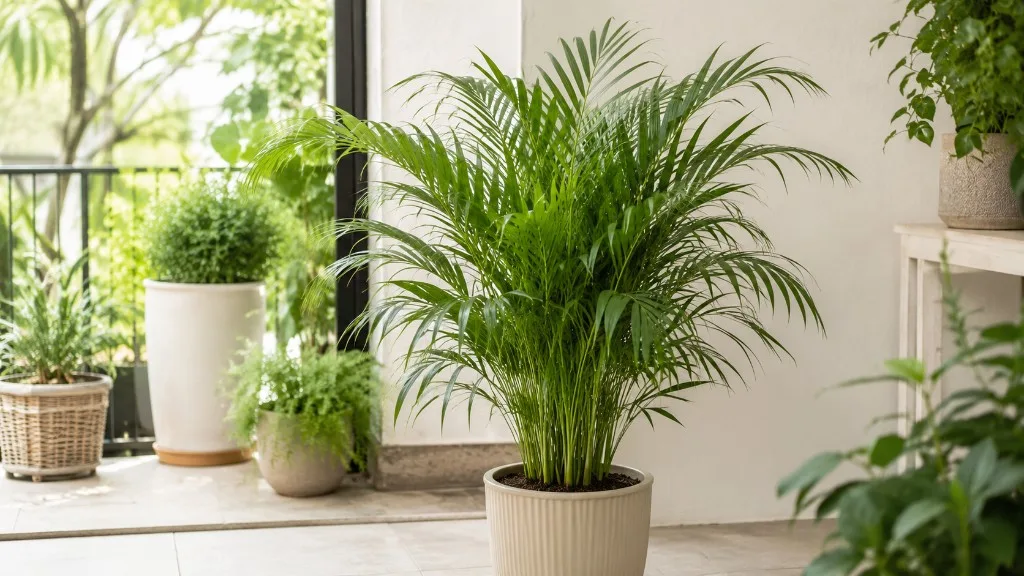
The parlor palm (Chamaedorea elegans) has been grown indoors since the Victorian era for a reason: it tolerates neglect, low light, and dry indoor air better than almost any other palm. It is also non-toxic to dogs.
Parlor palms stay compact — typically 2 to 4 feet tall — and grow slowly, which means they do not outgrow their space quickly. Place one on a side table, a low plant stand, or in a corner where it won’t be a tripping hazard. The slow growth also means less pruning and fewer dropped leaves.
Why it works for dog homes: Compact, non-toxic, and thrives in spots where many other plants struggle. Low leaf drop reduces floor-level temptation.
Care tip: Parlor palms are one of the few palms that genuinely tolerate low light. In a north-facing room, they will grow slower but stay healthy.
Common mistake: Misting instead of watering. Parlor palms dislike constantly wet foliage, which can lead to fungal spots. Water the soil, not the leaves.
Avoid this plant if: You want a fast-growing statement floor plant. The parlor palm’s charm is in its slow, steady reliability.
Useful care guides:
- Parlor Palm care guide
- Parlor Palm watering guide
- Parlor Palm light guide
- Parlor Palm soil guide
- Parlor Palm problems guide
5. Calathea
Best for: Statement foliage, medium-light rooms, plant collectors
Difficulty: Medium
Light: Medium indirect light, no direct sun
Water: Keep soil evenly moist but not soggy
Safety status: Non-toxic to dogs per ASPCA
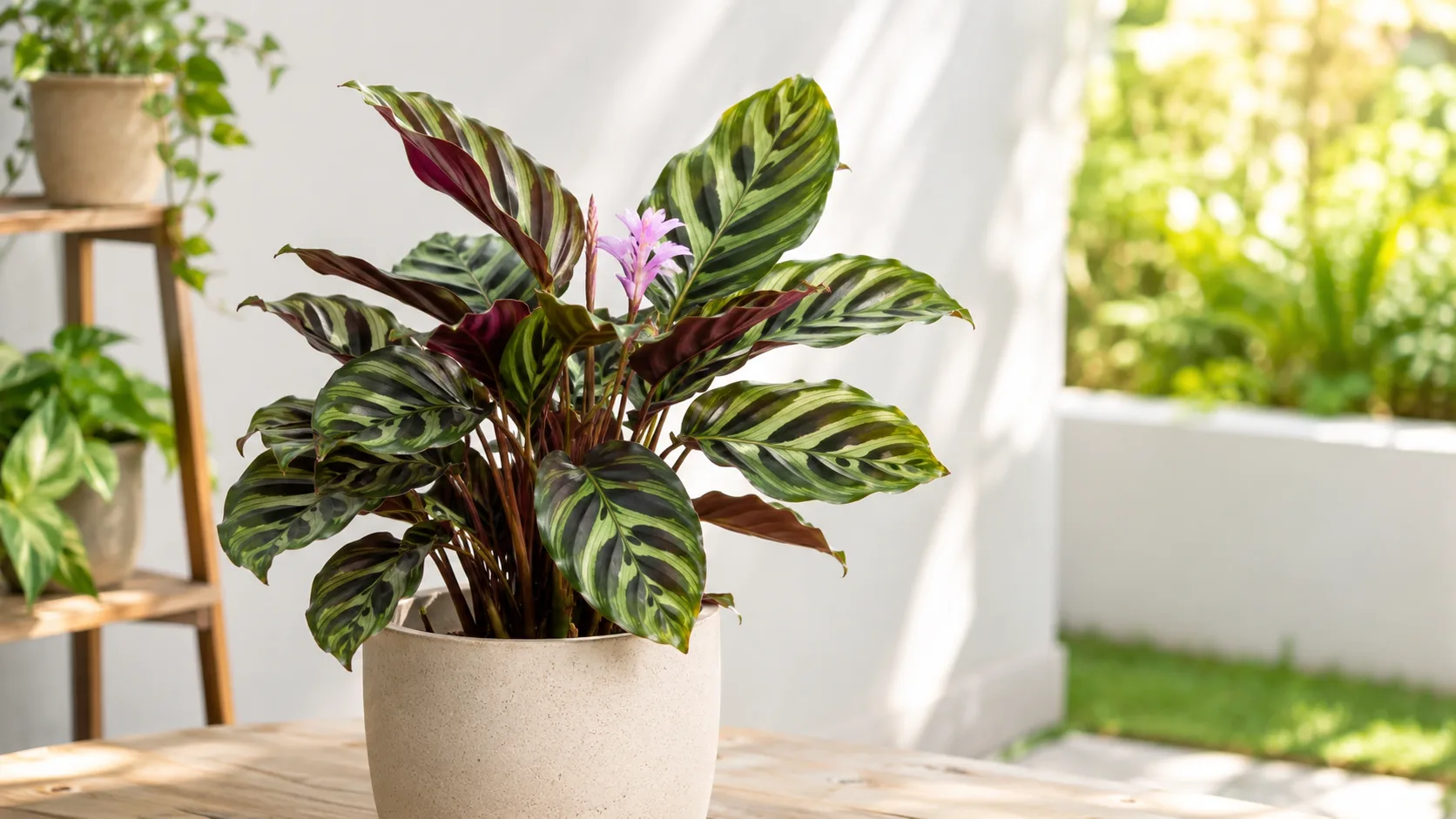
Calatheas are the showstoppers of the dog-safe plant world. Varieties like Calathea orbifolia, Calathea medallion, and Calathea lancifolia (rattlesnake plant) offer dramatic painted leaves that fold upward at night — a behavior called nyctinasty. The entire Calathea genus is non-toxic to dogs, which means you can collect multiple varieties without worrying about toxicity.
The trade-off: calatheas are humidity divas. Without enough moisture in the air, leaf edges crisp and curl. A bathroom with a window or a spot near a humidifier is ideal.
Why it works for dog homes: Stunning foliage that replaces toxic statement plants like dieffenbachia or philodendron. Entire genus is dog-safe.
Care tip: Use filtered or distilled water. Calatheas are sensitive to chlorine, fluoride, and dissolved salts. Crispy leaf edges are almost always a water-quality or humidity problem.
Common mistake: Placing calatheas in direct sun. Their leaves burn quickly. Bright indirect light only, and err on the side of less light rather than more.
Avoid this plant if: You want a low-maintenance plant you can ignore for two weeks. Calatheas need consistent attention.
Useful care guides:
- Calathea care guide
- Calathea watering guide
- Calathea light guide
- Calathea soil guide
- Calathea problems guide
6. Prayer Plant
Best for: Shelves, tabletops, trailing or spreading display
Difficulty: Medium
Light: Medium indirect light
Water: Keep lightly moist, do not let soil dry out fully
Safety status: Non-toxic to dogs per ASPCA
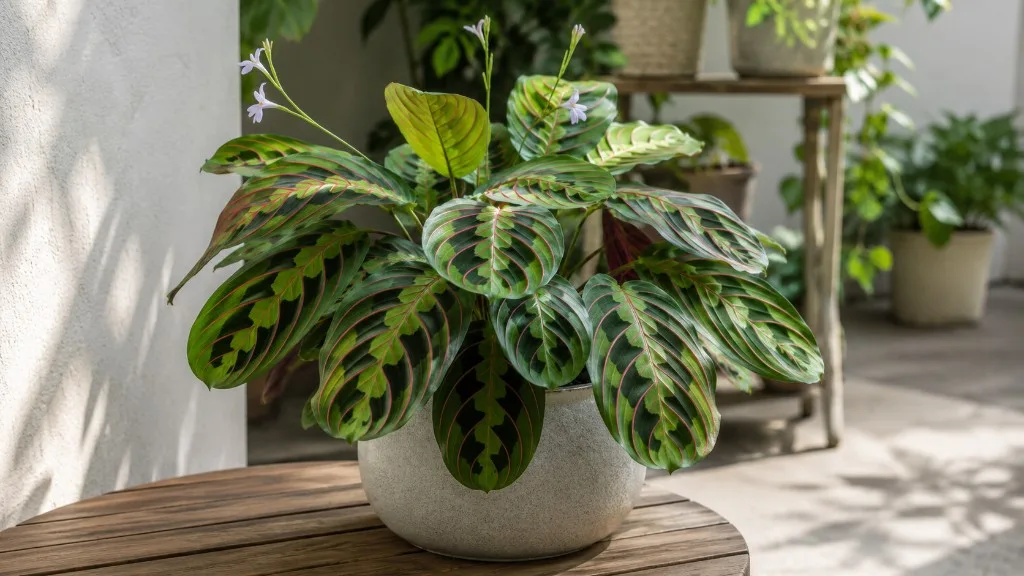
The prayer plant (Maranta leuconeura) is a close relative of calathea with the same evening leaf-folding behavior and the same dog-safe status. Its oval leaves have distinctive red veins and light green blotches that look almost painted on. It stays low and spreading — rarely taller than 12 inches — which makes it ideal for shelves and side tables.
Like calatheas, prayer plants need humidity and consistency. They crisp up fast in dry air and react poorly to tap water with high mineral content. If you can keep a calathea happy, you can keep a prayer plant happy.
Why it works for dog homes: Low, spreading growth habit keeps it at table height rather than floor level. Entire genus is non-toxic to dogs.
Care tip: Prayer plants benefit from a pebble tray or small humidifier. Dry indoor heating in winter is their biggest enemy.
Common mistake: Letting the soil dry out completely between waterings. Prayer plants prefer consistent light moisture — not soggy, but never bone-dry.
Avoid this plant if: You travel frequently and cannot maintain consistent watering and humidity.
Useful care guides:
- Prayer Plant care guide
- Prayer Plant watering guide
- Prayer Plant light guide
- Prayer Plant soil guide
- Prayer Plant problems guide
7. Haworthia
Best for: Desks, small shelves, forgetful waterers, beginners
Difficulty: Very easy
Light: Bright indirect light, tolerates some direct morning sun
Water: Every 2–3 weeks, let soil dry completely between waterings
Safety status: Non-toxic to dogs per ASPCA
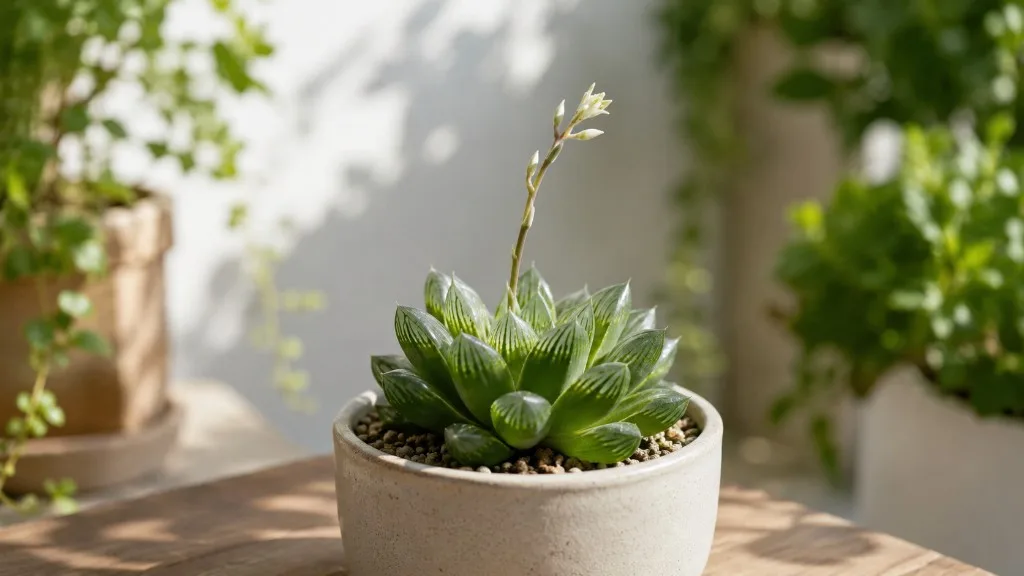
Haworthias are small, sculptural succulents with pointed, zebra-striped leaves that look like miniature aloe plants — but unlike aloe vera, which is toxic to dogs, haworthias are completely safe per ASPCA. They stay compact (3 to 5 inches tall), grow slowly, and ask for almost nothing except light and the discipline to water sparingly.
If you have killed succulents before, start with a haworthia. They tolerate lower light than most succulents and are forgiving of underwatering. The main way to kill one is by overwatering — let the soil dry completely between waterings, which in practice means watering every two to three weeks.
Why it works for dog homes: Small, out-of-reach on desks and shelves. Looks like a toxic aloe but is genuinely dog-safe.
Care tip: Use a pot with a drainage hole and gritty succulent or cactus mix. Standard potting soil holds too much water for haworthia roots.
Common mistake: Watering weekly like a tropical plant. Haworthias are desert-adapted and rot quickly in wet soil. When in doubt, wait another week.
Avoid this plant if: You want a large, fast-growing plant. Haworthias stay small and grow slowly — that is their nature.
Useful care guides:
- Haworthia care guide
- Haworthia watering guide
- Haworthia light guide
- Haworthia soil guide
- Haworthia problems guide
8. Burro’s Tail
Best for: Hanging pots, high shelves, trailing displays
Difficulty: Easy
Light: Bright light, tolerates some direct sun
Water: Every 2–3 weeks, let soil dry completely
Safety status: Non-toxic to dogs per ASPCA
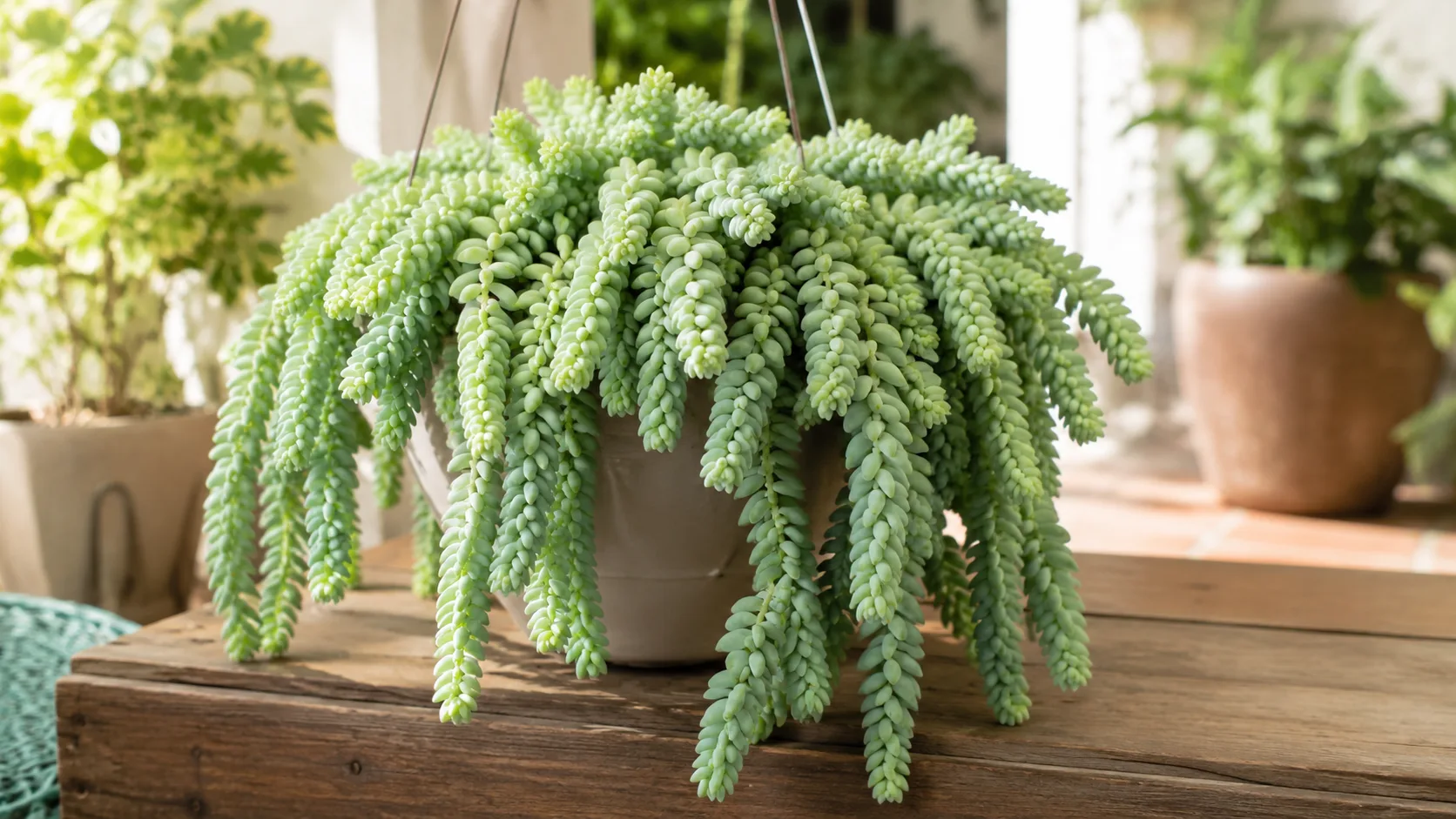
Burro’s tail (Sedum morganianum) is a trailing succulent with plump, overlapping leaves that cascade several feet over time. It looks delicate but is surprisingly sturdy as long as you do not touch it — the leaves detach at the lightest bump, which is both a design feature and a dog-home consideration.
Hung high in a hanging planter, burro’s tail is completely out of reach and visually striking. The risk is fallen leaves: they are non-toxic if eaten, but a dog that vacuums up dropped succulent leaves may still experience mild stomach upset. Sweep up fallen leaves promptly.
Why it works for dog homes: Thrives in hanging planters, naturally out of dog range. Non-toxic even if leaves fall.
Care tip: Water deeply but infrequently. When the leaves start to look slightly wrinkled or deflated, it is time to water. In summer this may be every 2 weeks; in winter, monthly.
Common mistake: Handling the plant too much. Every touch knocks off leaves. Place it, water it, and leave it alone.
Avoid this plant if: You have a dog that jumps at hanging plants or you place the pot where a wagging tail can swipe it.
Useful care guides:
- Burro’s Tail care guide
- Burro’s Tail watering guide
- Burro’s Tail light guide
- Burro’s Tail soil guide
- Burro’s Tail problems guide
9. Christmas Cactus
Best for: Winter blooms, tabletops, windowsills
Difficulty: Easy
Light: Bright indirect light
Water: When the top inch of soil dries out
Safety status: Non-toxic to dogs per ASPCA
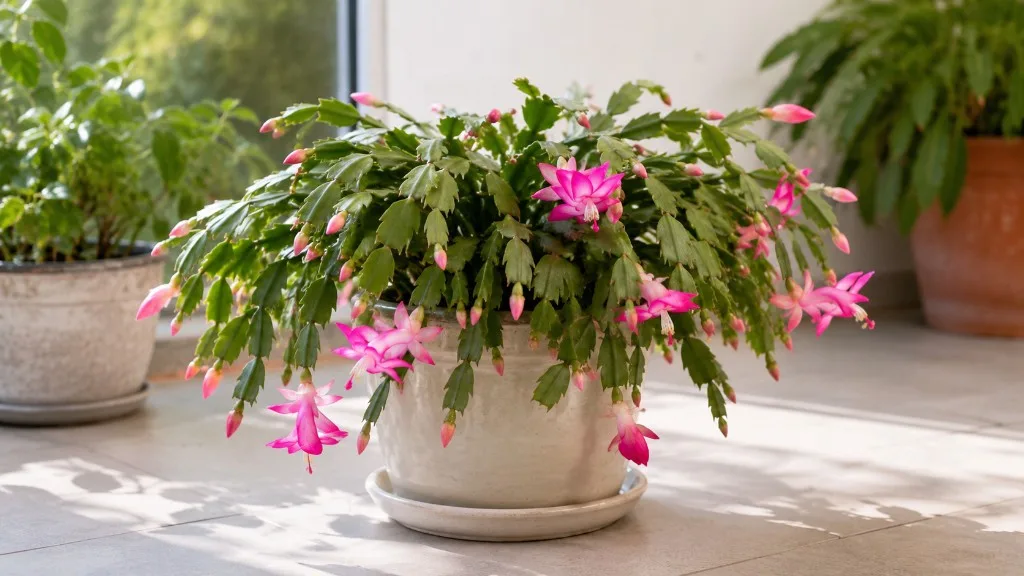
The Christmas cactus (Schlumbergera) is a dog-safe flowering plant that blooms in late fall and winter when most houseplants are dormant. Its segmented, spineless stems trail gently over the sides of a pot, and the flowers — pink, red, white, or orange — last for weeks.
Unlike many flowering houseplants that are toxic (amaryllis, kalanchoe, cyclamen), the Christmas cactus is clean. The segmented pads are not tempting to chew, and the plant stays compact enough to live on a windowsill or side table well above dog height.
Why it works for dog homes: One of the few reliably dog-safe flowering houseplants. Compact size, easy placement.
Care tip: To trigger blooming, give the Christmas cactus 12–14 hours of darkness per night for about six weeks starting in early fall. Once buds appear, resume normal light and stop moving the plant — bud drop is common if you relocate it mid-bloom.
Common mistake: Watering on a fixed schedule like a tropical plant. Christmas cacti are epiphytic cacti, not desert cacti — they like more water than a haworthia but less than a fern. Water when the top inch of soil feels dry.
Avoid this plant if: You want foliage year-round. Christmas cacti look fine out of bloom but their main draw is the seasonal flower show.
Useful care guides:
- Christmas Cactus care guide
- Christmas Cactus watering guide
- Christmas Cactus light guide
- Christmas Cactus soil guide
- Christmas Cactus problems guide
10. African Violet
Best for: Windowsills, compact spaces, year-round blooms
Difficulty: Medium
Light: Bright indirect light, no direct sun
Water: Bottom-water with room-temperature water, avoid wetting leaves
Safety status: Non-toxic to dogs per ASPCA
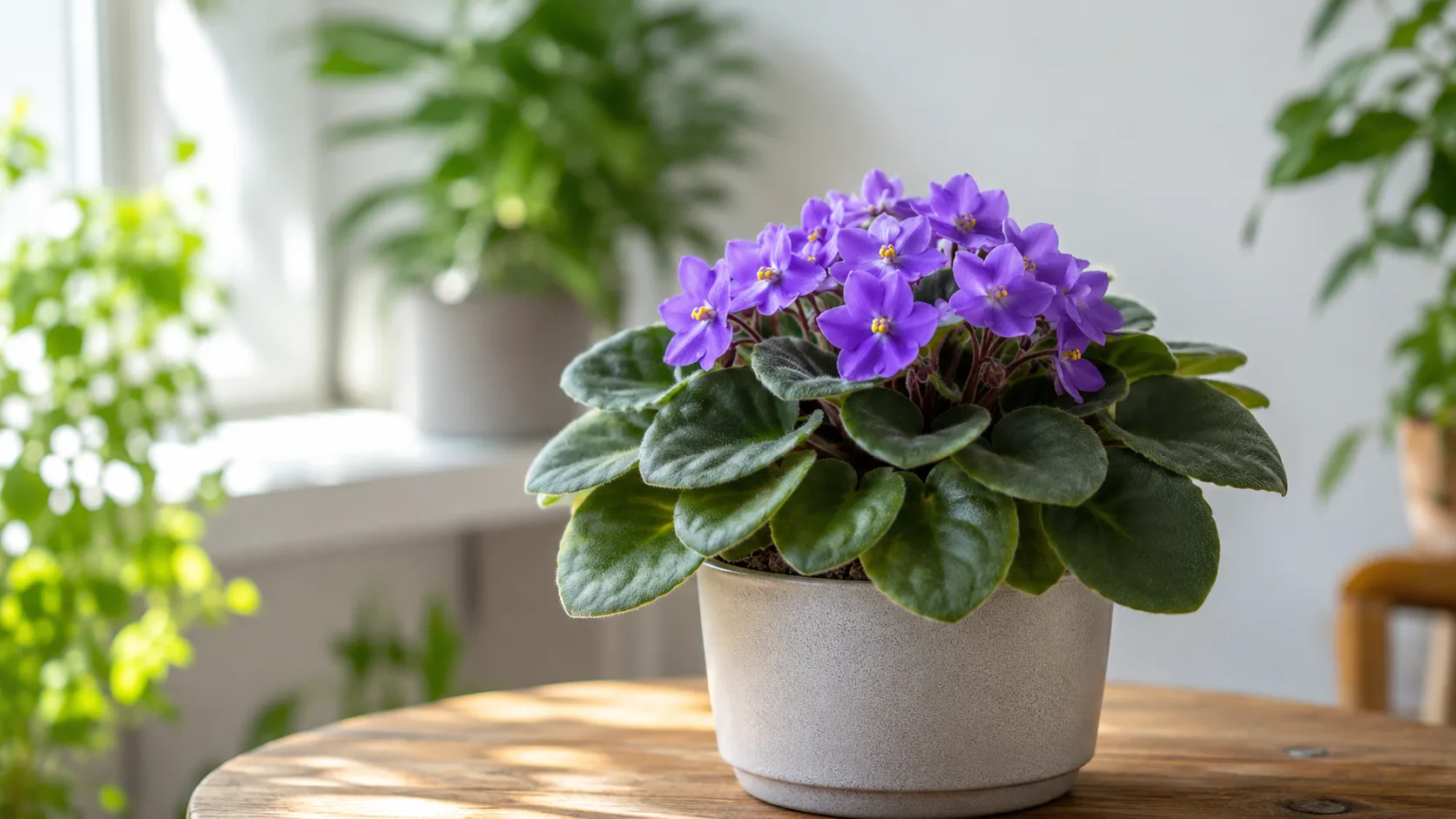
African violets (Saintpaulia) are compact, fuzzy-leaved flowering plants that bloom repeatedly throughout the year in purple, pink, white, and bicolor varieties. They are non-toxic to dogs and small enough to live on a narrow windowsill where no dog can reach them.
The care is specific but not difficult once you learn it: bottom-water with room-temperature water, never get the leaves wet, and provide bright indirect light. A north-facing or east-facing windowsill is ideal.
Why it works for dog homes: Tiny footprint, naturally elevated on windowsills. Blooms year-round without toxicity risk.
Care tip: Use a pot with drainage and a saucer. Pour water into the saucer and let the plant absorb it from the bottom for 30 minutes, then dump any excess. This prevents crown rot and leaf spotting.
Common mistake: Watering from above and soaking the leaves. Wet leaves on an African violet develop brown spots and rot. Always bottom-water.
Avoid this plant if: You tend to water plants from above without thinking. You will need to build a new watering habit for this one.
Useful care guides:
- African Violet care guide
- African Violet watering guide
- African Violet light guide
- African Violet soil guide
- African Violet problems guide
11. Hoya Carnosa
Best for: Hanging baskets, trellises, trailing from high shelves
Difficulty: Easy
Light: Bright indirect light
Water: When the soil dries out completely
Safety status: Non-toxic to dogs per ASPCA
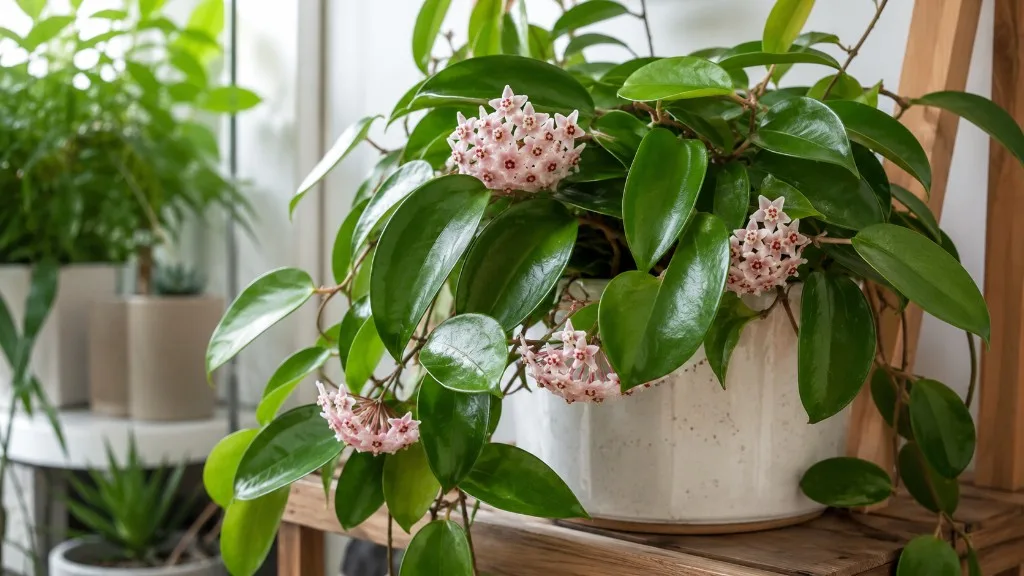
Hoya carnosa, also called wax plant, is a trailing or climbing vine with thick, waxy leaves and — eventually — clusters of star-shaped, sweet-smelling flowers. The entire Hoya genus is non-toxic to dogs, making it one of the safest trailing plants for a home with curious noses.
Hoyas are epiphytic, meaning they grow on trees in nature and prefer to dry out between waterings. They are far more likely to die from overwatering than from neglect. Hang one in a bright window and water it when the leaves start to feel slightly soft — typically every two to three weeks.
Why it works for dog homes: Trailing vines stay overhead in hanging baskets. Thick leaves are not tempting to chew. Entire genus is dog-safe.
Care tip: Do not cut off the long, leafless stems (peduncles) after flowers fade. Hoyas bloom from the same spurs year after year, and cutting them off prevents future flowers.
Common mistake: Overwatering. Hoyas store water in their thick leaves and roots. Water only when the soil is completely dry and the pot feels light.
Avoid this plant if: You want a fast grower. Hoyas are slow and steady — they reward patience, not frequent attention.
Useful care guides:
- Hoya Carnosa care guide
- Hoya Carnosa watering guide
- Hoya Carnosa light guide
- Hoya Carnosa soil guide
- Hoya Carnosa propagation guide
12. Bird’s Nest Fern
Best for: Bathrooms, kitchens, humid rooms
Difficulty: Easy to medium
Light: Low to medium indirect light
Water: Keep soil lightly moist
Safety status: Non-toxic to dogs per ASPCA
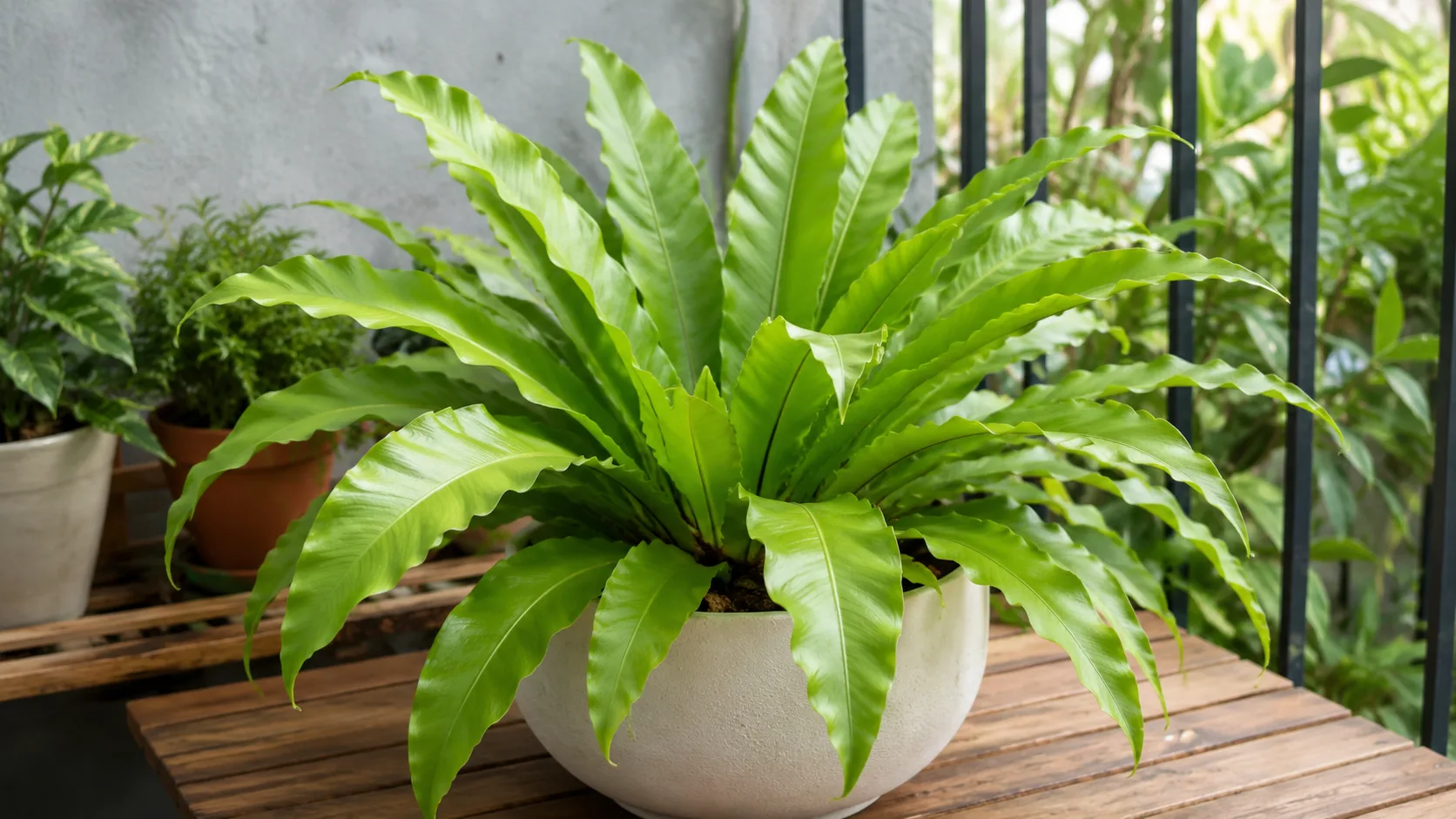
The bird’s nest fern (Asplenium nidus) has broad, rippled, apple-green fronds that emerge from a central rosette — the “nest.” Unlike the feathery Boston fern, it has solid, undivided leaves that make a bold architectural statement. It is non-toxic to dogs and thrives in the kind of indirect light and humidity found in bathrooms and kitchens.
The central rosette is the plant’s crown, and water should never pool there. Water the soil around the edges of the pot, not into the center. A bird’s nest fern with a rotting crown is nearly impossible to save.
Why it works for dog homes: Broad, solid fronds are less likely to shed fragments than feathery ferns. Thrives in elevated bathroom locations.
Care tip: Wipe the broad fronds with a damp cloth every few weeks. Dust buildup blocks light absorption and makes the plant look dull.
Common mistake: Pouring water into the center of the rosette. This causes crown rot. Always water the soil at the edges of the pot.
Avoid this plant if: Your bathroom has no natural light. Low light is fine, but no light at all will kill any fern.
Useful care guides:
- Bird’s Nest Fern care guide
- Bird’s Nest Fern watering guide
- Bird’s Nest Fern light guide
- Bird’s Nest Fern soil guide
- Bird’s Nest Fern problems guide
13. Pilea Peperomioides
Best for: Desks, tabletops, gifting plantlets to friends
Difficulty: Easy
Light: Bright indirect light
Water: When the top inch of soil dries out
Safety status: Non-toxic to dogs per ASPCA
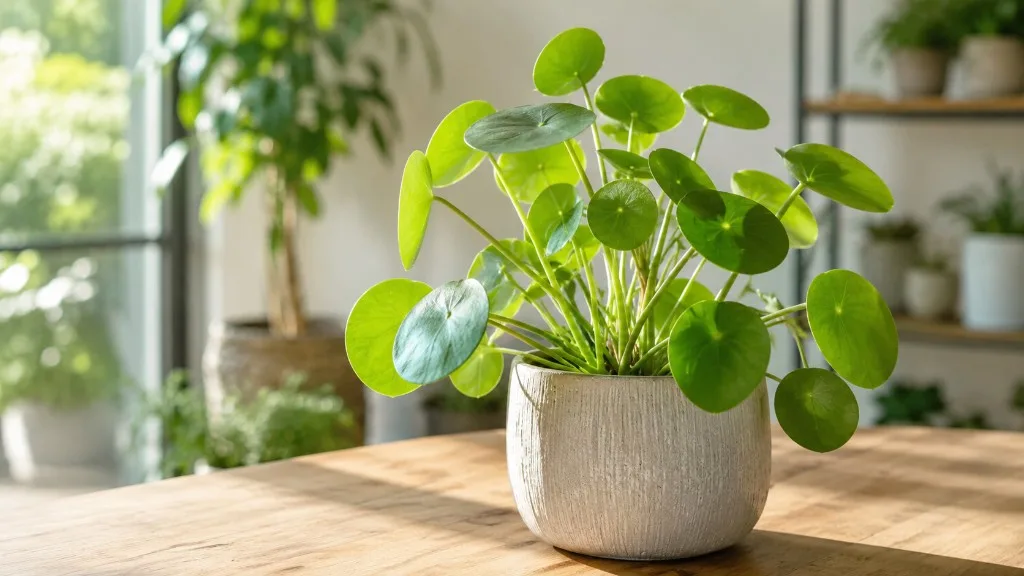
The pilea peperomioides — Chinese money plant, pancake plant, UFO plant — is one of the most recognizable houseplants of the last decade, and it is dog-safe. Its round, flat leaves sit on thin stems that radiate outward from a central trunk, creating a distinctive silhouette.
Pileas produce offsets (pups) that pop up around the base of the mother plant. You can leave them for a fuller look or separate them into new pots — a built-in supply of dog-safe gifts for fellow plant-and-dog households.
Why it works for dog homes: Naturally compact, fits on desks and shelves. Produces offsets you can share with other dog-owner friends.
Care tip: Rotate the pot a quarter turn every week. Pileas lean aggressively toward the light, and without regular rotation they grow lopsided.
Common mistake: Placing a pilea in a dark corner because it looks cute there. These plants need bright indirect light to maintain their round leaf shape. In low light, the leaves grow smaller and the stems stretch.
Avoid this plant if: You want a large floor plant. Pileas stay compact — usually under 18 inches tall.
Useful care guides:
- Pilea Peperomioides care guide
- Pilea Peperomioides watering guide
- Pilea Peperomioides light guide
- Pilea Peperomioides soil guide
- Pilea Peperomioides propagation guide
14. Money Tree
Best for: Floor plants, entryways, living rooms
Difficulty: Easy
Light: Medium to bright indirect light
Water: When the top 2 inches of soil dry out
Safety status: Non-toxic to dogs per ASPCA
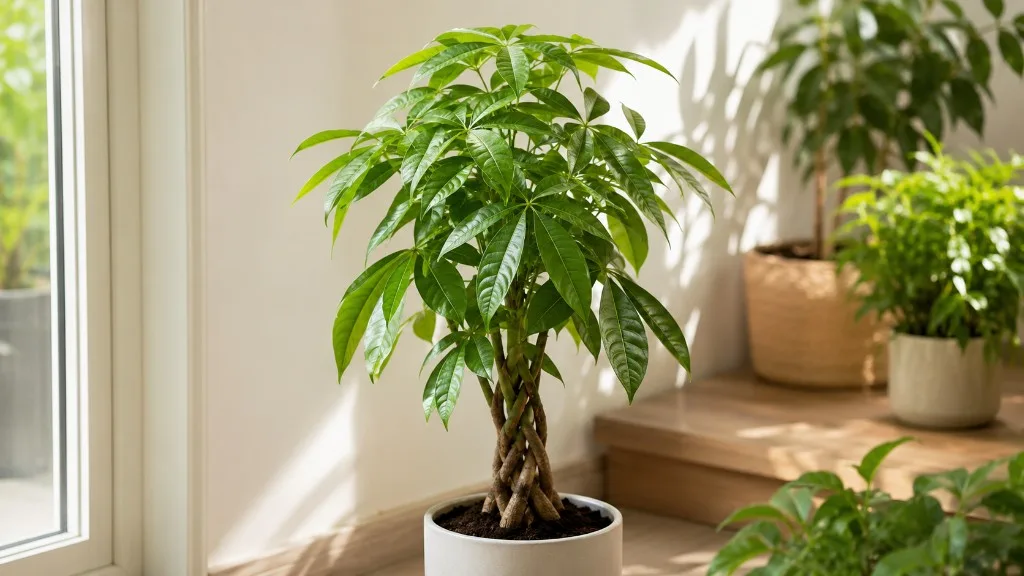
The money tree (Pachira aquatica) is a dog-safe floor plant with a braided trunk and glossy, five-lobed leaves. It grows 3 to 6 feet tall indoors and brings a tropical, canopy-layer feel to a room without the toxicity risk of floor plants like ficus, dieffenbachia, or dracaena.
Money trees are forgiving. They tolerate moderate light, bounce back from missed waterings, and do not drop leaves aggressively. The braided trunk is a decorative feature, not a structural requirement — the plant is typically sold with three to five stems braided together while young.
Why it works for dog homes: Large, non-toxic floor plant that fills the role of toxic alternatives like fiddle-leaf fig or rubber plant.
Care tip: The braided trunk can trap moisture and debris. Check between the braids occasionally for pests or mold, especially if the plant is in a humid room.
Common mistake: Overwatering. Money trees store water in their trunk and roots. If the leaves turn yellow and drop, you are watering too much. Let the top 2 inches of soil dry out before watering again.
Avoid this plant if: Your dog is a digger and the pot sits at floor level. Use a heavy pot and consider covering the soil surface with large stones to discourage excavation.
Useful care guides:
- Money Tree care guide
- Money Tree watering guide
- Money Tree light guide
- Money Tree soil guide
- Money Tree problems guide
15. Peperomia
Best for: Small shelves, variety collecting, low-maintenance greenery
Difficulty: Easy
Light: Medium to bright indirect light
Water: When the soil dries out completely
Safety status: Non-toxic to dogs per ASPCA
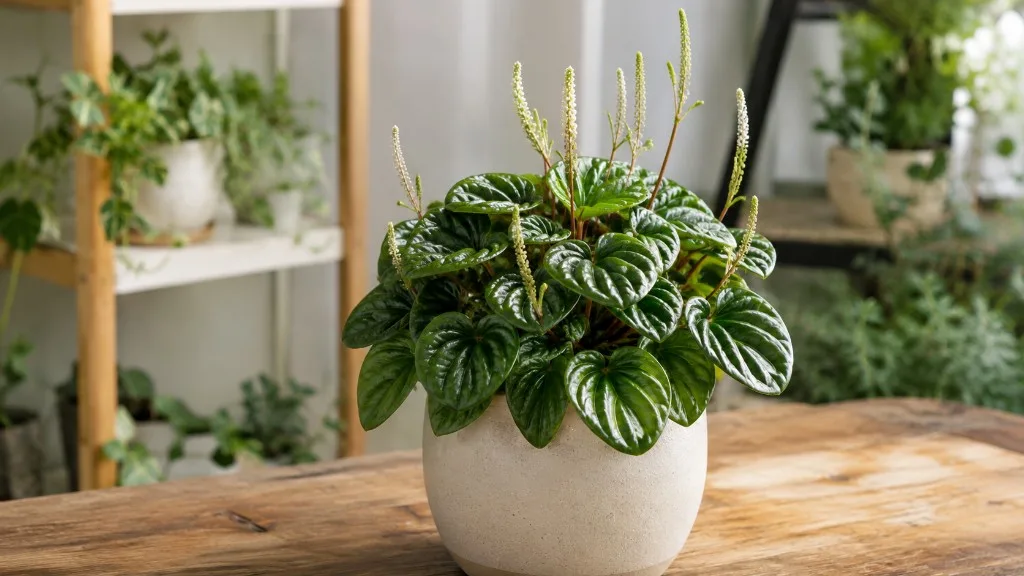
The Peperomia genus contains over a thousand species, and the entire genus is non-toxic to dogs. From the rippled leaves of Peperomia caperata (ripple peperomia) to the watermelon-striped foliage of Peperomia argyreia (watermelon peperomia), you can collect different varieties without ever checking a new toxicity listing.
Peperomias are semi-succulent, storing water in their thick leaves and stems. They prefer to dry out between waterings and do well in moderate indirect light. Their shallow root systems mean they stay small — perfect for shelves, desks, and windowsills above dog level.
Why it works for dog homes: Entire genus is dog-safe. Compact, semi-succulent, hard to kill. You can collect dozens of varieties without toxicity risk.
Care tip: Water from the bottom if possible. Peperomia stems and leaves rot if they stay wet. Bottom-watering keeps the crown dry.
Common mistake: Treating peperomias like tropical foliage plants that need constant moisture. They store water in their leaves. Let the soil dry out fully between waterings.
Avoid this plant if: You prefer one large statement plant over a collection of small ones. Peperomias are at their best in groups.
Useful care guides:
- Peperomia care guide
- Peperomia watering guide
- Peperomia light guide
- Peperomia soil guide
- Peperomia problems guide
Plants to Avoid in Dog Homes
Knowing what not to bring home is as important as knowing the safe options. These are the most common toxic houseplants that appear in homes with dogs, based on the ASPCA toxic plant database and veterinary poison-control reports such as the Merck Veterinary Manual.
| Toxic Plant | Toxic Principle | Common Symptoms in Dogs |
|---|---|---|
| Sago Palm (Cycas revoluta) | Cycasin | Vomiting, diarrhea, liver failure — potentially fatal |
| Pothos (Epipremnum aureum) | Insoluble calcium oxalates | Oral burning, drooling, difficulty swallowing |
| Snake Plant (Dracaena trifasciata) | Saponins | Nausea, vomiting, diarrhea |
| Peace Lily (Spathiphyllum) | Insoluble calcium oxalates | Oral irritation, drooling, vomiting |
| ZZ Plant (Zamioculcas zamiifolia) | Calcium oxalates | Oral irritation, vomiting |
| Aloe Vera | Saponins, anthraquinones | Vomiting, diarrhea, lethargy |
| Jade Plant (Crassula ovata) | Unknown toxin | Vomiting, depression, incoordination |
| Philodendron | Insoluble calcium oxalates | Oral burning, drooling, difficulty swallowing |
| Dieffenbachia (Dumb Cane) | Insoluble calcium oxalates | Severe oral burning, swelling, airway obstruction risk |
| English Ivy (Hedera helix) | Triterpenoid saponins | Vomiting, abdominal pain, hypersalivation |
Sago palm deserves special emphasis: it is severely toxic to dogs, and every part of the plant — seeds, leaves, trunk — contains cycasin, which causes liver failure. The Pet Poison Helpline reports that sago palm ingestion has a 32–50% fatality rate in dogs even with aggressive veterinary treatment. If you have a dog, do not keep a sago palm anywhere on your property, indoors or out.
How to Make Any Plant Safer Around Dogs
Even with non-toxic plants, setup matters. These practical steps reduce the risk of ingestion, injury, and mess.
Elevate everything you can. Shelves, wall-mounted planters, hanging baskets, and tall plant stands put plants above the sniff-and-chew zone. For small and medium dogs, anything above 3 feet is generally safe. For large dogs that counter-surf, go higher or use ceiling hooks.
Use heavy, wide-based pots. Tall plants in narrow pots tip over when a dog bumps them. A wide, heavy ceramic or terracotta pot with a low center of gravity resists tail-knocks and curious noses.
Cover the soil surface. Large river stones, a layer of coarse gravel, or purpose-made soil covers discourage digging. This is especially important if you use slow-release fertilizer pellets, which can look like food to a dog.
Pick up dropped leaves immediately. Even non-toxic leaves can cause vomiting if eaten in quantity. Get in the habit of checking the floor around your plants every evening.
Keep the ASPCA poison control number saved. ASPCA Animal Poison Control: (888) 426-4435. There is a consultation fee, but it is worth having the number accessible before you need it. Also save your regular vet’s emergency contact.
Label your plants. If something does happen and someone else is watching your dog, a plant label with the botanical name helps a vet or poison-control specialist identify the plant quickly. “Green leafy thing from the corner” is not useful in an emergency.
Separate plant and dog zones. If your dog has free run of the house while you are out, consider keeping plants in rooms the dog cannot access. A closed door is the simplest and most reliable safety measure.
How to Choose the Right Dog-Safe Plant
Pick based on your actual home conditions, not just what looks good in a photo.
If you forget to water: Haworthia, burro’s tail, hoya carnosa, and peperomia all prefer drying out between waterings. They will forgive you.
If you have low light: Parlor palm and bird’s nest fern handle dim corners that kill most other plants.
If you want a floor plant: Areca palm and money tree are non-toxic alternatives to toxic floor plants like fiddle-leaf fig, rubber plant, and dracaena.
If you have a puppy or heavy chewer: Stick to hanging or wall-mounted plants only. No floor pots, no low shelves. Spider plant, hoya carnosa, and burro’s tail all thrive in hanging setups.
If you want flowers: Christmas cactus and African violet are the two most reliably dog-safe flowering houseplants. Most other blooming houseplants — amaryllis, kalanchoe, cyclamen, azalea — are toxic.
If you lack humidity: Skip the calatheas, prayer plants, and Boston ferns. Go with haworthia, peperomia, pilea, and hoya — they do fine in average home humidity.
Common Mistakes Dog Owners Make with Houseplants
Trusting “pet-friendly” labels without verification. Nursery tags are not regulated for accuracy on pet safety. Always cross-check the botanical name against the ASPCA database.
Assuming “non-toxic” means “edible.” Non-toxic plants can still cause vomiting, diarrhea, or obstruction if eaten in large amounts. The label means no systemic poison — not a free snack.
Placing toxic plants “out of reach” and assuming that works. Dogs jump, climb, knock things over, and eat dropped leaves. “Out of reach” means inaccessible in a closed room, not just on a higher shelf.
Forgetting about the pot and soil. The plant may be safe while the fertilizer, pesticide, or moldy soil is not. Treat the whole setup — plant, pot, soil, saucer water — as a single risk assessment.
Bringing home a plant without knowing its botanical name. “Tropical foliage” or “assorted fern” on a label tells you nothing. If you cannot identify the plant by its scientific name, you cannot verify its safety.
Conclusion
A home with both plants and a dog is entirely achievable — you just need the right plants in the right places. The 15 plants in this guide are verified non-toxic to dogs by the ASPCA and cover every need from low-light corners to bright hanging displays.
If I had to recommend a starting trio for a first-time dog-plant household: spider plant in a hanging basket (easy, elevated, forgiving), haworthia on a desk (tiny, sculptural, nearly unkillable), and a parlor palm in a dim corner (low-light tolerant, non-toxic, no drama).
The safest approach is verification, elevation, and supervision. Check every plant against the ASPCA database before you buy it. Place it where your dog genuinely cannot reach it. And if your dog is a dedicated plant-eater, stick to hanging plants and closed doors — because no amount of “non-toxic” labeling prevents the mess of a toppled pot and an overconfident Labrador.
For a deeper look at individual plant care, explore our full plant library — every plant page includes a pet safety section with verified toxicity status.
Related Guides
- Pet-Safe Houseplants: Non-Toxic Options for Cats and Dogs — a broader pet-safe guide covering both cats and dogs with a safe-swap table for replacing common toxic plants
- Best Indoor Plants for Beginners — many beginner-friendly plants also happen to be pet-safe; this guide covers the easiest indoor plants to keep alive
- How to Water Indoor Plants the Right Way — overwatering is the number-one killer of pet-safe plants; learn the correct watering method for each type
- Indoor Succulent Care Guide — haworthia and burro’s tail are dog-safe succulents, but many others in this family are toxic; know which is which