Best Indoor Plants for Beginners: 15 Hard-to-Kill Options
Compare 15 beginner-proof indoor plants with real care realities, light needs, watering tips, common mistakes, and pet-safety notes. Pick the right first plant for your home.
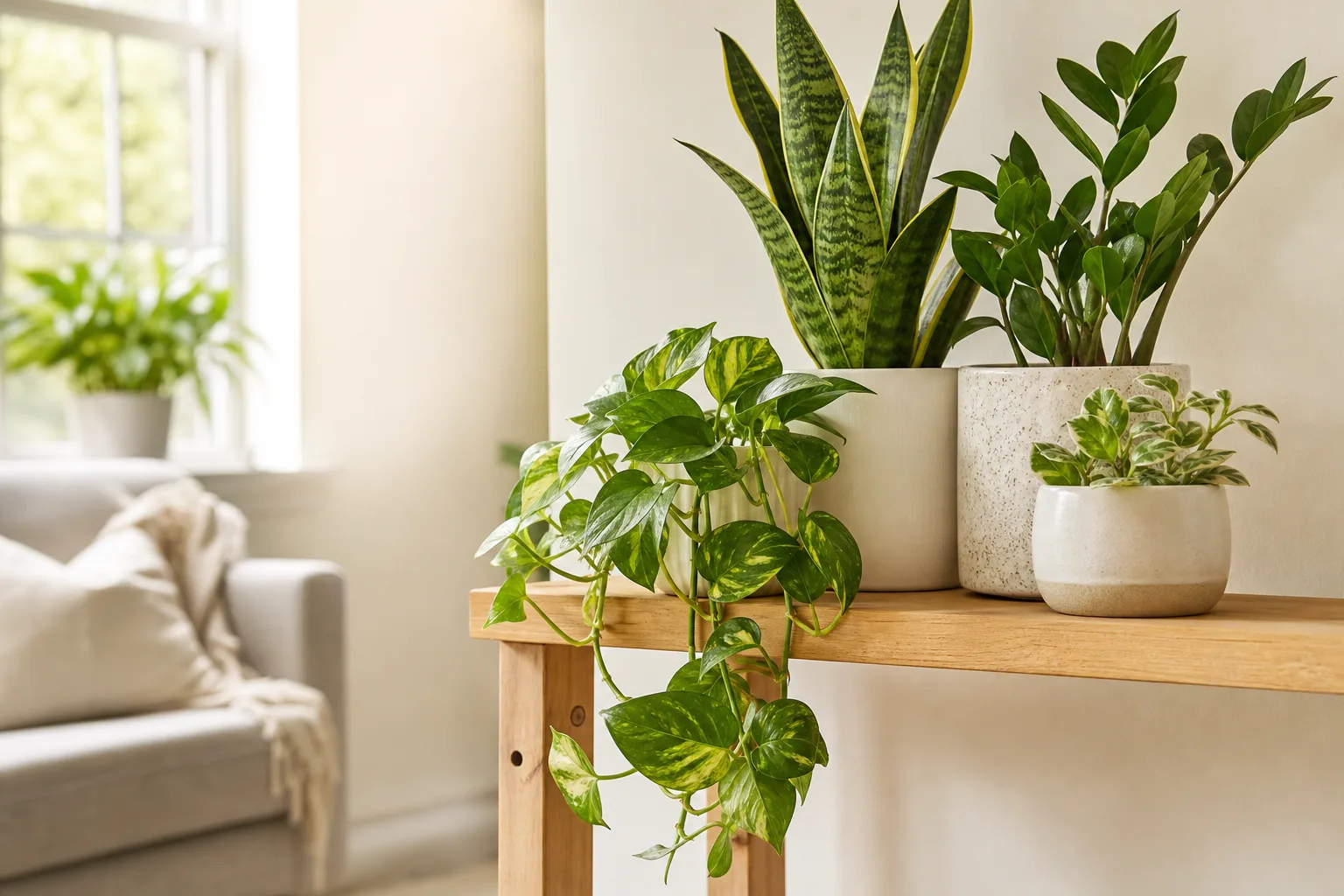
A beginner indoor plant should not feel like a test. It should be a plant that survives a missed watering, stays green in average indoor light, gives clear signals when something is wrong, and lets you build confidence before you move on to anything demanding. The best first plant is rarely the most photographed one on social media. It is the one whose natural survival instincts match the home you actually live in.
No plant is impossible to kill. Every plant listed here will die if it sits in standing water for weeks, gets zero daylight, or is placed directly on a heating vent. What makes these 15 genuinely beginner-friendly is that they tolerate a wider range of conditions than most houseplants, recover better from small mistakes, and communicate their needs clearly before the damage becomes permanent.
For a filterable plant finder, use the Best Large Indoor Plants quick list for statement-sized options. This guide focuses on 15 reliable starter plants with honest care realities: which ones forgive forgetful watering, which ones handle dim corners, which ones are safer around pets, and which common mistakes can still kill even the toughest species.
The RHS lists sansevieria, dracaena, spathiphyllum, and philodendron among their top easy-care houseplant recommendations—all genera represented in this list with deep LeafyPixels care coverage. UF/IFAS Gardening Solutions highlights cast iron plant as a drought-tolerant perennial that thrives in deep shade, reinforcing our selection of genuinely tough species for indoor beginners. (RHS Easy Care Houseplants)
Quick Pick: Best Beginner Plant for Your Situation
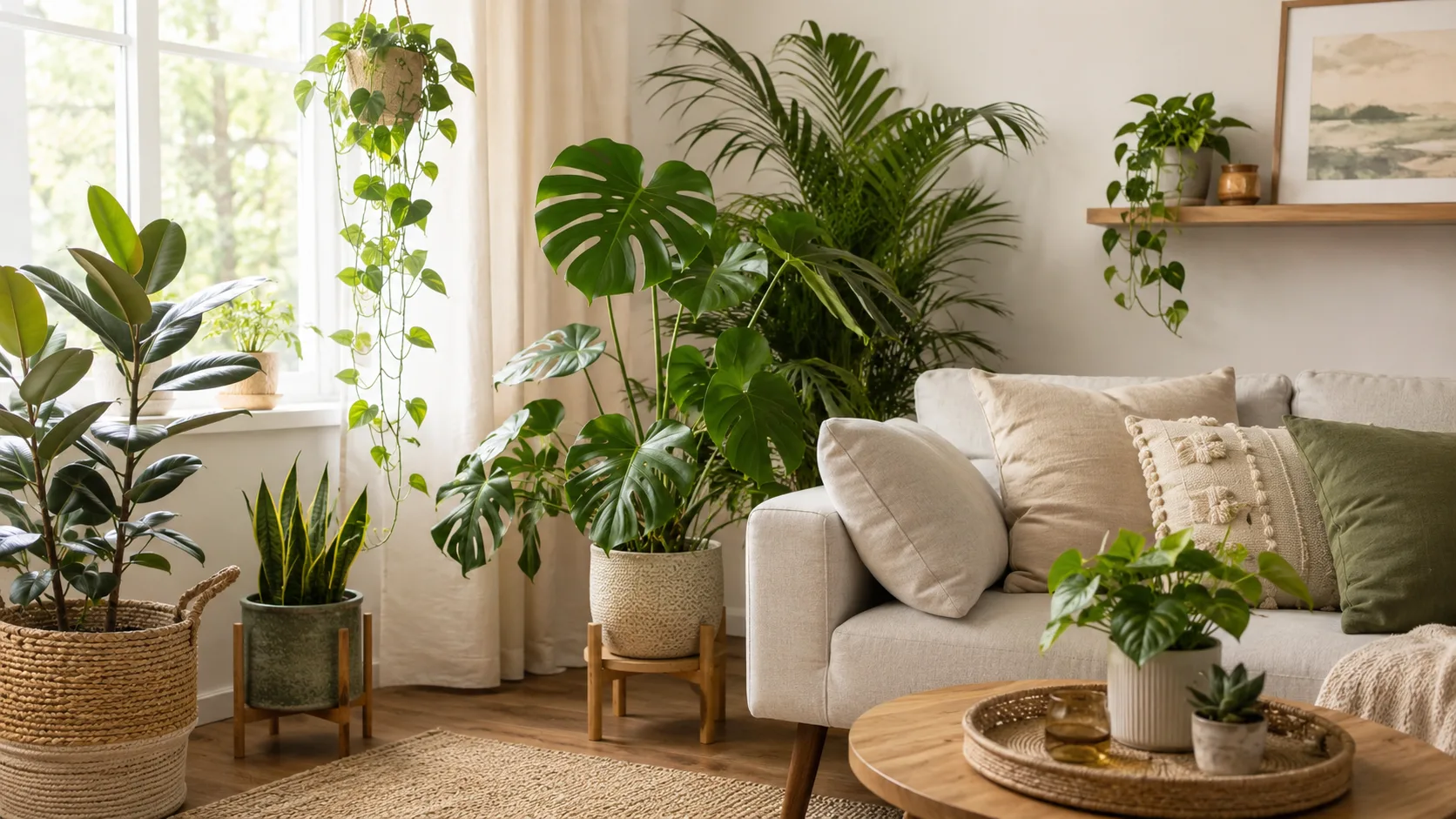
For the most forgiving plant period, choose snake plant or ZZ plant. Both handle low light, missed waterings, and normal indoor humidity without fuss. Snake plant grows vertically and fits almost anywhere. ZZ plant stays glossy and compact even in dim rooms where other plants slowly decline.
For a trailing plant that teaches you to read its signals, choose pothos or heartleaf philodendron. Both visibly droop when thirsty and perk back up after watering—a built-in lesson in reading your plant. They grow fast enough to feel rewarding but rarely die overnight from a small mistake.
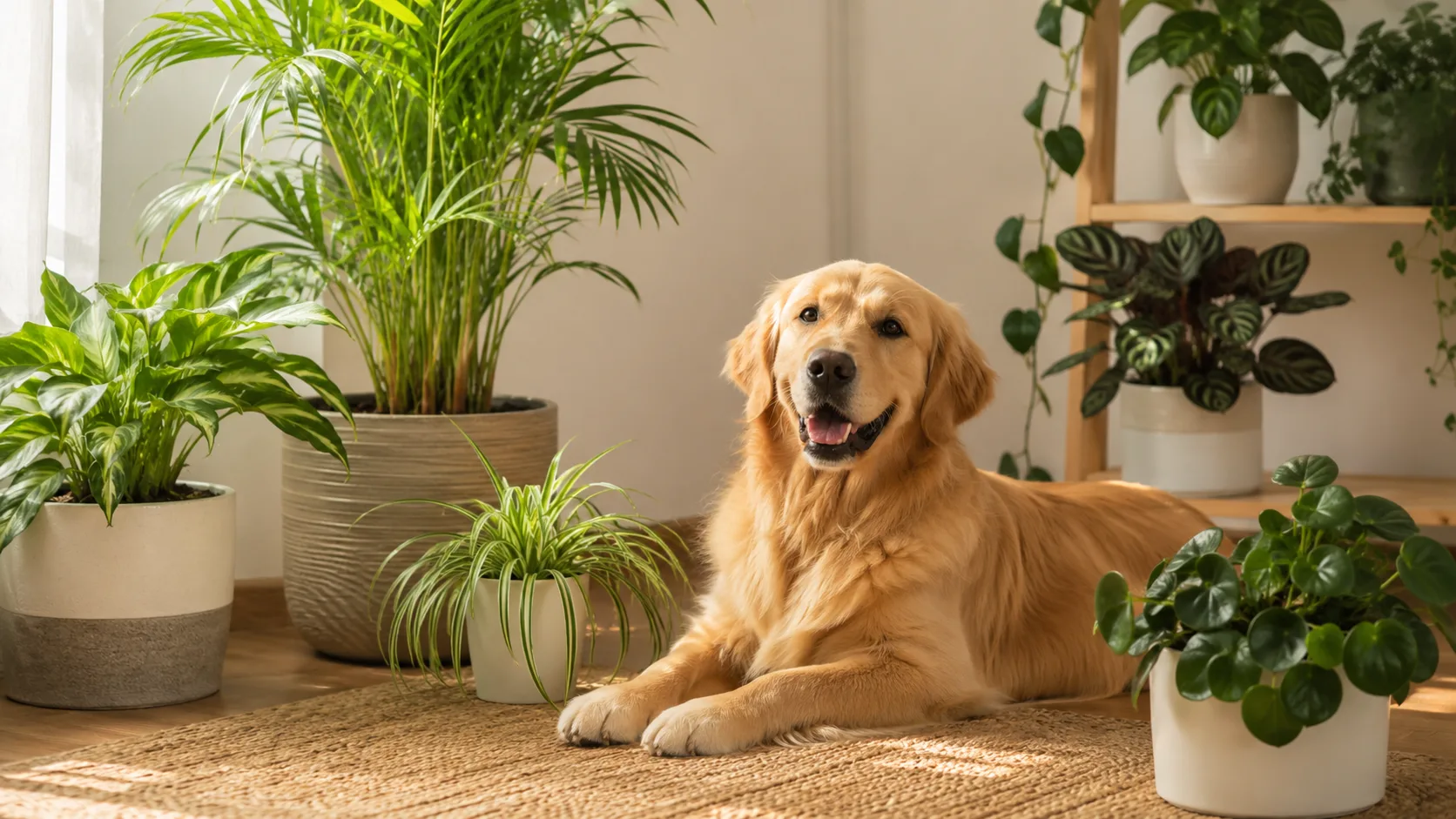
For pet-aware homes, start with spider plant or parlor palm. Spider plant produces offsets you can propagate into free new plants. Parlor palm stays compact and does well in medium indirect light. Both are safer choices around cats and dogs than many popular alternatives, though no plant should be treated as pet food.
For a desk or shelf plant that asks almost nothing, choose ZZ plant, aglaonema, or cast iron plant. These three tolerate low light, irregular watering, and average humidity. Aglaonema adds color with silver, pink, or red leaf markings while staying compact.
For a larger statement plant that is still beginner-friendly, choose rubber plant, corn plant, or dracaena marginata. They give you height and presence without the sensitivity of a fiddle leaf fig. Rubber plant has thick glossy leaves that forgive occasional neglect. Dracaena marginata stays slim and sculptural in tight corners.
What “Beginner-Friendly” Actually Means
A beginner-friendly plant is not just a plant labeled “easy.” It is a plant that meets five practical criteria most first-time owners actually need:
Missed-watering tolerance. If you forget for an extra week, the plant should wilt or droop visibly rather than rot silently. Plants that give clear thirst signals are easier to learn from than plants that look fine until the roots are dead.
Light flexibility. The plant should stay healthy in the light you actually have—not the south-facing sunroom you might build someday. Most beginner plants listed here work in medium to bright indirect light, and several tolerate genuinely dim corners.
Normal indoor humidity tolerance. If the plant needs a humidifier, pebble tray, or daily misting to avoid brown tips year-round, it is not a beginner plant for most homes.
Recovery from small mistakes. A beginner plant should bounce back after one underwatering or a few weeks in slightly weaker light. If a single mistake triggers an irreversible decline, the plant is too demanding for a first-time owner.
Simple watering logic. The care routine should be something like “water when the top two inches of soil are dry” rather than a calendar-dependent, season-adjusted, humidity-calibrated schedule.
University of Georgia Extension guidance on indoor plants reinforces that light is usually the first limiting factor indoors. Watering problems often follow because a plant in too little light uses water slowly, leaving soil wet for longer and increasing root rot risk. Start by matching the plant to your light, and the watering rhythm becomes easier to get right. (University of Georgia Extension Indoor Plants)
How We Selected These 15
These 15 plants were chosen for a balance of forgiveness, nursery availability, indoor practicality, and strong LeafyPixels care coverage. Each plant on this list has a full species hub with watering, light, soil, propagation, and problems guides so you can go deeper once you pick your plant.
Plants that are beautiful but demanding—fiddle leaf fig, calathea, maidenhair fern, alocasia—do not appear on this list even though they are popular. A plant that drops leaves every time you move it or browns at the edges when your humidity drops 5 percent is not a beginner plant, no matter how photogenic.
Philodendron hederaceum gets the slot over flashier philodendron varieties because tolerance matters more than variegation for a first plant. Golden pothos earns its place over rarer pothos cultivars because the standard form is more forgiving of lower light than heavily variegated types. Corn plant represents the dracaena family alongside dracaena marginata because they grow well under similar care but offer different silhouettes.
The 15 Best Beginner Indoor Plants
1. Snake Plant
Beginner rating: Very easy
Best for: forgetful waterers, low-light rooms, bedrooms, offices, tight corners
Light: Low to bright indirect; tolerates some direct sun
Water: Let soil dry out completely between waterings
Main beginner mistake: Watering too often in winter when the plant is barely growing
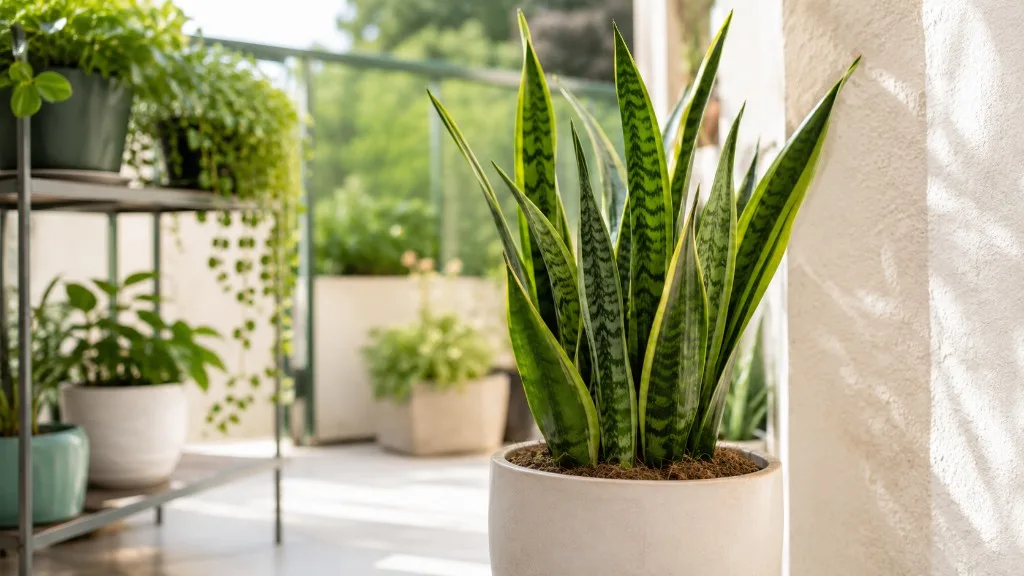
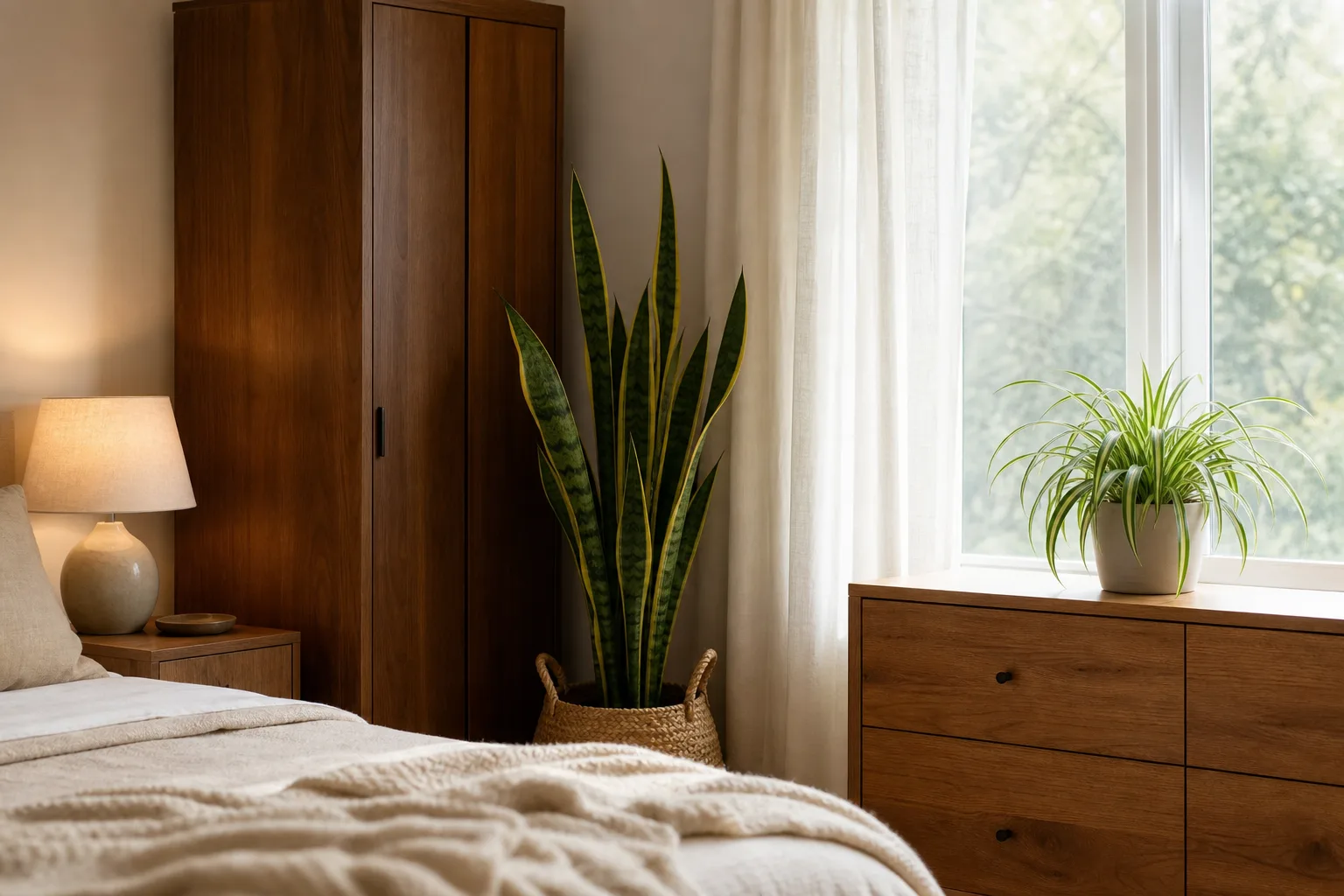
Snake plant is arguably the hardest houseplant to kill by accident. It stores water in its thick upright leaves and uses very little while sitting in dim light. You can forget it for three weeks, and it will look exactly the same. Its vertical growth habit makes it useful on narrow shelves, beside furniture, or on a desk where horizontal space is tight.
The RHS lists sansevieria as tolerant of some drought, happy in sun or part-shade, and able to grow in low humidity with well-drained compost. If your snake plant starts looking wrinkled or the leaves feel thin and flexible instead of firm, you have underwatered significantly—but it usually recovers. (RHS Easy Care Houseplants)
Care tip: Use a well-draining cactus or succulent mix. Standard potting soil stays wet too long for snake plant roots. Watch out for: Overwatering in winter kills snake plants faster than anything else. When in doubt, do not water. Pet safety: Toxic to cats and dogs per ASPCA. Keep out of reach in pet homes.
Useful care guides:
- Snake plant care guide
- Snake plant watering guide
- Snake plant light guide
- Snake plant problems guide
2. ZZ Plant
Beginner rating: Very easy
Best for: very dim rooms, offices with no windows, people who travel often
Light: Low to bright indirect
Water: Every 2–4 weeks; let soil dry completely
Main beginner mistake: Watering on a schedule instead of checking the soil first
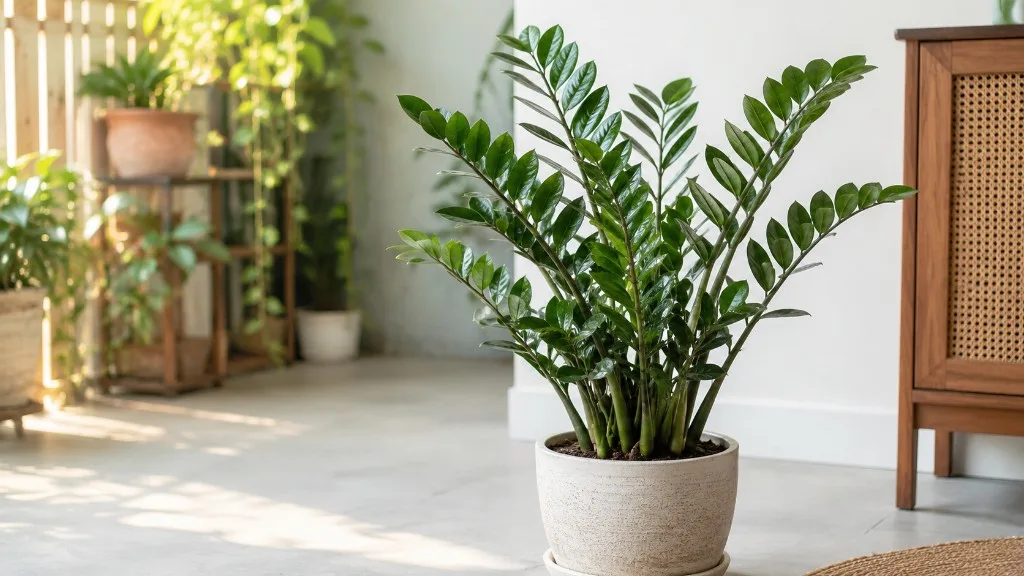
ZZ plant survives in conditions that would kill most other houseplants in a month. Its thick potato-like rhizomes store water underground, and its waxy leaves resist moisture loss. It stays glossy and green in fluorescent office light and can go weeks without attention. If you travel regularly or simply do not want to think about your plant very often, ZZ plant is the answer.
A ZZ plant in very low light may grow slowly or not at all, but unlike most plants, it will not stretch into a leggy mess trying to reach light. It simply pauses and waits for better conditions.
Care tip: ZZ plant in dim light might need water only once a month. Check the soil depth before reaching for the watering can. Watch out for: Drooping or yellowing stems almost always mean too much water, not too little. Let the soil dry fully and check for root rot. Pet safety: Toxic to cats and dogs per ASPCA. Keep out of reach in pet homes.
Useful care guides:
3. Pothos
Beginner rating: Very easy
Best for: shelves, hanging baskets, desks, anyone who wants a fast-growing trailing plant
Light: Low to bright indirect; avoid harsh direct sun
Water: When the top inch or two of soil dries
Main beginner mistake: Placing in a dark corner and expecting the same growth as a bright room
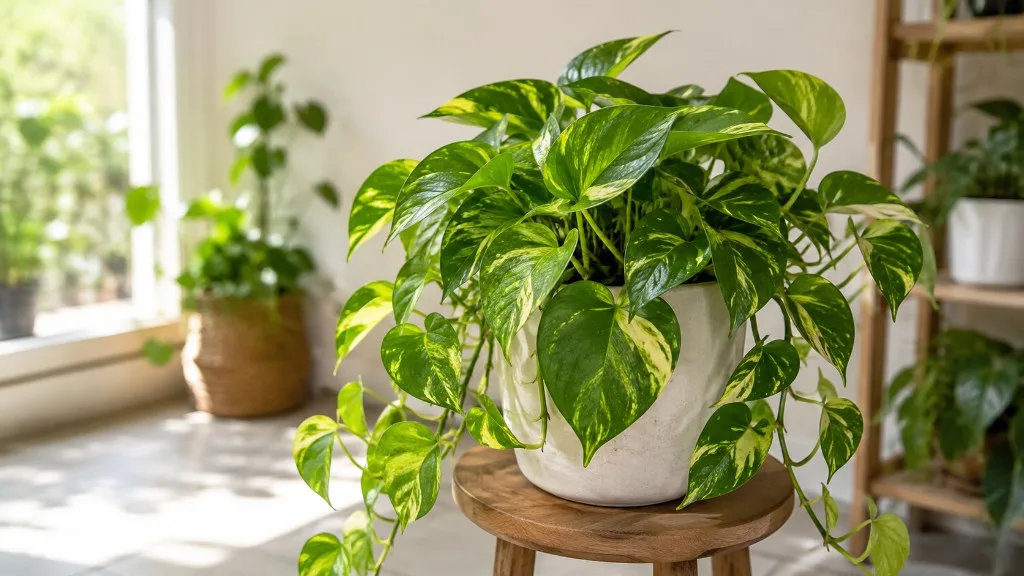
Pothos is one of the best beginner plants because it communicates clearly. When it needs water, the leaves go slightly soft and droopy. Water it, and within hours the leaves firm back up. That visible feedback loop makes pothos an ideal teacher—you learn to read your plant without killing it in the process.
It grows fast in good light, trails beautifully from shelves or hanging pots, and roots easily from stem cuttings in water, making it the easiest plant to propagate and share. If a stem gets too long or a section looks ragged, cut it back. The plant will push new growth from the cut point.
Care tip: The standard golden pothos is more forgiving of lower light than heavily variegated types like marble queen or snow queen. Start with golden and expand from there. Watch out for: Pothos can get root rot if it sits in soggy soil. A pot with no drainage hole will eventually kill it. Pet safety: Toxic to cats and dogs per ASPCA. Hang it up high in pet homes.
Useful care guides:
- Pothos care guide
- Pothos watering guide
- Pothos light guide
- Pothos propagation guide
- Pothos problems guide
4. Spider Plant
Beginner rating: Very easy
Best for: shelves, hanging baskets, pet-aware homes, anyone who wants free baby plants
Light: Medium to bright indirect
Water: When the top inch of soil dries
Main beginner mistake: Letting the soil go bone dry for too long, which browns leaf tips
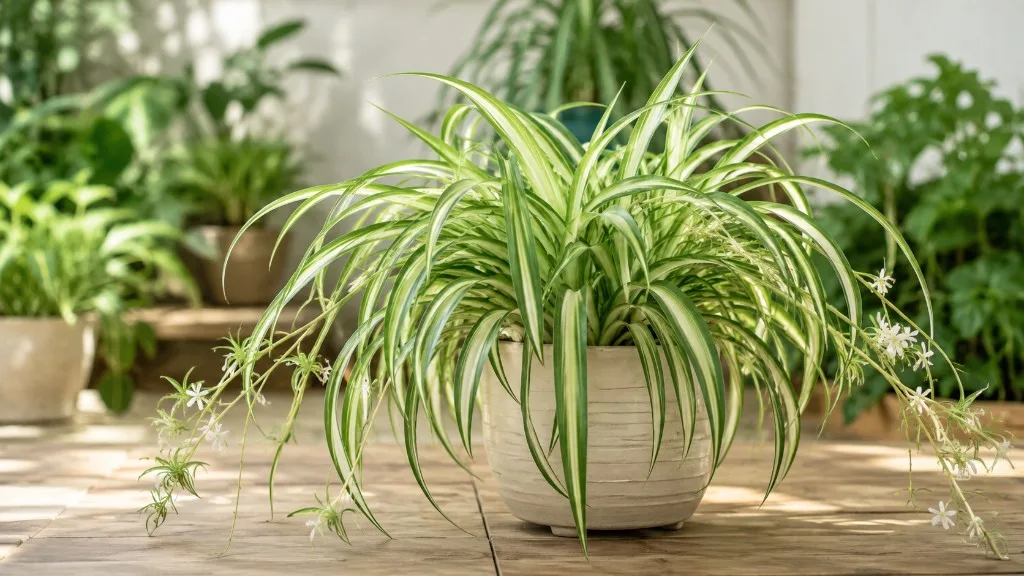
Spider plant is forgiving, fast-growing, and one of the most satisfying beginner plants because it rewards you with offsets—small plantlets dangling from long stems that you can snip off and pot up into free new plants. It is also among the safer choices for homes with cats and dogs who may nibble.
Spider plant does best in medium to bright indirect light. In dimmer rooms, growth slows and the leaves may lose their stripe definition. If leaf tips turn brown, the usual culprits are underwatering, dry air, or fluoride in tap water. Switching to rainwater or filtered water can help.
Care tip: Brown tips are cosmetic, not fatal. Trim the brown edges with clean scissors and adjust watering or water quality. Watch out for: Spider plants can become root-bound quickly. If the plant stops producing offsets or the soil dries out within a day of watering, it may need a slightly larger pot. Pet safety: Generally considered non-toxic and safe for cats and dogs.
Useful care guides:
- Spider plant care guide
- Spider plant watering guide
- Spider plant light guide
- Spider plant propagation guide
- Spider plant problems guide
5. Heartleaf Philodendron
Beginner rating: Very easy
Best for: shelves, hanging baskets, desks, people who want a forgiving trailing plant
Light: Low to bright indirect
Water: When the top inch or two of soil dries
Main beginner mistake: Confusing it with pothos and treating both identically—philodendron prefers slightly more consistent moisture
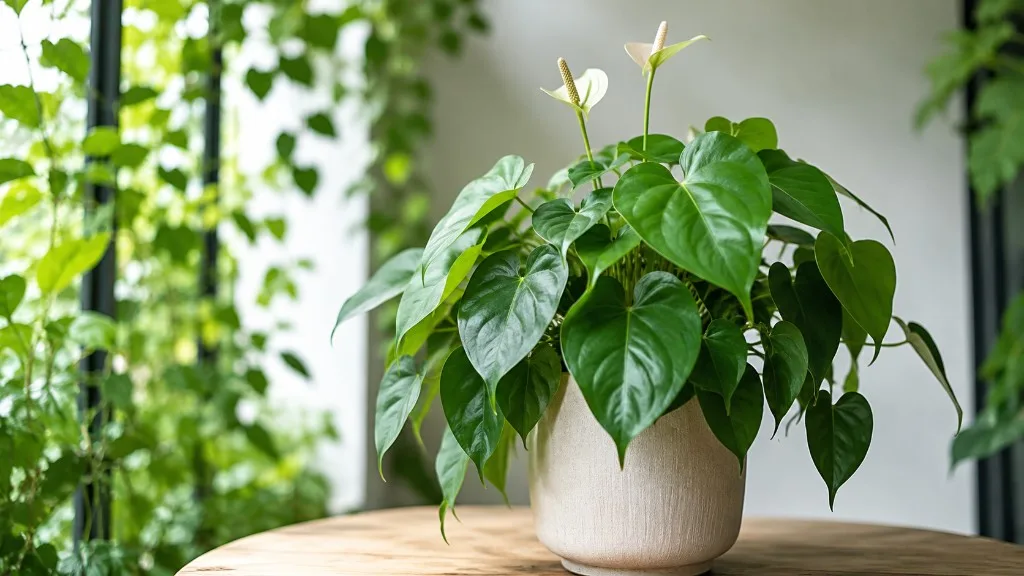
Heartleaf philodendron is the most forgiving member of the philodendron family for beginners. The RHS lists philodendron as tolerant of lower relative humidity, happy in shade or brighter light, unfussy about average room temperatures, and able to handle occasional underwatering. It trails or climbs, roots easily in water, and rarely throws a tantrum when moved. (RHS Easy Care Houseplants)
Its heart-shaped leaves stay a rich dark green in most light conditions. If the leaves start looking pale or small, move the plant closer to a window. Vining stems can be trimmed back anytime; the plant will branch from the cut.
Care tip: Wipe the leaves with a damp cloth every few weeks. Dust blocks light on broad leaves and can slow growth in dim rooms. Watch out for: Overwatering causes yellow lower leaves. Let the top inch of soil dry between waterings. Pet safety: Toxic to cats and dogs per ASPCA. Keep trailing stems out of reach.
Useful care guides:
- Heartleaf philodendron care guide
- Philodendron watering guide
- Philodendron light guide
- Philodendron propagation guide
- Philodendron problems guide
6. Peace Lily
Beginner rating: Easy
Best for: medium-to-low light rooms, offices, people who want a flowering plant
Light: Low to bright indirect
Water: When the top inch of soil dries or the leaves start to droop slightly
Main beginner mistake: Waiting until the plant collapses dramatically before watering
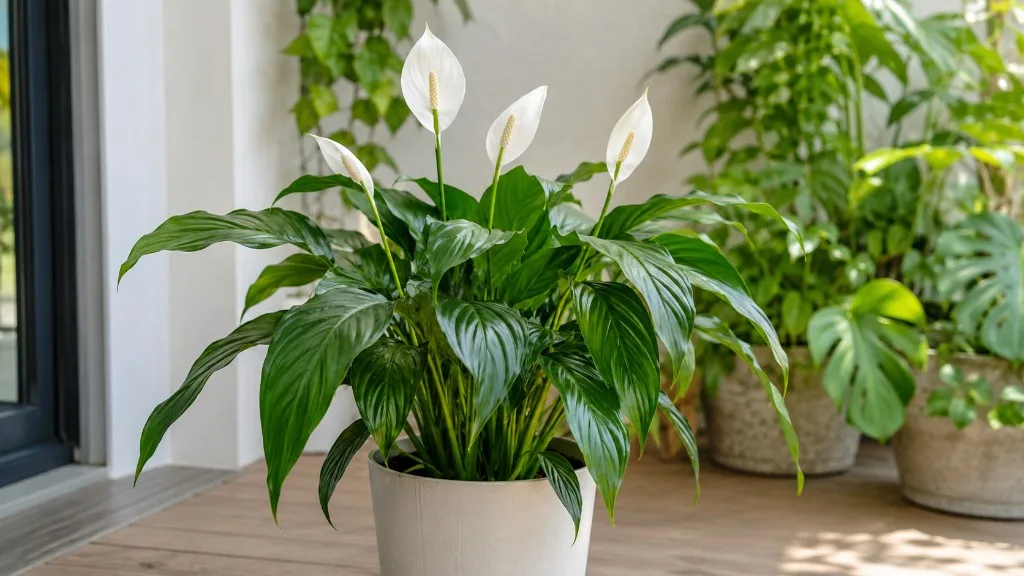
Peace lily is one of the few flowering plants that handles low light, which makes it a popular beginner choice. The RHS notes that spathiphyllum tolerates bright light through to full shade, grows in average room temperatures, and handles lower relative humidity. Its white spathes can appear multiple times a year in good light. (RHS Easy Care Houseplants)
Peace lily communicates thirst more dramatically than pothos—it droops completely when dry, then recovers within hours of watering. But letting it collapse repeatedly stresses the plant over time and can cause permanent brown leaf tips. Water just before or right as the droop begins, not hours after the plant has gone limp.
Care tip: Peace lily is sensitive to chlorine and fluoride in tap water. Brown tips that keep appearing despite good watering usually trace to water quality, not care mistakes. Watch out for: Overwatering is still the leading cause of peace lily decline. Soggy soil causes yellowing leaves and root rot faster than underwatering. Pet safety: Toxic to cats and dogs per ASPCA. Keep out of reach.
Useful care guides:
7. Aglaonema
Beginner rating: Easy
Best for: low-light rooms, desks, shelves, people who want color without complexity
Light: Low to medium indirect
Water: When the top inch or two of soil dries
Main beginner mistake: Overwatering in winter when growth slows
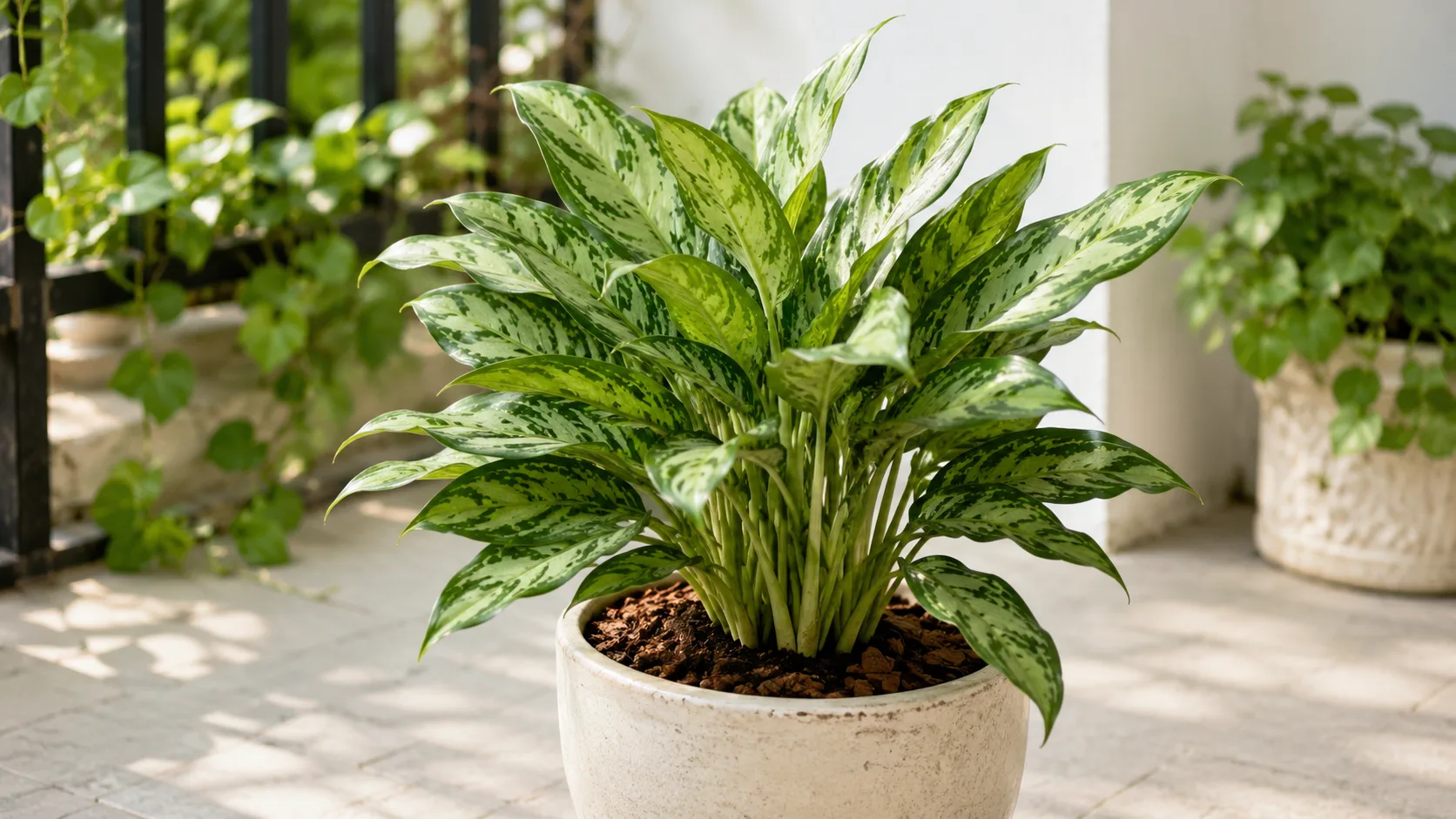
Aglaonema earns a spot on this list because it stays compact, handles low light, and adds genuine color to dim corners through silver, pink, red, or cream leaf markings. Unlike flowering plants that need strong light to bloom, aglaonema’s color is built into the foliage itself and holds in lower light than almost any other colorful plant.
It grows slowly, which is an advantage for a desk or shelf plant—you will not need to repot or prune it often. The main risk with aglaonema is overwatering in low light, where the soil stays wet for too long and roots begin to rot.
Care tip: Aglaonema in very low light needs even less water. Let the soil dry further down—two inches or more—before watering again. Watch out for: Cold drafts and temperatures below 60°F can damage aglaonema leaves. Keep it away from drafty windows in winter. Pet safety: Toxic to cats and dogs per ASPCA. Keep on a high shelf or desk in pet homes.
Useful care guides:
8. Cast Iron Plant
Beginner rating: Very easy
Best for: very dim rooms, hallways, people who have killed every plant they have owned
Light: Low to medium indirect; tolerates deep shade
Water: When the top two inches of soil dries
Main beginner mistake: Treating it like a high-light plant and watering too often
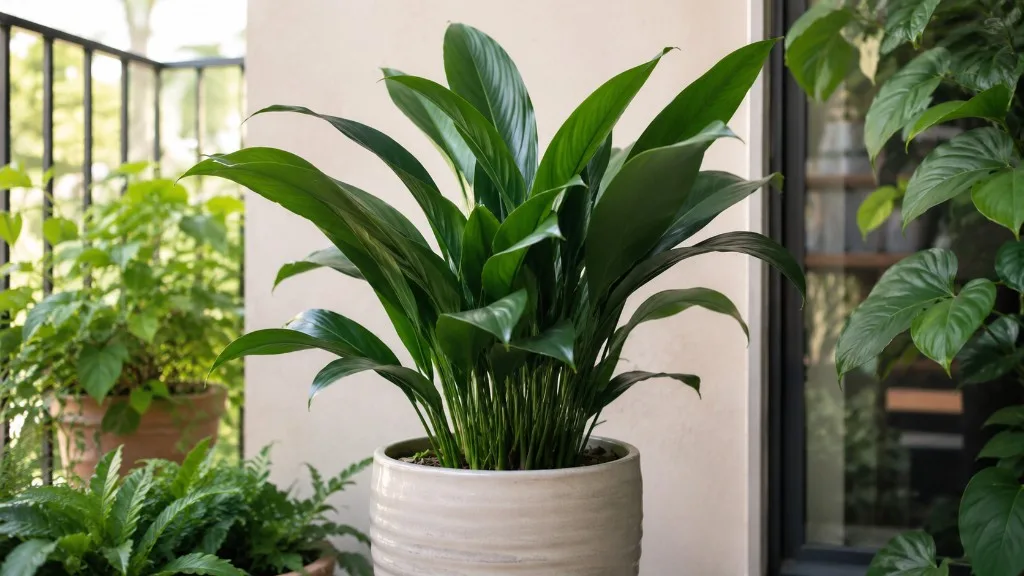
Cast iron plant lives up to its name. UF/IFAS Gardening Solutions describes it as a drought-tolerant perennial that thrives in deep shade—not just tolerates it, but actually thrives. Its broad dark green leaves stay healthy in conditions that make most houseplants decline, which is why it earned a spot on UF/IFAS’s tough plants list. (UF/IFAS Tough Plants)
Growth is slow, so buy the size you want rather than expecting a small plant to fill out quickly. The trade-off for that toughness is patience—a cast iron plant may produce only a few new leaves each year, and each one will last a long time if conditions stay reasonable.
Care tip: Wipe leaves with a damp cloth monthly. Cast iron leaves collect dust readily in low-traffic spaces. Watch out for: The main way to kill cast iron plant is soggy soil. In deep shade, it uses water slowly, so check the soil depth before watering. Pet safety: Generally considered non-toxic and safe for cats and dogs.
Useful care guides:
- Cast iron plant care guide
- Cast iron plant watering guide
- Cast iron plant light guide
- Cast iron plant problems guide
9. Aloe Vera
Beginner rating: Easy
Best for: sunny windowsills, forgetful waterers, people who want a useful plant
Light: Bright indirect to direct sun
Water: Let soil dry out completely between waterings
Main beginner mistake: Watering weekly like a tropical plant instead of treating it like a succulent
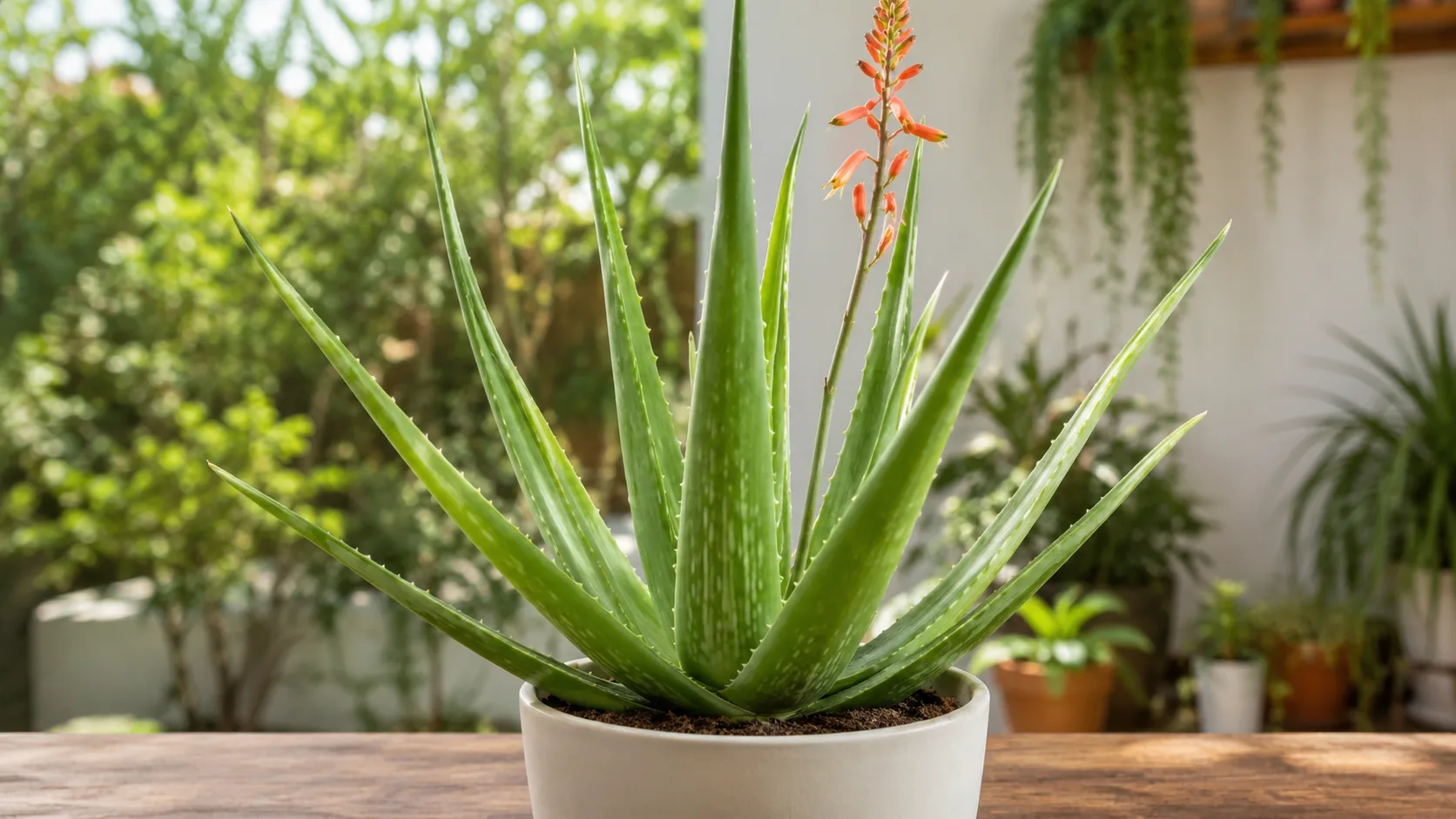
Aloe vera is a succulent that stores water in its thick leaves. It needs bright light to stay compact and firm. In dim rooms, leaves stretch and become floppy. On a sunny windowsill, it stays tight and may produce offsets—small pups you can separate and pot up into new plants.
The gel inside aloe leaves has been used for generations as a topical skin soother for minor burns, though this is not a substitute for proper first aid. In plant-care terms, the more useful point is that aloe gives unmistakable signals: firm upright leaves mean it is healthy; thin, curled, or brown-tipped leaves mean it needs water or more light.
Care tip: A terracotta pot helps aloe dry out faster than plastic, which reduces rot risk for beginners who tend to overwater. Watch out for: Aloe in low light rots easily because it cannot use the water you give it. The plant must be in bright light for the “water rarely” approach to work. Pet safety: Toxic to cats and dogs per ASPCA if ingested. Keep on a high windowsill in pet homes.
Useful care guides:
- Aloe vera care guide
- Aloe vera watering guide
- Aloe vera light guide
- Aloe vera propagation guide
- Aloe vera problems guide
10. Jade Plant
Beginner rating: Easy
Best for: sunny windowsills, desks, people who want a long-lived compact plant
Light: Bright indirect; tolerates some direct morning sun
Water: Let soil dry out completely between waterings
Main beginner mistake: Overwatering, especially when the plant is in a cachepot with no drainage
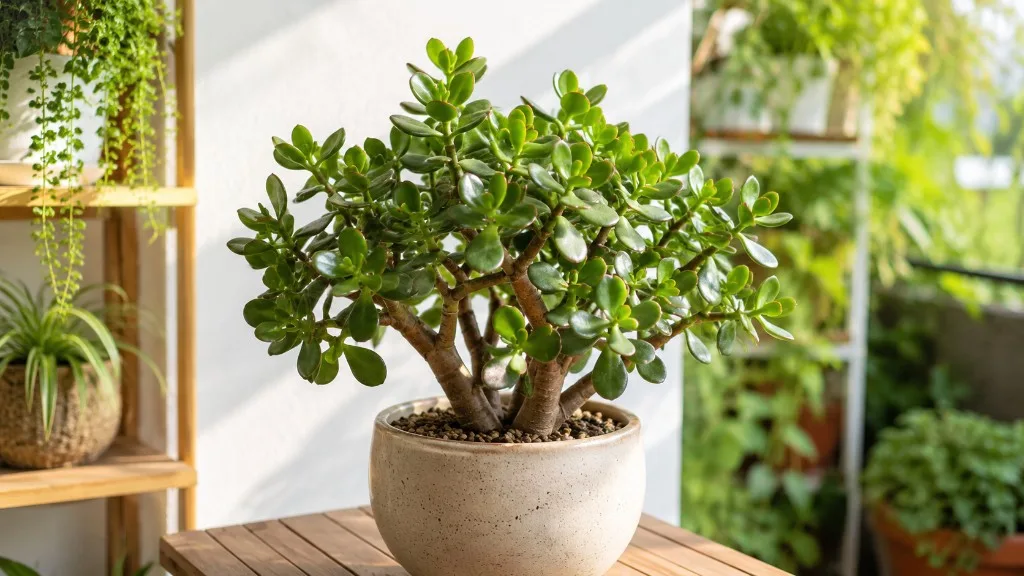
Jade plant looks like a miniature tree with thick oval leaves and woody stems. It grows slowly and can live for decades with minimal care, making it one of the most satisfying beginner plants for patient owners. In bright light, the leaf edges may develop a reddish tint.
The main reason jade plants fail for beginners is overwatering in low light. Like aloe, jade stores water in its leaves and needs the soil to dry fully between drinks. Watering it every week will rot the roots within a few months. In bright light, you may water every 2–3 weeks. In dimmer light, once a month may be enough.
Care tip: If jade leaves feel squishy or translucent, you have overwatered. Stop watering, move to brighter light, and let the soil dry completely. Watch out for: A jade plant in a pot with no drainage hole is almost guaranteed to rot. Drainage is non-negotiable for succulents. Pet safety: Toxic to cats and dogs per ASPCA. Keep out of reach.
Useful care guides:
- Jade plant care guide
- Jade plant watering guide
- Jade plant light guide
- Jade plant propagation guide
- Jade plant problems guide
11. Parlor Palm
Beginner rating: Easy
Best for: medium-to-low light rooms, pet-aware homes, desks, tables
Light: Medium to bright indirect; tolerates low light
Water: When the top inch or two of soil dries
Main beginner mistake: Letting the soil go bone dry, which browns the frond tips permanently
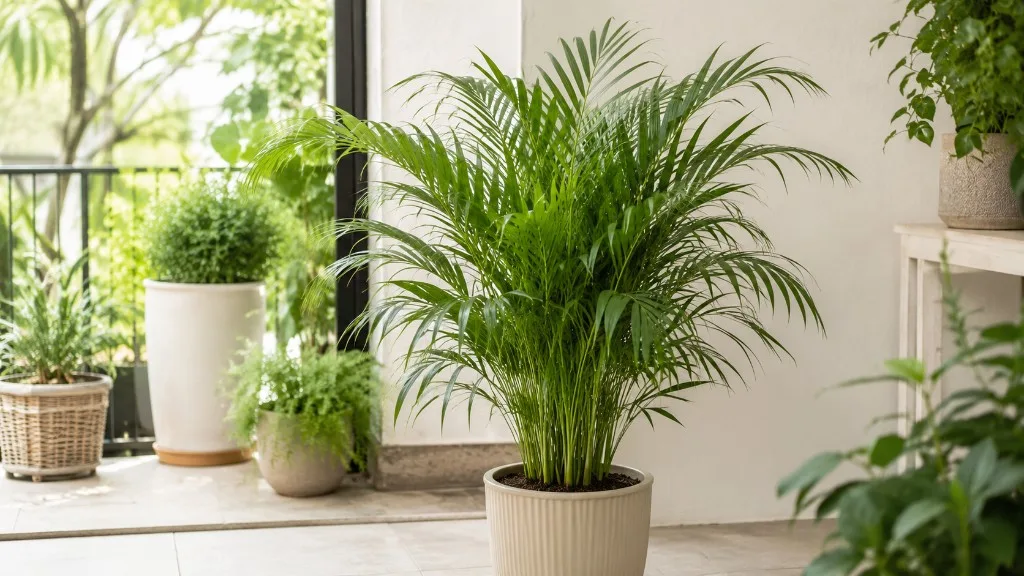
Parlor palm is a classic beginner palm that stays compact and manageable—rarely exceeding 3–4 feet indoors. It produces delicate fronds that add soft texture to a desk or tabletop without demanding the space or light of larger palms like areca or kentia.
It is also one of the safer choices for pet households. Parlor palm is generally considered non-toxic to cats and dogs, making it useful in homes where a trailing pothos or philodendron would be a risk. The main vulnerability is dry soil—parlor palm does not tolerate being forgotten as long as a snake plant or ZZ plant. If the soil dries out completely, the frond tips brown and do not recover.
Care tip: Keep parlor palm away from heating vents and drafty windows. Dry moving air is its main enemy indoors. Watch out for: Spider mites can colonize palm fronds in dry indoor air. Inspect leaves and stems when you water. Pet safety: Generally considered non-toxic and safe for cats and dogs.
Useful care guides:
- Parlor palm care guide
- Parlor palm watering guide
- Parlor palm light guide
- Parlor palm problems guide
12. Dracaena Marginata
Beginner rating: Easy
Best for: narrow spaces, corners, beginners who want height, offices
Light: Low to bright indirect
Water: When the top two inches of soil dries
Main beginner mistake: Using tap water with high fluoride, which causes brown streaks on leaves
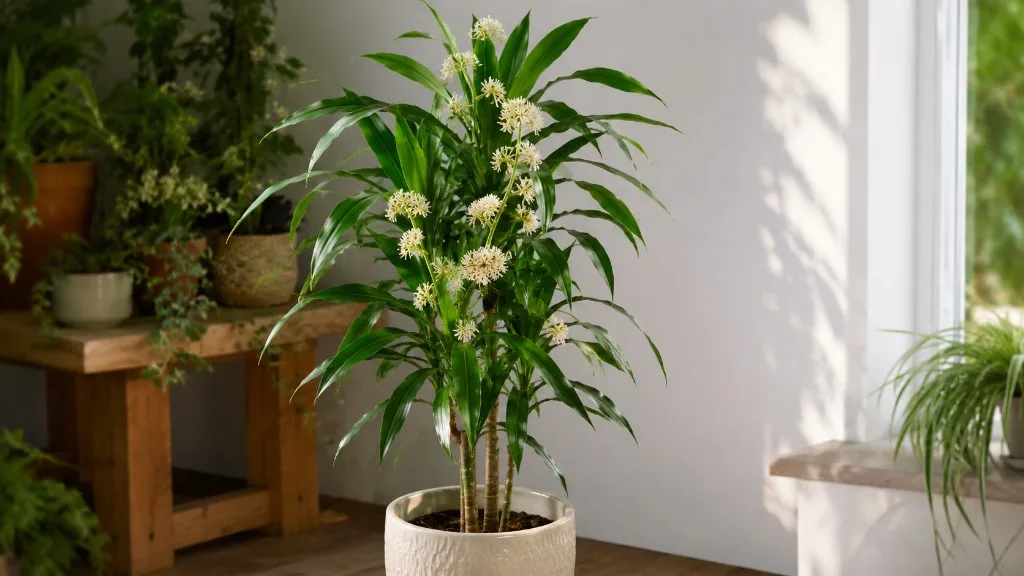
Dracaena marginata gives you height and sculptural form without the width of a rubber plant or the sensitivity of a fiddle leaf fig. Its slim canes with tufted strappy leaves make it one of the most space-efficient tall plants available. It slots into narrow corners, beside desks, and in hallways where broader plants would block the path.
The RHS places dracaena in their easy-care category, noting it does best in bright light but tolerates some shade, handles low relative humidity, and grows in average room temperatures—with the specific warning about fluoride sensitivity in tap water. If your dracaena develops brown streaks rather than brown tips, switch to rainwater or filtered water. (RHS Easy Care Houseplants)
Care tip: Dracaena marginata can lose lower leaves naturally as it grows, exposing bare canes with leaf tufts at the top—this is its normal growth habit, not a problem. Watch out for: Overwatering is lethal. In low light, let the soil dry further between waterings. Pet safety: Toxic to cats and dogs per ASPCA. Keep out of reach in pet homes.
Useful care guides:
13. Rubber Plant
Beginner rating: Easy to medium Best for: beginners who want a larger glossy plant, medium-to-bright rooms Light: Medium to bright indirect Water: When the top inch or two of soil dries Main beginner mistake: Buying a variegated variety for a dim room—ruby and tineke types need more light than the standard green form
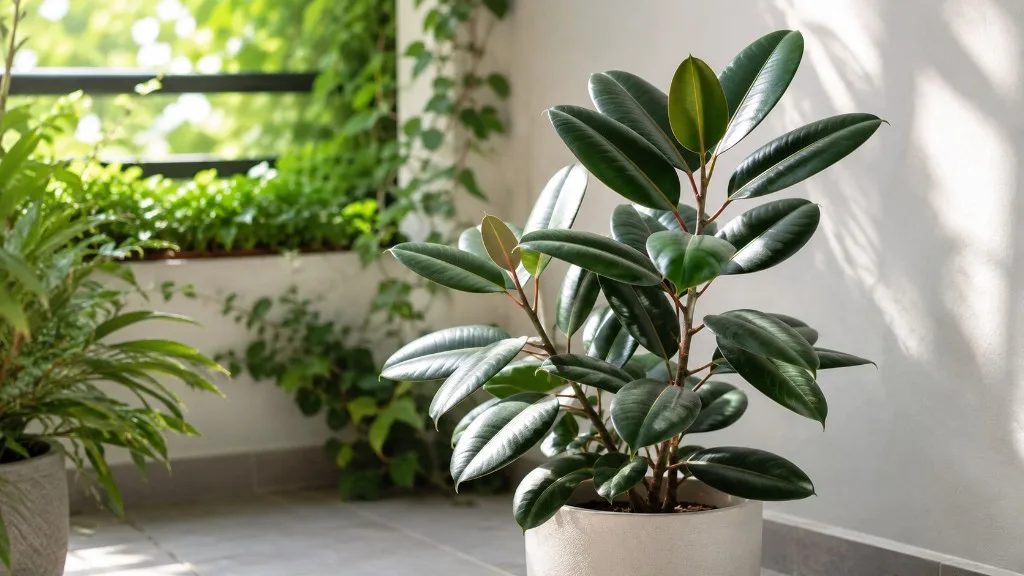
Rubber plant is one of the best beginner-friendly trees because its thick waxy leaves resist water loss and its care needs are straightforward: medium to bright indirect light, water when the upper soil dries, wipe the leaves occasionally. It does not drop leaves at the first sign of trouble like a fiddle leaf fig, and it grows steadily without demanding constant attention.
The standard green Ficus elastica is the most forgiving. Variegated forms like Ruby, Tineke, and Burgundy need brighter light to maintain their coloring. In dim rooms, variegated leaves can revert to green or drop.
Care tip: Wipe the broad leaves with a damp cloth every few weeks. Dust on large glossy leaves reduces the light the plant can capture. Watch out for: Rubber plant is a ficus species listed by the ASPCA as toxic to cats and dogs. Do not confuse it with the pet-safe baby rubber plant (Peperomia obtusifolia), which is a different genus entirely. Pet safety: Toxic to cats and dogs per ASPCA. Keep out of reach in pet homes.
Useful care guides:
- Rubber plant care guide
- Rubber plant watering guide
- Rubber plant light guide
- Rubber plant problems guide
14. Corn Plant
Beginner rating: Easy Best for: medium-light living rooms, offices, beginners who want a taller indoor tree Light: Medium to bright indirect Water: When the top two inches of soil dries Main beginner mistake: Overwatering, especially when the plant is in a dim corner
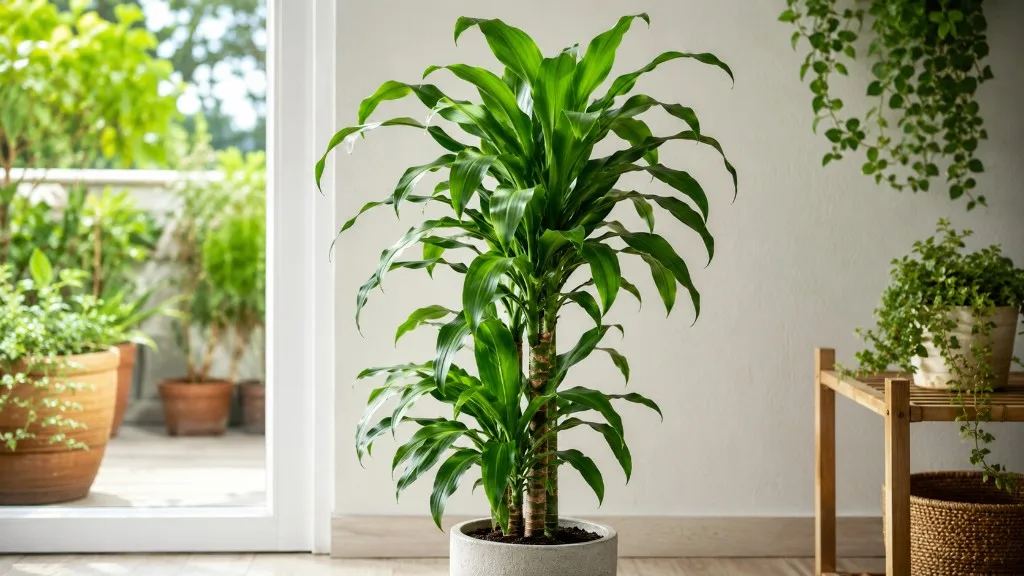
Corn plant (Dracaena fragrans) is closely related to dracaena marginata but has broader, softer leaves and a fuller silhouette. It grows on thick canes and can reach 5–6 feet indoors, giving beginners a substantial plant without the anxiety of caring for something expensive or delicate.
Like dracaena marginata, corn plant is sensitive to fluoride in tap water. If the leaf tips and edges develop brown or yellow streaks that spread, try switching to rainwater, distilled water, or filtered water. The damage is cosmetic, but persistent fluoride exposure can weaken the plant over time.
Care tip: Corn plant can be pruned by cutting a cane at the desired height. New leaf rosettes will sprout just below the cut within weeks. Watch out for: In very low light, corn plant may droop or lose lower leaves. Move it closer to a window if the cane starts to lean toward the light. Pet safety: Dracaena species are listed as toxic to cats and dogs by the ASPCA. Keep out of reach.
Useful care guides:
15. Ponytail Palm
Beginner rating: Very easy Best for: sunny spots, forgetful waterers, desks, people who want something unusual Light: Bright indirect to direct sun Water: Let soil dry out completely between waterings; every 2–4 weeks Main beginner mistake: Watering too often, which rots the swollen trunk base
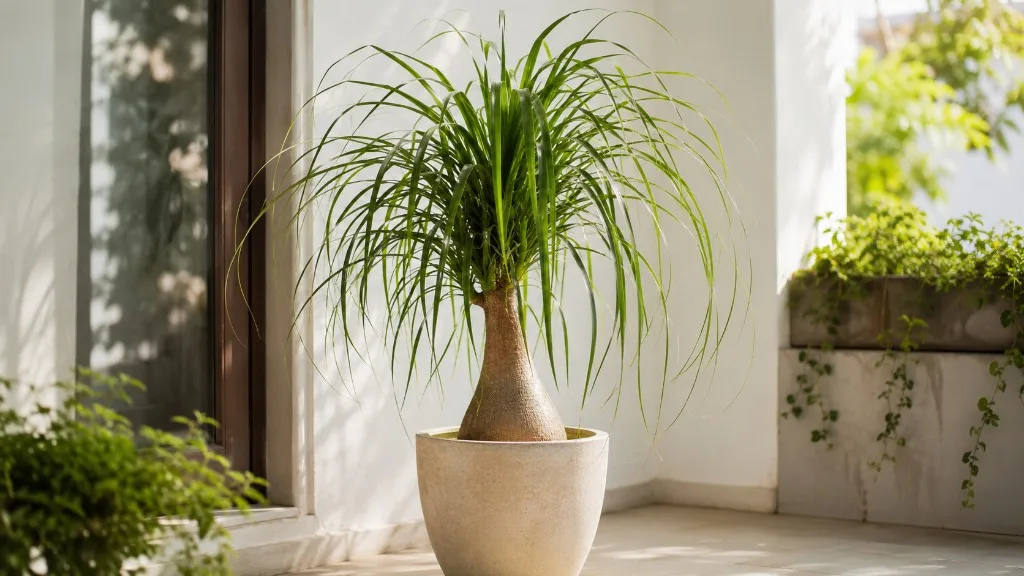
Ponytail palm is not a true palm. It is a succulent that stores water in a swollen trunk base called a caudex, earning it the nickname “elephant’s foot.” That water reserve makes it one of the most forgiving plants for people who forget to water. Its long, curly leaves cascade from the top like a fountain of green ribbons.
It needs bright light to thrive. In dim rooms, the leaves stretch thin and the plant loses its compact, sculptural shape. Give it a sunny windowsill and it will reward you with steady, low-maintenance growth for years.
Care tip: Ponytail palm can go a month or more between waterings in winter when growth slows. Err on the side of underwatering every time. Watch out for: The caudex should feel firm. If it feels soft or mushy, the plant has been overwatered and may have root rot. Stop watering immediately. Pet safety: Generally considered non-toxic. A safer choice for pet households.
Useful care guides:
- Ponytail palm care guide
- Ponytail palm watering guide
- Ponytail palm light guide
- Ponytail palm problems guide
Quick Comparison Table
| Plant | Beginner Rating | Light | Water | Pet Safe | Best Place |
|---|---|---|---|---|---|
| Snake plant | Very easy | Low to bright | Dry fully | No | Shelf, floor, narrow spaces |
| ZZ plant | Very easy | Low to bright | Dry fully | No | Dim rooms, offices |
| Pothos | Very easy | Low to bright | Top inch dry | No | Shelf, hanging basket |
| Spider plant | Very easy | Medium-bright | Top inch dry | Yes | Shelf, hanging basket |
| Heartleaf philodendron | Very easy | Low to bright | Top inch dry | No | Shelf, hanging basket, desk |
| Peace lily | Easy | Low to bright | Top inch dry | No | Desk, floor, low-light room |
| Aglaonema | Easy | Low-medium | Top 1–2 inches dry | No | Desk, shelf, dim corners |
| Cast iron plant | Very easy | Low-medium; deep shade | Top 2 inches dry | Yes | Dark hallways, dim rooms |
| Aloe vera | Easy | Bright-direct sun | Dry fully | No | Sunny windowsill |
| Jade plant | Easy | Bright-indirect sun | Dry fully | No | Sunny windowsill, desk |
| Parlor palm | Easy | Medium-bright; low | Top 1–2 inches dry | Yes | Desk, table, pet homes |
| Dracaena marginata | Easy | Low to bright | Top 2 inches dry | No | Narrow corners, offices |
| Rubber plant | Easy-medium | Medium-bright | Top 1–2 inches dry | No | Living room, bedroom |
| Corn plant | Easy | Medium-bright | Top 2 inches dry | No | Living room, office |
| Ponytail palm | Very easy | Bright-direct sun | Dry fully, 2–4 weeks | Yes | Sunny windowsill, desk |
Best Beginner Plant by Personality
Best for forgetful waterers
Snake plant, ZZ plant, ponytail palm, and cast iron plant all forgive missed waterings better than most. Snake plant and ZZ plant are tied for first place—they store water internally and barely notice an extra week or two without a drink.
Best for low-light homes
ZZ plant, cast iron plant, aglaonema, snake plant, and peace lily handle dim rooms better than the rest of this list. Cast iron plant is the single best choice for a truly dark hallway or corner with no direct window light.
Best for people who overwater
Pothos and peace lily are more tolerant of slightly wetter soil than succulents, but no plant survives permanently soggy roots. If you know you tend to overwater, start with pothos in a pot with excellent drainage and commit to checking the soil with your finger before every watering.
Best for small apartments
Pothos (trailing from a shelf), snake plant (vertical, narrow footprint), ZZ plant (compact), and aglaonema (compact, colorful) all work well in small spaces. None of them will outgrow a shelf or side table within a year.
Best for decorative impact
Rubber plant and corn plant give you the most visual presence for the least care complexity. They look like serious indoor trees without the fiddle-leaf-fig anxiety. Peace lily adds flowers to a low-light corner, which few other plants can do.
Best for fastest confidence boost
Pothos and spider plant grow fast enough in good light that you can see progress week to week. Both produce visible new leaves and stems regularly, which reinforces that you are doing something right. Spider plant adds the bonus of offsets—free baby plants you grew yourself.
Beginner Mistakes That Kill Even Easy Plants
Watering on a fixed calendar
A weekly watering schedule makes sense to humans, not to plants. A snake plant in dim winter light might need water once a month. That same plant on a sunny summer windowsill might need it every two weeks. Check the soil every time. The calendar cannot tell you what the soil can.
The Missouri Botanical Garden notes that overwatering is one of the most common problems across all indoor plants, and that symptoms of root rot from soggy soil can mimic the wilting that beginners often misinterpret as underwatering. (Missouri Botanical Garden Indoor Plant Problems)
Choosing plants before checking your light
Walk through your home at different times of day and honestly assess the light. A plant labeled “low-light tolerant” will survive in a dim bedroom. A fiddle leaf fig, aloe vera, or jade plant will not. Match the plant to the light you have, not the plant you wish would work.
Using pots without drainage holes
No beginner plant on this list can survive long-term in a pot with no drainage. Water collects at the bottom, roots sit in stagnant moisture, and root rot develops within weeks or months. If you want a decorative cachepot, keep the plant in a nursery pot with holes and place it inside the decorative one. Empty the outer pot after watering.
Misting instead of solving humidity
A light misting raises humidity for minutes, not hours. It does not replace a humidifier, a pebble tray, or grouping plants together. For the plants on this list, misting is usually unnecessary—they all tolerate normal indoor humidity. Focus on correct watering and light instead.
Moving plants too often
Plants adjust to their light environment slowly. Moving a plant every few weeks to chase the sun or redecorate resets that adjustment. Find a spot that matches the plant’s light needs and leave it there. If you need to move it, expect a brief adjustment period with slower growth or a dropped leaf.
Buying difficult plants too early
Calathea, fiddle leaf fig, maidenhair fern, and alocasia are beautiful and popular. They are also demanding. A calathea will crisp at the edges if your humidity drops 10 percent. A fiddle leaf fig will drop leaves after a draft. Start with the plants on this list. Build your skills. Then, if you still want a calathea, you will know enough to give it a fair chance.
Pet Safety Summary
Several plants on this list are safer for homes with cats and dogs that may chew foliage. Spider plant, parlor palm, cast iron plant, and ponytail palm are generally considered non-toxic. No plant should be treated as pet food—even non-toxic plants can cause stomach upset if eaten in quantity. But these four are the safest starting points for pet-aware homes.
Snake plant, ZZ plant, pothos, heartleaf philodendron, peace lily, aglaonema, aloe vera, jade plant, dracaena marginata, corn plant, and rubber plant are listed by the ASPCA as toxic to cats and dogs if ingested. Toxicity in these plants ranges from mouth and digestive irritation to more serious symptoms depending on the species and amount consumed. In pet homes, place toxic plants in hanging baskets, on high shelves, or in rooms your pets cannot access.
If a pet ingests any houseplant and shows symptoms—vomiting, drooling, lethargy, loss of appetite—contact your veterinarian or ASPCA Animal Poison Control at 888-426-4435. Keep plant labels or know the botanical name so you can tell the vet exactly what was eaten.
Where to Go Next
Pick your plant and go deeper:
- Snake plant care hub
- ZZ plant care hub
- Pothos care hub
- Spider plant care hub
- Heartleaf philodendron care hub
- Peace lily care hub
- Aglaonema care hub
- Cast iron plant care hub
- Aloe vera care hub
- Jade plant care hub
- Parlor palm care hub
- Dracaena care hub
- Rubber plant care hub
- Corn plant care hub
- Ponytail palm care hub
Related guides:
- How to Water Indoor Plants the Right Way
- Low-Maintenance Indoor Plants for Busy Homes
- Grow Lights Complete Guide for Indoor Plants
- Monstera Care Guide for Beginners
- Best Large Indoor Plants — filterable quick list for statement-sized picks
Conclusion
Start with conditions you cannot change: light, then space, then care habits, then pet safety. A dim apartment corner is perfect for a ZZ plant or cast iron plant, not an aloe or jade. A sunny windowsill opens up succulents. A home with nibbling pets points you toward spider plants and parlor palms. Pick one or two plants from this list, open their care guides, and learn to read them before you add more. Confidence in plant care comes from keeping a few plants healthy for months, not from buying a dozen at once and hoping for the best.