Best Indoor Plants for Indian Homes and Apartments: 12 Easy Picks
Looking for indoor plants for home India that actually survive? These 12 heat-tolerant, low-maintenance picks thrive in real Indian conditions — not just in photos.
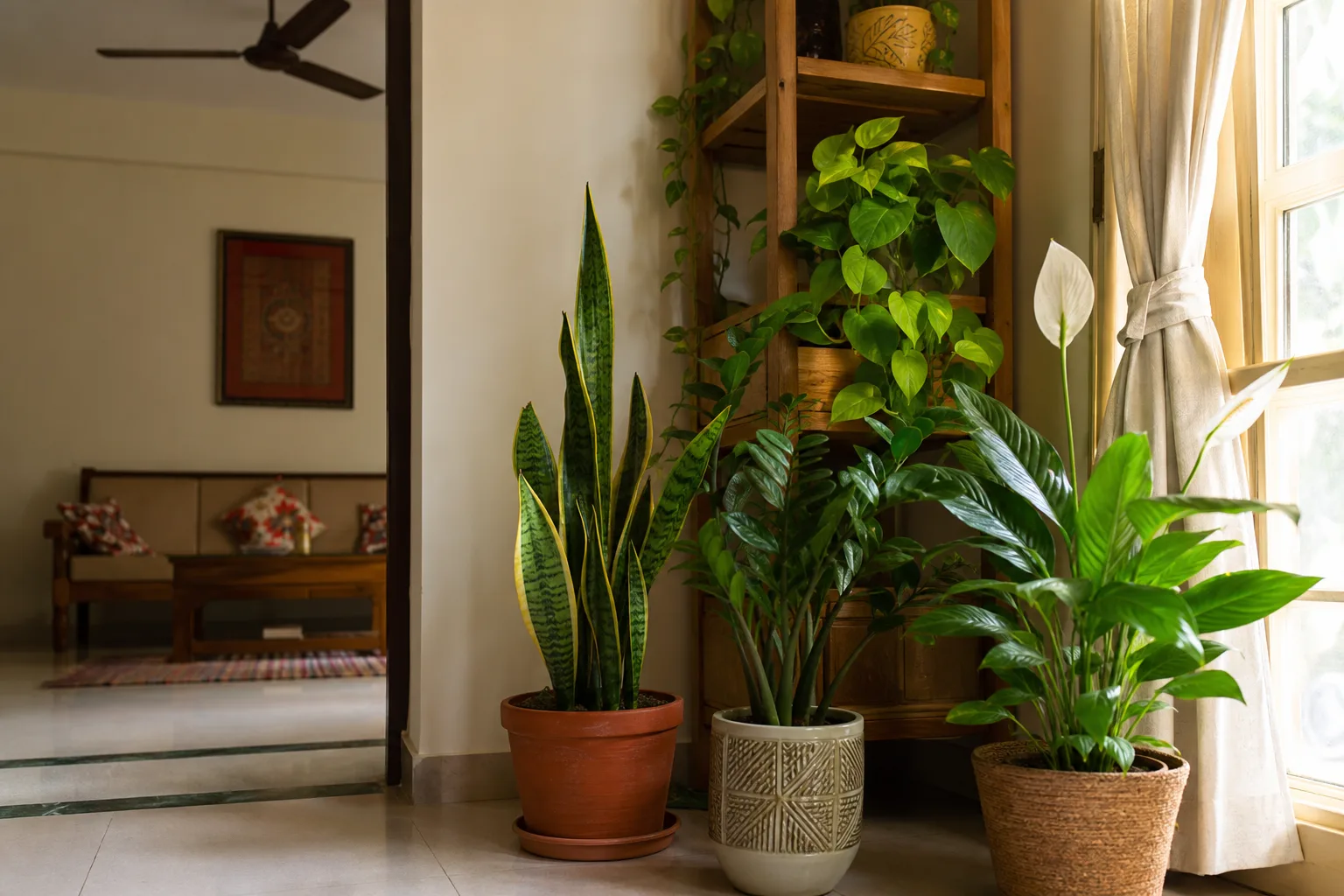
Most “best indoor plants” lists are written for temperate climates — mild summers, consistent heating in winter, and windows that get predictable light. Indian homes are different. In a single apartment, you might have a balcony that hits 40°C in May, a living room cooled by AC for ten hours a day, a kitchen window bright with morning sun, and a bedroom that stays dim because the neighboring building blocks the light. The plants that survive here are not the ones that look best on Instagram. They are the ones that handle heat, recover from missed watering, and stay healthy in the uneven light of real Indian rooms.
If you want a filterable quick list from LeafyPixels plant data, start with Best Low-Maintenance Indoor Plants. This guide goes deeper: why each plant works in Indian conditions specifically, where to place it, what mistakes to avoid, and how to adjust care as Indian seasons change.
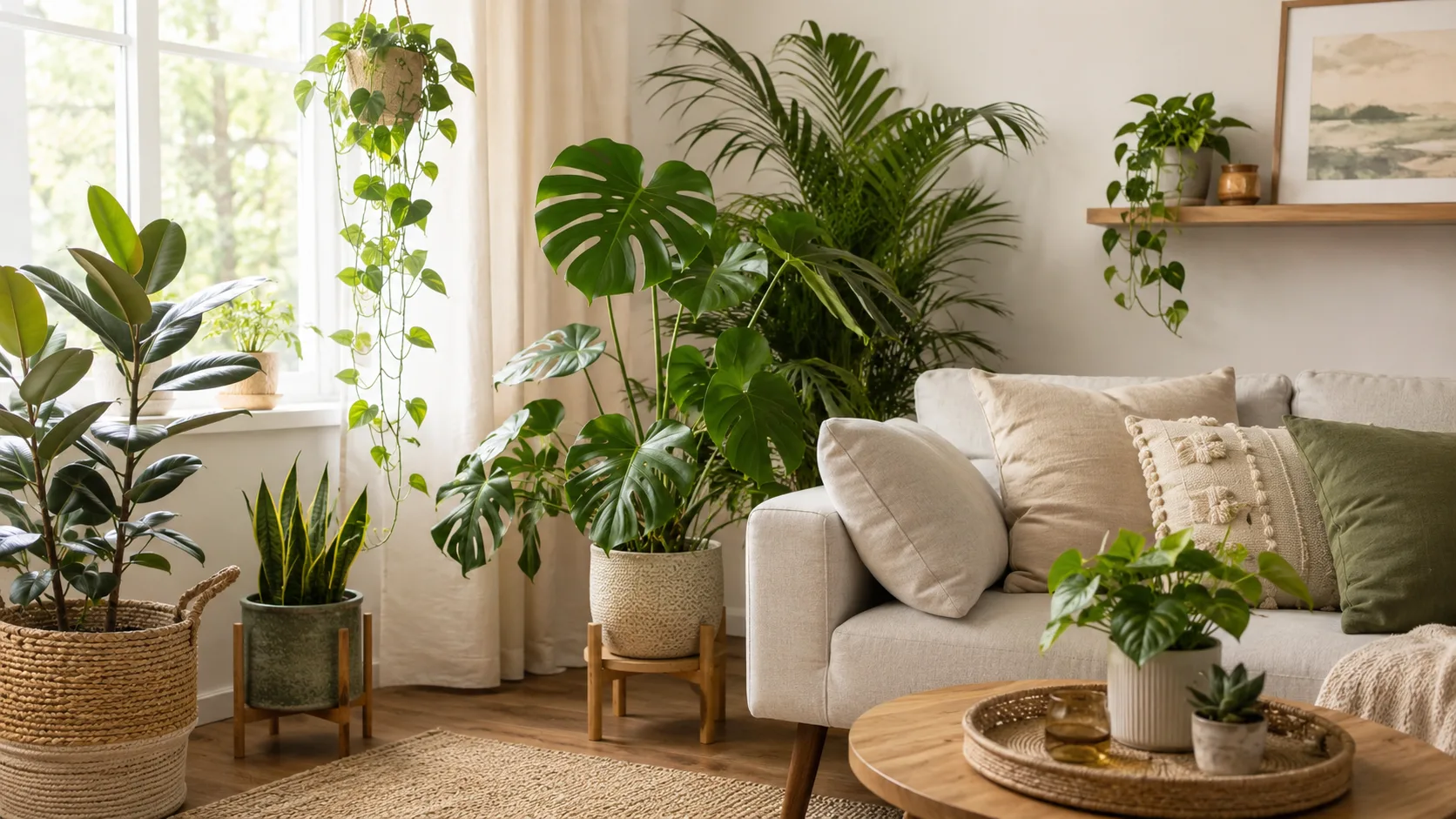
The 12 best indoor plants for Indian homes are snake plant, money plant, ZZ plant, peace lily, spider plant, aglaonema, areca palm, rubber plant, aloe vera, tulsi, jade plant, and syngonium. They are not interchangeable — each suits different rooms, light levels, and care habits.
Why Indian Homes Need Different Plant Choices
Indian indoor conditions throw a unique combination of challenges at houseplants. Summer temperatures indoors can stay above 35°C even with fans running, especially in cities like Delhi, Chennai, and Nagpur. Monsoon humidity spikes to 80-90% for weeks, then drops sharply in winter. Many apartments have windows shaded by adjacent buildings, limiting direct light to just an hour or two. AC units and ceiling fans create constant drafts that dry out soil and leaves faster than still air.
A plant labeled “low light” on a European or American website may have been tested in a room that still gets eight hours of soft daylight through large windows. In a Mumbai 1BHK with one north-facing window, that same plant may slowly decline. The plants on this list were chosen because they have been proven across Indian homes, not just in controlled greenhouses or temperate living rooms.
How These Plants Were Selected
Every plant on this list was evaluated against four criteria that matter for Indian homes.
Heat tolerance. The plant must handle indoor temperatures above 35°C for stretches of summer without irreversible damage. Plants with fleshy leaves, thick cuticles, or natural adaptations to warm climates scored higher.
Light flexibility. The plant must tolerate the mixed light of Indian apartments — bright near a balcony door, moderate a few feet inside, dim in hallways and interior rooms. Plants that demand consistent bright light were excluded.
Watering forgiveness. The plant must recover from occasional missed watering. Between travel, festivals, and busy weeks, Indian plant owners do not always water on schedule. Plants that collapse after one dry spell were excluded.
Availability in India. Every plant is commonly found in Indian nurseries, online plant stores, and local markets. No rare imports that require specialty growers.
Quick Comparison Table
| Plant | Best For | Light | Watering | Indian Summer | Beginner Rating |
|---|---|---|---|---|---|
| Snake Plant | Bedrooms, low light | Low to bright indirect | Every 2-3 weeks | Excellent | Very Easy |
| Money Plant | Shelves, hanging, beginners | Low to bright indirect | Weekly | Very Good | Very Easy |
| ZZ Plant | Dark corners, offices | Low to moderate | Every 2-4 weeks | Excellent | Very Easy |
| Peace Lily | Living rooms, flowering | Low to moderate | Weekly | Good | Easy |
| Spider Plant | Hanging baskets, shelves | Moderate to bright | Weekly | Very Good | Very Easy |
| Aglaonema | Low-light rooms, color | Low to moderate | Weekly to 10 days | Good | Easy |
| Areca Palm | Living rooms, corners | Bright indirect | Twice weekly | Good | Medium |
| Rubber Plant | Statement corners | Moderate to bright | Weekly to 10 days | Very Good | Easy |
| Aloe Vera | Kitchen windows, sunny spots | Bright | Every 2-3 weeks | Excellent | Very Easy |
| Tulsi | Balconies, puja rooms | Bright, 4-6 hrs sun | Daily to every other day | Very Good | Medium |
| Jade Plant | Desks, sunny windowsills | Bright | Every 2-3 weeks | Excellent | Very Easy |
| Syngonium | Shelves, table tops | Low to moderate | Weekly | Good | Easy |
1. Snake Plant (Sansevieria)
Best for: Bedrooms, low-light corners, forgetful waterers
Difficulty: Very Easy
Light: Low to bright indirect; tolerates some direct morning sun
Water: Every 2-3 weeks; let soil dry completely between waterings
Best placement: Bedroom corner, hallway, beside the TV unit, bathroom with a window
Pet safety: Toxic to cats and dogs if chewed — keep out of reach
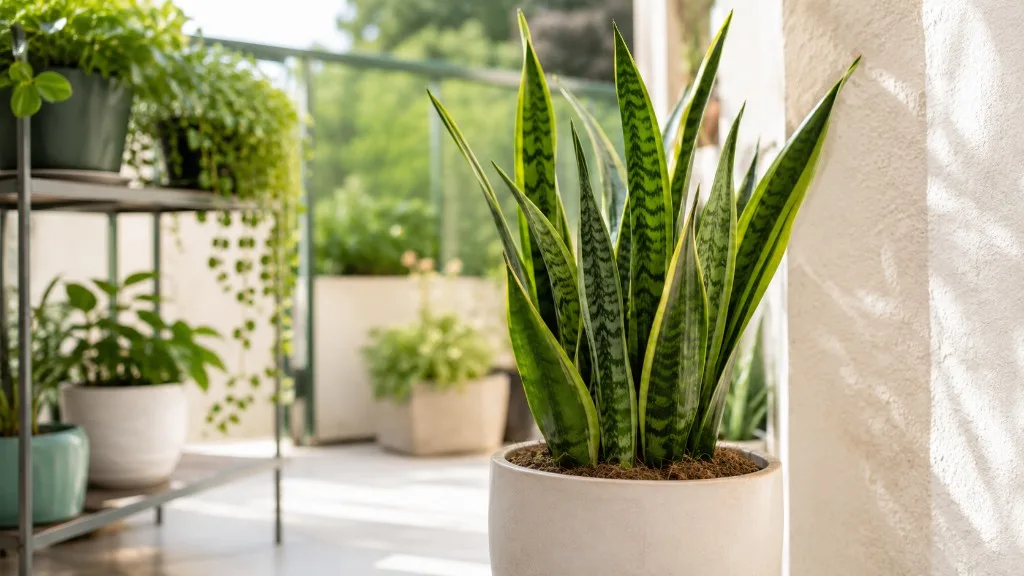
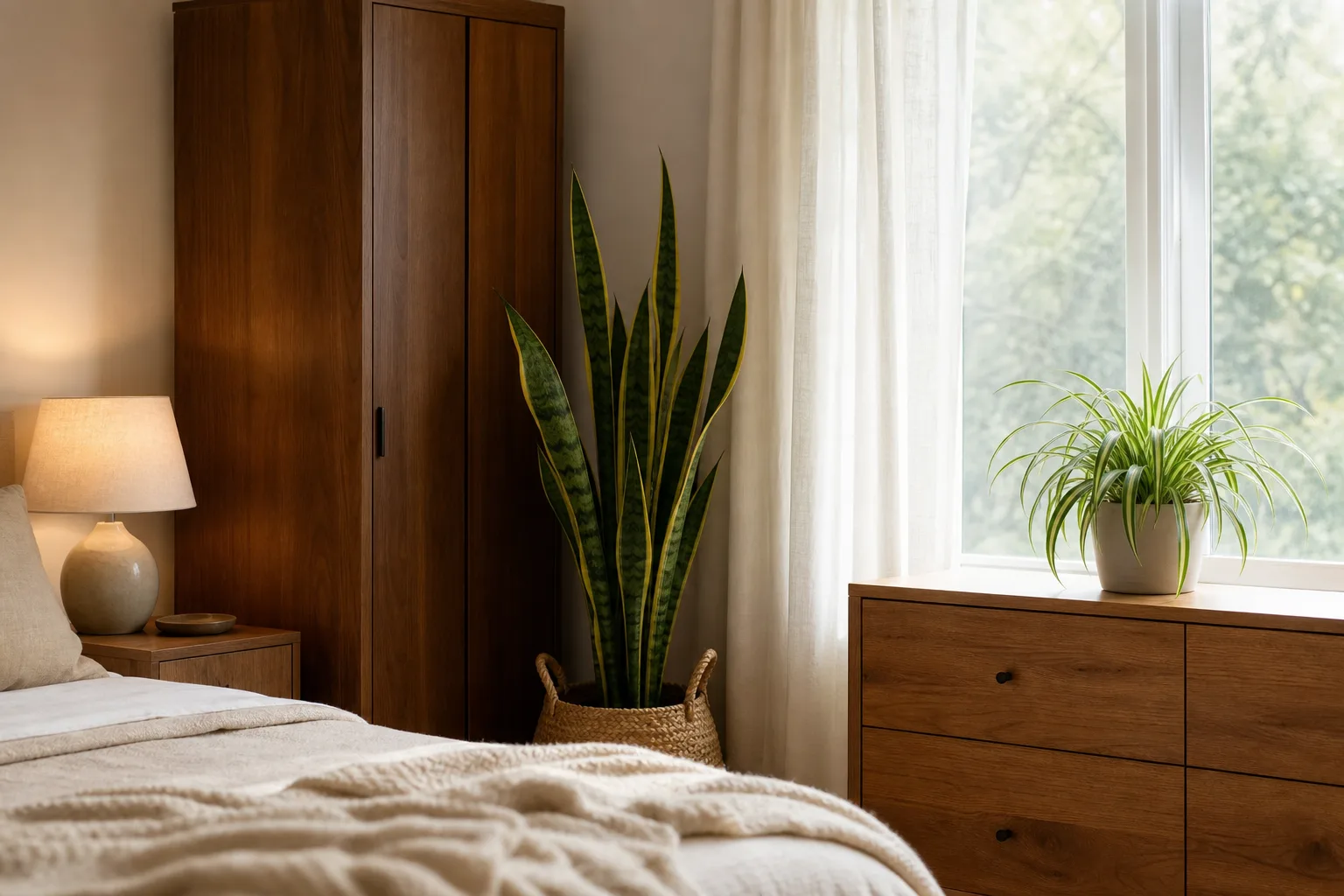
Snake plant is the closest thing to an unkillable indoor plant for Indian homes. Its upright, architectural leaves store water, which is why it survives the heat of an Indian summer even when you forget to water for two weeks. It also handles the dim light of interior rooms better than nearly any other plant on this list — including bedrooms that get only reflected daylight through a single window. The ASPCA lists snake plant (Sansevieria trifasciata) as toxic to dogs and cats due to saponins, which can cause nausea, vomiting, and diarrhea if ingested.
What makes snake plant especially useful for Indian apartments is that it grows vertically rather than sprawling outward. A mature plant takes up less floor space than a dinner plate while reaching waist height, which matters when you are working with a 600-square-foot flat.
Why it works in Indian homes: Snake plant uses Crassulacean Acid Metabolism (CAM) — it opens its pores at night to conserve water — which gives it an edge during hot, dry Indian summers. It does not mind the temperature swings between an AC-cooled room and a warm balcony either.
Care tip: Water only when the top few inches of soil are bone dry. In Indian monsoon humidity, that might mean waiting three or even four weeks between waterings. Overwatering kills more snake plants than neglect ever will.
Common mistake: Watering on a weekly schedule regardless of season. This plant needs less water when it is humid (monsoon) or cool (winter), and slightly more during dry summer heat — but never frequent watering.
Avoid this plant if: You want rapid visible growth or flowering. Snake plant grows slowly and almost never blooms indoors. It is a steady background plant, not a showpiece that transforms month to month.
Useful care guides:
2. Money Plant (Pothos)
Best for: Hanging baskets, shelf edges, beginner plant owners
Difficulty: Very Easy
Light: Low to bright indirect; avoid harsh afternoon sun
Water: Once a week; let top inch of soil dry between waterings
Best placement: Hanging near a window, trailing from a bookshelf, trained up a balcony grill
Pet safety: Toxic to cats and dogs if chewed
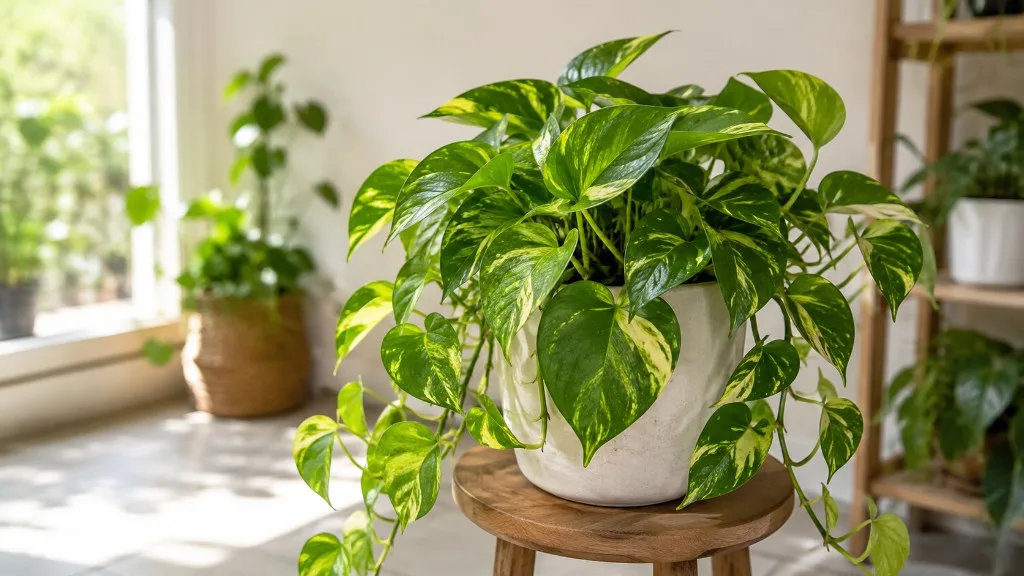
Money plant is the most common indoor plant in Indian homes for good reason. It grows fast, costs very little, propagates easily in water, and forgives almost every beginner mistake. You can start with a single cutting in an old bottle and end up with vines trailing across a room within a year. In a country where plants are often shared between neighbors and family members rather than bought from stores, money plant’s ease of propagation makes it a natural fit.
Despite its reputation as a low-light plant, money plant grows noticeably faster and produces larger leaves when it gets bright indirect light. In a truly dark corner, it will survive but stay leggy with small leaves spaced far apart. A spot near an east-facing window or on a balcony that gets filtered light through a curtain gives the best results.
Why it works in Indian homes: Money plant handles the warmth of Indian rooms without complaint. It also recovers quickly from underwatering — the leaves droop visibly when thirsty, which acts as a built-in reminder, then perk up within hours of watering.
Care tip: Trim long, bare vines in spring to encourage bushier growth. The cuttings root in plain water in about two weeks — glass bottles, old jars, and plastic cups all work.
Common mistake: Letting the plant sit in water that collects in a decorative outer pot without drainage. Money plant tolerates many things, but constantly wet roots will rot, especially during humid monsoon months.
Avoid this plant if: You have pets that chew on trailing greenery at ground level. Hang it high or pick a pet-safe alternative.
Useful care guides:
3. ZZ Plant
Best for: Dark rooms, offices, people who travel frequently
Difficulty: Very Easy
Light: Low to moderate indirect; tolerates fluorescent office lighting
Water: Every 2-4 weeks; let soil dry completely
Best placement: Interior rooms with no direct window, office desks, corridors, bathrooms
Pet safety: Toxic to cats and dogs if chewed
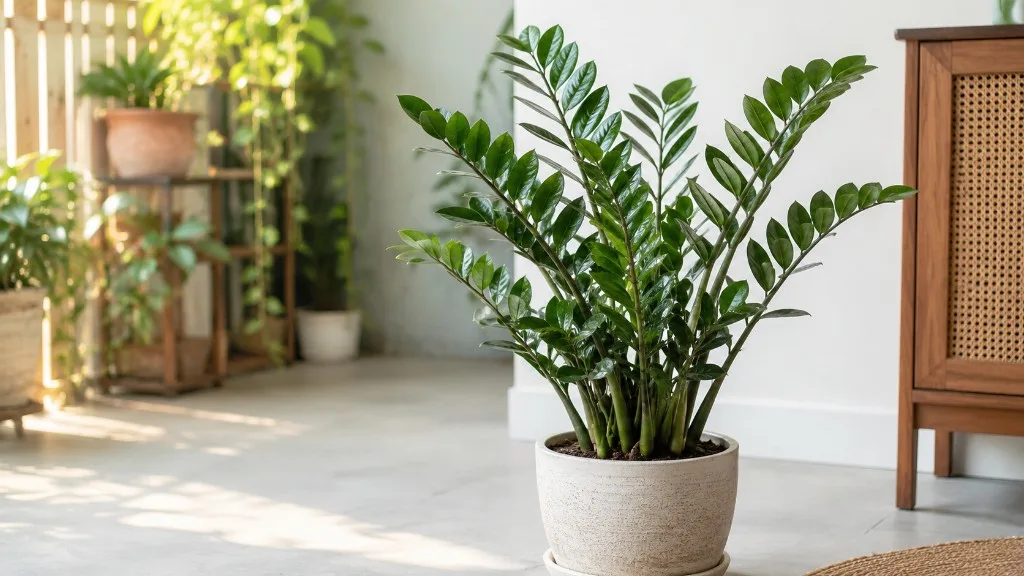
ZZ plant is the plant you buy for the corner where nothing else grows. It has thick, waxy leaves on upright stems and thick underground rhizomes that store water — which means it can go a month without watering and still look fresh. Indian homes with deep rooms, small windows, or windows blocked by neighboring buildings are where ZZ plant shines.
The plant’s tolerance for low light is often overstated — no plant grows in true darkness — but ZZ plant genuinely keeps its shape and color in dim conditions where a money plant would stretch thin and a peace lily would stop flowering. It also handles fluorescent light, which makes it one of the few plants that works in Indian offices and corporate spaces without natural windows.
Why it works in Indian homes: ZZ plant’s water-storing rhizomes make it nearly immune to the dry spells that come with Indian summers, travel during festivals, or simply forgetting to water during a busy work week. It also does not mind AC drafts the way thin-leaved plants do.
Care tip: Clean the leaves with a damp cloth every few weeks. ZZ plant’s glossy leaves collect dust quickly, and dust blocks whatever limited light the plant is receiving.
Common mistake: Treating “low light tolerant” as “no light needed.” In a truly dark room with no windows, even a ZZ plant will slowly decline. If the room is too dim to read a book during the day without artificial light, it is too dim for any plant without a grow light.
Avoid this plant if: You enjoy frequent plant interaction — ZZ plant asks for almost nothing, which some owners find unsatisfying. It is a background plant, not a hobby.
Useful care guides:
4. Peace Lily
Best for: Living rooms, flowering indoors, air-purifying claims (with realistic expectations)
Difficulty: Easy
Light: Low to moderate indirect; avoid direct sun
Water: Once a week; water when leaves just begin to droop
Best placement: Living room side table, bedroom corner with filtered light, office reception
Pet safety: Toxic to cats and dogs — contains calcium oxalate crystals
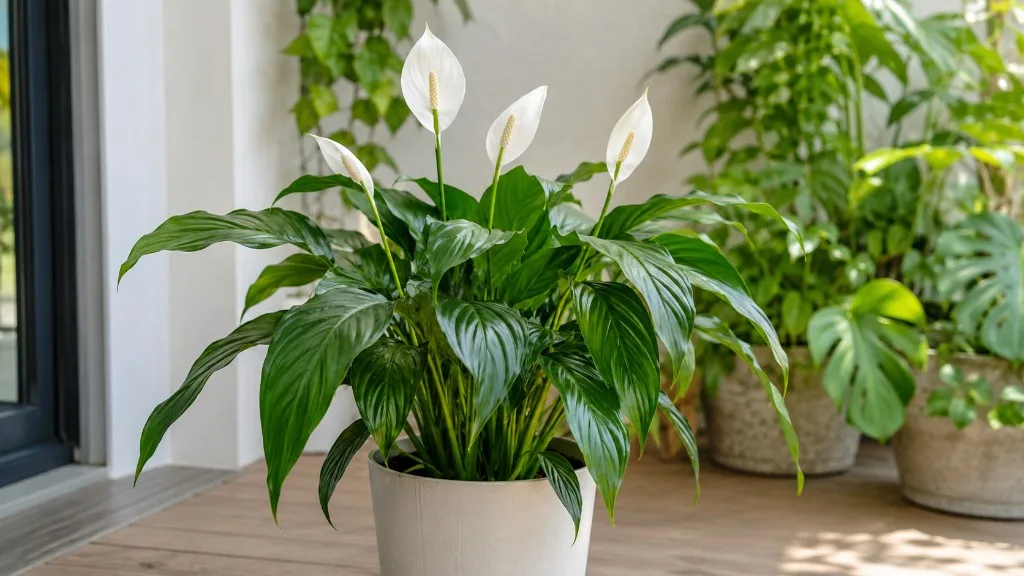
Peace lily is one of the few flowering plants that blooms reliably in the typical light of an Indian living room. Its white spathes last for weeks, and the glossy dark green leaves look polished even when the plant is not in flower. Unlike many flowering houseplants that demand bright light to bloom, peace lily produces flowers in moderate indirect light — the kind you get a few feet from an east or north-facing window. The ASPCA lists peace lily (Spathiphyllum) as toxic to dogs and cats, with calcium oxalate crystals causing oral irritation, drooling, and difficulty swallowing if chewed.
The plant has a built-in watering indicator that makes it nearly foolproof: the leaves droop dramatically when it is thirsty, then recover fully within hours of watering. In Indian summer heat, you may need to water twice a week; during monsoon, once every ten days may be enough.
Why it works in Indian homes: Peace lily handles the warmth of Indian rooms well and does not demand high humidity — an advantage in air-conditioned spaces and during dry winters. It also continues to grow in modest light where many flowering plants would stop producing blooms.
Care tip: Wipe the leaves every two weeks. Peace lily’s broad leaves are dust magnets, and dust buildup reduces the plant’s ability to use available light. Brown tips are usually a sign of tap water sensitivity or dry air, not disease — use filtered or RO water if brown tips persist.
Common mistake: Misreading the droop-water-recover cycle and overwatering preventatively. Let the plant tell you when it is thirsty rather than watering on a fixed day.
Avoid this plant if: You have pets at floor level that chew leaves. All parts of peace lily contain calcium oxalate crystals that cause mouth irritation, drooling, and digestive upset.
Useful care guides:
5. Spider Plant
Best for: Hanging baskets, shelves, homes with pets
Difficulty: Very Easy
Light: Moderate to bright indirect; tolerates some morning sun
Water: Once a week; keep soil lightly moist but not wet
Best placement: Hanging near a window, on a high shelf, in a balcony with filtered light
Pet safety: Non-toxic to cats and dogs
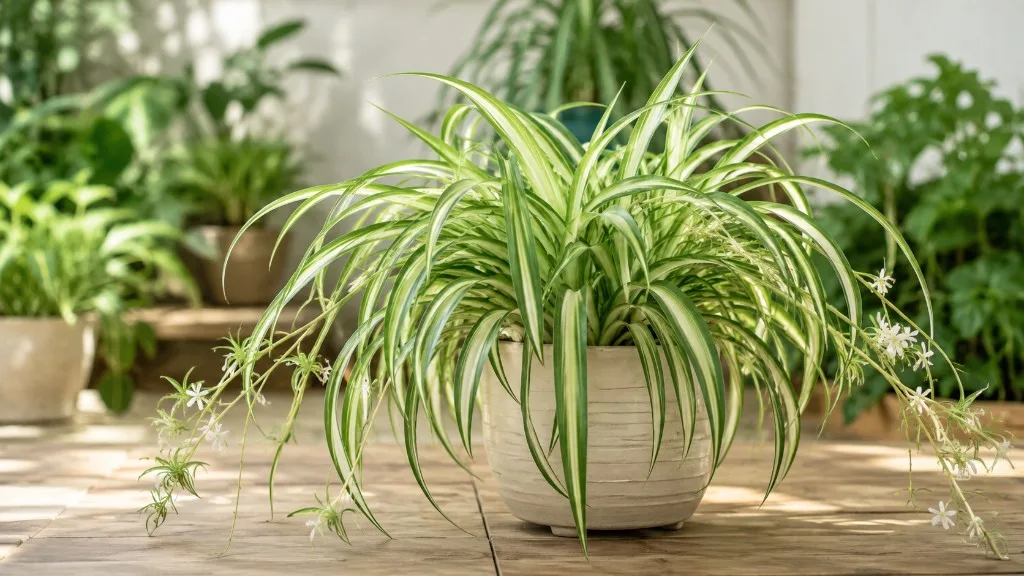
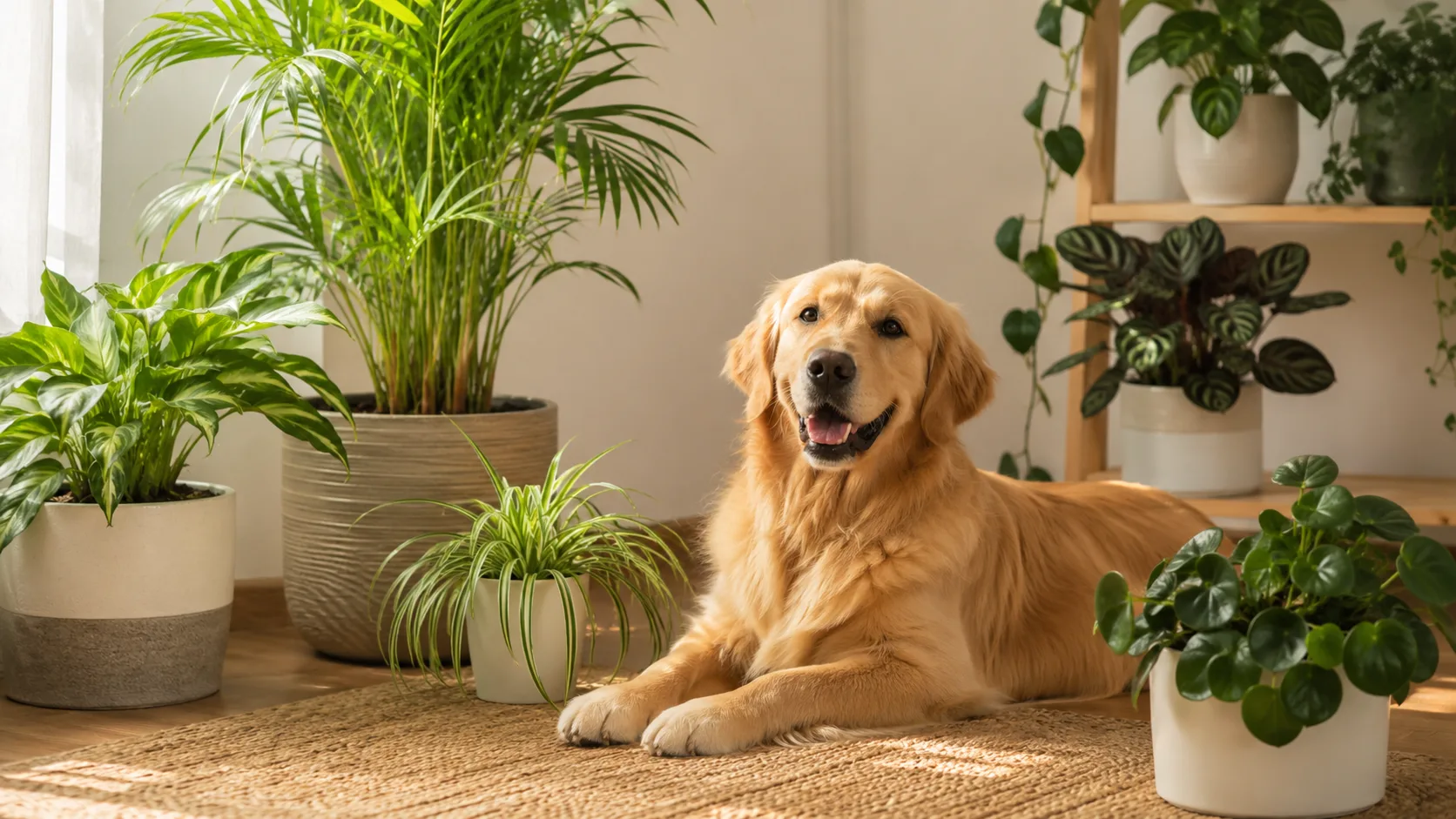
Spider plant is one of the safest choices for Indian homes with pets. Its arching, grass-like leaves are non-toxic, and it produces baby plantlets on long runners that hang down attractively from baskets and high shelves. The ASPCA lists spider plant (Chlorophytum comosum) as non-toxic to both dogs and cats. The plantlets can be snipped off and potted separately, which means one spider plant quickly becomes several — useful in a culture where sharing plants with family and neighbors is common.
Spider plant grows faster than snake plant or ZZ plant, which makes it rewarding for beginners who want to see visible progress. In a bright spot with regular watering, it fills out a hanging basket within a few months and starts producing runners.
Why it works in Indian homes: Spider plant tolerates the temperature range of Indian rooms well — from air-conditioned bedrooms to naturally warm living rooms. It also handles the occasional missed watering better than many thin-leaved plants, though it will show brown tips if neglected too long.
Care tip: If leaf tips turn brown, switch to filtered or RO water. Spider plant is sensitive to fluoride and chlorine in tap water, and brown tips are usually a water-quality issue, not a disease.
Common mistake: Placing spider plant in direct afternoon sun. The leaves scorch quickly, turning pale and crispy at the edges. Filtered bright light near an east-facing window gives the best balance.
Avoid this plant if: You want a tall, upright plant. Spider plant stays low and spreading — it is a shelf and hanging plant, not a floor statement piece.
Useful care guides:
6. Aglaonema (Chinese Evergreen)
Best for: Low-light rooms, colorful foliage, tabletop display
Difficulty: Easy
Light: Low to moderate indirect; tolerates fluorescent light
Water: Every 7-10 days; let top inch of soil dry
Best placement: Coffee table, office desk, bedroom nightstand, dim hallway
Pet safety: Toxic to cats and dogs
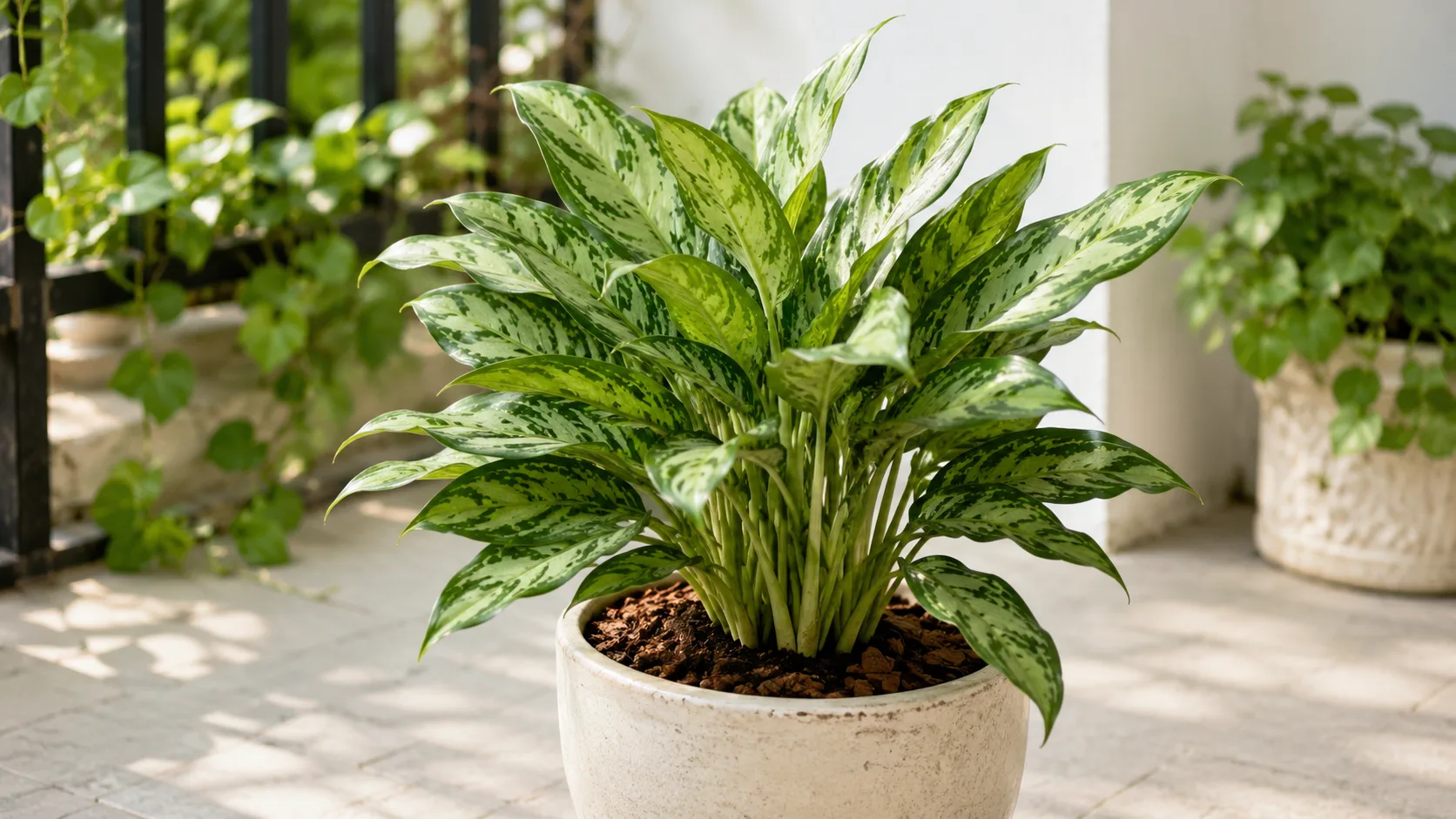
Aglaonema is the best plant on this list for adding color to dim Indian rooms. While snake plant and ZZ plant are green (or green-edged-with-yellow at most), aglaonema comes in varieties with pink, red, silver, and cream markings that hold their color even in low light. The plant has been grown in Indian homes for decades — older varieties with plain green leaves were common in government offices and railway waiting rooms long before “indoor plant styling” became a trend.
The newer colorful varieties like Red Siam, Pink Dalmatian, and Silver Bay are widely available in Indian nurseries and online stores. They cost more than a basic money plant but deliver more visual impact in exchange.
Why it works in Indian homes: Aglaonema is genuinely low-light tolerant in a way that preserves leaf color. Unlike some variegated plants that revert to plain green in dim conditions, aglaonema’s markings are genetically stable. It also handles the temperature fluctuations of Indian homes without dropping leaves.
Care tip: Rotate the pot a quarter turn every two weeks. In low light, aglaonema leans toward whatever light source is available, and regular rotation keeps the growth even rather than lopsided.
Common mistake: Overwatering during monsoon and winter. Aglaonema’s water needs drop sharply when growth slows — if leaves start yellowing from the bottom up, you are watering too often.
Avoid this plant if: You want a plant that tolerates direct sun. Aglaonema’s leaves scorch in direct light and it is strictly an indoor, indirect-light plant.
Useful care guides:
7. Areca Palm
Best for: Living room corners, room dividers, tropical look
Difficulty: Medium
Light: Bright indirect; tolerates some morning sun
Water: Twice a week in summer, once a week in winter; keep soil lightly moist
Best placement: Near a bright window, in a well-lit living room corner, on a covered balcony
Pet safety: Non-toxic to cats and dogs
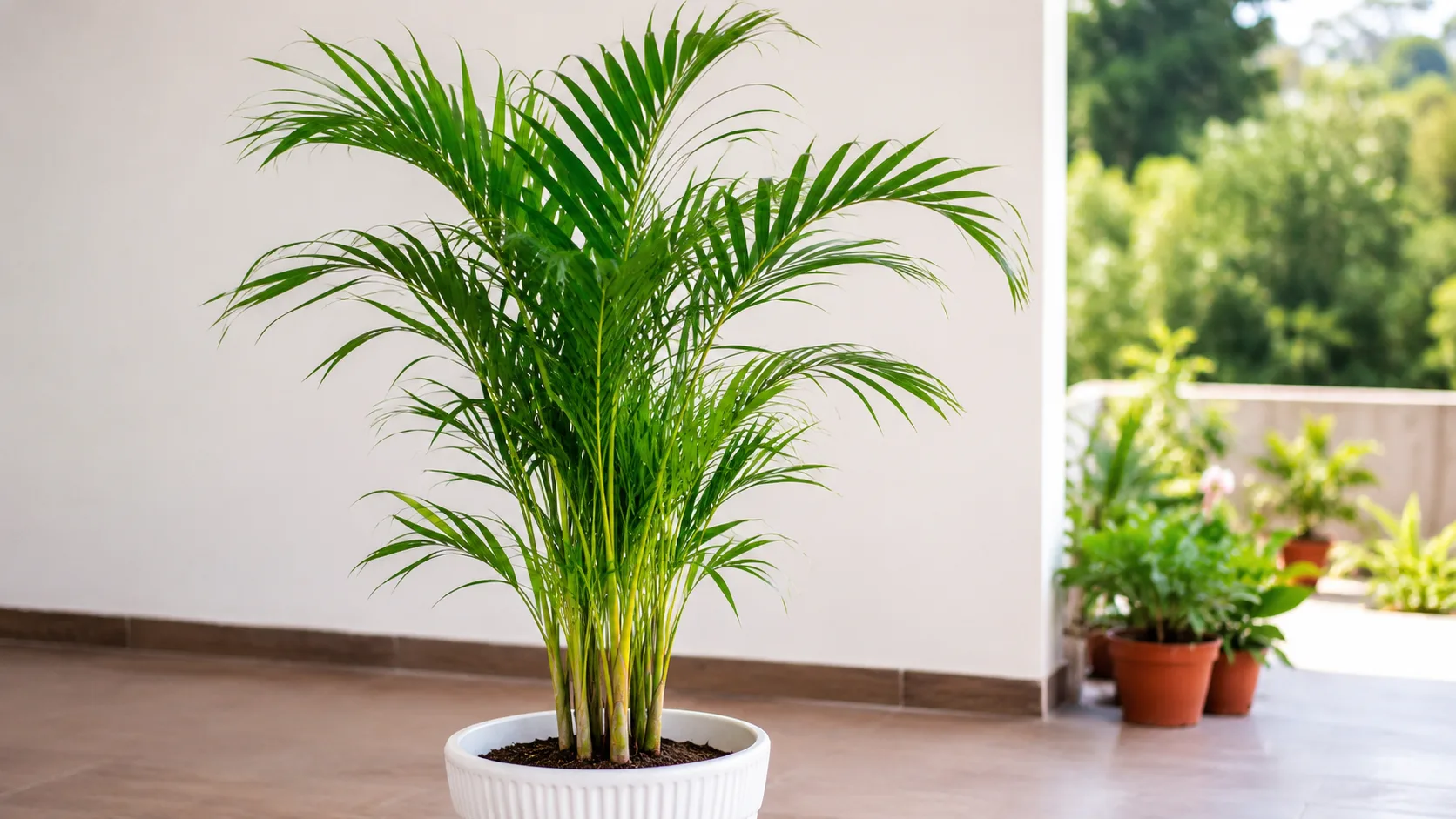
Areca palm brings height and tropical texture to an Indian living room in a way that small tabletop plants cannot. A healthy areca palm reaches five to six feet indoors with multiple feathery fronds that arch outward, creating a soft, layered screen. It is one of the most popular statement plants in Indian homes, partly because it is widely available and partly because it suits the Indian aesthetic preference for lush, green, garden-like indoor spaces. The ASPCA lists areca palm (Dypsis lutescens) as non-toxic to dogs and cats.
However, areca palm is more demanding than the first six plants on this list. It needs consistent moisture — not soggy soil, but not bone dry either — and it visibly declines in dim light. The fronds turn yellow and the tips brown when conditions are off. If you travel often or have a very dim apartment, areca palm is not the right pick.
Why it works in Indian homes: Areca palm appreciates the natural warmth of Indian rooms and the ambient humidity of monsoon season, which reduces the need for misting or humidifiers. A covered east or north-facing balcony is an ideal spot.
Care tip: Use a pot with generous drainage holes and a well-draining mix. Areca palm hates wet feet, and in the heavy humidity of Indian monsoon, excess water in a decorative outer pot will rot the roots fast.
Common mistake: Placing areca palm in a dark corner expecting it to “brighten up the room.” It needs actual light. If you can read comfortably without switching on a lamp during the day, the spot has enough light for an areca palm.
Avoid this plant if: You travel regularly or cannot commit to checking soil moisture twice a week during summer. Areca palm does not bounce back from neglect as readily as snake plant or ZZ plant.
Useful care guides:
8. Rubber Plant
Best for: Statement corners, living rooms, modern decor
Difficulty: Easy
Light: Moderate to bright indirect; tolerates some morning sun
Water: Every 7-10 days; let top inch of soil dry
Best placement: Living room corner with good light, beside a sofa, near a large window
Pet safety: Toxic to cats and dogs
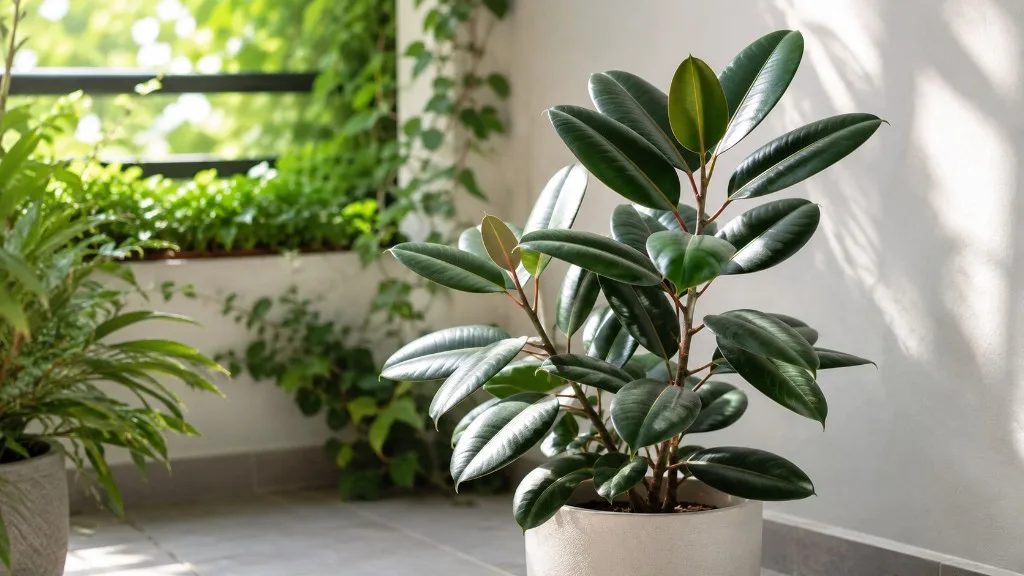
Rubber plant is the best large indoor plant for Indian homes that want bold, architectural foliage without the diva behavior of a fiddle leaf fig. Its broad, glossy leaves — deep green in the standard variety, nearly black in the Burgundy type, and marbled with cream or pink in the Tineke and Ruby varieties — make a strong visual statement. The plant grows upright on a single stem and reaches five to eight feet indoors over several years.
Unlike many large foliage plants, rubber plant does not demand constant attention. It handles the dry air of air-conditioned rooms, recovers from missed watering, and does not throw a tantrum when Indian summer temperatures climb. It grows faster in bright light but stays healthy in moderate light too, just more slowly.
Why it works in Indian homes: Rubber plant’s thick, waxy leaves resist water loss, which helps it cope with the dry heat of Indian summers and the dry air of AC rooms. It also stays compact enough for apartment living — it grows tall rather than wide.
Care tip: Clean the leaves monthly with a damp cloth. Those big, glossy leaves are dust magnets, and dust reduces photosynthesis. A quick wipe keeps them shiny and functional.
Common mistake: Moving the plant around too often. Rubber plant adjusts to a spot and may drop leaves if relocated frequently. Pick a location and commit — it prefers stability.
Avoid this plant if: You have curious pets at floor level. The milky sap is an irritant and the plant is listed as toxic by the ASPCA. Keep it on a plant stand or in a room pets do not access.
Useful care guides:
9. Aloe Vera
Best for: Kitchen windows, sunny balconies, medicinal use
Difficulty: Very Easy
Light: Bright; tolerates 3-4 hours of direct sun
Water: Every 2-3 weeks; let soil dry completely
Best placement: Kitchen windowsill, sunny balcony, near a south or west-facing window
Pet safety: Toxic to cats and dogs if ingested
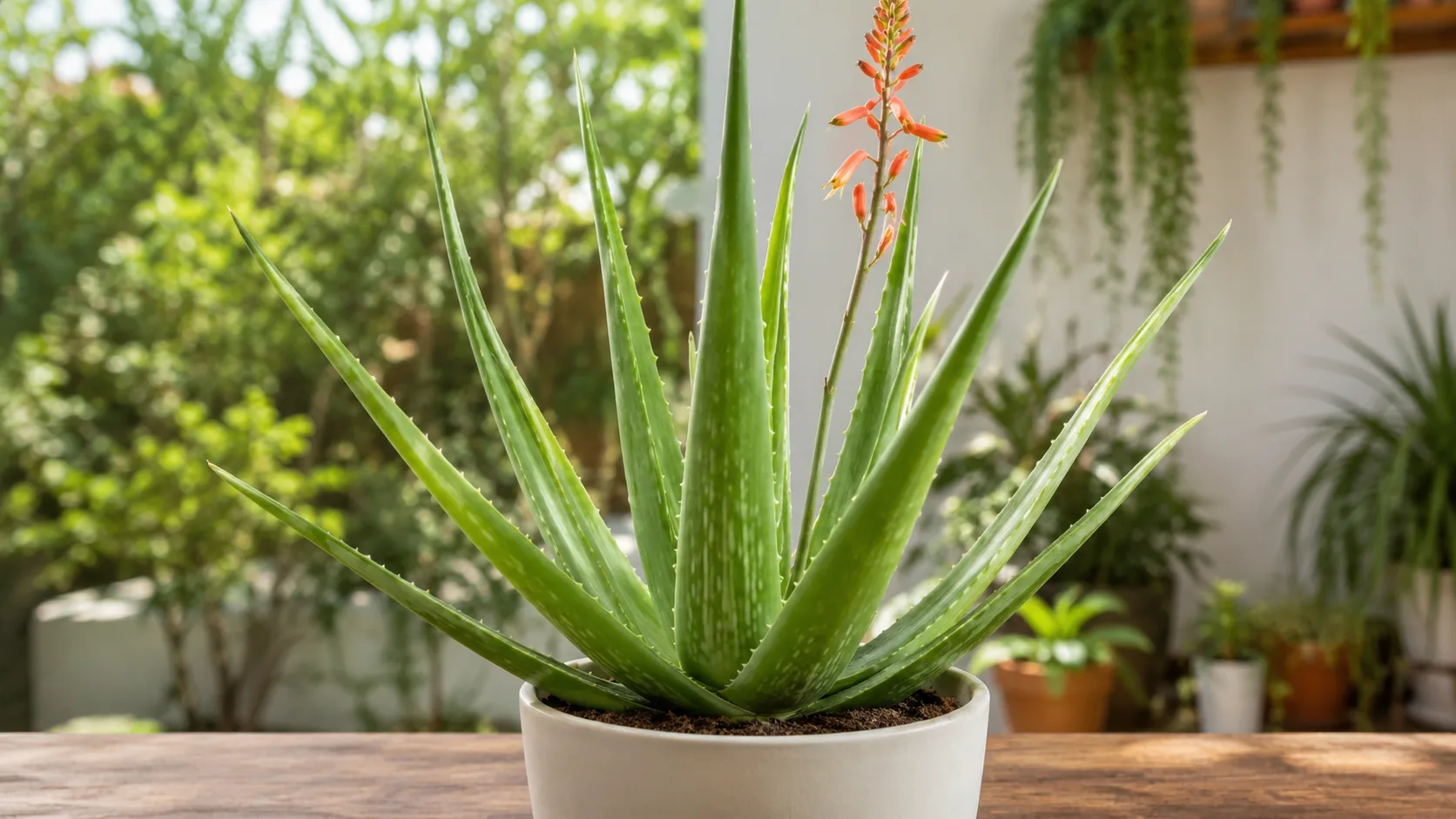
Aloe vera is the plant you keep in the kitchen for practical reasons, not just decoration. The gel inside its thick leaves soothes minor burns, cuts, and skin irritation — a real benefit in Indian homes where cooking burns and sun exposure are everyday occurrences. The plant itself is nearly impossible to kill as long as you do not overwater it.
Aloe vera is a succulent, which means it stores water in its leaves and needs bright light to stay compact and healthy. In dim conditions, the leaves stretch thin and pale, and the plant loses its structural shape. A sunny kitchen window, a south-facing balcony, or any spot that gets direct morning or late-afternoon sun is ideal.
Why it works in Indian homes: Aloe vera’s drought tolerance is perfectly matched to hot Indian summers. It thrives on neglect and actually performs worse when fussed over. Many Indian households already know aloe vera as a medicinal plant — bringing it indoors formalizes a relationship that already exists on rooftops and in courtyard gardens.
Care tip: Harvest outer leaves at the base when you need gel — the plant heals the cut and keeps growing from the center. Do not harvest more than a third of the leaves at once.
Common mistake: Watering too often and using soil that holds moisture. Aloe vera rots quickly in wet soil. Use a sandy, well-draining cactus mix and a terracotta pot that breathes.
Avoid this plant if: Your only available spots are dim interior rooms. Aloe vera needs bright light to keep its shape — in low light it becomes leggy, pale, and unattractive.
Useful care guides:
10. Tulsi (Holy Basil)
Best for: Balconies, puja rooms, kitchen windows, cultural value
Difficulty: Medium
Light: Bright; needs 4-6 hours of direct or strong indirect sun
Water: Every 1-2 days; keep soil consistently moist
Best placement: Sunny balcony, puja room with good light, kitchen windowsill, courtyard
Pet safety: Generally considered safe
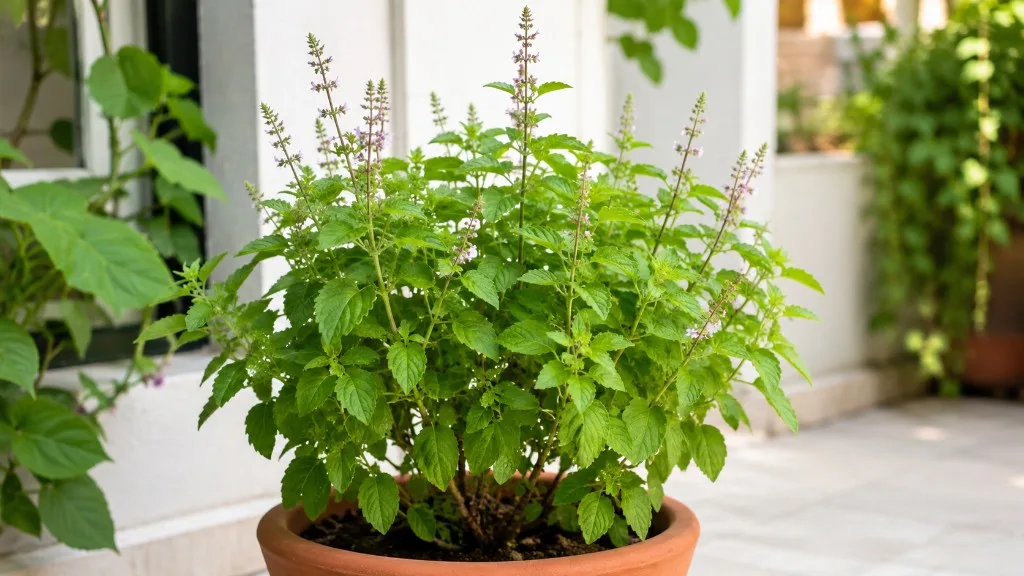
Tulsi holds a unique place in Indian homes that no purely decorative plant can match. It is grown for religious and cultural reasons, used in Ayurvedic preparations, added to tea, and treated as a living presence rather than just a houseplant. In many households, the tulsi plant is tended daily with the same regularity as cooking or prayer, placed in a dedicated planter on a balcony or in a courtyard.
From a purely horticultural standpoint, tulsi is not an “easy” indoor plant. It needs strong light — at least four to six hours of direct or very bright indirect sun — and consistent moisture. It grows as an annual or short-lived perennial, meaning it will eventually flower, set seed, and decline, requiring replacement. But it is one of the most meaningful plants you can grow in an Indian home, and it thrives outdoors on balconies and terraces where many purely indoor plants would scorch.
Why it works in Indian homes: Tulsi is adapted to the Indian climate and grows vigorously in warm weather with adequate light and water. It does not need special soil or fertilizers — regular garden soil with some compost works fine in Indian conditions.
Care tip: Pinch off flower spikes as they appear to prolong the plant’s leafy growth phase. Once tulsi flowers heavily and sets seed, the leaves lose flavor and the plant begins to decline.
Common mistake: Growing tulsi in a dim indoor room expecting it to survive like a snake plant. Tulsi needs real sun. Without it, the plant becomes leggy, pale, and quickly succumbs to fungal issues.
Avoid this plant if: Your home lacks a sunny balcony or bright window. Tulsi will not thrive in low light, and a struggling tulsi plant carries cultural disappointment in a way a struggling pothos does not.
Useful care guides:
11. Jade Plant
Best for: Desks, sunny windowsills, compact spaces
Difficulty: Very Easy
Light: Bright; benefits from 3-4 hours of direct morning sun
Water: Every 2-3 weeks; let soil dry completely
Best placement: Desk near a window, sunny windowsill, shelf with good light
Pet safety: Toxic to cats and dogs if ingested
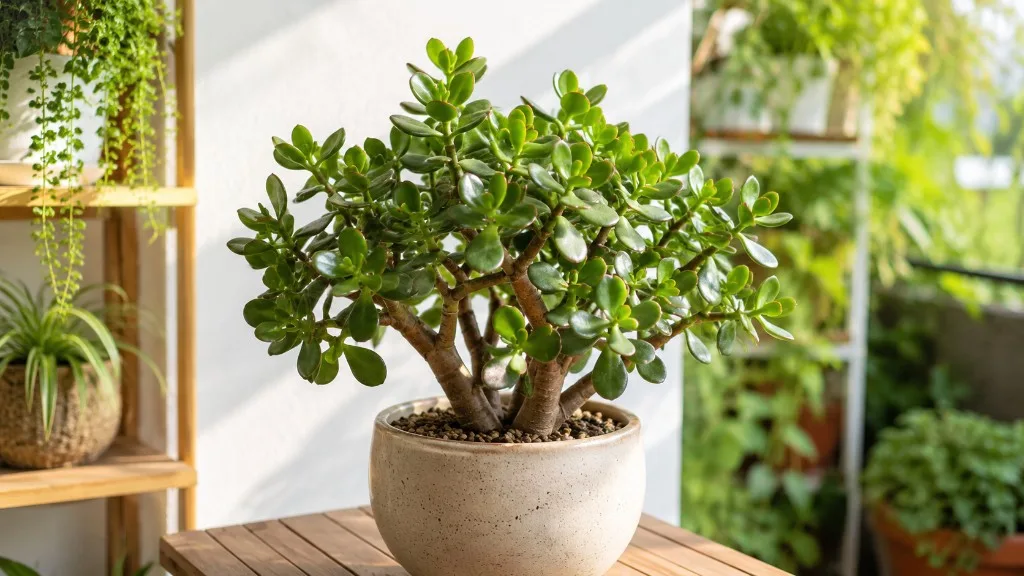
Jade plant is a compact succulent with thick, oval leaves that look like small green coins — which is why it is often associated with prosperity and kept near the entrance of Indian homes and businesses. It stays small enough for a desk or windowsill, grows slowly enough that it never outgrows its spot, and asks for almost nothing beyond bright light and very occasional watering.
In Indian homes, jade plant bridges the gap between “desk plant” and “statement plant.” It develops a woody trunk and tree-like shape over several years, which gives it presence without demanding floor space. A mature jade in a terracotta pot on a sunny windowsill looks deliberate and cared-for.
Why it works in Indian homes: Jade plant’s succulent leaves store water efficiently, making it extremely drought-tolerant — a good match for hot Indian summers and busy schedules. It also tolerates the dry air of AC rooms without complaint.
Care tip: Give it the sunniest spot you have. Jade plant’s leaves develop red edges when exposed to bright light, which is a sign of healthy stress, not damage. In dim conditions, the plant stretches and loses its compact shape.
Common mistake: Using standard potting soil that holds too much moisture. Jade plant needs a gritty, fast-draining cactus mix. Regular garden soil or compost-heavy potting mix will hold water and rot the roots, especially during humid monsoon months.
Avoid this plant if: You have a dim home with no bright windows. Jade plant becomes leggy and unattractive without strong light.
Useful care guides:
12. Syngonium (Arrowhead Plant)
Best for: Shelves, table tops, small spaces, trailing or climbing display
Difficulty: Easy
Light: Low to moderate indirect; tolerates fluorescent light
Water: Once a week; let top inch of soil dry
Best placement: Shelf, desk, side table, hanging basket, trained up a small moss pole
Pet safety: Toxic to cats and dogs
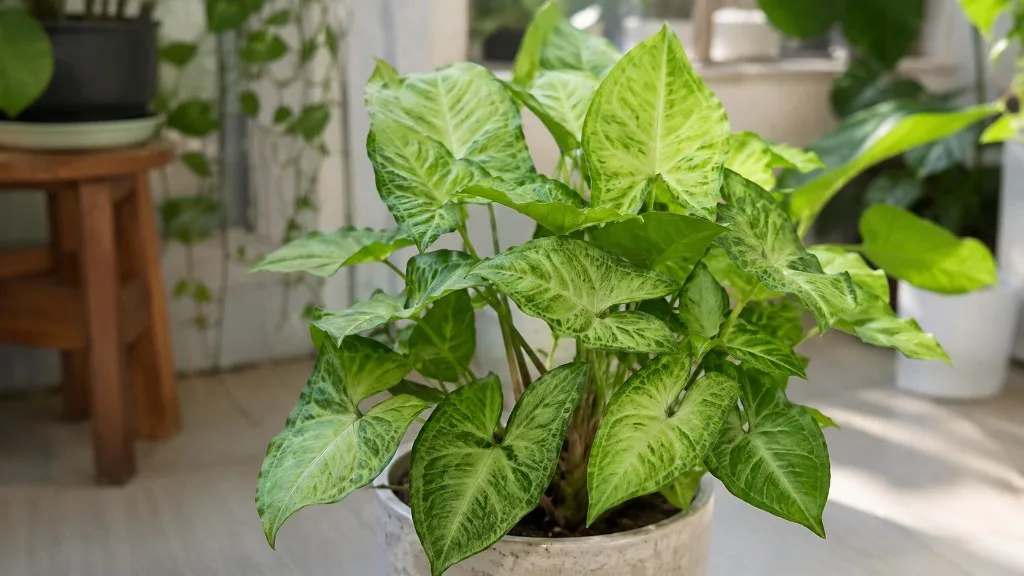
Syngonium is the adaptable all-rounder on this list. As a young plant, it stays compact and bushy on a tabletop. As it matures, it begins to vine — you can let it trail from a shelf or train it up a small support for a climbing look. The arrow-shaped leaves come in shades of green, pink, cream, and deep burgundy depending on the variety, and the plant is inexpensive and widely available in Indian nurseries.
What makes syngonium especially useful for Indian apartments is its tolerance for low-to-moderate light. It will not grow quickly in a dim corner, but it will maintain its shape and color where many other leafy plants would yellow and drop leaves. It also handles the warmth of Indian rooms without issue.
Why it works in Indian homes: Syngonium is forgiving of inconsistent care — it bounces back from underwatering, tolerates occasional overwatering better than succulents, and does not throw a fit when moved between rooms. It is a good starter plant for someone who wants something slightly more interactive than a snake plant.
Care tip: If you want a bushier plant, pinch back the growing tips regularly. If you want a climbing plant, give it a small moss pole or trellis — the leaves grow larger and develop more pronounced lobes when the plant climbs.
Common mistake: Letting the plant sit in a dark corner and wondering why growth has stopped. Syngonium tolerates low light but does not thrive in it. A spot that gets bright indirect light, like near an east-facing window, produces faster growth and better leaf color.
Avoid this plant if: You want a plant with large, dramatic leaves. Syngonium’s leaves stay modest in size — usually three to five inches — even on a mature plant indoors. For big foliage, choose a rubber plant or monstera instead.
Useful care guides:
How to Choose the Right Plant for Your Indian Home
For sunny balconies and bright windows: Aloe vera, tulsi, jade plant, and areca palm perform best where direct or strong indirect light is available for several hours. These are your picks for south and west-facing windows, covered balconies, and kitchen windowsills that get morning sun.
For dim apartments and interior rooms: Snake plant, ZZ plant, aglaonema, and syngonium are the best choices for rooms with limited natural light — north-facing windows, ground-floor flats shaded by buildings, hallways, and bathrooms with small windows. Money plant and peace lily can work too, but they will grow slowly and may not flower.
For busy people who travel: Snake plant, ZZ plant, jade plant, and aloe vera store water in their leaves or rhizomes and can go two to four weeks without watering. They are the safest picks if you travel for work, visit family for weeks at a time, or simply tend to forget plant care during busy periods.
For homes with pets and children: Spider plant is the safest choice — it is non-toxic to cats and dogs and stays contained in hanging baskets out of reach. Areca palm is also listed as non-toxic by the ASPCA. Most other plants on this list — snake plant, money plant, ZZ plant, peace lily, aglaonema, rubber plant, aloe vera, jade plant, and syngonium — are toxic if chewed and should be placed on high shelves, in hanging baskets, or in rooms pets and small children cannot access.
For traditional and cultural value: Tulsi is the definitive choice, with religious and cultural significance across Indian households. Aloe vera has practical medicinal value. Money plant and jade plant are both associated with prosperity and are commonly placed near entrances. Snake plant is sometimes recommended in Vastu for specific directions.
Common Mistakes Indian Plant Owners Make
Watering on a fixed schedule regardless of season. Indian seasons swing dramatically — summer heat dries soil in days, monsoon humidity keeps it wet for weeks, and winter slows plant metabolism. A “water every Sunday” rule works in none of these conditions. Check the soil with your finger each time. If it feels damp an inch down, skip watering.
Placing plants in harsh afternoon sun. Direct Indian afternoon sun through a west-facing window can scorch leaves in under an hour, especially between March and June. Plants labeled “bright light” usually mean bright indirect light or gentle morning sun, not the full force of a 2 PM Delhi or Chennai sun. Use sheer curtains or move plants a few feet back from west-facing windows during summer afternoons.
Using pots without drainage holes. Decorative ceramic pots without drainage are a leading cause of indoor plant death in Indian homes. Water pools at the bottom, roots rot, and the plant declines slowly with symptoms that look like underwatering. Always use a nursery pot with drainage holes inside the decorative outer pot, and empty excess water from the outer pot after watering.
Ignoring AC and fan drafts. Air conditioning and ceiling fans create constant dry airflow that pulls moisture from leaves and soil faster than still air. Plants near AC vents or directly under fans may need more frequent watering and occasional leaf misting. Move sensitive plants like peace lily and areca palm away from direct drafts. Hardier plants like snake plant and ZZ plant are less affected.
Seasonal Care Tips for Indian Weather
Summer (March to June). Check soil moisture more often — plants in bright spots may need water twice as often as in winter. Move plants away from west-facing windows during peak afternoon hours. If you run AC during the day, group plants together to create a slightly more humid microclimate. Do not fertilize during extreme heat — plants are stressed and cannot use extra nutrients effectively.
Monsoon (July to September). Cut back watering significantly. Soil stays wet longer in high humidity, and overwatering during monsoon is the most common cause of root rot in Indian homes. Ensure pots drain freely — elevate them on pebbles or pot feet if they sit directly on a surface that traps water. Watch for fungus gnats and mold on soil surface — both are signs of excessive moisture. Open windows when possible to improve air circulation.
Winter (October to February). Most indoor plants slow down or stop growing as temperatures drop and daylight hours shorten. Water less often — soil takes longer to dry. Stop fertilizing until spring. In North India, move plants away from cold window glass at night. In South India where winters are mild, maintain regular care but still reduce watering frequency slightly compared to summer.
Conclusion
The best indoor plant for your Indian home is the one that matches your actual conditions — not the one that looked best in a photo.
If you want a nearly unkillable plant for a dim bedroom, get a snake plant or ZZ plant. If you want something that grows fast and trails beautifully, start with a money plant — it is cheap, forgiving, and easy to propagate into multiple plants. If you want a statement plant for a well-lit living room corner, choose a rubber plant. If cultural and practical value matters most, grow tulsi on your balcony and keep aloe vera in your kitchen. If you have pets, a spider plant hanging high is the safest bet.
All 12 plants on this list are available in Indian nurseries and online plant stores. Start with two or three that fit your light and schedule, care for them through a full cycle of Indian seasons, and add more only when you are confident in those first few. A small collection of healthy, well-placed plants looks better and causes less stress than a crowded room of struggling ones.
Related guides
- 10 Low-Maintenance Indoor Plants for Busy Homes and Beginners — more easy-care picks that tolerate missed watering and lower light
- How to Water Indoor Plants the Right Way — detailed watering guide including seasonal adjustments
- Best Potting Mix for Indoor Plants — What Works — soil and drainage for indoor pots
- Indoor Plant Watering Basics — beginner-friendly watering fundamentals
- Best Indoor Plants for Small Apartments — curated picks for compact spaces