Best Low-Maintenance Indoor Plants
Plants that thrive with minimal watering and care attention.
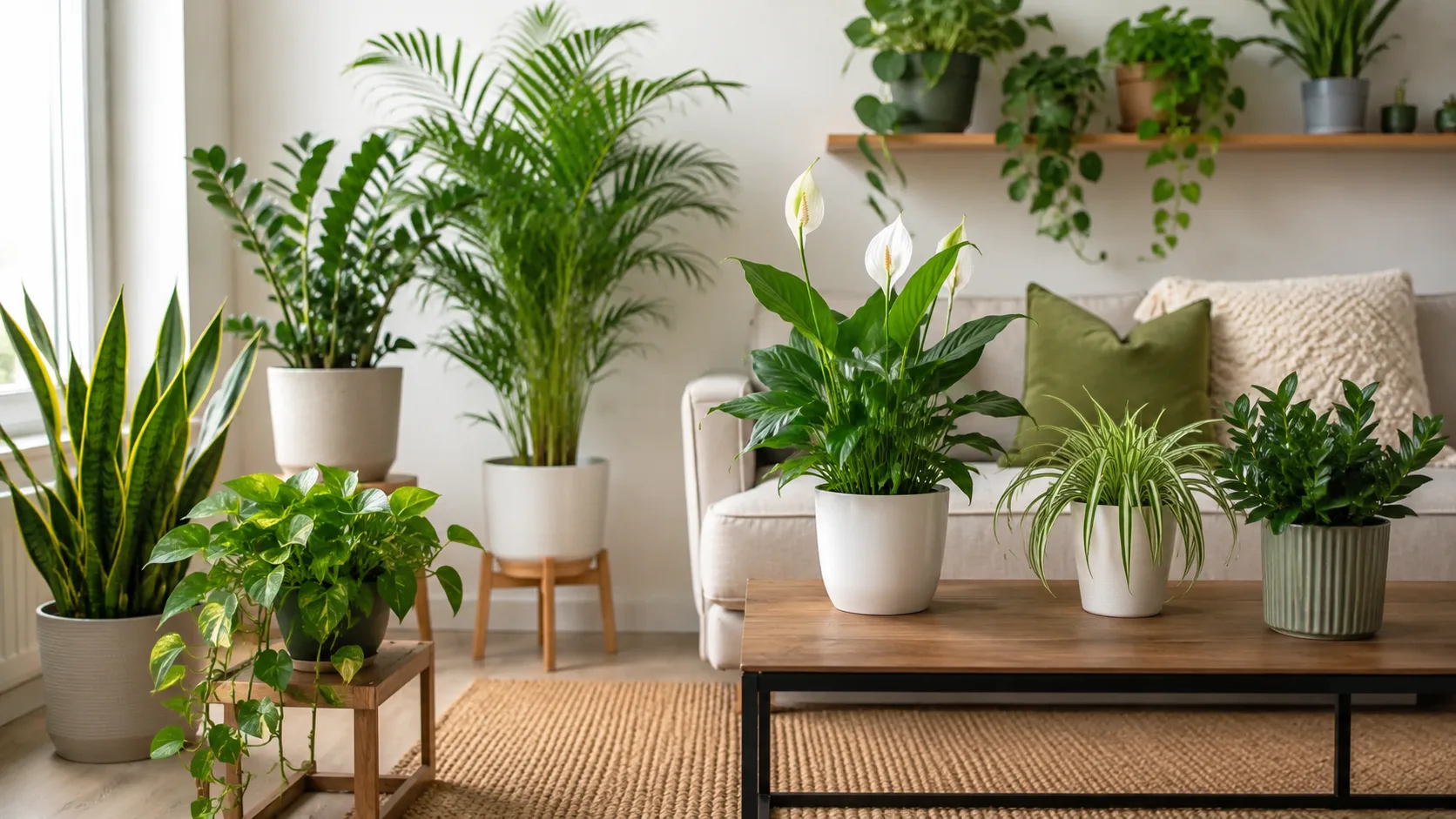
Best Low-Maintenance Indoor Plants
Quick recommendation
ZZ plant and snake plant need watering only every few weeks.
Best Low-Maintenance Indoor Plants
Plants that thrive with minimal watering and care attention.
Quick recommendation
ZZ plant and snake plant need watering only every few weeks.
Low-maintenance does not mean no maintenance. It means the plant forgives missed waterings, tolerates average indoor light, and does not punish you with crispy leaves the first time you travel for ten days. The best easy-care plant is rarely labeled “impossible to kill” at the nursery—it is the one whose water storage, light needs, and pest resistance match how you actually live.
If you want a filterable quick list from LeafyPixels plant metadata, this page’s featured plants appear in our database filters. This guide goes deeper: what “easy” really means, a comparison table by watering interval, and links to full species care on LeafyPixels.
The ten best low-maintenance indoor plants for most homes are ZZ plant, snake plant, pothos, jade plant, aloe vera, haworthia, rubber plant, ponytail palm, peace lily, and spider plant. They are not equally easy in every room—light still rules.
University extension guidance treats light, water, drainage, and temperature as the core indoor success factors. Low-maintenance plants usually share traits: water-storing tissues, tolerance of drying between waterings, and adaptability to medium or low indirect light. (University of Georgia Extension)
Low-maintenance does not mean:
It does mean:
For maximum neglect tolerance in low light, choose ZZ plant or snake plant.
For trailing easy green, choose pothos—more forgiving than most vines.
For sunny windowsills with minimal watering, choose haworthia, aloe vera, or jade plant.
For pet-aware homes, choose spider plant (ASPCA non-toxic). Avoid aloe, pothos, and peace lily within pet reach.
For a large easy floor plant in a bright room, choose rubber plant or ponytail palm.
For clear “water me” signals, choose peace lily—medium maintenance but obvious wilt cues.
Match light first, then watering style, then size and pet safety.
Jade, aloe, and haworthia are easy on sunny sills and demanding in dim corners. Snake plant and pothos fit low light better.
Easy plants die in sealed ceramic pots when roots sit wet. Use drain holes or water precisely.
Chronic overwaterers should choose ZZ plant and snake plant. Chronic underwaterers who want wilt signals may prefer peace lily.
These ten were chosen for documented forgiveness of irregular care, broad nursery availability, typical indoor light tolerance, and LeafyPixels care depth—not because they never need attention.
We excluded humidity divas (calathea, maidenhair fern) and high-light drama plants (fiddle leaf fig) from this easy-care list even though they are popular.
| Plant | Watering Interval (typical) | Light | Care Level | Pet Safety | Travel Tolerance | Main Trade-Off |
|---|---|---|---|---|---|---|
| ZZ plant | 3–4 weeks | Low–medium | Easiest | Toxic | Excellent | Toxic to pets |
| Snake plant | 2–4 weeks | Low–medium | Easiest | Toxic | Excellent | Slow in dim light |
| Pothos | 10–14 days | Low–medium | Easy | Toxic | Good | Toxic; grows fast |
| Jade plant | 2–3 weeks | Bright indirect | Easy | Toxic | Good | Needs sun |
| Aloe vera | 2–3 weeks | Bright indirect | Easy | Toxic | Good | Needs sun; toxic |
| Haworthia | 10–14 days | Bright indirect | Easy | Non-toxic | Good | Needs sun |
| Rubber plant | 7–14 days | Bright indirect | Easy | Toxic | Moderate | Needs bright room |
| Ponytail palm | 2–4 weeks | Bright indirect | Easy | Non-toxic | Excellent | Needs light; slow |
| Peace lily | 7–10 days | Medium indirect | Medium | Toxic | Poor if dry | Wilts when thirsty |
| Spider plant | 7–10 days | Medium indirect | Easy | Non-toxic | Moderate | Likes some attention |
Best for: chronic overwaterers, low light, travelers.
Difficulty: Easiest
Light: Low to medium indirect
Water: Every 3–4 weeks typical
Best placement: Dim corner, entryway, office
Pet safety: Toxic if ingested
Typical indoor size: 12–24 inches
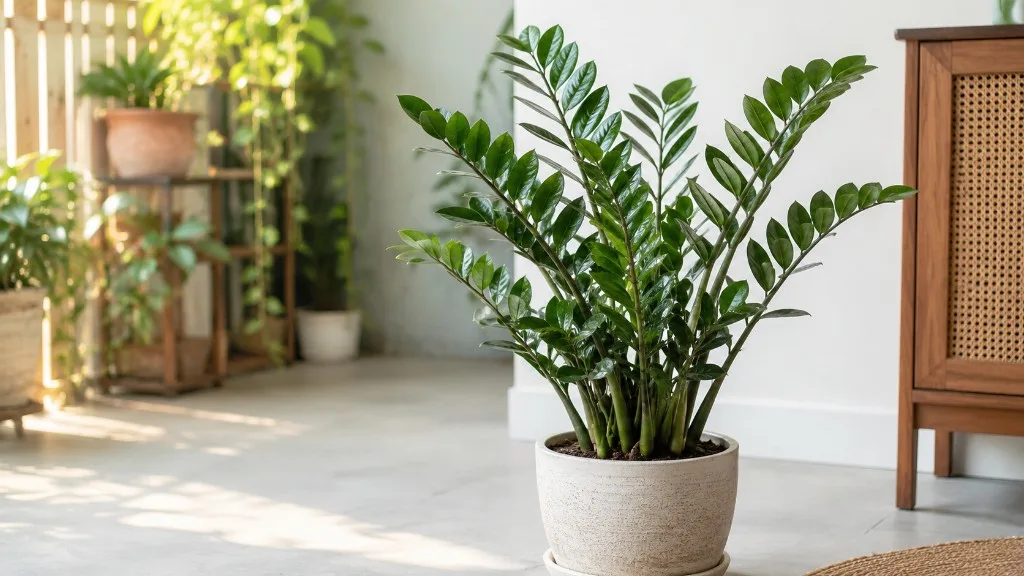
ZZ plant stores water in rhizomes—among the most forgiving houseplants sold. It tolerates low light and weeks without water better than almost anything on this list.
Why it works: Rhizome storage handles neglect and irregular schedules.
Who it is for: Beginners, frequent travelers, low-light apartments.
Care reality: Rot is the main risk—from kindness, not neglect.
Common mistake: Weekly watering because the glossy leaves look “thirsty.”
Limitation: Toxic to pets; nearly stagnant in very dark rooms.
Useful care guides:
Best for: bedrooms, offices, upright minimal look.
Difficulty: Easiest
Light: Low to medium indirect
Water: Every 2–4 weeks
Best placement: Floor corner, nightstand, bathroom with window
Pet safety: Toxic if ingested
Typical indoor size: 12–36 inches
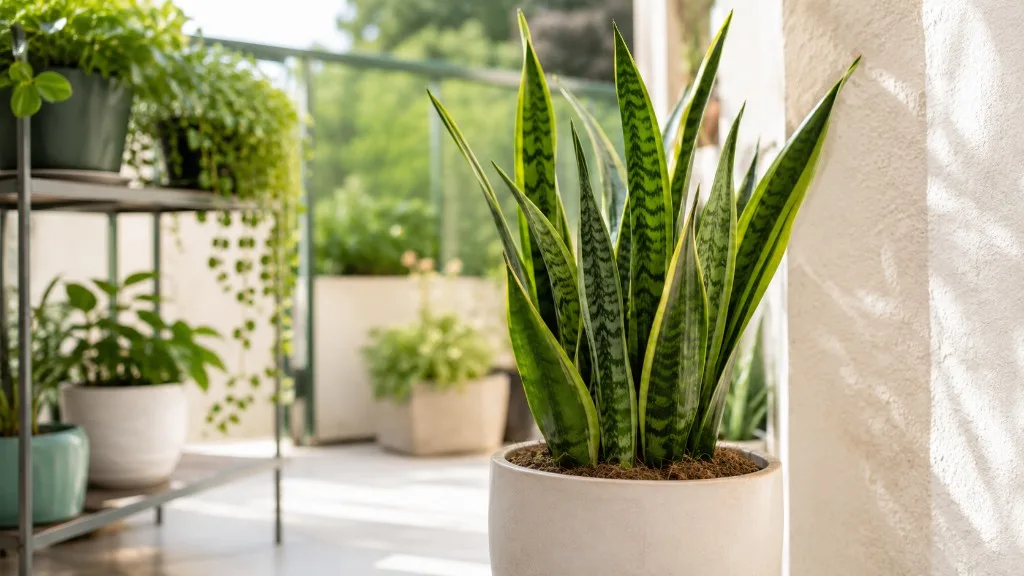
Snake plant survives conditions that kill fussier tropicals. CAM photosynthesis helps it tolerate dry air and irregular water—useful in heated homes.
Why it works: Extreme drought tolerance with slim footprint.
Who it is for: Anyone who has killed “easy” plants by overwatering.
Care reality: Soft mushy base means rot—stop watering immediately.
Common mistake: Planting in huge decorative pots that stay wet for weeks.
Limitation: Toxic; growth is slow without brighter light.
Useful care guides:
Best for: trailing shelves, first vine plant, low-medium light.
Difficulty: Easy
Light: Low to medium indirect
Water: When top 2 inches dry
Best placement: Shelf, cabinet top, hanging basket
Pet safety: Toxic if ingested
Typical indoor size: Vines 6–10 feet; trim to control
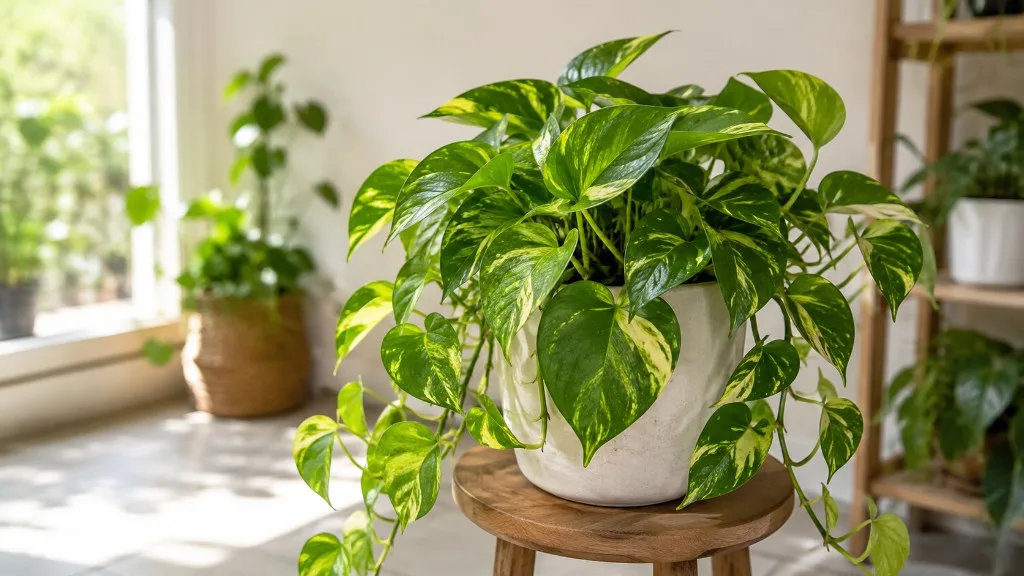
Pothos is the gateway easy plant: fast growth when happy, slow survival mode when neglected. It communicates by yellowing leaves when overwatered—learn that signal early.
Why it works: Balances forgiveness with visible growth reward.
Who it is for: Renters and beginners wanting lush trailing green.
Care reality: More water-needy than ZZ plant but still forgiving.
Common mistake: Keeping in zero light and wondering why vines are bare.
Limitation: Toxic to pets; needs occasional trim.
Useful care guides:
Best for: sunny windowsills, succulent style, slow compact growth.
Difficulty: Easy
Light: Bright indirect
Water: Every 2–3 weeks when soil dries completely
Best placement: South or west window sill
Pet safety: Toxic if ingested
Typical indoor size: 12–24 inches slowly
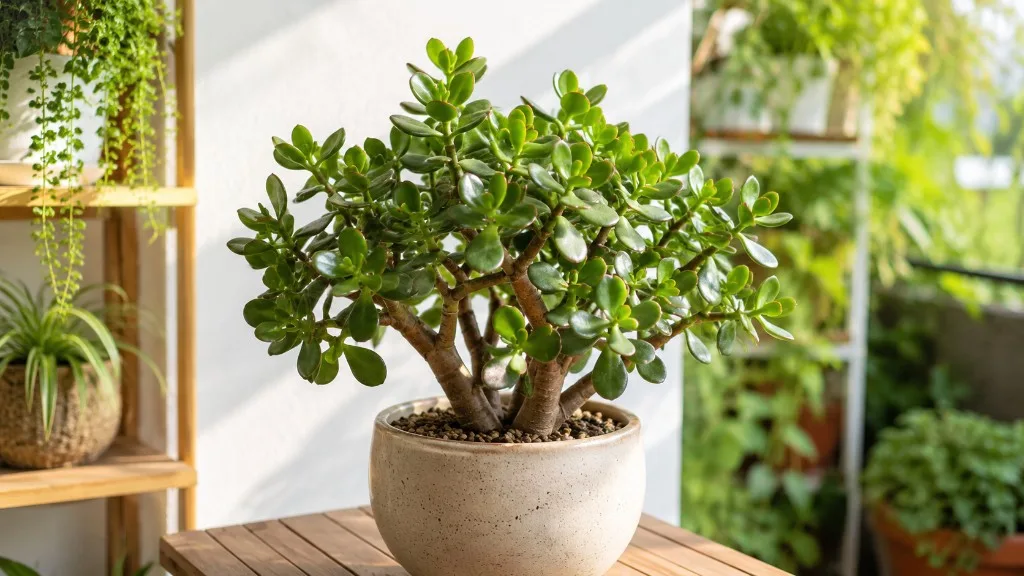
Jade plant is low-maintenance where it gets sun. It stores water in leaves and stems—excellent for travelers with bright windows.
Why it works: Woody structure; tolerates dry soil long intervals.
Who it is for: Sunny apartments and mindful underwaterers.
Care reality: Leaves shrivel when thirsty; recovers after one good soak.
Common mistake: Treating as low-light easy like snake plant.
Limitation: Toxic; etiolates in dim rooms.
Useful care guides:
Best for: sunny kitchens, utility plant, occasional harvest.
Difficulty: Easy
Light: Bright indirect
Water: Every 2–3 weeks when dry
Best placement: Bright kitchen window
Pet safety: Toxic if ingested
Typical indoor size: 12–18 inches rosette
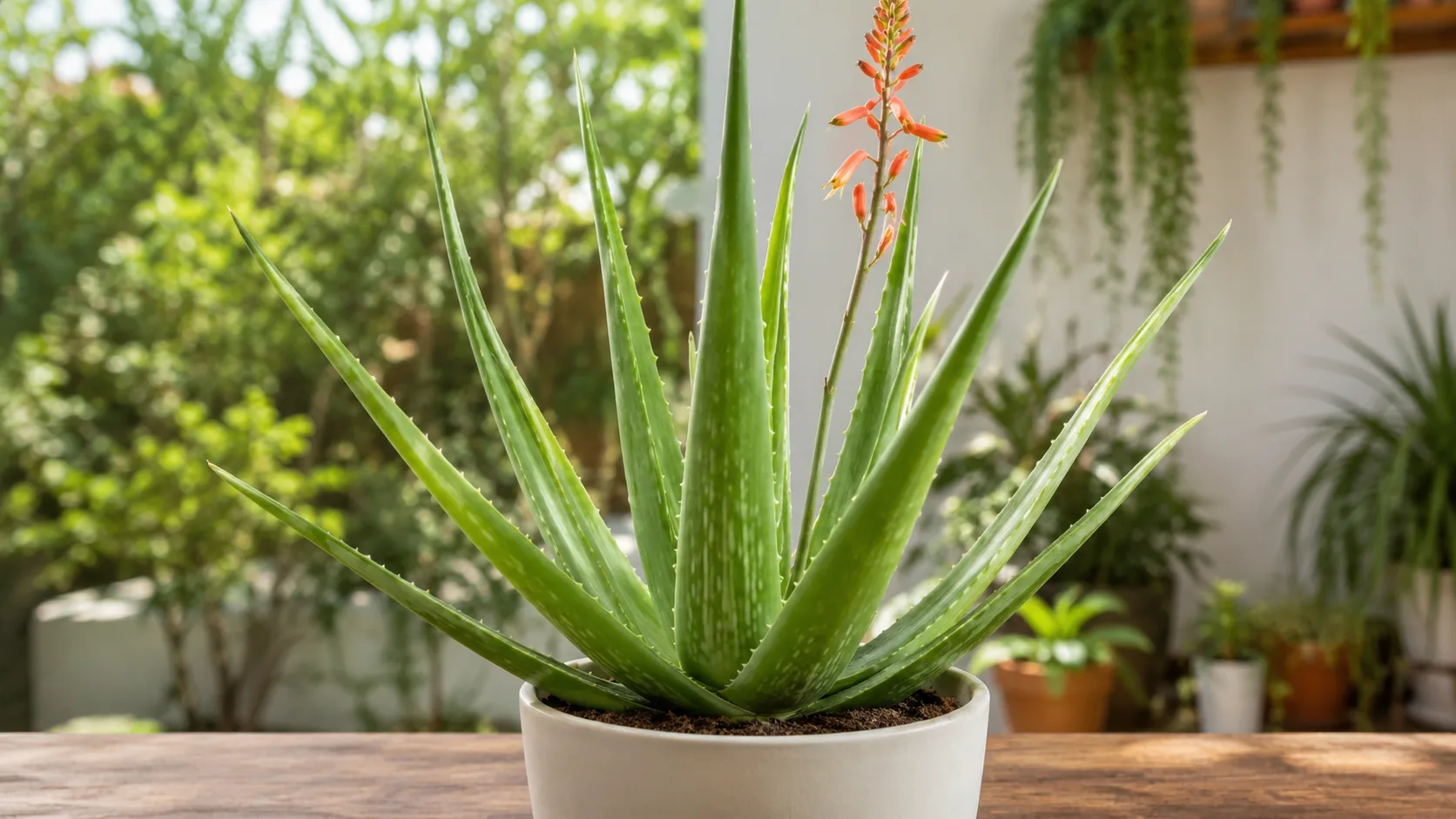
Aloe vera is easy on a sunny sill—less so in living rooms away from windows. Gel harvest is optional; the plant is decorative first.
Why it works: Succulent storage handles missed waterings in bright spots.
Who it is for: Sunny kitchens and confident underwaterers.
Care reality: Root rot from winter overwatering in cool dim rooms.
Common mistake: Bathroom shelf placement without enough light.
Limitation: Toxic to pets; not a low-light plant.
Useful care guides:
Best for: small sunny desks, pet-safe succulent.
Difficulty: Easy
Light: Bright indirect
Water: Every 10–14 days when fully dry
Best placement: Windowsill desk
Pet safety: Non-toxic to cats and dogs (ASPCA)
Typical indoor size: 4–6 inch rosette
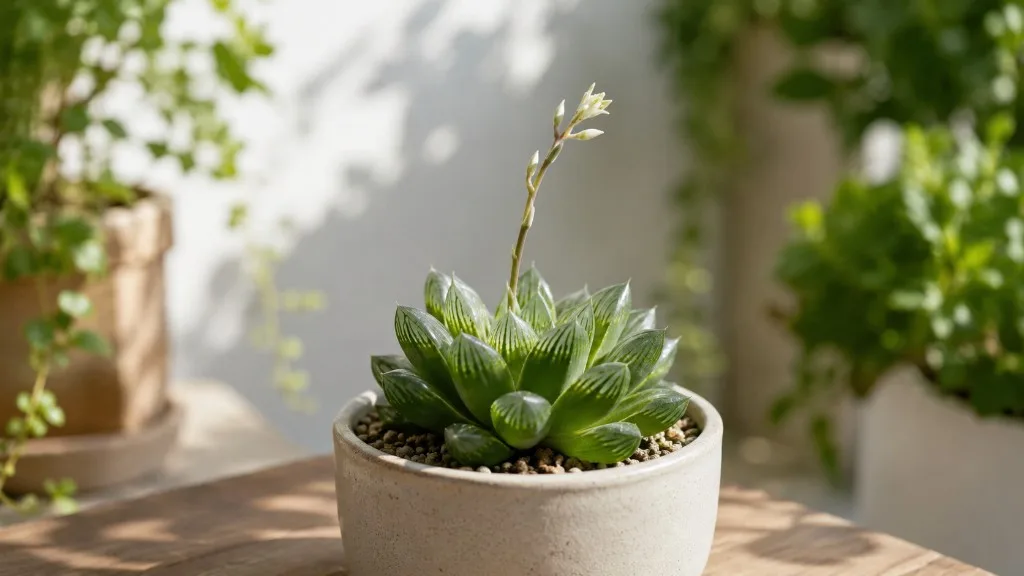
Haworthia delivers succulent ease with ASPCA non-toxic status—rare combination. It needs brighter light than ZZ plant but less frequent water than pothos.
Why it works: Pet-safe drought tolerance in a tiny pot.
Who it is for: Cat households with sunny sills.
Care reality: Mushy base means rot from overwatering.
Common mistake: Grouping with snake plant in a dark hallway.
Limitation: Not for low-light “easy plant” requests.
Useful care guides:
Best for: bright rooms, large easy floor plant.
Difficulty: Easy to medium
Light: Bright indirect
Water: When top 2 inches dry
Best placement: Living room corner with window
Pet safety: Toxic if ingested
Typical indoor size: 6–10 feet over years
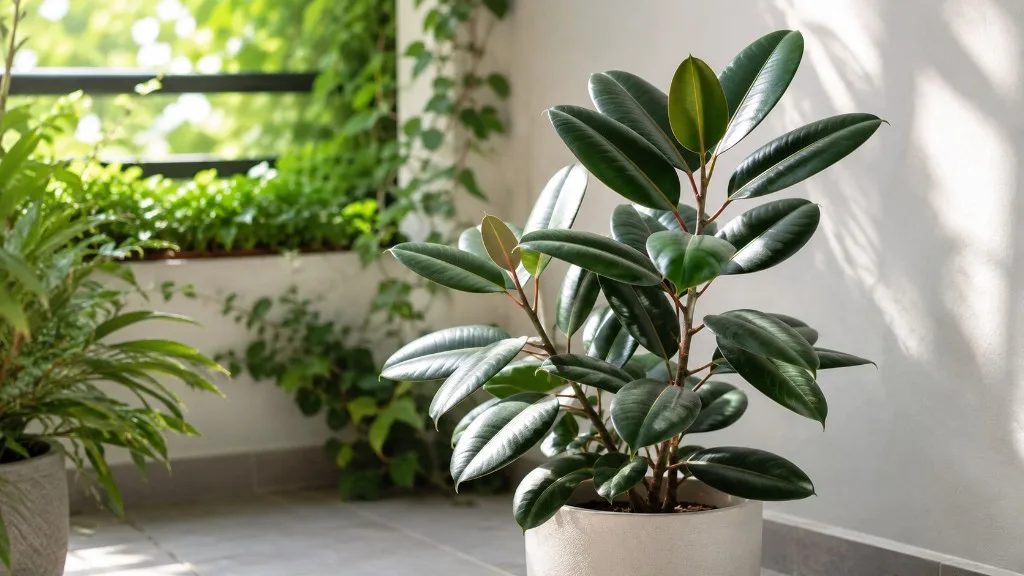
Rubber plant is among the easiest large indoor plants when light is adequate. It does not need fern humidity or daily misting.
Why it works: Bold size without calathea-level fuss.
Who it is for: Bright living rooms with floor space.
Care reality: Drops leaves if light drops or watering swings wildly.
Common mistake: Buying for a medium-light corner expecting tree-like growth.
Limitation: Toxic; needs space and light.
Useful care guides:
Best for: bright rooms, caudex water storage, quirky silhouette.
Difficulty: Easy
Light: Bright indirect
Water: Every 2–4 weeks
Best placement: Floor beside sunny window
Pet safety: Non-toxic to cats and dogs (ASPCA)
Typical indoor size: 3–6 feet indoors slowly
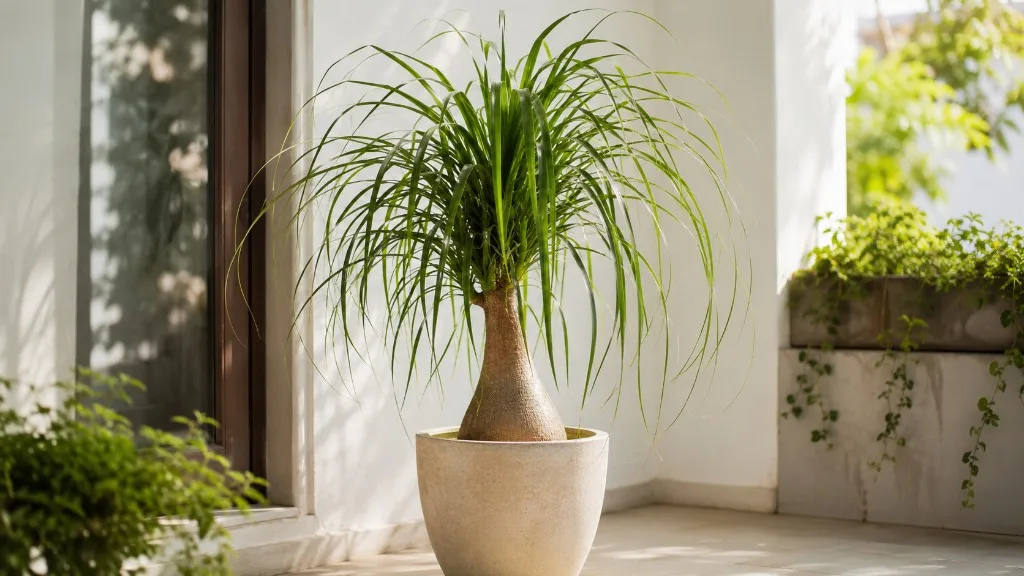
Ponytail palm (Beaucarnea recurvata) is not a true palm—the swollen base stores water. Excellent travel tolerance in bright rooms.
Why it works: Pet-safe water storage at floor scale.
Who it is for: Bright living rooms needing sculptural easy plants.
Care reality: Trunk softening means serious overwatering damage.
Common mistake: Frequent small sips instead of deep infrequent watering.
Limitation: Slow growth; poor in dim rooms.
Useful care guides:
Best for: owners who want obvious wilt feedback, medium light.
Difficulty: Medium
Light: Medium indirect
Water: When soil surface dries; wilts dramatically when dry
Best placement: Living room with window light
Pet safety: Toxic if ingested
Typical indoor size: 12–24 inches
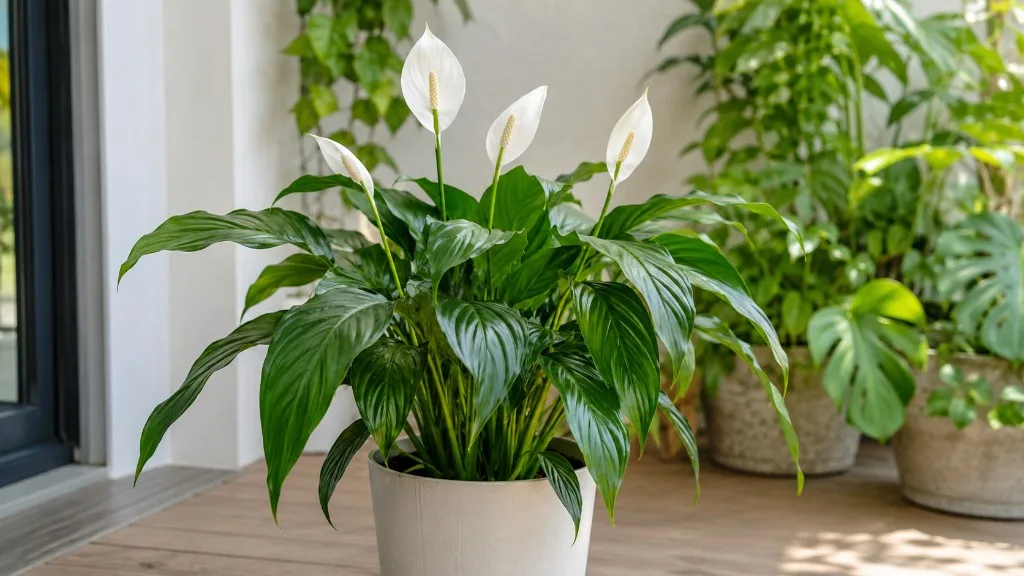
Peace lily is not as neglect-proof as ZZ plant—but it tells you when to water. That makes it low-maintenance for attentive beginners who forget schedules but notice droop.
Why it works: Visual wilt prevents long drought confusion.
Who it is for: Growers who check plants every few days.
Care reality: Cannot survive multi-week travel without wilting.
Common mistake: Keeping in dark rooms because lists call it “easy.”
Limitation: Toxic; poorest traveler on this list.
Useful care guides:
Best for: pet homes, hanging baskets, medium light.
Difficulty: Easy
Light: Bright to medium indirect
Water: When top 2 inches dry
Best placement: Hanging basket or shelf
Pet safety: Non-toxic to cats and dogs (ASPCA)
Typical indoor size: 12–24 inches with spiderettes
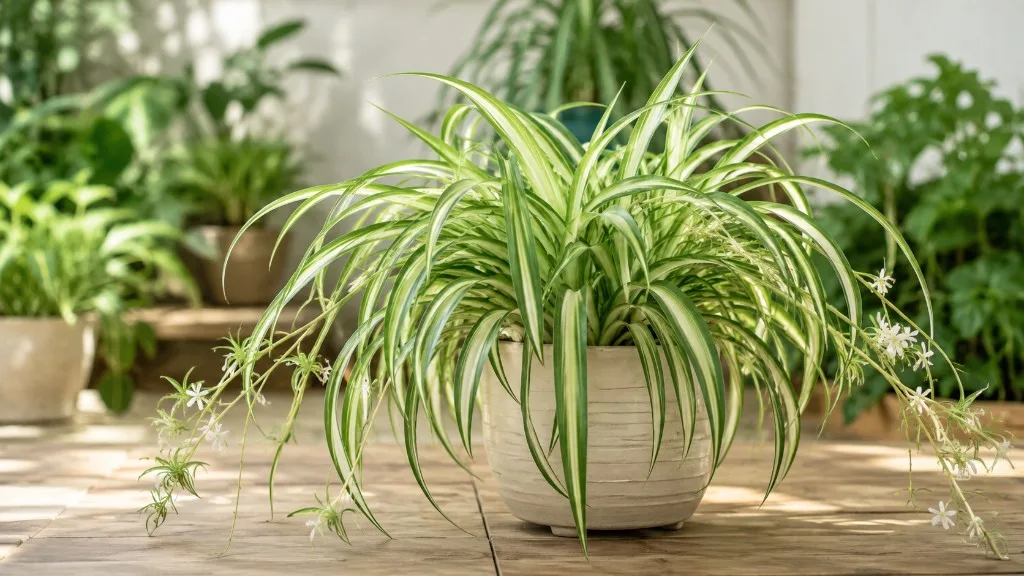
Spider plant needs water more often than snake plant—but still forgives occasional misses. ASPCA non-toxic status makes it the easy pick for pet owners.
Why it works: Pet-safe with straightforward care in medium light.
Who it is for: Families with cats and bright-ish rooms.
Care reality: Brown tips from fluoride or dry air—cosmetic, not fatal.
Common mistake: Equating easy with zero watering for weeks.
Limitation: More attention than ZZ plant or snake plant.
Useful care guides:
Overwatering on a schedule. Easy plants prefer dry spells; rot is the universal killer.
Buying succulents for gifts in dim apartments. Match plant to light, not label hype.
No drainage holes. Low-maintenance still requires root oxygen.
Ignoring pests until webbing covers leaves. Easy plants can host scale and mealybugs—inspect monthly.
Expecting zero light survival. Snake plant tolerates low light; it does not thrive in closets.
True low-maintenance plants match your light and watering habits. ZZ plant and snake plant lead for neglect and travel. Pothos adds trailing growth with still-easy care. Haworthia and ponytail palm are pet-safe options in bright rooms. Peace lily suits owners who want wilt signals—not month-long absences.
Start with one plant, learn its dry-down rhythm, then expand. For species-level care, follow the LeafyPixels guides linked in each section above.
This Best Low-Maintenance Indoor Plants plant list was researched and written by . Plant picks, rankings, and suitability notes for Best Low-Maintenance Indoor Plants are checked against LeafyPixels plant metadata, care requirements, pet-toxicity references, and practical indoor suitability.
We prioritize sources that hold up under scrutiny:
The LeafyPixels editorial team then reviews the draft for clarity, step-by-step usefulness, and fit with real apartment and home conditions-not ideal greenhouse setups. When guidance changes materially, we update the page and note the revision date.