Best Office Desk Plants - Compact & Hardy
Compact, forgiving plants for desks under fluorescent or indirect light.
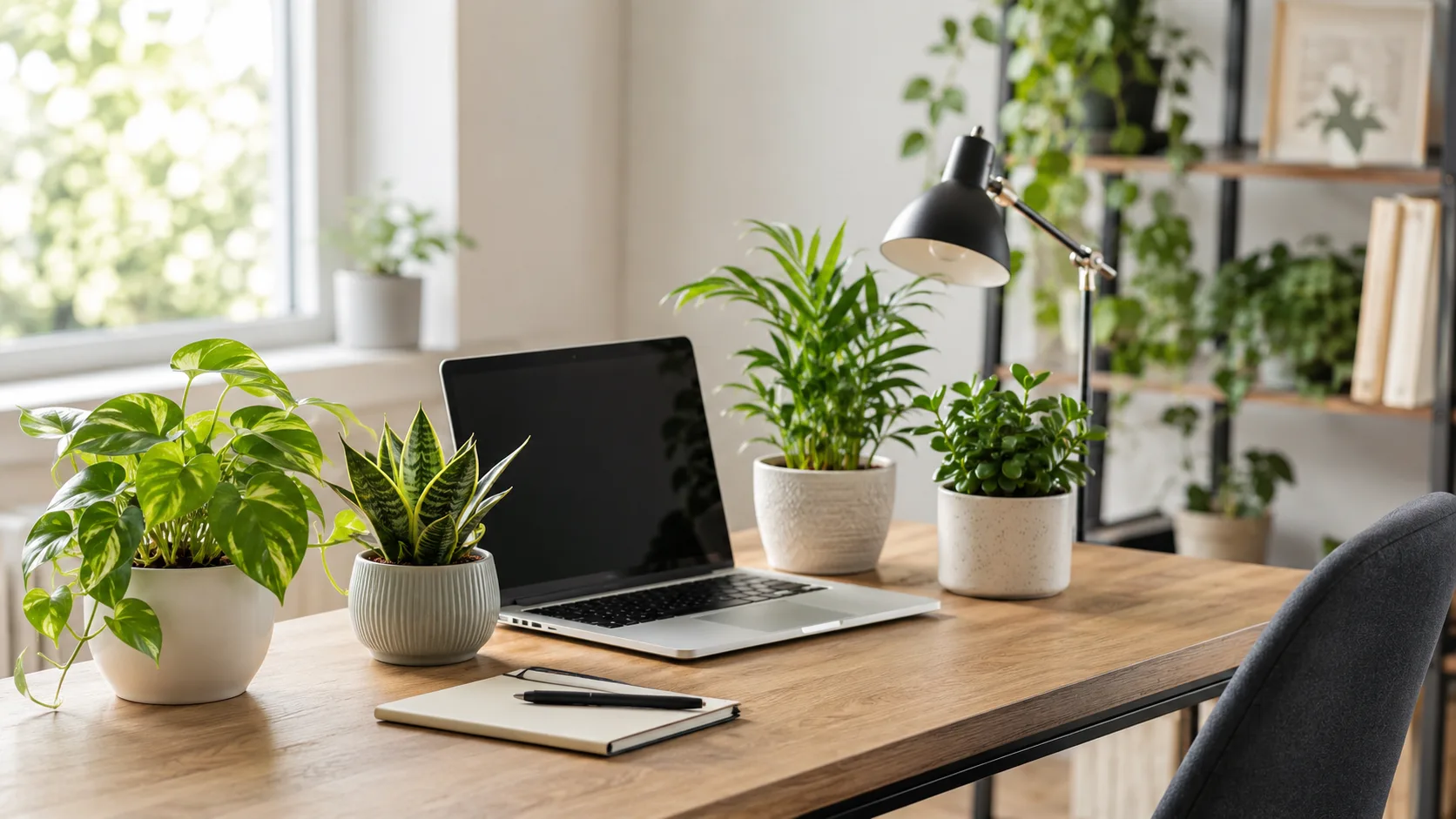
Best Office Desk Plants
Quick recommendation
ZZ plant, snake plant, and small pothos stay compact on desks.
Best Office Desk Plants - Compact & Hardy
Compact, forgiving plants for desks under fluorescent or indirect light.
Quick recommendation
ZZ plant, snake plant, and small pothos stay compact on desks.
A desk plant should do more than decorate a Zoom background. It should stay small enough to share space with a monitor and coffee mug, survive weekends and holidays without daily attention, and tolerate the fluorescent-plus-window light typical of offices—not the bright greenhouse conditions plant tags imply. The best desk plant is rarely the trendiest succulent on Instagram. It is the one that matches your cubicle light, your travel schedule, and whether HR allows plants at all.
If you want a filterable quick list from LeafyPixels plant metadata, this page’s featured plants appear in our database filters. This guide goes deeper: fluorescent-light reality, a comparison table by desk footprint, and links to full species care on LeafyPixels.
The ten best office desk plants for most workspaces are ZZ plant, snake plant, pothos, peperomia, pilea peperomioides, jade plant, haworthia, parlor palm, tillandsia, and philodendron. They differ in size, light needs, and how fast they reach for your keyboard.
Office plants usually live on a mix of overhead fluorescents or LEDs and incidental window light—often medium to low indirect by houseplant standards. University of Maryland Extension notes that artificial light can support indoor plants when intensity and duration are adequate, with red and blue wavelengths important for growth—but a small desk lamp across the room is not the same as a grow light at the canopy. (University of Maryland Extension)
Desks near large windows get brighter conditions; interior cubicles rely more on fluorescents. ZZ plant, snake plant, and pothos tolerate the latter; jade plant and pilea want more light to stay compact.
Editor note (weekends): Office plants often go unwatered from Friday to Monday, then get drenched Tuesday out of guilt. Desk survivors prefer dry weekends and measured midweek checks—not sympathy floods.
For the lowest-maintenance cubicle, choose ZZ plant or snake plant. Both handle fluorescents, missed waterings, and AC drafts better than ferns.
For trailing green that stays manageable, choose a small pothos in a 4–6 inch pot—trim vines before they cross the keyboard.
For a compact sculptural look near a window desk, choose pilea peperomioides or peperomia.
For sunny window desks, choose haworthia or jade plant—not on dim interior cubicles.
For no-soil desk experiments, choose tillandsia—if you will soak on schedule.
For pet-friendly home offices, parlor palm and peperomia are ASPCA non-toxic; most others here are toxic if chewed.
Judge by desk footprint, light zone, watering rhythm, and spill risk.
A 6-inch pot with saucer needs roughly 8×8 inches of stable space. Trailing pothos needs vertical clearance—or regular trimming.
Plants that store water—ZZ plant, snake plant, jade plant, haworthia—outlast peace lilies and ferns when offices empty out.
Use sealed saucers or cachepots to protect papers and electronics. Check workplace policies before large floor plants.
These ten were chosen for compact habit, tolerance of office light, infrequent watering needs, and LeafyPixels care coverage—not because they are the only plants ever placed on desks.
We excluded large floor-only species and humidity divas that fail in dry cubicles. Parlor palm is the largest here—best on floor beside desk, not on the desktop itself.
| Plant | Best For | Desk Footprint | Light | Care Level | Stays Compact? | Main Trade-Off |
|---|---|---|---|---|---|---|
| ZZ plant | Interior cubicles | 6–8 in. pot | Low–medium | Easy | Yes | Toxic to pets |
| Snake plant | Minimal care desks | 6–8 in. pot | Low–medium | Easy | Yes (dwarf varieties) | Slow in dim light |
| Pothos | Trailing monitor green | 6 in. pot + trim | Low–medium | Easy | With trimming | Vines reach keyboard |
| Peperomia | Small leafy desks | 4–6 in. pot | Medium | Easy | Yes | Non-toxic but overwater-prone |
| Pilea peperomioides | Window desks | 6 in. pot | Medium–bright | Easy | Yes | Leggy in low light |
| Jade plant | Sunny window desks | 6 in. pot | Bright indirect | Easy | Slow compact | Needs sun; toxic |
| Haworthia | Sunny sills | 4 in. pot | Bright indirect | Easy | Yes | Not for dim cubicles |
| Parlor palm | Floor beside desk | 8–10 in. pot | Low–medium | Easy | Moderate height | Too tall for desktop long-term |
| Tillandsia | Soil-free displays | 2–4 in. mount | Bright indirect | Medium | Yes | Must soak on schedule |
| Philodendron | Shelf above desk | 6 in. pot | Medium | Easy | With trimming | Toxic to pets |
Best for: interior cubicles, forgetful waterers, modern desk aesthetic.
Difficulty: Easy
Light: Low to medium indirect; tolerates fluorescents
Water: Every 3–4 weeks typical in office light
Best placement: Back corner of desk away from monitor heat
Pet safety: Toxic if ingested
Typical desk size: 12–18 inches in 6-inch pot
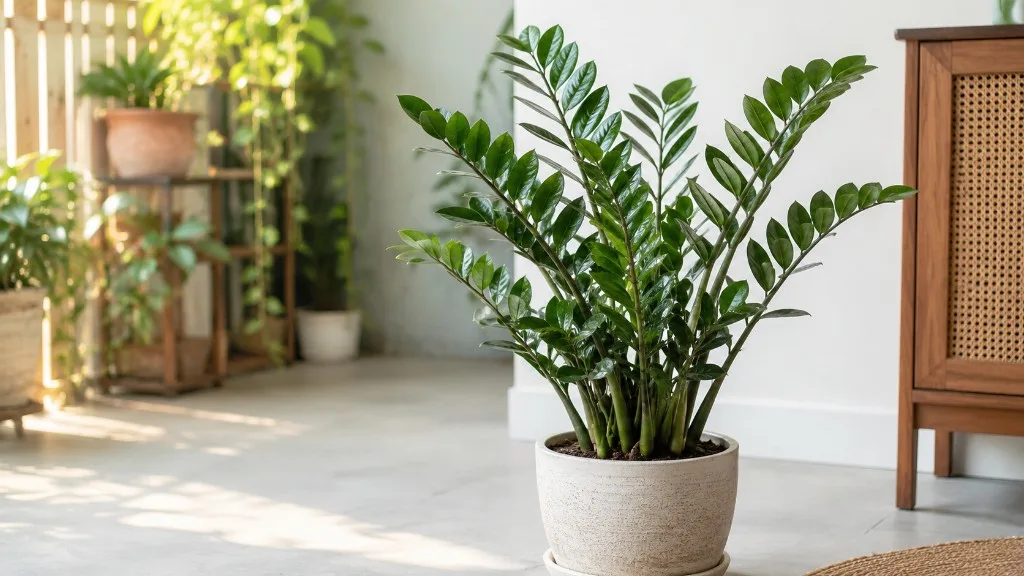
ZZ plant is the office survivor: glossy leaves, upright habit, rhizomes that store water through long weekends. It grows slowly under fluorescents—ideal when you do not want a plant competing for desk space.
Why it works: Maximum tolerance for cubicle light and irregular watering.
Who it is for: Interior desks, frequent travelers, first office plants.
Care reality: Rot from Tuesday overwatering after dry weekends is the top killer.
Common mistake: Weekly watering because “plants need schedules.”
Limitation: Toxic; keep off pet-accessible home desks.
Useful care guides:
Best for: narrow desks, low light, vertical accent.
Difficulty: Easy
Light: Low to medium indirect
Water: Every 2–4 weeks
Best placement: Desk corner or monitor side
Pet safety: Toxic if ingested
Typical desk size: 8–24 inches depending on variety
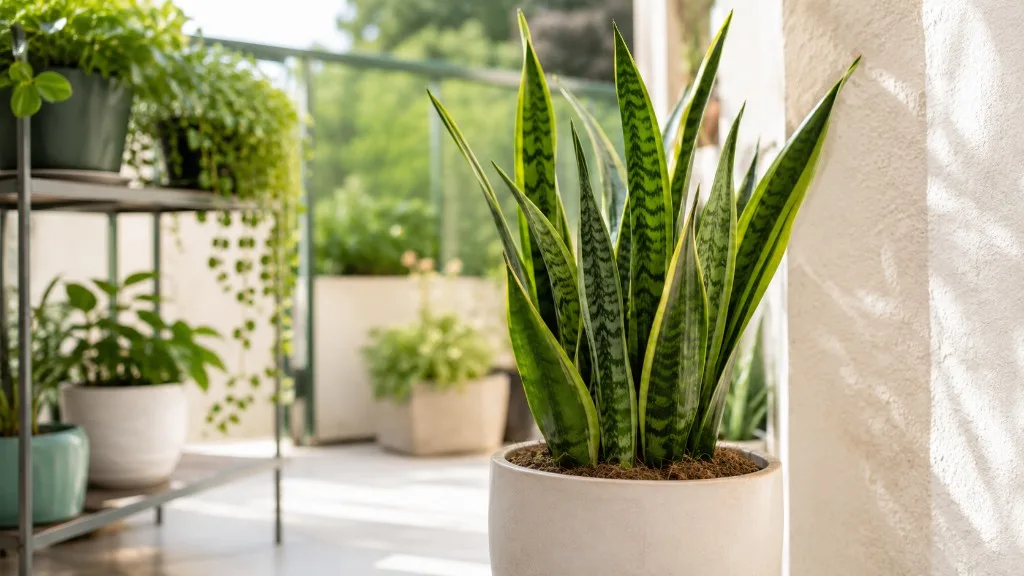
Dwarf snake plant varieties fit desks better than full-size floor types. Upright leaves add green without trailing into keyboards.
Why it works: Slim footprint with very low water needs.
Who it is for: Minimalists and dim cubicles.
Care reality: Thrives on neglect; hates wet soil in cool AC.
Common mistake: Choosing a large floor snake plant for a small desk.
Limitation: Nearly stagnant growth in very dim interior cubes.
Useful care guides:
Best for: trailing softness, easy propagation, shared office gifts.
Difficulty: Easy
Light: Low to medium indirect
Water: When top 2 inches dry
Best placement: Shelf above desk or back edge with trellis clip
Pet safety: Toxic if ingested
Typical desk size: Controllable with trimming
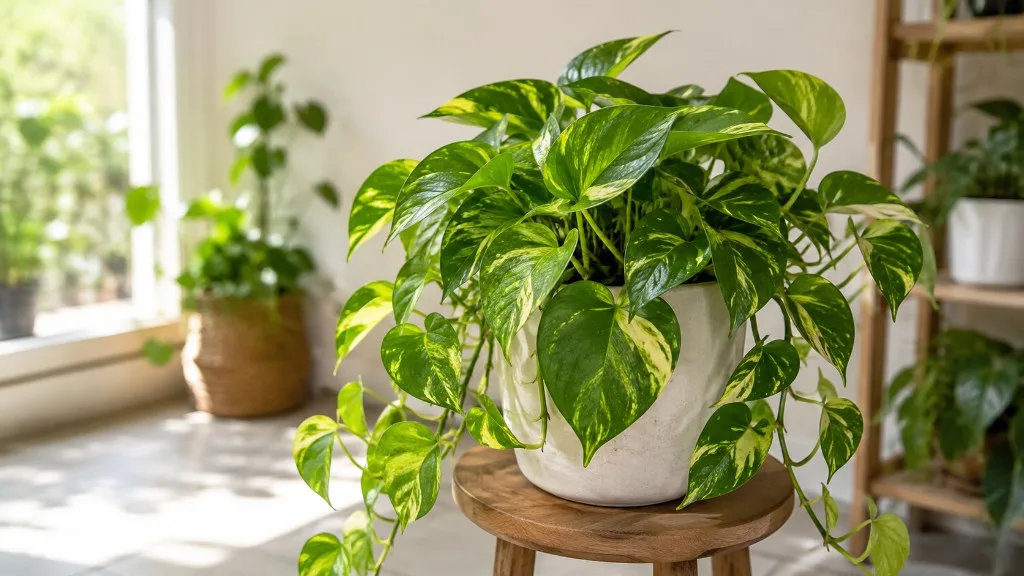
A small pothos in a 4–6 inch pot is one of the best desk plants when you trim monthly. It handles fluorescents and forgives occasional drought.
Why it works: Fast visual impact with easy recovery from mistakes.
Who it is for: Window-adjacent or medium-light desks.
Care reality: Vines grow toward light—redirect or trim.
Common mistake: Letting vines drape over keyboards and mouse pads.
Limitation: Toxic; trailing habit needs maintenance.
Useful care guides:
Best for: small pots, leafy texture, pet-friendly home offices.
Difficulty: Easy
Light: Medium indirect
Water: Every 10–14 days when soil dries
Best placement: Desk center or beside monitor
Pet safety: Non-toxic to cats and dogs (ASPCA peperomia listing)
Typical desk size: 6–10 inches
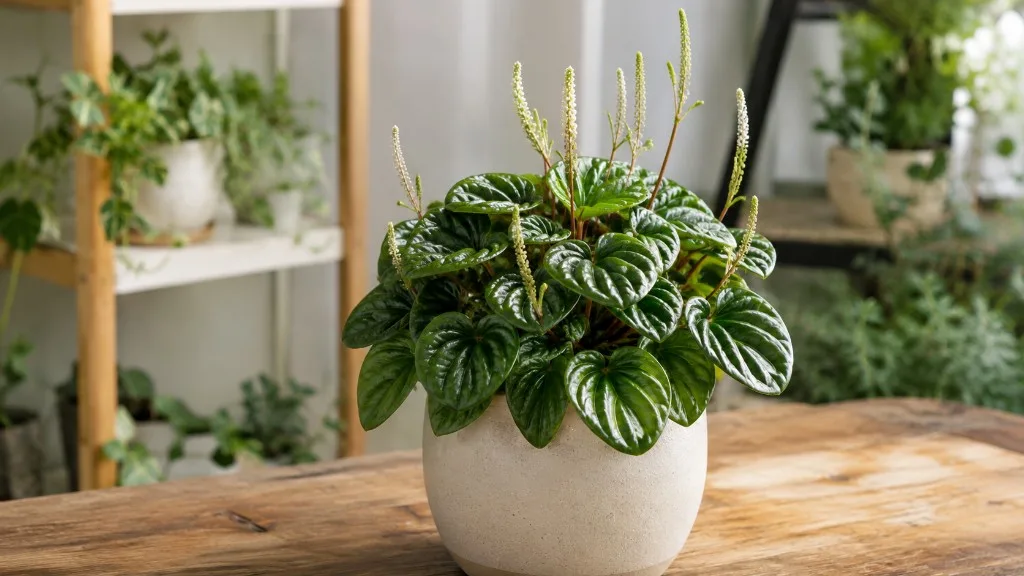
Peperomia stays naturally small—excellent desk scale. Thick leaves store some water; shallow roots rot in deep wet pots.
Why it works: Compact ASPCA non-toxic option for home desks with pets.
Who it is for: Small-surface desks needing leafy—not spiky—green.
Care reality: Prefers drying between waterings; hates oversized mugs-used-as-pots.
Common mistake: Overwatering after weekends because leaves feel firm.
Limitation: Leggy in dim interior cubicles without window light.
Useful care guides:
Best for: window desks, design-forward offices, conversation starter.
Difficulty: Easy
Light: Medium to bright indirect
Water: When top inch dries
Best placement: Window-side desk with sheer light
Pet safety: Non-toxic to cats and dogs (ASPCA)
Typical desk size: 8–12 inches; spreads via pups
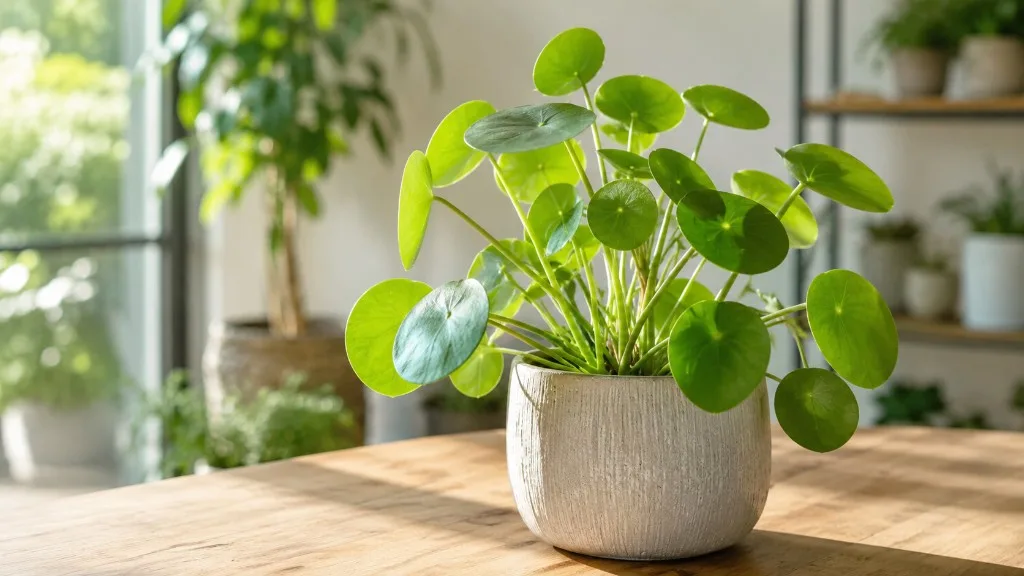
Pilea peperomioides (Chinese money plant) wants more light than ZZ plant. On a bright desk, its coin leaves stay flat and compact; in dim cubes, stems stretch.
Why it works: Distinctive look at true desk scale.
Who it is for: Window desks and design studios.
Care reality: Rotate pot weekly for even growth toward light.
Common mistake: Interior cubicle placement with only fluorescents.
Limitation: Not a low-light plant despite small size.
Useful care guides:
Best for: sunny window desks, succulent lovers.
Difficulty: Easy
Light: Bright indirect; needs window proximity
Water: Every 2–3 weeks when soil dries completely
Best placement: Windowsill desk or directly beside south/west window
Pet safety: Toxic if ingested
Typical desk size: 6–12 inches; slow growing
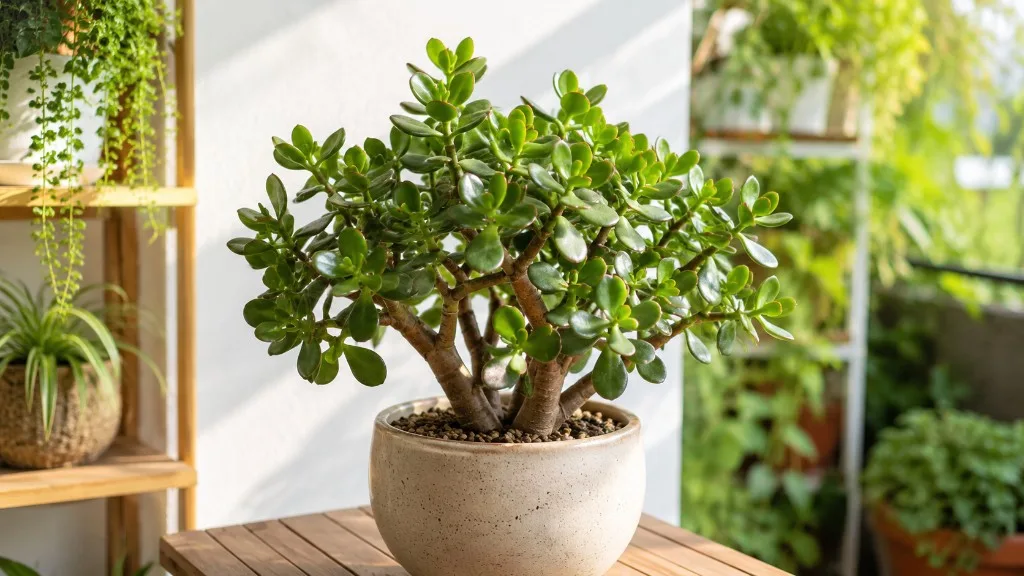
Jade plant (Crassula ovata) is a classic desk succulent—for sunny desks. It stores water in leaves and stems, surviving missed waterings when light is adequate.
Why it works: Sculptural succulent that stays small for years.
Who it is for: Window-line desks with strong daylight.
Care reality: Etiolates and drops leaves in dim fluorescents-only cubes.
Common mistake: Buying for a dim cubicle because “succulents are easy.”
Limitation: Toxic; needs sun to stay compact.
Useful care guides:
Best for: tiny pots, sunny desks, succulent texture without jade size.
Difficulty: Easy
Light: Bright indirect
Water: Soak and dry every 10–14 days
Best placement: Sunny windowsill desk
Pet safety: Non-toxic to cats and dogs (ASPCA)
Typical desk size: 4–6 inch rosette
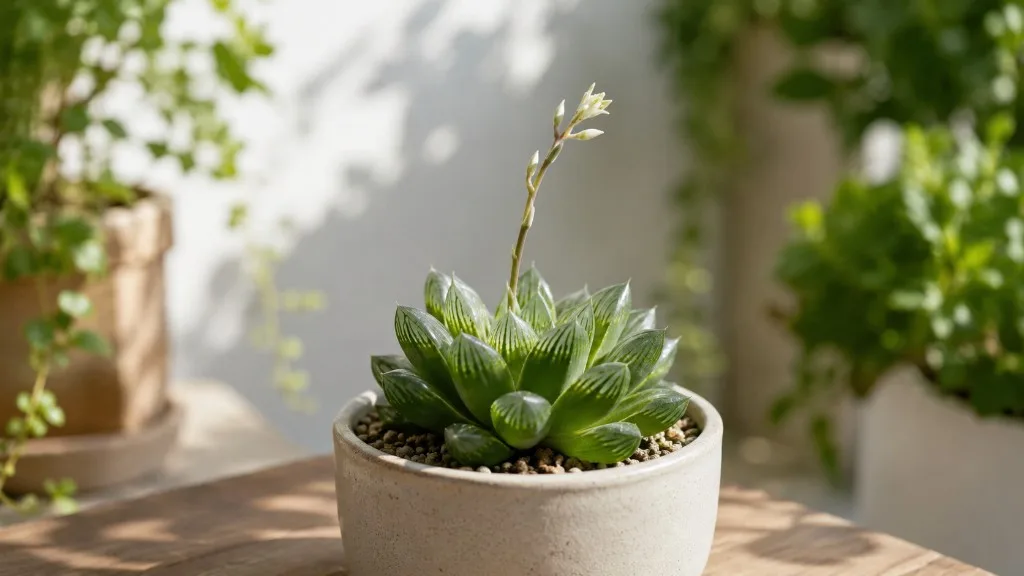
Haworthia fits mug-sized pots—ideal when desk space is minimal. It needs brighter light than ZZ plant but less water than leafy tropicals.
Why it works: Tiny pet-safe succulent footprint.
Who it is for: Sunny desks and home offices with cats.
Care reality: Rot if watered weekly in low light.
Common mistake: Pairing with interior fluorescents only.
Limitation: Not a trailing or lush tropical look.
Useful care guides:
Best for: floor beside desk, soft height, pet-safe offices.
Difficulty: Easy
Light: Low to medium indirect
Water: When top 3–5 cm dries
Best placement: Floor beside desk—not on desktop long-term
Pet safety: Non-toxic to cats and dogs (ASPCA)
Typical size: 2–4 feet in office conditions
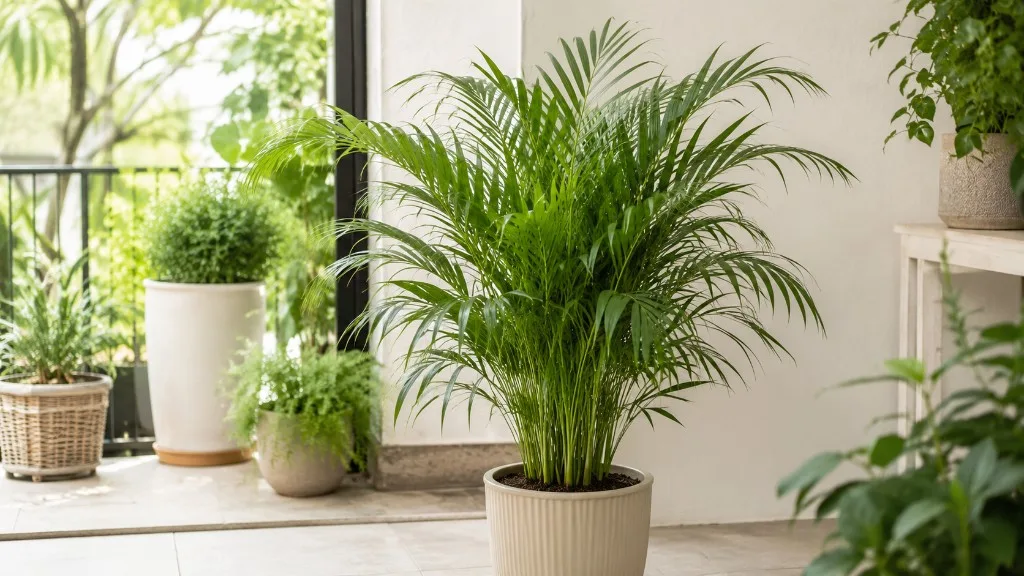
Parlor palm outgrows most desktops within a year—best as a floor companion beside your workstation. It handles office fluorescents better than areca palm and stays pet-safe.
Why it works: Soft vertical green without desktop footprint long-term.
Who it is for: Home offices and corner cubicles with floor space.
Care reality: Brown tips in dry AC—group with other plants or humidify.
Common mistake: Desktop placement until fronds crowd the monitor.
Limitation: Too tall for small cubicle desktops eventually.
Useful care guides:
Best for: soil-free displays, modern desks, bright light.
Difficulty: Medium
Light: Bright indirect
Water: Soak 20–30 minutes weekly; mist between in dry AC
Best placement: Desk mount, wire holder, or open terrarium—never sealed glass long-term
Pet safety: Non-toxic generally; verify species
Typical desk size: 2–6 inches per plant
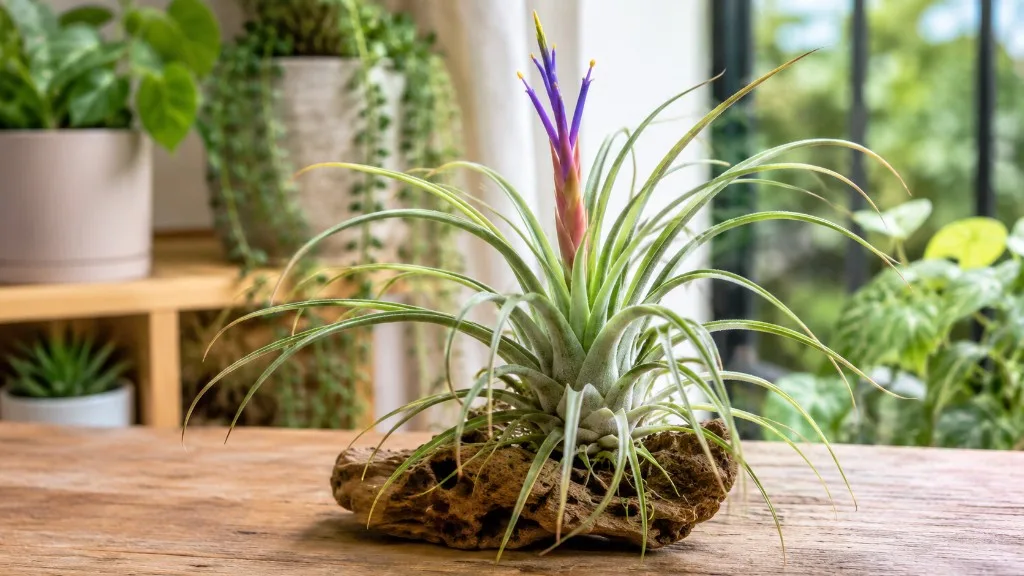
Tillandsia (air plants) need no soil—appealing for tidy desks—but they are not zero-care. Office AC dries them quickly without soaking discipline.
Why it works: Minimal desk clutter; sculptural form.
Who it is for: Bright desks with owners who calendar soak days.
Care reality: Dies from neglect faster than ZZ plant despite “no soil” marketing.
Common mistake: Misting only in dry HVAC offices without weekly soaks.
Limitation: High attention-to-size ratio; poor for travel-heavy schedules.
Useful care guides:
Best for: shelf above desk, trailing file-cabinet top.
Difficulty: Easy
Light: Medium indirect
Water: When top 2 inches dry
Best placement: Upper shelf trailing down—not across keyboard
Pet safety: Toxic if ingested
Typical desk size: Controllable with trimming
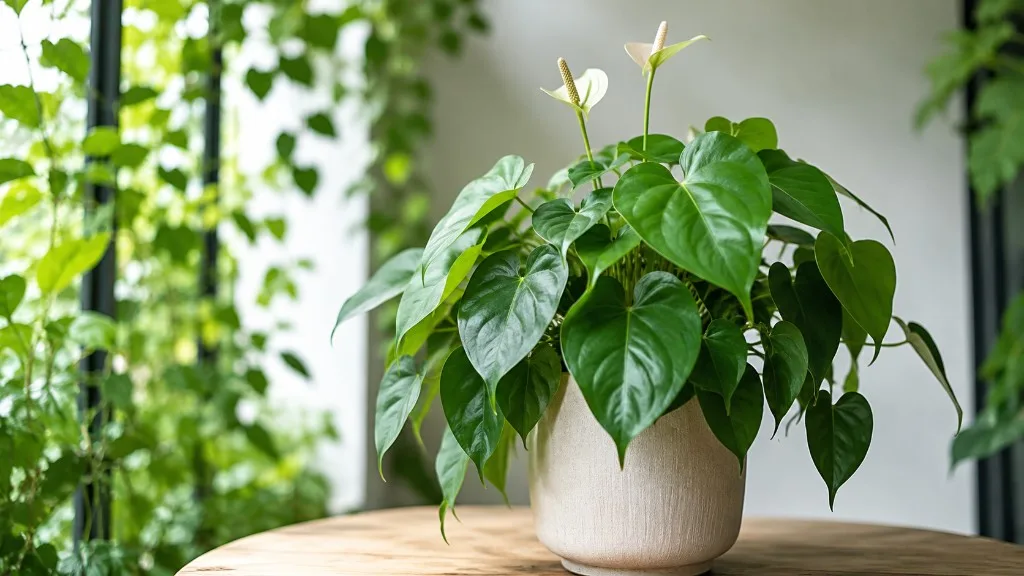
Philodendron heart-leaf types mirror pothos desk use with slightly sturdier leaves. Best above the workspace, not on the keyboard tray.
Why it works: Trailing green for medium-light offices.
Who it is for: Window-adjacent cubicles with shelf space.
Care reality: Forgiving of weekend dry spells.
Common mistake: Desktop placement where vines snag cables.
Limitation: Toxic to pets on home desks.
Useful care guides:
Sympathy watering Mondays. Dry weekends are normal; drenching causes rot.
No saucer on IT equipment. Always protect desks and laptops from drainage.
Choosing succulents for dim cubes. Jade and haworthia need window light.
Letting trailers invade workspace. Trim pothos and philodendron monthly.
Decorative no-drain pots. Cachepots still need internal drainage or careful watering.
The best desk plant survives your light, travel schedule, and desk size—not an ideal greenhouse. ZZ plant and snake plant win for interior cubicles. Peperomia, pilea, and haworthia suit smaller sunny desks. Pothos and philodendron work when you trim. Parlor palm belongs on the floor beside you, not crowding your monitor.
Start with one plant in a pot with drainage. For species-level care, follow the LeafyPixels guides linked in each section above.
This Best Office Desk Plants plant list was researched and written by . Plant picks, rankings, and suitability notes for Best Office Desk Plants are checked against LeafyPixels plant metadata, care requirements, pet-toxicity references, and practical indoor suitability.
We prioritize sources that hold up under scrutiny:
The LeafyPixels editorial team then reviews the draft for clarity, step-by-step usefulness, and fit with real apartment and home conditions-not ideal greenhouse setups. When guidance changes materially, we update the page and note the revision date.
Best-plant lists are reviewed against LeafyPixels plant metadata, source-backed care requirements, pet-toxicity references where relevant, and practical indoor suitability. Rankings prioritize fit for the page intent, ease of care, container growing, and safety constraints.