How to Grow and Care for Philodendron Moonlight
Grow a healthy Moonlight philodendron with practical light, watering, soil, feeding, and repotting advice, plus a safe way to divide rooted offsets.
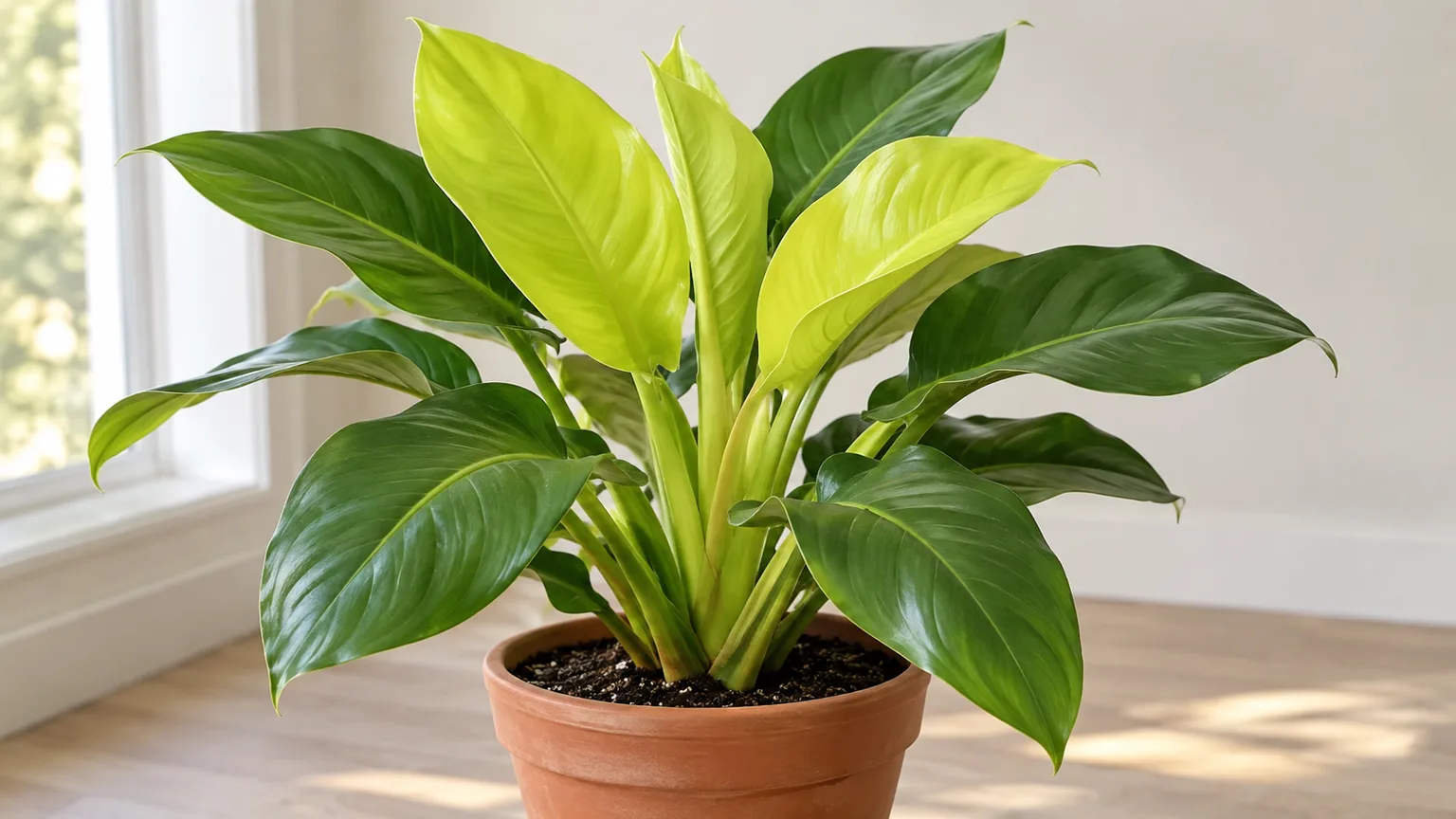
Philodendron Moonlight stands out for its vivid new growth: the leaves often open in bright chartreuse or yellow-green before maturing toward a softer green. It is commonly grown as an upright, self-heading philodendron, so its foliage rises from a compact base instead of trailing from a long vine. Bright filtered light, an airy potting mix, and watering based on how quickly that mix dries will help it keep producing healthy leaves.
The word “Moonlight” is a familiar plant-trade name, but a label alone does not guarantee a precise lineage or identical color on every plant. The Royal Horticultural Society lists Philodendron ‘Moonlight’ in its plant database while marking the name status as unresolved (RHS plant record for Philodendron ‘Moonlight’). The useful care clues are the plant’s upright form and its changing leaf color, not an unsupported claim about its exact parentage. This guide explains how to read those clues, maintain a stable indoor routine, and propagate only when the plant has a suitable rooted offset.
What makes Philodendron Moonlight different?
Moonlight is valued for the contrast between its fresh, bright foliage and its older, greener leaves. New leaves emerge from the center of the plant and gradually harden. Their shade can vary with cultivar labeling, light, leaf age, and the individual plant, so do not treat a single photo or one shade of yellow-green as a test of authenticity. A leaf that is firm and gradually changes color is different from tissue that turns soft, blotchy, or suddenly yellow.
The plant is generally sold as a self-heading philodendron. “Self-heading” means it builds a short central stem and a rounded crown of upright leaves rather than sending out long climbing stems that need a moss pole. Clemson Extension describes the philodendron genus as including both climbing and self-heading forms, while the RHS likewise notes that philodendron growth habit varies across the genus (Clemson Extension’s philodendron guidance; RHS philodendron overview). For a Moonlight-type plant, keep the crown open and give it enough space to spread; tying it to a pole will not correct a light or watering problem.
Look for a compact plant with several firm leaves, an intact growing point, and no soft or foul-smelling soil. The newest leaf should be opening normally, even if it is not as vivid as a reference photo. If you are buying online, ask the seller whether the plant is an established rooted specimen or a young division, and whether the label is a cultivar name or a general color description. Those answers help set expectations better than a promised mature height, which can vary considerably indoors.
Compare Moonlight with similar philodendrons
Houseplant shops use many color-led names, and several philodendrons can appear lime green in photographs. Moonlight is typically an upright crown plant with broader leaves arranged from a central base. A Lemon Lime heartleaf philodendron has a vining habit and smaller, heart-shaped leaves along trailing stems. That difference in growth form is often more dependable than color alone.
Prince of Orange and related self-heading types can also produce bright new leaves, though their young foliage may show orange or copper tones before turning green. Green self-heading types such as Imperial Green do not usually display Moonlight’s strong chartreuse flush. Birkin is recognized for pale pinstripes on darker foliage rather than a mostly solid lime-colored new leaf. These are useful visual comparisons, not a taxonomic key: lighting changes leaf color, and retail labels are not always applied consistently.
When comparing a nursery plant, watch where each leaf emerges. A compact central crown points to a self-heading type; a long stem with repeated nodes and leaves along its length indicates a climber or trailer. If exact cultivar identity matters, buy from a specialist who can explain provenance. Do not use a seller’s marketing copy to infer a breeding history that the plant label and reliable records do not establish.
Give it bright, indirect light
Place Moonlight close to a bright window where daylight is abundant but the leaves are protected from prolonged harsh midday or afternoon sun. An east-facing window often gives gentle morning light. A brighter south- or west-facing window can work when a sheer curtain softens direct rays or the pot sits back from the glass. The RHS recommends bright indirect light for philodendrons, and its genus overview notes that leaf appearance varies among types.
Use the newest growth as your light report. If fresh leaves are consistently smaller, paler, or slower to open and the petioles stretch toward a window, increase brightness gradually. If leaves develop bleached patches or dry, sharply defined scorch on the window-facing side, filter the light or move the pot farther from the glass. A sudden transfer from a dim corner to direct sun can burn foliage, so make changes over several days and reassess the next growth rather than expecting damaged leaves to turn green again.
Rotate the pot occasionally if the crown leans toward its brightest side, but avoid frequent moves that change several conditions at once. In a dim home, a grow light can supplement daylight; follow the fixture’s distance and timing instructions, and check that the plant is not warming or drying too quickly beneath it. More light generally speeds water use, so recheck the soil after changing the location rather than keeping the old watering interval.
Use a loose, well-draining potting mix
Philodendron roots need moisture, but they also need air around them. A fine, compact potting soil can remain wet long after the surface looks dry, particularly in a cool room or a pot without enough drainage. Choose a medium that holds some moisture after watering yet allows excess water to leave the root zone. Always use a pot with open drainage holes; a decorative cover pot is fine if you remove the nursery pot to water and empty the runoff.
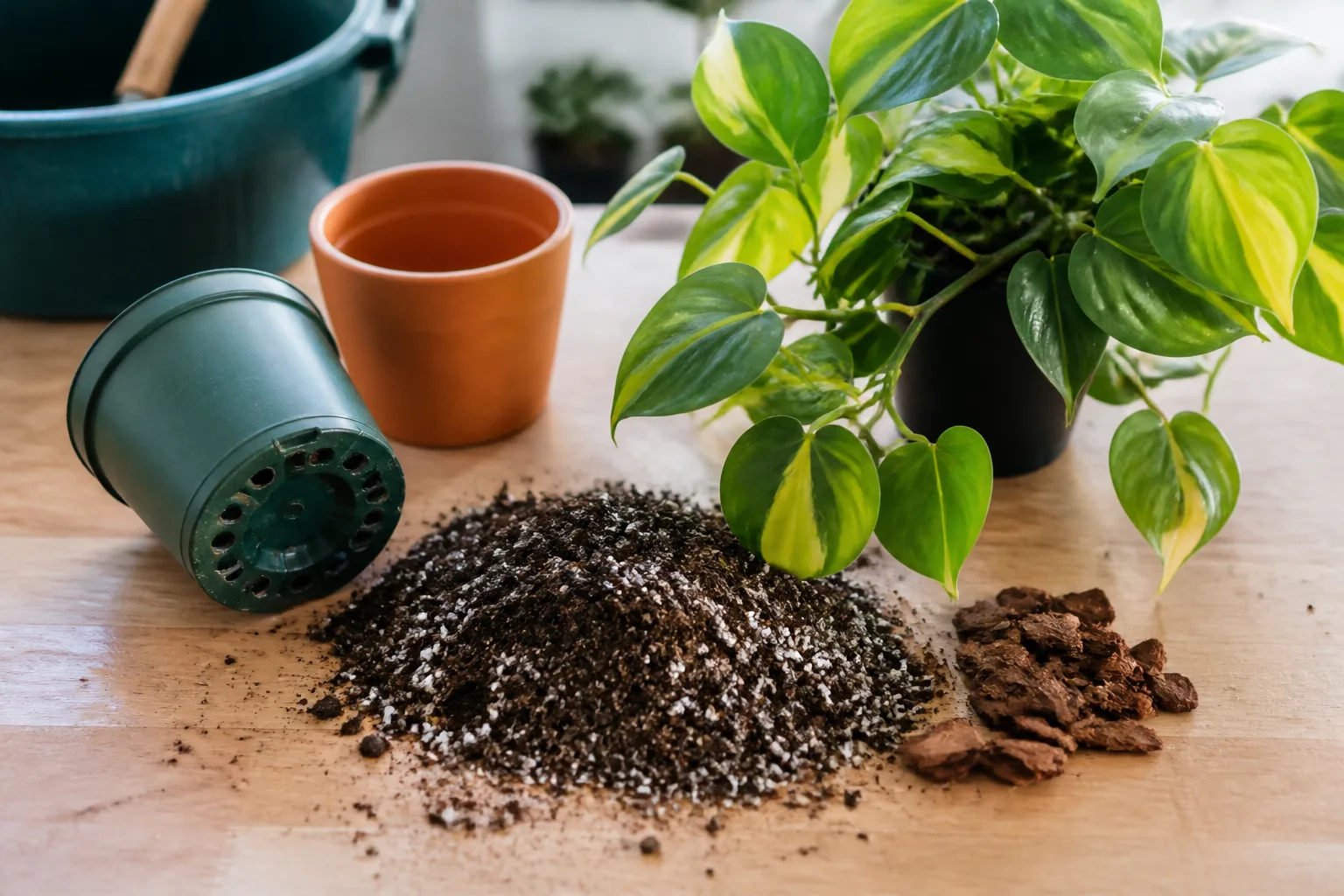
The plant pictured is another philodendron, but the setup illustrates the goal: visible structure in the mix and a container that can drain. Clemson Extension advises keeping philodendrons evenly moist without allowing them to stand in water, and the RHS recommends moisture-retentive but well-drained compost. Epic Gardening’s heartleaf philodendron guide also discusses bright indirect light and an airy growing medium for a vining philodendron. Those shared genus-level principles are useful here, while Moonlight’s own upright form still determines how it is displayed and propagated. A blend of standard indoor potting mix with coarse bark and perlite or pumice can provide that balance.
Adjust the mix to your room and pot
There is no single recipe that suits every climate and watering style. A practical starting blend is about two parts indoor potting mix to one part orchid bark and one part perlite or pumice. The base mix retains water, while bark and mineral particles create larger air spaces. If a warm, bright room dries the pot very quickly, use a little more base mix; if the center stays soggy, increase the coarse portion and review drainage and pot size.
Do not compensate for dense soil by adding stones to the bottom of the container. Stones do not make water move through a fine mix more freely and can leave the wettest layer near the roots. Instead, loosen the entire blend and choose a pot only modestly wider than the root mass. A huge pot can hold more damp soil than a small crown can use, making root problems harder to avoid.
Water after checking the root zone
Water when the upper layer of mix has dried and the root ball is beginning to lose moisture, not because a certain weekday has arrived. Push a finger into the top few centimeters or use a wooden skewer; also lift the pot occasionally so you learn how it feels when wet and when drying. If the center still feels cool and damp, wait and check again. When the root zone is ready, water slowly and thoroughly until extra water drains from the bottom, then empty the saucer or cachepot.
This check matters because pot material, plant size, light, airflow, and substrate all affect dry-down. A young division in a small plastic pot may dry quickly in a bright warm room. A mature plant in a large ceramic pot can stay wet much longer, especially through winter. The RHS advises allowing the top of the compost to dry between waterings, while Clemson Extension emphasizes moist but well-drained soil and avoiding standing water. Use those principles together: let the surface dry somewhat, but do not leave a root-bound plant bone-dry for long stretches.
If water races down the pot’s edges without soaking the mix, the substrate may have become hydrophobic. Set the pot in a shallow basin briefly so the root ball can take up water, then let it drain fully. If the surface dries but the pot remains heavy, do not add small splashes to the top; those can leave the lower mix wet while the root zone receives little benefit. Check holes and mix texture before adjusting your watering habits.
Change the check with the season
In lower light or cooler weather, growth often slows and the soil takes longer to dry, so check less often. Do not reduce the amount of water by giving the plant a tiny sip every time; when the mix is ready, wet the root ball evenly and drain it. In a warm, bright room or under a grow light, the plant may stay active through the winter and use water more quickly. Let the pot itself tell you how conditions changed.
After repotting, do not water again just because fresh soil was added; the mix may already be moist. After a long trip or a move to a new window, check the pot before resuming a familiar routine. If you see drooping leaves, first test whether the medium is dry or wet. Droop in dry soil may mean the plant needs a thorough drink; droop while the mix is saturated suggests a root or drainage issue, and extra water can make it worse.
Keep the room warm and humidity steady
Moonlight is a tropical foliage plant, so protect it from cold drafts, air-conditioning blasts, and cold window glass. An ordinary comfortable indoor room is usually more useful than chasing an exact temperature or humidity number. The RHS describes philodendrons as warm-growing houseplants and notes that they can tolerate typical indoor humidity. Growth may slow in a cool, dim room even when the plant is not in immediate danger.
If leaf edges repeatedly crisp, look at the entire setup before assuming the air is too dry. Direct sun, underwatering, fertilizer salts, damaged roots, and hot air blowing from a vent can all affect leaf edges. A room humidifier can help if the indoor air is consistently dry, especially during heating season, but misting leaves briefly does not create lasting humidity. Keep air moving gently and avoid placing a pot where leaves stay wet for long periods.
When moving the plant outside for warm weather, first confirm that nights remain reliably warm and choose a sheltered bright-shade position. Acclimate it over several days and bring it inside before cool weather returns. Outdoor sun, wind, and rain change dry-down and scorch risk, so do not assume an indoor routine transfers unchanged. If you cannot protect it from temperature swings, it is easier to keep it indoors.
Feed lightly during active growth
A healthy plant in fresh potting mix may not need immediate fertilizer. During active growth, use a balanced houseplant fertilizer according to its label, starting conservatively if you are unsure how concentrated the formula is. Apply it to already moist soil rather than to a bone-dry root ball. Stop or reduce feeding when growth slows in a cool, low-light season.
More fertilizer does not make the chartreuse leaves brighter. Excess salts can damage roots and contribute to brown tips or a crust at the soil surface. If growth is weak, first check light, drainage, and root condition. Do not feed a plant with soggy soil or signs of root rot until the underlying stress has been corrected. Rinse away accumulated salts only when the pot drains freely, and follow the product label for safe handling and dosage.
Repot when roots need more room
Repot when roots circle densely around the root ball, grow from several drainage holes, or the mix dries unusually fast despite stable conditions. One root appearing at a hole is not always an emergency. Check whether water still moves through the pot and whether the plant is producing healthy new leaves. A compact plant can remain in its current container longer than an actively growing specimen with a tightly packed root mass.
Choose a container only one size larger, with open drainage holes. Loosen the outer roots gently and remove only roots that are clearly dead, mushy, or foul-smelling. Set the crown at the same depth it was growing before; burying the base can keep the crown too wet. Fill around the roots with fresh airy mix, water to settle it, and let runoff escape. Place the plant in bright indirect light while it adjusts, and hold fertilizer until new growth resumes.
Spring or early summer is convenient because the plant is more likely to be growing, but a plant with failing roots or waterlogged mix may need attention whenever the problem appears. Avoid repotting an otherwise stable new purchase immediately. Let it acclimate, inspect for pests, and learn how quickly its current pot dries before changing the medium, location, and feeding routine all at once.
Prune and clean without reshaping the crown
Moonlight does not need frequent pruning to climb; it is not a long vine that needs regular stem training. Remove a yellow or damaged leaf by cutting its petiole near the base with clean shears, taking care not to nick the central growing point or neighboring leaves. If an outer leaf is healthy but older, you can leave it until it yellows and begins to decline. One older leaf at a time can be part of normal aging.
Wipe dust from broad leaves with a damp soft cloth so the foliage stays clean and you can inspect it for pests. Avoid oily leaf-shine products that can leave a coating. If sap gets on your skin or eyes, rinse the area with plenty of water and avoid touching your face; philodendron sap can irritate sensitive tissue. Wash hands after pruning and keep cut material away from curious pets and children.
Propagate from a rooted basal offset
For a self-heading Moonlight, division is the practical home method when a mature plant produces a separate basal offset. It is different from taking a stem cutting from a vining philodendron: a leaf with no stem or growing point will not become a new plant. Look at the base for a smaller crown emerging beside the parent. Do not force a division while it is tiny or attached by a fragile connection.
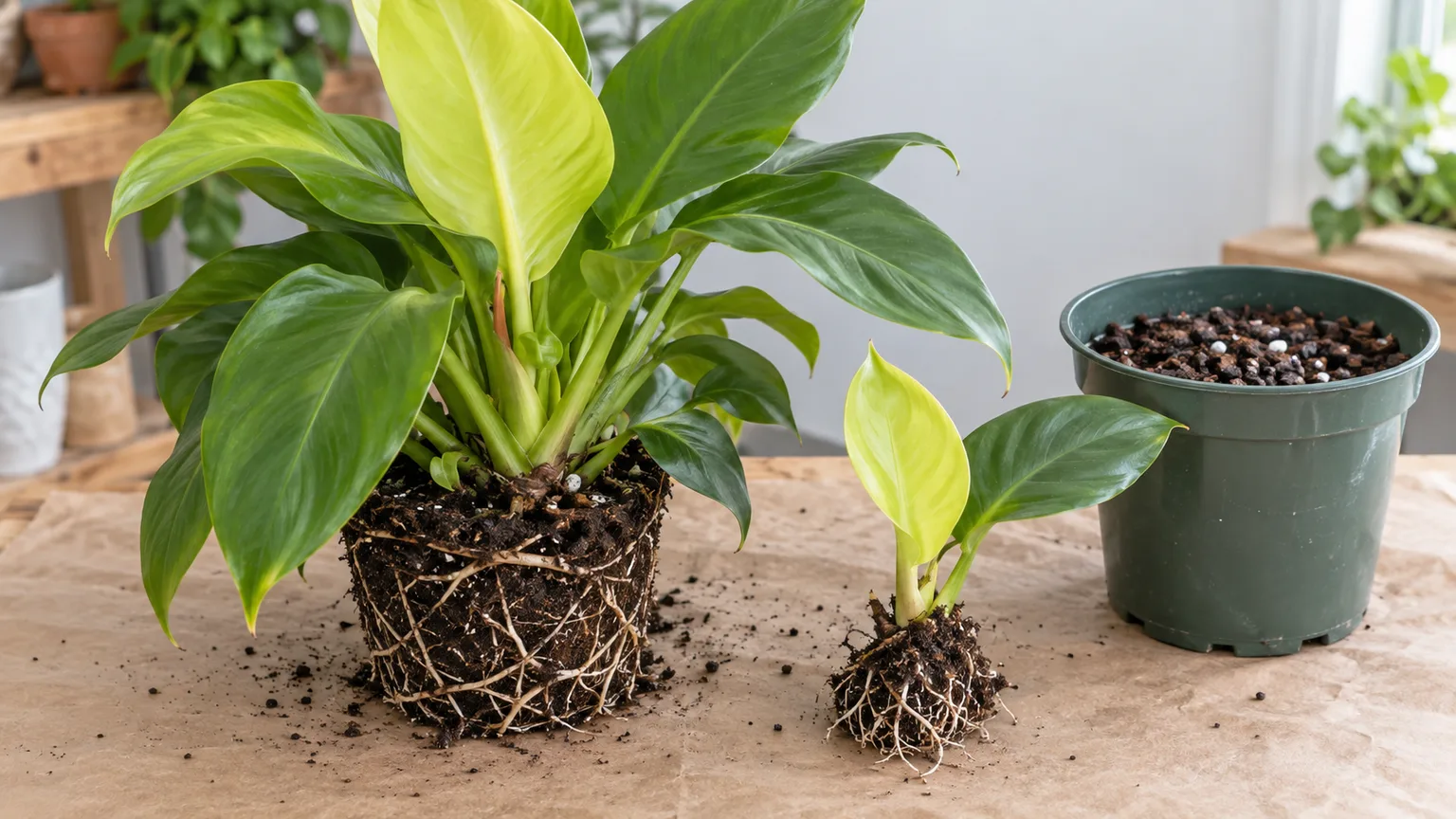
BBC Gardeners’ World describes basal offshoot division as a way to propagate philodendrons when a shoot has its own roots; their practical guidance is to water ahead of the task, separate carefully, and keep a new division steadily moist while it establishes (Gardeners’ World philodendron types guide). The key readiness test is not the calendar: the offset needs its own crown and roots capable of supporting it after separation. If it is still a small bud with no roots, leave it attached and let the parent continue growing.
Divide, pot, and settle the offset
Water the parent the day before division so the root ball is easier to handle. Slide it from the pot and brush away enough mix to see where the offset attaches. If it separates with a gentle pull and already has roots, divide it cleanly. If the connection is firm, use a sanitized sharp knife to make a careful cut that leaves both the offset and parent with healthy roots. Do not tear through the crown or cut away most of the parent plant’s root system just to make the offset larger.
Pot the small division in a container just large enough for its roots, using the same airy mix and keeping the crown at its previous depth. Water gently until the soil is evenly moist, then drain the pot. Keep it in warm bright indirect light and check the mix more often than you would for a mature plant because a small root system can dry quickly. Avoid fertilizing until new growth shows that it has settled. If the offset has too few roots to stand on its own, reattach it or leave it with the parent rather than trying to rescue an unready cutting.
Troubleshoot yellow leaves and slow growth
Start with the pattern, not a single symptom. One older lower leaf turning yellow while the crown continues to produce healthy leaves may be ordinary aging. Several yellow leaves appearing within a short period, soft stems at the base, or a sour smell from the pot deserve a moisture and root check. A slow plant may simply be resting through a darker season; it may also need brighter light or a less compact growing medium.
Make one change at a time and give the next leaf time to respond. Record when you last watered, whether the pot was light or heavy, and whether the plant recently moved or was repotted. This simple history prevents a common cycle of adding water, fertilizer, and a new location in quick succession, which makes the original cause harder to identify.
Separate watering stress from light and age
If the soil remains damp and several leaves yellow, slide the root ball out carefully if the pot drains poorly. Healthy roots are generally firm; damaged roots may be soft, dark, or unpleasant-smelling. Trim only clearly rotten tissue with clean tools, replace compact or sour mix, and use a draining pot. Let the new mix begin drying between thorough waterings. Clemson Extension identifies overwatering and poor drainage as concerns for philodendrons, so do not treat wilting in wet soil with more water.
If the mix is dry and the leaves hang limply, water thoroughly and confirm that the center of the root ball was wetted. If watering does not restore firmness, inspect the roots rather than repeating small drinks. Dry brown edges can follow a long dry spell, direct sun, or salt accumulation. Move the plant out of hard sun, correct how water reaches the roots, and avoid increasing fertilizer as a first response.
For pale or smaller new leaves, evaluate the window before repotting. If older leaves are healthy but growth is sparse and leaning, more indirect brightness may help. If the crown is bright and the plant remains stalled, check for a tight root ball, pests, cold drafts, or a saturated mix. Do not expect a leaf that has already scorched or yellowed to recover; judge whether the new growth improves after conditions stabilize.
Check leaf undersides for pests
Inspect leaf undersides, petiole joints, and the central crown when growth becomes distorted or leaves develop stippling, sticky residue, or cottony patches. Common philodendron pests include mealybugs, aphids, scales, and spider mites; Clemson Extension lists these among pests to watch on philodendrons. Isolate the plant while you identify the pest and check nearby houseplants as well.
Wipe small infestations from leaf surfaces and use a labeled treatment only if needed, following its directions and testing it on a small area first. Do not spray a plant in direct sun or apply several products at once. Continue checking new growth after treatment because eggs or hidden insects can remain in leaf joints. If the plant is severely infested and other plants are at risk, ask a local extension service or experienced plant professional for a suitable next step.
Keep the plant away from pets and children
Philodendrons contain insoluble calcium oxalate crystals that can irritate the mouth and digestive tract if chewed. Clemson Extension describes philodendron toxicity, and ASPCA Poison Control lists heartleaf philodendron as toxic to pets, with signs such as oral irritation, drooling, vomiting, and difficulty swallowing (Clemson Extension on philodendrons; ASPCA Poison Control’s heartleaf philodendron listing). The ASPCA entry is for a different philodendron type, so use it as genus-relevant safety information rather than a Moonlight-specific clinical study.
Keep the pot where pets and children cannot chew leaves or play in the soil, and collect dropped leaves after pruning. Wear gloves if your skin is sensitive to plant sap, wash hands after handling cut material, and do not use any part of the plant as food. If a pet or child chews it, contact a veterinarian, poison-control service, or medical professional for advice about the specific exposure. Seek urgent help for trouble breathing or swallowing, severe swelling, or persistent vomiting.
Conclusion
Philodendron Moonlight is easiest to care for when you respond to the plant’s growth rather than a fixed schedule. Give its upright crown bright filtered light, use a pot and mix that drain, and water when the root zone is beginning to dry. Keep it warm, feed conservatively during active growth, and repot when the roots—not the calendar—need room. If you want another plant, wait until a healthy rooted offset can stand on its own. Those few checks support vivid new growth while helping you catch root stress, pests, and safety issues early.