Philodendron Moonlight Care Guide: Complete Overview
Philodendron 'Moonlight'
Philodendron Moonlight needs bright indirect light for chartreuse new leaves, check-first watering when top 3–5 cm dries, division propagation, and moderate humidity. Toxic to pets.
Philodendron Moonlight Care Guide: Complete Overview
Start with wateringThe most common care mistake for Philodendron MoonlightWatering guide →Philodendron Moonlight care essentials
Light
Water
Every 7–10 days in summer - allow top 3–5 cm to dry. Every 10–14 days in winter.
Soil
Standard potting mix + 20–25 % perlite. Well-draining. pH 5.5–6.5.
Humidity
Moderate humidity (50–60 %)
Temperature
18°C to 29°C (65–85°F)
Fertilizer
Feed lightly during active growth.
About Philodendron Moonlight
Philodendron Moonlight has a upright growth habit.
| Detail | Information |
|---|---|
| Growth habit | Upright |
| Scientific name | Philodendron 'Moonlight' |
Philodendron Moonlight Care Guide: Complete Overview
Philodendron Moonlight is one of those houseplants people buy for instant colour — a glowing chartreuse crown on a compact upright plant — and then wonder why the glow fades six months later. The care itself is straightforward. What trips people up is treating Moonlight like a trailing vine, watering on autopilot, or judging health by old leaves instead of the newest one at the crown. This guide covers identity, light, water, soil, humidity, propagation, repotting, pet safety, and the mistakes that turn an easy philodendron into a yellow-leaf rescue project.
What Philodendron Moonlight Actually Is
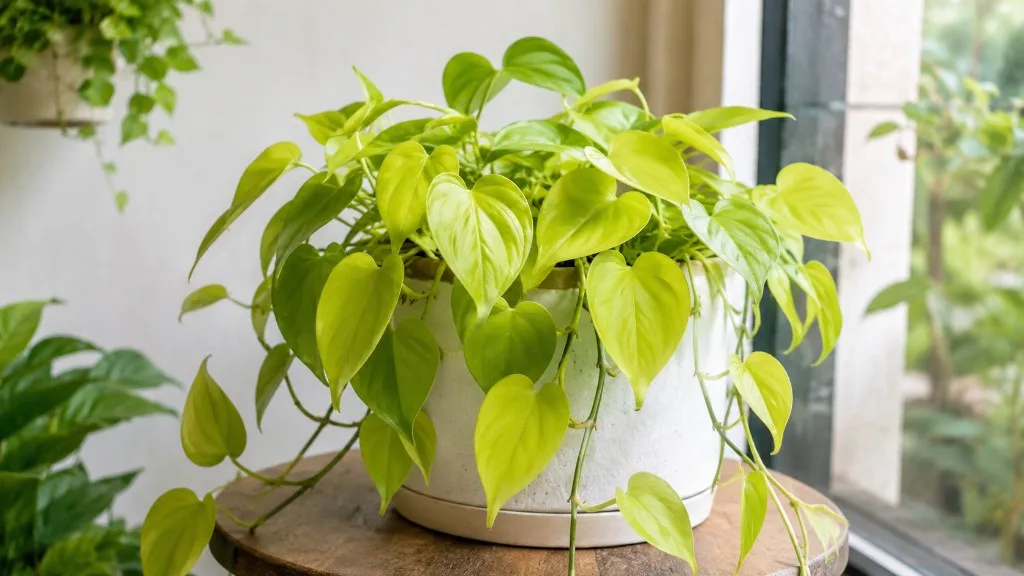
Philodendron Moonlight (Philodendron ‘Moonlight’) is a patented self-heading hybrid philodendron bred for luminous chartreuse-yellow new foliage that matures to softer light green. Unlike climbing species in the Philodendron erubescens group, Moonlight grows as a compact upright rosette from a central crown. It is widely sold as an office-friendly colour accent because the habit stays bushy without a moss pole.
Moonlight belongs to the modern Florida hybrid philodendron line that UF/IFAS describes as self-heading plants with spade-shaped leaves and upright growth — distinct from vining heartleaf types in hanging baskets. NC State’s P. erubescens cultivar list even references Moonlight as a parent of ‘Tangerine’ (P. ‘Moonlight × P. erubescens ‘Prince of Orange’), which confirms its place in the same breeding family as Prince of Orange and Pink Princess — even though Moonlight itself looks and behaves quite differently indoors.
How Moonlight Differs from Lemon Lime and Pink Princess
Compared with Philodendron Lemon Lime, a trailing chartreuse vine, Moonlight is self-heading with thicker leaves and a tight rosette habit rather than dangling stems. Compared with Philodendron Pink Princess, Moonlight is not a climber and does not need variegation management or a moss pole — its colour is uniform chartreuse on new leaves, not chimeric pink sectors that revert. If you want a colour-forward philodendron that stays compact on a desk or shelf, Moonlight fits that niche better than either sibling.
Growth Habit Indoors: Self-Heading, Not a Climber
Philodendron Moonlight is self-heading — it sends leaves from a heavy clump at the base and grows upward as a rosette rather than vining outward. Clemson HGIC notes that self-heading philodendrons produce leaves from a central growth point and often have dramatically coloured new foliage; Moonlight’s chartreuse crown is the clearest example.
Why Moonlight Does Not Need a Moss Pole
Because Moonlight does not inherit the climbing architecture of P. erubescens, long naked stems with small leaves almost always mean insufficient light, not a request for support. Do not mount a moss pole expecting larger leaves — move the plant to brighter filtered light first. A healthy Moonlight should stay bushy with tight internodes; stretchy petioles are a lighting problem, not a trellis problem.
Mature Size and Rosette Shape
Indoors, Moonlight typically stays compact — a dense rosette roughly 50–60 cm tall and wide at maturity in a standard pot when well fed and brightly lit, though specimens can grow larger over years. The rosette should read as a dense mound of paddle-shaped leaves, with the brightest colour always on the newest leaf emerging from the centre.
Quick Care Summary for Philodendron Moonlight
Light: Medium to bright indirect light; chartreuse crown fades in deep shade. Water: Every 7–10 days in summer — allow top 3–5 cm to dry. Every 10–14 days in winter. Soil: Standard potting mix + 20–25% perlite. Well-draining. pH 5.5–6.5. Humidity: Moderate (50–60%). Temperature: 18°C to 29°C (65–85°F). Propagation: Division at repotting. Fertilizer: Monthly balanced liquid at half strength during active growth.
Placement and Buying Checkpoints
Moonlight reads best within 1–2 m of an east window or behind a sheer curtain on south-west glass. Too much direct sun bleaches the chartreuse; too little shade dulls it. When buying, select plants with a bright yellow-green crown and tight internodes. Stretchy stems with small pale leaves indicate the plant was grown in too little light — no amount of home fertiliser will restore compact habit without brighter exposure.
Light and Chartreuse Leaf Colour
Light drives foliage quality on Philodendron Moonlight more than on solid-green philodendrons. UF/IFAS hybrid philodendron guidance states that cultivars with coloured foliage need higher light levels to maximize their colour — Moonlight’s chartreuse is exactly that kind of pigment.
The target is medium to bright indirect light for most of the day: east-window brightness, or several feet back from filtered south or west glass. Gentle morning sun is sometimes fine; harsh midday or afternoon beams bleach pale tissue and cause brown patches. The RHS philodendron guide recommends bright but indirect placement and warns that too little light produces leggy stems with fewer, smaller leaves — the classic Moonlight failure mode.
Best Windows and Grow-Light Backup
East-facing windows are often ideal. For south or west exposure, keep Moonlight at least 60 cm back from the glass or behind a sheer curtain. In dim rooms, a full-spectrum LED grow light 30–45 cm above the canopy for 10–12 hours daily can maintain crown colour through winter. See the dedicated Philodendron Moonlight light guide for window placement, grow-light specs, and scorch recovery.
Reading the Crown Leaf for Light Stress
Judge Moonlight by the newest leaf at the crown, not older foliage that formed under different conditions. A vivid chartreuse emergent leaf means light is adequate. Dull olive-green new growth with wide internodes means increase filtered brightness before changing fertilizer or pot size. Bleached or crispy patches on pale tissue mean pull back from direct sun. Existing mature leaves will not regain lost chartreuse — only new growth reflects corrected light.
Watering Philodendron Moonlight
Philodendrons fail more often from overwatering in low light than from drought. Moonlight is no exception. Water when the top 3–5 cm of potting mix feels dry — roughly every 7–10 days during active summer growth and every 10–14 days in cooler, dimmer winter for a standard indoor pot with drainage. Always check the actual soil with your finger or a dry chopstick rather than watering on a fixed calendar.
Clemson HGIC recommends keeping philodendron mix evenly moist but not soggy, and never letting plants stand in water. The RHS adds that saturated compost eventually causes root rot — let the surface dry between waterings and empty saucers promptly. When you water, soak until excess runs from drainage holes, then discard runoff within thirty minutes.
Check-First Rhythm and Seasonal Shifts
Lift the pot occasionally — a dry pot is noticeably lighter than a freshly watered one. In warm bright months, check every few days even if your calendar says weekly; strong light plus airflow can pull moisture faster than expected. In winter, extend the interval when new growth pauses and the top 3–5 cm stays dry longer. Full step-by-step workflow: Philodendron Moonlight watering guide.
Overwatering vs Underwatering Signals
Yellow leaves on wet mix with soft petioles usually mean overwatering or compacted soil — inspect roots before assuming hunger. Root rot on Philodendron Moonlight follows chronic wet mix, especially in dim corners. Drooping leaves on very dry mix mean underwatering or root loss from past rot. Moonlight wilts faster from soggy roots than from a brief dry spell; when unsure, check moisture at 3–5 cm depth before adding water.
Soil, Pots, and Drainage
Use standard potting mix amended with 20–25% perlite for well-draining, slightly acidic conditions around pH 5.5–6.5. The RHS suggests a chunky, free-draining blend — two parts orchid bark or peat-free compost to one part perlite works well if you prefer a more aroid-forward mix. Drainage holes are non-negotiable; decorative cache pots without drainage are where Moonlight goes to rot quietly.
Choose pot size based on root mass, not wishful thinking. An oversized pot holds water the root system cannot use, especially in winter. Terracotta dries faster and forgives heavy-handed waterers; plastic holds moisture longer for attentive underwaterers in bright light. Recipe detail and DIY ratios: Philodendron Moonlight soil guide.
Humidity and Temperature
Moonlight prefers moderate humidity around 50–60% and grows best around 18°C to 29°C (65–85°F). Clemson HGIC notes that philodendrons tolerate the lower humidity of most homes, though they grow best with higher humidity. The RHS minimum of 15°C (59°F) applies — keep Moonlight away from cold window glass, radiators, and direct AC blasts in winter.
Raise humidity with a small humidifier or plant grouping if leaf tips brown in dry heating season. Misting is a poor substitute — the humidity spike lasts minutes, and wet foliage in stagnant air can invite fungal spotting. Good air circulation in the room matters as much as raw humidity percentage.
Fertilizer During Active Growth
Feed lightly during active growth — typically monthly in spring and summer with a balanced liquid fertilizer diluted to half strength on already-moist soil. Clemson HGIC recommends regular dilute feeding for philodendrons; skip fertilizer in winter, after repotting, during pest recovery, or whenever the plant yellows on wet mix. Fertilizer does not restore chartreuse colour — light does. Never fertilize a dry root ball; salts burn aroid roots quickly. Deeper NPK guidance: Philodendron Moonlight fertilizer guide.
Propagation and Repotting
Moonlight is a patented cultivar, so home propagation should focus on division at repotting — separating offset crowns with their own roots — rather than mass-producing stem cuttings for sale. Division is the reliable method named in LeafyPixels grower data and matches how self-heading hybrid philodendrons produce offsets in cultivation.
Repot every 1–2 years in spring, or when roots circle the pot and water runs straight through. Move up one pot size at a time with fresh draining mix. Water lightly after repotting and keep the plant in bright indirect light without direct sun for a week while roots heal. Do not repot on day one after purchase unless the mix is clearly failing or pests are present — quarantine and observe first. Step-by-step: Philodendron Moonlight propagation guide · Philodendron Moonlight repotting guide.
Common Problems and Real Fixes
Most Moonlight problems are environmental, and the diagnostic order is always moisture in the pot, then light, then pests, then salts.
Yellow leaves on wet mix usually mean overwatering — see yellow leaves on Philodendron Moonlight. Leggy stems with small dull leaves mean insufficient light — see leggy growth on Philodendron Moonlight. Brown leaf tips often trace to low humidity, direct sun on pale tissue, or fertilizer salt buildup — see brown tips on Philodendron Moonlight. Slow growth in an otherwise healthy rosette may simply mean winter dormancy or dim placement — see slow growth on Philodendron Moonlight.
NC State’s P. erubescens profile lists spider mites, mealybugs, and scale as common philodendron pests — spider mites on Philodendron Moonlight appear in dry stagnant air. Shower the plant, raise humidity, and treat consistently if webbing or stippling shows up. Fix conditions first, then trim damaged leaves.
Pet Toxicity and Safe Placement
Philodendron Moonlight contains insoluble calcium oxalate crystals that irritate the mouth, lips, and tongue if chewed. Clemson HGIC notes that all philodendron parts are toxic if eaten, causing burning, drooling, vomiting, and difficulty swallowing. The ASPCA lists philodendron as toxic to cats and dogs.
Keep Moonlight out of reach of pets and young children who chew plants — elevated shelves or rooms pets do not access work better than floor pots. If ingestion is suspected, contact your veterinarian promptly; US pet owners can reach ASPCA Animal Poison Control at 888-426-4435.
When to Use This Page vs Other Philodendron Moonlight Guides
This overview is the canonical hub for Philodendron Moonlight — start here for the full picture, then drill into sibling guides when one care pillar needs depth.
- Philodendron Moonlight light — Window placement, grow lights, and scorch recovery when crown colour fades.
- Philodendron Moonlight watering — Check-first rhythm, seasonal shifts, and overwatering rescue.
- Philodendron Moonlight soil — Mix recipes, pH, and drainage troubleshooting.
- Philodendron Moonlight propagation — Division step-by-step and offset aftercare.
- Philodendron Moonlight pruning — When to trim and how to shape a rosette.
Related Philodendron Moonlight Guides
- Philodendron Moonlight watering
- Philodendron Moonlight light
- Philodendron Moonlight soil
- Philodendron Moonlight fertilizer
- Philodendron Moonlight repotting
- Philodendron Moonlight propagation
- Philodendron Moonlight pruning
- Yellow leaves on Philodendron Moonlight
- Root rot on Philodendron Moonlight
- Leggy growth on Philodendron Moonlight
Conclusion
Philodendron Moonlight is a self-heading chartreuse hybrid — compact, colourful, and genuinely easy when you respect its rosette habit. Give it medium to bright indirect light, water when the top 3–5 cm dries, use a well-draining mix, and judge health by the newest crown leaf, not older foliage. Skip the moss pole, divide at repot if you want more plants, and keep it away from chewing pets. When something looks wrong, check water and light before reaching for fertilizer — and use the sibling guides above when one topic needs a deeper dive.
How to care for Philodendron Moonlight?
When should you water Philodendron Moonlight?
Every 7–10 days in summer - allow top 3–5 cm to dry. Every 10–14 days in winter.
- Check top 2 inches - Every 7–10 days in summer - allow top 3–5 cm to dry.
- Drain excess water - Empty the saucer after watering so the roots are not sitting in standing water.
What soil works best for Philodendron Moonlight?
Standard potting mix + 20–25 % perlite. Well-draining. pH 5.5–6.5.
- Well-draining mix - Well-draining.
Grower notes for Philodendron Moonlight
Moonlight colour checkpoint
Judge health by the newest leaf at the crown. If it emerges dull green instead of chartreuse-yellow, increase filtered brightness before changing fertilizer or pot size.
Compact rosette habit
Moonlight is a self-heading philodendron that grows as an upright rosette with short stems — not a vine. Long naked stems with small leaves mean insufficient light, not a request for a moss pole.
Patent cultivar note
Moonlight is a patented Florida hybrid (USPP 12,221) in the P. erubescens breeding line. NC State lists 'Tangerine' as a cross of Moonlight and Prince of Orange. Division at repot is the reliable home propagation method for self-heading types.
What matters most with Philodendron Moonlight
Philodendron Moonlight is easiest to understand by its growth habit. Self-heading — no trellis needed. In practice: Medium to bright indirect light; chartreuse crown fades in deep shade. Pair with Standard potting mix + 20–25 % perlite. Well-draining. pH 5.5–6.5, and avoid changing water, pot size, and placement all at once.
Best placement in a real home
Moonlight reads best within 1–2 m of an east window or behind a sheer curtain on south-west glass. Too much direct sun bleaches the chartreuse; too little shade dulls it. Every 7–10 days in summer - allow top 3–5 cm to dry. Every 10–14 days in winter. Humidity target: Moderate humidity (50–60 %). Temperature comfort zone: 18°C to 29°C (65–85°F).
Before you buy this plant
Select plants with a bright yellow-green crown and tight internodes. Stretchy stems with small pale leaves indicate the plant was grown in too little light. Compared with Lemon Lime vine, Moonlight has thicker self-heading foliage in a compact rosette.
First month after bringing it home
Do not repot Philodendron Moonlight on day one unless the mix is failing or pests are obvious. Quarantine it, learn dry-down speed, and keep care boring while it adjusts. Watch for yellowing lower leaves from overwatering or weak light.
Safety note for Philodendron Moonlight
Philodendron Moonlight is not safe for pets or children who chew plants. Like all philodendrons it contains calcium oxalate crystals. Use elevated placement or choose a non-toxic alternative for floor pots.
Is it pet safe?
Philodendron Moonlight is toxic to cats and dogs.
Toxic - calcium oxalate crystals.
Watering Philodendron Moonlight
Every 7–10 days in summer - allow top 3–5 cm to dry. Every 10–14 days in winter.
Soil & potting for Philodendron Moonlight
Standard potting mix + 20–25 % perlite. Well-draining. pH 5.5–6.5.
Humidity & temperature for Philodendron Moonlight
Philodendron Moonlight prefers moderate humidity (50–60 %), though normal home humidity is usually fine. Keep temperatures around 18°C to 29°C (65–85°F).
| Detail | Information |
|---|---|
| Humidity | Moderate humidity (50–60 %) - normal home humidity is fine. |
| Ideal temperature | 18°C to 29°C (65–85°F) |
Fertilizer & pruning for Philodendron Moonlight
Use feed lightly during active growth. for Philodendron Moonlight.
| Detail | Information |
|---|---|
| Fertilizer type | Feed lightly during active growth. |
Common problems on Philodendron Moonlight
Yellow Leaves
MediumLikely cause: Common on this plant type; confirm with recent watering, light, and root checks.
Quick fix: Inspect the plant and correct the most likely care stressor before stacking treatments.
Full fix guide →Brown Tips
MediumLikely cause: Common on this plant type; confirm with recent watering, light, and root checks.
Quick fix: Inspect the plant and correct the most likely care stressor before stacking treatments.
Full fix guide →Root Rot
MediumLikely cause: Common on this plant type; confirm with recent watering, light, and root checks.
Quick fix: Inspect the plant and correct the most likely care stressor before stacking treatments.
Full fix guide →Overwatering
MediumLikely cause: Common on this plant type; confirm with recent watering, light, and root checks.
Quick fix: Inspect the plant and correct the most likely care stressor before stacking treatments.
Full fix guide →Underwatering
MediumLikely cause: Common on this plant type; confirm with recent watering, light, and root checks.
Quick fix: Inspect the plant and correct the most likely care stressor before stacking treatments.
Full fix guide →Spider Mites
MediumLikely cause: Common on this plant type; confirm with recent watering, light, and root checks.
Quick fix: Inspect the plant and correct the most likely care stressor before stacking treatments.
Full fix guide →Mealybugs
MediumLikely cause: Common on this plant type; confirm with recent watering, light, and root checks.
Quick fix: Inspect the plant and correct the most likely care stressor before stacking treatments.
Full fix guide →Aphids
MediumLikely cause: Common on this plant type; confirm with recent watering, light, and root checks.
Quick fix: Inspect the plant and correct the most likely care stressor before stacking treatments.
Full fix guide →Leggy Growth
MediumLikely cause: Common on this plant type; confirm with recent watering, light, and root checks.
Quick fix: Inspect the plant and correct the most likely care stressor before stacking treatments.
Full fix guide →Slow Growth
MediumLikely cause: Common on this plant type; confirm with recent watering, light, and root checks.
Quick fix: Inspect the plant and correct the most likely care stressor before stacking treatments.
Full fix guide →Wilting
MediumLikely cause: Common on this plant type; confirm with recent watering, light, and root checks.
Quick fix: Inspect the plant and correct the most likely care stressor before stacking treatments.
Full fix guide →Drooping Leaves
MediumLikely cause: Common on this plant type; confirm with recent watering, light, and root checks.
Quick fix: Inspect the plant and correct the most likely care stressor before stacking treatments.
Full fix guide →Low Humidity
MediumLikely cause: Common on this plant type; confirm with recent watering, light, and root checks.
Quick fix: Inspect the plant and correct the most likely care stressor before stacking treatments.
Full fix guide →Not Enough Light
MediumLikely cause: Common on this plant type; confirm with recent watering, light, and root checks.
Quick fix: Inspect the plant and correct the most likely care stressor before stacking treatments.
Full fix guide →Fungus Gnats
MediumLikely cause: Common on this plant type; confirm with recent watering, light, and root checks.
Quick fix: Inspect the plant and correct the most likely care stressor before stacking treatments.
Full fix guide →Mold on Soil
MediumLikely cause: Common on this plant type; confirm with recent watering, light, and root checks.
Quick fix: Inspect the plant and correct the most likely care stressor before stacking treatments.
Full fix guide →