Philodendron Moonlight Light Needs: Best Window, Sun &
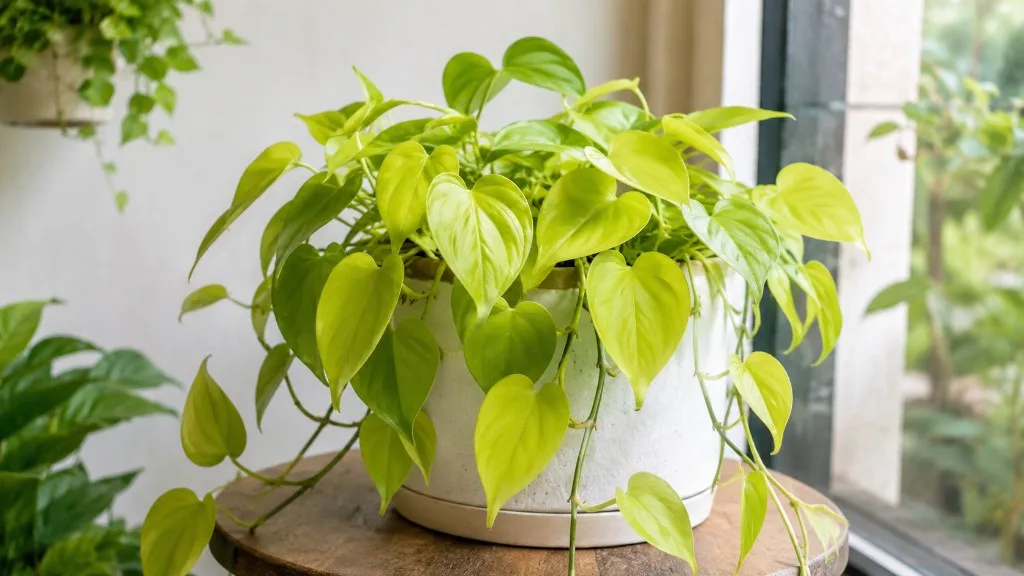
Philodendron Moonlight Light Needs: Best Window, Sun & Warning Signs
Philodendron Moonlight Light Needs: Best Window, Sun & Warning Signs
The fastest way to lose Philodendron Moonlight’s signature look is not underwatering — it is placing the pot where the room feels bright to you while the crown receives weak plant-facing light all day. Philodendron Moonlight (Philodendron ‘Moonlight’, USPP 12,221) is a patented self-heading hybrid grown for bright chartreuse-yellow new leaves that mature to light green. Unlike heartleaf philodendrons that tolerate dim corners, Moonlight needs enough filtered brightness to keep new foliage luminous and internodes tight. When light falls short, the plant stretches, leaves shrink, and the crown dulls toward plain green — long before roots fail.
Quick Answer: Bright Filtered Light for Chartreuse Crowns
Give Philodendron Moonlight medium to bright indirect light for most of the day — roughly 200 to 1,000 foot-candles (about 2,000 to 10,000 lux) at the leaf surface. An east-facing window with the pot 30–90 cm (12–36 inches) from the glass, or a filtered south or west window set back behind sheer fabric, is the safest default for most homes. NC State Extension lists Philodendron erubescens cultural conditions as partial shade and dappled sunlight, and warns to avoid direct sunlight indoors — a baseline that applies to modern erubescens hybrids including Moonlight. Judge success by the newest leaf at the crown: vivid chartreuse with short internodes means today’s placement works.
Target Range and Default Window
Moonlight is a compact self-heading rosette, not a vine. The growing crown sits at or just above the pot rim, so light must reach the top of the foliage mass, not a distant moss pole. Clemson HGIC notes that self-heading philodendrons such as tree philodendron and ‘Prince of Orange’ perform best with medium to bright light near an east, west, or south window — unlike heartleaf types that tolerate very low light. Moonlight follows the same self-heading logic: brighter filtered exposure than a trailing philodendron, with protection from harsh midday beams.
Why Moonlight Colour Follows Light
Chartreuse new leaves contain less chlorophyll than mature green foliage. In dim conditions the plant compensates by producing darker, greener leaves with more chlorophyll — the same survival response that dulls variegation on Pink Princess, but on Moonlight it reads as loss of the yellow-green glow rather than pink fade. Light is the primary control for crown colour, rosette compactness, and how quickly the pot dries between waterings.
Plant-Facing Brightness vs Room Ambience
Run a shadow test on a clear day. Hold your hand between the plant and the window at crown height. A soft shadow with readable edges near the newest leaves usually means bright indirect light. A faint or absent shadow means the plant is too far back, the window is too dim, or a shelf blocks the light column — common on north exposures and interior tables more than one metre from glass. Clemson HGIC indoor light guidance notes that a well-lighted home interior is often less than 100 foot-candles, while outdoor shade on a clear day can exceed 10,000 foot-candles — explaining why “bright room” and “bright plant” are not the same.
The New-Leaf Colour Checkpoint
Your plant detail hub calls this the Moonlight colour checkpoint: judge health by the newest leaf at the crown. If it emerges dull green, increase filtered brightness before changing fertilizer or pot size. Mature leaves keep the colour they formed under; only new growth confirms a light fix worked. Wait for two new leaves after any move before deciding the placement failed.
Best Light for Philodendron Moonlight Indoors
Moonlight is not a low-light philodendron. Clemson HGIC describes most philodendrons as preferring indirect or curtain-filtered sunlight, while heartleaf types alone tolerate very low light. Coloured self-heading cultivars — including ‘Prince of Orange’, which Clemson notes needs high light to maintain colour and growth — sit closer to the bright end of that range. Moonlight’s chartreuse crown behaves similarly: enough brightness to keep new leaves luminous, not so much direct sun that pale tissue bleaches.
The RHS philodendron growing guide recommends bright but indirect light, keeping plants out of direct summer sun, and warns that insufficient light causes philodendrons to become leggy with fewer, smaller leaves — exactly the stretched rosette Moonlight shows when under-lit.
Foot-Candle Benchmarks for Self-Heading Hybrids
Indoor targets that match extension partial-shade guidance and collector practice:
| Light level | Approximate foot-candles | What Moonlight typically does |
|---|---|---|
| Too dim long-term | Below 200 FC | Leggy stretch, dull green crown, small new leaves |
| Maintenance | 200–400 FC | Survives; slow growth; chartreuse often fades |
| Target range | 400–1,000 FC | Vivid chartreuse new leaves; tight rosette |
| Too intense unfiltered | Above 2,000 FC at leaf surface | Bleached yellow-white patches; crispy edges on pale tissue |
These ranges are practical heuristics, not laboratory requirements. Your goal is consistent plant-facing brightness in the target band, then read the next crown leaf.
Best Window Placement by Direction
Window direction changes both intensity and heat — critical for a cultivar whose pale new leaves scorch before older green ones. Moonlight reads best within 1–2 m of an east window or behind a sheer curtain on south-west glass, per LeafyPixels grower notes for this plant.
| Window | Typical Moonlight outcome | Placement tip |
|---|---|---|
| East | Strong default: morning brightness plus steady indirect day | Crown 30–90 cm from glass; rotate pot weekly |
| North | Often maintenance-only without supplemental light | Add grow light or accept duller crown and slower growth |
| West | High afternoon heat risk on chartreuse tissue | Sheer curtain or 60–120 cm setback; watch summer scorch |
| South | Brightest; scorch risk without filtering | Sheer fabric or 90–150 cm back; never jump here from a dim shop |
East, North, West, and South Compared
East windows deliver the best balance for most Moonlight setups: enough intensity to preserve chartreuse without the sustained heat load of afternoon sun. Place the centre of the rosette, not just the pot base, within the light column.
North windows work only when the room receives reflected brightness or you add artificial light. Expect longer internodes, smaller leaves, and a duller crown through winter unless you supplement.
West and south windows can support vigorous growth when filtered, but chartreuse new leaves bleach first. Use sheer curtains and increase distance before you increase duration of direct sun.
Because Moonlight is self-heading, the entire rosette shares one light plane — there is no climbing tip above the window line. That simplifies placement versus a moss-pole Pink Princess, but it also means a tall shelf above the pot does not help if the crown sits in shade.
Can Philodendron Moonlight Take Direct Sun?
Limited early-morning direct sun through east glass is tolerable for many acclimated plants — think one to two hours when leaves were produced in similar brightness. NC State explicitly recommends avoiding direct sunlight for P. erubescens indoors, and Moonlight’s pale new tissue fails faster than mature green leaves under harsh rays.
Never move a plant straight from a dim nursery shelf to an unfiltered south or west sill. Warning signs of too much direct exposure include bleached chartreuse patches, crisp brown edges on the newest leaf, leaf curl during peak hours, and sudden cosmetic damage after relocation. If you want brighter placement, follow the acclimation sequence below rather than accepting bleaching as normal.
Morning Sun vs Midday Heat
Morning sun is cooler and shorter than west-facing afternoon beams. A Moonlight that receives gentle east direct sun often holds colour well, while the same plant on an unfiltered west windowsill may bleach by July. Sheer curtains reduce intensity without eliminating brightness — usually the safest upgrade on south-west glass.
Low-Light Limits and Chartreuse Fade
Low light is a poor long-term strategy for Moonlight. The plant may persist for months on stored energy, but new leaves usually emerge smaller, darker green, and farther apart. The chartreuse crown dulls because the plant prioritizes chlorophyll where photosynthesis is limited.
Do not confuse chartreuse fade from insufficient light with nutrient problems or repot stress. If internodes lengthen and the crown greens up across two or more consecutive new leaves, brightness is the first variable to fix. Link chronic stretch to our leggy growth guide and persistent dim conditions to slow growth when light correction alone does not restore vigour.
Self-Heading Rosette vs Climbing Relatives
Moonlight differs from Philodendron Pink Princess and other climbing P. erubescens cultivars in ways that change light strategy. Pink Princess is a vining variegated erubescens where pink tissue needs bright light at the moss-pole tip; Moonlight is a non-vining self-header with a central crown and solid chartreuse new leaves — closer in habit to ‘Prince of Orange’, which NC State lists as a compact, bushy non-vining type with coloured emerging foliage. Moonlight does not need a moss pole; leggy stretch means insufficient light on the rosette, not a request for vertical support.
Compared with Philodendron Lemon Lime vine, Moonlight has thicker leaves, a tighter upright rosette, and higher light demand for the same yellow-green colour read. Trailing chartreuse philodendrons can look acceptable farther from glass; Moonlight loses its signature glow sooner in the same spot.
Using Grow Lights for Philodendron Moonlight
When window light is weak — especially north rooms and short winter days — a full-spectrum LED is the most reliable fix. Clemson HGIC classifies medium-light houseplants as those placed within several feet of eastern exposures or under equivalent artificial brightness; Moonlight fits that medium-to-bright band rather than true low-light tolerance.
Hours, Distance, and Heat Monitoring
Practical starting points for a single rosette pot:
- Duration: 10–12 hours daily on a timer
- Distance: 30–45 cm (12–18 inches) from the crown for typical household LED grow lamps
- Heat check: if leaves feel warm to touch after two hours, raise the fixture or reduce intensity
- Coverage: aim the lamp at the centre of the rosette, not the floor beside the pot
Combine a modest east window with a supplemental lamp through winter if the crown dulls despite open curtains. Ceiling room LEDs alone rarely deliver enough plant-facing intensity for chartreuse colour.
How to Move or Acclimate Safely
Sudden jumps in exposure cause scorch, leaf drop, or stalled growth — especially on pale new leaves. Use incremental moves over 10–14 days:
- Days 1–3: Shift the pot 30 cm closer to the target window during morning hours only; return to the previous spot for harsh afternoon sun if needed.
- Days 4–7: Leave the plant in the brighter position full-time behind sheer curtain if west or south.
- Days 8–10: Remove one layer of filtering or move 15–30 cm closer if no bleaching appears on new growth.
- Days 11–14: Set final position; stop adjusting water and fertilizer until a new leaf unfurls.
Worked example: A Moonlight sits 2 metres from an east window with a dull green crown and 8 cm internodes. You move it to 60 cm from the glass using the schedule above. At day 12, a new leaf opens bright chartreuse with tighter spacing — light placement confirmed. If bleaching appears instead, pull back 30 cm and repeat more slowly.
Change one variable at a time. Do not simultaneously repot, fertilize heavily, and jump to a south sill.
Warning Signs: Too Much vs Too Little Light
| Symptom | Likely cause | First response |
|---|---|---|
| Long internodes, small new leaves, dull green crown | Too little plant-facing light | Move closer or add grow light; check crown height in light column |
| Bleached yellow-white patches on newest leaf | Too much direct sun or heat | Filter window or increase distance |
| Sudden leaf curl at midday | Heat + intensity spike | Sheer curtain; move back 30–60 cm |
| Old leaf colour unchanged but new growth vivid | Past damage only | Keep current placement; do not overcorrect |
| Soil stays wet for weeks; soft lower leaves | Low light + slow transpiration | Improve brightness; review watering rhythm |
Judge by new growth after any move, not old blemishes from a previous location.
Light Changes Watering
Light and water move together. A Moonlight in brighter exposure transpires faster and dries its mix sooner. After you increase light, revisit the top 3–5 cm dry checkpoint from our watering guide rather than keeping the old calendar.
If you move dimmer to slow a scorch issue, extend the dry window — roots consume less when photosynthesis drops, and soggy mix in low light invites root rot. Pair light corrections with the soil mix that drains fast enough for the new dry-down rhythm.
Do not compensate for chartreuse fade with fertilizer. Crown colour follows light first.
Know Your Plant: Self-Heading Hybrid
Philodendron Moonlight is a patented Florida hybrid (Philodendron ‘Moonlight’, USPP 12,221) in the P. erubescens breeding line. NC State documents P. erubescens as a Colombian tropical perennial preferring warm temperatures, high humidity, moist well-drained soil, and partial shade, reaching about 3 feet tall indoors when grown as a houseplant. The same profile lists ‘Tangerine’ as a hybrid of Moonlight × ‘Prince of Orange’ — confirming Moonlight’s place among compact coloured self-headers rather than climbers.
Moonlight’s calcium oxalate crystals make all philodendron parts irritating if chewed; light placement does not change toxicity, but brighter windows sometimes sit on sill ledges pets can reach — keep elevated if chewers share the home.
Seasonal Light Adjustments
Day length and sun angle shift placement needs without any care change from you. Late autumn through winter, north and east rooms lose intensity — crown dulling or leggy stretch often appears even when summer placement seemed perfect. Add a grow light or move the pot 15–30 cm closer temporarily, then revisit in spring.
Late spring through summer, west and south glass gains heat. A spot that was safe in March may bleach chartreuse tissue by July. Add sheer filtering or pull the pot back before leaves bleach.
Rotate the pot a quarter turn weekly so one side of the rosette does not dominate growth toward the glass. Rotation manages shape; it does not fix a fundamentally dim room — relocate or supplement instead.
Common Moonlight Light Mistakes
- Judging by room brightness instead of shadow test at crown height
- Treating Moonlight like a heartleaf philodendron in a dim corner
- Moving straight from shop dim shelf to unfiltered south glass
- Adding a moss pole when the plant needs brighter light on the rosette
- Fertilizing when the crown dulls instead of increasing filtered brightness
- Changing light, water, pot, and fertilizer the same week — impossible diagnosis
- Expecting old leaves to re-yellow after a move; only new growth counts
For cluster context, see the overview guide, propagation for division timing, and pruning when removing sun-damaged outer leaves.
Conclusion
Philodendron Moonlight light success is colour-aware placement: bright indirect exposure at the crown, east or filtered south-west windows for most homes, 10–12 hour grow-light supplementation when winter or north exposures fall short, and gradual acclimation that protects chartreuse new tissue. Read the next two leaves for vivid yellow-green colour and tight internodes; distinguish temporary dulling from chronic stretch that needs a permanent brighter home. When you increase light, tighten the watering rhythm; when you filter harsh sun, expect slower dry-down. Get placement right first — fertilizer and repotting cannot replace photons on a self-heading chartreuse philodendron.
When to use this page vs other Philodendron Moonlight guides
- Philodendron Moonlight overview — Start here for whole-plant context before deep-diving light placement.
- Philodendron Moonlight watering — Use when dry-down rhythm, not brightness, is the main question.
- Leggy growth on Philodendron Moonlight — Escalate here when brighter placement and grow lights still leave stretched stems.