Watering Philodendron Moonlight: Schedule & Soil Checks
Watering Philodendron Moonlight: Schedule & Soil Checks
Watering Philodendron Moonlight: Schedule & Soil Checks
Philodendron Moonlight watering should follow a check-first rhythm, not a calendar pour. Philodendron ‘Moonlight’ (USPP 12,221) is a patented self-heading hybrid with luminous chartreuse new foliage that matures to softer green. Unlike climbing philodendrons that vine up a moss pole, Moonlight grows as a compact upright rosette from a single crown — which makes chronic wet soil especially dangerous because there is one growth point to protect. The goal is moist roots after a thorough soak, then partial dry-down before the next soak — never permanently damp peat in a dim room.
This guide covers how often to water Philodendron Moonlight indoors, the moisture checks that beat any schedule, seasonal rhythm, clean watering technique, the mistakes that trigger root rot on Philodendron Moonlight and yellow leaves, and when to stop watering and inspect roots instead of adding another drink.
Why Moonlight Watering Depends on the Pot, Not the Calendar
Philodendrons evolved in tropical forests where roots sit in loose, organic debris that drains quickly between rain events. NC State Extension’s philodendron profile lists moist, well-drained soil and notes that overwatering can cause root rot — the same failure mode that kills most indoor philodendrons when growers treat “every seven days” as law instead of a reminder to check.
Moonlight is self-heading, meaning it does not climb and does not need a moss pole. That matters for watering because the plant has one central crown rather than multiple vine tips exploring new soil. When mix stays wet around that crown in low light, rot can move from roots into the stem base before you notice leaf yellowing. Clemson HGIC notes that root rot usually results from soil that does not drain quickly or overly frequent watering, and that self-heading philodendrons have brittle petioles at the crown — another reason to keep the base dry and stable.
Compared with Philodendron Pink Princess, Moonlight is not a variegated climber whose pale sectors show stress differently. Moonlight’s chartreuse colour is a whole-leaf signal: dull new growth at the crown usually means insufficient light before it means thirst. Fix light and drainage before assuming the plant needs more water.
How Often to Water Philodendron Moonlight
There is no honest universal schedule for how often to water Philodendron Moonlight. A useful starting framework — not a rule — looks like this:
During active growth (roughly spring through early fall), many indoor Moonlight plants in bright indirect light need water about every 7–10 days, but only when the top 3–5 cm (1–2 inches) of mix feel dry and the pot feels noticeably lighter. In winter, the same plant in the same pot may need water only every 10–14 days, sometimes longer in a cool, low-light room.
The interval is a consequence of dryness, not a cause. UF/IFAS Gardening Solutions recommends watering hybrid philodendrons whenever the top inch of soil feels dry — a slightly shallower check than Moonlight’s typical 3–5 cm, which reflects that Moonlight in a standard indoor pot with perlite-enriched mix usually dries a bit deeper before the root zone needs a drink. Your job is to check, not to obey a reminder.
Track how your specific container behaves for two full cycles. Note the date you watered, when the pot felt light again, and what the newest crown leaf looked like. Within a month you will know your home’s rhythm better than any generic blog schedule.
Worked Example: One Pot Through Summer and Winter
Picture a healthy Moonlight in a 12 cm plastic nursery pot with perlite-amended mix, sitting 1 metre from an east window at 20–22°C (68–72°F). In July, active growth and bright morning light may push the dry-down to eight days between thorough soaks — top 3–5 cm dry, pot light, chartreuse crown vivid. Move the same plant to the same spot in January with shorter days, and the interval may stretch to sixteen days without any change in your habits. The plant changed; your skill did not.
Best Moisture Check for Philodendron Moonlight
The most reliable watering signal for Moonlight in typical indoor pots is waiting until the top 3–5 cm (1–2 inches) of mix feel dry, then watering thoroughly until excess drains. Surface color alone is unreliable — peat-heavy blends can look pale on top while staying wet underneath, especially in plastic pots and cachepot setups.
Finger Test, Skewer Probe, and Pot Weight
Three checks, used together, beat any schedule printed on a care tag.
Finger or knuckle test: Push your index finger into the mix to the second knuckle, about 3–5 cm deep. If the soil feels cool and clings to your skin, wait. If it feels dry and crumbly at that depth, the plant is likely ready. For small pots under 12 cm, a dry top 2–3 cm may be enough because the root zone is shallow.
Skewer or chopstick probe: Insert a dry wooden skewer toward the pot bottom, leave it thirty seconds, pull it out, and feel the shaft. A damp skewer means moisture remains lower in the column; a clean, dry skewer supports watering.
Pot weight is the check experienced growers trust most. Clemson HGIC’s indoor watering guide notes that as potting mixtures become dry, a definite loss in weight can be observed. Lift the container after a thorough watering and notice the heft — that is your wet reference. Lift it every few days until the weight drops noticeably. That lightness, combined with a dry top 3–5 cm, is a stronger signal than leaf droop alone.
Wilting is a symptom, not a schedule. If leaves droop but the pot is heavy and the finger test reads wet, do not add water — inspect drainage, improve light, and let the mix dry. If leaves droop and the pot is light with dry soil at depth, water thoroughly.
Signs You Are Watering Too Much
Philodendron Moonlight overwatering announces itself in layers, and early signs are easy to dismiss on a plant where chartreuse colour can mask yellowing until damage is advanced.
Watch for yellow leaves starting at the bottom while newer growth still looks acceptable — a pattern that often indicates roots struggling in wet mix rather than normal old-leaf drop. Wilting in wet soil is the paradox that traps beginners: damaged roots cannot transport water even though the mix holds plenty. Soft or darkening petioles near the soil line, a sour smell from the pot, and stunted new leaves in bright light with wet soil are advanced warnings. Fungus gnats hovering around the surface often mean mix that never dries.
On Moonlight specifically, overwatering is more likely when well-draining mix is paired with low light, a pot with no drainage, or a decorative outer pot that holds runoff without being emptied. If several signs appear together, pause watering and inspect the root zone before feeding or repotting on impulse.
Over vs Under Symptom Comparison for Moonlight
| Signal | Overwatering (wet root zone) | Underwatering (dry root zone) |
|---|---|---|
| Pot weight | Heavy, cool days after last drink | Light, easy to lift |
| Top 3–5 cm | Moist, clings to finger | Dry, crumbly |
| Leaf look | Yellow lower leaves; limp despite wet soil | Limp leaves that perk after soak |
| Crown colour | Dull chartreuse in dim wet conditions | Often dull from light stress, not thirst alone |
| Soil smell | Sour, rotten | Neutral or dusty |
| Fix direction | Stop watering; drain; inspect roots | Soak thoroughly; drain; resume dry-down cycle |
Signs You Waited Too Long
Underwatering happens, especially after a root-rot scare when growers overcorrect toward neglect. The signs differ from overwatering in ways that matter for Moonlight.
Wilting that recovers within hours after a thorough soak points to genuine dryness — the pot feels light and the finger test reads dry at depth. Dry, crispy edges on mature leaves and slightly curled foliage suggest repeated mild drought. Mix pulling away from pot walls means the soil has gone quite dry; water in two slow passes to rehydrate shrunken peat.
Do not confuse afternoon heat wilt with drought — if the plant perks up each evening without additional water, wait until morning to check soil moisture. A single dry episode rarely kills Moonlight; these plants tolerate missed drinks better than chronic wet feet. Rehydrate with one full soak, let excess drain, then return to the dry-down cycle. Do not compensate with daily sips — that swings the problem to overwatering within a week.
Seasonal Watering Changes Indoors
Moonlight water use tracks growth phase more than the month on the calendar. Active spring extension, summer rosette filling, autumn slowdown, and winter rest each change how fast a given pot dries.
In spring and summer, expect to water more often — commonly every 7–10 days, sometimes every 5–7 days for small pots in bright light. In autumn, stretch intervals as growth decelerates. In winter, the same pot that needed water weekly in July may need water only every 10–14 days, sometimes every three weeks in a cool, low-light room. Continuing summer frequency into winter is a primary path to root problems when evaporation drops and roots are semi-dormant.
The RHS philodendron growing guide recommends letting compost dry out slightly between waterings and keeping plants above 15°C (59°F). Moonlight near cold glass in winter holds wet mix longer while roots lose function — keep the plant out of drafts below about 15°C (59°F) and reduce watering when the top 3–5 cm stay dry longer.
How to Water Philodendron Moonlight Cleanly
Technique matters as much as timing. The goal is to wet the entire root column once, drain completely, and then leave the plant alone until the top 3–5 cm dry — not to dribble small amounts every few days.
Use room-temperature water and a watering can with a narrow spout. Apply water slowly across the soil surface until water runs freely from the drainage holes. Clemson HGIC instructs growers to water thoroughly until water runs out the bottom, which guarantees the lower two-thirds of the pot — where most roots live — receives sufficient moisture. Never let the pot sit in runoff. Empty saucers and cachepots within fifteen to thirty minutes.
NC State’s Philodendron erubescens profile recommends watering philodendrons at the base and preventing water from contacting leaves when possible, because wet foliage can contribute to leaf spot issues. Moonlight’s dense rosette shades the soil rim, which is another reason pot weight checks matter more than surface appearance.
Drainage, Saucers, and Cachepots
Cachepots — decorative outer shells with no drainage — are a common killer of compact philodendrons. Water drains from the inner pot into a hidden pool at the bottom. The grower sees dry surface soil, adds more water next week, and the roots sit in a permanent bog. Either remove the inner pot to drain after every watering, or accept that the setup requires extra vigilance on pot weight.
If water pools on the surface and runs down the inside wall without wetting the center — common in peat mixes that have dried and shrunk — break the surface tension with a fork or chopstick, then water again in two short passes. Bottom watering is optional; if you use it, still let the top 3–5 cm dry before the next session.
Light, Soil, and Pot Size Effects on Dry-Down
A Moonlight moved closer to a window uses water faster. If you improve light to keep chartreuse new growth vivid, recheck your interval — the old winter schedule may now be too slow in spring. Conversely, a plant in deep shade dries slowly and uses less water while staying at higher rot risk if you water on a summer calendar.
Soil mix changes dry-down speed dramatically. Moonlight prefers standard potting mix with 20–25% perlite for drainage. Heavy peat with no amendment holds water near the crown for days. After repotting into fresh mix or a larger pot, expect slower drying for several weeks until roots colonize the new volume — extend your interval until weight checks stabilize.
Chartreuse Crown as a Water-and-Light Signal
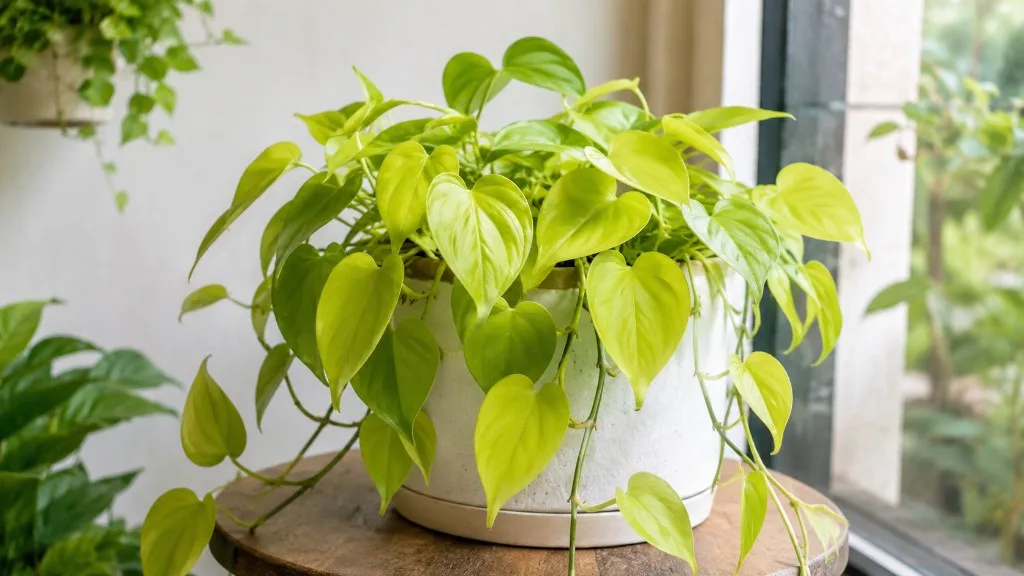
Moonlight’s signature is bright chartreuse-yellow new leaves maturing to light green. Judge hydration and light together by watching the newest leaf at the crown, not older foliage that will never regain colour.
If new leaves emerge dull green in a pot that dries on a normal schedule, increase filtered brightness before adding water or fertilizer. If new leaves look fine but lower leaves yellow while the pot stays heavy, suspect overwatering, not thirst. This dual read prevents the common mistake of watering a plant that actually needs better light and drainage.
Common Philodendron Moonlight Watering Mistakes
Mistake: watering on a fixed weekly schedule without checking soil. Fix: adopt a check-first rule — finger, skewer, or pot weight — before every pour. The calendar reminds you to look, not to water.
Mistake: giving small sips daily instead of a full soak. Fix: water thoroughly until drainage, then let the top 3–5 cm dry. Daily sips keep the upper layer moist while lower roots starve or rot.
Mistake: leaving runoff in the saucer or cachepot. Fix: empty standing water within thirty minutes, every time.
Mistake: continuing summer frequency into winter. Fix: when night temperatures drop and new growth slows, stretch intervals and verify with weight checks.
Mistake: assuming wilting always means thirst. Fix: check soil moisture and petiole firmness before adding water. Wilting plus wet soil means stop watering — see our drooping leaves guide for the full diagnostic.
Mistake: watering heavily because chartreuse leaves look fragile. Fix: match water to dry-down checks, not leaf colour. Dull crown colour usually means light, not thirst.
Mistake: ignoring sour smell because leaves still look acceptable. Fix: repot into fresh mix and inspect for root rot. Sour smell means anaerobic conditions.
Root Rot Warning: When to Stop Watering
Root rot on Moonlight almost always follows overwatering, poor drainage, or both — not random bad luck. When soil stays wet, roots cannot absorb oxygen, die back, and decay. The plant then cannot take up water even though the mix is wet, which is why wilting on wet soil is the classic emergency signal.
If leaves are limp and the mix is wet and the pot is heavy days after the last drink, stop watering immediately. Do not “give it a little drink to perk it up.” Empty saucers, move the plant to brighter indirect light if it was in dim conditions, and let the mix dry until the top 3–5 cm are genuinely dry before considering another soak.
If yellowing spreads, petioles soften at the base, or the mix smells sour, unpot the plant and inspect roots. Healthy roots are firm, white to tan. Rotting roots are brown to black and slimy. Trim mushy tissue, repot into fresh well-draining mix sized to the remaining root mass, water once lightly to settle, drain fully, then wait for the top 3–5 cm to dry before the next soak. Do not fertilize until new growth shows the roots are functioning again. Prevention beats surgery: top 3–5 cm dry, drain saucers, fast mix, adequate light.
When to use this page vs other Philodendron Moonlight guides
- Philodendron Moonlight overview — Start here for whole-plant context before deep-diving this topic.
- Philodendron Moonlight light — Use when dull chartreuse crown or leggy stems suggest light, not water, is the limiting factor.
- Philodendron Moonlight soil — Escalate here when mix stays wet too long despite correct watering technique.
- Root rot on Philodendron Moonlight — Jump here when watering adjustments are not enough and roots need inspection.
Related Philodendron Moonlight guides
- Philodendron Moonlight overview
- Philodendron Moonlight light
- Philodendron Moonlight soil
- Philodendron Moonlight fertilizer
- Philodendron Moonlight repotting
- Philodendron Moonlight propagation
- Yellow leaves on Philodendron Moonlight
- Root rot on Philodendron Moonlight
- Drooping leaves on Philodendron Moonlight
Conclusion
Philodendron Moonlight watering is less about memorizing how many days pass between drinks and more about reading whether the top 3–5 cm (1–2 inches) of mix have dried enough to welcome the next soak. This self-heading hybrid rewards growers who water thoroughly, drain every saucer, and respect its compact crown — one wet rot event at the base can stall the whole rosette. Active indoor growth often calls for water every 7–10 days once checks confirm dryness; winter slowdown may stretch that to 10–14 days or longer in cool, low-light rooms. Yellow lower leaves, wilting in wet soil, sour-smelling mix, and fungus gnats are overwatering and root rot warnings, not calls for more water. Dramatic wilting with a light, dry pot is thirst — and Moonlight usually forgives that mistake within hours. Master the finger test, the skewer probe, and pot weight together, pair them with well-draining mix and bright indirect light, and your Moonlight keeps the chartreuse crown that made you choose it: full hydration, real dry-down, and roots that breathe between every drink.