Philodendron Moonlight Soil Mix: Drainage, Perlite & pH
Philodendron Moonlight Soil Mix: Drainage, Perlite & pH Guide
Philodendron Moonlight Soil Mix: Drainage, Perlite & pH Guide
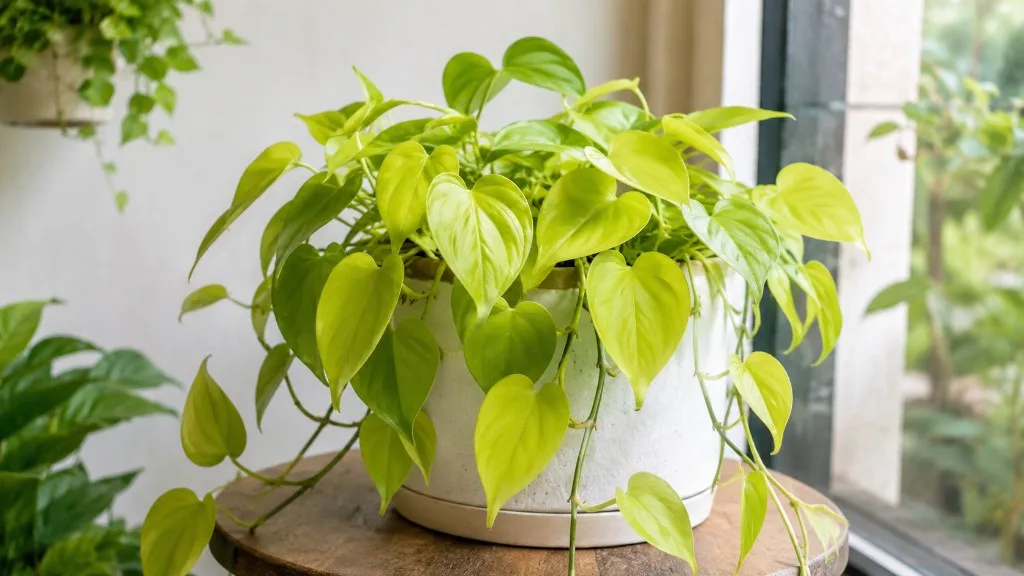
Philodendron Moonlight (Philodendron ‘Moonlight’) is a patented self-heading hybrid bred for a compact upright rosette and luminous chartreuse new leaves. Unlike vining philodendrons that climb moss poles, Moonlight stays bushy with one central crown — and that growth habit changes what its roots need from the pot. The right Philodendron Moonlight soil mix keeps oxygen at the roots so you can water thoroughly without suffocating the plant. Heavy, peat-dense substrate compacts after months of watering, collapses around fibrous aroid roots, and turns a forgiving colour accent into a yellowing, dull-green specimen long before you notice trouble at leaf level.
Moonlight belongs to the Araceae family — the same plant group as monsteras, pothos, and anthuriums. Its breeding line connects to Philodendron erubescens hybrids such as Prince of Orange; NC State Extension describes the species as preferring moist, well-drained soil rich in organic matter and partial shade indoors. Your living room is not a Colombian rainforest, but the root biology is the same: Moonlight needs a well-draining mix with enough organic matter to hold moisture for several days without going swampy, and a container that lets excess water exit freely after every thorough pour.
This guide covers what Moonlight roots actually need, how to build or amend a mix with real volume ratios, how to test drainage before you repot, how pot choice and pH affect the root zone, and the step-by-step repotting routine — all tied to how chartreuse crown colour depends on healthy roots below the soil line.
Why Moonlight Soil Is About Drainage Speed, Not Fancy Ingredients
The phrase “aroid mix” appears on every philodendron care card, but the label alone does not tell you whether your specific pot drains in two minutes or holds water for a week. What matters is structure: the network of gaps between peat particles, perlite grains, and optional bark chips that lets oxygen reach roots while moisture moves through predictably. When that structure collapses — and it will, faster in plastic pots and humid rooms — roots lose oxygen within days of a thorough watering. Anaerobic bacteria multiply in those low-oxygen zones, and root rot follows, often before the chartreuse sections of your newest leaf show more than slight dulling.
Moonlight is not more delicate than every other philodendron, but it carries a visible health signal: judge recovery by the newest leaf at the crown. If new growth emerges dull green instead of bright chartreuse-yellow, light is often the first suspect — yet soggy mix that damages fine roots removes the buffer that would otherwise keep colour vivid through a missed watering or a dim winter week. Good soil does not replace adequate light; it keeps roots healthy enough to respond when light is right.
What Self-Heading Moonlight Roots Need From Soil
Soil for Philodendron Moonlight has one job: give self-heading aroid roots a stable, breathable environment that dries down predictably between waterings. The three properties that matter most are drainage speed, aeration structure, and moderate moisture retention.
Florida Hybrid Roots vs Vining Philodendrons
Philodendron erubescens and its hybrids are native to Colombia and neighboring South American forests, where roots spread through loose organic debris — decomposed leaf litter, bark chips, and open air pockets between rain events. Moonlight was bred as a non-vining, compact self-header with narrow chartreuse leaves, not as a climber demanding moss-pole support. That means its root ball stays relatively contained in a single pot, and a simpler blend — standard potting mix plus perlite — often outperforms an ultra-chunky bark-heavy mix designed for long vining stems.
Clemson HGIC notes that self-heading philodendrons send leaves from a heavy clump at the base and have brittle petioles that break easily if bumped. At repotting, do not bury stems deeper to stabilize the plant; fix support and soil structure instead.
The Moisture-Aeration Balance for Chartreuse Crowns
The central tension in Moonlight soil is holding enough moisture for steady growth while keeping enough air in the root zone that roots never sit in stagnant water. Pure peat or straight coco coir absorbs water beautifully but compacts and suffocates roots without coarse amendments. Pure perlite drains fast but dries so quickly that you end up watering constantly.
The goal is a blend that holds moisture in the middle and lower root zone while letting the top 3–5 cm (1–2 inches) dry within a few days and excess water exit from the bottom within minutes of a thorough pour. When you squeeze a handful of properly mixed Moonlight soil, it should barely clump and fall apart easily when you open your hand — not form a tight mud ball and not crumble like dry sand. That dry-down rhythm pairs directly with the check-first watering approach this cultivar needs.
Best DIY Soil Mix for Philodendron Moonlight
A reliable DIY mix is almost always better than unamended bagged soil for Moonlight because you control the drainage channels yourself. You do not need exotic ingredients — the right ratios and a few minutes of thorough blending are enough.
Core Recipe by Volume (75/25 Potting to Perlite)
For most indoor Moonlight setups in plastic or glazed ceramic pots with drainage holes:
- 75% quality peat-based or coco-based potting soil — structural base and nutrient anchor
- 25% perlite — primary aeration and drainage channels (20–25% range is the sweet spot)
For a single 15 cm (6-inch) pot refresh, that translates roughly to 3 cups potting base + 1 cup perlite. Scale up proportionally for larger batches.
This matches LeafyPixels plant-care data for Moonlight and performs well for the compact self-heading habit. It is simpler than the chunkier aroid blends vining cultivars like Pink Princess often need, because Moonlight’s contained root ball dries more evenly in a standard amended mix.
Avoid using cactus or succulent mix as the sole substrate. It drains too aggressively for a tropical hybrid that evolved in moisture-rich forest debris. Borrow perlite from a cactus blend as an amendment, but do not pot Moonlight straight into it unless you are prepared to water every few days and monitor closely.
When to Add Bark or Push Perlite Higher
A standard peat-based potting mix with 20–25% perlite is usually enough for this cultivar. Add a handful of orchid bark or pine bark fines when:
- the pot is oversized relative to the root ball
- the room runs humid and mix stays wet on the surface more than 3–4 days after watering
- you tend to overwater despite good intentions
Push perlite to 30–35% when fungus gnats hover around the soil surface, the pot sits in a cool low-light corner, or water pools on top for more than 10 seconds. At higher perlite levels the mix feels lighter and dries faster — an intentional trade for lower root-rot risk.
Pumice substitutes for perlite at a 1:1 ratio if you prefer a heavier amendment that does not float when you water aggressively.
Drainage Speed and the Cup Test
Do not wait until your Moonlight yellows to find out whether a mix drains well. A one-minute percolation test takes less time than repotting and saves you from discovering a problem after roots are already stressed.
Step 1: Fill a small cup or 10 cm (4-inch) nursery pot with your dry mix. Do not pack it down.
Step 2: Pour 120 ml (½ cup) of water onto the surface in one steady pour.
Step 3: Watch the bottom. In a pot with a drainage hole, water should begin exiting within 10–30 seconds and finish draining within 2–3 minutes. The surface should darken evenly, not pool for more than a few seconds.
Step 4: After 24 hours, poke a finger 3 cm deep. The mix should feel lightly cool and barely damp, not wet and not bone dry.
The squeeze test complements the percolation check. Grab a handful of moistened mix and squeeze firmly. It should hold together briefly then crumble apart when you prod it with a finger. A tight, shiny mud ball means too little perlite.
Pot Choice and Container Setup
Soil mix and container setup work as a system. The best amended blend fails in a pot with no exit for water.
Yes — Moonlight needs at least one drainage hole in the grow pot. A hole at the bottom lets excess water leave the root zone after a thorough watering and pulls fresh air in as the mix dries. Without it, water accumulates at the bottom even if the top looks dry, and roots suffocate in that hidden reservoir (Clemson HGIC — indoor containers).
Decorative cachepots are fine as display pieces if the plant lives in a plain nursery pot or inner pot with drainage that lifts above any collected water. After watering, empty the cachepot saucer within 30 minutes. Never let Moonlight sit in standing runoff.
The gravel-at-the-bottom trick does not fix poor drainage. It reduces the volume of soil available to roots while creating a perched water table where the fine soil above the gravel stays wetter than you expect. If drainage is slow, fix the mix and the hole size — do not add a false bottom layer.
Choose a pot only 2–5 cm (1–2 inches) wider in diameter than the current root ball when repotting. Moonlight grows steadily but an oversized pot surrounds a small root system with a large volume of mix that stays wet for days after each watering — one of the most common causes of root rot in otherwise attentive homes.
Plastic and glazed ceramic retain moisture longer and suit most growers. Terracotta wicks water through its walls and dries the mix faster — useful if you chronically overwater, but stressful if you already run a dry home or use a high-perlite blend.
pH, Minerals, and Salt Buildup
Moonlight prefers slightly acidic soil, typically in the pH 5.5–6.5 range common to peat-based and coco-based potting mixes. The RHS philodendron guide recommends slightly acidic compost with pH around 5–6 for philodendrons generally. In that band, nitrogen, phosphorus, potassium, and trace elements remain chemically available for root uptake. Most quality bagged indoor mixes land near this range out of the bag, so hobbyist growers rarely need to adjust pH chemically.
Salt buildup appears as a white or tan crust on the soil surface and along the pot rim. It comes from fertilizer, hard tap water, and the natural mineral content of peat. A light crust after a year is normal. A heavy crust that returns within weeks of scraping means you should flush the pot — water slowly and deeply until twice the pot volume runs from the drainage hole — or refresh the mix entirely at the next repot. For fertilizer timing after a refresh, see the Philodendron Moonlight fertilizer guide.
Do not add lime or sulfur to adjust pH unless you have a test result showing you are out of range. Blind adjustment creates more problems than it solves in a container with a single plant.
When to Refresh or Repot the Mix
Moonlight does not demand annual repotting, but it outgrows degraded mix faster than slow-growing succulents. Plan to refresh soil every 1–2 years, or sooner if you see clear signals that the root zone is failing.
Repot in spring or early summer when the plant is entering active growth — the same window recommended in the Philodendron Moonlight repotting guide. Roots repair faster, new chartreuse leaves fill the crown quickly, and you are less likely to trigger prolonged transplant stress. Avoid repotting in late fall or winter unless the situation is urgent — visible root rot, a completely collapsed mix, or a plant that is root-bound to the point where water runs straight through without moistening anything.
Signs it is time to repot or refresh the mix:
- roots circling the bottom of the pot or emerging from drainage holes
- water runs down the sides without absorbing (hydrophobic, degraded peat)
- the mix smells sour, swampy, or stagnant
- the soil surface stays wet for a week despite conservative watering
- growth has stalled and new leaves emerge smaller, paler, or dull green instead of chartreuse
Chartreuse Crown Colour and Root Zone Health
Moonlight’s signature is bright chartreuse-yellow new leaves maturing to light green. That colour checkpoint is your fastest soil-health diagnostic: if the crown dulls while you are watering on schedule, inspect the root zone before reaching for fertilizer or a bigger pot.
Soggy mix accelerates decline in two ways. First, damaged roots deliver less water and nutrients to leaves already competing for energy in a compact rosette. Second, chronic wet conditions favor fungus gnats and mold on the soil surface — problems that start in the root zone even when foliage still looks acceptable. Fixing aeration often resolves leaf symptoms that look like a watering mistake on the surface.
If crown colour fades after a soggy spell, correct the mix and container first, then review light placement before assuming fertilizer will restore chartreuse. Light drives leaf colour expression; soil keeps the roots healthy enough to respond to that light.
Common Philodendron Moonlight Soil Mistakes
Using straight bagged potting soil with no perlite. Fix: blend the existing mix with 25–30% perlite, or replace entirely with a fresh 75/25 batch.
Oversized decorative pot with no drainage. Fix: move the plant to a nursery pot with a hole that fits inside the decorative sleeve, or drill a hole if the material allows. Empty standing water after every watering.
Bottom gravel layer instead of better mix. Fix: remove the gravel, rebuild with proper perlite content throughout the blend.
Repotting into a pot three sizes too large after seeing fast summer growth. Fix: step up one size only. A 15 cm pot goes to 17–20 cm, not 25 cm.
Ignoring sour smell because leaves still look green. Fix: repot immediately into fresh mix and inspect roots. Sour smell means anaerobic conditions — rot may already be underway. Yellow lower leaves with a heavy pot often trace back to chronic wet mix in low light, as noted in the Philodendron Moonlight overview.
Burying the crown or brittle petioles too deep at repotting to stabilize a top-heavy rosette. Fix: keep the crown at the same depth as before; use a heavier pot or place the container out of traffic paths. Self-heading philodendrons have brittle leaf stalks that snap when bumped (Clemson HGIC).
Step-by-Step Repotting With Fresh Mix
Step 1: Water lightly the day before so roots are flexible, not brittle.
Step 2: Choose a pot 2–5 cm (1–2 inches) wider with a drainage hole. Prepare enough fresh 75/25 mix to fill the new container.
Step 3: Gently slide the plant out. Tease circling roots apart with your fingers; trim only mushy brown rot, not healthy white or tan roots.
Step 4: Add fresh mix to the bottom so the root ball sits at the same depth as before. Do not bury the crown or stems deeper than they were — that invites stem rot on self-heading philodendrons.
Step 5: Fill around the sides with mix, tapping the pot to settle without compacting. Leave a small gap below the rim for watering.
Step 6: Water thoroughly until runoff exits the hole. Empty the saucer.
Skip fertilizer for 4–6 weeks after repotting while roots establish. For division at repot — Moonlight’s reliable home propagation method — see the Philodendron Moonlight propagation guide.
When to use this page vs other Philodendron Moonlight guides
- Philodendron Moonlight overview — Start here for whole-plant context, toxicity, and the chartreuse crown checkpoint before deep-diving soil.
- Philodendron Moonlight watering — Use when the mix drains well but you still need a check-first watering rhythm at 3–5 cm depth.
- Philodendron Moonlight repotting — Escalate here for seasonal timing, division steps, and post-repot care beyond mix ratios alone.
- Philodendron Moonlight light — Jump here when soil is fine but new leaves emerge dull green — light often drives colour before mix changes help.
Related Philodendron Moonlight guides
- Philodendron Moonlight overview
- Philodendron Moonlight watering
- Philodendron Moonlight light
- Philodendron Moonlight fertilizer
- Philodendron Moonlight repotting
- Philodendron Moonlight propagation
Conclusion
Philodendron Moonlight soil succeeds when three elements work together: a well-draining amended mix with enough organic matter to buffer moisture, perlite at 20–25% to keep that mix open and airy through months of watering, and a container with real drainage sized close to the root ball. The baseline recipe — 3 parts quality potting soil to 1 part perlite, with optional bark in humid rooms or oversized pots — handles most indoor homes well. Push perlite higher when the mix stays wet on the surface; add a bit more organic matter only if you water constantly in a bright, dry setup.
Test your mix before repotting with a quick cup percolation check and a squeeze test. Refresh the substrate every 1–2 years or when it smells sour, drains poorly, or collapses. Fix the root zone first when leaves yellow, the crown dulls, or growth stalls — because Philodendron Moonlight rewards good soil with the vivid chartreuse new growth that made you choose this cultivar in the first place.