Philodendron Moonlight Pruning: When, How, and Mistakes
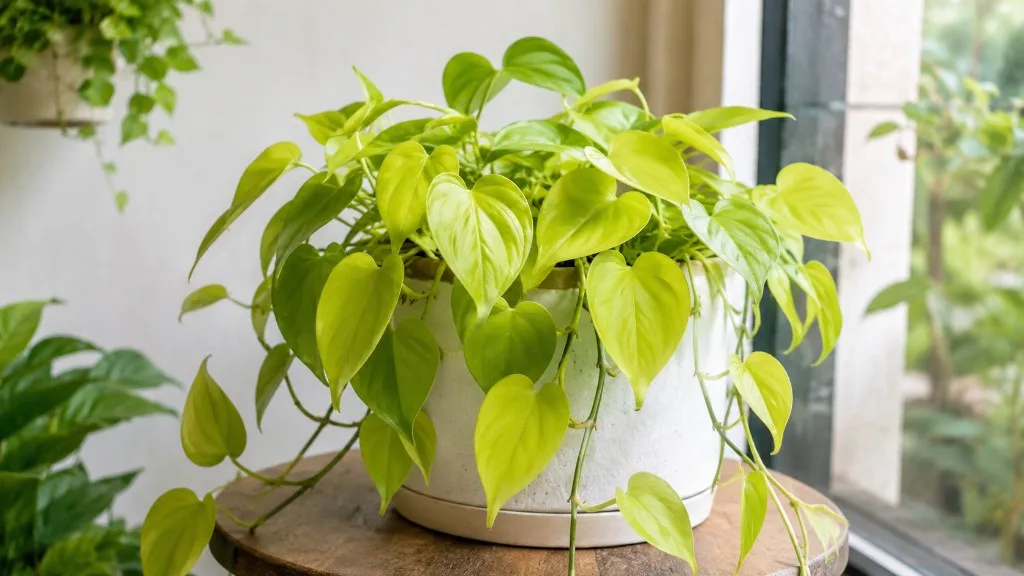
Philodendron Moonlight Pruning: When, How, and Mistakes to Avoid
Philodendron Moonlight Pruning: When, How, and Mistakes to Avoid
First, remove only fully dead, yellow, or clearly damaged leaves with clean sharp scissors — snip each petiole at its base where it meets the crown. Philodendron Moonlight (Philodendron ‘Moonlight’) is a self-heading hybrid that grows as an upright rosette, not a climbing vine. A quick sanitation pass shows you what is actually alive before you decide whether outer spent leaves need removal for light or size.
Quick Answer
Prune Moonlight for cleanup, light exposure, and modest size control in late spring through summer, when the rosette is actively growing. Cut spent leaves at the petiole base — never into the central crown where new chartreuse foliage emerges. Remove no more than one-third of total foliage per session. Emergency trimming of mushy, pest-damaged, or fully brown tissue can happen any time. RHS philodendron guidance notes that bushy philodendron species generally do not need the same node-level cutbacks as climbers — Moonlight fits that pattern. Pruning cannot replace Philodendron Moonlight light — chartreuse color fades and stems stretch in dim corners regardless of trim frequency.
What Pruning Does for Philodendron Moonlight
Moonlight is a patented self-heading hybrid with luminous chartreuse new leaves that mature to light green. UF/IFAS hybrid philodendron guidance describes self-heading hybrids as upright plants with large spade-shaped leaves — distinct from vining heartleaf types that need moss poles and node cuts.
Unlike climbing philodendrons such as Pink Princess, Moonlight does not produce long runners with aerial roots. New growth emerges from a central crown in a tight rosette. Pruning serves four practical jobs:
- Removes failing tissue — yellow, scorched, pest-damaged, or fully brown leaves that drain energy and harbor disease
- Exposes the crown to light — outer spent leaves can shade the center and dull new chartreuse color
- Controls modest size — gradual outer-leaf removal keeps the rosette manageable without hacking the crown
- Prepares for division — heavy size reduction pairs with spring repotting and division when the plant outgrows its pot
Pruning does not fix chronic under-lighting. If new leaves emerge dull green with long naked stems, improve light placement before expecting shears to restore compact form. Moonlight should stay bushy — stretchy stems with small pale leaves mean insufficient brightness, not a request for a trellis.
What to Check Before You Cut
Before removing outer leaves for shape, read the rosette from soil line to crown:
- Crown color — the newest leaf should be bright chartreuse-yellow; dull green at the center signals low light
- Petiole firmness — Clemson HGIC philodendron guidance warns that petioles on self-heading types are brittle; bent or snapped stalks may need clean removal
- Lower leaf yellowing — natural aging on the oldest outer leaves differs from widespread yellowing from overwatering or cold roots
- Stem stretch — long internodes with small leaves indicate light stress, not a pruning deficit
- Root stress signs — wet mix that never dries, soft base, or recent repotting mean hold major cuts until the plant stabilizes
The ASPCA lists philodendron as toxic to cats and dogs. Wear gloves when cutting — calcium oxalate sap can irritate skin.
The First Cut to Make
After dead and damaged tissue is gone, assess whether outer spent leaves are shading the crown or crowding the pot rim. The oldest leaves sit lowest and outward; they yellow and fade naturally as the rosette pushes new growth upward from the center.
Remove an outer leaf only when its petiole is fully yellow or brown, or when you need to expose the crown for light. Never cut into the central growing point — that is where the next chartreuse leaf unfurls. If the entire plant looks leggy with small pale leaves throughout, pause pruning and address light first.
When to Prune Philodendron Moonlight
Moonlight tolerates light cleanup year-round, but timing changes recovery speed, not survival.
Best season for shaping and outer-leaf removal
Late spring through summer is the ideal window for removing spent outer leaves and modest size control. Daylight is increasing, the pot dries on a predictable rhythm from your watering routine, and chartreuse new leaves are already unfurling. Early autumn works as a second option if your space stays warm and bright through winter.
Cuts that cannot wait
Some trimming should not wait for spring:
- Fully yellow or brown leaves — snip at the petiole base any time
- Scorched or pest-damaged foliage — remove once you have a treatment plan for remaining leaves
- Mushy, rotting petioles — cut cleanly at the base; sterilize blades between cuts
- Broken petioles from traffic or pets — self-heading philodendron stalks snap easily; clean up promptly
When to delay major pruning
Hold off on removing large numbers of outer leaves when:
- The plant was recently repotted or divided — let roots firm for two to four weeks
- Root rot or chronic overwatering is active — fix moisture before removing substantial foliage
- The specimen is weak or recently recovered from pest damage — a light sanitation pass is enough until new growth stabilizes
- You are in late autumn or winter with low light unless you accept a slow response
- Room temperatures drop below about 15°C (59°F) — RHS guidance lists this as the minimum for philodendrons; chilled wet roots lose function
Where to Cut: Petiole-Level Technique
Moonlight pruning happens at petiole bases, not mid-stem above nodes like climbing philodendrons.
Identify each leaf’s petiole — the stalk connecting the blade to the crown. Cut flush at the base where the petiole meets the rosette, using clean bypass pruners or sharp scissors. Leave the central crown tissue intact.
For cosmetic brown tip trimming, cut only the dead edge of the leaf blade — do not remove the whole leaf unless more than one-third of the blade is damaged. Fix the underlying cause (low humidity, salt buildup, inconsistent watering) before repeated tip trims.
Sterilize blades with rubbing alcohol between cuts when removing diseased or pest-damaged tissue.
How Much You Can Safely Remove
Limit removal to one-third of total foliage in a single session under normal conditions. Moonlight photosynthesizes through its leaf mass; removing too many outer leaves at once stalls recovery, especially when chartreuse tissue is already stressed by dim light.
For an overgrown specimen, spread outer-leaf removal across two spring or summer sessions spaced four to six weeks apart. Watch the crown between sessions — if the next leaf emerges small or dull green, pause and improve light before the next round.
Pruning Yellow, Brown, or Dead Growth
Fully yellow outer leaves are often natural aging — remove them at the petiole base once the blade is more yellow than green. Widespread yellowing across multiple leaves usually signals overwatering, cold wet roots, or insufficient light; fix those conditions before aggressive pruning.
Brown tips on otherwise healthy leaves respond to humidity and salt issues more than shears. Trim tips cosmetically only after adjusting watering and flushing accumulated fertilizer salts if needed.
Dead or dry leaves come off cleanly at the petiole base any time. They add nothing to the plant and can harbor pests.
Shaping and Size Control
Moonlight stays compact when light is adequate. Shaping means gradually removing the oldest outer leaves to expose the crown and keep the rosette symmetrical — not topping or cutting into the center.
Rotate the pot quarterly so all sides receive even light; lopsided rosettes often reflect uneven exposure rather than a need for heavy pruning.
When the plant outgrows its pot, division at spring repotting is the reliable size-control method for this cultivar — not repeated hard foliage stripping. See the propagation guide for division steps.
Leggy Stretch and Light Recovery
Long naked stems with small pale leaves mean Moonlight was grown in too little light — not that it needs a moss pole or node cutbacks. Climbing philodendron pruning techniques do not apply here.
Move the plant to medium or bright indirect light per the light guide, remove only fully spent outer leaves, and judge the next new leaf at the crown. Chartreuse color returning confirms recovery; continued dull green means light is still insufficient.
Aftercare and Recovery
After pruning, focus on conditions that support clean regrowth:
- Bright indirect light — essential for chartreuse crown color; harsh direct sun bleaches pale leaves first
- Water when the top 3–5 cm of mix dries — hold fertilizer two to three weeks post-prune while wounds callus
- Moderate humidity (50–60%) — supports clean unfurling without stagnant damp foliage
- Stable temperatures above 15°C (59°F) — avoid cold drafts near windows in winter
NC State Extension notes that overwatering causes root rot in philodendrons; avoid stacking repotting, relocation, and heavy pruning on the same week.
During active growth, a new chartreuse leaf usually appears within two to four weeks of moderate cleanup. Visible fullness develops over six to ten weeks as leaves stack at the crown. Autumn or winter pruning can double that timeline.
Signs Pruning Worked (or Went Too Far)
Pruning worked when:
- New chartreuse leaves unfurl from the crown within two to four weeks during active growth
- The rosette looks tighter with fewer shaded outer leaves
- Lower yellowing stops after removing spent foliage and fixing water rhythm
- The plant maintains firm petioles and upright form
Pruning went too far or was badly timed when:
- No new crown growth appears for six or more weeks during warm active season
- New leaves emerge smaller, thinner, or dull green — usually a light problem, not a shear problem
- The plant wilts or yellows widely after removing more than one-third of foliage
- Petioles collapse at the base — check for root rot before removing more leaves
Mistakes to Avoid
- Cutting into the central crown — destroys the only growing point on this self-heading plant
- Treating Moonlight like a climbing philodendron — no moss pole, no mid-stem node cuts
- Stripping outer leaves hoping to force bushiness in dim light — improve brightness first
- Removing green leaves prematurely — only take outer leaves that are fully yellow or clearly spent
- Pruning heavily after repotting or division — let roots recover before foliage removal
- Handling cut material bare-handed around pets or children — sap is irritating and plant parts are toxic if chewed
- Ignoring brittle petioles in traffic paths — relocate the pot rather than repeatedly snapping leaves
Conclusion
Philodendron Moonlight pruning is rosette maintenance: sanitize failing tissue first, remove spent outer leaves at the petiole base, protect the central crown, and limit removal to one-third per session. Bright indirect light keeps chartreuse color vivid — shears tidy the plant but do not create compact form where light is insufficient. For major size reduction, plan division at spring repot rather than repeated hard foliage stripping.
When to use this page vs other Philodendron Moonlight guides
- Philodendron Moonlight overview — Start here for whole-plant context before deep-diving this topic.
- Philodendron Moonlight light — Escalate here when stretch and dull crown color persist after cleanup pruning.
- Philodendron Moonlight watering — Escalate here when yellowing suggests moisture stress rather than natural leaf aging.
- Philodendron Moonlight propagation — Use when size control requires division at repot, not more foliage removal.