Peperomia Problems: Causes & Quick Fixes
Quick answer
Peperomia is prone to 33 common issues - each link below is a plant-specific fix guide.
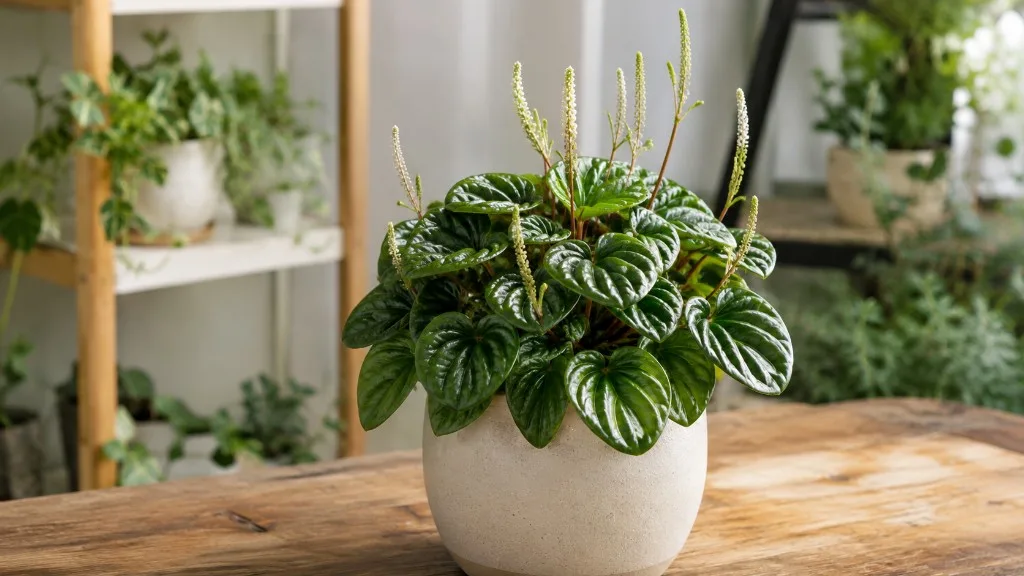
Peperomia problems
Use the guides below to diagnose and fix common issues on Peperomia. Each problem page explains why it happens on this species and what to do first.
Or use our problem diagnosis tool to narrow down symptoms.
Common problems on Peperomia
Likely cause: Sep 3, 2025 · Peperomia is a large genus of ornamental foliage tropical plants in the family Piperaceae native to Mexico, South America, and the Caribbean. With more than 1,500 known species, like …
Quick fix: Follow extension or botanical guidance for Peperomia ants on plant; adjust care before applying broad treatments.
Full fix guide →Mold on Soil
MediumLikely cause: Overwatering creating persistently damp soil surface
Quick fix: Allow soil to dry fully; reduce watering frequency
Full fix guide →Leggy Growth
MediumLikely cause: Insufficient light causing stretched stems
Quick fix: Move to brighter indirect light
Full fix guide →Root Rot
HighLikely cause: Overwatering before soil has fully dried - primary Peperomia killer
Quick fix: Allow soil to dry completely before watering; improve drainage
Full fix guide →Yellow Leaves
MediumLikely cause: Overwatering or too little light
Quick fix: Ensure soil dries completely; move to brighter position
Full fix guide →Aphids
MediumLikely cause: Aphids on Peperomia cluster on tender new leaves and spring-to-summer flower spikes, leaving sticky honeydew on fleshy foliage. First step: isolate the plant and rinse colonies from leaf undersides an
Quick fix: See plant-specific guide for step-by-step fixes.
Full fix guide →Brown Tips
MediumLikely cause: Brown tips on Peperomia usually trace to fluoride or minerals in tap water, fertilizer salt buildup, very dry winter air, or direct sun on variegated leaves - not a single generic stress. First step:
Quick fix: See plant-specific guide for step-by-step fixes.
Full fix guide →Drooping Leaves
MediumLikely cause: Peperomia stems and leaves droop when roots cannot move water - from soggy soil damaging roots, genuine drought, cold drafts, or weak growth in dim light. First step: push your finger 2 inches into th
Quick fix: See plant-specific guide for step-by-step fixes.
Full fix guide →Fungus Gnats
MediumLikely cause: Fungus gnats on Peperomia mean the soil surface stays wet too long-common when calendar watering meets semi-succulent leaves that hide how damp the mix really is. First step: stop watering until the t
Quick fix: See plant-specific guide for step-by-step fixes.
Full fix guide →Low Humidity
MediumLikely cause: Peperomia tolerates average home humidity better than calatheas, but thin-leaved types such as P. argyreia and P. caperata show brown tips when winter heating drops air below about 30%. First step: pl
Quick fix: See plant-specific guide for step-by-step fixes.
Full fix guide →Mealybugs
MediumLikely cause: Mealybugs on Peperomia cluster as cottony white masses in leaf axils, crown centers, and stem joints. First step: isolate the plant and dab every visible colony with 70% isopropyl alcohol on a cotton
Quick fix: See plant-specific guide for step-by-step fixes.
Full fix guide →Not Enough Light
MediumLikely cause: Not enough light makes Peperomia stretch, fade variegation, and grow slowly. Move the pot to bright indirect light-an east window or a filtered spot one to two feet from south or west glass-not a dim
Quick fix: See plant-specific guide for step-by-step fixes.
Full fix guide →Overwatering
MediumLikely cause: Overwatering on Peperomia shows as limp leaves and yellow lower foliage while the mix stays wet-semi-succulent leaves store water, so wilt does not mean thirst. First step: stop watering until the top
Quick fix: See plant-specific guide for step-by-step fixes.
Full fix guide →Slow Growth
MediumLikely cause: Peperomia is a naturally slow-growing genus, and a winter pause with little or no new foliage is often normal-not a failure. Stalled growth in spring or summer usually traces to insufficient bright in
Quick fix: See plant-specific guide for step-by-step fixes.
Full fix guide →Spider Mites
MediumLikely cause: Spider mites on Peperomia cause fine stippling and webbing in dry winter rooms, often hiding in compact rosette crowns. First step: isolate the plant and rinse leaf undersides with lukewarm water-avoi
Quick fix: See plant-specific guide for step-by-step fixes.
Full fix guide →Underwatering
MediumLikely cause: Underwatered Peperomia shows a light dry pot, thin slightly wrinkled leaves, and mix dry through the top half-not limp foliage on wet soil. First step: bottom-water in a tray until the surface moisten
Quick fix: See plant-specific guide for step-by-step fixes.
Full fix guide →Wilting
MediumLikely cause: Wilting on Peperomia usually means roots cannot move water to semi-succulent leaves - either because the mix is too dry or because overwatering has damaged roots while soil stays wet. First step: lift
Quick fix: See plant-specific guide for step-by-step fixes.
Full fix guide →Curling Leaves
MediumLikely cause: Common curling leaves pattern on Peperomia under indoor care stress.
Quick fix: Inspect roots, watering, light, and pests; adjust one variable and monitor new growth.
Full fix guide →Brown Leaves
MediumLikely cause: Common brown leaves pattern on Peperomia under indoor care stress.
Quick fix: Inspect roots, watering, light, and pests; adjust one variable and monitor new growth.
Full fix guide →Black Spots
MediumLikely cause: Common black spots pattern on Peperomia under indoor care stress.
Quick fix: Inspect roots, watering, light, and pests; adjust one variable and monitor new growth.
Full fix guide →Holes in Leaves
MediumLikely cause: Common holes in leaves pattern on Peperomia under indoor care stress.
Quick fix: Inspect roots, watering, light, and pests; adjust one variable and monitor new growth.
Full fix guide →Pale Leaves
MediumLikely cause: Common pale leaves pattern on Peperomia under indoor care stress.
Quick fix: Inspect roots, watering, light, and pests; adjust one variable and monitor new growth.
Full fix guide →Distorted Leaves
MediumLikely cause: Common distorted leaves pattern on Peperomia under indoor care stress.
Quick fix: Inspect roots, watering, light, and pests; adjust one variable and monitor new growth.
Full fix guide →Scale Insects
MediumLikely cause: Common scale insects pattern on Peperomia under indoor care stress.
Quick fix: Inspect roots, watering, light, and pests; adjust one variable and monitor new growth.
Full fix guide →Thrips
MediumLikely cause: Common thrips pattern on Peperomia under indoor care stress.
Quick fix: Inspect roots, watering, light, and pests; adjust one variable and monitor new growth.
Full fix guide →Whiteflies
MediumLikely cause: Common whiteflies pattern on Peperomia under indoor care stress.
Quick fix: Inspect roots, watering, light, and pests; adjust one variable and monitor new growth.
Full fix guide →Leaf Miners
MediumLikely cause: Common leaf miners pattern on Peperomia under indoor care stress.
Quick fix: Inspect roots, watering, light, and pests; adjust one variable and monitor new growth.
Full fix guide →Caterpillars
MediumLikely cause: Common caterpillars pattern on Peperomia under indoor care stress.
Quick fix: Inspect roots, watering, light, and pests; adjust one variable and monitor new growth.
Full fix guide →Nitrogen Deficiency
MediumLikely cause: Common nitrogen deficiency pattern on Peperomia under indoor care stress.
Quick fix: Inspect roots, watering, light, and pests; adjust one variable and monitor new growth.
Full fix guide →Iron Deficiency
MediumLikely cause: Common iron deficiency pattern on Peperomia under indoor care stress.
Quick fix: Inspect roots, watering, light, and pests; adjust one variable and monitor new growth.
Full fix guide →Magnesium Deficiency
MediumLikely cause: Common magnesium deficiency pattern on Peperomia under indoor care stress.
Quick fix: Inspect roots, watering, light, and pests; adjust one variable and monitor new growth.
Full fix guide →Potassium Deficiency
MediumLikely cause: Common potassium deficiency pattern on Peperomia under indoor care stress.
Quick fix: Inspect roots, watering, light, and pests; adjust one variable and monitor new growth.
Full fix guide →Calcium Deficiency
MediumLikely cause: Common calcium deficiency pattern on Peperomia under indoor care stress.
Quick fix: Inspect roots, watering, light, and pests; adjust one variable and monitor new growth.
Full fix guide →