Drooping Leaves on Peperomia: Causes, Checks & Fixes
Quick answer
Peperomia stems and leaves droop when roots cannot move water - from soggy soil damaging roots, genuine drought, cold drafts, or weak growth in dim light. First step: push your finger 2 inches into the mix and lift the pot. Wet and heavy means stop watering; light and dry means a thorough soak.
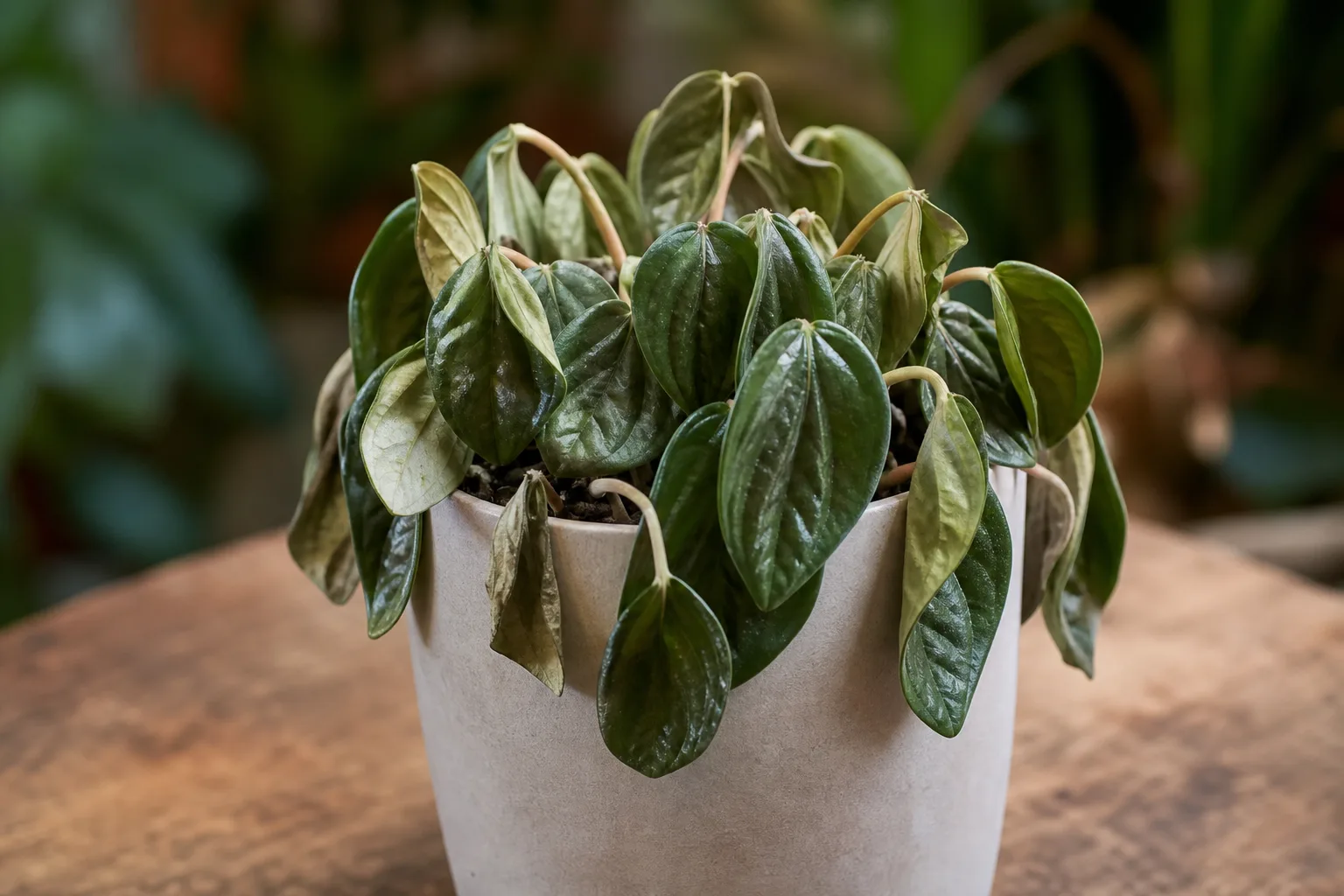
Drooping Leaves on Peperomia: Causes, Checks & Fixes
This guide covers drooping leaves on Peperomia. See also the general Drooping Leaves guide, watering, and light pages for this plant.
Drooping Leaves on Peperomia: Causes, Checks & Fixes
Quick answer
Peperomia (Peperomia spp.) carries thick, semi-succulent leaves and stems that store water - yet drooping still happens when roots cannot deliver moisture to foliage. The three most common indoor triggers are overwatering (limp leaves on wet soil), underwatering (limp leaves on dry, light soil), and cold drafts below about 50°F (10°C) on tropical forest-floor species. Low light weakens stems over time so upright types sag even when watering is technically correct.
Drooping is not the same as acute wilting - this page covers gradual downward sag, stem softness, and the wet-soil paradox. Sudden whole-plant collapse after a missed watering or repot shock fits the dedicated wilting guide better.
First step: push your finger 2 inches into the mix and lift the pot. Wet, cool, heavy soil with soft limp leaves means stop watering and check drainage - see overwatering on Peperomia. Light, dusty-dry soil with thin, slightly wrinkled leaves means water thoroughly once - see underwatering. Full species context: Peperomia overview and watering rhythm.
What drooping leaves look like on Peperomia
Peperomia droop is a posture problem - stems, petioles, and leaf blades hang lower than their healthy angle instead of standing firm.
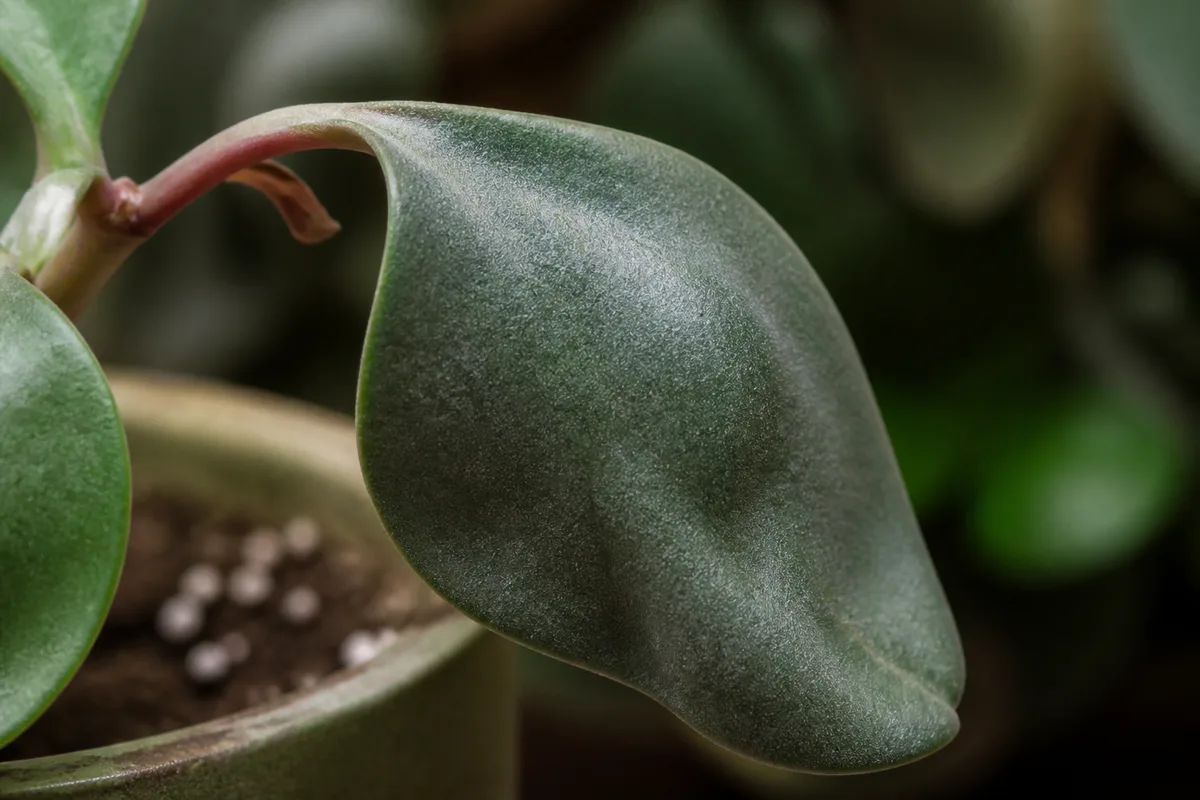
Drooping Leaves symptoms on Peperomia - compare with healthy tissue on the same plant.
Overwatered droop (most common indoors):
- Stems and leaves sag while soil stays damp for many days
- Leaves feel soft or mushy, sometimes yellowing from the bottom up
- Pot feels heavy; surface may look dark and cool
- Fungus gnats or a sour smell from the mix often appear at the same time
- The plant looks thirsty - beginners water again and worsen root rot, the most common peperomia disease per Clemson HGIC
Underwatered droop:
- Leaves and stems hang limp but tissue stays firm, not mushy
- Mix is dry several inches down; pot feels noticeably light
- Thin-leaved P. argyreia and P. caperata may show slight leaf cupping or edge wrinkling before obtusifolia types complain
- Recovery after a proper soak is often visible within hours to one day
Cold-draft droop:
- Sagging appears overnight after the pot sat on a cold windowsill, near an AC vent, or beside a frequently opened door in winter
- Soil moisture may be normal; stems feel firm but leaves hang
- RHS notes peperomias need minimum temperatures around 10°C (50°F) - sudden cold below that band damages tropical foliage quickly
Low-light weakness (slow droop):
- Upright types such as P. obtusifolia develop long, weak petioles that cannot hold leaves at their usual angle
- Internodes may stretch while leaves stay small - overlap with not enough light
- Soil dries slowly in dim corners, which increases overwatering risk even when you water less often
Drooping vs. wilting vs. leggy stretch:
| Pattern | What you see | First check |
|---|---|---|
| Drooping (this page) | Stems and leaves sag downward; may be gradual | Soil moisture + pot weight |
| Wilting | Acute collapse, often rapid after stress event | Compare to wilting guide |
| Leggy stretch | Stems grow tall with long gaps; leaves small but pointing up | Light level and window distance |
Why Peperomia leaves droop
Peperomia biology explains why the same symptom - limp foliage - can mean opposite fixes.
Semi-succulent leaf reservoirs. Leaves and stems store internal water. That storage masks brief root failure: a plant with damaged roots can still look slightly firm for a day while soil stays wet, then sag as reserves drain. The classic mistake is watering limp leaves because they “look thirsty” when roots are actually drowning.
Shallow, epiphytic roots. In nature many peperomias grow on trees and rocks with thin organic root zones that dry quickly. Indoors, those roots suffocate in compact, waterlogged mix - especially in oversized decorative pots or cachepots that hold stale runoff. Transport fails upward; leaves droop despite wet soil.
Species thickness changes timing. NC State Extension describes P. obtusifolia as succulent-like with low water needs - it droops slowly from drought and recovers fast. Thinner P. caperata and P. argyreia droop sooner when dry and show stress faster when overwatered because they carry less internal storage.
Winter calendar watering. The same weekly schedule that worked in summer overwaters in cool, dim winter when roots are barely active. Clemson HGIC recommends letting plants dry out between waterings - winter droop from soggy soil is more common than true drought in typical collections.
Common causes of drooping Peperomia leaves
Overwatering and root damage
Chronic moisture keeps roots oxygen-starved. Feeder roots die first. Leaves lose turgor while mix stays wet - the wilting paradox described in the watering guide. Lower leaves yellow, stems soften at the base, and root rot from overwatering is the most common peperomia disease. Escalate to root rot if the crown softens or smell turns sour.
Underwatering and drought stress
Extended dry spells drain leaf reserves. Thick obtusifolia leaves go slightly soft; thin ripple and watermelon types cup or wrinkle at edges. Soil is dry to the second knuckle, pot is light. Unlike overwatering, stems stay firm and there is no sour smell. Peperomia recovers from brief drought more reliably than from chronic saturation.
Low light and weak stems
In medium or low light, peperomia grows slowly with elongated, weak petioles that cannot support leaf weight - especially on upright cultivars. The mix also dries slowly, so growers sometimes overwater while trying to “help” a sagging plant. Bright, indirect light tightens growth and reduces both weak droop and rot risk.
Cold drafts and temperature shock
Tropical understory species react sharply to cold air below about 50°F (10°C). Winter window sills, AC blasts, and opened exterior doors can droop foliage overnight without changing soil moisture. Move to stable warmth before assuming a watering problem.
Root rot and pest stress
Advanced rot softens the crown and collapses the whole plant. Spider mites and mealybugs drain sap until leaves hang limp - check undersides and stem joints if soil moisture looks normal. See spider mites on Peperomia when stippling or webbing appears.
How to confirm the cause
Run this checklist in order. One soil probe and pot-weight reading resolves most cases.
- Soil moisture at 2 inches - Finger, skewer, or meter at mid-depth. Wet and cool → overwatering branch. Dry and dusty → underwatering branch.
- Pot weight - Lift the container. Heavy days after the last watering confirms saturation. Very light means thirst.
- Stem and leaf feel - Mushy base or translucent lower leaves → rot risk. Firm but limp on dry soil → drought. Firm on wet soil → root damage, not thirst.
- Recent watering history - Calendar watering through a dim winter? Standing water in a cachepot? Those patterns favor wet-soil droop.
- Light and placement - Leggy spacing plus sag suggests not enough light. Cold window or vent path suggests temperature.
- New growth condition - Soft, collapsing center growth is urgent. Firm center with only outer leaves drooping is lower urgency.
- Pest scan - Webbing, cottony clusters, or stippling on undersides mean treat pests even while you fix water.
You have confirmed the cause when soil moisture, pot weight, and stem feel all point the same direction - wet/mushy/overwatered, dry/firm/underwatered, or normal moisture with cold placement/draft.
Drooping with wet soil vs. dry soil
| Soil + stem feel | Likely cause | First action |
|---|---|---|
| Wet, heavy; soft leaves; yellow lowers | Overwatering / root stress | Stop watering; empty saucer; improve airflow |
| Wet, heavy; firm leaves; recent cold exposure | Draft shock on wet roots | Move to stable warmth; do not water |
| Dry, light; firm limp leaves | Underwatering | Thorough soak; drain fully |
| Dry, light; wrinkled thin leaves | Drought on argyreia/caperata | Soak; shorten next dry interval slightly |
| Damp but not soggy; weak long petioles | Low light weakness | Move to brighter indirect light |
| Wet soil; sour smell; mushy crown | Root rot | See root rot guide |
First fix for Peperomia drooping leaves
Apply one correction, then wait five to seven days before stacking Peperomia repotting guide, pruning, or fertilizer.
If soil is wet: stop watering
Do not water limp leaves on wet soil. Move the pot to Peperomia light guide to speed evaporation, confirm drainage holes are open, and empty any cachepot runoff. Let the top half of the mix dry before the next drink. If leaves keep declining after the mix dries properly, slide the root ball out and inspect for brown mushy roots - trim only clearly dead tissue and repot into fresh, airy mix if more than a third of roots are lost.
If soil is dry: water thoroughly once
When the top 1 to 2 inches are dry and the pot is light, water until a small amount runs from the drainage hole, then empty the saucer. Peperomia wants a full soak followed by a real dry-down - not shallow sips. Leaves often re-firm within hours on obtusifolia; thin-leaved types may need a full day.
If cold draft is the trigger: warm and stable placement
Move the pot inward from winter glass and away from AC vents without repotting the same day. Stable room temperatures in the 65–80°F (18–27°C) range let leaves recover once chill stress ends.
If low light weakens stems: improve light first
Shift to the brightest indirect spot available - east window, or several feet back from south or west glass. Do not compensate with extra water in shade; slow drying worsens rot. Judge recovery on tighter new leaf spacing over two to three weeks.
Recovery timeline
Recovery speed depends on cause and species thickness.
- Brief underwatering: Leaves often perk within hours to one day after a proper soak on thick-leaved types.
- Overwatering without advanced rot: One to two weeks after soil dries and oxygen returns; watch for firm new center growth, not perfect old leaves.
- Root damage / repot rescue: Two to four weeks for new leaves; severely yellowed or mushy foliage may be removed once the plant stabilizes.
- Cold draft: Several days to one week after stable warmth if roots were healthy.
- Low light: Two to three weeks of improved light before new growth looks compact; old elongated petioles do not shorten.
Damaged leaf tissue may not return to its original angle - judge success by new growth, not by old leaves re-standing perfectly.
What not to do
- Do not water because leaves look limp without checking soil - wet-soil droop is more common than drought on peperomia.
- Do not fertilize a stressed plant before roots and light stabilize.
- Do not repot, prune heavily, and treat pests on the same day - peperomia responds better to one change at a time.
- Do not leave the pot in a full saucer or sealed cachepot - shallow roots drown in stale water within 48 hours.
- Do not assume drooping equals wilting - acute collapse after repot or heat shock may need the wilting page workflow instead.
How to prevent drooping leaves next time
- Check moisture at depth before every watering - top 1 to 2 inches dry for most species; see watering guide for species-specific dry-down.
- Use fast-draining mix and a pot with a drainage hole sized to the root ball, not an oversized decorative container.
- Stretch winter intervals when growth slows - the same summer rhythm overwaters in dim, cool months.
- Keep stable placement away from cold glass and dry heat vents once the plant acclimates.
- Match light to growth - bright indirect light produces firm stems less prone to sag.
When to worry
Treat as urgent if:
- The crown softens while soil is wet - possible advancing root rot
- Mushy stems at the soil line spread upward within a few days
- Pests coat new growth with webbing or mealy clusters
- Whole plant collapses after a recent repot or fertilizer application
Lower urgency: a few outer leaves droop on an otherwise firm center while you correct watering - monitor for one week before escalating to root surgery.
Conclusion
Drooping leaves on Peperomia almost always trace to water mismatch - too much or too little - or to cold and weak light weakening stems. Semi-succulent leaves store water, but damaged roots cannot move it upward, which is why limp foliage on wet soil means stop watering, not another drink. Push your finger 2 inches into the mix, lift the pot, and branch from there. Recovery shows in firm new center growth; pair this page with the overview, watering guide, and sibling problem pages when one cause dominates.
When to use this page vs other Peperomia guides
- Peperomia watering guide - Use for routine moisture checks before assuming drooping leaves is the main issue.
- Peperomia problems hub - Browse all 5 common issues on this species.
- Root Rot on Peperomia - Different entry point when symptoms overlap with drooping leaves.