Underwatering on Peperomia: Causes, Checks & Fixes
Quick answer
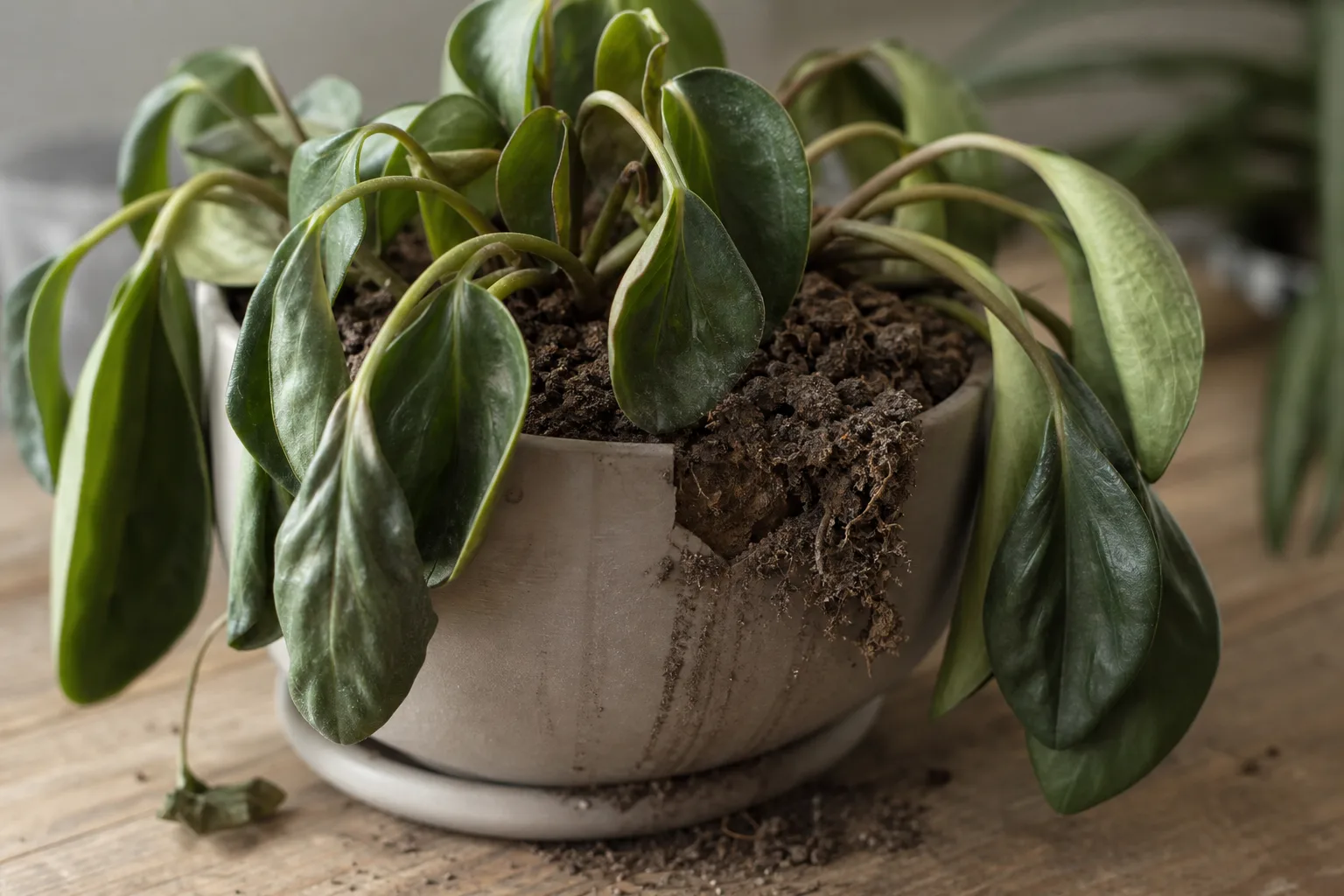
Underwatered Peperomia shows a light dry pot, thin slightly wrinkled leaves, and mix dry through the top half-not limp foliage on wet soil. First step: bottom-water in a tray until the surface moistens, drain completely, then resume the top-half dry protocol from the watering guide.
Underwatering on Peperomia: Causes, Checks & Fixes
This guide covers underwatering on Peperomia. See also the general Underwatering guide, watering, and light pages for this plant.
Underwatering on Peperomia: Causes, Checks & Fixes
Quick answer
Peperomia (Peperomia spp.) is a compact genus with thick, semi-succulent leaves that store water while fine, shallow roots dry out quickly in small pots. That pairing makes underwatering less common than overwatering indoors-but when drought does hit, leaves go limp on a light, dry pot, not on soggy mix.
First step: bottom-water in a tray until the surface of the mix feels evenly moist, then lift the pot out and let it drain completely. Use room-temperature water. Do not repot, fertilize, or mist before you confirm the root zone was actually dry and the plant responds to water.
If stems stay limp more than a few days after a proper soak on previously dry soil, stop watering and inspect roots. That pattern is overwatering or root damage, not thirst. For everyday dry-down rhythm, keep the Peperomia watering guide beside this rescue page.
Wet soil vs. dry soil - is it really underwatering?
Peperomia’s stored leaf water creates the most common misread in houseplant care: limp foliage does not automatically mean “add water.” Pair what the leaves feel with what the pot and mix tell you.
| Pattern | Pot weight | Soil at mid-depth | Leaf feel | Stem at soil line | What it usually means |
|---|---|---|---|---|---|
| Underwatering | Light | Dry throughout top half | Thin, slightly wrinkled | Firm and green | Turgor loss from drought |
| Overwatering | Heavy | Wet, cool, clings | Soft, limp on wet mix | Usually firm early | Roots failing from saturation |
| Advancing root rot | Heavy | Wet, sour smell | Yellow, mushy lower leaves | Soft or darkening | Anaerobic decay at crown |
| Low humidity alone | Normal | Appropriate moisture | Crisp brown tips, firm body | Firm | Air too dry, not thirst |
Wilting with moist soil often means roots cannot absorb water because they are decaying-not that the plant needs more water. Underwatered peperomia wilts on a light dry pot and often re-firms within one to three days after one thorough soak. For the full wilt-on-wet-soil branch, see wilting on Peperomia.
What underwatering looks like on Peperomia
Peperomia hides early drought longer than thin-leaf plants like Fittonia because semi-succulent tissue holds internal water reserves. By the time leaves look obviously thirsty, the mix has often been dry through much of the top half for days.
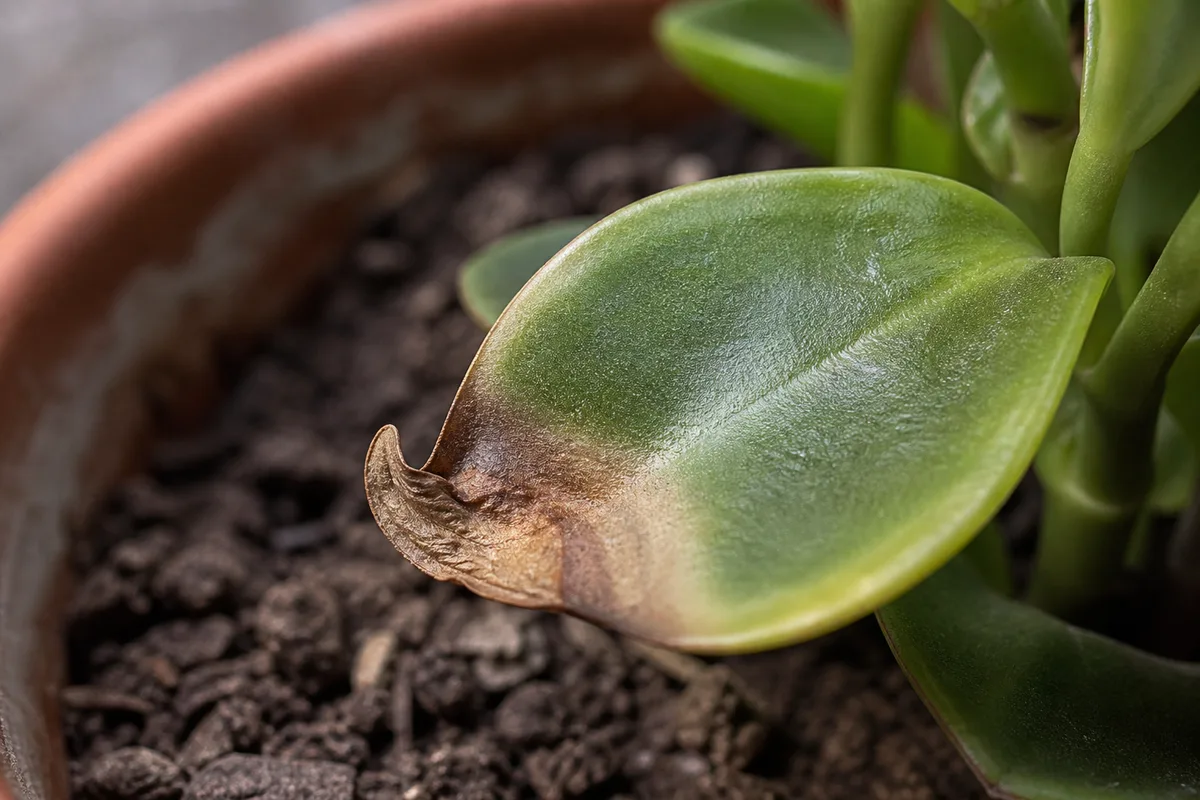
Underwatering symptoms on Peperomia - compare with healthy tissue on the same plant.
Classic thirst pattern:
- Pot feels noticeably light when lifted compared to after watering
- Top half of mix is dry and crumbly to the second knuckle-not merely “less wet” at the surface
- Soil may shrink slightly and pull away from the pot wall
- Leaves feel thin or slightly wrinkled, not mushy
- Older leaf margins turn crisp and brown while the stem base stays firm
- MOBOT notes peperomias prefer moist well-drained mix-chronic neglect pushes them past that buffer into visible wilt
After repeated dry cycles:
- Slow or stalled new growth and smaller incoming leaves
- Lower leaves drop or yellow from stress-not the clustered yellow-on-wet-soil pattern of overwatering
- Insignificant flower spikes may abort if the plant was blooming
- Trailing types show limp lower stems before upper growth fails
What underwatering does not look like:
- Limp leaves on wet, heavy soil-that points to overwatering
- Soft, mushy stems at the soil line-root rot, not drought
- Wilt that persists days after a confirmed soak on dry soil-damaged roots cannot take up water
- Uniform crisp tips on otherwise firm, well-watered plants in dry winter air-often low humidity compounded stress, not thirst alone
The key Peperomia tell is the pot-soil pairing: light container, dry top half, firm stems, thin wrinkled leaves. Recovery after one proper soak confirms thirst when roots are still healthy.
Why Peperomia gets underwatered
Peperomia evolved for intermittent tropical showers followed by real dry-down in forest understory and on epiphytic branches-not for calendar neglect, but also not for perpetual dampness. Its drought tolerance is real, which makes underwatering easy to underestimate until storage reserves run out.
Semi-succulent leaves mask soil dryness
Many Peperomia species store water in fleshy leaves as insurance against dry spells. Thick-leaved P. obtusifolia (baby rubber plant) can look firm for days after the top half of mix has dried. Thin-leaved P. argyreia (watermelon peperomia) and rippled P. caperata show wilt sooner because they have less internal storage. Leaf firmness alone is a poor watering trigger-always check pot weight and mid-depth moisture per the watering guide.
Small pots and bright light dry quickly
A 4-inch terracotta pot in a bright east window can lose the top half of its mix in seven to ten days during active summer growth. Heating vents, sunny glass, and warm rooms accelerate drying even when you watered on schedule last week.
Fear of overwatering after past rot
Because root rot from overwatering is the most common peperomia disease, many owners swing too far the other way-skipping drinks until leaves collapse. Peperomia forgives brief drought far more reliably than chronic sogginess, but weeks of neglect in a hot room still desiccates fine feeder roots.
Wick and self-watering failures
Self-watering pots, wicks, and cachepots can stop delivering moisture when the wick salts up, the reservoir runs dry unnoticed, or peat pulls away from the pot wall. The plant looks fine until stored leaf water is exhausted-then wilt appears suddenly.
Calendar watering gaps
Watering every Sunday regardless of how fast the pot dried ignores seasonal light, species differences, and pot size. A peperomia that needed water every ten days in July may still need checks every two weeks in January-but never means “ignore for a month in a bright warm room.”
Hydrophobic old mix
Peat-heavy soil that has dried completely can repel water. The surface looks briefly damp after a quick top pour while the root ball inside stays dry. That mimics underwatering even when you think you watered-see the recovery section for rewetting steps.
How to confirm the cause
Work through these checks in order before you change anything else:
- Pot weight test - Lift the pot. A thirsty Peperomia feels noticeably lighter than it does one to two days after watering. A heavy pot with wilted leaves suggests the opposite problem.
- Mid-depth probe - Push to the second knuckle. For this genus, drought rescue applies when the top half is dry and the deeper zone is approaching dry-not when only the surface dusts over while mid-depth still feels cool. That matches the drought protocol in the watering guide.
- Leaf squeeze test - Pinch a mature leaf gently. Thin, slightly soft tissue on a light pot supports thirst. Mushy tissue on wet mix does not.
- Stem and root line check - Stems should stay firm and green at the soil line. Soft blackening tissue means unpot and inspect per the root rot guide-do not soak again.
- Recovery test - Bottom-water once (steps below). If leaves re-firm within one to three days on previously dry soil, underwatering was the cause. If they stay limp on moist soil after 48 hours, inspect roots.
- Watering history and environment - Count days since the last deep soak. Note heat vents, sunny glass, and species type. Thick-leaved obtusifolia tolerates longer dry-down than ripple or watermelon types.
If dry soil and light pot weight align with thin wrinkled leaves, proceed with rehydration. If soil is wet, read overwatering on Peperomia instead.
First fix for Peperomia
Bottom-water the pot in a tray of room-temperature water until the surface of the mix feels evenly moist-usually 20 to 45 minutes for a 4-inch pot, longer for a 6-inch container-then remove the pot and let it drain fully.
Bottom-watering lets dry mix wick moisture upward through drainage holes more evenly than a quick top pour that runs down the gap along the pot wall. Set the pot in a sink or tray with roughly one inch of water. When the top feels moist to your finger, lift the pot out and let excess water drain for at least 15 minutes before returning it to its saucer.
Use room-temperature water-cold water can spot fuzzy-leaved types like P. caperata. Empty the saucer so the plant is never sitting in standing water after the soak.
Do not mist leaves as a substitute for soil moisture. Do not fertilize a drought-stressed plant. Do not repot on the same day unless the mix has gone hydrophobic and will not absorb water after two soak attempts.
Step-by-step recovery after chronic dryness
After the initial bottom-water:
- Repeat soak if water ran through too fast - Hydrophobic mix may need a second tray session the same day. If water beads on the surface, poke a few shallow holes in the dry crust with a chopstick before soaking again.
- Move off heat sources temporarily - Shift the plant away from radiators, sunny south glass, and AC vents while it rehydrates. Heat pulls moisture from leaves faster than roots can replace it.
- Trim only after firming - Wait until leaves re-turgidify before snipping crispy margins. Cut brown edges with clean scissors; green tissue will not turn brown back to green.
- Adjust your check routine - Mark how many days until the top half dries again in your home. That interval becomes your personal cue, not a calendar date-details in the watering guide.
- Inspect roots only if wilt persists - Slide the plant out if it stays limp on moist soil after 48 hours. Firm, pale cream roots mean keep diagnosing lookalikes. Mushy brown roots mean rot treatment, not more water.
Documented recovery example: A 4-inch P. obtusifolia in a dry terracotta pot-pot weight roughly half of post-water weight, top half of mix dusty dry, leaves thin and slightly drooped-bottom-watered 25 minutes until the surface moistened, drained 20 minutes, and showed noticeably firmer leaves by the next morning. Crisp edges on two lower leaves remained permanent; new growth at the crown looked normal within ten days.
Recovery timeline
Mild dehydration on an otherwise healthy Peperomia often shows visible firming within 24 to 72 hours of a thorough bottom-water when roots are still intact. Leaves that were only limp-not fully crispy-usually look acceptable within a week.
Crispy brown leaf margins from repeated drought do not green up again. Judge success by upright new growth at stem tips and a heavier pot after watering, not by old damaged edges.
A plant left dry for weeks with bare stems may take several weeks to push new leaves, if it recovers at all. Peperomias tolerate dry soil better than many tropical houseplants but not months of neglect through a full growing season in hot dry air.
Chronic drought may delay insignificant flower spikes until turgor rebuilds over several weeks. If collapse happens daily despite moist soil, the problem is not underwatering-check for root rot, compacted mix, or a pot that is too large and staying wet in the center while the surface looks dry.
Lookalike symptoms to rule out
Overwatering - Limp leaves on wet, heavy soil; yellowing lower leaves in clusters; sour smell from the mix; fungus gnats hovering at the surface. Wilt plus wet soil is not thirst.
Root rot - Wilt that does not resolve after one proper soak on dry soil. Roots are brown, mushy, and smell bad. The plant may have been overwatered for weeks before you noticed collapse on a heavy pot.
Low humidity alone - Firm, well-watered plants with brown tips but no dramatic whole-plant wilt on a light pot. Dry winter air below 40% humidity worsens edge crisping even when soil moisture is fine.
Light stress - Pale stretched growth with long gaps between leaves points to not enough light before you blame watering. Dim rooms extend dry-down so long that owners forget to check.
Cold drafts - Wilt and edge browning when cold air hits leaves. Keep peperomias above roughly 13°C (55°F) and away from winter window frost zones.
Mistakes to avoid
Do not drench daily after one dry spell-that swings straight to overwatering and rot on this genus.
Do not rely on misting to fix dry soil. A brief leaf film does not replace root-zone water.
Do not assume dramatic wilt always means underwatering. Confirm dry soil before you soak-a wilted plant in wet mix needs drying out, not another drink.
Do not use cold water on fuzzy-leaved ripple types; room-temperature water prevents spotting on sensitive foliage.
Do not fertilize to “perk up” a dry plant. Salts stress drought-damaged roots.
Do not repot into a much larger pot hoping it holds more water. Excess soil stays cold and wet in the center and invites rot when you resume watering.
Peperomia care cross-check
Underwatering rescue works best when the rest of the setup matches genus needs:
- Light: Bright indirect light so the plant uses water at a predictable rate-see the light guide
- Soil: Fast-draining mix with perlite per the soil guide so rewetting after drought does not leave a soggy core
- Pot size: Right-sized container with open drainage-not an oversized decorative pot that hides drying speed
- Routine: Top half dry, then deep soak-the same drought protocol as the watering guide, not surface-only sips
How to prevent underwatering next time
Check the top half of the mix and pot weight weekly during spring and summer growth. Water when that zone has dried and the container feels meaningfully lighter-not when leaves have already shriveled. Thick-leaved P. obtusifolia may go longer between drinks than P. argyreia or P. caperata; thin-leaved types need earlier checks.
Match pot size to the root ball. Small dense root systems in tiny pots dry fast in bright light-that is normal, not a sign the plant is “too needy.”
Avoid letting peat-heavy mix dry to dust repeatedly. Once hydrophobic, it resists rewetting and causes false underwatering cycles even when you pour water.
In winter, stretch intervals in cool dim rooms but never ignore a light pot for a month in a warm bright window. Central heating dries containers faster than many owners expect.
For genus-wide context and species notes, see the Peperomia overview.
When to worry
Treat as urgent when the whole plant is limp, the top half of mix is dusty dry several inches down, and the pot sits in hot direct sun or above a heat register. Severe dehydration combined with heat can desiccate fine roots beyond recovery.
Worry if stems stay limp more than four to six days after a confirmed thorough soak on previously dry soil. That suggests root damage from prior overwatering or chronic drought, not current thirst alone.
Replace or propagate from firm leaves or stem cuttings if the base is bare, stems are shriveled, and no new growth appears after two weeks of corrected watering. Many peperomias root easily from cuttings when tissue is still firm.
A once-weekly wilt that recovers after each watering is manageable thirst-not an emergency-but it means your check routine is too reactive. Shift to watering when the top half dries, not after collapse.
When to use this page vs. the watering guide
| Your situation | Start here |
|---|---|
| Routine “when should I water?” checks | Peperomia watering guide |
| Limp leaves on wet heavy soil | Overwatering or wilting |
| Light dry pot, thin wrinkled leaves | This page |
| Mushy stems, sour smell, brown roots | Root rot |
| Building a new collection | Peperomia overview |
Related Peperomia guides
- Peperomia overview - genus ID, species differences, and collection basics
- Watering - top-half dry protocol, seasonal rhythm, and semi-succulent biology
- Overwatering - limp leaves on wet soil, yellow lower foliage, mushy stems
- Wilting - wet-vs-dry wilt decision path when leaves collapse
- Root rot - mushy roots, sour smell, and crown decay after chronic saturation
- Brown tips - crisp margins on otherwise firm, well-watered plants
- Low humidity - edge crisping when soil moisture is fine
Conclusion
Underwatering on Peperomia is less common than overwatering-but when it happens, the fix is straightforward on healthy roots: confirm a light dry pot, bottom-water thoroughly, drain completely, then resume top-half dry checks. Semi-succulent leaves buy you time, which makes drought easy to miss until wilt appears. Pair leaf feel with pot weight every time; wet mix with limp foliage means stop watering, not another soak. Correct the rhythm and most desk peperomias recover within days; misread the paradox and root rot follows.
Related tool
Use the Plant Watering Calculator to narrow causes for underwatering on this plant before changing multiple variables at once.