Overwatering on Peperomia: Causes, Checks & Fixes
Quick answer
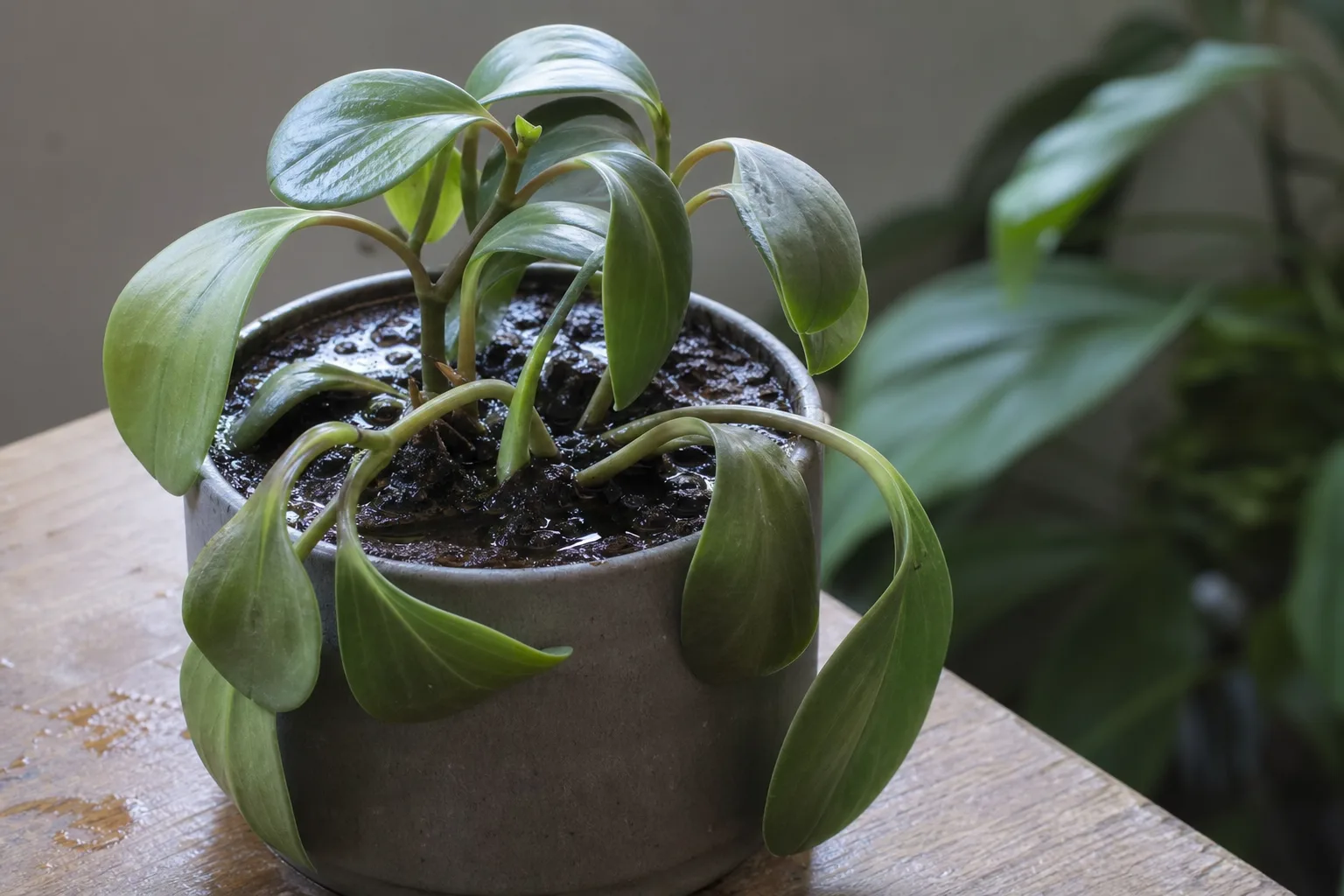
Overwatering on Peperomia shows as limp leaves and yellow lower foliage while the mix stays wet-semi-succulent leaves store water, so wilt does not mean thirst. First step: stop watering until the top half of the mix is dry and the pot feels lighter.
Overwatering on Peperomia: Causes, Checks & Fixes
This guide covers overwatering on Peperomia. See also the general Overwatering guide, watering, and light pages for this plant.
Overwatering on Peperomia: Causes, Checks & Fixes
Quick answer
Peperomia (Peperomia spp.) stores water in thick, semi-succulent leaves and stems while its fine, shallow roots suffocate in stale moisture-a pairing that makes overwatering the dominant indoor failure mode on this genus. When the root zone stays wet too long, oxygen drops, feeder roots die, and the plant wilts despite moisture in the pot. That wilting paradox tricks growers into watering again.
First step: stop watering immediately. Wait until the top half of the mix is dry and the pot feels noticeably lighter-the same drought protocol in our Peperomia watering guide. Do not pour another drink because leaves feel soft while soil is still cool at mid-depth. If stems soften at the base or mix smells sour, escalate to the root rot guide before Peperomia repotting guide on impulse.
Overwatering vs. underwatering vs. root rot on Peperomia
| Pattern | Pot weight | Soil at mid-depth | Leaf feel | Stem at soil line | What it usually means |
|---|---|---|---|---|---|
| Overwatering | Heavy | Wet, cool, clings | Soft, limp on wet mix | Usually firm early | Roots failing from saturation |
| Underwatering | Light | Dry throughout | Thin, slightly wrinkled | Firm and green | Turgor loss from drought |
| Advancing root rot | Heavy | Wet, sour smell | Yellow, mushy lower leaves | Soft or darkening | Anaerobic decay at crown |
Wilting with moist soil often means roots cannot absorb water because they are decaying-not that the plant needs more water. Underwatered peperomia wilts on a light dry pot and often re-firms within days after one thorough soak. For the full wilt-on-wet-soil branch, see wilting on Peperomia.
What overwatering looks like on Peperomia
Peperomia’s compact form hides early root stress. Firm semi-succulent leaves can mask how long the mix has stayed wet.
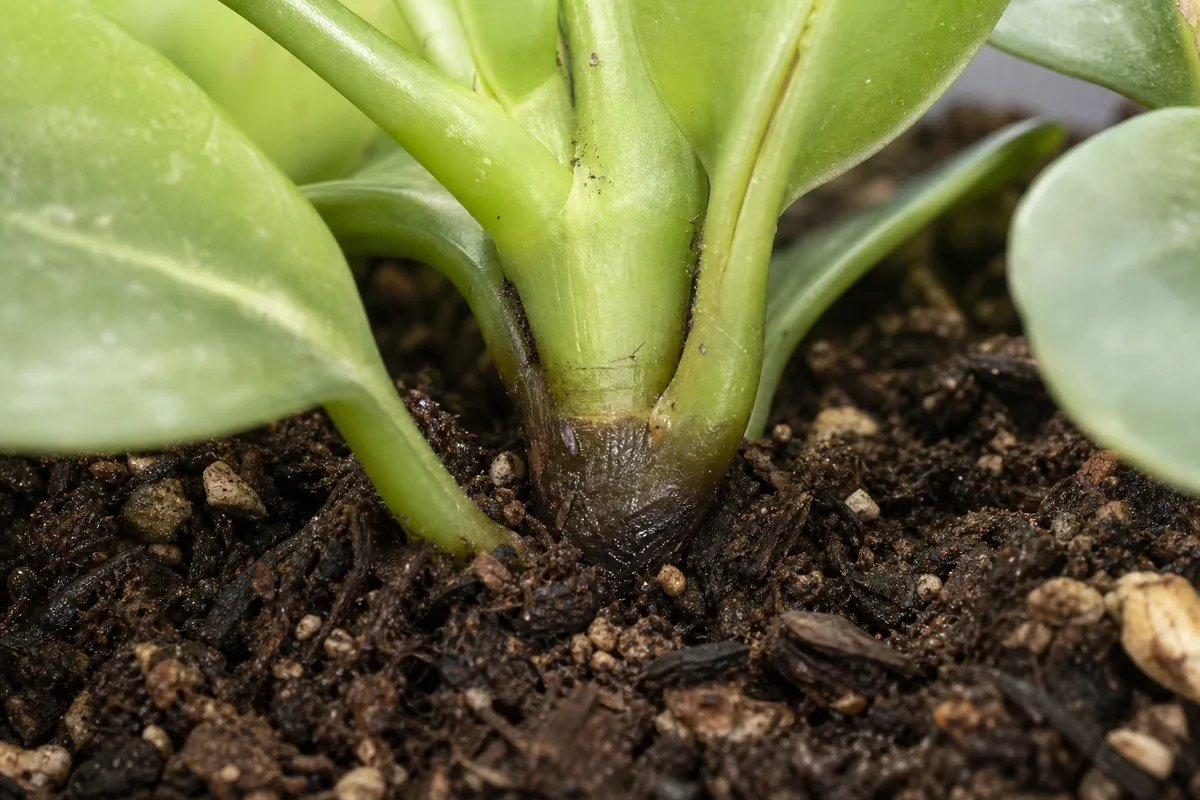
Overwatering symptoms on Peperomia - compare with healthy tissue on the same plant.
Early signs:
- Yellow lower leaves in clusters while mix stays damp-not one old leaf aging naturally; see yellow leaves when that pattern dominates
- Limp, soft foliage on wet soil that does not perk after you water
- Soil surface dark and cool for five or more days after one drink
- Fungus gnats hovering near the pot on chronically moist peat-see fungus gnats when flies are the first symptom you notice
- Edema-raised corky bumps on leaf undersides from cells bursting under excess water pressure
Advanced signs:
- Stems softening or darkening at the base where oxygen is lowest
- Sour or swampy smell when lifting the pot
- New growth that stalls, shrivels, or aborts despite wet mix
- Leaves dropping with little pressure near the soil line-overwatered peperomia drops leaves
- Mushy brown roots if you unpot-healthy peperomia roots stay firm and pale cream to white; root rot from overwatering is the most common peperomia disease
Why Peperomia gets overwatered
Peperomia evolved for intermittent tropical showers followed by real dry-down in forest understory and on epiphytic branches-not for sitting in a perpetually damp kitchen pot. Its semi-succulent tissue stores water as insurance against dry spells, which makes the genus far more tolerant of missed drinks than of extra splashes on already-damp soil.
Calendar watering. The same Sunday schedule that worked in bright summer leaves mix wet for weeks in a cool north-facing office. Peperomia slows in winter; a pot that dried in ten days in July may need three to four weeks in January without being neglected.
The wilting misread. Thick leaves hold turgor for days after roots begin failing. You see drooping foliage and reach for the watering can-the worst reflex on this genus. Wet soil plus soft limp leaves means stop watering, not add more.
Oversized pots and dense mix. Fine, compact roots in a pot much larger than the root ball sit in a reservoir of unused wet peat. Standard bagged soil without enough perlite holds moisture at the core even when the surface looks acceptable.
Cachepots and standing saucers. Runoff trapped in a decorative outer pot rewets the bottom third from below. Bottom-watering without letting the top half dry between sessions keeps the egg zone and upper roots chronically damp.
Low light and cool rooms. Dim placement slows transpiration. The plant uses less water per week while the same watering rhythm continues-overwatering risk rises even when leaves still look fine.
Species notes: thick-leaved vs. thin-leaved types
Not every peperomia on the shelf dries at the same speed, even under the same top-half-dry rule.
Thick-leaved types-P. obtusifolia (baby rubber plant), P. polybotrya, P. graveolens-have the most succulent-like foliage with low water needs. They tolerate deeper dry-down between drinks and show overwatering more slowly because stored leaf water masks root decline. Obtusifolia-specific troubleshooting also lives on the baby rubber plant overwatering page.
Thinner-leaved types-P. caperata (ripple peperomia), P. argyreia (watermelon peperomia), P. clusiifolia-still need the top half dry before watering but yellow and wilt faster when roots sit in stale moisture. Do not keep ripple or watermelon types “evenly moist” like a fern.
Trailing forms in hanging baskets may dry faster at the exposed soil surface while the core stays wet-or the opposite if vines shade the pot. Always probe mid-depth, not surface color alone.
When unsure of species, default to conservative dry-down: top half dry, pot lighter, then one full soak with complete drainage.
How to confirm the cause
Work through these checks before repotting, fertilizing, or moving the plant:
- Lift pot weight before adding water. Heavy and wet days after the last drink confirms overwatering direction.
- Probe mid-depth with a finger or dry skewer to the top half of the pot. Moisture clinging at mid-depth while you water on schedule means stop-not another drink.
- Leaf firmness vs. soil state-pinch a mature leaf. Firm leaves on soil wet for two weeks signal the wilting paradox; thin wrinkled leaves on dry mix signal drought.
- Smell the mix when lifting. Sour odor means inspect roots soon.
- Check stem firmness at the soil line. Soft blackening tissue escalates to unpotting and the root rot protocol.
- Note pests and surface clues-fungus gnats, algae film, or mold on wet peat support chronic moisture; see mold on soil when fuzz is the main symptom.
- Season and placement-cool dim winter rooms extend dry-down; bright warm summer setups shorten it. Compare against your watering guide intervals, not a calendar.
If the top half is bone dry, the pot is light, and leaves are thin and wrinkled, treat underwatering instead.
The first fix to try
Stop watering until the top half of the mix is fully dry and the pot feels noticeably lighter. Confirm drainage holes are open and empty saucers and cachepots within thirty minutes of every watering. Move to brighter indirect light if the plant sits in deep shade-slow evaporation worsens wet soil without fixing roots.
If lower leaves keep yellowing after the upper zone dries, unpot and inspect roots. Trim mushy brown tissue with clean scissors, repot into fresh airy mix sized to remaining roots, and follow the root rot guide for full rescue steps. Remove fully yellow spent leaves after the plant stabilizes. Do not fertilize a waterlogged peperomia.
Step-by-step recovery
Mild overwatering-yellow lower leaves, slight wilting, wet soil for days, but firm stem base:
- Withhold water until top half dry and pot weight normalizes for your setup.
- Provide bright indirect light and airflow so the next dry cycle completes predictably.
- Resume with one deep soak when checks pass; drain fully.
- Watch for new compact leaves at the crown within two to four weeks.
Moderate stress-persistent wilting, sour smell, fungus gnats, but stem still firm:
- Complete dry-down as above.
- Scrape or remove the wettest top inch of peat if it stays soggy while deeper mix dries.
- Consider repotting into fresh 50% compost / 50% perlite mix per the soil guide if old mix smells or compacts.
- Use yellow sticky traps for gnats only as support-the dry cycle is the real fix.
Severe escalation-soft stem base, black mush at crown, most roots slimy on inspection:
- Unpot immediately; trim all dead root tissue.
- Repot into a smaller pot matched to remaining roots, not former foliage spread.
- Withhold water three to seven days, then one cautious soak.
- Accept that advanced crown rot may not be recoverable-judge by firm new growth, not old leaf color.
Recovery timeline and what to watch
Leaves often re-firm within several days to two weeks once soil oxygen returns and intact roots resume function. Fully yellow blades drop and do not re-green-success means firm new leaves at the crown, not saving every old leaf.
Root damage from chronic saturation may take two to four weeks to outgrow. In cool dim rooms the dry-down pause itself can last two to three weeks before the first post-recovery soak.
Improvement: yellowing stops; new tips emerge; pot weight matches your corrected rhythm; gnats decline as surface dries.
Worsening: stems soften at the base; sour smell intensifies; collapse on soggy mix with no new growth for a month-treat as root rot immediately.
What not to do
- Do not water when leaves droop on a heavy wet pot
- Do not fertilize a waterlogged plant during recovery
- Do not repot into a larger pot to “help drying”-that adds excess wet soil volume
- Do not assume wilt always means thirst on semi-succulent peperomia
- Do not mist as a substitute for proper dry-down checks
- Do not keep calendar watering through winter at summer frequency
How to prevent overwatering next time
Water only when the top half of the mix is dry-use touch, skewer, and pot weight together, not dates. Use fast-draining mix with perlite in a pot sized to the root mass with an open drainage hole. Empty saucers and cachepots after every drink.
Provide bright indirect light so the plant uses water at a predictable rate-placement detail on the light guide. Stretch intervals in cool winter rooms. For full seasonal rhythm and the leaf-firmness test, keep the Peperomia watering guide beside this page.
When to worry
Escalate beyond simple dry-down when:
- Stem base turns soft or black while mix is wet
- Sour smell persists after surface dries
- Wilting spreads to upper leaves on saturated soil
- No new growth for a month after corrected watering
- More than a small fraction of roots are mushy on inspection
Those patterns overlap advanced root rot. Early intervention-dry-down while stems are still firm-saves most peperomias that owners would otherwise lose to kindness.
Conclusion
Peperomia forgives drought far more reliably than chronic sogginess. Semi-succulent leaves exist so you can let compost partially dry between waterings-then water deeply, drain completely, and wait again. When limp foliage appears, pair the leaf with the soil: wet mix means stop watering, not another drink. Correct the rhythm and most compact desk peperomias recover; ignore the paradox and root rot follows. For genus-wide care context, see the Peperomia overview.
When to use this page vs other Peperomia guides
- Peperomia watering guide - Use for routine moisture checks before assuming overwatering is the main issue.
- Peperomia problems hub - Browse all 5 common issues on this species.
- Root Rot on Peperomia - Different entry point when symptoms overlap with overwatering.
- Yellow Leaves on Peperomia - Different entry point when symptoms overlap with overwatering.
- Mold on Soil on Peperomia - Different entry point when symptoms overlap with overwatering.