Wilting on Peperomia: Causes, Checks & Fixes
Quick answer
Wilting on Peperomia usually means roots cannot move water to semi-succulent leaves - either because the mix is too dry or because overwatering has damaged roots while soil stays wet. First step: lift the pot and check moisture depth before you add any water.
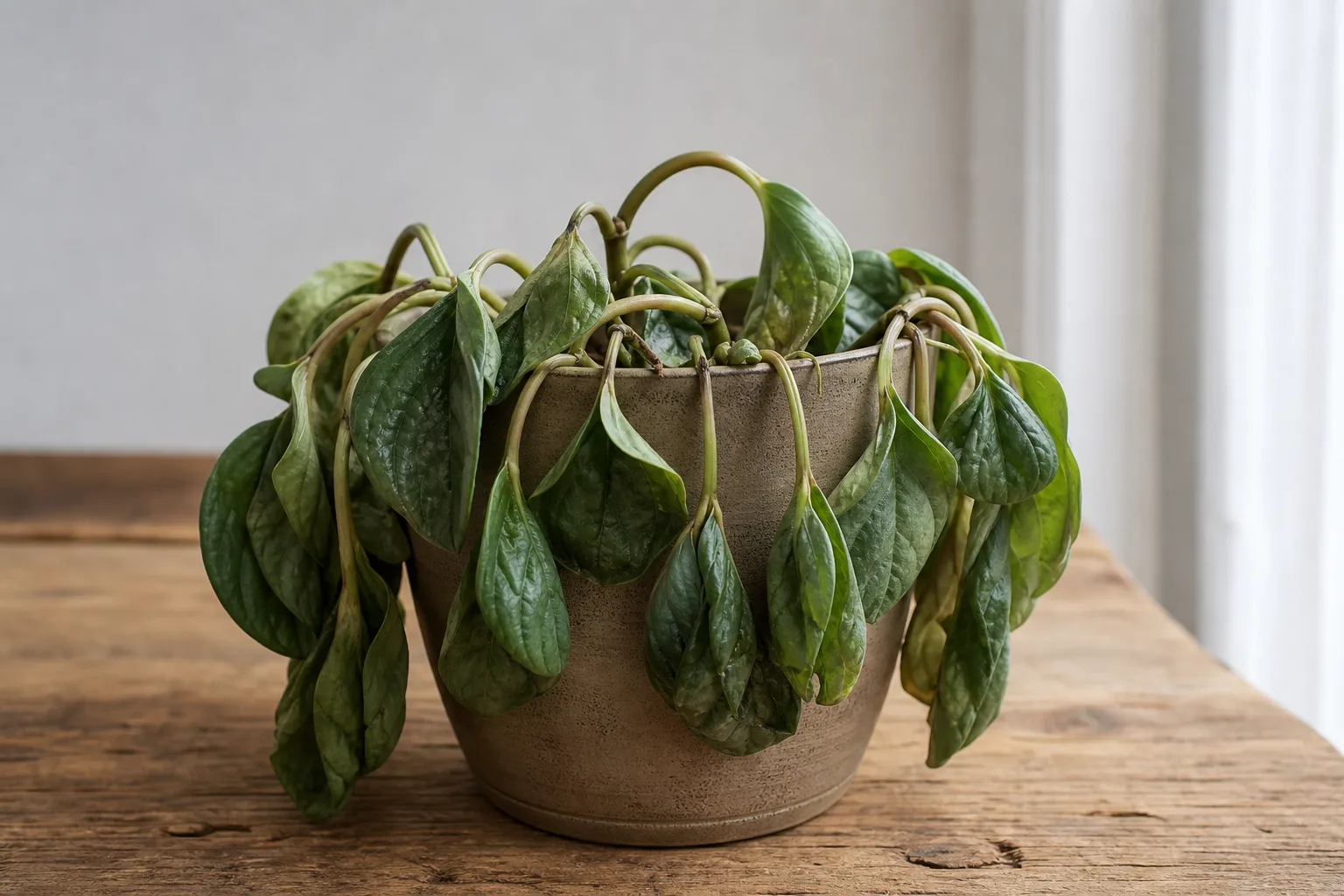
Wilting on Peperomia: Causes, Checks & Fixes
This guide covers wilting on Peperomia. See also the general Wilting guide, watering, and light pages for this plant.
Wilting on Peperomia: Causes, Checks & Fixes
Quick answer
Peperomia (Peperomia spp.) wilting is a turgor-loss problem - leaves and stems lose internal firmness and collapse because water cannot reach foliage fast enough. The same limp posture can come from opposite causes: dry roots that cannot supply water, or rotting roots that cannot absorb water even when the pot is heavy and wet.
First step: lift the pot and check soil moisture before you water. A light, dry pot with firm stems at the base usually means underwatering - water once thoroughly and discard saucer water. A heavy, wet pot with soft stems or a sour smell means stop watering and inspect the root zone instead of adding more moisture. Full genus context: Peperomia overview and watering rhythm.
What wilting looks like on Peperomia
Healthy peperomias hold leaves with visible substance - thick, semi-succulent tissue that feels firm when gently pressed. Wilting collapses that posture: petioles hang, leaf blades soften, and the whole plant may look dramatically thirsty even when the real problem is the opposite.
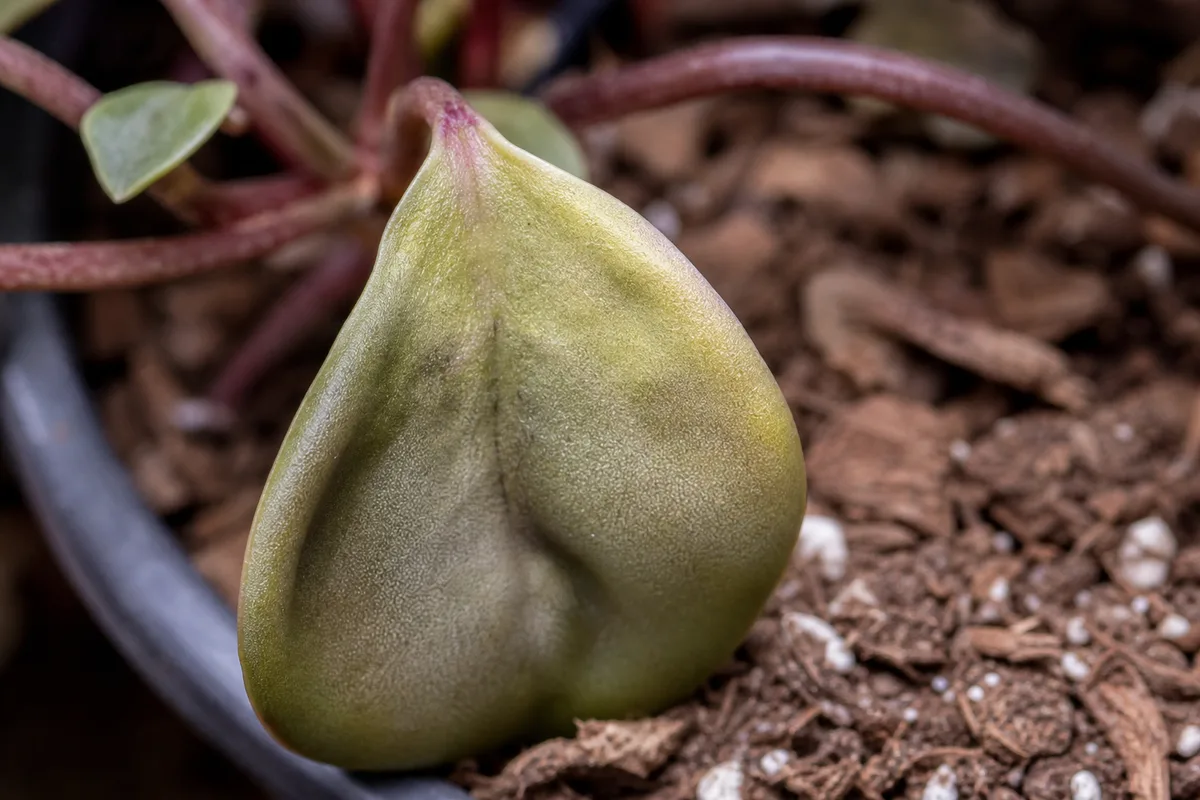
Wilting symptoms on Peperomia - compare with healthy tissue on the same plant.
Dry wilt (underwatering):
- Pot feels very light when lifted
- Mix is dry 2 inches deep and often throughout the root ball
- Leaves lose firmness and may show slight edge wrinkling or cupping
- Stems and petioles usually stay firm at the base, not mushy
- Thin-leaved P. argyreia and P. caperata complain before thick P. obtusifolia types
- Plant often re-firms within hours after a proper soak
Wet wilt (overwatering or root failure):
- Pot stays heavy for days after the last watering
- Mix feels damp or soggy deep down despite limp leaves
- Lower leaves turn yellow while outer foliage still hangs
- Stems feel soft where they meet the soil line
- Soil or drainage holes may smell sour or swampy
- No improvement after watering - in fact, watering makes decline worse
Temporary afternoon wilt:
- Leaves soften on hot afternoons near a sunny window
- Plant often firms up by evening if soil moisture is even
- Different from chronic collapse that persists overnight
Do not assume every limp leaf means thirst. On this genus, the wet-soil wilt paradox - limp foliage with saturated mix - is one of the most common and dangerous misreads indoors.
Why Peperomia wilts
Several traits make wilting on peperomias a water-movement problem more often than a mystery disease.
Underwatering. Many species store moisture in thick, fleshy leaves similar to succulents, but prolonged drought still pulls water faster than fine, compact roots can replace it. Small pots on warm windowsills or near heating vents dry out in days. Hydrophobic old mix can shed water, leaving dry pockets around roots even after you think you watered.
Overwatering and root rot. Peperomia prefers to dry out between waterings. Chronic saturation suffocates fine roots, which decay and lose the ability to transport water. Root rot from overwatering is the most common disease of peperomia per Clemson HGIC. The plant then wilts while the mix stays wet - classic uptake failure that looks like thirst but is the opposite problem.
Oversized pots and poor drainage. Peperomias thrive slightly pot-bound with a small root ball. An oversized container holds excess wet mix around roots that never dry quickly enough. Heavy peat without perlite, blocked drainage holes, or saucers left full keep lower roots oxygen-starved.
Low light plus habitual watering. In dim corners the plant transpires slowly, so mix stays wet longer. Watering on a fixed calendar without checking dryness keeps roots in stale moisture even though the plant uses little water.
Heat and drafts. Hot dry air near radiators or AC vents increases water loss from leaf tissue. Cold drafts below about 10°C (50°F) can stress roots and slow uptake at the same time.
Recent Peperomia repotting guide or root disturbance. Unpotting or repotting into wet mix can cause temporary wilt while roots re-establish - especially if the crown was buried too deep in the new soil.
Root rot fungi often finish the breakdown once tissue is oxygen-deprived, but on Peperomia the trigger is almost always culture - waterlogged mix, wrong pot size, or watering before the top dries - not random infection.
Wilting vs. drooping on Peperomia
These terms overlap in conversation, but they point to different diagnostic paths on this genus.
Wilting is acute turgor loss - tissue goes soft and limp because internal water pressure has failed. It often appears suddenly after a missed watering, a repot shock, a heat spike, or when roots stop functioning in wet soil. Whole-plant collapse over hours to a few days fits here.
Drooping is more often a posture change - stems and petioles hang lower while tissue may still feel moderately firm. Gradual sag from chronic overwatering, cold drafts, or weak growth in dim light fits the drooping leaves guide better.
When wilt is sudden and whole-plant, start on this page. When sag developed slowly over weeks with stretching or cold-window placement, read the drooping guide too - both pages share the same pot-weight and soil-moisture checks.
Species notes: thick-leaved vs. thin-leaved types
Not every peperomia wilts on the same timeline, even under the same semi-succulent rules.
Peperomia obtusifolia (baby rubber plant) and thick-stemmed types - including P. graveolens - have the most succulent-like foliage. They tolerate longer dry spells before wilting visibly but still hate stale wet soil. Dry wilt may look subtle until several inches of mix are bone dry.
Peperomia caperata (ripple peperomia), P. argyreia (watermelon peperomia), and P. clusifolia - semi-succulent types with textured or patterned leaves - wilt faster when the top half dries because thinner tissue holds less reserve. Water when the top half is dry, not on a calendar.
Peperomia prostrata, P. rotundifolia, and trailing forms - cascading stems may dry faster at exposed soil surfaces in hanging baskets. Check moisture at the core, not only at the rim.
Cultivar-specific detail: see wilting on Watermelon Peperomia and baby rubber plant care when your plant is a named type with different leaf thickness.
How to confirm the cause
Work through these checks in order before you treat:
- Pot weight - Lift the pot. Light and dry strongly suggests underwatering. Heavy and wet points to uptake failure from saturated roots.
- Soil moisture at depth - Push a finger or wooden skewer 2 inches into the mix. Dry throughout fits drought wilt. Constantly damp deep soil with limp leaves fits rot or overwatering.
- Stem and petiole firmness - Press where stems meet the soil. Firm bases with dry soil mean water. Soft, collapsing bases with wet soil mean crown or root decay.
- Smell test - Sour or rotten odor from drainage holes or the soil surface suggests anaerobic conditions in the root zone.
- Leaf pattern - Yellowing lower leaves with wet soil and soft stems fit root decline. Thin, slightly wrinkled leaves on dry soil fit drought.
- Watering history - Have you watered before the top dried, left saucer water standing, or moved the plant to a much larger pot recently? That pattern fits wet wilt on peperomias.
- Recovery test (dry soil only) - If soil is dry and stems are firm, water once thoroughly. If leaves do not re-firm within 24 hours, roots - not thirst - are the problem.
If soil is wet and stems are soft, do not water again hoping for recovery. Proceed to inspection or the wet-soil recovery path below. Escalate to root rot on Peperomia if the crown softens or smell turns foul.
| Check | Dry wilt pattern | Wet wilt pattern |
|---|---|---|
| Pot weight | Light | Heavy for days |
| Soil 2 in. deep | Dry | Damp or soggy |
| Stem base | Firm | Soft or mushy |
| Smell | Neutral | Sour or rotten |
| After one soak | Perks in 12–24 hr | No change or worse |
First fix for Peperomia
Lift the pot and check soil moisture before you add any water.
This single diagnostic step prevents the most costly mistake on wilted peperomias: watering an already-soggy root zone because limp leaves look thirsty. Hold the pot in both hands, feel weight, probe moisture depth, and press stem bases at the crown.
Only after that check:
- Dry and light: Water until excess runs from drainage holes, discard saucer water, and wait for re-firming within 24 hours. See underwatering on Peperomia if drought keeps recurring.
- Wet and heavy: Stop watering immediately. Move to Peperomia light guide, empty any standing saucer water, and plan a gentle root inspection if decline continues beyond 48 hours. See overwatering on Peperomia for the full wet-soil branch.
Do not fertilize, mist heavily into the crown, or repot on day one unless you confirm mushy roots or a failing crown during inspection.
Step-by-step recovery
If the pot is dry and stems are firm
- Water thoroughly once - Soak until water runs freely from drainage holes. If dry mix repels water and runs straight through, bottom-water 20 to 30 minutes or poke shallow holes to rewet evenly.
- Discard saucer water - Never leave the pot standing in runoff.
- Wait 12 to 24 hours - Judge recovery by leaf firmness and stem stiffness, not by watering again.
- Resume dry-down rhythm - Water next only when the top half of the mix dries for most species. Do not keep soil constantly moist as overcorrection - that triggers rot on this genus.
If the pot is wet and stems are soft
- Stop all watering - Allow the mix to begin drying from the top. Do not mist the crown or pour water around the base.
- Improve light and airflow - Move to bright indirect light so the plant uses water more predictably. Avoid cold drafts and hot radiator blasts during recovery.
- Empty saucers and confirm drainage - Ensure holes are open and no decorative pot is trapping water.
- Inspect roots if decline continues - After 48 to 72 hours with no improvement, gently unpot. Trim brown mushy roots with sterile scissors, air-dry cut surfaces briefly, and repot into fresh perlite-heavy mix in a pot matched to the trimmed root ball.
- Trim irreversible tissue - Leaves that stay collapsed and necrotic after the root zone is corrected will not rehydrate. Remove them to reduce stress on remaining healthy tissue.
If wilt follows recent repotting
Hold watering until the top inch dries unless soil was bone dry at repotting. Keep bright indirect light and avoid burying the crown deeper than before. Temporary wilt for a few days is common; persistent wet-soil wilt with soft stems is not normal transplant adjustment.
Recovery timeline
Dry wilt: Mild dehydration often shows improvement within a few hours and full re-firming within 12 to 24 hours after one thorough watering. Crispy brown edges on leaves that formed during drought will not revert, but new growth should look normal once the rhythm stabilizes.
Wet wilt with early root damage: After stopping water and improving conditions, expect 1 to 3 weeks before new center leaves emerge and stems firm at the base. Judge success by new growth and root firmness, not by old collapsed leaves standing back up.
Advanced crown rot: If the crown is fully soft or most roots are mushy, recovery is unlikely. Save healthy leaf or stem cuttings while tissue is still firm rather than waiting for a collapsed plant to revive.
Lookalike symptoms to rule out
Gradual drooping toward light - Outer leaves may lean toward a window while stems stay moderately firm and soil moisture is appropriate. Rotate the pot weekly; this overlaps with drooping leaves, not acute wilt.
Leggy growth from low light - Long thin petioles and small dull leaves from insufficient light can look weak but soil dries normally and stems stay firm. Move to brighter indirect light rather than watering more.
Crispy leaves from low humidity - Dry air browns edges and can precede wilt in very dry rooms, but the primary check is still soil moisture. See low humidity on Peperomia when tips crisp while soil is appropriately dry.
Pest-related weakness - Mealybugs, scale, or root-feeding fungus gnat larvae can weaken the plant, but wilting still ties back to water movement. Inspect leaf axils and soil surface if care checks do not explain decline.
Heat scorch - Direct sun can bleach or tan foliage and cause afternoon limpness. Move back from harsh glass; confirm even soil moisture rather than assuming underwatering.
What not to do
Do not water wilted peperomias without checking soil first - this habit causes most crown rot on the genus.
Do not keep the pot in a full saucer because the plant looks thirsty. Standing water suffocates lower roots quickly on small root systems.
Do not repot into a much larger container hoping to fix wilt. Oversized pots stay wet longer and often worsen root decline.
Do not increase fertilizer on a wilted plant. Stressed roots cannot use nutrients; salts can burn thin leaf edges.
Do not mist heavily into the crown on wet-soil wilt. Trapped moisture at the center accelerates stem decay.
Do not move a wet, wilted plant into harsh direct sun to dry it out. Bright indirect light is enough; scorch adds a second stress.
Do not stack repotting, heavy pruning, and pesticide on the same day.
How to prevent wilting next time
Learn your pot’s dry-down time in its actual window - not a generic weekly schedule. Lift the pot weekly until you can judge weight by feel.
Allow the top half of the mix to dry before rewatering for most species; thick-leaved types can dry even more thoroughly. Reduce frequency in winter when growth slows. Use perlite-heavy, well-draining mix and a pot only slightly larger than the root ball.
Keep bright indirect light so the plant uses water at a steady rate. Pair good light with stable temperatures away from heating vents and cold drafts.
Empty saucers after every watering. Avoid leaving the pot standing in water - the RHS warns that persistent damp conditions lead to root rot and collapse.
Scout new growth and stem firmness during routine care. Early softening at the crown is easier to correct than a fully collapsed plant. The full prevention rhythm lives in the Peperomia watering guide.
When to worry
Treat as urgent when wilt persists with wet soil, a sour smell, or a soft crown - unpot and inspect roots promptly rather than waiting another week.
Act quickly if more than one-third of roots are mushy on inspection, or if the entire plant collapses inward despite wet mix. Save cuttings from firm tissue while you still can.
Dry wilt that does not improve 24 hours after one thorough watering suggests root damage or compacted hydrophobic mix - not simple thirst.
Mild dry wilt on an otherwise healthy plant with firm stems is not urgent. One proper watering and a return to dry-down rhythm usually resolves it.
Conclusion
Wilting on Peperomia is a diagnostic puzzle with two opposite answers: too dry or too wet at the roots. Lift the pot, check moisture, and feel stem firmness before you water - that one habit separates a quick recovery from crown rot. Match your fix to what you find, judge improvement by new growth and firm stems, and keep a dry-down rhythm in bright indirect light. When one cause dominates, pair this page with underwatering, overwatering, root rot, drooping leaves, and the genus overview.
When to use this page vs other Peperomia guides
- Peperomia watering guide - Use for routine moisture checks before assuming wilting is the main issue.
- Peperomia problems hub - Browse all 5 common issues on this species.
- Root Rot on Peperomia - Different entry point when symptoms overlap with wilting.
- Yellow Leaves on Peperomia - Different entry point when symptoms overlap with wilting.