Iron Deficiency on Peperomia: Causes, Checks & First Fix
Quick answer
Iron deficiency is plausible when Peperomia's newest leaves turn yellow between greener veins while older leaves keep their normal color. First pause feeding and check root-zone moisture and drainage before adding iron.
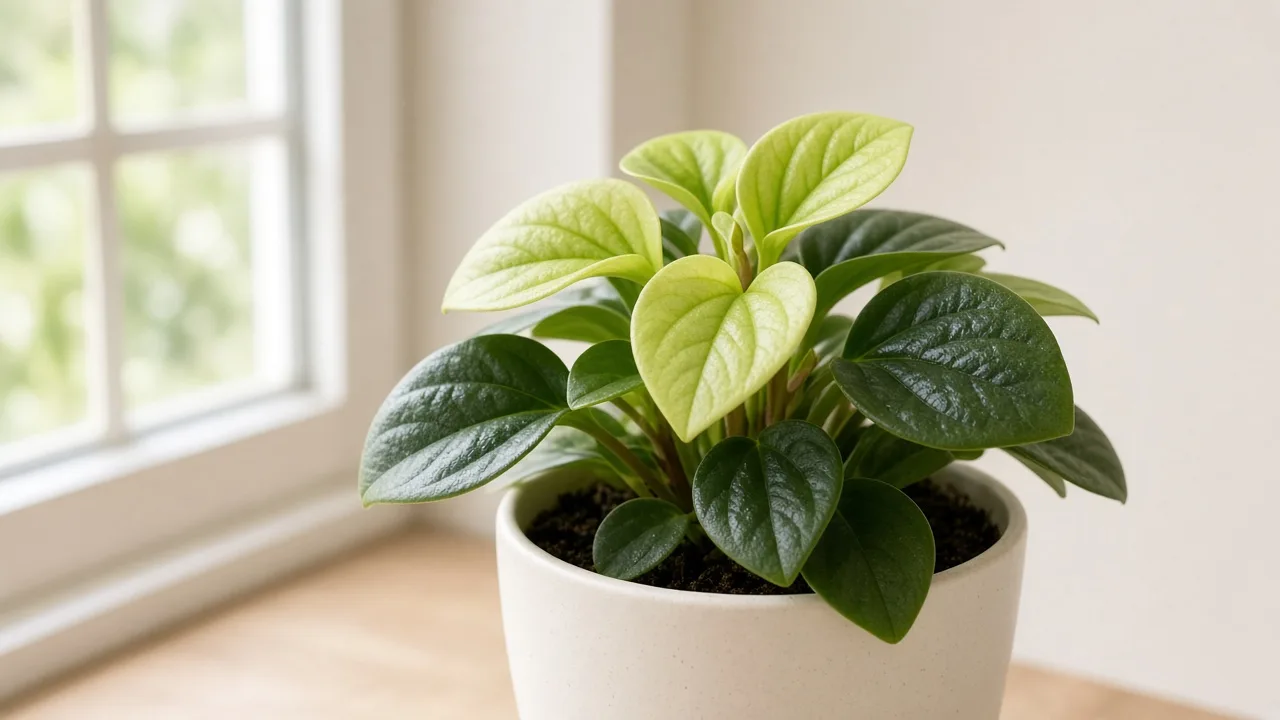
Iron Deficiency on Peperomia: Causes, Checks & First Fix
This guide covers iron deficiency on Peperomia. See also the general Iron Deficiency guide, watering, and light pages for this plant.
Iron Deficiency on Peperomia: Causes, Checks & First Fix
Quick answer
Iron deficiency is plausible when a Peperomia’s newest leaves turn pale yellow between greener veins while older leaves keep their usual color. A pale or patterned leaf alone is not enough to diagnose it: Peperomia includes many species and cultivars with naturally silver, striped, red, or strongly veined foliage. First pause routine feeding and check the root zone before adding iron; the Peperomia overview can help you compare your plant’s normal leaf and growth habit.
For the general nutrient pattern, see the iron-deficiency guide. On Peperomia, the useful clue is where the color change begins and whether the growing roots can still function normally.
What iron chlorosis looks like on Peperomia
Look at the newest leaf that has mostly unfolded, then compare it with the next older leaf on the same stem or crown. True iron chlorosis usually begins on young growth: the tissue between veins fades to yellow or very pale green while the veins stay greener for a time. Extension guidance describes this young-leaf, green-vein pattern as characteristic of iron chlorosis, although the pattern by itself does not prove the cause (RHS guidance on chlorosis).
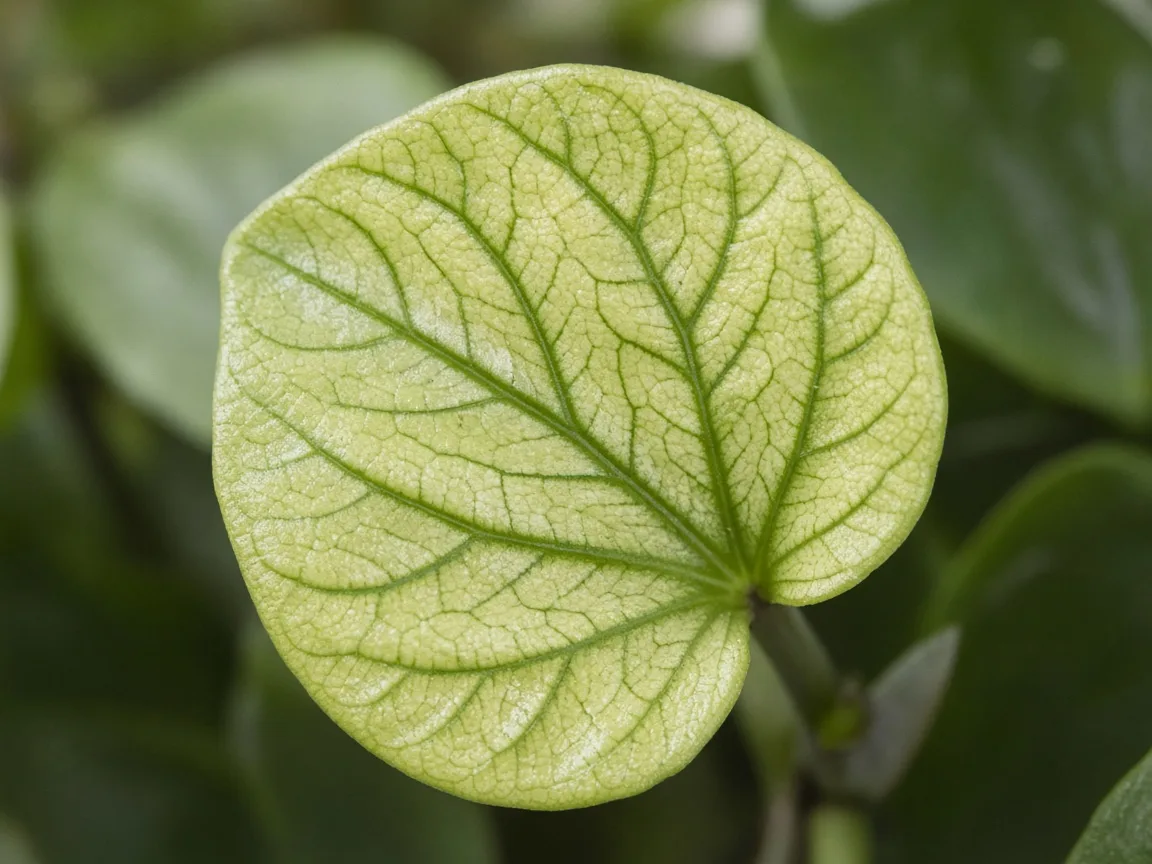
Compare the pale tissue and greener veins with a mature leaf from the same Peperomia; cultivar color can change the baseline.
If the newest leaves emerge smaller, slower, or paler in successive growth cycles, iron availability becomes more plausible. If just one older leaf yellows while the tip keeps producing normally colored leaves, look first at age or watering stress rather than treating for iron.
Peperomia’s leaf patterns can create false alarms
“Peperomia” is a large genus, not one leaf shape. Some common forms have watermelon-like stripes, silver patches, red undersides, rippled surfaces, or naturally contrasting veins. NC State Extension lists substantial variation in Peperomia foliage and identifies the group as typically slow growing; a vein pattern that is stable across old and new leaves may be the cultivar’s normal color rather than a new deficiency (NC State Extension’s Peperomia profile).
Use the plant itself as the control: compare the newest leaf with older leaves on the same branch, and compare leaves that receive similar light. On watermelon Peperomia, for example, the silver-and-green striping is part of the normal leaf pattern. The Spruce also identifies overwatering as a common reason watermelon Peperomia leaves turn yellow, so a yellow leaf should lead to a root-zone check before an iron dose (The Spruce’s watermelon Peperomia guide).
Why the Peperomia root zone can limit iron
Iron may be in the potting mix but unavailable to roots when the root-zone chemistry is unsuitable. High pH is one recognized cause: iron can become less available in alkaline soil, so adding more general fertilizer may not correct the underlying condition (New Mexico State University Extension). Do not assume this is happening from leaf color alone; use a suitable pH test if the symptom pattern fits.
Root condition matters too. A mix that stays wet or drains poorly can weaken Peperomia roots and interfere with nutrient uptake; review your Peperomia watering routine and soil setup if the pot remains heavy for a long time or the mix is compacted. Waterlogging and other root-zone conditions can limit nutrient uptake even when nutrients are present (Epic Gardening’s chlorosis guide).
Confirm the diagnosis before treating
- Map the affected leaves. Iron chlorosis fits best when the newest leaves are affected first and the older leaves retain their normal color. Interveinal yellowing that starts on older leaves points toward other nutrient patterns; the Peperomia magnesium-deficiency guide is a useful comparison.
- Compare with the cultivar’s baseline. Check older leaves, the other side of the plant, and leaves with similar exposure. Natural silvering, striping, red undersides, or dark veins should be consistent with the plant’s established pattern rather than appearing only on the newest growth.
- Check the pot before adding nutrients. Feel the mix below the surface and note whether it drains freely. If it remains wet, smells sour, or the plant is losing firmness, inspect drainage and roots; a Peperomia overwatering check is more useful than an iron supplement at this stage.
- Review recent changes. Note recent repotting, fertilizer use, water source, and any change in the mix. If new leaves repeatedly show the same green-vein pattern while roots are firm, test the potting mix or root-zone pH rather than guessing.
Iron deficiency is not confirmed by a single yellow leaf or by a fertilizer history. The pattern, the age of the affected tissue, the roots, and—when the symptom persists—the root-zone pH should tell a consistent story.
First fix: pause feeding and stabilize the root zone
First, hold the next fertilizer dose until you have checked the mix and roots. This keeps you from adding a nutrient before you know whether the root zone is working normally or whether pH is limiting iron.
If the mix is staying wet, correct that first: make sure water can escape the pot, empty standing runoff, and let the mix dry to the level appropriate for your Peperomia before watering again. Do not unpot a healthy plant just because one leaf is pale. Repot only if the mix is compacted, stays saturated despite a sound watering routine, or the roots are damaged.
If the roots are firm and the newest leaves match the iron pattern, check the pH before changing the chemistry. When a test shows the root zone is too alkaline for nutrient availability, replace unsuitable mix or follow a reputable local recommendation for correcting it. Avoid pouring vinegar, sulfur, or an acidifier into a houseplant pot by guesswork; a rapid pH swing can trade one uptake problem for another.
If iron limitation is confirmed
Treat the cause the evidence points to. If the root zone is waterlogged or the roots are injured, restore drainage and healthy roots before feeding. If pH is out of range, correct the mix or water chemistry in a measured way. If the plant has a healthy root system, appropriate pH, and a repeated young-leaf pattern, use a complete fertilizer that supplies micronutrients or an iron product labeled for container plants, following its label exactly. A dose alone will not correct an unsuitable root zone.
Do not use Epsom salts as an iron treatment; they supply magnesium, not iron. Do not increase a complete fertilizer’s strength to force color back. Peperomia is a slow-growing group, and its feeding needs depend on active growth; use the Peperomia fertilizer guide for the plant’s ordinary feeding schedule once the root zone is stable.
Separate iron chlorosis from other Peperomia problems
| What you see | More likely direction | Next guide |
|---|---|---|
| Young leaf turns yellow between greener veins; older leaves stay normal | Iron availability is possible; check root condition and pH first | This guide |
| Older leaves yellow fairly evenly while new growth stays greener | Nitrogen or general root stress is more plausible than iron | Nitrogen deficiency |
| Interveinal yellowing begins on mature leaves | Consider magnesium or another older-leaf nutrient pattern | Magnesium deficiency |
| Several leaves yellow without a clear green-vein pattern, especially in wet mix | Watering stress may be the cause | Yellow leaves |
| Color looks washed out across older and newer leaves, with stretched growth | Check placement and light before feeding | Pale leaves and the Peperomia light guide |
The pattern is a sorting clue, not a lab diagnosis. Peperomia’s natural leaf colors and root stress can blur the distinction between nutrient symptoms.
Recovery: judge the next Peperomia leaf
Existing yellow tissue may stay pale even after the cause is corrected. On a slow-growing Peperomia, progress is best judged by the next leaf or growth point: new tissue should approach the plant’s established color and shape, and the pale-vein pattern should stop spreading. Growth rate varies by species, season, light, and root health, so wait for a clear new-growth cycle rather than expecting a fixed number of days.
If new leaves remain chlorotic after root-zone and pH checks, revisit the diagnosis rather than repeating iron treatments. Several nutrient problems, water stress, pests, and natural leaf patterning can overlap; the broader Peperomia problems hub helps route the next check.
Prevent a repeat on Peperomia
Keep the pot in bright indirect light that suits the variety, but avoid using extra fertilizer to compensate for weak light or slow growth. Water according to how quickly that plant and pot dry, and use a loose, well-drained mix. Feed only during active growth, using the light schedule described in Clemson Extension’s Peperomia guide.
If the same newest-leaf pattern returns, record the water source, fertilizer product, potting mix, and pH result before changing anything. That history helps distinguish a nutrient shortage from an availability problem or damaged roots.
Related tool
Use the Fertilizer Dilution Calculator only after you have decided that the Peperomia is ready for routine feeding. It can help check a diluted application, but it cannot confirm iron deficiency or diagnose root-zone pH.
Related Peperomia guides
Use this guide for a repeated green-vein yellowing pattern on new Peperomia growth. The Peperomia problems hub lists the plant-specific routes for other leaf and root symptoms; start with the relevant sibling guide when the affected leaves are older, uniformly yellow, or pale across the whole plant.