Scale Insects on Peperomia: How to Identify and Treat Them
Quick answer
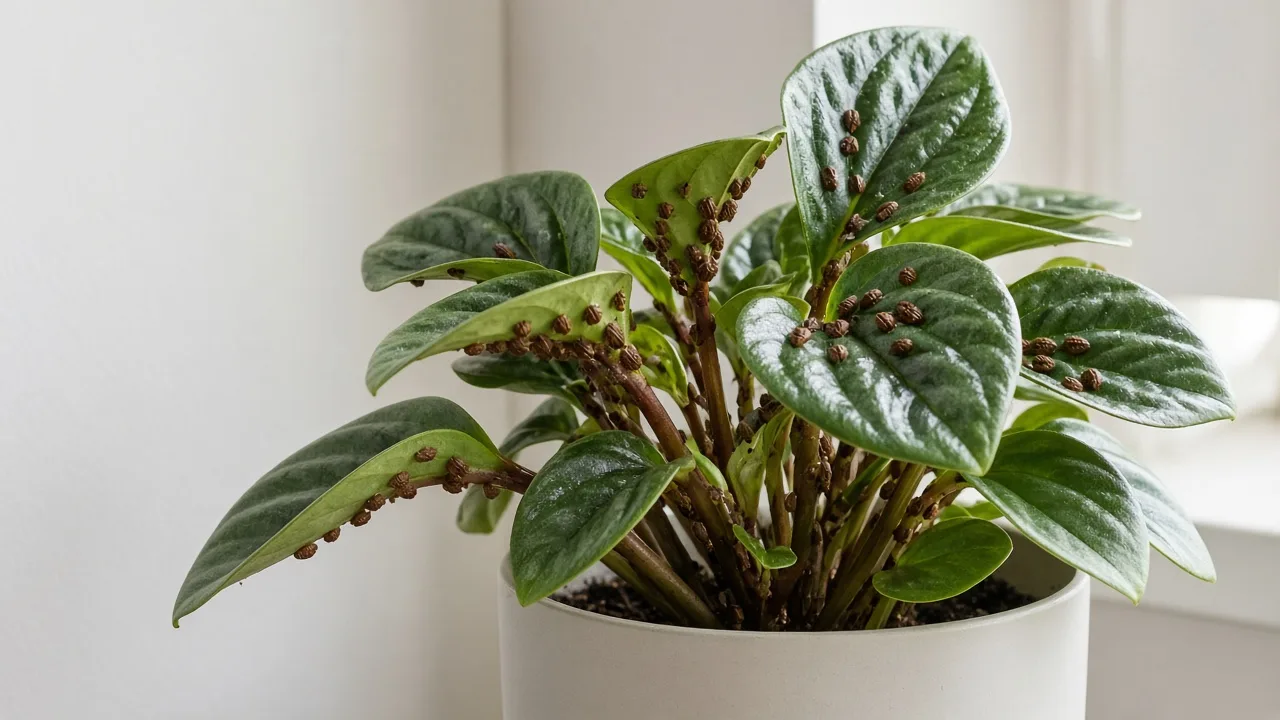
Scale insects on Peperomia appear as tan or brown bumps attached to stems, leaf stalks, or leaf undersides. First isolate the plant, then confirm an attached insect or moving crawler before choosing treatment.
Scale Insects on Peperomia: Causes, Checks & Fixes
This guide covers scale insects on Peperomia. See also the general Scale Insects guide, watering, and light pages for this plant.
Scale Insects on Peperomia: Causes, Checks & Fixes
Quick answer
On Peperomia, scale usually looks like separate tan or brown round-to-oval bumps that stay attached to a leaf stalk, stem, or leaf underside. First, move the plant away from nearby houseplants. Then inspect it in bright light and confirm a pest before spraying; a leaf mark alone is not enough to identify scale.
For the general pest life cycle, see the scale insects guide. This page focuses on where scale hides on Peperomia. The Peperomia overview covers the plant as a whole, and the Peperomia problems hub helps if you find no insect.
What scale insects look like on Peperomia
Look at the undersides of leaves, along their central veins, around the base of each petiole, and at stem joints. On mounding Peperomia, check where leaves overlap; on a trailing type, turn over the runners and inspect their joints. Adult scales can resemble small oval discolorations or bumps, while the tiny crawler stage moves before it settles. Some types have detachable armored covers; rounder soft scales produce sticky honeydew, so a clean leaf does not rule out every scale species. See UC IPM’s scale life stages.
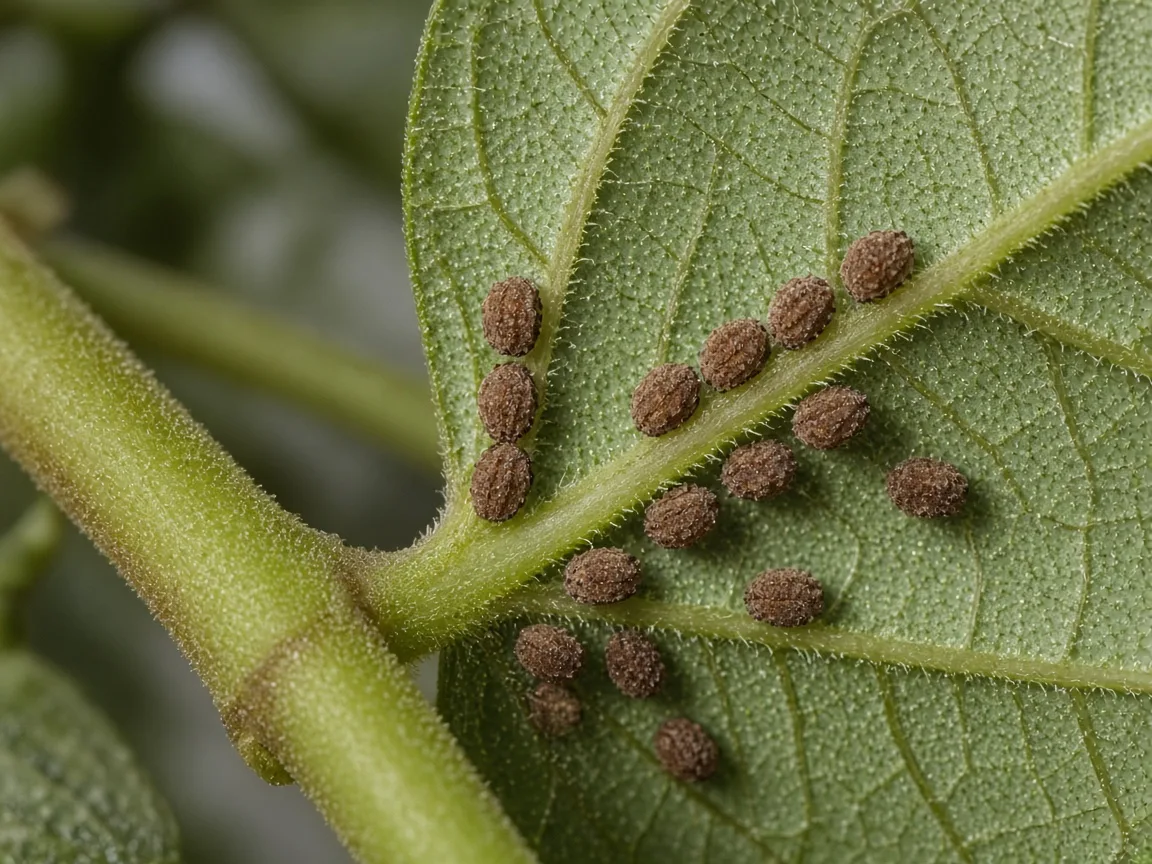
Compare the attached bumps with the leaf’s own markings; the insect sits on the surface rather than forming part of the tissue.
Scale feed on plant juices. A heavy infestation can leave Peperomia leaves yellowed, brown, or distorted, and some scales produce clear, sticky honeydew; Melinda Myers describes these effects. These signs support the diagnosis but are not as decisive as finding the insects themselves.
Why scale is easy to miss on Peperomia
Peperomia is a large genus, not one uniform leaf shape. NC State Extension describes more than 1,000 species with varied leaf colors, shapes, and textures, and lists scale among the pests to monitor. A raised vein, patterned surface, or fuzzy leaf can therefore look suspicious at first glance; focus on whether a separate insect is attached rather than treating every bump as a pest.
Scale is an insect problem, not a sign that Peperomia needs extra water or fertilizer. A recently purchased plant or one brought indoors after spending time outside is a plausible introduction route. Montana State Extension notes that houseplant pests can arrive on new plants or when plants are brought indoors, and that dead female scale shells can remain attached for years; those are useful clues, not proof of where the infestation began. Read Montana State’s houseplant pest guidance.
How to confirm scale instead of another mark
Use a small hand lens and check one leaf at a time, including the back of the leaf and the point where it meets its stem. Gently touch one suspect bump with a damp cotton swab or the edge of a fingernail. A scale cover may lift away and reveal an insect beneath it; do not scrape hard enough to cut or bruise Peperomia tissue.
To check for crawlers, hold a sheet of white paper under a stem and tap it lightly; this can reveal tiny, moving crawlers. See Montana State Extension’s crawler test. Settled adult scales are immobile, so an old shell by itself does not prove the infestation is still active.
Sticky leaves or black sooty growth can accompany some soft scales, but they are not required for a diagnosis. Armored scales do not produce honeydew, while other sap-feeding pests can also make leaves sticky. If you see residue without attached scale, keep inspecting before choosing a treatment.
First fix to try
Isolate the Peperomia before you start removing insects. Place it where its leaves do not touch other plants, then inspect nearby plants for attached bumps, crawlers, or fresh sticky residue. Get Busy Gardening recommends quarantining and monitoring nearby plants for several weeks; isolation limits contact while you confirm how widespread the problem is.
Remove and treat the infestation
For a few visible scales, lift them off individually with a damp cotton swab or a soft brush. Support the leaf while you work and stop if the surface starts to tear. Peperomia leaf surfaces vary, so gentle spot removal is easier to control than rubbing or spraying the whole plant at once. Montana State Extension notes that small numbers can be removed by hand and larger infestations are better treated when crawlers are exposed; see its treatment guidance.
If a stem or leaf is covered in scale, remove only the worst-affected piece if the plant will still have healthy growth. Bag the removed material and discard it; do not leave it beside the pot. Keep healthy stems and leaves where possible.
For a larger infestation that keeps producing crawlers, a labeled insecticidal soap or horticultural oil may be an option for indoor ornamentals. Time contact treatment for the exposed crawler stage, then follow the product label for indoor use, coverage, and repeat timing. Test it on a small leaf area first because some formulations can stain or injure foliage; see Montana State Extension’s label and spot-test guidance.
Avoid homemade detergent or oil mixtures and do not keep spraying on a fixed schedule that the label does not give. If you cannot confirm the pest or the right label for your Peperomia, continue manual removal and ask a local extension service or qualified nursery for identification before using a pesticide.
Lookalikes on Peperomia
| What you see | What to check next |
|---|---|
| A separate round or oval bump that can be lifted from the surface | Check beneath it for scale; then inspect nearby petiole joints and leaves. |
| A raised vein, color pattern, or texture that remains part of the leaf | Compare it with healthy leaves of the same Peperomia. Natural surface variation does not lift away as an insect. |
| Dark marks embedded in the leaf rather than a raised pest | Compare the black spots guide before treating for scale. |
| Misshapen or curled new leaves with no attached insects | Use the distorted leaves or curling leaves guide to check other causes. |
| A winding mark within a leaf or actual missing tissue | Compare the leaf miners or holes in leaves guide. |
| Silvery scarring without attached bumps | Check the thrips guide for a different pest pattern. |
Peperomia recovery: what to watch
Do not judge recovery by whether an old leaf returns to its original color. Instead, look for no fresh crawlers or newly attached scales, no new sticky patches, and clean new Peperomia growth. An old shell can remain after a scale insect dies, so confirm activity rather than counting every brown bump as a live pest.
Check the isolated plant and its neighbors at least weekly for several weeks. If you used a spray, repeat only as its label directs and keep checking after the last application. A few adults can be removed by hand, but a large infestation can weaken a plant and lead to more leaf damage; if scale covers most stems and fresh growth is failing, discarding the plant may protect the rest of the collection.
If yellowing, curling, or dark marks continue after you stop finding live scale, do not automatically spray again. Recheck the plant’s recent care and use the Peperomia watering guide or the matching symptom guide to investigate another cause.
Prevent scale from returning
Inspect each new Peperomia before it joins the collection, then keep it separate and check it over the next few weeks. During routine care, turn over leaves and look at stems, petiole bases, and the centers of crowded growth rather than checking only the most visible leaf surfaces. Repeat the same close check when bringing an outdoor plant indoors.
Do not use extra water, fertilizer, or a pesticide as general prevention for scale. The useful prevention step is early inspection: catching a few attached insects is easier to manage than waiting until several leaves are sticky or distorted.
Related tool
Use the Pest Identifier Tool to compare visible signs with other common pests. Treat the result as a starting point, then confirm the insect on the plant before choosing a product.
Related Peperomia guides
- Distorted leaves is for misshapen growth when you cannot find an attached pest.
- Curling leaves helps when leaves fold or curl without scale bumps.
- Black spots covers dark marks within the leaf tissue rather than insects sitting on it.
- Brown leaves is useful when discoloration continues after scale is controlled.
- Leaf miners covers tunnel-like marks inside leaves.
- Thrips is a better fit for silvery scarring or small black flecks without scale shells.
- Holes in leaves helps when leaf tissue is missing instead of covered by bumps.
- Iron deficiency is for persistent pale growth without visible insects.