Peperomia Brown Leaves: Sun, Water & Leaf Spot Checks
Quick answer
On Peperomia, brown leaves can follow direct sun, a persistently wet root zone, or a leaf-spot pattern. First compare the damaged area with the rest of the plant, then match your next change to the evidence instead of changing water, light, and fertilizer together.

Brown Leaves on Peperomia: Causes, Checks & Fixes
This guide covers brown leaves on Peperomia. See also the general Brown Leaves guide, watering, and light pages for this plant.
Brown Leaves on Peperomia: Causes, Checks & Fixes
Quick answer
On Peperomia, brown foliage may appear as a dry margin, a sun-facing scorch patch, or distinct spots. Direct sunlight can scorch Peperomia leaves, while overwatering is associated with root rot and yellowing or curling; brown color by itself does not identify the cause (NC State Extension’s Peperomia profile). First compare the pattern, recent light exposure, and root-zone moisture before making a change.
What brown leaves look like on Peperomia
Start by separating three patterns: a crisp edge that moves inward, a bleached or dry patch on the side facing a window, and individual spots within otherwise green tissue. Note whether one old leaf is affected or the symptom is appearing on several newer leaves. The pattern helps choose what to inspect next, but it cannot diagnose the cause alone.
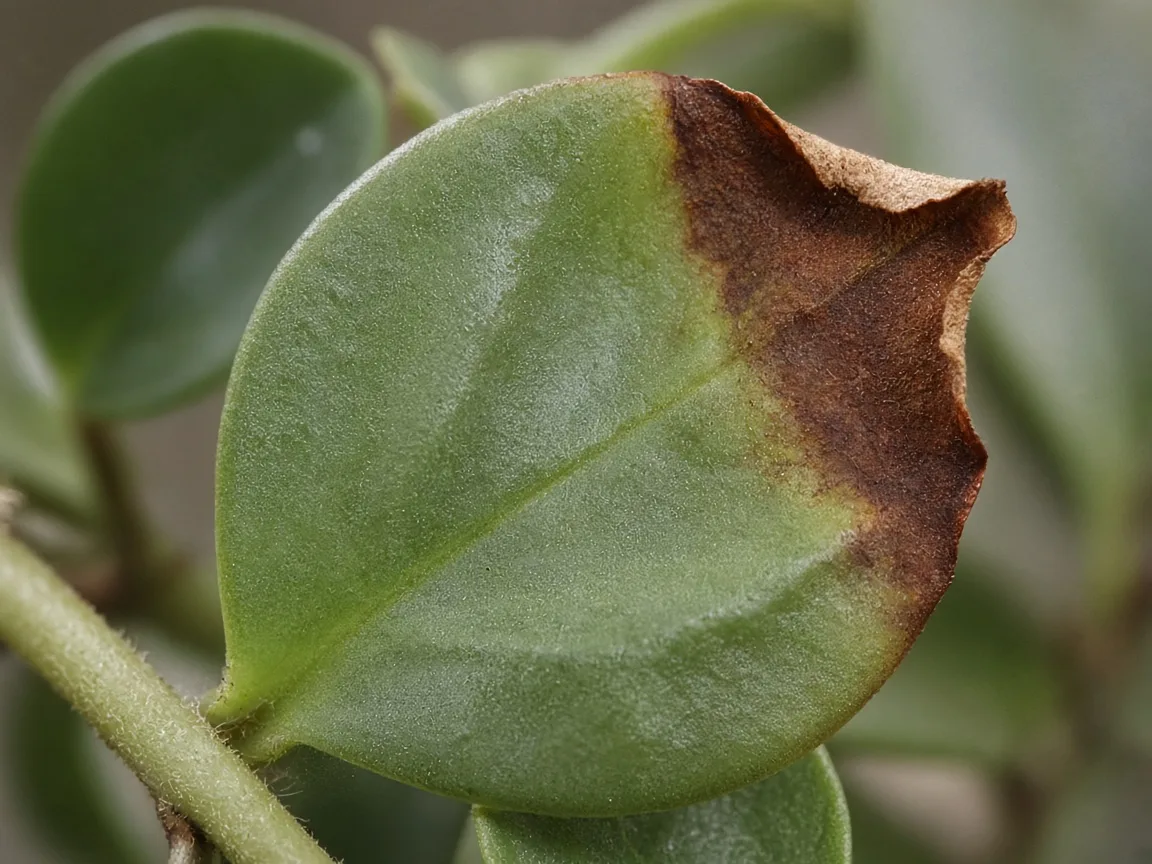
Compare the brown margin with unaffected tissue and check whether similar marks are developing on other leaves.
Peperomia is a large genus rather than one uniform plant. NC State Extension describes its species as having varied leaf shapes and textures, and notes that many have fleshy leaves that store water (the genus profile). That range matters: a thick-leaved baby rubber plant and a thinner-leaved Peperomia should not be diagnosed from a calendar watering schedule alone.
Why Peperomia leaves turn brown
Direct light can scorch exposed foliage. If a brown or pale patch is concentrated on the window-facing side, check whether direct sun reaches that leaf and whether the plant was recently moved. NC State Extension notes that direct sunlight can scorch Peperomia, and its baby rubber plant profile says overly strong or direct sun burns that species’ leaves (NC State’s Peperomia obtusifolia guidance). A dark, spreading spot is a different pattern from an exposed area that dried after a light change.
A wet root zone can stress Peperomia. A pot that stays heavy and wet, especially with yellowing, curling, or soft stems, makes excess moisture and root damage more plausible. NC State Extension links overwatering in Peperomia with root rot and yellowing or curling leaves (its genus-level problem notes). Planet Natural also warns that soggy soil can contribute to root rot and notes that direct light may scorch foliage (its Peperomia guide). Brown leaves alone are not enough to conclude that the roots are rotting.
Separate spots deserve a closer look. NC State Extension recommends keeping foliage dry and providing good air circulation to help prevent leaf spots on Peperomia. If distinct marks are expanding across leaves, avoid overhead wetting and look for a pattern before applying a fungicide or pruning healthy growth.
Concentric translucent-to-brown rings together with curling or twisting new leaves are a different warning pattern. Gardening Know How describes those signs in its discussion of Peperomia ring spot (its Peperomia problems guide). A ringed mark is a reason to isolate and seek a reliable identification, not proof of a virus from appearance alone.
How to confirm the cause before changing care
Check the plant in this order:
- Map the damage. Note if it starts at leaf tips or margins, follows the window-facing side, or appears as separate spots. Photograph one affected leaf so you can compare it later.
- Review the last light change. Look for a recent move into direct sun, a changed curtain, or a brighter season. If the damage is strongest on the exposed side, compare it with leaves shaded by the plant itself.
- Check the mix, not the calendar. Feel the potting mix below the surface and lift the pot. If it remains wet, check that water can drain; if the mix is dry, do not assume dryness explains distinct expanding spots.
- Inspect stems and leaf undersides. Look for soft or darkening stem bases, visible pests, or marks that continue to spread. If the stem base is firm and the mix is drying normally, root rot is less supported by the evidence.
Peperomia species vary, so use the plant’s own dry-down pattern and potting mix rather than following the same interval every week. The plant’s watering guide and soil guide help you compare the setup with its care baseline.
The first fix for brown Peperomia leaves
If the affected leaves were in direct sun and the marks are strongest on that side, move the plant into bright indirect light first. Keep it in a stable spot while you watch whether new damage appears; do not also change watering and fertilizer unless your inspection found a separate problem.
If the mix is staying wet, pause the next watering until you confirm the root ball is no longer saturated and the pot drains freely. Avoid unpotting a firm, stable Peperomia just because one leaf is brown. If stems are soft or the base is darkening, inspect the roots and use the plant’s overwatering guide before deciding whether a repot is warranted.
If spots are spreading, keep the foliage dry and give the plant space for air movement. Isolate it while you monitor the next leaves. Do not treat a suspected disease with a pesticide or fungicide until the symptom pattern is better identified; a sun scorch patch and an expanding lesion need different responses.
Recovery and when to escalate
Use two signs to judge progress: whether new marks are appearing and whether the next leaves look sound. A brown patch is evidence of earlier damage, so its color alone is not a useful recovery measure. Peperomia is typically slow-growing, according to NC State Extension, so assess a steady trend instead of expecting a new leaf on a fixed schedule (the genus profile).
Act sooner if several leaves develop expanding spots, new growth becomes distorted, or stems soften at the base. Those signs call for isolating the plant and checking the cause more carefully. For separate black or ringed spots, compare the plant’s black-spots guide; if only the tips are dry, use the brown-tips guide.
Preventing brown leaves from returning
Keep Peperomia in bright indirect light and avoid placing it where direct afternoon rays hit the foliage. Let the mix drain freely and check how quickly this particular pot dries before watering again. NC State Extension recommends avoiding wet foliage and maintaining air circulation to reduce leaf-spot problems on Peperomia (its prevention guidance).
When you adjust care, change one condition at a time and record the date. That makes it easier to tell whether the light position, watering pattern, or a spreading spot is connected to fresh damage. For general symptom comparisons, see the brown leaves guide.
When to use this page vs other Peperomia guides
Use this page when broad areas or several parts of the leaf are turning brown. If the change is limited to dry tips, use brown tips on Peperomia; for discrete dark lesions, compare black spots on Peperomia. When yellowing or limp growth accompanies persistently wet soil, check yellow leaves or overwatering instead.
Related Peperomia guides
- Peperomia overview: use this for the plant’s overall growing pattern and profile.
- Peperomia light guide: use this when browning began after a change in sun exposure.
- Peperomia watering guide: use this when the mix is staying wet or drying much faster than usual.
- Peperomia problems hub: browse other plant-specific symptoms and care issues.
Related tool
Use the Plant Problem Diagnosis Tool to compare the observed pattern with other Peperomia problems before changing several care conditions.