Holes in Peperomia Leaves: What to Check First
Quick answer
Isolate the Peperomia and inspect fresh holes before spraying. Repeated new holes call for a check for chewing pests; stippling, silvery scarring, tunnels, or expanding spots need different checks.
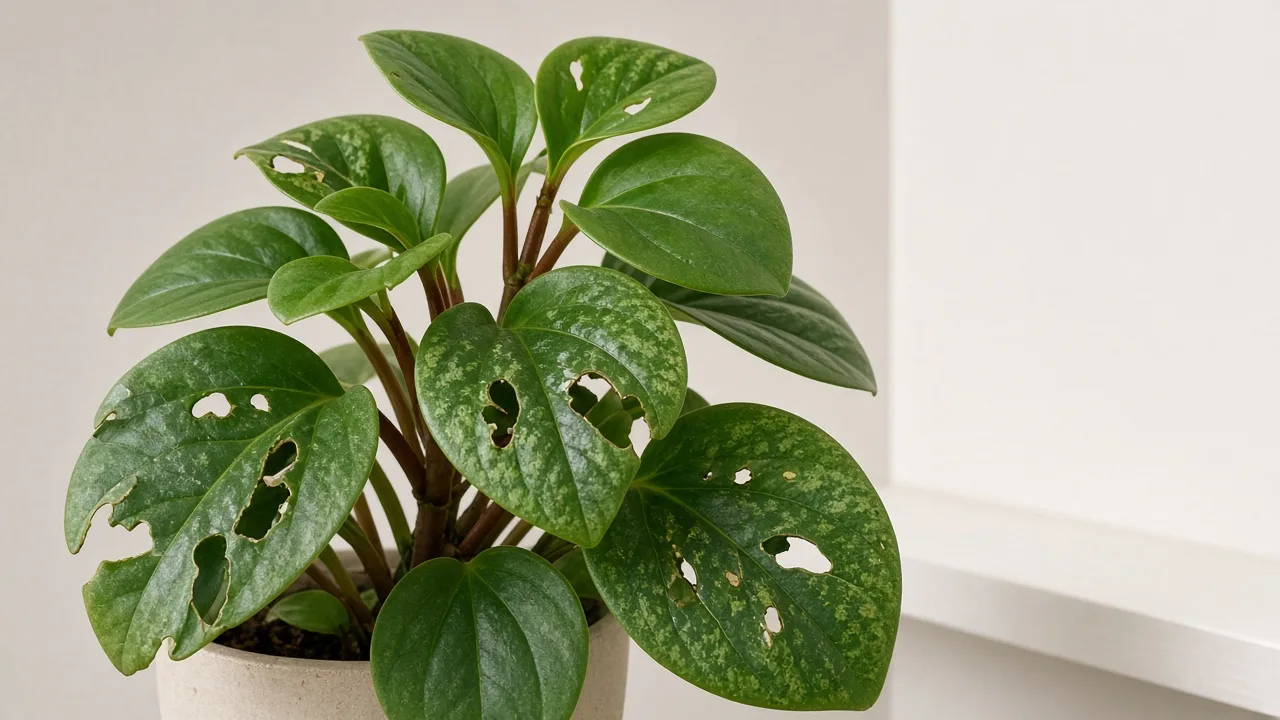
Holes in Peperomia Leaves: Causes, Checks & Fixes
This guide covers holes in leaves on Peperomia. See also the general Holes in Leaves guide, watering, and light pages for this plant.
Holes in Peperomia Leaves: Causes, Checks & Fixes
Quick answer
First, isolate the Peperomia and inspect the newest hole and the rest of the plant before spraying. If fresh holes keep appearing, check for a chewing pest; stippling, silvery scarring, tracks, or spreading spots call for different checks. A hole by itself does not identify the cause.
What holes look like on Peperomia
Look for a true gap where leaf tissue is missing, then compare its edge with the surrounding surface. Note whether it is new and whether other leaves show the same damage. Repeated new gaps are a reason to inspect for active feeding; one unchanged split is not enough to identify a pest. The photo below shows the kind of missing tissue this guide addresses; it cannot identify the pest or prove that an insect caused it.
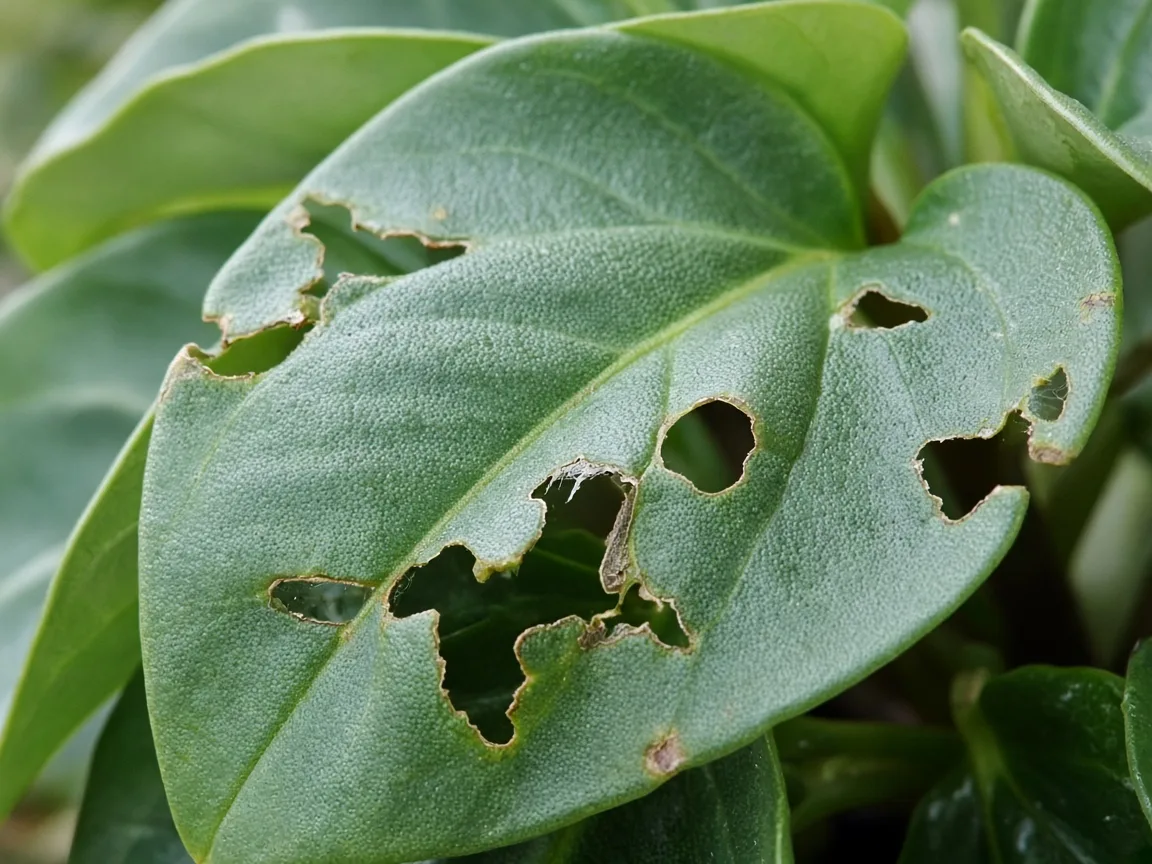
Check whether the edges are newly ragged and whether similar damage is appearing on other Peperomia leaves.
Why holes on Peperomia need a closer diagnosis
North Carolina State Extension’s Peperomia profile describes more than 1,000 species with varied foliage, notes that some species store water in succulent leaves, and lists mealybugs, spider mites, aphids, scale, fungus gnats, and whiteflies among pests to monitor. That range is why the Peperomia overview helps identify the plant you actually own before you assume its leaves or care response match another variety.
Those pests do not all make holes. Epic Gardening includes caterpillars among possible Peperomia pests, while mealybugs and spider mites are described by Get Busy Gardening as occasional indoor issues. Taken together, those references support checking for a pest without treating chewing as the default explanation for every damaged leaf.
Not all pest feeding leaves a hole: UC IPM describes spider mites as causing pale stippling and thrips as causing scarring or distorted growth (houseplant pest symptom guide).
Match the damage pattern before acting
| What you see | What it may point to | What to check next |
|---|---|---|
| Several fresh, ragged gaps or bites along the edge | Chewing by a caterpillar, beetle, slug, or another animal | Inspect the whole plant, pot rim, and nearby leaves for the pest. Note if the plant was recently outside. |
| Pale pinpricks, stippling, or fine webbing, but no missing tissue | Spider mites rather than a hole-making pest | Check leaf undersides and use the Peperomia spider-mite guide. |
| Silvery scars or distorted leaves, with dark specks | Thrips feeding injury rather than clean holes | Look closely along leaf undersides and folds; compare with the Peperomia thrips guide. |
| A pale or brown track inside an otherwise intact leaf | A leaf miner tunnel, where immature insects burrow inside the leaf (UAF guidance) | Treat this as a different problem from an open hole and identify it before removing leaves. |
| A dark, tan, or water-soaked spot that is expanding | A leaf lesion or other leaf-spot problem, not confirmed chewing | Photograph the change and use the Peperomia black-spots guide. |
| One isolated clean split, with no repeat damage | Possible handling or contact injury | Monitor the plant for fresh holes before treating it as a pest outbreak. |
Colorado State Extension’s pest guide cautions that feeding signs should be separated from care or disease symptoms, and that accurate pest identification matters because different pests produce different injuries and require different management. Use the Peperomia problems hub if the plant has more than one symptom.
The first fix: isolate and inspect the Peperomia
Move the pot away from other houseplants while you inspect it. Use a bright light to check both sides of the damaged leaves, leaf joints, stems, and the soil surface. Look for a live insect or slug, fresh feeding, or damage on nearby plants. Photograph the same leaves so you can tell whether new holes appear after this check.
University of Alaska Fairbanks Extension recommends identifying the pest before planning control. It lists caterpillars, beetles, leafhoppers, and leaf miners among occasional houseplant pests; it advises hand-picking caterpillars and beetles, and notes that slugs and snails sometimes arrive on indoor plants that spent time outside (houseplant pest guidance). If the plant was outdoors or near an open door, include the pot rim and the sheltered undersides of low leaves in your inspection.
What to do if you find a chewing pest
If you can identify and safely reach one caterpillar, beetle, slug, or snail, remove it by hand and dispose of it away from the plant. Check the Peperomia again for fresh feeding before considering any spray. A confirmed caterpillar problem has different next steps from a leaf-miner trail; use the Peperomia caterpillar guide for that specific case.
Do not spray just because a hole is present. The pest may be absent, or the damage may come from a lesion or a one-time injury. If an identified pest keeps returning after manual removal, ask a local extension service to confirm it and choose a targeted next step.
If you cannot find a pest, keep the Peperomia isolated and recheck for new damage over the next several inspections. A single old split with no new holes is weaker evidence of ongoing feeding than repeated fresh bites. If dark spots or water-soaked areas are expanding instead, avoid handling wet foliage and compare the pattern with the separate holes-in-leaves symptom guide.
Peperomia care checks that do and do not explain holes
Peperomia care problems are worth checking when other symptoms appear, but they do not by themselves explain a fresh gap in leaf tissue. North Carolina State Extension’s Peperomia care notes associate overwatering with root rot, yellowing, or curling and direct sun with scorch; they advise keeping foliage dry and providing good air circulation to prevent leaf spots. If you also see yellowing, drooping, or soft stems, check the plant’s watering routine, light placement, and soil and drainage separately rather than changing all three at once.
For leaf spots, the same Extension source recommends avoiding wet foliage and providing good air circulation as prevention. A dark area that is spreading is therefore a reason to review the Peperomia black-spots guide, rather than treating every hole as an insect problem. The correct comparison depends on what the edge and surrounding tissue look like, not just on the label “holes.”
Recovery: watch for new damage, not a perfect old leaf
An injured Peperomia leaf will not close over a hole; damaged leaves do not heal themselves. North Carolina State Extension describes Peperomia as typically slow-growing, so judge recovery by the absence of new holes and healthy leaves emerging, not by a fixed date. You can leave a leaf in place if most of it is firm and green. Remove it only if it is mostly dead, diseased, or too damaged to keep, using clean snips.
Escalate the inspection if holes continue to spread, several leaves become affected, or the plant also develops soft stems, rapid leaf drop, or expanding lesions. These combinations do not identify a single cause, but they justify isolating the plant and seeking a specific pest or disease diagnosis rather than adding fertilizer or repotting without evidence.
Prevent holes from returning
- Inspect both sides of Peperomia leaves and the stem joints when you bring the plant indoors or place it near other plants.
- Check any plant that has spent time outside for small visitors, especially around the pot rim and low foliage.
- Keep a photo of the first affected leaf and compare it during later checks; a stable old hole and new feeding are different situations.
- Treat only an identified pest, and follow the relevant label if a pesticide is needed.
- Keep routine care suited to your Peperomia variety. The genus includes many leaf forms and some water-storing species, so use the individual plant’s response rather than a fixed schedule.
When to use this page vs other Peperomia guides
Use this guide when leaf tissue is actually missing and you need to decide whether the damage is active feeding, an internal mine, a leaf spot, or a one-time tear. Use the caterpillar or thrips pages when you have identified those signs; use the black-spots guide when discoloration is spreading around the damaged area. The Peperomia overview and care guides cover routine growing conditions, while the problems hub routes to other symptoms.
Related tool
Use the Plant Problem Diagnosis Tool to compare several symptoms before choosing a next step.
Related Peperomia guides
- Caterpillars on Peperomia — use when you see a caterpillar or fresh chewing consistent with caterpillar feeding.
- Thrips on Peperomia — use for silvery scarring, distortion, or dark specks rather than missing tissue.
- Black spots on Peperomia — use for expanding dark or tan lesions.