Thrips on Peperomia: How to Spot and Treat Them
Quick answer
First isolate the Peperomia, then confirm thrips by tapping suspect growth over white paper and checking leaf undersides. Look for fresh silver scars, black specks, and tiny moving insects together; old marks will not heal, so judge control by clean new leaves.
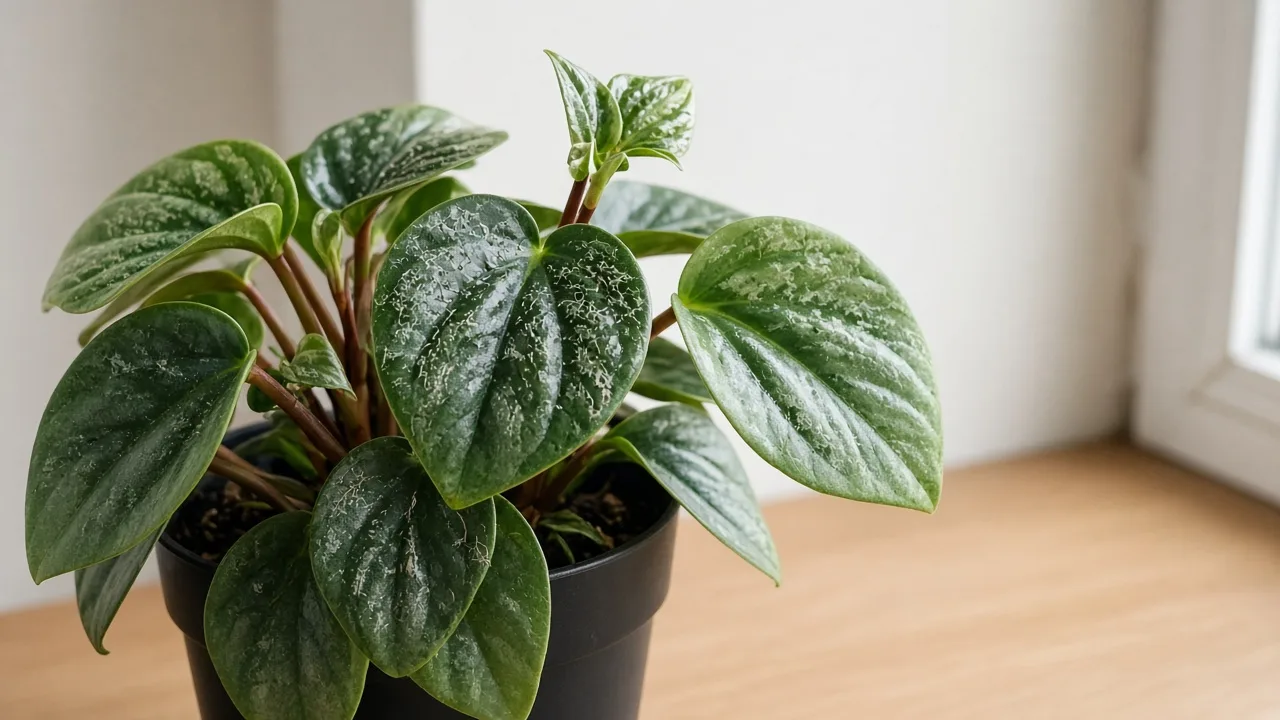
Thrips on Peperomia: Causes, Checks & Fixes
This guide covers thrips on Peperomia. See also the general Thrips guide, watering, and light pages for this plant.
Thrips on Peperomia: Causes, Checks & Fixes
Quick answer
First, move a Peperomia with suspected thrips away from the rest of your plants. Then look for a combination of fresh silvery or bronze scars, small black specks, and tiny insects on the leaf undersides or newest growth. Damage alone is not proof. The general thrips guide covers pest biology; this page focuses on how to check a Peperomia without mistaking its normal leaf pattern or care stress for an infestation.
What thrips damage looks like on Peperomia
Thrips feeding can leave silver or bronze scars and black frass alongside curled or distorted young leaves. UC IPM says injury may appear as tissue expands, so recheck Peperomia leaves as they unfold rather than judging only a folded tip.

Look for moving insects alongside new scarring; the leaf marks alone cannot confirm thrips.
Check Peperomia’s normal leaf pattern before calling it thrips
Peperomia is a varied genus: some types have round striped leaves, others have rippled, solid-colored, or trailing foliage. NC State’s Peperomia profile describes this range of leaf shapes, textures, and colors. That matters because silver or cream markings can be part of the plant’s normal pattern. Compare a suspicious area with an older, undamaged leaf or a photo of your own plant before deciding that every pale patch is pest damage.
There is also a Peperomia-specific reason to inspect closely rather than relying on a general photo search: Ohio Tropics documents pale thrips nymphs on Raindrop Peperomia. A Peperomia can host the pest, but the plant’s natural pattern still makes color alone a weak test. Fresh roughened scars, dark specks, and live insects together provide a stronger diagnosis.
Where to inspect on Peperomia
Check the undersides of leaves, the points where leaf stalks meet stems, folded new leaves, and the growing tips. Compact upright plants can hide insects where several leaves meet; on trailing Peperomia, follow the stems and inspect more than the first visible tip. If your plant has flower spikes, check their bases and any nearby folded foliage as well.
Thrips often feed in protected places such as buds and shoot tips, so damage may show before the insects do. Gardener’s Path notes that thrips hide in buds and tight growth, which is why a quick glance at the upper leaf surface can miss them.
How to confirm thrips instead of guessing
Hold a sheet of white paper under a suspect stem or leaf and tap it gently. Watch for narrow insects that crawl across the paper; a hand lens helps because adults are only about 1/16 inch long and can range from yellowish to dark brown or black. The University of Minnesota Extension description is a useful visual reference for their size and shape.
Look for pale, wingless young insects as well as darker adults; UC IPM’s description of thrips larvae explains why they can be harder to spot than adults. Repeat the paper test on a damaged leaf and a healthy-looking section. If you find no insects, no dark specks, and no fresh damage on new leaves, keep monitoring before using a pesticide. A sticky card can help show that small flying insects are nearby, but it cannot by itself prove that they are feeding on this Peperomia; UC IPM treats traps as monitoring tools, not proof that the plant is being injured.
Lookalikes to rule out
Peperomia’s patterned varieties can have natural stripes or silver areas, so compare suspect marks with the plant’s usual pattern. Spider mites and other small pests can also cause stippling; water stress or sun injury may discolor leaves without leaving live thrips or black frass. UC IPM cautions that mites and other causes can resemble thrips injury, so confirm the insect before treating the plant.
If the main symptom is curling without fresh silver scars or insects, use the Peperomia curling-leaves guide to check other causes. The Peperomia problems hub helps route symptoms that are mainly yellowing, spotting, or loss of firmness.
First fix: isolate the Peperomia
Move the pot to a separate room if possible, and keep its leaves from touching neighboring plants. Do this before any treatment so you can confirm and monitor one plant at a time. Keep a note or photo of the damaged leaves so you can tell whether new injury appears after treatment.
What to do after confirmation
Rinse the foliage thoroughly over a sink, including the undersides, while tilting the pot so the mix does not become unnecessarily saturated. Wipe broad, firm leaves gently; do not scrub tender new growth. Remove only badly damaged or visibly occupied leaves if the plant can spare them, and discard them in a closed bag. Do not strip every scarred leaf: old damage is not evidence that the pest is still present.
If live thrips continue to appear, choose a product whose label permits use on indoor ornamental plants and on Peperomia. Test a small area first, then cover the leaf undersides and growing points as the label directs. UC IPM explains why contact treatments need thorough coverage; never improvise a dilution or repeat interval, and do not use a product indoors if its label does not allow it.
One rinse or spray can miss eggs and hidden life stages within leaf tissue, soil, or plant crevices. Keep monitoring, and repeat any product only at label intervals. Check the plant and its neighbors at least weekly while the problem is active, and continue after the last visible insect rather than treating one clean inspection as clearance.
Keep Peperomia care steady during treatment
Thrips scars do not mean the plant needs more water or fertilizer. Keep the normal dry-down rhythm, and avoid leaving this Peperomia in wet mix while you are washing its leaves. Use the Peperomia watering guide and soil guide if the pot stays heavy or the mix dries unusually slowly; repot only for a separate soil or root problem, not as a stand-alone thrips fix.
Keep the plant in its usual bright indirect position while it produces replacement leaves; do not move it into direct sun to try to speed recovery. The Peperomia light guide covers the plant’s normal placement needs.
Recovery timeline and when to escalate
Existing silver scars and distorted areas will not turn back into smooth, unmarked tissue. UC IPM notes that thrips-damaged plant tissue remains damaged until it is shed or pruned. Judge progress by the next leaves: they should expand without fresh scarring, black specks, or visible insects.
Keep isolating and monitoring if fresh damage continues, if the paper test still finds moving thrips, or if nearby plants develop the same signs. If most growing points are repeatedly infested and the Peperomia is declining despite careful, label-directed control, removing it may protect the rest of the collection. A plant with several sound stems and healthy leaves is usually worth monitoring while you work through the pest cycle.
Prevent thrips from returning
Inspect new plants before placing them beside established Peperomia, and keep them separate while you check the undersides, leaf joints, and new growth more than once. During an active problem, clean fallen leaves and spent flower material from the shelf and keep tools used on the infested plant away from healthy plants until cleaned.
For routine checks, look at new leaves as they unfold rather than waiting for a whole plant to look dull. That is especially useful on Peperomia because its many leaf patterns can mask a small scar at first. If the plant’s symptoms do not match active thrips, return to the Peperomia overview and its care guides before changing several conditions at once.
Related tool
Use the Pest Identifier Tool to compare visible insects and likely pest signs before choosing a treatment.
Related Peperomia guides
- Use the Peperomia overview for plant identification and the full care picture; this page is for a suspected active thrips infestation.
- Use the curling-leaves guide when leaves curl but you cannot confirm insects, silver scars, or frass.
- Use the watering guide and soil guide when the mix stays wet or the plant’s leaves soften for reasons unrelated to thrips.