Whiteflies on Peperomia: How to Identify and Treat Them
Quick answer
If white insects flutter when you disturb a Peperomia or pale, flat nymphs sit beneath its leaves, isolate the plant first. Then rinse the leaf undersides gently while keeping the potting mix from staying wet.
Whiteflies on Peperomia: Causes, Checks & Fixes
This guide covers whiteflies on Peperomia. See also the general Whiteflies guide, watering, and light pages for this plant.
Whiteflies on Peperomia: Causes, Checks & Fixes
Quick answer
Whiteflies are confirmed by the insects themselves: small white-winged adults lift off when foliage is disturbed, while pale, flattened nymphs stay attached to the undersides of leaves. First isolate the Peperomia from other plants. Then check the leaf backs and rinse them gently; do not respond by watering the pot more often. Clemson Extension lists whiteflies among the occasional pests of Peperomia, so this can be a true pest issue even when the plant’s care has not changed (Clemson Extension’s Peperomia guide).
For the general pest life cycle and control options, see our whiteflies guide. The steps here focus on checking the varied leaves of Peperomia and removing pests without leaving its mix wet.
What whiteflies look like on Peperomia’s varied leaves
Whitefly adults look like tiny white moths and often rise from the plant in a cloud when a stem or leaf is touched. Turn leaves over and look for flat, oval, cream-colored nymphs, pale eggs, sticky honeydew, or black sooty mold. Whiteflies feed on sap, and a heavy infestation can cause mottling, poor growth, or leaf loss (Missouri Botanical Garden’s indoor whitefly guide).

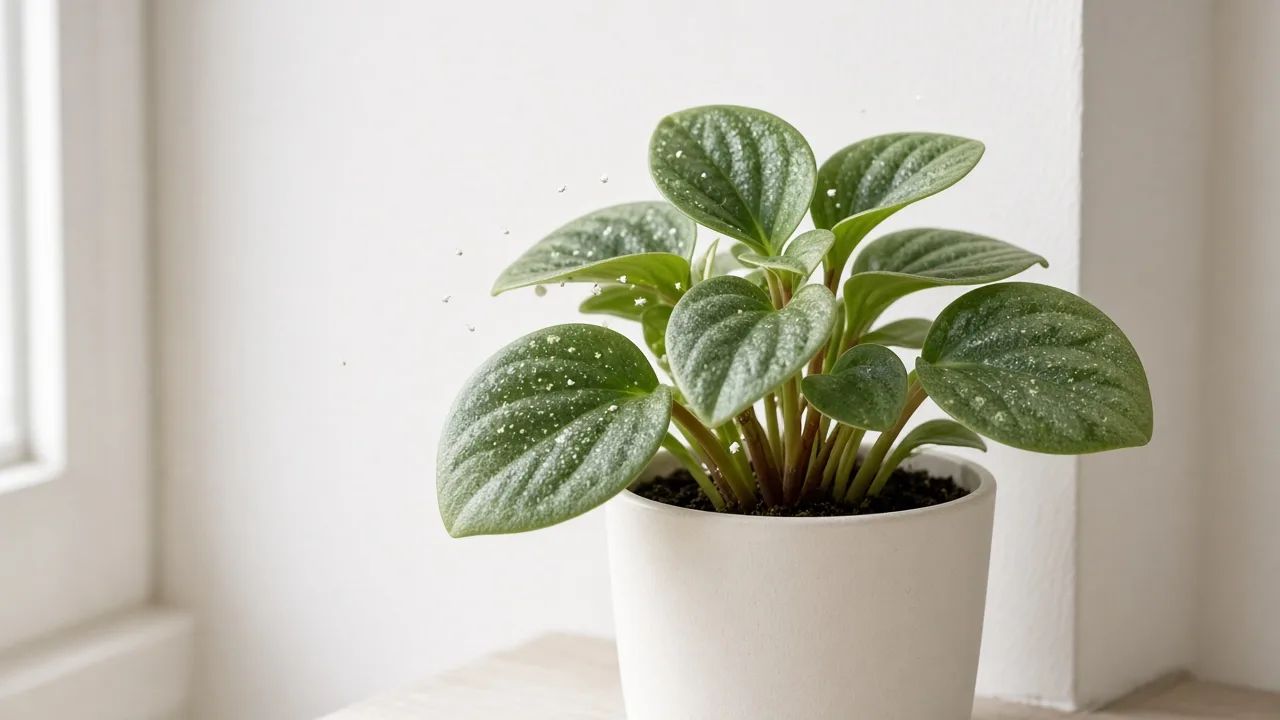
Whiteflies and their pale eggs or nymphs are easiest to spot on the undersides of Peperomia leaves; confirm live insects before treating.
Peperomia is a large, varied group rather than one leaf shape. A Watermelon Peperomia has striped round leaves, ripple types have textured leaves, and baby rubber plants have thicker oval leaves; some species trail with smaller foliage. Compare suspect marks with healthy leaves on the same plant, then look for insect stages underneath instead of treating a leaf’s natural texture or color as damage (Clemson Extension’s Peperomia guide).
Why whiteflies appear on Peperomia
Whiteflies usually arrive on an infested plant or move from a nearby host; they are not a sign that you watered Peperomia incorrectly. New plants deserve a close check before they join a collection, and adults can be active year-round indoors when conditions stay warm (RHS guidance on glasshouse whitefly).
Peperomia can lose leaves for reasons besides pests. Its leaves and growth habits vary by species, while root stress from persistently wet mix can also cause leaf drop. If you find no adults, nymphs, honeydew, or eggs, compare the pot’s dry-down and leaf firmness with the plant’s watering guide before changing its routine.
Check Peperomia’s leaf undersides and stem joints
Use a bright lamp or hand lens and inspect the underside of several leaves, especially where overlapping foliage hides the surface and along the midrib. Tap a suspect stem over white paper: adults that lift and fly are a useful clue, but inspect the leaf backs for immobile stages too. The Royal Horticultural Society notes that whitefly adults fly up when plants are disturbed and that scale-like nymphs remain on the leaf underside (RHS identification details).
Sticky leaves or black film can support the diagnosis, but they do not prove whiteflies by themselves. If you find winding pale tunnels rather than insects, compare the marks with the Peperomia leaf-miner guide; silvery scars and dark specks point to a different check in the thrips guide. If you see only dark lesions, use the black-spots guide to assess that pattern.
First fix: isolate the Peperomia
Move the plant away from other houseplants before handling it. Keep it in a separate room if possible, and avoid brushing the foliage against neighboring plants because disturbed adults can fly. Inspect other plants that touched it or sat close by; whiteflies often go unnoticed until adults become visible. Quarantining new purchases and checking leaf undersides are recommended ways to catch an introduction before it spreads (RHS whitefly management guidance).
Rinse the leaves without soaking Peperomia’s mix
After isolation, rinse the leaf undersides with a gentle stream of lukewarm water, supporting the stems so small petioles do not bend. Work over a sink or outdoors, angle the leaves so water carries insects away, and keep most of the stream off the potting mix. A water rinse can dislodge whiteflies from leaf undersides as an initial nonchemical measure (Epic Gardening’s houseplant whitefly guide).
Peperomia prefers to dry between waterings, and overwatering can cause it to drop leaves. Let the pot drain after rinsing and return to the plant’s usual dry-down rhythm; do not count leaf washing as a reason to water the root ball (Clemson Extension’s Peperomia guide). Remove only leaves that are badly infested or already failing, since stripping healthy foliage reduces the plant’s remaining growing surface.
Keep checking as whitefly stages emerge
One rinse may knock down adults and some nymphs, but eggs and other stages can remain on foliage. Whiteflies can be present in several life stages at once, so keep checking rather than treating a single clean rinse as proof that the infestation is over (The Spruce’s houseplant whitefly guide). Look under leaves and around new growth every few days at first, then weekly for several weeks. Yellow sticky cards can help show whether adult activity is falling, but they do not reveal eggs or attached nymphs and should be treated as monitors rather than a complete fix (UC IPM’s whitefly monitoring guidance).
If you continue to find live stages, remove heavily infested leaves and keep the Peperomia isolated. Only move to a spray if needed: choose a product whose label permits indoor use on the plant and follow the label exactly. The Missouri Botanical Garden advises checking that the target plant is listed and the product is approved for indoor use, while UC IPM recommends testing a few plants before wider application (Missouri Botanical Garden’s label guidance; UC IPM product precautions).
Use Peperomia leaf firmness to read secondary damage
Whitefly feeding can leave pale stippling, yellow patches, sticky residue, or gradual leaf loss. Peperomia’s leaves may be thick and fleshy, and the genus includes both smooth and textured surfaces, so compare affected leaves with the plant’s own normal color and firmness rather than using one universal appearance (Clemson Extension’s Peperomia guide).
If the pot stays heavy and damp while leaves feel soft or fall, check the root zone instead of spraying for a pest you cannot find. Review Peperomia’s soil guide if the mix drains slowly, and use its light guide to keep growth steady while the plant recovers. Existing yellow or stippled tissue may remain marked; improvement means no new honeydew or nymphs appear and fresh leaves emerge firm.
Prevent whiteflies from returning to Peperomia
Inspect both sides of leaves when bringing a new Peperomia home and keep it apart from the collection while you watch for adults or pale nymphs. Check nearby plants at the same time, especially when you see a white cloud rise from foliage. Keep the plant in bright indirect light and allow its mix to dry between waterings; these conditions support Peperomia care, but neither one replaces direct pest checks. The Peperomia overview summarizes the plant’s varied forms and baseline care.
Related tool
Use the Plant Problem Diagnosis Tool if you do not find whiteflies but Peperomia keeps losing leaves or developing pale patches.
When to use this page vs other Peperomia guides
Use this guide when you can find small white-winged adults, pale nymphs, or eggs on leaf undersides. If there are no insects, but a wet pot and soft leaves point to root stress, start with the Peperomia watering guide or the brown-leaves guide. The Peperomia problems hub lists the plant’s other confirmed problem guides.
Related Peperomia guides
- Use leaf miners on Peperomia when pale winding tunnels are inside leaves rather than on the surface.
- Use thrips on Peperomia when new leaves have silvery scarring and dark specks but no white adults or flat nymphs.
- Use black spots on Peperomia when dark lesions, rather than sticky honeydew or insects, are the main sign.