Slow Growth on Peperomia: Causes, Checks & Fixes
Quick answer
Peperomia is a naturally slow-growing genus, and a winter pause with little or no new foliage is often normal-not a failure. Stalled growth in spring or summer usually traces to insufficient bright indirect light, cold rooms below about 15°C (59°F), root damage from overwatering, or an oversized pot keeping soil wet. First step: confirm the season and light level before changing water or repotting.
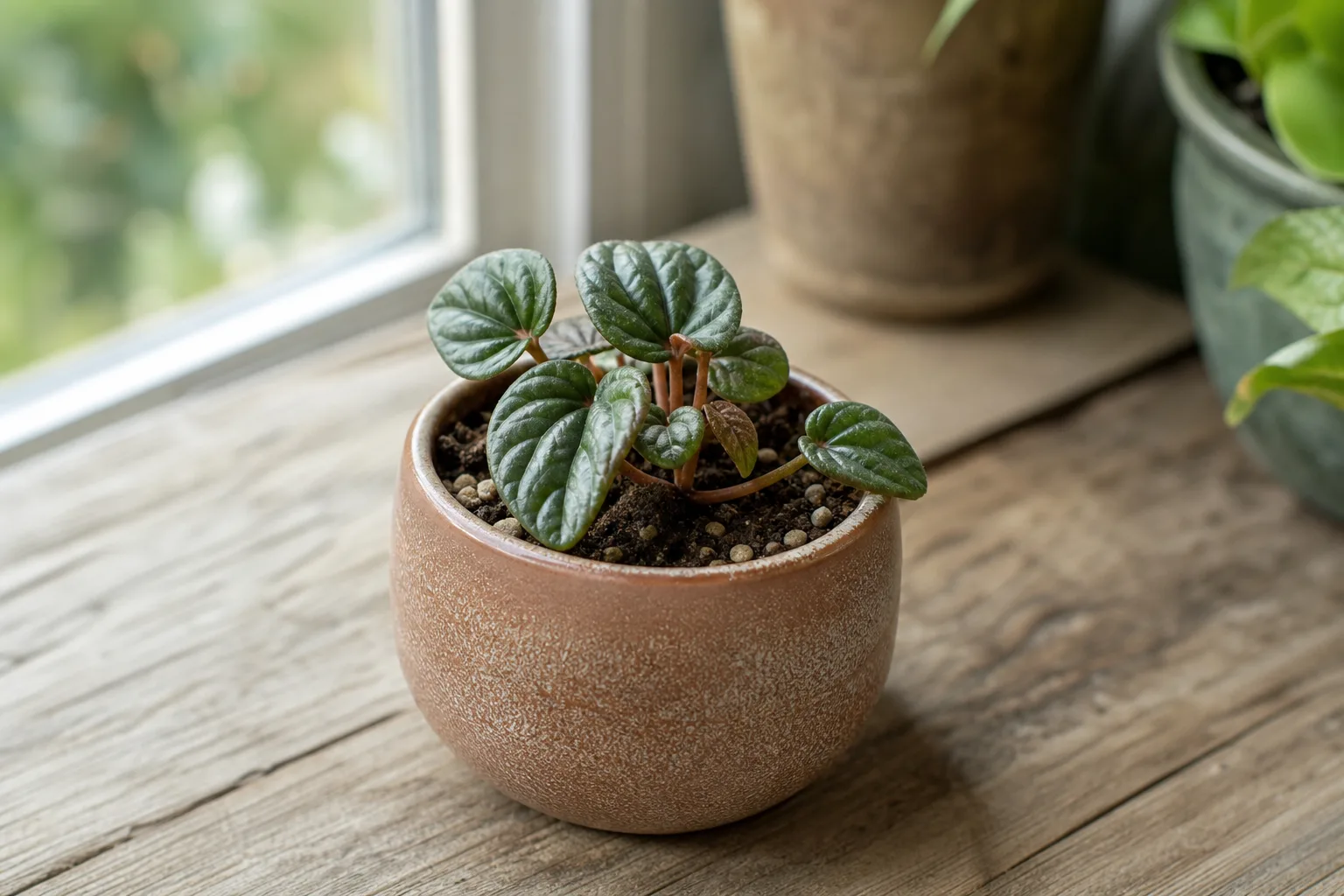
Slow Growth on Peperomia: Causes, Checks & Fixes
This guide covers slow growth on Peperomia. See also the general Slow Growth guide, watering, and light pages for this plant.
Slow Growth on Peperomia: Causes, Checks & Fixes
Quick answer
Peperomia slow growth is often normal-and sometimes a care signal. The genus is typically slow-growing with compact habits; in bright, warm rooms you may see modest new leaves through spring and summer, while cool, dim winter conditions can pause growth almost entirely without harming a healthy plant.
Stalled growth becomes a problem when no new foliage appears for six or more weeks during warm, bright weather, especially if lower leaves yellow, stems feel soft, or soil stays damp for days. The most common stress causes on Peperomia are insufficient Peperomia light guide, winter overwatering in cold rooms, root damage from chronic overwatering, temperatures below about 15°C (59°F), and oversized pots that keep mix wet around shallow, epiphytic roots.
First step: note the season and your light level before changing water or Peperomia repotting guide. If it is midwinter in a north-facing room and the plant looks otherwise firm and green, stretch your watering interval and wait for longer days. If it is spring in a bright east or west window and nothing has emerged for two months, inspect soil moisture and root health before fertilizing or upsizing the pot.
Is slow growth normal for Peperomia?
Yes-often. Peperomia is marketed as a compact, easy houseplant precisely because it does not race across your shelf like a pothos. Most peperomias are slow growing and can stay in the same container for two to three years when drainage is good. NC State Extension lists a slow growth rate as a defining trait of the genus, with many indoor specimens staying 6 to 12 inches (15 to 30 cm) wide.
That baseline matters because search intent for “Peperomia slow growth” usually splits two ways: Is my plant healthy? and Why has it stopped entirely? A normal slow pace looks like a firm, green plant that adds one new leaf every few weeks in bright spring conditions, then slows or pauses through short winter days. An abnormal stall looks like no new growth for six or more weeks during warm, bright weather, often paired with yellow lower leaves, pale or shrinking new leaves, soft stems, or soil that stays wet for many days.
Season sets the expectation. Peperomia metabolism drops when light and temperature fall. In cool, dim rooms, growth nearly stalls in winter even though the plant is alive and resting. Compare your plant to last season at the same window, not to a fast-growing tropical on the next shelf.
Species changes the pace too. Thick-leaved Peperomia obtusifolia pushes upright stems steadily in good light. Patterned P. argyreia and rippled P. caperata stay smaller and may produce fewer leaves in identical conditions. Trailing P. prostrata adds length along stems rather than height, so growth looks slow even when healthy.
Why Peperomia growth stalls
Low light and short winter days
Peperomia prefers bright but indirect or filtered light. In medium or low light, photosynthesis drops, internodes may lengthen, and new leaves arrive slowly or stop. Too much shade leads to poor, straggly growth-the same dim conditions that stall growth also produce stretch, which overlaps with the leggy-growth problem page.
Dim light also slows soil drying. A Peperomia that uses less water in shade stays wet longer after each drink, increasing root-stress risk even when you have not changed your watering calendar.
Winter dormancy and reduced watering
Most Peperomias slow dramatically in autumn and winter, especially in cooler rooms. Growth may pause for weeks while the plant rests. During this phase, the same Peperomia watering guide that worked in July keeps soil cold and wet in January-a common path to yellow lower leaves and root decline without any visible “emergency.”
Winter rest is not the same as root rot on Peperomia. Resting plants hold firm green foliage and dry soil between drinks. Stressed plants show yellowing clusters, sour smells, or soft stems while mix stays damp.
Root damage from overwatering
Peperomia’s semi-succulent leaves store water, but shallow roots suffocate quickly in saturated mix. Clemson HGIC notes that root rot from overwatering is the most common disease of peperomia. Damaged roots cannot support new leaves even when older foliage still looks green for a time.
Chronic overwatering stalls growth faster than occasional underwatering on this genus. Leaves may stay turgid while the root zone fails-a pattern that sends many growers to repot or fertilize when the first fix should be drying the mix and inspecting roots.
Cold rooms and slow metabolism
Peperomia prefers stable indoor warmth-roughly 18 to 27°C (65 to 80°F) during active growth, per Clemson HGIC and the RHS. Cold window sills, drafty entries, and rooms that drop below about 15°C (59°F) slow root activity and can stop new growth entirely. The Old Farmer’s Almanac recommends keeping peperomias away from drafty windows and bringing outdoor plants inside before temperatures fall below 50°F (10°C).
Cold stress can yellow or drop leaves on sensitive types while growth pauses. Do not confuse a plant resting on a cool sill with one failing from root damage-check soil moisture and stem firmness together.
Oversized pots and persistently wet soil
Peperomia roots spread horizontally in shallow zones; they do not use the bottom half of a deep, oversized pot. The RHS warns that if the pot is too big, compost stays wet longer and roots can rot-and wet, idle roots produce no new growth. Repotting into a larger container to “encourage growth” is one of the most common mistakes on this genus.
Root-bound stall vs. healthy compact growth
Peperomia tolerates-and often prefers-being slightly root-bound. A compact root ball keeps the plant stable and helps soil dry predictably. Severe binding is different: water runs straight through without soaking, the pot dries in a day or two after every drink, and growth stops despite good light. That pattern calls for a gentle spring repot one size up in a shallow container, not a deep upgrade.
Nutrient issues (less common)
Peperomia is a light feeder. Lack of nutrients rarely stalls an otherwise healthy plant in fresh mix. Over-fertilizing stressed or dormant plants causes more harm than deficiency. Reserve feeding for active spring and summer growth on plants with firm roots and bright light-never as a first response to a winter pause or suspected root damage.
What slow or stalled growth looks like on Peperomia
Normal slow growth: Firm green leaves, compact shape, one new leaf every one to three weeks in bright spring weather, then a visible slowdown in winter. Soil dries on a predictable rhythm. No yellowing clusters or soft stems.
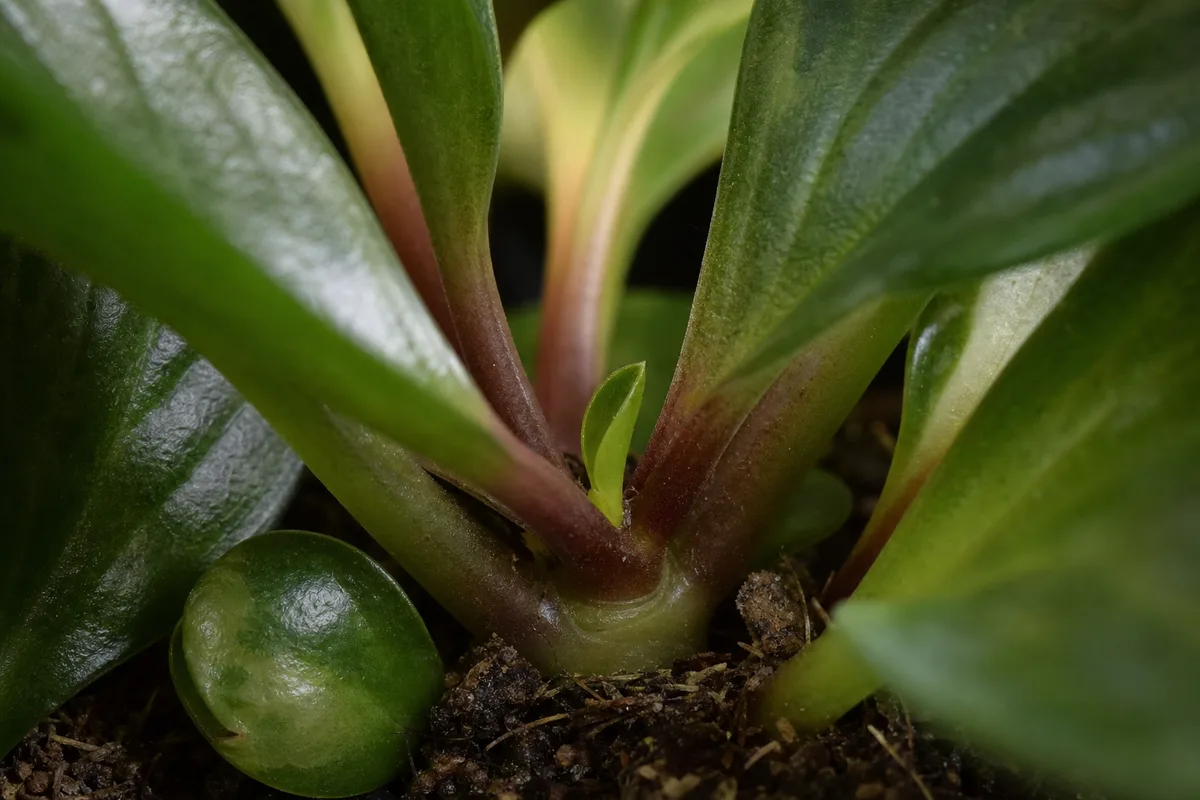
Slow Growth symptoms on Peperomia - compare with healthy tissue on the same plant.
Low-light stall: Few or no new leaves for months; existing foliage may look healthy but stems stretch with wide gaps between smaller leaves. Soil stays damp longer than it used to. Variegation and silver striping fade on P. argyreia.
Winter rest: No new growth for several weeks in cool, dim conditions while leaves stay firm. Pot feels light for weeks between drinks. Lower light and shorter days explain the pause.
Root-damage stall: No new growth for six or more weeks during warm, bright weather. Lower leaves yellow while soil stays wet or smells sour. Stems may soften at the base. Fungus gnats often appear at the soil surface.
Cold-room stall: Growth stops near a drafty window or AC vent while leaf edges brown or drop. Soil dries slowly because metabolism is low and the root zone is cold.
Oversized-pot stall: Plant looked fine after repotting into a bigger decorative pot, then growth stopped and soil stays cool and damp at mid-depth for days after watering.
How to confirm the cause
Work through this checklist in order:
- Season and room temperature - Midwinter pause in a cool room often normal. Six or more stall-weeks in warm spring is not.
- Light level - Is the plant within a few feet of an east or west window, or several feet back from south glass with filtered light? Can you see strong ambient brightness on the leaves without hot midday sunbeams? Stretching stems point to light deficiency.
- Newest leaf trend - Measure or photograph the newest leaf every two weeks. Shrinking or paler new leaves suggest light or root stress. No change at all in warm bright weather suggests roots or pot size.
- Soil moisture rhythm - Push a finger or skewer to mid-depth. Does mix stay damp for five or more days after watering? Wet, cool soil in a dim room supports overwatering stall. Pot drying in one to two days may indicate severe root binding.
- Pot weight and drainage - Lift before and after watering. Heavy pot days after a drink, with no new growth, fits wet-soil stall. Water running straight through without absorbing fits compaction or root-bound extremes.
- Pot size vs. root ball - Slide the plant partway out. Excess empty soil around a small root ball in a large pot confirms oversized-container risk.
- Stem and root sniff test - Firm green stems and neutral-smelling soil favor rest or light issues. Soft stems, sour soil, or dark mushy roots when you unpot confirm damage-see the overwatering and root-rot pages before repotting again.
- Species baseline - Trailing P. prostrata and compact P. argyreia grow slower than P. obtusifolia in the same window. Adjust expectations before treating normal compact pace as failure.
First fixes by cause
If it is midwinter and the plant is firm with dry soil: Stretch watering toward a three-to-four-week interval in cool dim rooms. Do not fertilize. Wait for longer days before expecting new leaves.
If light is the primary limiter-and this is the most common fix in spring: Move the plant to brighter indirect light: an east-facing window, a few feet from south or west glass with sheer curtain, or a full-spectrum grow light 12 to 18 inches (30 to 45 cm) above foliage for 10 to 12 hours daily. Acclimate over one to two weeks if coming from deep shade. Reduce watering slightly until new growth resumes, because brighter light increases water use.
If soil stays wet and lower leaves yellow: Stop watering until the top half of mix dries. Inspect roots when growth has stalled six or more weeks in warm weather. Trim mushy roots, repot into fresh airy mix in a shallow pot only one size larger if needed-not a deep upgrade. See the overwatering problem page for the full root-rescue sequence.
If the pot is clearly oversized: Do not water more to “wake” the plant. Either slip the root ball back into a snug nursery pot inside the decorative cover, or repot in spring into a shallow container one size up with fast-draining mix. Resume watering only when the top half dries.
If severely root-bound with fast dry-out and no growth: Repot in spring into a pot 1 to 2 inches (2.5 to 5 cm) wider, shallow rather than deep, with fresh well-draining mix. Water once to settle; avoid fertilizing for four to six weeks.
If cold exposure is the trigger: Move off the winter window sill or away from AC drafts into stable 18 to 24°C (65 to 75°F) warmth with bright indirect light. Recovery follows within two to four weeks once roots warm.
Make one change at a time so you can read the plant’s response over the next two to three weeks.
Recovery timeline for Peperomia
A normal winter pause needs no recovery-only patience and drier soil. After a light upgrade in spring, many Peperomias push a visible new leaf within two to four weeks. Root-damage recovery takes longer: three to six weeks after drying soil and trimming rot before steady new growth returns, and badly damaged roots may never fully restore prior pace.
Old leaves that yellowed during stress will not green up again. Judge success by firm new tips, neutral-smelling soil, and a return to a predictable dry-down cycle-not by older foliage.
Trailing P. prostrata may add only a few new “turtle” leaves per month even when healthy. Upright P. obtusifolia usually shows recovery faster in the same conditions.
Lookalike symptoms and causes to rule out
Slow growth overlaps with several sibling problems:
| Pattern | Likely cause | Key differentiator |
|---|---|---|
| Compact plant, no new leaves, firm stems, winter timing | Normal rest or cold slowdown | No yellowing clusters; soil dries slowly but does not stay sour |
| Long gaps between leaves, plant reaches toward window | Low light / leggy growth | Stretch visible; see leggy-growth page |
| No growth, wet soil, yellow lower leaves, gnats | Overwatering / root damage | Soft stems or sour smell; see overwatering and root-rot pages |
| Crisp leaves, very light pot, growth stops in summer heat | Underwatering | Soil pulls away from pot sides; revives after a full soak |
| Stall after repot into bigger pot | Oversized container | Excess wet soil around small root ball |
| Fast dry-out, water runs through, roots circling | Severe root binding | Repot candidate in spring-not a light problem |
What not to do
Do not repot into a larger pot to force growth-Peperomia almost always stalls further in excess wet soil. Do not fertilize a dormant winter plant or one with suspected root damage; salts stress failing roots. Do not increase watering because growth is slow in a dim room; that deepens wet-soil stall.
Do not assume all slow growth is a problem. A compact P. obtusifolia adding one leaf monthly in moderate light may be perfectly healthy. Do not stack repotting, pruning, and fertilizer on the same day.
How to prevent slow growth problems on Peperomia
Keep bright indirect light as the default-east or west exposure, or filtered south light. Match watering to season: deeper dry-down in winter, more frequent checks in bright summer. Use shallow pots with drainage sized to the root ball, refreshing mix every two to three years per the repotting guide.
Rotate the pot weekly for even light on rosette types. Feed lightly only during active spring and summer growth on healthy plants. Watch for the first signs of stretch or yellow lower leaves before growth fully stalls-those early signals are easier to correct than a six-week stall with root decline.
When to worry
Escalate if no new growth appears for six or more weeks during warm, bright weather, especially with yellow lower leaves, soft stems, or sour soil. Inspect roots before another repot. Act sooner if the crown softens while soil stays wet-that may be advancing rot, not seasonal rest.
A firm, green Peperomia that pauses through January in a cool room is low urgency. A plant that has not grown since early spring in a bright window with constantly damp soil is not resting-it needs root and light diagnosis now.
Conclusion
Peperomia slow growth is often normal compact habit and seasonal rest, not a crisis. Confirm the season, light, and soil moisture before repotting or feeding. When growth truly stalls in warm, bright weather, trace the pattern-wet soil and yellow leaves point to roots; stretch and pale new leaves point to light; an oversized pot keeps mix idle around shallow roots. Fix one variable at a time and measure recovery by new leaves, not old damage.
When to use this page vs other Peperomia guides
- Peperomia watering guide - Use for routine moisture checks before assuming slow growth is the main issue.
- Peperomia problems hub - Browse all 5 common issues on this species.
- Leggy Growth on Peperomia - Different entry point when symptoms overlap with slow growth.
- Yellow Leaves on Peperomia - Different entry point when symptoms overlap with slow growth.