19 Tall Low-Light Plants You Should Grow Indoors
Compare 19 tall houseplants for low-light rooms, with foot-candle reality checks, a full comparison table, pet safety notes, and when to buy height vs grow in place.
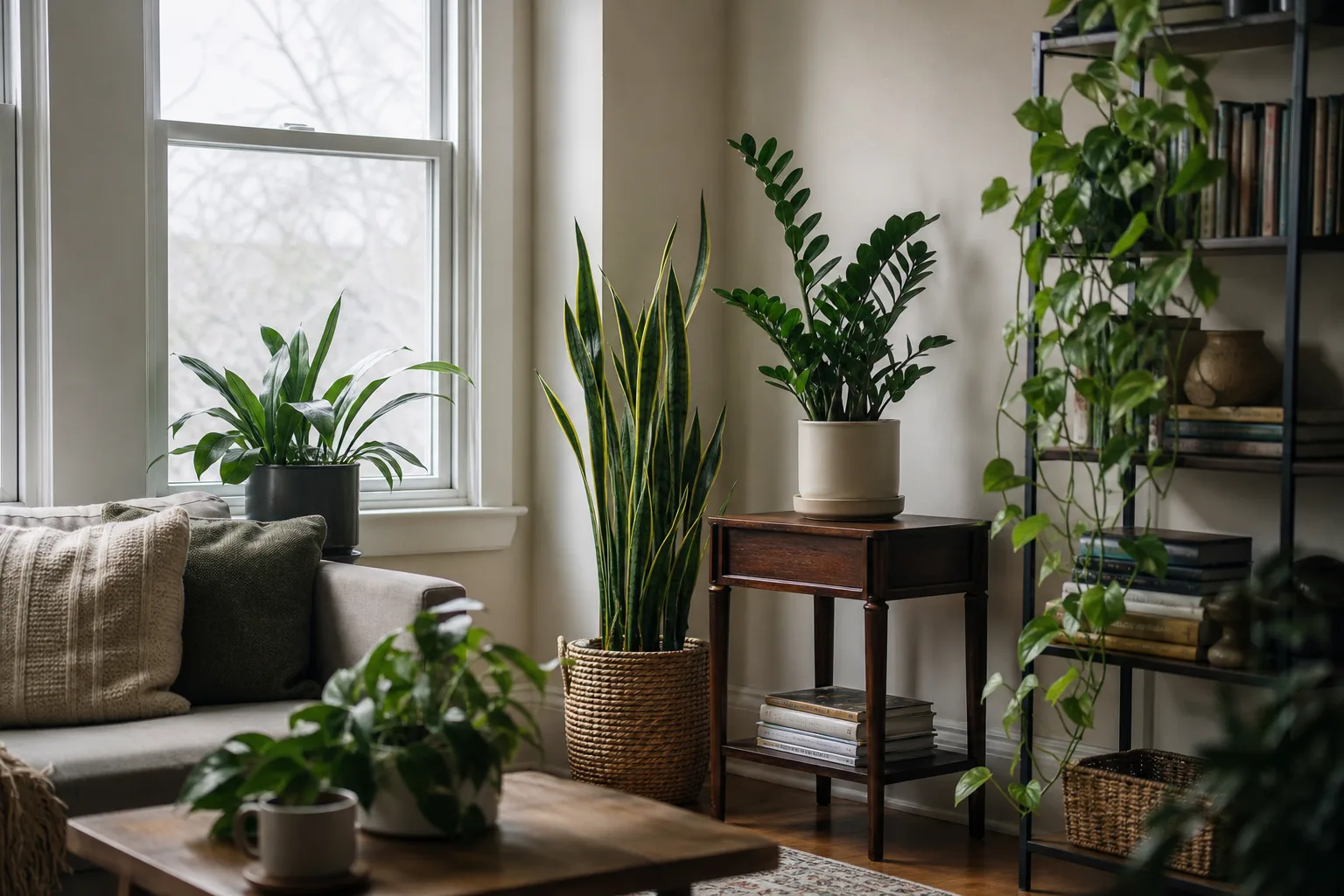
A dark hallway does not have to stay empty. Tall houseplants add vertical structure to rooms where floor lamps and furniture already eat floor space, and several species tolerate the 50–250 foot-candle range typical of north-facing windows and interior corners. The catch is that low light is not no light, and tall does not mean fast. Some of the best shade survivors grow inches per year, not feet.
This guide covers 19 tall indoor plants that tolerate dim conditions well enough to keep their place in a room—with honest light tiers, height ranges, pet notes, and a clear rule for when you should buy height upfront instead of waiting. Every species links to its LeafyPixels care hub so you can go deeper on watering, soil, and repotting after you pick a corner.
What Low Light Actually Means Indoors
Low light indoors usually means roughly 50–250 foot-candles at the leaf surface—the kind of brightness where you can read during the day without turning on a lamp, but far from the direct sun a south window delivers. University of Maryland Extension notes that low light slows photosynthesis, stretches internodes, and reduces leaf size, which is why “tolerates shade” and “looks full and bushy in shade” are not the same thing. (University of Maryland Extension)
Missouri Extension groups common houseplants by light need and reminds growers that even shade-tolerant species perform best when they receive filtered daylight for part of the day—not perpetual gloom. (Missouri Extension) Before you buy, stand where the pot will sit at midday. If you would reach for a lamp to read comfortably, you are below typical low-light tolerance and should either add a grow lamp or choose from the Excellent tier in the comparison table below.
Foot-Candles and Realistic Expectations
North windowsills often deliver 150–250 foot-candles for a few hours. Move the same plant six to eight feet into the room and levels can fall below 100 foot-candles—still workable for cast iron plant, ZZ plant, and snake plant, but marginal for banana, stromanthe, and heavily variegated aglaonema. Variegated cultivars almost always need more photons than solid-green forms of the same species; a pink or silver Chinese evergreen in a dim corner will revert or crisp at the edges while a plain green one holds on.
Height claims on plant tags assume years of stable care. A parlor palm labeled “eventually six feet” may take a decade in low light to reach that size. Plan for survival and slow vertical gain, not Instagram growth rates, unless you supplement light or start with a mature specimen.
When Grow Lights Become Necessary
Add a grow light when the plant sits in a windowless room, more than eight feet from any daylight source, or below roughly 50 foot-candles for most of the day. Even the most shade-tolerant entries on this list—snake plant, ZZ plant, cast iron plant—will eventually stall without photons. A full-spectrum LED placed 12–24 inches above the canopy for 10–14 hours daily can turn a “survive” corner into a “slowly grow taller” corner without relocating furniture.
Grow lights matter most for tree-form dracaenas, rubber plant, and banana, which need more energy to add trunk height than a compact ZZ rhizome does. If you refuse to add artificial light, stay in the beginner upright group and buy the height you want on day one.
How to Choose a Tall Plant for a Dim Room
Match three variables before you checkout: target height within two years, how dim the spot really is, and whether pets or toddlers share the space. A six-foot weeping fig sounds perfect until it drops half its leaves after every watering miss—and it is toxic to dogs and cats. A four-foot kentia palm is safer and more shade-stable, but it costs more upfront because it grows slowly.
Excellent shade tolerance means the plant holds healthy foliage for months in true low light with only minor stretching. Good means it survives but may lose variegation, fenestrations, or lower leaves. Moderate means it needs the brightest spot in an otherwise dim room—or supplemental light—to stay tall without looking starved.
Buy Height Now vs Grow in Place
Use this decision rule: if the species adds less than six inches of height per year in low light, buy the height you want now. That applies to parlor palm, kentia palm, ZZ plant (unless you want a tabletop size), and most corn plants under five feet. Fast climbers trained on moss poles—golden pothos, monstera, schefflera—can gain vertical inches faster when watered correctly, but they still look better if you start with a pole already wrapped to four feet or higher.
Snake plant, cast iron plant, and aglaonema stay relatively compact even when mature; buy a large pot if you want instant corner mass rather than waiting for offset pups to fill out. Rubber plant and money tree sit in the middle: a young six-inch liner will take years to read as a “tree,” so budget for a three- to five-foot specimen if the corner is the focal point.
Quick Comparison Table: All 19 Plants at a Glance
| Plant | Typical indoor height | Light tolerance | Pet note |
|---|---|---|---|
| Snake Plant | 2–4 ft | Excellent | Toxic — saponins |
| ZZ Plant | 2–4 ft | Excellent | Toxic if ingested — calcium oxalates |
| Cast Iron Plant | 2–3 ft | Excellent | Non-toxic — ASPCA |
| Golden Pothos | 6–10 ft (trained) | Excellent | Toxic to pets |
| Parlor Palm | 4–6 ft (slow) | Good | Non-toxic — NC State |
| Kentia Palm | 8–10 ft (slow) | Good | Non-toxic |
| Corn Plant | 4–6 ft | Good | Toxic to pets |
| Dragon Tree | 4–6 ft | Good | Toxic to pets |
| Rubber Plant | 6–10 ft | Good | Toxic to pets |
| Money Tree | 6–8 ft | Good | Non-toxic |
| Monstera | 6–10 ft (with support) | Good | Toxic — ASPCA Swiss cheese plant |
| Schefflera | 6–10 ft | Moderate | Toxic to pets |
| Weeping Fig | 6–10 ft | Moderate | Toxic to pets |
| Aglaonema | 2–4 ft | Good (green forms) | Non-toxic |
| Calathea | 2–3 ft | Moderate | Non-toxic |
| Stromanthe Triostar | 2–3 ft | Moderate | Non-toxic |
| Alocasia Zebrina | 3–5 ft | Moderate | Toxic if ingested |
| Dieffenbachia | 3–5 ft | Moderate | Highly toxic — NC State |
| Banana | 6–10 ft | Moderate | Non-toxic fruit plant; large leaves need humidity |
Use the table as a filter, not a guarantee. A Moderate plant in the brightest spot of a dim apartment often outperforms an Excellent plant shoved into a windowless bath.
Beginner Uprights: Snake, ZZ, Cast Iron, and Pothos
These four are the lowest-risk starting points when you want height—or height potential—without bright windows. They forgive missed waterings, handle typical indoor humidity, and recover from dust-coated leaves better than fussy rainforest species.
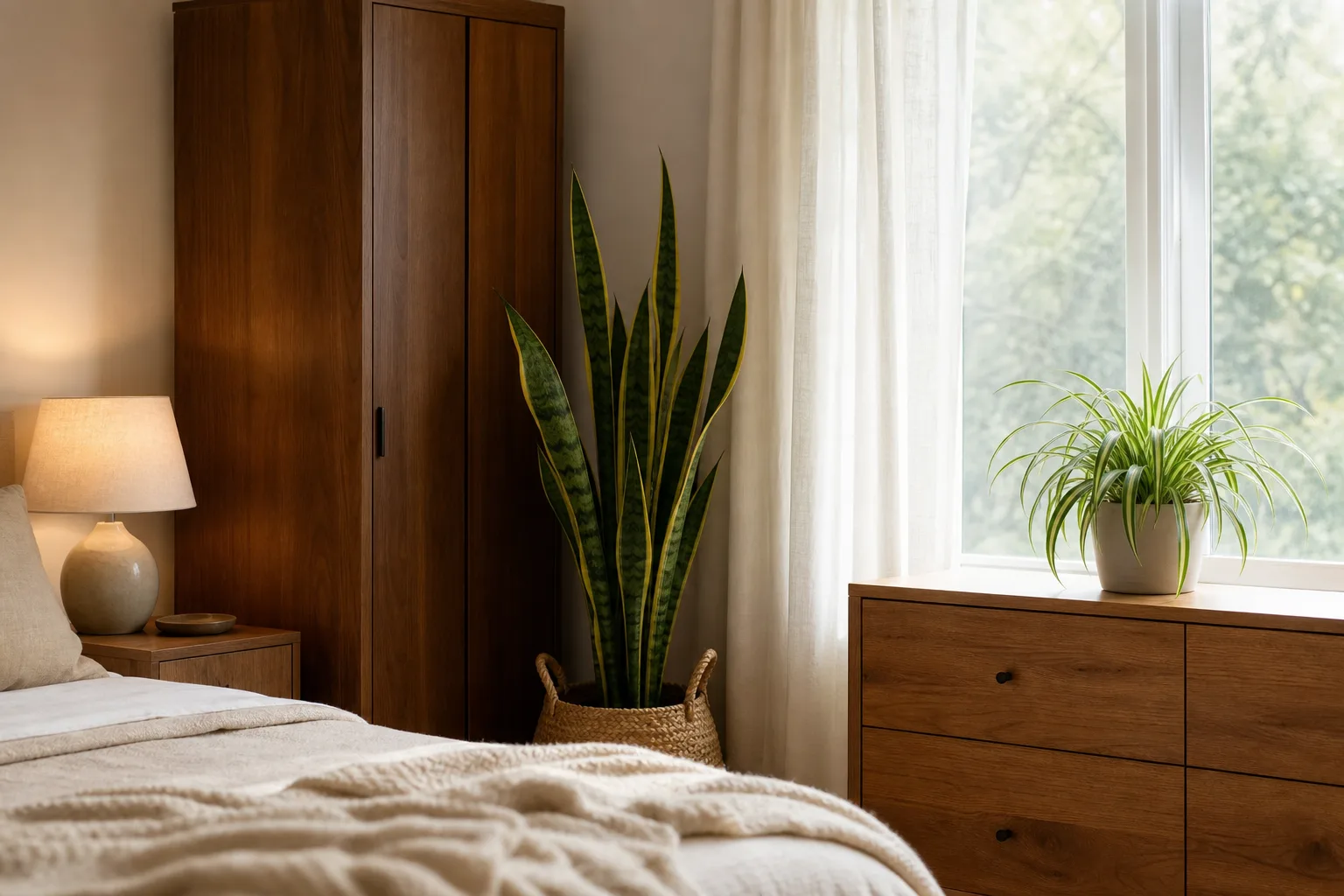
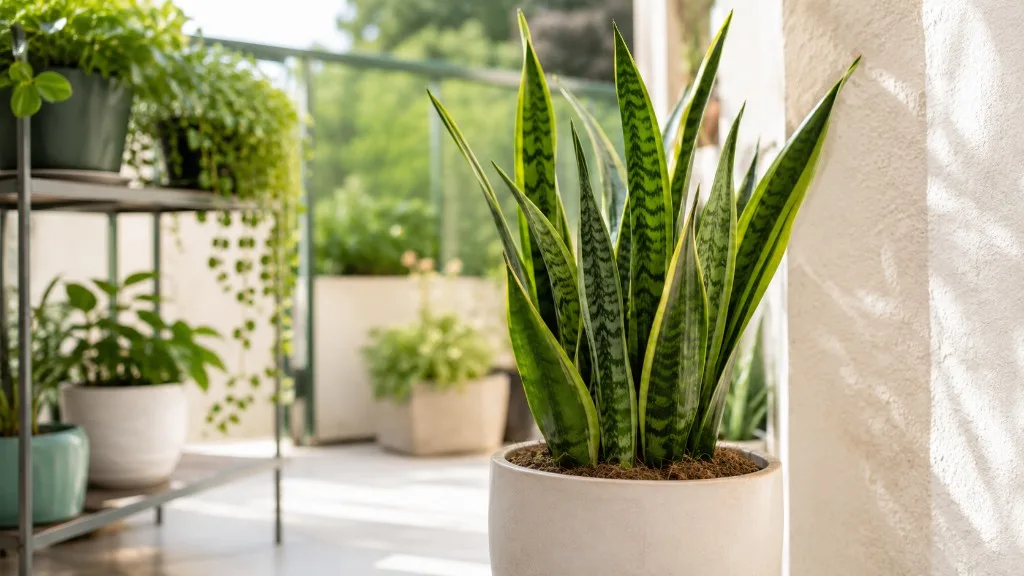
Snake Plant builds vertical structure through stacked rosettes rather than a single trunk, reaching two to four feet indoors depending on cultivar. It is one of the most reliable Excellent low-light performers, though Pet Poison Helpline lists it as toxic to dogs and cats due to saponins. Water only when the soil is dry several inches down; in dim rooms that may mean every three to four weeks. Choose taller varieties like Laurentii or Bantel’s Sensation if you want instant corner presence.
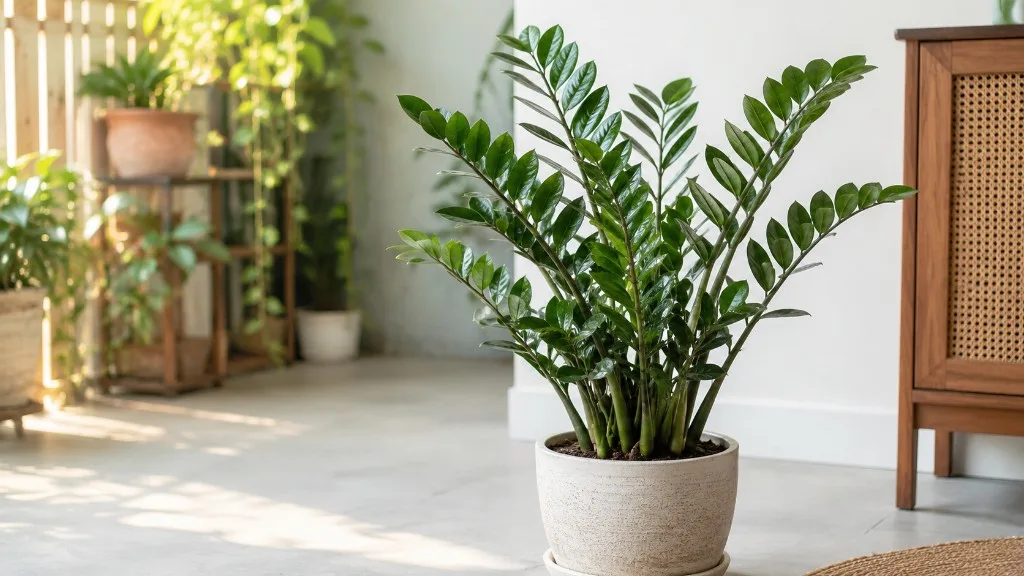
ZZ Plant stores water in thick rhizomes and holds glossy leaves in corners where other plants yellow. Iowa State Extension notes it tolerates low light and drought—ideal for offices—but also warns that all parts contain calcium oxalate crystals irritating to people and pets if chewed. Expect two to four feet over many years unless you buy a multi-stem specimen. Wipe leaves monthly; dust blocks the little light the plant already receives.
Cast Iron Plant earns its name from decades of dim Victorian parlor culture. NC State Extension describes Aspidistra elatior as tolerant of deep shade, temperature swings, and neglect. It stays two to three feet tall—more mass than tree—but fills a floor pot beautifully. ASPCA lists it as non-toxic, making it the safest Excellent tier pick for pet households that refuse grow lights. Let soil dry halfway down between waterings; soggy soil in low light invites root rot faster than drought does.
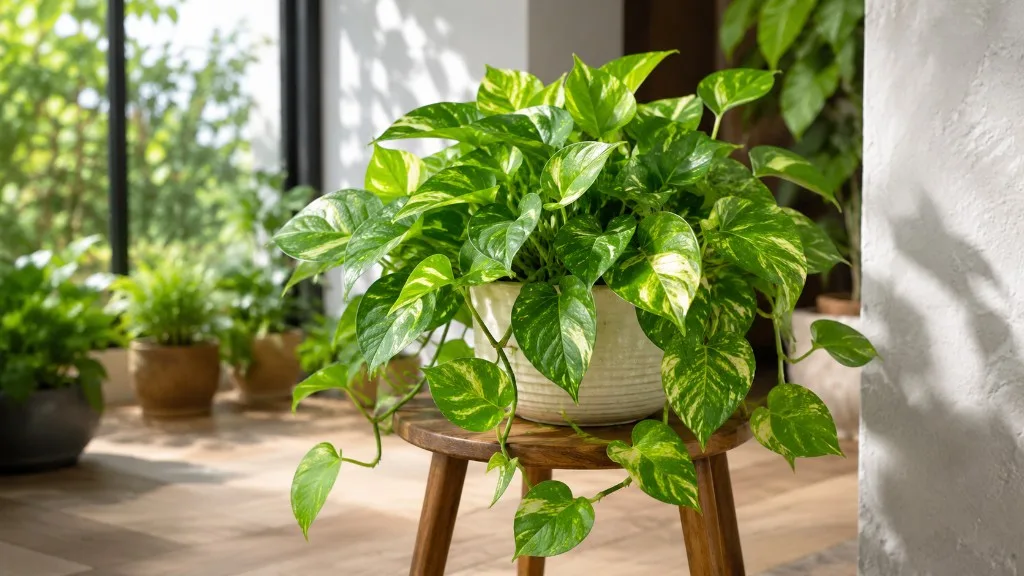
Golden Pothos is not tall by default—it becomes tall when you train it up a moss pole, trellis, or wall hooks. In low light, growth slows but vines still climb, often reaching six to ten feet over time with periodic pinning. It is toxic to pets, so elevate the pole or choose cast iron plant instead if you have chewers. Keep soil lightly moist but never waterlogged; yellow leaves usually mean too much water, not too little light.
Tree-Form Statement Plants: Corn, Rubber, Dragon, Money, Weeping Fig, and Umbrella
These are the plants people picture when they say “indoor tree”—single or clustered trunks, canopy above eye level, real furniture-scale presence. All tolerate partial shade, but none thrive in a closet; place them in the brightest low-light spot you have.
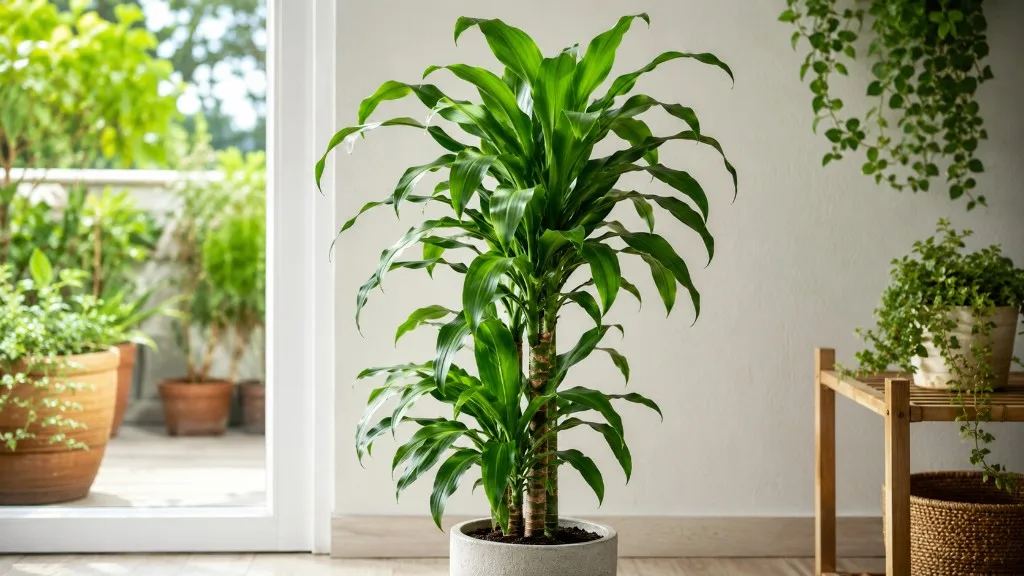
Corn Plant (Dracaena fragrans) develops a woody stem topped with strap-like leaves, commonly four to six feet indoors. It accepts light shade and keeps producing leaves, though internodes stretch in very dim rooms. Toxic to pets. Let the top two inches of soil dry before watering—overwatering is the main killer, especially when growth slows in shade.
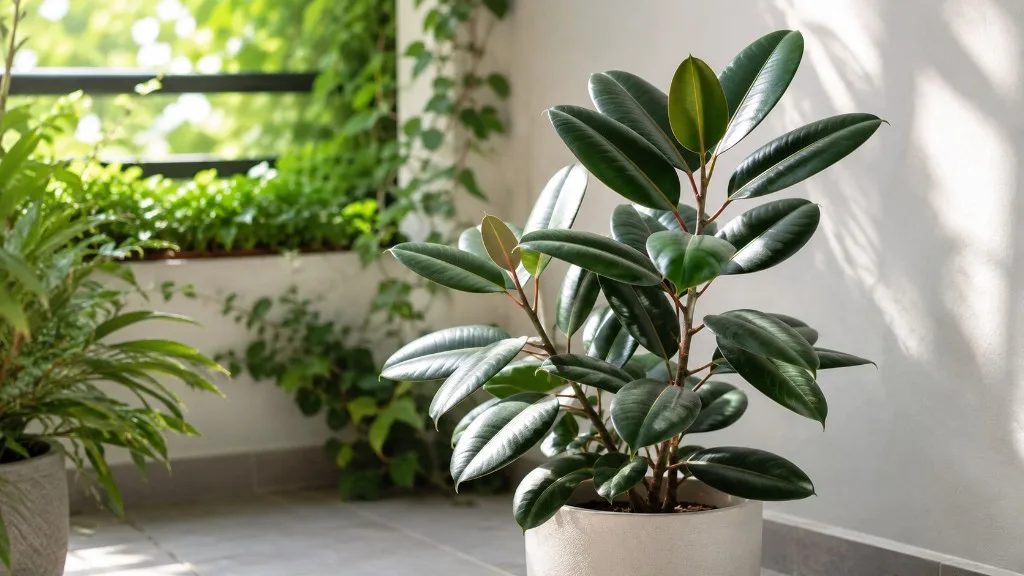
Rubber Plant (Ficus elastica) can reach six to ten feet with a broad, shiny canopy if you repot every year or two and rotate the pot quarterly. It wants the lightest corner in your low-light category; deep shade produces sparse lower branches. Toxic sap if stems break. Dust the large leaves; they are the plant’s solar panels.
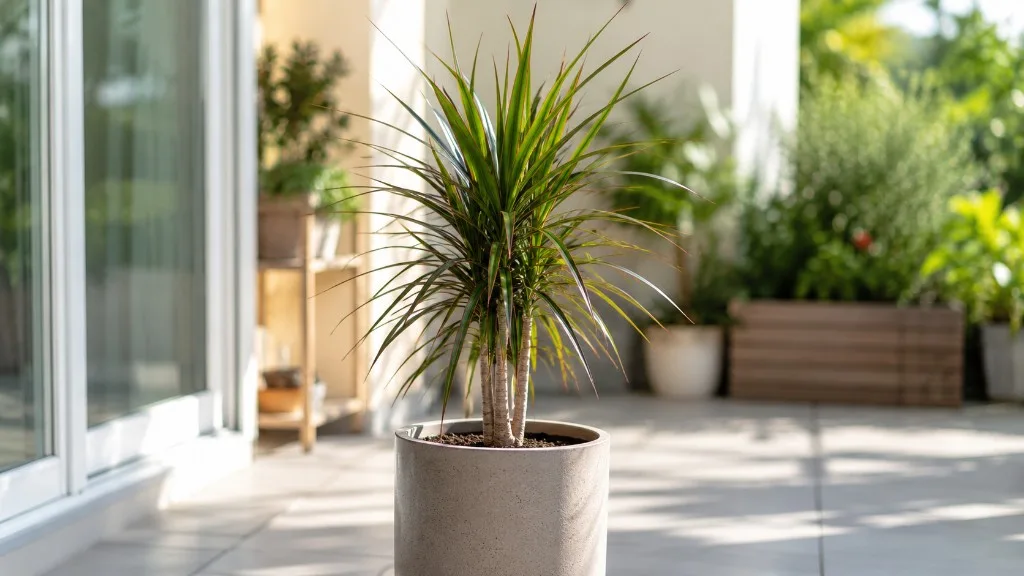
Dragon Tree (Dracaena marginata) adds height through bare stems topped with thin, arching leaves—often four to six feet indoors. It is forgiving of irregular watering and semi-shade, though leaf tips brown in dry air. Toxic to pets. If lower leaves brown and drop, check for overwatering before blaming light.
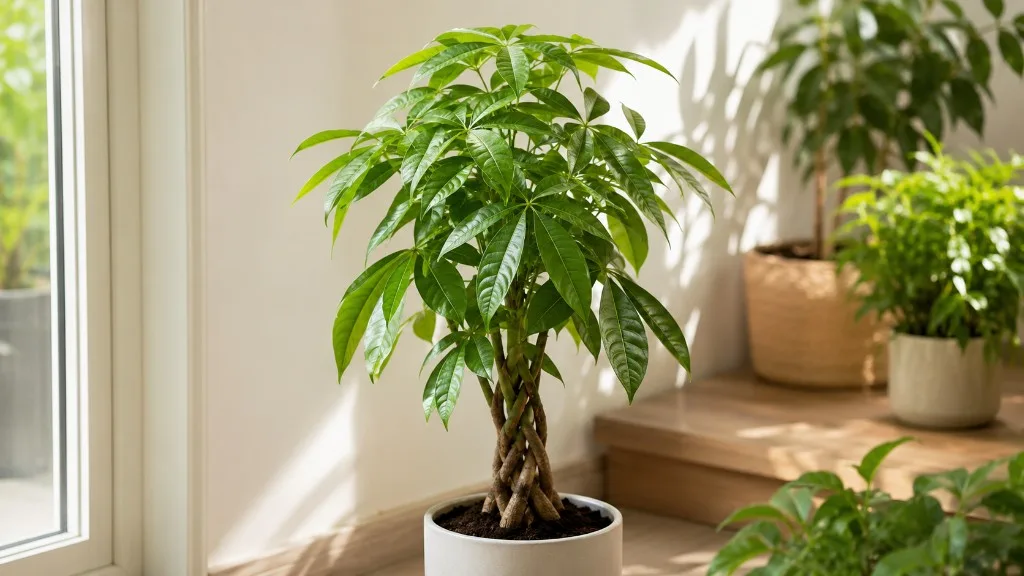
Money Tree (Pachira aquatica) is sold with braided trunks and a six- to eight-foot ceiling in bright conditions; in shade it holds height better than it adds it. Non-toxic to pets—a strong tree-form option for dim pet-friendly rooms if you buy a tall starter. Water when the top half of soil dries; braided trunks trap moisture if the pot is too large.
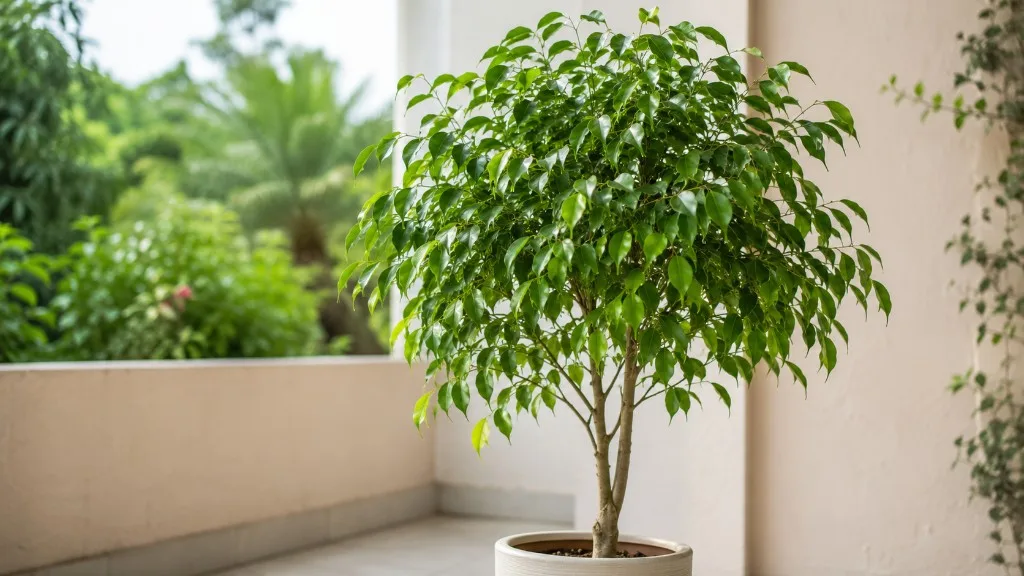
Weeping Fig can become a true indoor tree at six to ten feet, but it is the moodiest entry here. It tolerates semi-shade yet drops leaves when light, watering, or drafts change—even moving it across a room. Toxic to pets. Keep soil evenly moist (not soggy) and accept some leaf fall in winter. Skip this species if you want a set-and-forget corner tree.
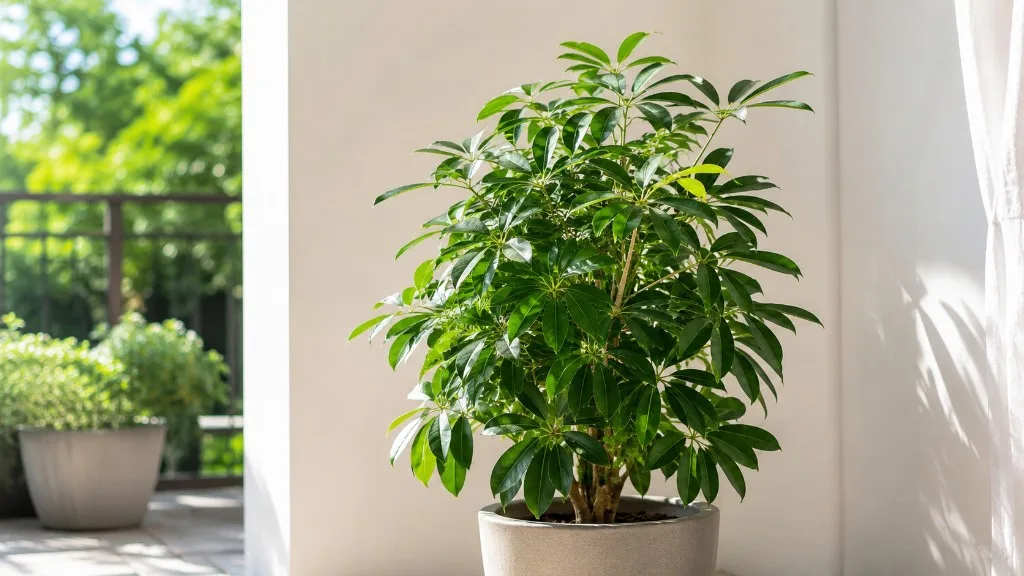
Schefflera (umbrella tree) builds six- to ten-foot specimens with palmate leaves and, with a moss pole, a climbing habit. It survives low light but stretches toward windows—expect sparse lower stems unless you prune or supplement light. Toxic to pets. Water when the top third of soil dries; legginess is a light problem more often than a water problem.
Palms for Dim Rooms: Parlor and Kentia
Palms sell the tropical look better than almost any other group, and two species handle apartment shade without the high light demands of majesty or areca palms.
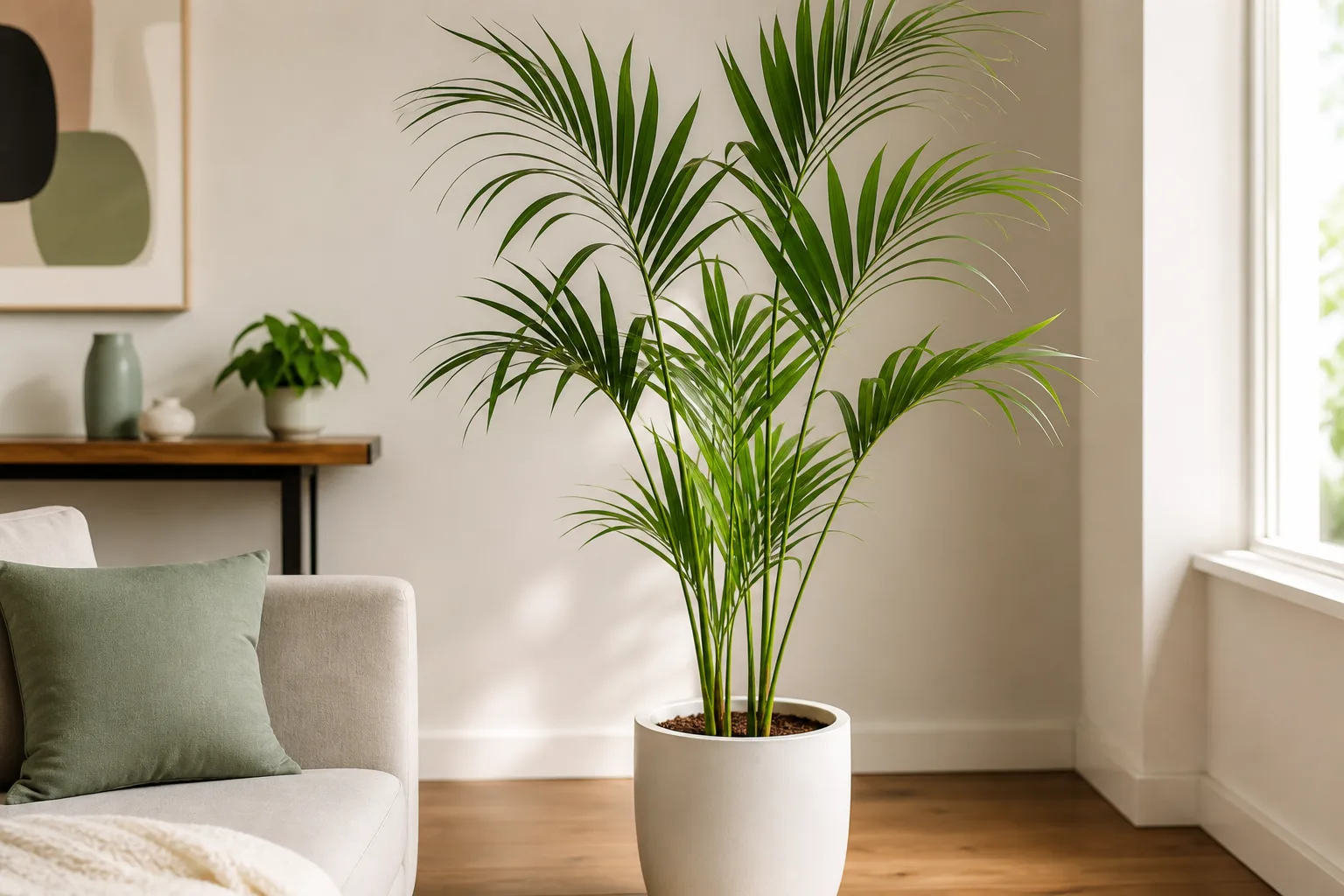
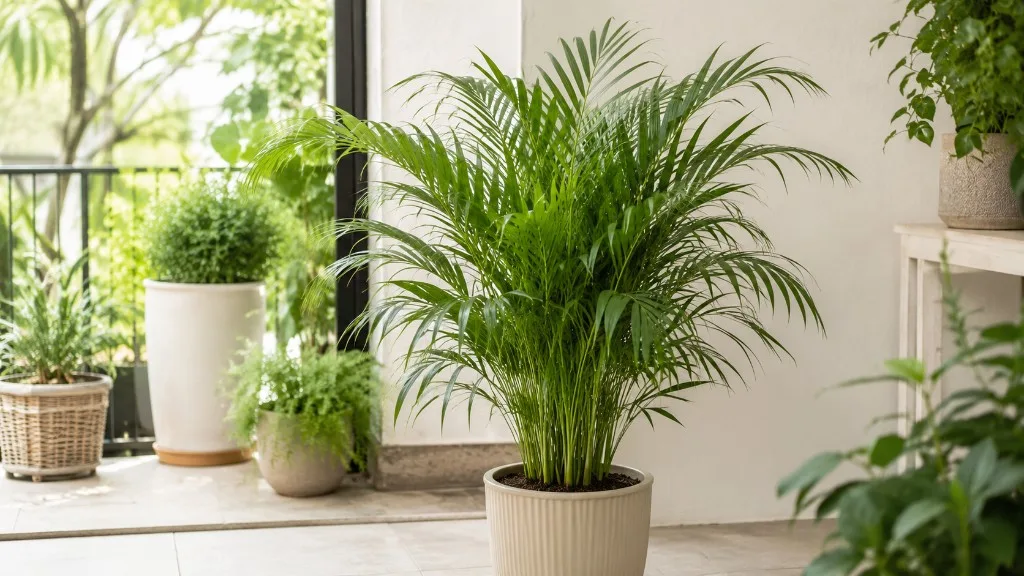
Parlor Palm (Chamaedorea elegans) is the classic dim-room palm. NC State Extension notes its tolerance of low light and indoor conditions; ASPCA-adjacent references classify it as non-toxic to dogs and cats. It grows slowly toward four to six feet—buy height if you need a statement now. Keep soil lightly moist, not saturated; fronds brown at tips when air is too dry or salts build up.
Kentia Palm (Howea forsteriana) is the upscale choice for tall corners, reaching eight to ten feet indoors over many years. It tolerates shade better than most large palms and is non-toxic, but it costs more and grows even slower than parlor palm. Low light is acceptable; cold drafts are not. Water when the top two inches dry; yellow fronds often mean overwatering in a dim, slow-growth pot.
If your room is truly dark and you need six feet of green on day one, a mature parlor or kentia palm is a smarter purchase than a cheap areca that will decline within months.
Bold Foliage for Shaded Corners: Monstera, Calathea, Stromanthe, Alocasia, Dieffenbachia, Aglaonema, and Banana
These plants trade easy care for visual drama—split leaves, stripes, elephant ears, or tree-sized banana fronds. All appear on low-light lists because rainforest understory species evolved for dappled shade, but humidity and stability matter as much as foot-candles here.
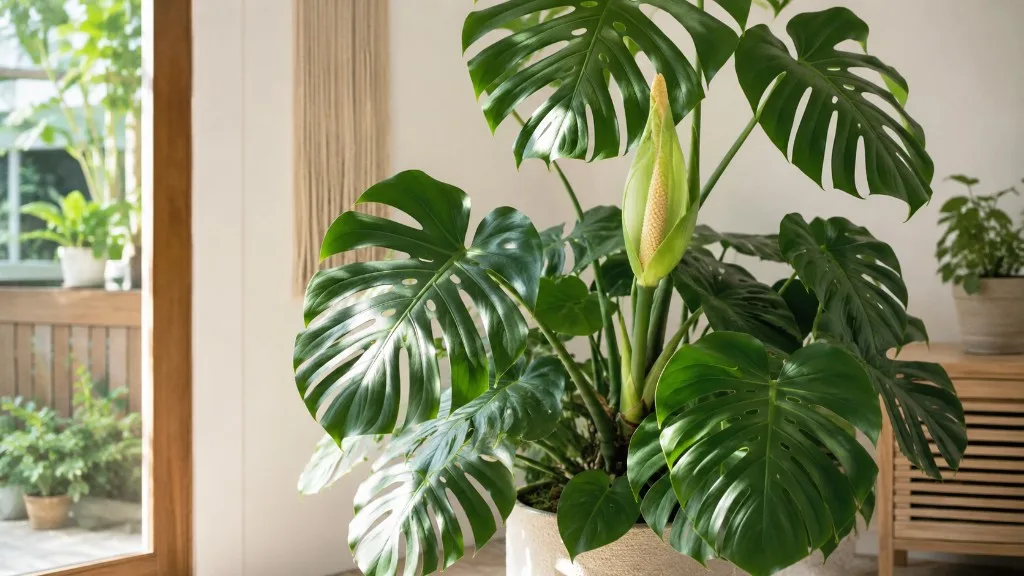
Monstera is the icon: with a moss pole it climbs six to ten feet indoors. It tolerates low light and keeps pushing new leaves, but fenestrations (splits) often disappear in shade—you get solid, heart-shaped foliage instead. ASPCA lists Swiss cheese plant as toxic to pets. Water when the top two inches dry; a dim monstera needs less water than a bright one because it grows slower.
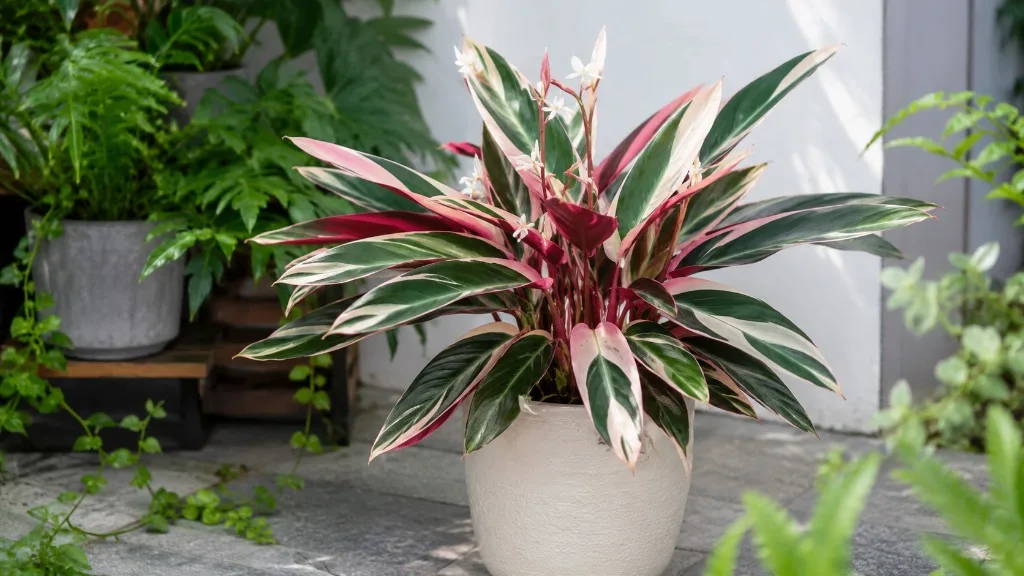
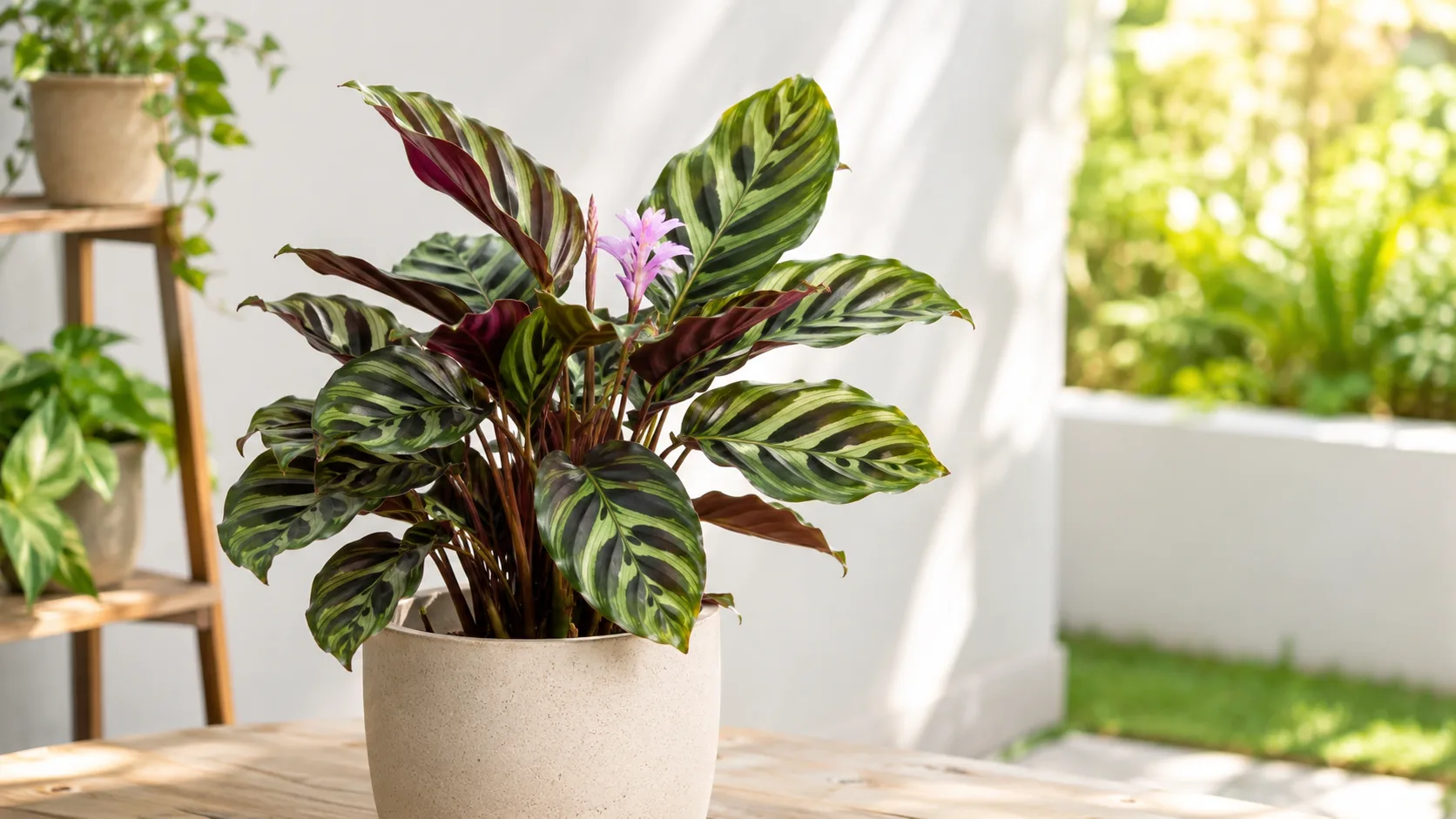
Calathea and Stromanthe Triostar stay two to three feet tall but read as large thanks to broad, patterned leaves. Both are non-toxic and adapted to filtered understory light, yet they sulk when air drops below 40–50% humidity—brown, crispy edges in a dry, dark bedroom are common. Group them near a humidifier or bathroom door; do not choose them for a drafty, dark hallway.
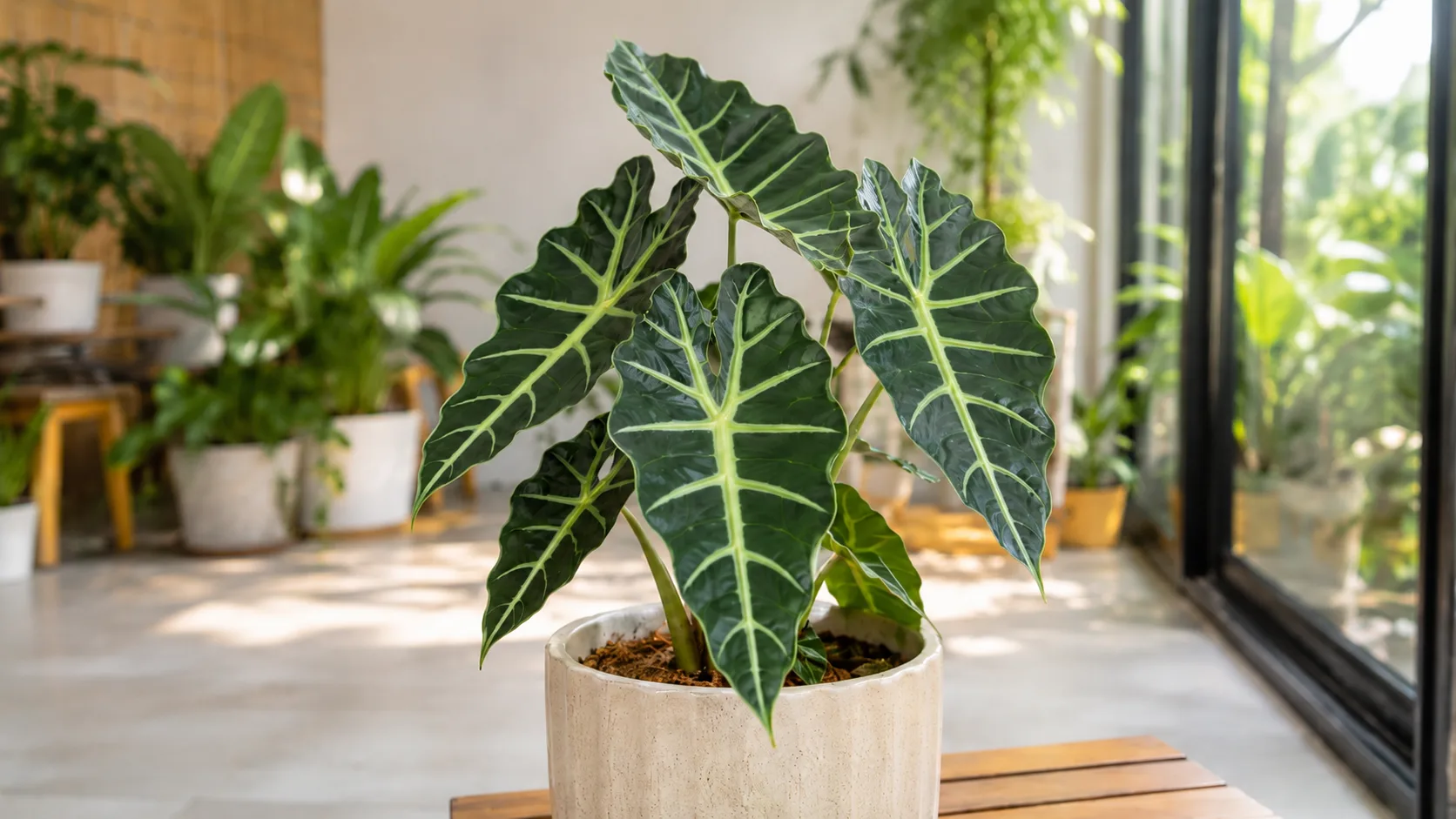
Alocasia Zebrina adds three to five feet of zebra-striped stems and arrow leaves. Large leaf surface helps harvest limited light, but it is toxic if ingested and goes dormant if underwatered or chilled. Brightest shady spot only; not a true beginner plant despite its shade label.
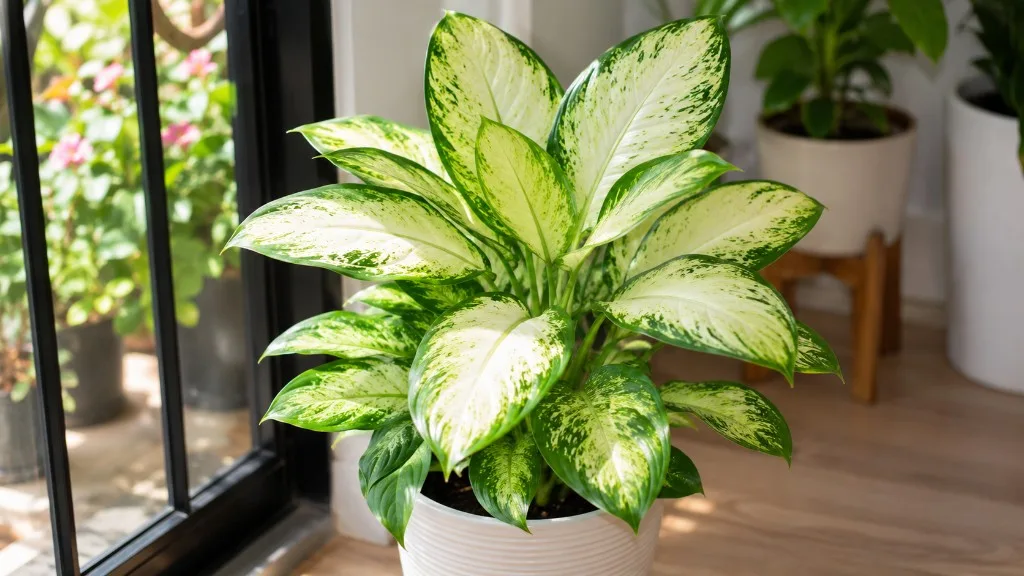
Dieffenbachia grows a thick cane to three to five feet with bold speckled leaves. NC State Extension warns that sap causes intense mouth irritation if chewed—highly toxic to pets and risky around children. It handles partial shade and humidity; keep it out of reach even if the room is dim.
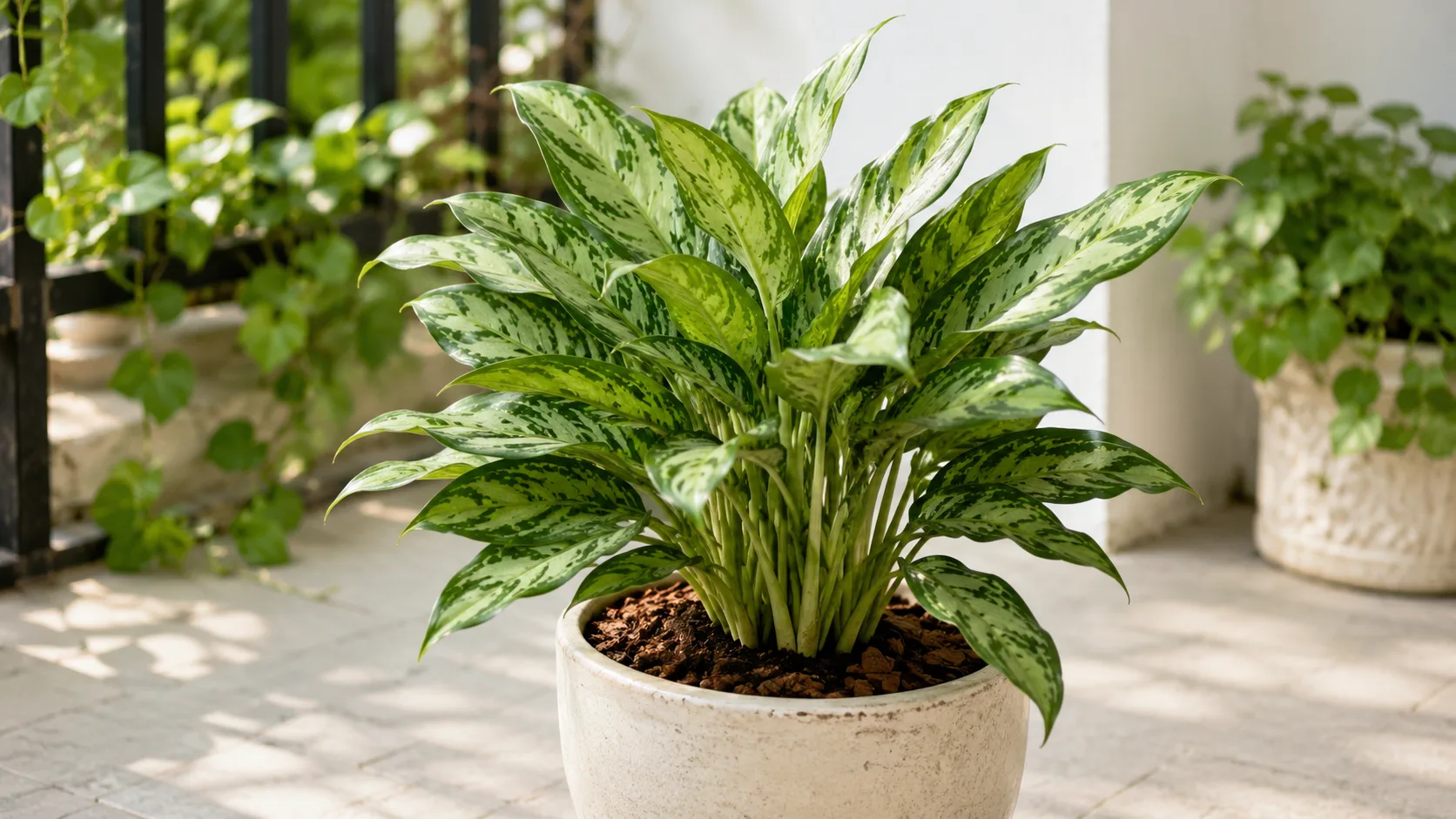
Aglaonema (Chinese evergreen) is the compact bold-foliage winner: two to four feet, non-toxic, and solid-green cultivars tolerate low light far better than red or pink variegated forms that need brighter indirect light to hold color. Water when the top two inches dry; yellow lower leaves often mean overwatering.

Banana (Musa spp.) delivers six- to ten-foot leaves on a pseudo-trunk—maximum tropical impact. It survives partial shade but will not fruit indoors and needs high humidity plus the brightest spot you can offer without direct hot sun. Non-toxic. Skip banana if you cannot run a humidifier; choose monstera on a pole for similar scale with less fuss.
Pet Safety at a Glance
Toxicity status matters when tall plants sit at pet eye level. Non-toxic means no known systemic poison—it does not mean your dog should eat a frond. Any plant material can cause vomiting.
| Status | Plants |
|---|---|
| Non-toxic (ASPCA-aligned) | Cast iron plant, parlor palm, kentia palm, money tree, calathea, stromanthe triostar, aglaonema, banana |
| Toxic — keep out of reach | Snake plant, ZZ plant, pothos, corn plant, dragon tree, rubber plant, monstera, schefflera, weeping fig, alocasia zebrina |
| Highly toxic — avoid in chewer homes | Dieffenbachia (oral swelling, drooling, difficulty swallowing per NC State) |
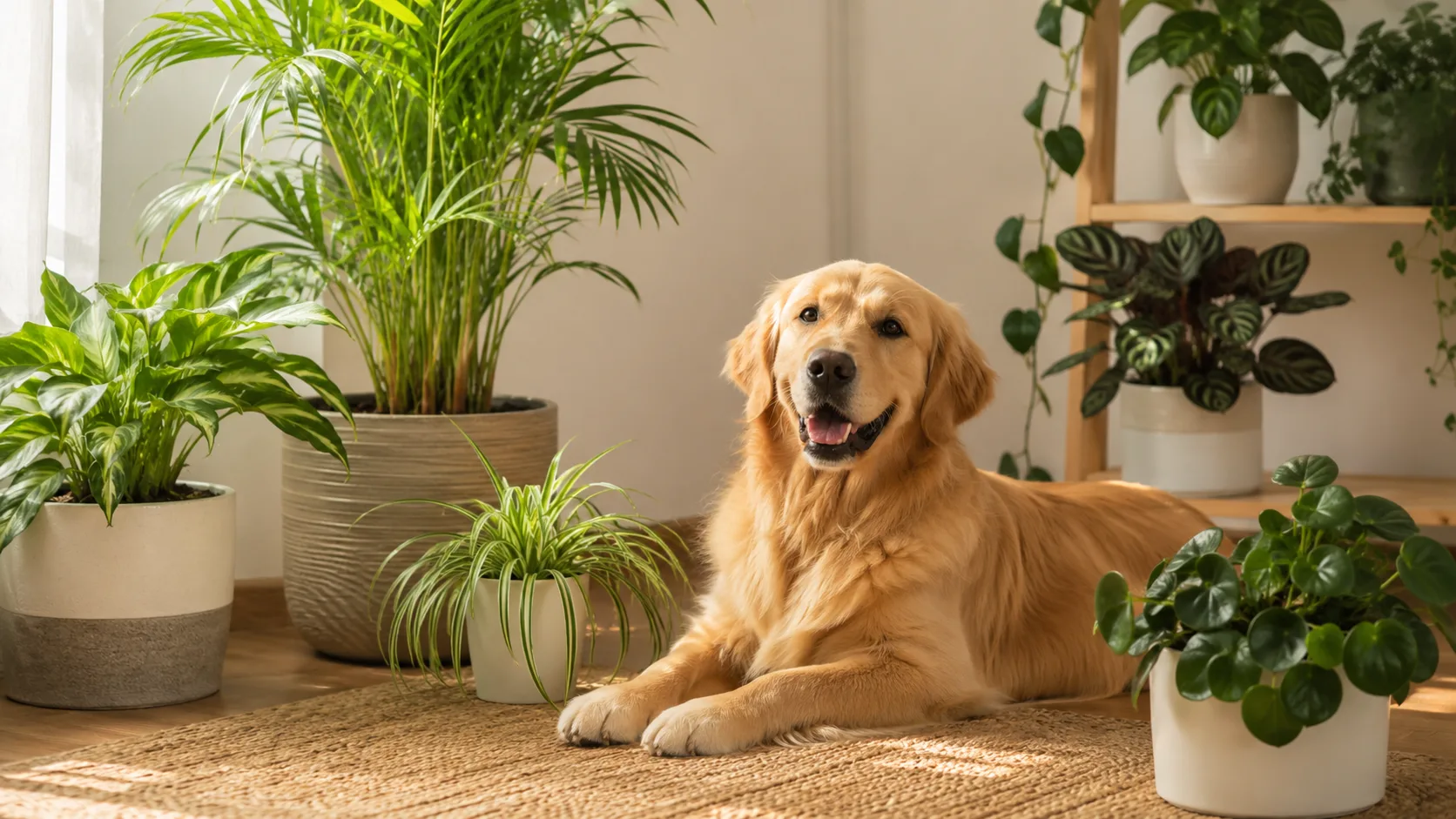
For verified pet households in dim rooms, the best tall combo is usually kentia or parlor palm plus cast iron plant at floor level. If you must have vertical drama with pets, money tree on a sturdy stand beats toxic pothos on a moss pole. Photograph plant labels and call your veterinarian or poison control if ingestion happens—do not wait for severe symptoms.
Placement Tricks and Grow-Light Upgrades
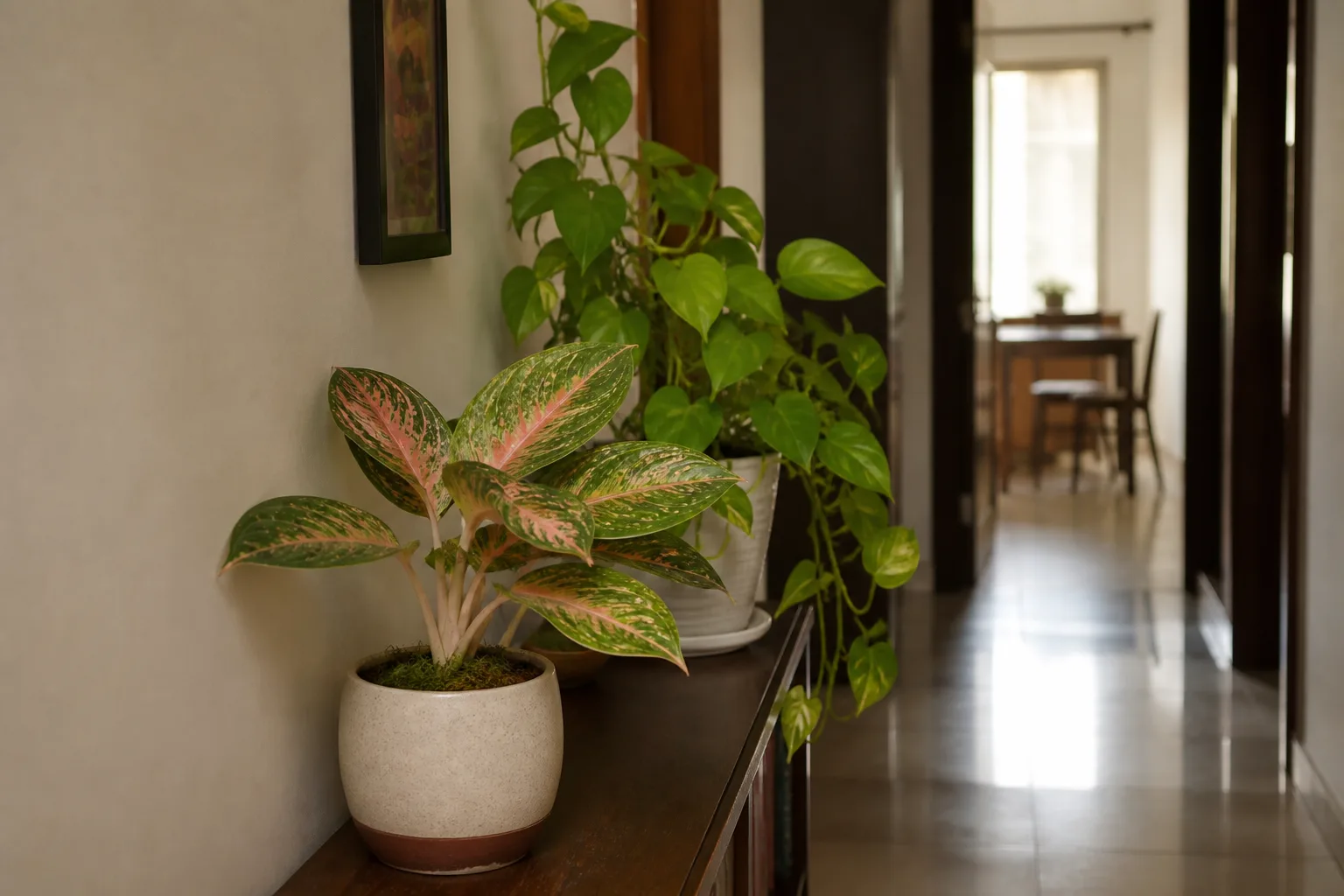
Put the light-hungriest plant in the spot with the most indirect daylight—usually within three feet of a north or east window, or deeper in the room if a sheer curtain softens west light. Rotate pots a quarter turn every two weeks so one side does not lean permanently toward the glass.
Use plant stands to lift canopies closer to window height without moving furniture. Hang a full-spectrum LED 12–18 inches above schefflera, rubber plant, or banana if lower leaves drop while top growth continues—that pattern means the canopy is starving for photons.
Group humidity lovers (calathea, stromanthe, banana) away from heating vents and AC returns. A shared pebble tray helps, but a small humidifier within three feet works better in winter. Keep toxic species on heavy, stable pots so climbing cats cannot tip a six-foot dracaena.
Dust leaves monthly with a damp cloth—especially rubber plant, monstera, and palms. In low light, every blocked pore counts.
Troubleshooting Leggy Growth in Dim Rooms
Leggy means long internodes, small leaves, and bare lower stems—the plant is reaching for light you are not providing. Schefflera, pothos, and weeping fig show it first. Fix it by moving the pot one to two feet closer to the window, adding a grow light, or pinching top growth to force bushier side shoots after light improves.
Leaf drop without new growth on weeping fig or rubber plant often follows a light or watering change—stabilize both before repotting. Yellow leaves on pothos or corn plant usually mean overwatering in slow-growth shade; cut water frequency before adding light.
No fenestrations on monstera is normal in low light—not a disease. Brown calathea edges mean humidity or water quality, not always light. ZZ or snake plant collapse is almost always rot from dark, wet soil—repot into fresh, airy mix and water sparingly.
When a Moderate tier plant looks starved after six months, do not keep hoping—either upgrade light or swap it for an Excellent tier species. Fighting the wrong plant for the room wastes money and floor space.
Conclusion
Tall impact in a dim room is absolutely possible if you match species to real foot-candles, buy height when growth is slow, and treat tolerates low light as survival language—not a promise of lush, fast growth. Start with snake plant, ZZ plant, cast iron plant, or trained pothos if you want the lowest risk; choose parlor or kentia palm and money tree when pets share the space; save monstera, calatheas, and banana for the brightest shady corner you have—or add a grow light and accept the extra care.
Use the comparison table as your shortlist, read the linked care hubs before you repot, and upgrade light before you upgrade fertilizer. The right tall plant in the right dim corner should look settled within a season—not stretched, dropping, or waiting for a brighter apartment you do not have.