Types of Marigolds: 20 Varieties to Grow
Compare 20 marigold types—African, French, signet, and triploid hybrids—with heights, bloom colors, and the best uses for beds, containers, and companion planting.
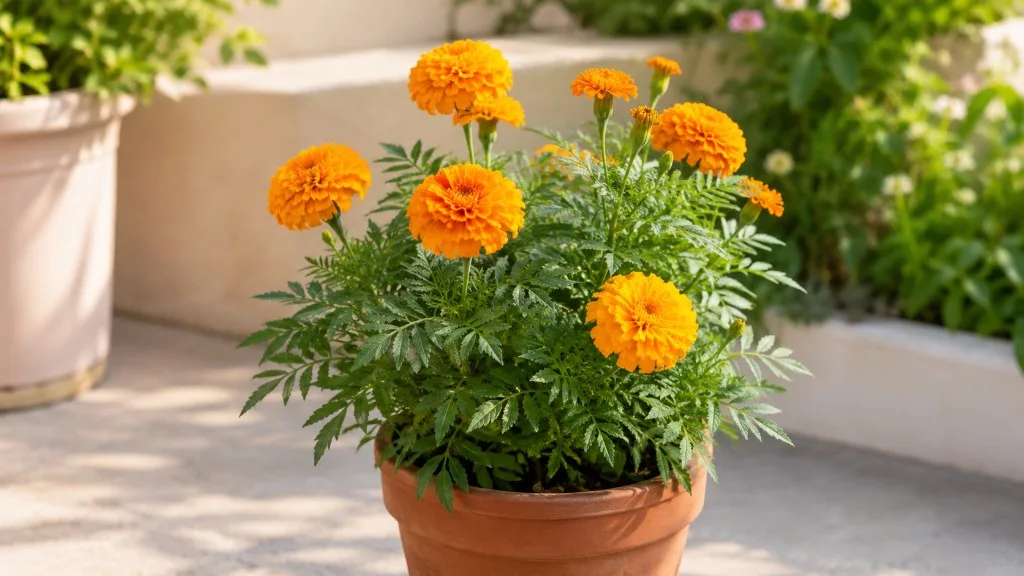
Walk past a spring seed rack and every packet says marigold—yet African doubles, French bi-colors, and signet gems are not interchangeable. One type tops three feet and needs staking in a windy bed. Another stays eight inches wide and never blocks a tomato. A third smells like lemon and shows up in salads, while the big orange doubles beside it are Tagetes, not the pot marigold your recipe might mean. The genus Tagetes holds roughly fifty species; most garden beds see one of four growth forms plus a handful of named cultivars bred for height, color, or summer stamina.
This guide compares 20 marigold varieties worth planting this season, grouped by the garden job they actually solve—tall cuts, tight borders, edible edging, nematode cover crops, and heat-proof hybrids. For watering, deadheading, and pest troubleshooting after you pick a type, see our marigold care guide and marigold plant hub.
How to Choose the Right Marigold Type
Buying marigolds should start with height and habit, not the brightest photo on the seed envelope. Two filters prevent most regrets before you memorize cultivar names.
Match Height and Habit to Your Garden Job
African marigolds (Tagetes erecta) are the giants—often 3 to 4 feet tall with large double flower heads on upright stems (Penn State Extension). They anchor the back of a border, fill a cutting garden, or supply Dia de los Muertos–scale orange blooms. They are slow to mature and should go in the ground early in spring after frost, not midsummer.
French marigolds (Tagetes patula) are compact and bushy, typically 6 to 24 inches tall and often wider than tall (Wisconsin Horticulture). They edge paths, fill 10-inch pots, and tolerate rainy spells better than African types (Penn State Extension). Plant French types from spring through midsummer.
Signet marigolds (Tagetes tenuifolia) are the smallest common group—usually under 12 inches, mound-shaped, with fine foliage and single, lemon-scented flowers (Wisconsin Horticulture). They suit herb-style rows, rock-garden edging, and salads when you choose Gem-series cultivars.
Triploid hybrids cross African vigor with French flower count. They bloom heavily, tolerate heat, and do not produce viable seed—plan to buy plants or F1 seed each year.
| Type | Typical height | Best job | Plant timing |
|---|---|---|---|
| African (T. erecta) | 24–48 in. (series-dependent) | Back border, cuts, bold color | Early spring after frost |
| French (T. patula) | 6–24 in. | Edging, pots, companions | Spring through midsummer |
| Signet (T. tenuifolia) | 6–12 in. | Edging, herb garden, edible flowers | Spring through midsummer |
| Triploid F1 hybrid | 10–16 in. | Heat-proof beds and containers | Spring |
Match Bloom Form to Beds, Borders, or Cut Flowers
Double African heads—Crackerjack, Diamond Jubilee, Autumn Orange—last well in vases but collapse after overhead rain or evening sprinklers. Site them where you water at the base and have airflow.
French singles and bi-colors—Striped Marvel, Dainty Marietta, Spanish Brocade—read better at path level and recover faster from wet weather than massive doubles.
Signet singles stay open and airy; they attract small pollinators without blocking sight lines.
If your primary goal is long stems for arrangements, choose African heirlooms and tall series (Crackerjack, Tall Sierra Orange, Diamond Jubilee Orange). If the job is a 12-inch pot on a railing, dwarf French types (Janie Spry, Spanish Brocade) or signet Gems win.
The Five Main Marigold Groups in Tagetes
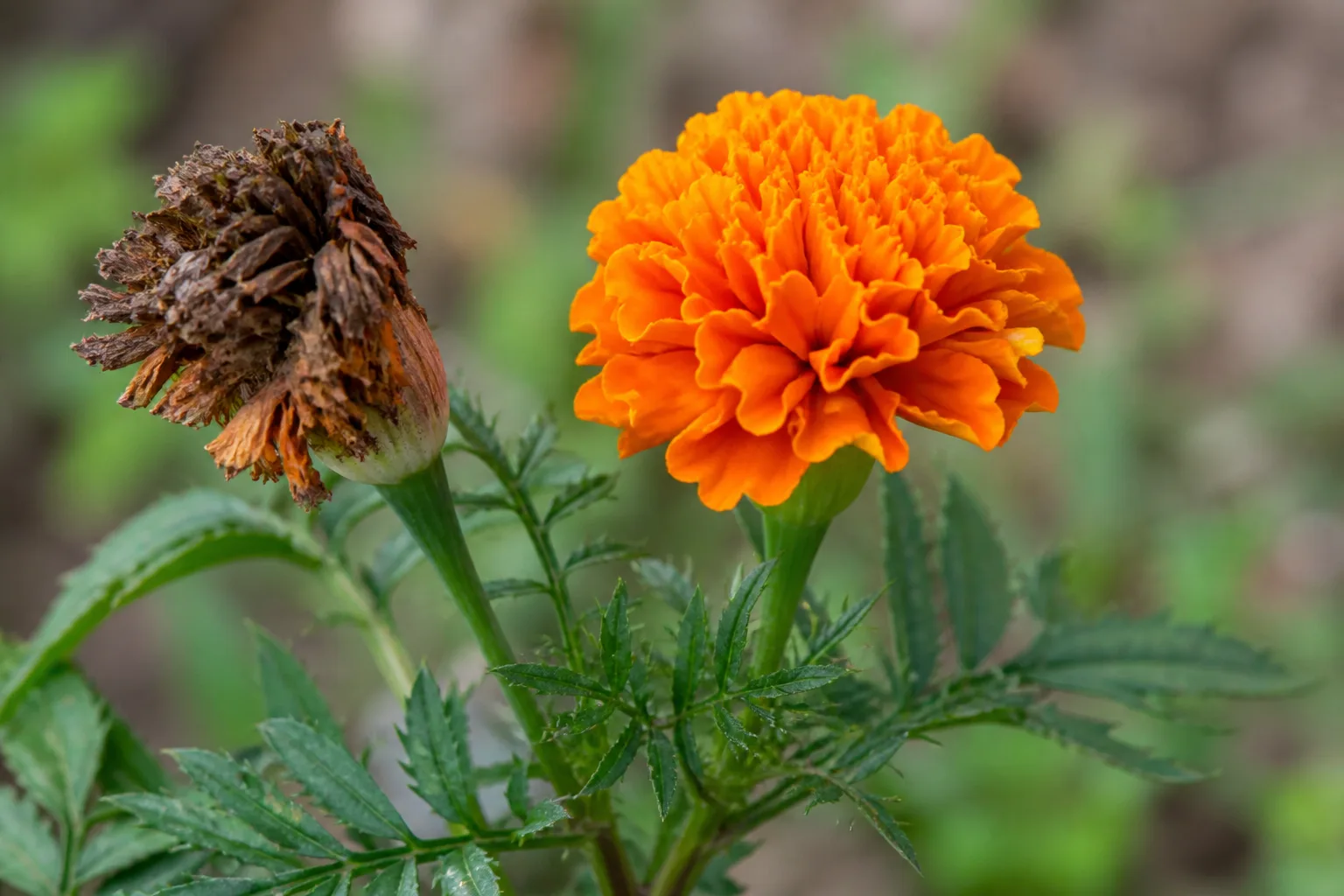
Most seed packets hide the species in small print. Learn the five groups first; cultivar names become easier to sort.
African Marigolds (Tagetes erecta)
Despite the name, African marigolds are native to Mexico and Central America, not Africa (Wisconsin Horticulture). They are also called Aztec or American marigolds. Plants are strongly upright with carnation-like double flowers that can reach 5 inches across on the largest cultivars. Foliage is often less fragrant than French types.
African marigolds thrive in full sun and tolerate dry heat once established (Penn State Extension). They are the wrong choice for shade, crowded 8-inch pots, or beds that get nightly overhead irrigation on the blooms.
French Marigolds (Tagetes patula)
French marigolds are compact bushes with smaller, often bi-colored flowers in red, orange, gold, and maroon combinations (NC State Extension). The species name patula means spreading—many cultivars are wider than tall.
French types are the default companion-planting marigold beside vegetables because they fit row spacing without shading crops. Certain French cultivars also release root compounds that suppress root-knot nematodes when grown as a dense same-site cover crop—not when you drop one plant beside a tomato (Wisconsin Horticulture). For what that evidence actually supports, read do marigolds really deter pests.
Signet Marigolds (Tagetes tenuifolia)
Signet marigolds carry single flowers and finely divided, aromatic leaves that smell citrusy or spicy when crushed (NC State Extension). They excel in hot, dry edges and stay neat without constant pinching.
Do not assume every signet helps with nematodes—extension guidance warns that signet types can allow some nematode species to reproduce, unlike selected French cultivars used in cover-crop rotations.
Triploid Hybrid Marigolds
Triploid marigolds are F1 hybrids between T. erecta and T. patula. They combine large flowers with compact habit and heavy bloom through summer heat. Examples on this list include Antigua Orange and White Gold Max.
Because they are triploid, plants set little or no seed. You cannot save seed reliably for next year. Treat them as annual purchases—seed or transplants—when you want predictable performance.
Mexican Tarragon (Tagetes lucida)
Mexican tarragon (Tagetes lucida) is a separate species grown for anise-scented leaves used in Mexican cooking, not for massive orange doubles (NC State Extension). It produces small yellow composite flowers in late summer and can behave as a perennial in Zone 8 and warmer.
It belongs in an herb row or pathway, not a bedding scheme expecting Crackerjack-scale blooms. Flavor is tarragon-like, not lemon—do not confuse it with signet Gem cultivars.
Tagetes Marigolds vs Pot Marigold (Calendula)
Pot marigold is Calendula officinalis—a different genus in the same aster family (Wisconsin Horticulture). Calendula petals are the ones classic recipes call edible and mild in salads.
Garden Tagetes marigolds—the African, French, and signet types on this page—are not pot marigolds. Penn State Extension notes that flowers from Tagetes are generally considered inedible, while Calendula adds color and spice to summer dishes (Penn State Extension). Pet toxicity also differs: garden Tagetes appear on pet-poison lists with mild GI concerns, while Calendula is often listed as non-toxic to dogs and cats—verify botanical names on labels before assuming a yellow flower is safe for pets or plates.
When a seed packet says only “marigold,” check the Latin name before harvesting for kitchen or pet-safe beds.
Marigolds for Pest Management: What Actually Works
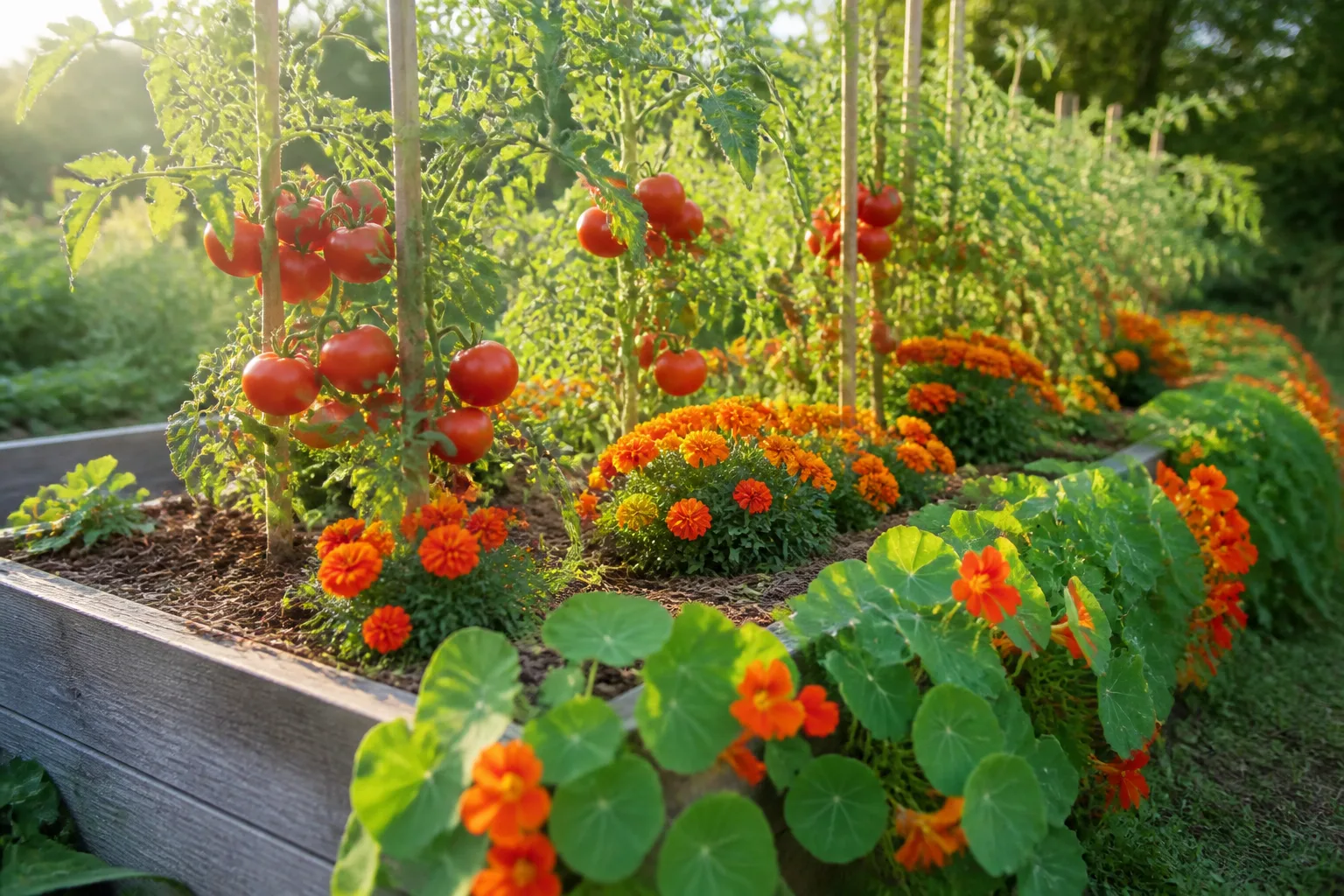
Marigolds earned their companion-plant reputation partly from root chemistry, not flower scent alone. French marigold roots can release alpha-terthienyl, toxic to root-knot nematode eggs and development (Wisconsin Horticulture).
That effect requires a thick stand grown in the same soil for months, then turned in or removed before the next crop—interplanting one marigold beside a tomato does not replicate a cover crop (Penn State Extension). Cultivar and nematode species matter; UF/IFAS guidance stresses that not every marigold suppresses every nematode (UF/IFAS NG045).
For leaf-level pests—aphids, whiteflies, mosquitoes—the honest answer is weaker. Marigolds may host or attract insects as easily as repel them. Use marigolds because they bloom all summer in full sun, not as a substitute for monitoring and targeted control. Our marigold companion plants guide pairs types with vegetables when you want habitat diversity without overpromising repellent magic.
Which Marigold Flowers Are Edible—and Which Are Not
Signet Gem cultivars—Lemon Gem, Tangerine Gem, Red Gem—are the Tagetes group most often grown for culinary petals with a citrus-tarragon note. Remove the bitter white base of each petal if flavor matters. NC State lists signet types among edible-garden uses (NC State Extension).
African and French doubles on this list are ornamental Tagetes, not salad ingredients. Mexican tarragon leaves are the edible part of T. lucida, not the big bedding doubles.
Calendula remains the safe default when a recipe says “marigold petals.” Never harvest from a mixed bed without confirming the botanical name.
20 Marigold Varieties Worth Planting This Season
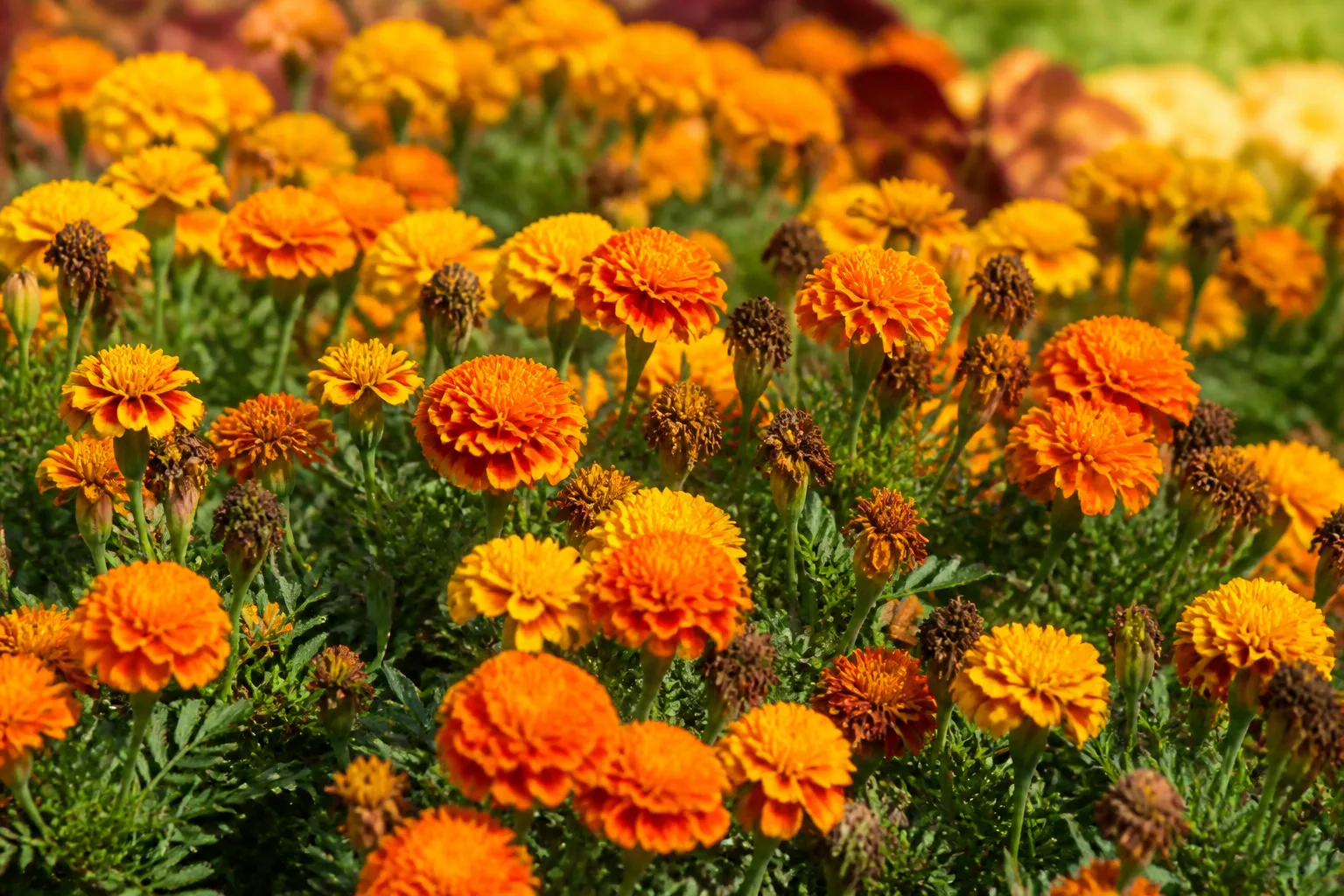
The cultivars below appear on current seed and plant lists and cover the main garden jobs. Heights are typical mature sizes in full sun with average soil—not guaranteed in shade or starving pots.
Tall African and Cut-Flower Cultivars
Crackerjack (Tagetes erecta) — Heirloom African reaching 24 to 36 inches with 5-inch, fluffy yellow doubles suited to vases. Starts early in spring; stake in windy sites. One of the tallest yellow options on this list.
Autumn Orange (T. erecta ‘Autumn Orange’) — Deep orange ruffled doubles about 2½ inches wide on 16-inch bushy plants. Long-lasting blooms for fall color echoes; deadhead to keep September show going.
Diamond Jubilee Orange (T. erecta ‘Diamond Jubilee Orange’) — Jubilee-series African to 24 inches with dense orange doubles up to 4 inches wide. Heat-resistant bloomer for southern summer beds.
Diamond Jubilee Yellow (T. erecta ‘Diamond Jubilee Yellow’) — 16-inch plants with bold yellow ball-shaped flowers from early summer through mid-fall. Tolerates urban heat; deer usually ignore it.
Tall Sierra Orange (T. erecta ‘Tall Sierra Orange’) — 28-inch orange African that performs in lean soil if moisture stays even. Remove spent heads to encourage branching; feed lightly every two weeks in containers.
French Border, Edging, and Container Cultivars
Yellow Boy (Tagetes patula ‘Yellow Boy’) — Ubiquitous French marigold with lemon-yellow pincushion doubles on 10-inch plants. Excellent cut flower for small vases; deadhead for repeat bloom (see deadheading marigolds).
Dainty Marietta (T. patula ‘Dainty Marietta’) — Early-blooming yellow flowers with maroon streaks on 12-inch stems. Fine for borders and window boxes.
Red Marietta (T. patula ‘Red Marietta’) — Red and orange bi-color 2-inch flowers on 12 to 18-inch plants all summer. Strong spicy scent—good where you want fragrance at path height.
Janie Spry (T. patula ‘Janie Spry’) — Dwarf French to 8 inches with red doubles and deep yellow-orange centers. Ideal edging plant; compact foliage stays neat.
Spanish Brocade (T. patula ‘Spanish Brocade’) — Quick-from-seed dwarf to 8 inches with red flowers and gold edges like flamenco trim. One of the fastest French types for late color.
Cresta Orange (T. patula ‘Cresta Orange’) — Early-flowering French with large orange blooms on 10 to 12-inch plants spreading 14 inches wide. Tolerates partial shade better than most Africans—still bloom best in sun.
Safari Gold (T. patula ‘Safari Gold’) — Safari-series French with extra-large deep gold blooms and ruffled centers. Strong cut-flower candidate at French scale.
Striped Marvel (T. patula ‘Striped Marvel’) — Striking red-and-yellow striped petals on 10 to 24-inch plants; 2½-inch flowers attract butterflies in mixed beds.
Alumia Vanilla Cream (T. patula ‘Alumia Vanilla Cream’) — Pastel pale yellow option when loud orange feels tired. 10 to 12 inches tall with 2½-inch blooms on branching stems; flowers last about a week each.
Signet Gems, Triploids, and Specialty Picks
Lemon Gem (Tagetes tenuifolia ‘Lemon Gem’) — Signet with deep yellow singles and lemon-scented foliage that lingers after brushing. 6 to 12 inches tall; classic tomato-row companion and salad petal source.
Tangerine Gem (T. tenuifolia ‘Tangerine Gem’) — Orange signet blooms with tarragon-like flavor when petals are prepared correctly. Same low mound habit as Lemon Gem.
Red Gem (T. tenuifolia ‘Red Gem’) — Crimson singles with golden centers on lacy foliage; lemon fragrance in beds and containers.
Antigua Orange (T. erecta × T. patula F1 ‘Antigua Orange’) — Triploid hybrid to 12 inches with 3-inch bright orange doubles and heavy bloom. Seedless—buy F1 seed or plants annually.
White Gold Max (T. erecta × T. patula F1 ‘White Gold Max’) — Triploid with creamy white doubles on 12-inch vigorous plants—rare pale marigold for mixed white-and-yellow schemes.
Mexican Tarragon (Tagetes lucida) — Not a bedding marigold. 24-inch herb species with small yellow flowers late in the season and anise-flavored leaves for cooking. Perennial in Zone 8+; treat as annual farther north.
How to Plant and Space Marigold Types
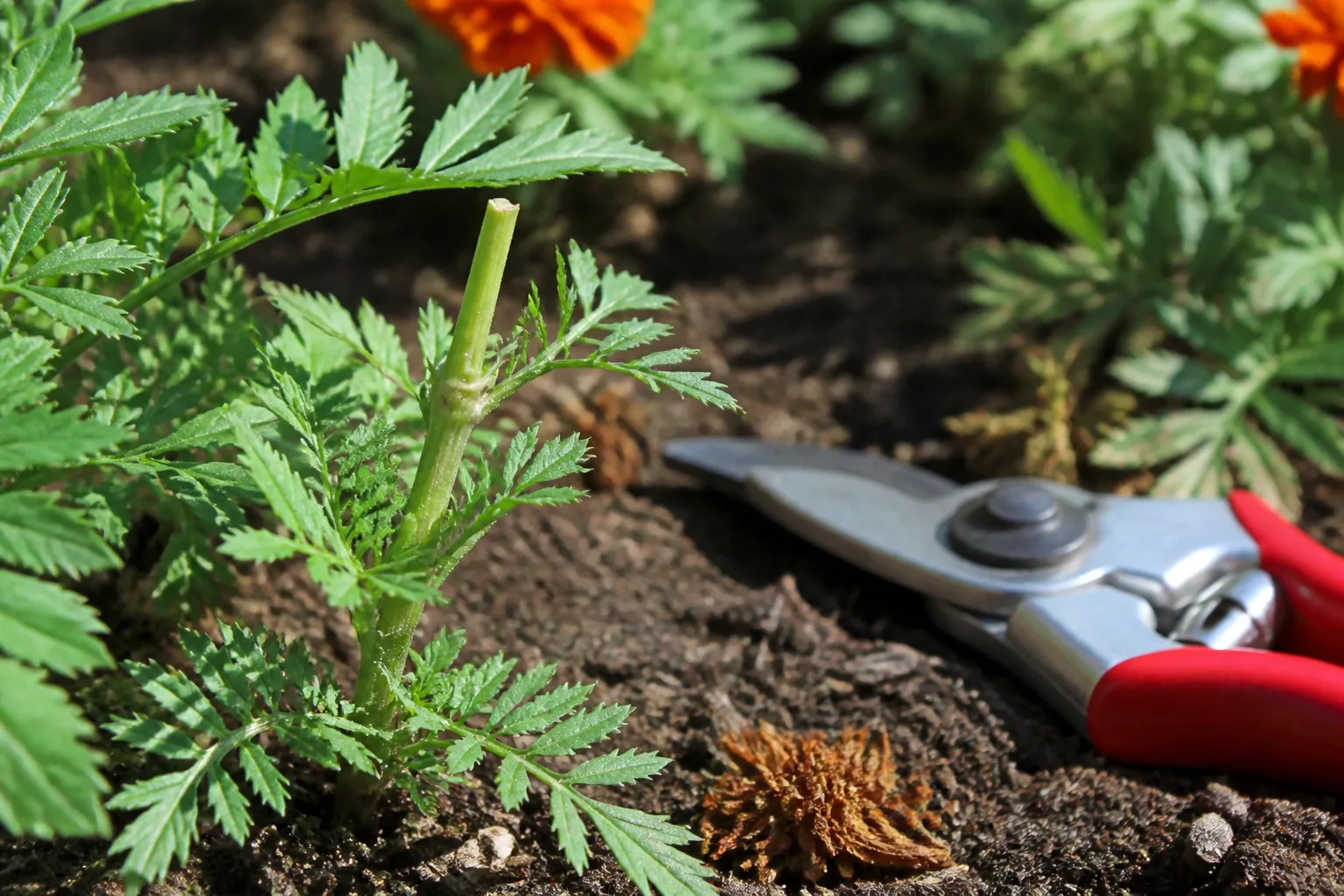
All types want full sun—at least six to eight hours of direct light (Wisconsin Horticulture). Soil should be well-drained with pH near 6 to 7. Marigolds are low feeders; avoid high-nitrogen fertilizer that pushes leaves over flowers (Penn State Extension).
Sow or plant after soil warms above about 65°F. Seeds sprout within a week in warm soil; flowers often follow in about two months (Penn State Extension). Start Africans immediately after frost; French and signets can go in through midsummer for late color.
Spacing:
- French and signet types: 8 to 10 inches apart
- African marigolds: 12 inches apart (tall series may need 14 to 16 inches)
Water when the top inch dries, then soak deeply at the base—not over the blooms. Pinch young plants once to branch; deadhead spent flowers to redirect energy (how to make marigolds bloom again). In containers, use potting mix with slow-release feed and do not crowd three Africans in one 12-inch pot.
Conclusion
The right types of marigolds depend on height, bloom form, and job—not on a generic pest-repelling promise. African marigolds supply tall cuts and bold orange architecture. French marigolds edge paths, fill pots, and anchor nematode cover-crop plans when you use the right cultivar as a dense pre-crop. Signet gems and triploid hybrids solve small-space and heat-stress problems French and African parents handle less gracefully. Mexican tarragon is an herb, not a substitute for Crackerjack.
Pick two or three cultivars from the list above rather than ten random packets. Match spacing and spring timing to the species, keep Tagetes separate from Calendula in your kitchen plans, and carry care forward with our marigold care guide and fall marigold cleanup when the season turns.