How to Deadhead Marigolds: Cut Points and Timing
Deadhead marigolds the right way: cut spent blooms to a leaf joint, tell normal fade from stress, and know when to stop for seed saving.
The Direct Answer: Yes—Deadhead Through the Season
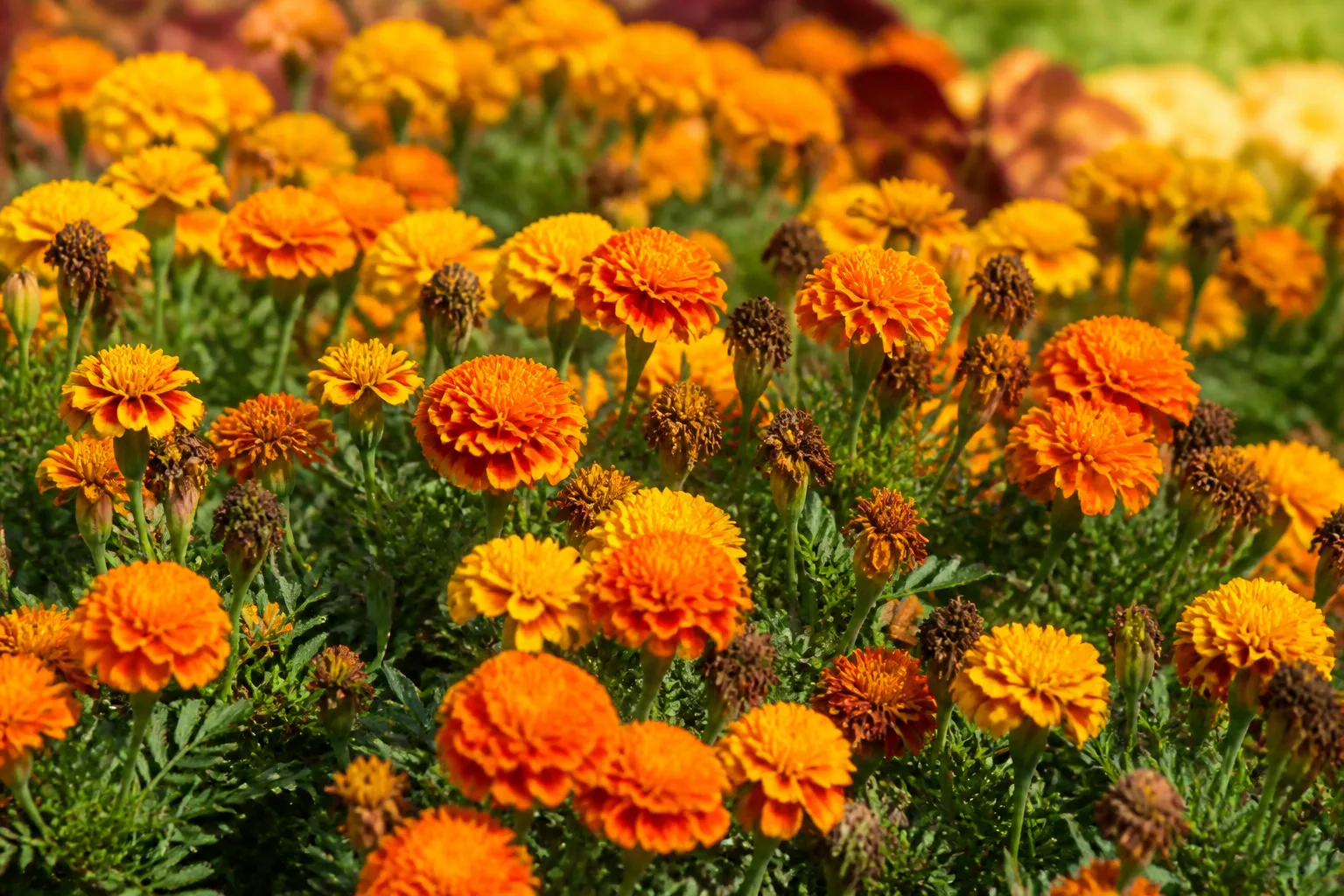
Yes—deadhead marigolds when flowers start to fade if you want the longest, tidiest show from early summer until frost. Marigolds are built to bloom, set seed, and finish fast; removing spent heads before seed matures tells the plant to branch and push new buds instead of pouring energy into brown cones at the stem tips. The safe default is to cut or pinch each fading bloom back to the next healthy leaf pair or side branch, not merely pluck dry petals off the top.
Treat deadheading as ongoing maintenance, not a one-time rescue. Walk beds and containers every few days during peak bloom, remove anything that looks wilted, brown, or soggy after rain, and keep watering at the root zone on a consistent schedule. Marigolds will technically keep flowering without deadheading, but beds finish earlier, look messier, and produce noticeably fewer flowers over the season—exactly why extension guides list deadheading among the highest-return tasks on these annuals.
Use this quick decision rule at the plant. If a bloom is wilting while fresh buds sit lower on the same stem, remove only the spent head down to a leaf joint. If every flower on a short stalk has finished, cut the whole stalk to the next branching point rather than leaving a bare stick. If you want to save seed from a favorite open-pollinated cultivar, leave a few chosen heads until they dry on the plant and skip deadheading on those stems only. If frost has blackened foliage, stop deadheading flowers and switch to end-of-season cleanup instead.
Why Marigold Blooms Die (Normal Fade vs Real Problems)
Not every wilted marigold head means you did something wrong. Before you snip, decide whether the flower finished its normal job or the whole plant is stressed.
Normal Lifecycle After Pollination
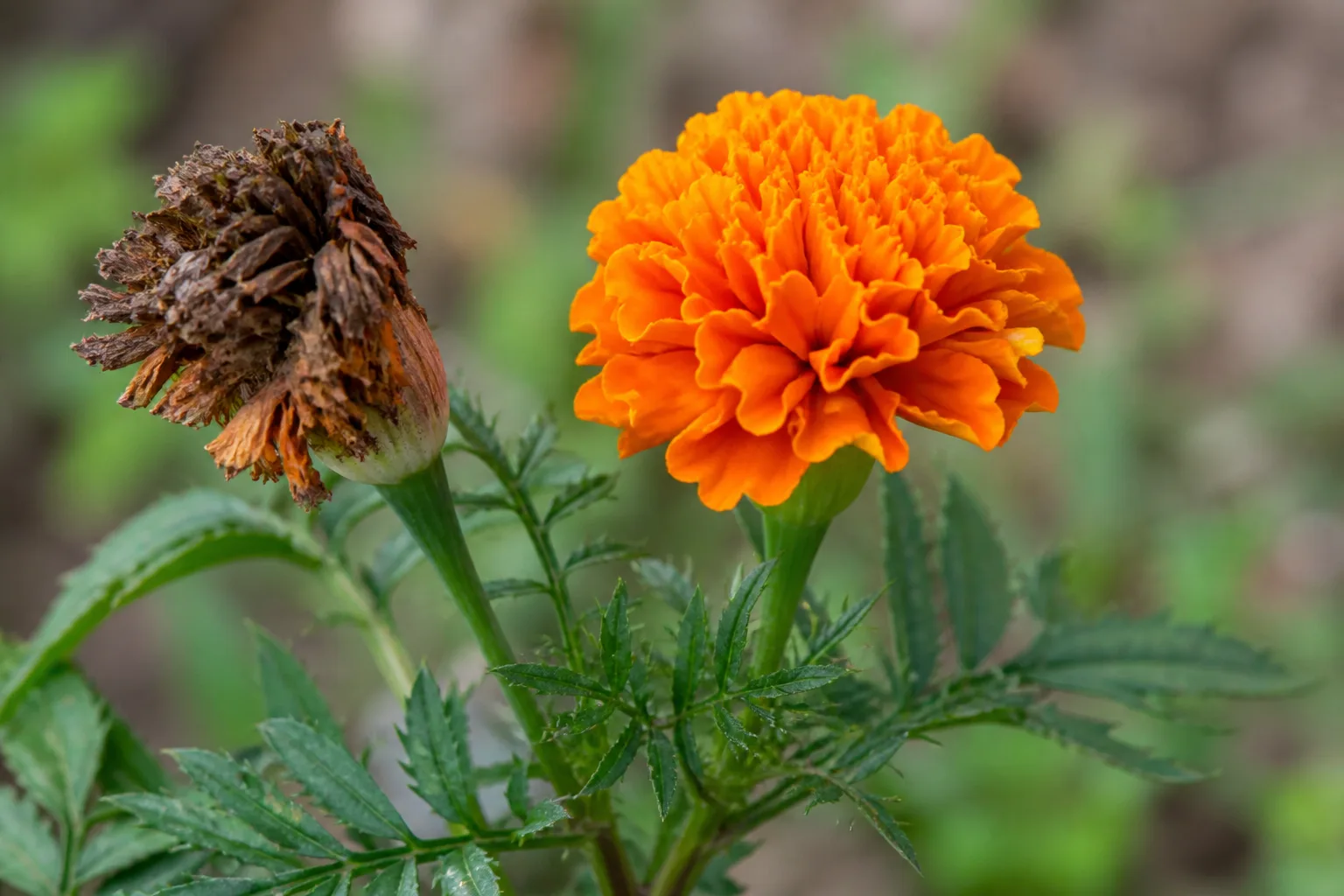
A marigold bloom exists to attract pollinators, get fertilized, and start seed development. Once pollination happens, petals lose turgor, color dulls, and the center begins forming a seed cone. You will often see flowers in multiple stages on one plant—tight buds, wide-open disks, and papery brown heads at the same time. That pattern is normal on fast-blooming Tagetes annuals, not a sign of disease.
Leaving those finished heads in place redirects the plant toward seed. Over a few weeks, energy shifts from new buds to maturing cones, which is why beds that never get deadheaded look tired by late summer even when the plants are technically alive. Composting removed blooms is fine when plants are healthy; discard any moldy double flowers that sat wet after heavy rain.
When Water, Heat, or Rain Cause Wilt
Sometimes marigold flowers collapse because the plant is struggling, not because individual blooms aged out. Common cultural stress still applies on marigolds even though they are tough: too much water, drought, extreme heat, or a sudden cold snap can make fresh-looking buds abort or hang limp. Marigolds tolerate heat better than many annuals, but sustained highs above about 90°F (32°C) can pause bud formation until nights cool.
Heavy rain on double African marigolds is another common trigger—waterlogged petals rot on the stem, inviting gray mold on dense flower heads. In those cases, deadheading is still the right move, but fix the underlying issue too: improve drainage, water at the base in morning, and remove soggy blooms promptly so fungus does not spread into stems. If lower leaves yellow and the whole plant droops, check soil moisture before you blame normal bloom fade alone.
What Deadheading Does for Marigolds
Deadheading is not cosmetic fussiness on marigolds—it changes how the plant allocates growth for the rest of the season.
More Flowers Instead of Seed
Removing a spent bloom before the seed cone hardens interrupts the plant’s shift toward reproduction. The stem responds by pushing side shoots and new buds from nodes below your cut. The Royal Horticultural Society (RHS) notes that deadheading redirects energy into more flowers rather than seed production on bedding plants and long-blooming annuals. (RHS) Gardeners’ World puts it plainly for marigolds: removing dead and faded heads encourages more flowers to develop through summer and into autumn. (Gardeners’ World)
Marigolds left alone will still bloom, but the show tapers sooner. Regular deadheading stretches the display toward first frost and keeps container plantings from looking like a mix of fresh color and brown pom-poms on the same plant.
Tidier Plants and Less Stem Rot
Spent marigold heads—especially heavy Tagetes erecta doubles—hold moisture and collapse inward after rain. That mess is more than ugly; it can harbor fungal issues on thick stems. Cleaning heads as they fade keeps air moving through the plant, makes pest checks easier, and prevents wet petals from smothering buds directly beneath them. On tall African types in windy sites, removing top-heavy spent blooms also reduces stem snapping, which NC State notes can happen when large flowers load upright stems. (NC State Extension)
African, French, and Signet: Deadheading by Type
Most garden marigolds are annuals that die with frost. They are not long-lived perennials—Lemon Gem and other signet marigolds (Tagetes tenuifolia) are annual too, though they self-seed generously and can reappear next year from dropped seed. Deadheading technique is similar across types, but stem thickness and bloom size change how you cut.
African Marigolds (Tagetes erecta)
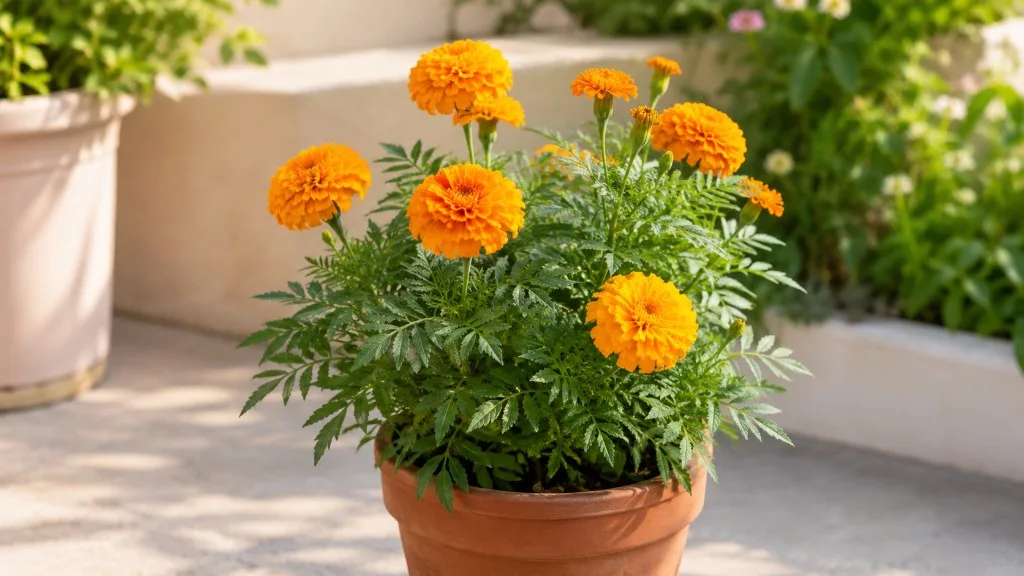
African marigolds carry the largest flowers—often 3–4 inches across on doubles—and the thickest stems. Use bypass secateurs or sharp snips on these, cutting each spent head back to the first leaf pair or outward-facing side branch below the flower. Pinching only the dry cap off a double African bloom leaves the seed cone attached, so rebloom slows.
Because blooms are heavy, deadhead promptly after they fade, especially before rain. If a stem already snapped under a spent pom-pom, cut back to healthy tissue at the next joint rather than leaving a dangling stub.
French Marigolds (Tagetes patula)
French marigolds produce more, smaller flowers on bushy plants usually under 12 inches tall. Many gardeners deadhead these with finger and thumb, snapping the flower and its short stalk at a leaf junction. That matches RHS guidance that bedding plants with soft stems often come off cleanly by pinching. (RHS)
French types branch well on their own, but steady deadheading keeps the mound covered in color instead of bare stems topped with brown buttons. In tight edging rows, a weekly pass with snips is faster than pinching dozens of heads by hand.
Signet Marigolds Including Lemon Gem
Signet marigolds—including Lemon Gem—bear masses of small single flowers on fine stems with citrus-scented foliage. Deadhead lightly but often; pinch or snip each spent star-shaped bloom back to the next leaf node. Some gardeners trim the whole plant lightly after a wave of bloom to encourage a synchronized flush, which works on bushy signet types because new buds break quickly from soft growth.
Signets are excellent for saving seed if you want free plants next year. Leave a few dried heads on selected stems in late summer, deadhead the rest, and collect seed once cones are papery brown.
Where and How to Cut a Spent Marigold Bloom
The most important deadheading detail on marigolds is where you cut, not whether you cut.
The Leaf-Joint Rule
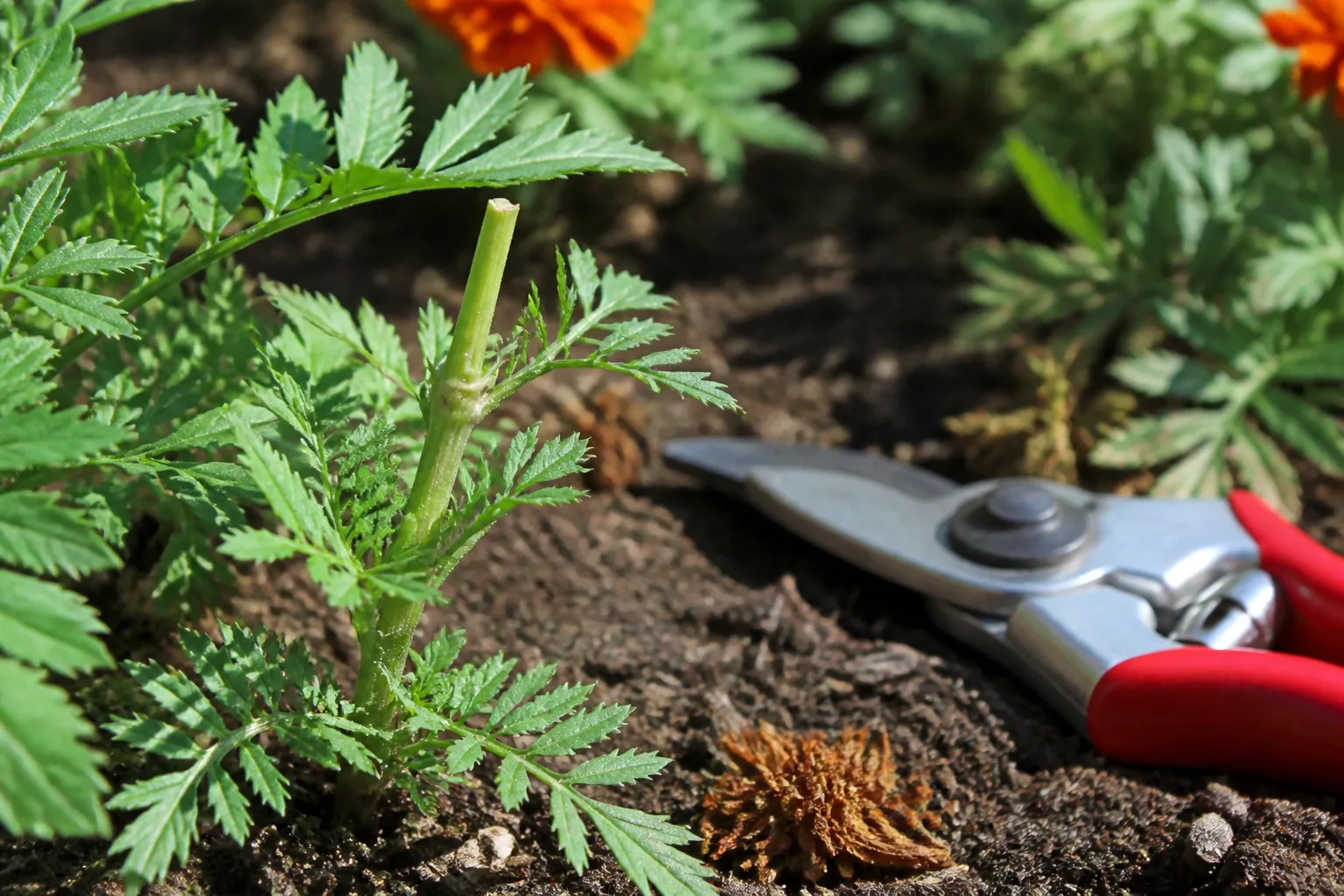
Follow the same principle extension services use on other annual flowers: remove the spent bloom back to a leaf or branching stem, not in the middle of bare stalk. Trace the flower stem downward to the first healthy pair of leaves or an outward side shoot, and cut or pinch just above that point. That removes the seed-forming tissue and gives the plant a clean node from which to branch.
Pulling off dry petals alone is the most common mistake. The cone-shaped seed head stays attached, the plant still treats that tip as finished business, and you get a stubby brown nub instead of fresh buds within a week or two. On marigolds with closely stacked blooms, work from the top down so you do not accidentally remove unopened buds hiding under a faded head.
Pinching vs Secateurs on Soft Stems
Pinching works on French and signet marigolds when stems are soft enough to break cleanly at a joint. Secateurs or garden snips are better on African marigolds, water-swollen stems after rain, and any tissue that tears instead of snapping. Disinfect tools if you removed moldy flowers.
Marigolds are forgiving—cutting immediately behind the flower head alone rarely kills the plant—but the leaf-joint cut reblooms faster and keeps plants better shaped. If you are short on time during a busy week, a quick pinch behind the head still beats leaving dozens of seed cones in place, especially on French types.
When to Deadhead Marigolds (Schedule Through Frost)
Start deadheading at first open bloom and continue until hard frost kills the plants or you deliberately stop for seed collection. In warm summer weather, new buds often appear within one to two weeks after a thorough deadheading pass, though extreme heat can temporarily slow bud formation regardless of how clean your cuts are.
Frequency: During peak bloom, check beds every three to seven days. Container marigolds in small pots may need a quicker pass because fewer stems carry the whole display. RHS guidance allows flexibility—a delay of a few days will not ruin the season—but letting seed cones multiply for weeks definitely shortens the flower window. (RHS)
Best timing within the day: Deadhead whenever you have a few minutes; morning is ideal so you spot soggy heads from overnight rain before they mold. Avoid handling plants when foliage is wet from overhead watering if powdery mildew has been an issue in your garden.
Through fall: Keep deadheading while plants are actively producing buds. Cool nights may slow rebloom slightly, but marigolds often still look strong into early fall when fed and deadheaded consistently. University of Minnesota Extension lists marigolds among annual flowers that benefit from removing faded blooms to maintain appearance and flowering. (UMN Extension)
When You Should Skip Deadheading
Deadheading is the default, not a religion. Skip or reduce it when:
You are saving seed. Choose a few open-pollinated plants, leave selected heads to dry on the stem, and deadhead the rest so the plant still branches. Gardeners’ World describes cutting dried flowerheads into a paper bag once cones are fully brown. (Gardeners’ World)
Late-season pollinators or birds matter to you. A few spent heads left in early fall can feed seed-eating birds or provide late insect forage in wildlife beds—balance that against messy appearance in formal borders.
Plants are finished after frost. Once foliage blackens, deadheading individual flowers no longer increases bloom. Switch to pulling or cutting plants for compost or winter bed cleanup.
The bed is purely decorative and you accept early shutdown. Marigolds will eventually set enough seed to slow flowering even without your help; skipping deadheading is a valid choice if you do not mind fewer flowers and earlier browning.
Deadheading vs End-of-Season Cleanup
Summer deadheading removes individual fading flowers to encourage rebloom. End-of-season cleanup happens after frost or when plants are clearly done—it means pulling annual marigolds, cutting them at the base, and composting healthy foliage, or leaving signet seedheads if you want volunteers next spring.
Do not confuse the two jobs. Cutting marigolds to the ground in July to “refresh” them is not deadheading; it removes photosynthesizing leaves the plant needs during heat stress and can set bloom back weeks. Save hard cutbacks for frost-killed plants or selective trimming of leggy signet types where light pinching still leaves plenty of foliage.
Iowa State Yard and Garden notes that marigolds are annuals grown for seasonal color and respond well to maintenance that keeps them flowering in the home garden—including deadheading during the active season rather than one dramatic midseason chop. (Iowa State Extension) For deeper seasonal pruning rules—including early pinching on young African marigolds—see the marigold pruning guide on LeafyPixels.
Troubleshooting Sparse Blooms After Deadheading
If you deadhead correctly but flowers stay sparse, look beyond the scissors:
Too much shade produces leggy stems and few buds. Marigolds want full sun—at least six hours of direct light daily. Overwatering or drought both reduce bloom; let soil dry slightly between deep waterings and avoid wet leaves overnight. High-nitrogen fertilizer pushes leaves at the expense of flowers; shift toward balanced or phosphorus-forward feeding if you fertilize at all.
Heat stalls can pause buds for a week or two in midsummer even on well-deadheaded plants. Keep removing spent heads, maintain even moisture, and expect rebloom as nights cool. Pests such as slugs on low French marigolds or spider mites in hot dry spells can destroy buds before they open—inspect undersides of leaves and stems, not just faded flowers.
When problems persist, cross-check water, light, and feeding against the marigold care overview rather than deadheading harder. Deadheading fixes seed-driven slowdown; it cannot replace sun or correct soggy soil.
Conclusion
Deadhead marigolds through the active blooming season by cutting spent flowers back to the next leaf pair or side branch—not by pulling petals alone. African types need snips on thick stems; French and signet marigolds pinching often works fine. Check plants every few days, expect new buds within one to two weeks in good weather, and keep going until frost unless you are deliberately saving seed.
Before you snip, confirm the bloom actually finished its normal cycle rather than signaling drought, heat, or rot from rain. Skip deadheading only when you want seed, welcome late-season wildlife value, or plants are done after frost—then switch to end-of-season cleanup, not midsummer scalping. Done consistently, deadheading is the simplest way to turn marigolds from short-lived color bursts into border workhorses that bloom until cold weather finally stops them.



