Should You Leave Your Bird Feeder Up This Winter?
Should you take bird feeders down for winter? Usually no. Get the decision rules for disease, bears, migration myths, cleaning, and safe winter feeding.
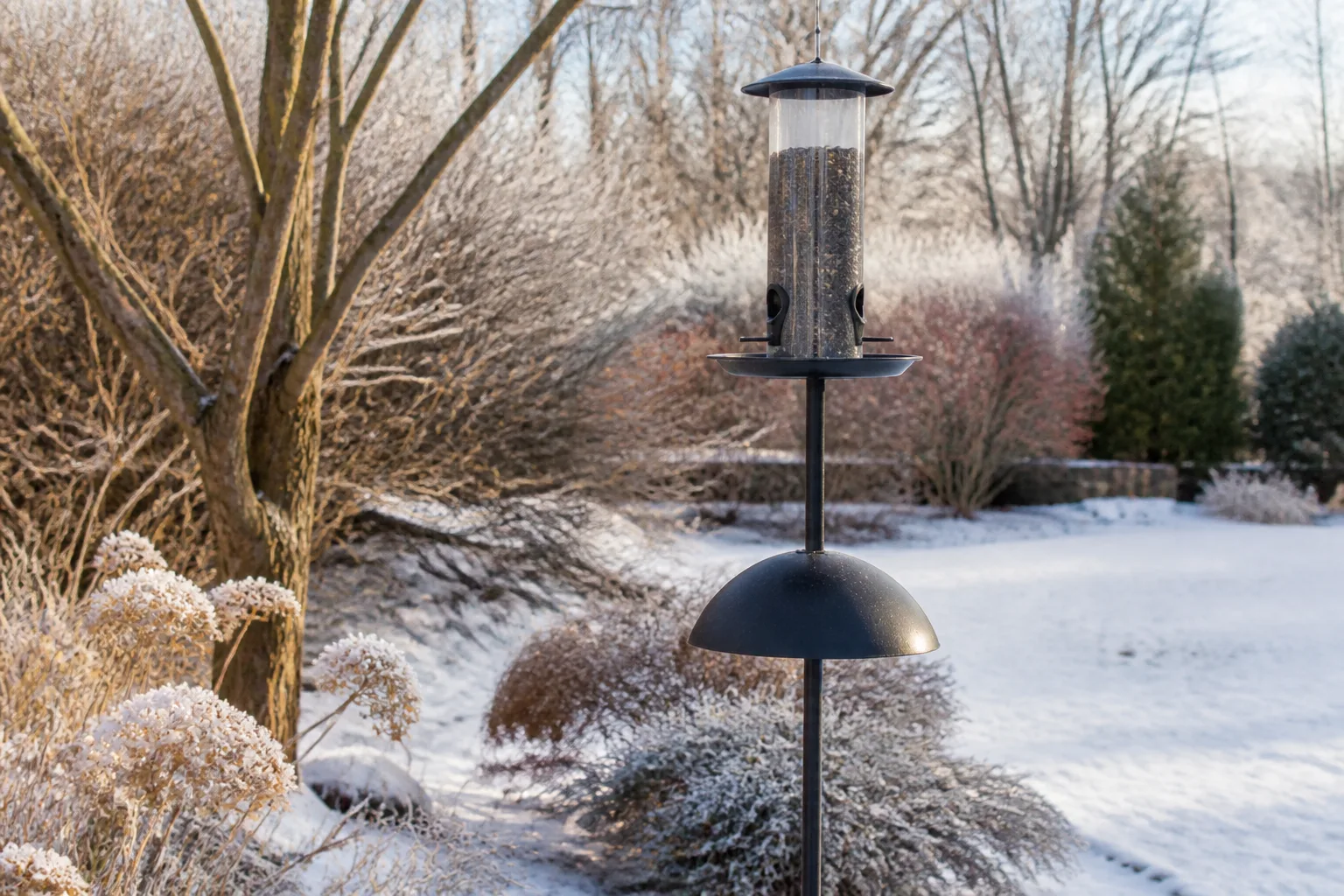
When the first hard frost hits, a surprising number of well-meaning backyard birders haul their feeders inside for the season. Others do the opposite: they fill a hopper once in November, forget about it until March, and wonder why the chickadees stopped coming. Both approaches miss the point.
Winter is usually the best time to keep a bird feeder up — not because birds cannot survive without you, but because supplemental food makes a measurable difference when daylight is short, insects are scarce, and snow or ice locks up natural seed sources. The mistake is not leaving feeders up. It is treating winter feeding as low-maintenance decoration instead of a seasonal care routine with clear take-down rules.
Here is the decision framework ornithologists and extension specialists use: keep feeders up if you can fill them consistently, keep them clean, and manage pests and predators. Take them down temporarily when disease appears, when wildlife agencies advise removal, or when your setup creates a problem you cannot fix with placement and hygiene.
The Short Answer: Keep Feeders Up If You Can Maintain Them
If you are asking whether bird feeders belong outside in winter, the practical answer for most North American backyards is yes. Penn State Extension describes winter feeding as a reliable way to support the roughly three dozen species that commonly visit feeders in cold months, especially when snow cover or sustained freezing temperatures reduce access to wild seeds and dormant insects (Penn State Extension: Winter Bird Feeding).
That yes comes with conditions. A feeder that is empty for days, crusted with moldy seed, or buried under wet hulls is worse than no feeder at all. Birds that learn your station is dependable will visit more often in winter; if you disappear mid-season without transitioning them off, you remove a food source at the hardest time of year.
The real question is not “up or down.” It is whether you are willing to run a winter feeding program: higher-calorie food, regular cleaning, fresh water when possible, and a plan for the exceptions that actually require removal.
Why Winter Is When Feeders Matter Most
Songbirds do not hibernate. They survive cold nights by burning stored fat, fluffing insulating feathers, and shivering to generate heat. Small species like chickadees can lose a significant share of their body weight on a single frigid night and must replace those calories quickly the next morning.
In summer and early fall, many yards offer insects, fruit, weed seeds, and flower heads. By late fall, that pantry shrinks. Snow and ice bury ground-level food. Deciduous trees drop the last seeds. Insect activity plummets. Birds that stay through winter — juncos, titmice, nuthatches, woodpeckers, cardinals, finches — shift into survival mode.
How cold weather changes a bird’s energy budget: Fat-rich foods become disproportionately valuable in cold weather. Suet, peanuts, and black-oil sunflower seeds pack more calories per bite than millet or low-quality filler mixes. That is why winter feeding recommendations consistently emphasize high-fat, high-protein offerings rather than the same seed blend you might use in June (Audubon Magazine: How to Feed Birds Safely This Winter).
Feeders also concentrate birds in view — which is part of the pleasure of winter birding. Project FeederWatch, Cornell Lab of Ornithology’s long-running citizen science program, tracks which species visit feeders across North America and has documented how feeder communities shift with weather, habitat, and season (Project FeederWatch). Your station becomes a predictable refueling stop on days when foraging in the wild would cost more energy than it returns.
This does not mean birds are helpless without you. It means consistent, clean supplemental food helps during the season when natural supplies are thinnest — especially in snowy regions and during severe weather events.
The Myth That Feeders Stop Migration
One of the most persistent reasons people take feeders down in fall is fear that easy food will convince migratory birds to stay north and freeze. That is not how migration works.
Migration is driven primarily by changing day length, hormonal cues, weather patterns, and instinct — not by whether your hopper has sunflower seeds. Birds that migrate will migrate. Birds that overwinter locally are already adapted to do so. Fall migrants may stop at your feeder the way travelers stop at a gas station: as a refueling point, not a reason to cancel the trip (Spark Birding: Fueling Birds for the Journey).
Eric Lind, then director of Audubon New York’s Constitution Marsh, explained on Margaret Roach’s A Way To Garden podcast that birds follow food supplies across the landscape, but supplemental feeding in winter is a separate decision from migration timing. Irruptive species like pine siskins or snowy owls may appear in unusual winters when natural crops fail far north — a sign of food stress in the wild, not proof that backyard feeders confused them (A Way To Garden: Bird Feeding With Eric Lind).
Keep feeders up through fall migration. They can help traveling birds without trapping residents. Take them down only for the specific reasons covered later — not because you worry about cancelling migration.
What Most People Get Wrong About Taking Feeders Down
The common failure mode is binary thinking: feeders are either always good or always bad. In practice, winter feeding fails in predictable ways.
The mid-winter stop that hurts the birds you trained: Birds develop feeding routes. In winter, many visit reliable stations early in the morning and again near dusk — the highest-energy hours. If you filled feeders reliably in November and December, then travel for two weeks in January without a refill plan, local birds that counted on that calories may struggle during a cold snap.
Extension guidance is blunt on this point: if you start winter feeding, stay consistent through the season or taper off before severe weather, not in the middle of it (Penn State Extension: Winter Bird Feeding). You are not creating permanent dependency for entire populations, but you are altering the daily energy math for the individuals that learned your address.
Assuming natural food always covers the gap: Native plants, brush piles, and seedheads left standing are the foundation of bird-friendly yards — more important than any feeder over the long term (Cornell Lab: Attract Birds With Native Plants). That does not make feeders irrelevant in January.
A yard with good habitat plus a clean feeder outperforms either alone in deep winter. The mistake is installing a feeder while removing every food and cover source, then blaming the feeder when starlings overrun a bare lawn. Habitat first; feeders second.
When You Should Actually Take Feeders Down
Responsible feeding includes knowing when removal is the right call. These are not edge cases — they are the reasons experts pause feeding even when they support winter stations the rest of the time.
Disease Outbreaks, Sick Birds, and State Advisories
Feeders concentrate birds in ways that rarely happen in wild foraging. That makes disease transmission easier when a pathogen is present. Salmonella, conjunctivitis in finches, and highly pathogenic avian influenza have all prompted real-world guidance to remove feeders temporarily in affected regions (Audubon Magazine: How to Feed Birds Safely This Winter).
Take feeders down immediately if you see:
- Multiple dead birds near the feeding area
- Birds with swollen eyes, discharge, tremors, or obvious lethargy
- A state wildlife agency advisory for your county
Audubon recommends removing feeders and draining baths for at least a few days after sick or dead birds appear, cleaning thoroughly before rehanging, and reporting sightings to your state wildlife agency (Audubon: Three Ways to Keep Your Bird Feeder Disease-Free). Do not try to capture mobile sick birds — you risk injuring them further. Contact a licensed wildlife rehabilitator for guidance on grounded birds.
During active HPAI outbreaks, follow current local advisories. Recommendations change with surveillance data; a national default cannot replace your state agency’s instructions.
Bears, Rodents, and Other Wildlife Conflicts
Where black bears are active, feeders belong down when bears are not hibernating — and sometimes earlier in fall than you expect. At Constitution Marsh, staff take winter feeding stations down in spring partly because bears become active again (A Way To Garden: Bird Feeding With Eric Lind). If bears raid your seed, removal is a safety issue for wildlife and neighbors, not a birding preference.
The same logic applies when feeders train raccoons, coyotes, or other mammals into nightly patio visits you cannot manage. Fix placement and storage first; if conflict persists, pause feeding.
Seed hulls and spilled millet feed rodents. Rats at night are a sign your setup is feeding more than birds. Solutions include hull-free seed, trays that catch debris, nightly sweeping, and moving feeders away from structures. If rats persist despite cleanup, take feeders down until you solve the sanitation issue — disease risk to you and birds rises when rodents share the food zone.
Switch Your Winter Feeding Routine Before You Worry About Timing
Leaving a feeder up is only half the job. Winter success depends on swapping food, feeder style, and refill habits with the season.
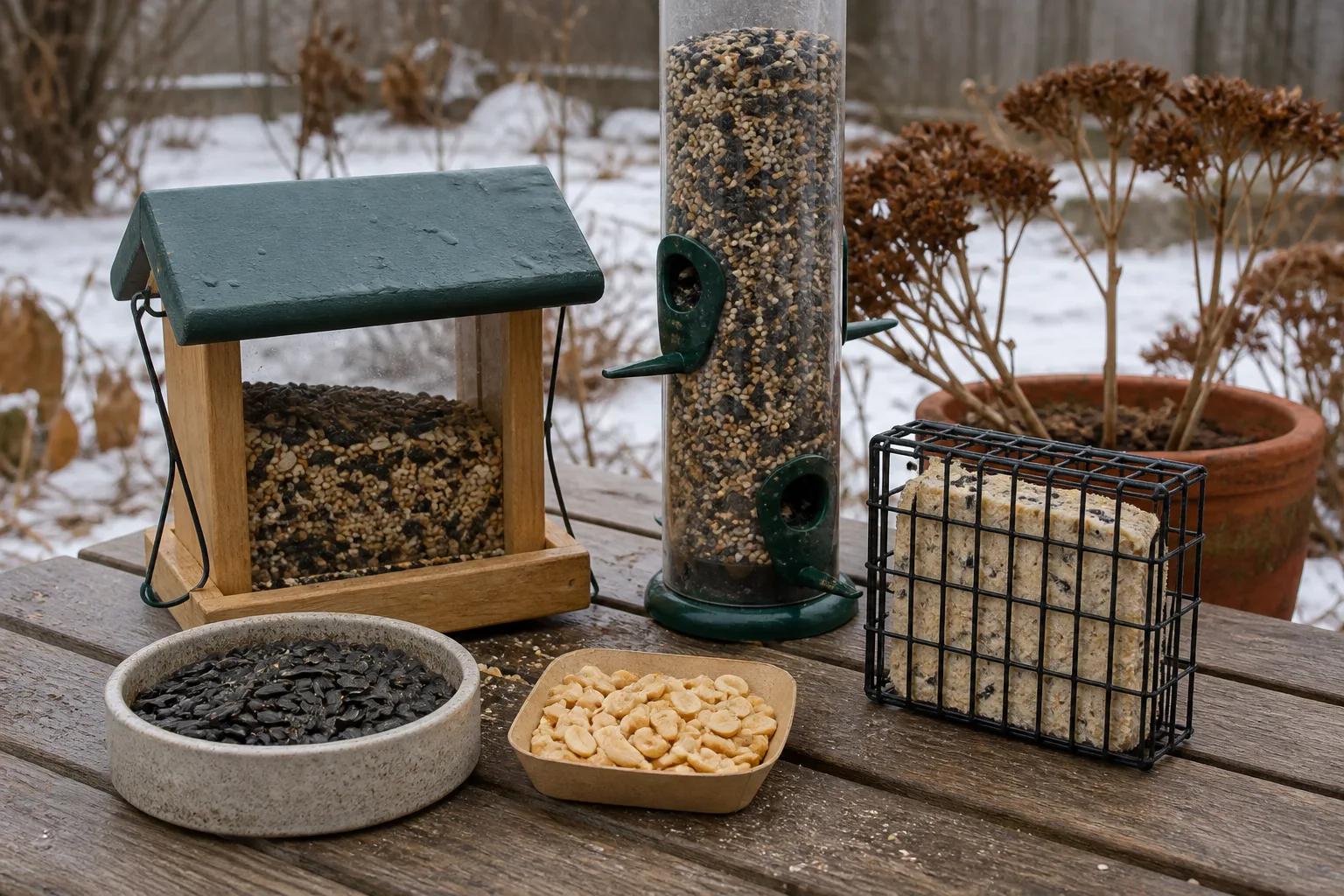
High-fat foods that support cold-weather survival: Penn State Extension calls black-oil sunflower seed the best single all-around choice: high oil content, thin shell, attractive to chickadees, titmice, nuthatches, and finches (Penn State Extension: Winter Bird Feeding). Striped sunflower suits larger birds like cardinals and blue jays. Nyjer feeds goldfinches and siskins. Suet and peanut pieces target woodpeckers, nuthatches, wrens, and chickadees when insects are unavailable.
Skip cheap mixes heavy on wheat, milo, and hulled oats. Birds pitch them aside, and the waste attracts rodents. In wet climates, use feeders with drainage and avoid letting seed ferment in the hopper.
Feeder types for different winter visitors: Match feeder to species:
- Tube feeders for perching birds that eat clinging — finches, chickadees, titmice
- Hopper feeders for mixed flocks; choose models you can fully disassemble
- Platform feeders for ground-feeders like juncos and doves; offer only one day’s seed at a time on decks or patios
- Suet cages for woodpeckers and nuthatches
If squirrels dominate your station, hardware beats gimmicks: pole baffles, weight-sensitive feeders, and strategic placement (how to keep squirrels out of bird feeders). Greasing poles is unsafe for birds — use baffles instead (greasing bird feeder poles).
Cleaning Is Not Optional in Freezing Weather
Dirty feeders are the main way good intentions turn harmful. Mold, wet hulls, and accumulated droppings spread bacteria and fungi. You cannot wait until you see slime.
How often to clean seed and suet feeders: Audubon suggests every two weeks as a minimum for seed and suet feeders, with more frequent cleaning in humid, warm, or wet spells (Audubon Magazine: How to Feed Birds Safely This Winter). Nature for My Soul, a birding-focused blog citing Cornell participation data, recommends stepping up to weekly scrubs when seed gets wet or visitation is heavy (Nature for My Soul: Winter Bird Feeding Mistakes).
In dry, sub-freezing weeks, monthly cleaning may suffice for tube feeders that stay dry — but inspect ports every refill. If ice seals the openings, clear it so birds are not pecking at empty plastic.
A simple vinegar soak that sanitizes without residue: Emma Greig of Project FeederWatch and Audubon rehabilitators recommend a practical routine (Audubon Magazine: How to Feed Birds Safely This Winter):
- Empty old seed; dispose of waste — do not dump moldy seed on the ground
- Scrub with dish soap and hot water
- Soak 15 minutes in a 50-50 vinegar and water solution
- Rinse thoroughly and dry completely before refilling
Moisture left inside a refilled tube feeder is an invitation for mold. Dishwasher-safe models simplify the job. For ground feeding areas, rotate sites and rake debris regularly (Penn State Extension: Winter Bird Feeding).
Water Matters as Much as Seed When Temperatures Drop
Birds need water for drinking and bathing even in winter. Natural sources freeze. A shallow bath with a thermostat heater — or a daily refresh of a saucer you bring in at night — attracts species that ignore seed entirely.
Change bath water every day or two to limit algae and bacteria (Audubon Magazine: How to Feed Birds Safely This Winter). Place baths away from feeders so droppings do not contaminate drinking water, but near shrubs that offer escape cover. In cat-heavy neighborhoods, elevate baths and keep them away from ambush shrubbery where predators hide.
Where to Hang Feeders So Birds Stay Safe
Location determines whether your feeder helps birds or turns them into easy targets.
Cover, predators, and the window-collision rule: Penn State Extension recommends placing feeders within about 10 feet of trees or shrubs so birds have cover, but not so tight that cats can launch from hiding (Penn State Extension: Winter Bird Feeding). Hawks at feeders are unnerving but normal; dense planting gives small birds escape routes. If a Cooper’s hawk camps on your railing, take feeders down for a few days and let it move on.
Windows kill far more birds than hawks at feeders. Audubon advises placing feeders and baths either within 3 feet of glass or more than 30 feet away — the dangerous zone is the middle distance where birds gain speed before impact (Audubon Magazine: How to Feed Birds Safely This Winter). Close placement slows takeoffs; distant placement reduces reflection confusion. Hawk silhouettes are not reliable; netting or external screens work better.
Keep cats indoors. Free-roaming cats are among the largest human-caused threats to songbirds. A feeder near cover without cat control is a trap, not habitat.
Squirrels, Rats, and Other Unwanted Dinner Guests
Winter hunger makes mammals bold. Squirrels are predictable; rats are the warning sign. Spilled seed under hoppers, millet-heavy mixes, and feeders on unbaffled poles are the usual causes.
Fix the setup before you blame the birds: baffles, hull-free seed, caught trays, evening cleanup, and distance from structures. A separate squirrel corn station away from bird feeders sometimes reduces raids (Penn State Extension: Winter Bird Feeding). If rodents persist, pause feeding until the ground is clean and access is blocked.
For hardware-focused comparisons, see best squirrel-proof bird feeders — but no feeder replaces good placement.
What Changes in Late Spring and Summer
Many birders reduce or remove feeders in late spring when insects emerge and nesting peaks. Visitation often drops during the “summer slowdown” as birds switch to caterpillars and fruit. That is normal — not a sign you failed.
Penn State notes feeder use typically falls in summer and early fall when natural foods abound (Penn State Extension: Winter Bird Feeding). Some people keep feeders up to enjoy spring migrants like rose-breasted grosbeaks; others store feeders once bears wake and bears become the limiting factor.
Hummingbird feeders are a separate schedule — sugar water spoils fast in heat and needs more frequent cleaning than seed. Do not apply winter seed-feeder logic to nectar feeders.
If you stop for summer, clean and dry feeders before storage so mold does not set in the garage. Resume in fall when you are ready for the consistency commitment again — ideally before the first sustained cold spell when birds are re-establishing routes (ways to attract birds to your yard).
A Simple Decision Checklist for Your Yard
Use this before you take feeders down — or before you leave them up without a plan:
Keep feeders up when:
- You can refill every few days through winter
- You will clean every 1–2 weeks (more if wet)
- No sick or dead birds have appeared
- No state disease advisory applies
- Bears and unmanaged rodents are not raiding seed
- Feeders are near cover but away from cat ambush points
- Windows are within 3 feet or beyond 30 feet, or treated
Take feeders down temporarily when:
- Sick or dead birds appear — report and clean before rehanging
- Wildlife agency advises removal for avian flu or other outbreaks
- Bears are active in your area
- Rats or unchecked mammal conflict persists after sanitation fixes
- You cannot maintain fills through an upcoming absence — ask a neighbor or remove before you leave, not mid-cold-snap
Upgrade your winter setup if you keep them up:
- Switch to black-oil sunflower, suet, and peanuts
- Add a heated or refreshed water source
- Install baffles and hull-catching trays
- Store seed dry and cool; discard moldy bags
Conclusion
Most people get winter feeders wrong in one of two directions: they take them down out of misplaced migration worry, or they leave them up without changing food, water, or cleaning for the season. The evidence-based middle path is clearer than either habit.
Leave bird feeders up in winter when you can feed consistently with high-fat foods, clean on schedule, and manage pests and predators. Take them down when disease, wildlife conflict, or your own maintenance gap makes the station a hazard. Feeders are a supplement to habitat, not a substitute — but in snow, ice, and sub-freezing weeks, a well-run feeder is one of the most direct ways to support the birds already living in your neighborhood.
Start with one reliable seed, one suet cage, and a cleaning date on your calendar. The birds that arrive in November will still be there in February — if you give them a reason to trust the address.