Greasing Bird Feeder Poles: Why to Avoid It
Bird experts say don't grease feeder poles—grease mats feathers and can poison birds. Here are baffles, spicy seed, and placement fixes that work.
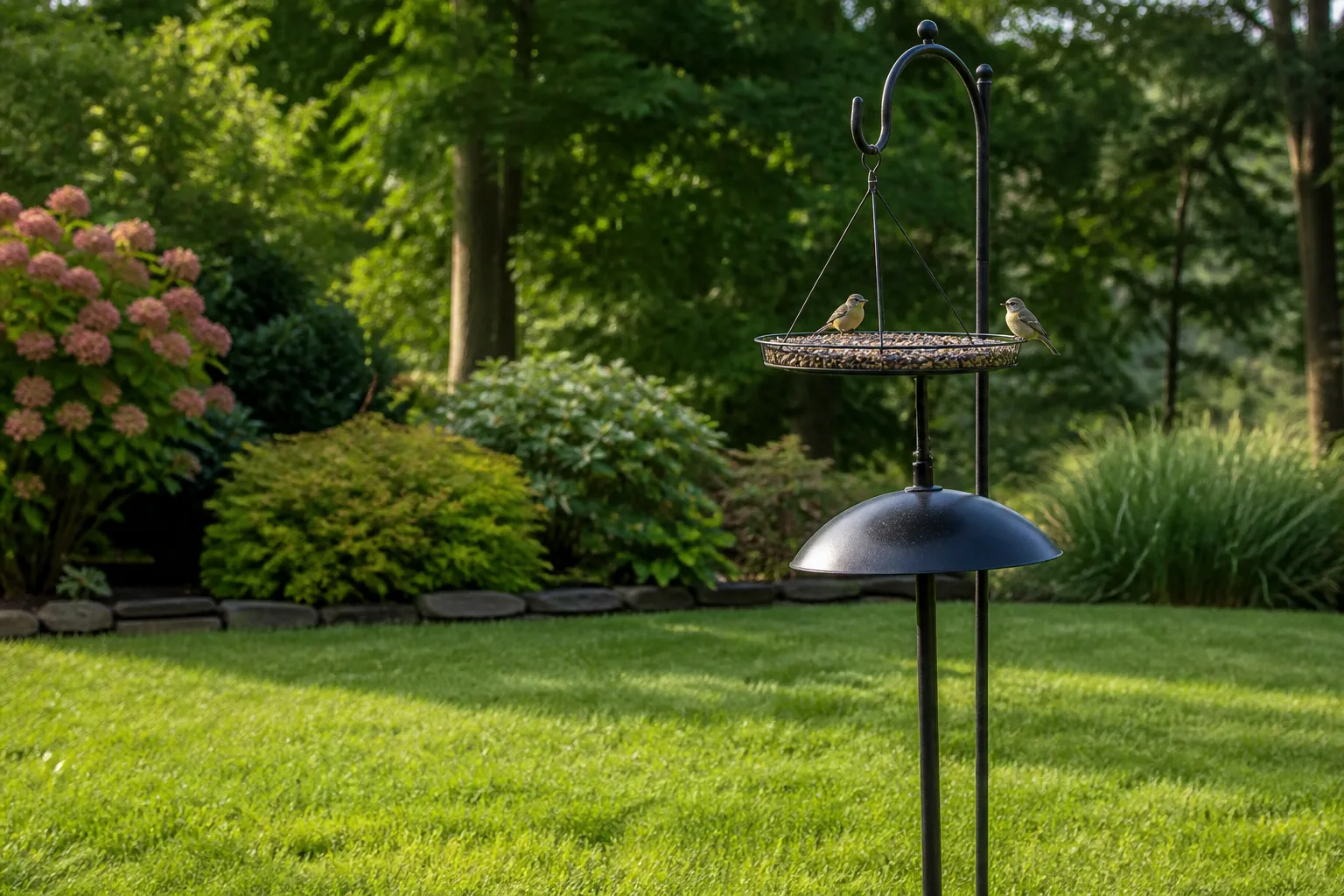
Do not grease your bird feeder pole. Whether the lubricant is Vaseline, cooking oil, WD-40, axle grease, or coconut oil, coating a feeder post to stop squirrels creates a sticky surface that clinging birds cannot clean from their feathers. Wildlife rehabilitators and bird specialty retailers have documented cases where greased poles led to feather damage, illness, and death—most famously a downy woodpecker that ingested petroleum jelly from a homeowner’s greased feeder pole in Maine.
The greased-pole trick works on squirrels for a day or two. It fails birds for much longer. Squirrels are athletic, persistent, and motivated by high-calorie seed. Homeowners are motivated by viral videos showing a squirrel sliding down an oiled pole like a firefighter on a brass rail. What those clips rarely show is the woodpecker that lands on the same pole, shimmy down to the feeder perch, and coat its wings in grease it cannot remove.
Bird experts—including staff at Wild Birds Unlimited stores and wildlife rehabilitation centers—urge a hard stop on pole greasing. The safer playbook uses hardware, placement, and seed choice instead of lubricants. Here is what greasing actually does, why the trend persists, and how to protect your seed without putting the birds you meant to help at risk.
The Short Answer on Greasing Bird Feeder Poles
Greasing bird feeder poles is not safe for birds and should be avoided. Petroleum-based products like Vaseline and mineral oil can be toxic when ingested during grooming. Plant-based greases like coconut oil mat feathers and destroy waterproofing even when they are not poisonous. Any slippery coating on a pole transfers to bird feathers when clinging species land on the post and move up or down before hopping to the feeder.
Squirrel-proof feeders, pole baffles, hot-pepper-treated seed, strategic placement, and separate squirrel feeding stations are more effective long-term—and they do not risk the downy woodpeckers, nuthatches, and chickadees that use your feeder most actively.
What Greasing Actually Does to Birds
Bird feathers are not decorative fluff. They provide flight, insulation, and weatherproofing. Each feather barb locks into place through microscopic structures that maintain a smooth, water-shedding surface. Grease, oil, or petroleum jelly disrupts that structure. It mats barbs together, collapses the insulating air layer next to the skin, and prevents water from shedding off the feather surface.
Wild Birds Unlimited staff across multiple stores publish the same warning every year: clinging birds—woodpeckers, chickadees, and nuthatches especially—land on the side of a feeder pole and shimmy up or down until they reach feeder height, then fly from the pole to the perch (Wild Birds Unlimited). Grease on the pole transfers directly to breast, flank, and wing feathers during that climb. Birds cannot wash grease off the way they remove dust or parasites. Once coated, a bird may struggle to fly, stay dry in rain, or maintain body temperature in cold weather.
Why the Greased-Pole Trend Keeps Spreading
The appeal is obvious and immediate. A greased pole turns a determined squirrel into a slapstick slide. Social media rewards that visual. Homeowners get a quick win without buying new hardware or rethinking feeder placement.
The problem is the trade-off is invisible until it is catastrophic. Squirrels recover and try again. Birds do not always recover from a single grease exposure. Grease also washes off in rain, attracts dirt, and needs constant reapplication—so the pole stays hazardous through repeated coating cycles. A well-placed baffle or weight-sensitive feeder solves the squirrel problem without re-greasing every storm.
How Bird Feeder Grease Damages Feathers and Health
Greasing a feeder pole is not a neutral “squirrels only” barrier. It is a surface treatment on the exact route many small birds use to access food.
Woodpeckers, Nuthatches, and Other Pole-Climbing Birds
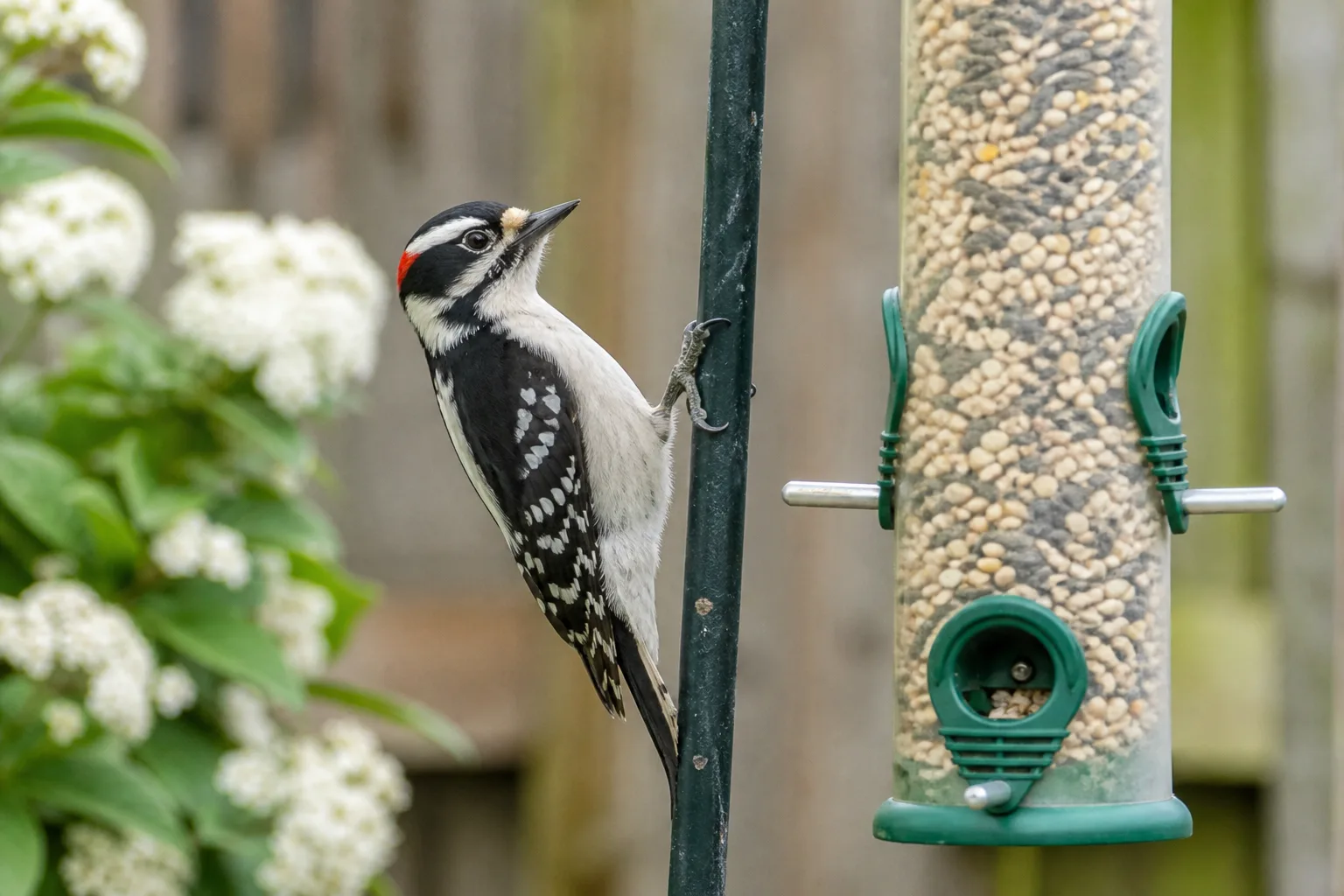
Downy woodpeckers—the smallest North American woodpecker and a common backyard feeder visitor—are especially vulnerable because they cling to vertical surfaces habitually. Nuthatches descend headfirst down trunks and poles. Chickadees bounce between branches and posts with equal comfort on horizontal and vertical surfaces.
These species do not always fly directly to the feeder perch. They treat the pole as a ladder. That behavior is why bird specialty retailers emphasize downy woodpecker risk in grease warnings. Barbara Gleason of Wild Birds Unlimited echoed the same point in industry interviews: greasing poles can harm the smallest woodpecker in the yard.
The Center for Wildlife, a rehabilitation organization in Cape Neddick, Maine, reported a case that turned the social-media trend into a cautionary story. A downy woodpecker contacted a feeder pole coated in Vaseline at a local home. The bird was admitted in distress, bathed repeatedly by rehab staff, and died from trauma despite treatment (Center for Wildlife case reported via wildlife rehabilitators). The organization urged homeowners to use Slinkys or baffles instead of any lubricant on poles.
Petroleum Jelly, WD-40, and “Natural” Oils
Petroleum-based products—Vaseline, mineral oil, axle grease, WD-40—carry both mechanical and chemical risk. They mat feathers and can cause internal illness if ingested during preening. Wild Birds Unlimited lists ingestion as a primary reason to avoid greasing: squirrels and birds that groom contaminated fur or feathers can become seriously ill (Wild Birds Unlimited).
“Natural” alternatives like coconut oil, vegetable shortening, or butter are still harmful on feathers even when they are less toxic internally. They go rancid, attract insects and dirt, and destroy waterproofing the same way petroleum products do. The competitor framing of “natural = safe” does not hold for avian feather maintenance. If it coats and mats feathers, it is a problem—regardless of the label on the jar.
Avoid greasing feeder hooks, hanger arms, or feeder roofs too. Any surface birds touch while approaching food can transfer lubricant.
Ingestion, Illness, and Temperature Stress
Grease exposure creates a chain of failures. A bird with matted feathers preens aggressively to fix the problem—and swallows lubricant in the process. Petroleum ingestion can disrupt digestion and cause systemic illness.
Temperature regulation fails next. Feathers normally trap a layer of warm, dry air against the body. Grease collapses that layer. In cold weather, a greased bird loses insulation. In wet weather, water penetrates matted feathers instead of shedding off the surface. Wild Birds Unlimited notes the same risk applies to squirrels: grease on fur disrupts their thermoregulation too (Wild Birds Unlimited). The difference is squirrels are not the species you installed the feeder to support.
Safer Ways to Keep Squirrels Off Your Bird Feeder
The durable fixes combine hardware, seed strategy, and placement math. None require coating a pole in anything sticky.
Squirrel-Proof and Weight-Sensitive Feeders
Weight-sensitive feeders close feeding ports when an animal above a certain mass lands on the perch—typically a squirrel, raccoon, or large bird. Chickadees and finches weigh only a fraction of an ounce; gray squirrels weigh roughly a pound or more. The weight gap is large enough for mechanical triggers to discriminate reliably.
Cage-style feeders surround seed ports with a wire mesh gap wide enough for small birds but too narrow for squirrels to reach through. Tube feeders with metal tops and tight port spacing frustrate chewing and prying.
The RSPB recommends squirrel-buster feeders where port shutters close under squirrel weight but remain open for lighter birds (RSPB). Match feeder style to your dominant visitors: mesh nut feeders for peanuts, tube feeders for sunflower hearts, platform feeders for mixed seed with a roof to limit rain exposure.
Pole Baffles, Slinkys, and PVC Guards
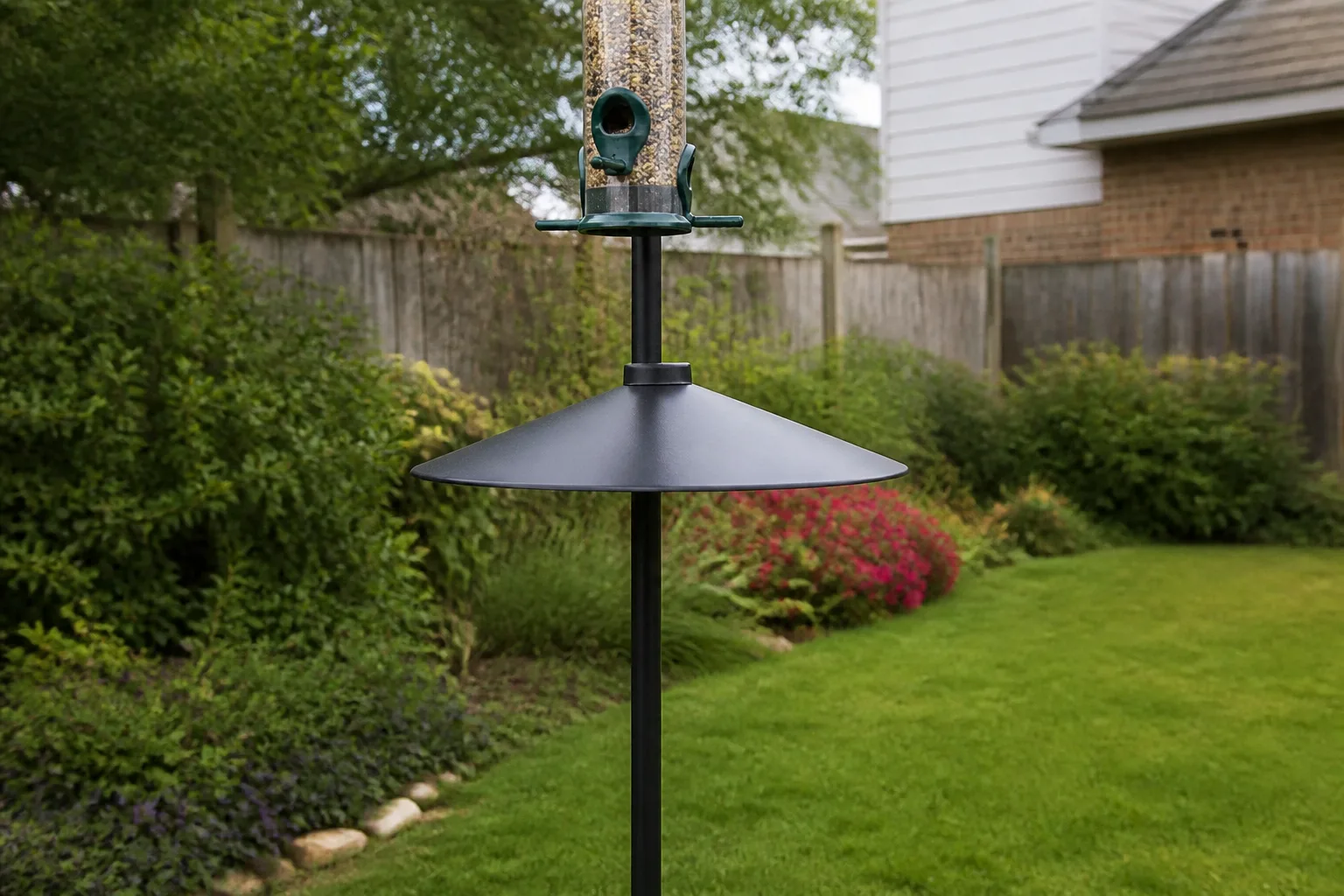
A pole baffle is a dome or torpedo-shaped barrier mounted on the post so squirrels cannot climb past it. Torpedo baffles sit on the pole below the feeder; dome baffles hang above hanging feeders. Effective baffles are wide enough that a squirrel cannot bridge the gap with a standing leap—typically 15 to 18 inches in diameter for torpedo styles.
A Slinky stretched down a metal pole creates a unstable, collapsing surface squirrels struggle to climb. It is the hardware alternative wildlife rehabilitators specifically recommended after the greased-pole woodpecker case. Smooth PVC pipe sleeves over a wooden post achieve a similar slip effect without grease—though determined squirrels sometimes learn to jump past short sleeves, so combine PVC with a baffle for best results.
The RSPB also notes revolving plastic bottles fixed along a post as a low-cost deterrent, though commercial baffles are more consistent (RSPB).
Hot Pepper Seed, Safflower, and Seed Switches
Capsaicin-treated bird seed exploits a biological split: mammals feel the burn of hot pepper; birds do not. Capsaicin activates pain receptors in mammalian mouths and paws but does not bind the avian equivalent. Squirrels learn quickly that your feeder is not worth the discomfort. Many specialty retailers sell hot-pepper-coated seed blends labeled for this purpose (Wild Birds Unlimited).
Safflower seed is another switch. Many songbirds accept it; many squirrels ignore it. Nyjer (thistle) seed in fine-port tube feeders attracts finches while discouraging larger mammals. Plain sunflower is squirrel magnet number one—if squirrels dominate your station, sunflower is the first seed to replace or hot-pepper-treat.
Temporary spicy seed can break a squirrel’s daily habit even if you later return to standard mixes in a better-protected feeder.
Feeder Placement: Height, Distance, and Launch Points
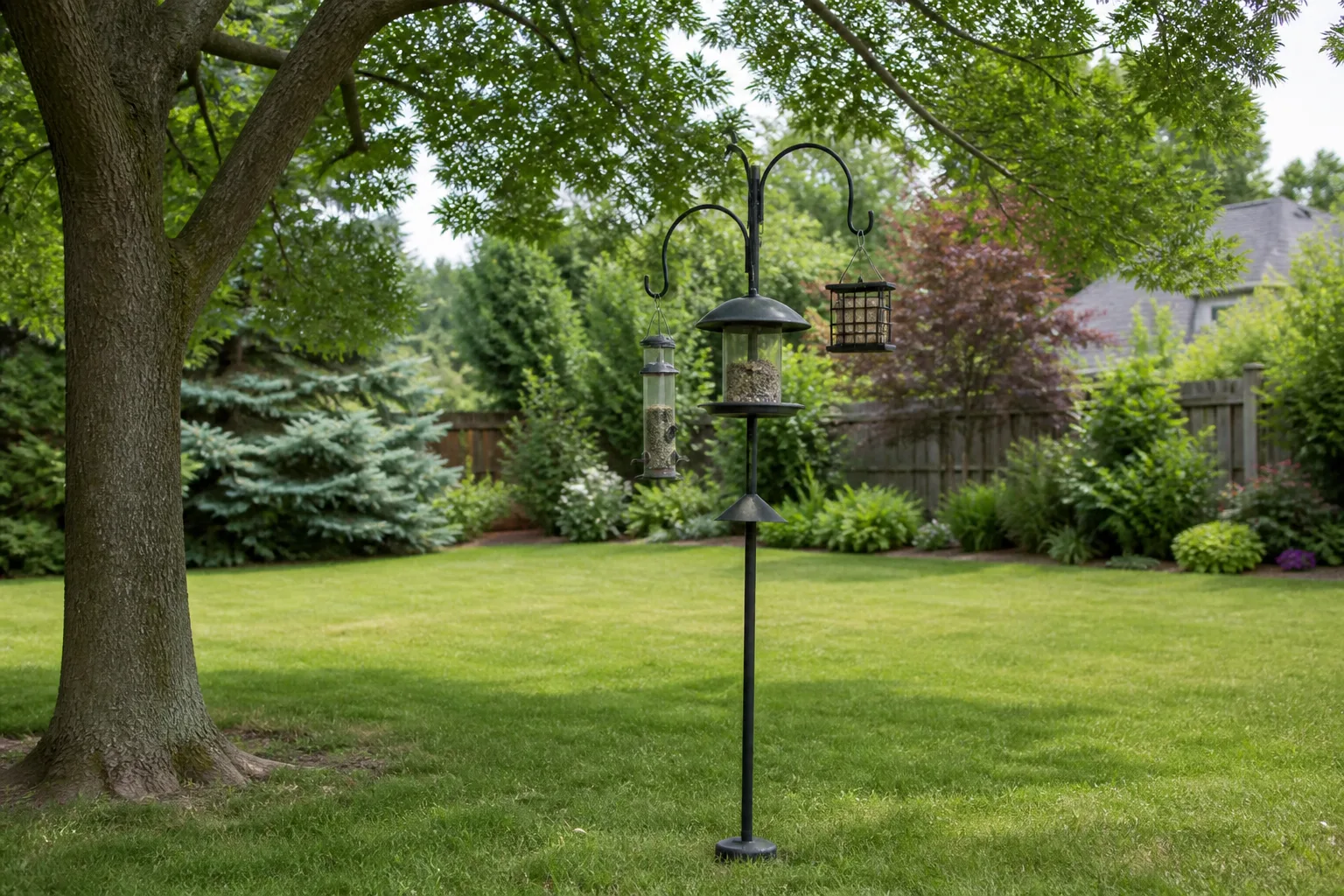
Squirrels jump. They leap roughly 5 feet vertically from the ground and 8 to 12 feet horizontally from trees, fences, porch rails, and roof edges. Placement rules follow from those numbers:
- Hang or mount feeders at least 6 feet above the ground on a pole system with a baffle.
- Keep feeders 8 feet away from trees, shrubs, fences, and structures squirrels can launch from.
- Avoid placing feeders directly under overhanging branches squirrels can drop from.
- Move feeders periodically to prevent heavy seed buildup and predator ambush patterns underneath.
Quiet sightlines matter too. Birds want nearby cover for escape—shrubs or tree lines within about 10 feet—but not so close that squirrels can bridge the gap without jumping. The sweet spot is a pole in open ground with cover close enough for birds to dart to, but not close enough for a squirrel leap.
When Feeding Squirrels Separately Is the Practical Fix
Sometimes the lowest-conflict solution is not total exclusion—it is redirecting attention. A platform feeder stocked with inexpensive corn or unsalted peanuts placed 15 to 20 feet away from bird feeders can satisfy squirrels without emptying your premium sunflower mix.
This works best when the squirrel station is easier to reach than the bird feeder. Combine separate feeding with baffles on the bird pole so the premium seed stays protected. The Humane Society frames wildlife conflicts as solvable through habitat modification and coexistence rather than harm (Humane Society).
Separate feeding does not mean unlimited squirrel buffet. Limit quantities, clean spillage, and bring food in at night if rodents or raccoons become secondary problems.
Other Animals That Raid Bird Feeders
Squirrels are the daily annoyance. Other visitors create different risks.
Rodents, Skunks, Raccoons, Deer, and Bears
Rodents—rats and mice—follow spilled seed under feeders. Fix: sweep spillage daily, use trays to catch dropped seed, switch to hot pepper blends, and bring feeders in overnight.
Skunks and raccoons visit after dark, climb poles, and scatter seed. Fix: daytime-only feeding, tight lids on stored seed, and cleanup beneath feeders every evening. Strong-smell deterrents around the yard perimeter can help with skunks; see our guide on skunk deterrent methods for smell-based options and their limits.
Deer eat bird seed when browse is scarce. Fix: raise feeders beyond deer reach on tall poles, use deterrent sprays on surrounding vegetation, or bring feeders in at night.
Bears are the highest-stakes raiders. In bear country, feeders are often illegal or strongly discouraged during active bear seasons. Remove feeders entirely from spring through fall, or use daytime-only feeding with spotless cleanup. A bear that discovers a feeder will return and may destroy the hardware.
Raptors Hunting Near Feeders
Hawks and falcons sometimes patrol feeder stations because concentrated songbirds are easy targets. Reduce ambush risk by placing feeders within 10 feet of shrub cover birds can reach quickly—but not so deep in brush that cats can stalk unseen. Overhead awnings or dense canopy can block hawk swoops. Avoid ground feeding, which exposes birds to both raptors and cats.
Feeder Hygiene and Seasonal Feeding Basics
Squirrel battles are pointless if your feeder spreads disease. The RSPB emphasizes clean, dry seed and regular feeder maintenance (RSPB):
- Brush debris off feeders whenever you refill.
- Scrub feeders weekly with a mild disinfectant solution; rinse and dry fully.
- Move feeder locations after each deep clean to prevent droppings and mold buildup underneath.
- Refresh water daily in bird baths; disinfect weekly.
- Remove uneaten seed before it molds—food should be consumed within one to two days in warm weather.
The RSPB currently advises avoiding peanuts and loose seed mixes between May and November in the UK due to trichomonosis transmission risk—a disease spread through contaminated food and water. In North America, follow local extension guidance, but the hygiene principle is universal: wet, moldy, or piled seed under feeders attracts rodents and sick birds.
Wear gloves when cleaning feeders and wash hands thoroughly afterward. Some avian diseases can infect people, though risk is low with basic precautions.
Feed seasonally with purpose. High-fat foods (suet, peanuts) support birds in cold months. High-protein offerings (mealworms) help during nesting and molt. Adjust quantities to demand—never let seed sit uneaten for days.
Conclusion
Greasing bird feeder poles is a trending shortcut that trades a funny squirrel video for real risk to the birds you meant to feed. Vaseline, oils, WD-40, axle grease, and even “natural” fats mat feathers birds cannot clean, disrupt flight and thermoregulation, and can cause serious illness when ingested during grooming. Wildlife rehabilitators have documented fatalities linked to greased poles—enough evidence that bird specialty retailers publish annual warnings against the practice.
The fix is not more lubricant. It is better design. Install a pole baffle or weight-sensitive feeder. Hang seed stations at least 6 feet up and 8 feet from squirrel launch points. Switch to hot pepper-treated seed or safflower if squirrels persist. Feed squirrels separately on cheap corn if coexistence is easier than exclusion. Clean spillage daily, scrub feeders weekly, and adjust feeding seasonally.
Your backyard feeder should support native birds—not endanger the downy woodpecker that shimmies up your pole every morning. Skip the grease. Upgrade the hardware.



