Will Pine-Sol Keep Skunks Away? What Experts Say
Will Pine-Sol keep skunks away? We break down what the smell can and cannot do, safer application tips, and proven methods that actually solve the problem.

Pine-Sol may nudge a skunk away from a specific spot for a few days, but it will not solve a skunk problem on its own. Pest professionals and university extension services reach the same conclusion from different angles: smell-based products—including Pine-Sol, ammonia-soaked rags, and citrus peels—are at best a temporary “stay away” notice. If food, shelter, or a cozy den site remain available, the skunk comes back once the scent fades or rain washes it away.
That does not make Pine-Sol useless. It makes it a short-term tool in a longer plan built around removing attractants and blocking access. Here is what the evidence says, how to use Pine-Sol safely if you try it, and what actually keeps skunks from settling under your deck, shed, or porch.
The Short Answer on Pine-Sol and Skunks
Pine-Sol works on skunks the same way strong perfume might startle you at the door—it gets attention, then wears off. Skunks have an excellent sense of smell and rely on scent to find food and evaluate threats. A sharp, unfamiliar odor can make them avoid a treated area briefly. Pennsylvania State University Extension is blunt about the category: there are no EPA-registered repellents for skunks, and odor repellents are only a temporary measure (Penn State Extension).
Pest control operators who deal with skunk calls regularly describe Pine-Sol the same way: homeowners report a few quiet nights, then the animal returns—especially when garbage, pet food, grubs, or a den under the structure are still on offer.
What Pest Pros and Extension Experts Agree On
Across professional pest control and extension wildlife guidance, three points repeat:
- Smell deterrents fade. Cleaners and essential oils are formulated to dissipate. Rain, wind, and humidity accelerate that timeline.
- Attractants beat odors. A hungry skunk tolerates a bad smell more easily than it tolerates missing a reliable food source.
- Exclusion is the durable fix. Sealing foundation gaps, screening under decks, and securing garbage remove the reason skunks chose your property in the first place.
If you remember only one line: Pine-Sol is a bandage, not an eviction.
Why Skunks Show Up in Yards and Gardens
Before you pour cleaner around the patio, it helps to know what you are actually competing against. The striped skunk (Mephitis mephitis) is a native, mostly nocturnal mammal about the size of a house cat. It is slow-moving, mild-tempered, and far more interested in grubs than in you—until a dog, a sudden movement, or a cornered animal triggers its famous defense spray.
Skunks are beneficial in many yards. Penn State Extension notes they eat large numbers of grasshoppers, white grubs, beetles, crickets, and mice (Penn State Extension). The U.S. Fish and Wildlife Service describes them as peaceful neighbors that prefer to flee rather than fight when left alone (U.S. Fish and Wildlife Service). Problems start when they den too close to human activity, dig up lawns, raid poultry, or spray pets.
Food, Shelter, and Lawn Digging
University of California Integrated Pest Management (UC IPM) lists the three magnets that pull skunks into residential areas: food, water, and shelter (UC IPM). Common attractants include:
- Garbage and compost with loose or missing lids
- Pet food left outside overnight
- Fallen fruit under trees and bird feeder spillage
- Rodent populations in sheds, crawl spaces, or garages (skunks eat mice)
- Lawn grubs and insects that cause cone-shaped digging holes 3–5 inches across
Den sites matter just as much. Skunks burrow under porches, decks, garden sheds, mobile homes, and loose foundations. They also use hollow logs, brush piles, and abandoned woodchuck burrows. UC IPM notes they will enlarge an existing cavity rather than always dig from scratch—which means your deck may already be the perfect prefab den.
If you smell faint skunk odor without seeing an animal, that alone can signal regular nighttime travel routes. During late-winter breeding season, males spray while competing over females—another clue that exclusion work should happen before pregnant females settle in.
What Pine-Sol Is Today—and Why the Formula Matters
Pine-Sol is a Clorox household cleaner sold for grease cutting and floor cleaning. When the brand launched in 1929, pine oil was the active ingredient that gave it its name and smell. Clorox announced in 2014 that retail Pine-Sol would no longer contain pine oil, citing limited supply and higher cost (Consumerist). By 2016, store formulas had shifted to synthetic fragrance and surfactants instead of true pine oil.
Why does that matter for skunk deterrence? Many online tips assume “pine” is doing biological work. Today you are mostly relying on strong artificial scent and cleaning agents, not botanical pine oil. Anecdotal success stories from decades ago may not match what is in the current bottle—and even the old formula was never tested or registered as a wildlife repellent.
Pine-Sol is also a cleaner, not an outdoor pesticide. Using it like one introduces a different set of risks covered below.
Does Pine-Sol Keep Skunks Away?
Sometimes, briefly, in the right conditions. There is no peer-reviewed study proving Pine-Sol repels skunks. What exists is field experience: a powerful odor may discourage a skunk from crossing a treated threshold or entering a shallow crawl space—until the smell weakens or the animal decides the payoff (food, warmth, cover) is worth tolerating discomfort.
Think of it like putting perfume on your jacket to keep bears away on a trail. It might make you think twice about walking past—but it will not stop a hungry animal with a den nearby.
Why Strong Smells Only Work Temporarily
Skunks evolved around intense odors. Their own musk is designed to linger for days. Household smells, by contrast, are engineered to dissipate quickly so your kitchen does not smell like a factory forever. Wind, dew, irrigation, and rain reset the clock within hours to days.
Penn State Extension groups mothballs (naphthalene), lights, and radios in the same bucket: they may occasionally push a mammal out of a confined space if the odor is overwhelming and frequently refreshed, but success rates are inconsistent and results are not permanent (Penn State Extension). UC IPM evaluated commercial skunk repellents and found few are very effective (UC IPM).
The pattern is consistent: odor = temporary disruption; habitat change = lasting change.
How to Apply Pine-Sol If You Still Want to Try It
If you need a stopgap while scheduling exclusion work—or want to test whether a skunk is just passing through rather than denning—pest pros who accept Pine-Sol as a short-term tactic generally recommend these practices:
- Treat vertical surfaces, not soil. Wipe or sponge diluted Pine-Sol onto deck posts, foundation rims, lattice, or shed thresholds. Pouring it on lawn or garden beds risks plant burn and soil contamination.
- Use open jars of scent, not puddles. Soak cotton balls, place them in glass jars with vented lids, and set jars near (not inside) suspected entry points. This extends scent release and keeps liquid off plants.
- Reapply after rain and every few days in dry weather. There is no “set and forget” schedule—if you are not refreshing, assume the barrier is gone.
- Pair with attractant removal the same day. Secure garbage lids, pull pet bowls indoors at dusk, and pick up fallen fruit. Pine-Sol cannot outcompete a free meal.
- Never mix with bleach or ammonia. Pine-Sol contains cleaning chemistry that can release toxic chlorine gas when combined with bleach. Ammonia is sometimes suggested as its own skunk deterrent; combining the two is dangerous.
Set realistic expectations: you are buying time, not solving the underlying den or food issue.
Risks of Using Pine-Sol Outdoors
Treating wildlife problems with household cleaners introduces hazards many quick-fix tips gloss over.
Pets may lick treated surfaces or walk through residue, then groom their paws. Dogs especially investigate strong smells. Keep pets away from treated zones until surfaces are dry and ventilated.
Plants and soil can be damaged by concentrated or repeated applications of alkaline cleaners. Avoid flower beds, vegetable gardens, and lawn areas you intend to plant.
Water runoff can carry surfactants toward storm drains, creeks, or neighbor property. Use the smallest effective amount on hardscape and vertical wood—not as a broadcast yard treatment.
Children’s play areas should not be treated with industrial-strength cleaners as a pest strategy. If skunks are active near play structures, prioritize exclusion and professional help instead of chemical perimeter sprays.
If the skunk is already denning under an occupied building, do not flood the crawl space with any strong cleaner or ammonia. UC IPM warns that fumes from ammonia and similar odor repellents can be drawn into living spaces through HVAC or floor gaps (UC IPM).
What Actually Works for Long-Term Skunk Control
Extension wildlife programs rank solutions the same way every time: modify habitat, exclude dens, then consider trapping or professional removal if animals persist. Smell products come last—or not at all.
Remove Attractants and Seal Entry Points
Start with the boring work that actually changes behavior:
Food and waste
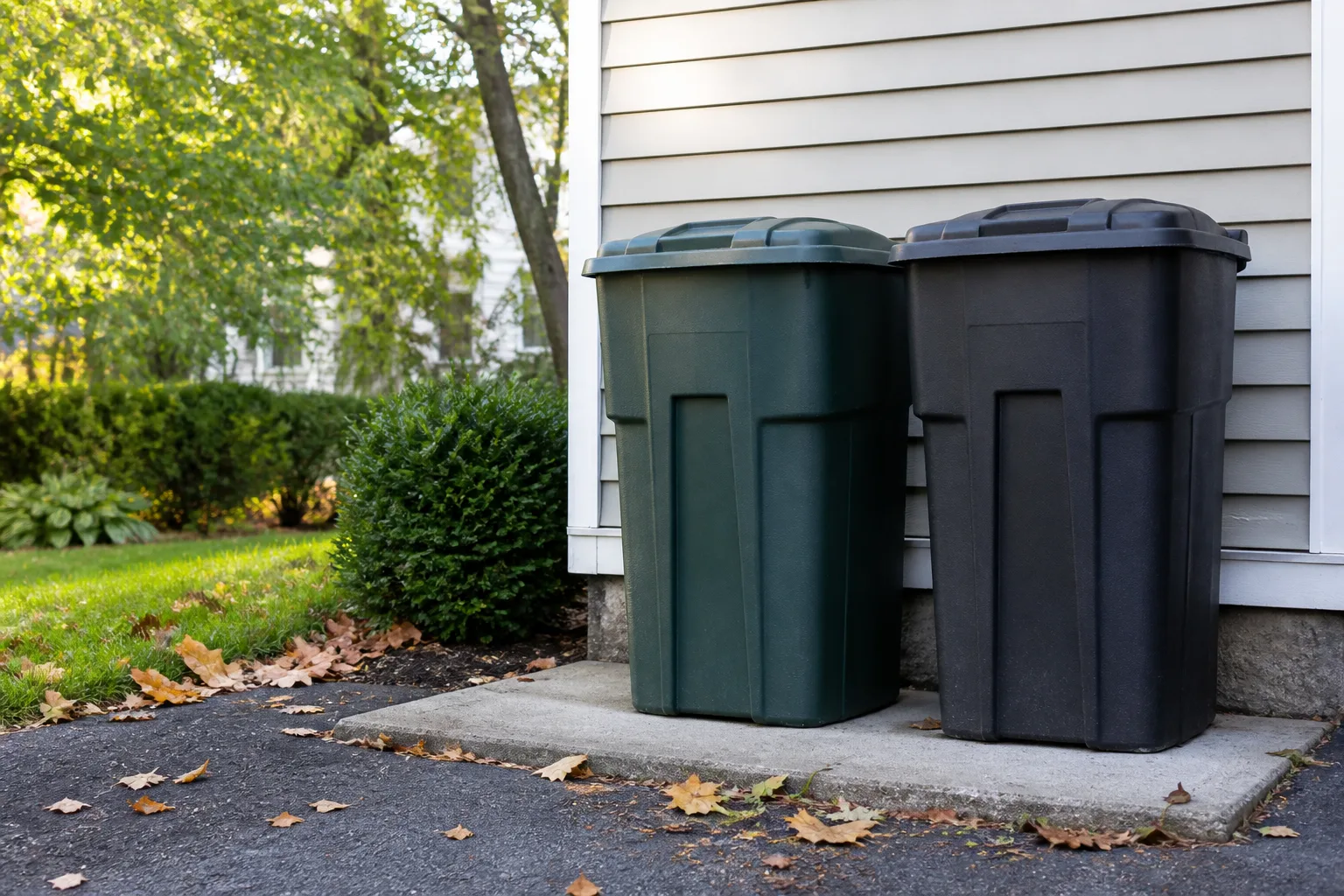
- Use garbage cans with tight-fitting lids; store cans in a secured area if possible.
- Bring pet food inside before nightfall.
- Remove fallen fruit and bird feeder spillage promptly.
- Do not intentionally feed wildlife—UC IPM notes that habituated skunks lose fear of people and create bite risk (UC IPM).
- Control rodents in sheds and garages; skunks follow mouse populations.
Shelter and clutter
- Stack firewood at least 18 inches off the ground.
- Clear brush piles, loose boards, and debris that harbor insects skunks eat.
- Trim overgrown shrubbery that hides den entrances.
Exclusion hardware
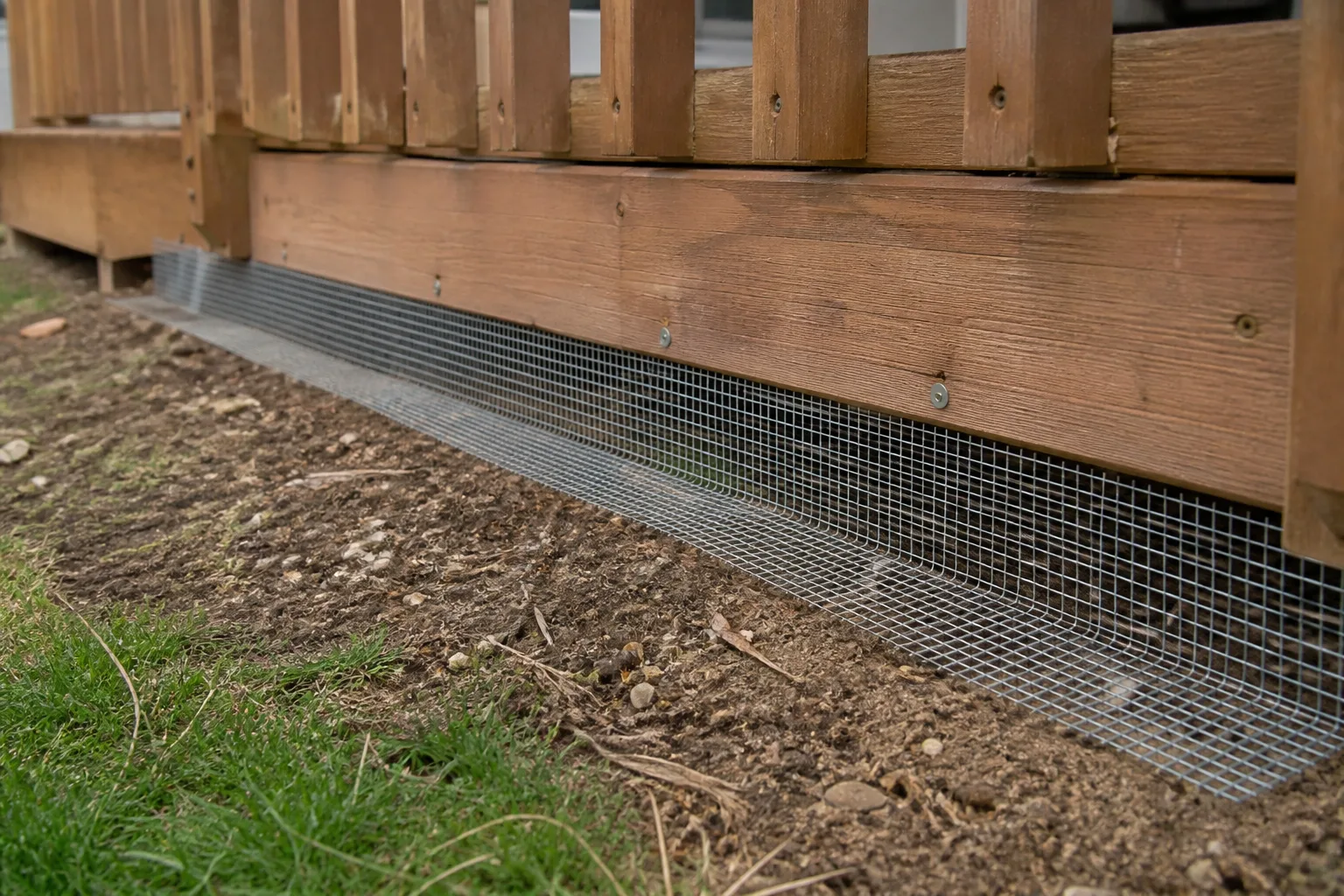
- Screen openings under decks, porches, and sheds with 1/4-inch hardware cloth.
- Bury wire at least 6 inches (Penn State recommends 1½–2 feet in dig-prone areas) with the bottom edge bent outward in an L-shape to block digging (Penn State Extension).
- Close ground-level gaps in poultry coops before dusk; skunks generally do not climb fences but will slip through holes.
This is the work pest pros mean when they say “exclusion.” It is more labor than soaking a rag—but it is the only method that stops the next skunk, not just today’s.
One-Way Doors and Baby-Season Timing
If a skunk is already living under your deck, you cannot seal the opening on day one. First confirm the animal has left, or install a one-way door that swings outward so the skunk can exit but not re-enter. Penn State Extension describes a simple plywood flap hinged at the top—larger than the opening, loose on three sides (Penn State Extension).
Critical timing: sealing a den from early May through mid-August can trap flightless kits inside, killing them and creating odor and fly problems. Wait until young are mobile, or verify the den is empty with a flour tracking patch at the entrance: sprinkle a smooth layer, check for exiting footprints after dark, then close the hole immediately once traffic stops (UC IPM).
If you are unsure whether babies are present, call a wildlife professional rather than guessing.
Other Smell-Based Deterrents and Their Limits
Homeowners reach for smell solutions because they are cheap and fast. Here is how common options compare—none replace exclusion.
Ammonia-soaked rags are the most cited home remedy after Pine-Sol. UC IPM reports some success driving skunks from beneath buildings, with the same fade-and-return cycle—and the same warning about fumes entering occupied structures (UC IPM). Never mix ammonia with bleach.
Citrus peels and peppermint or other essential oils on cotton balls in vented jars follow the same logic as Pine-Sol jars: mild annoyance, short window, must be refreshed. They are less likely to damage plants than poured cleaner but are equally unregistered and unproven at scale.
Mothballs (naphthalene) occasionally push mammals out of enclosed voids if used in large quantities and replaced often. Penn State cautions they are odor repellents only, not a standalone fix, and they are toxic if eaten by pets or children (Penn State Extension).
Commercial granular repellents (brands such as Safer Critter Ridder or Repels-All) work by irritating nasal passages temporarily. UC IPM’s broader skunk guidance rates commercial repellents as generally not very effective; some homeowners see short-term displacement near garden edges when used exactly as labeled. Treat them like Pine-Sol: a possible nudge, not a fence.
Motion Lights, Sprinklers, and Grub-Damaged Lawns
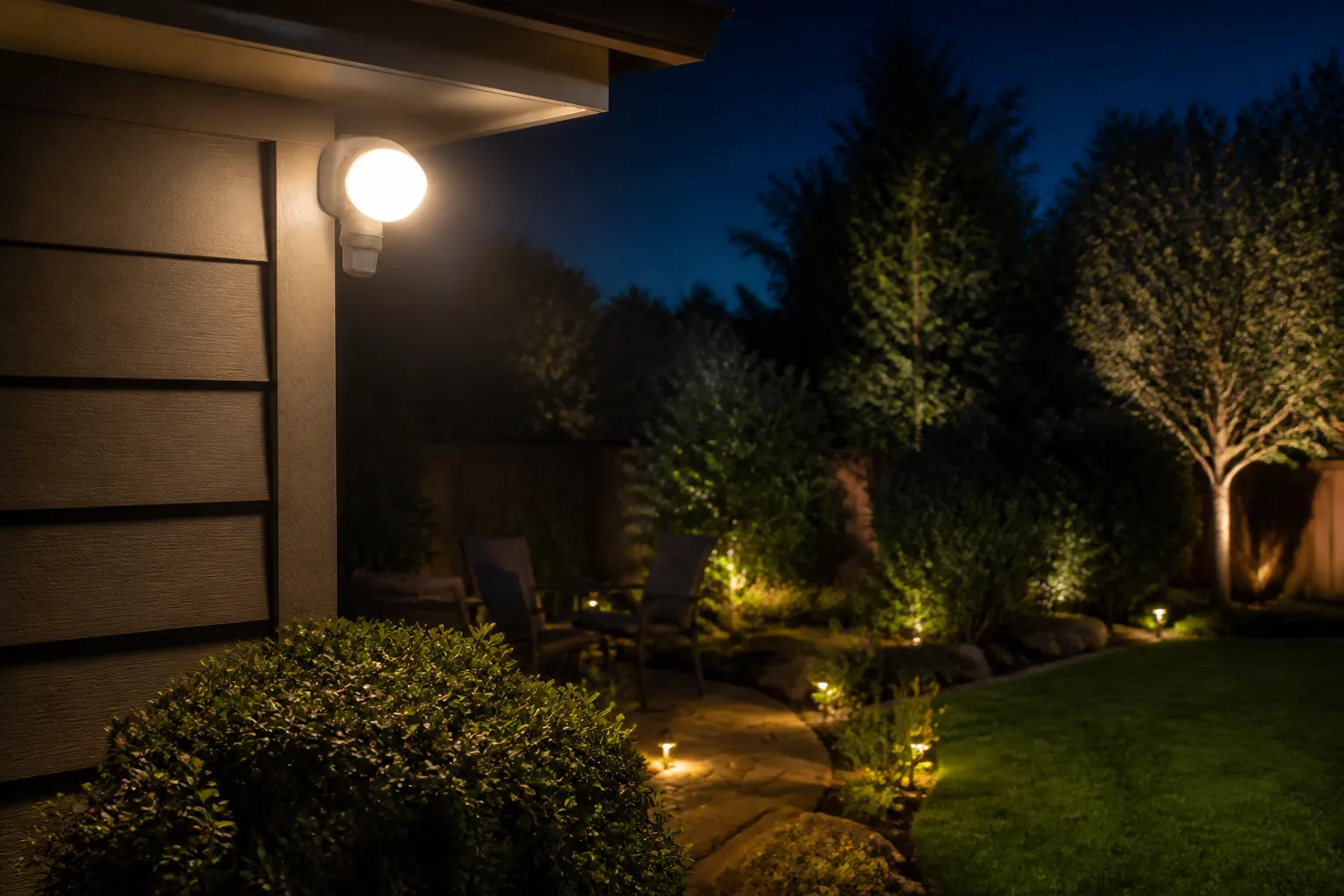
Motion-activated lights and sprinklers can startle a skunk on its nightly route and interrupt habituated travel paths. They work best on open approaches—walkways, lawn edges, garden gates—where the animal has not already committed to a den inches away. Effectiveness drops once a skunk is living under your deck; you cannot sprinkler your way out of structural shelter.
Use caution: startling a skunk at close range increases spray risk to people and pets. Position devices to give the animal an escape path away from you, not toward the back door.
Lawn digging is often grub hunting, not random destruction. Cone-shaped holes and rolled sod sections point to skunks (and sometimes raccoons) feeding on lawn insects.
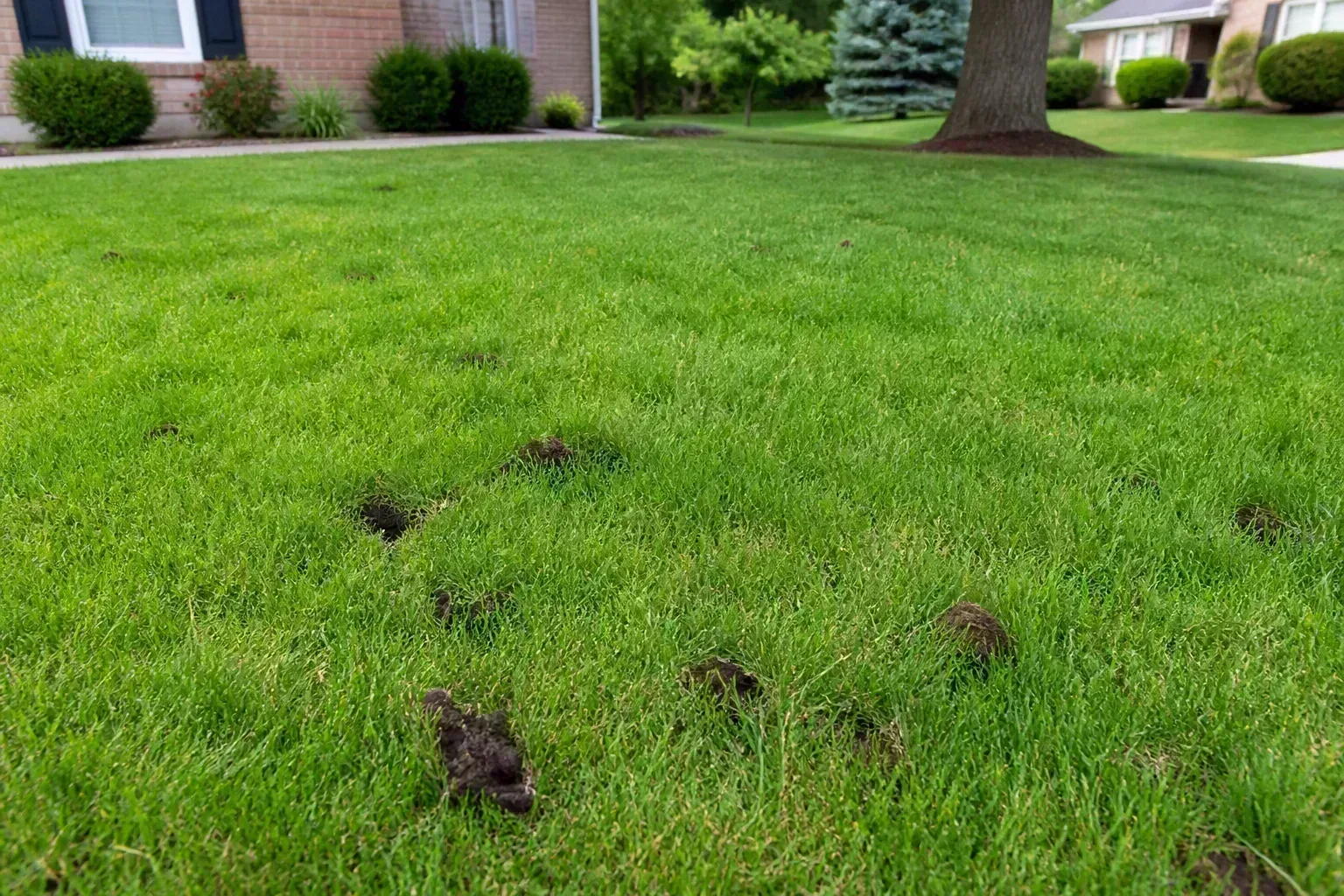 UC IPM suggests managing grubs and other lawn pests to reduce foraging incentive, referencing integrated lawn insect control rather than indiscriminate pesticide dumps (UC IPM). Fixing the insect problem addresses a root attractant Pine-Sol never touches.
When to Call a Wildlife Professional
DIY exclusion is reasonable for handy homeowners when no kits are present, rabies is not suspected, and the skunk has an obvious exit. Call a licensed wildlife control operator when:
- You hear or see young skunks and cannot confirm they have left the den
- A skunk acts aggressive, tame, or disoriented in daylight—possible rabies symptoms requiring health department involvement (UC IPM)
- The animal is under a foundation with HVAC draws that make fumigant or ammonia tactics unsafe
- You need live trapping and are in a state that restricts relocation of rabies vector species (Penn State notes Pennsylvania homeowners who trap skunks may not relocate them like other wildlife) (Penn State Extension)
- Repeated spraying incidents with pets or family members make professional removal worth the fee
Wildlifehelp.org and local extension offices can help you find region-appropriate assistance.
Conclusion
Pest pros agree on the headline: Pine-Sol might keep a skunk away for a little while, but it will not keep skunks away for good. The smell is a temporary deterrent in a category extension services do not recognize as a reliable solution—because skunks stay for food, shelter, and safe dens, not because your yard lacks pine fragrance.
Use Pine-Sol only as a short-term, carefully placed smell barrier while you do the real work: secure garbage and pet food, reduce grubs if lawn digging is the issue, and screen under decks and sheds with buried hardware cloth. Add one-way doors with baby-season awareness if an animal is already living on your property. Save motion lights and commercial repellents as optional extras—not the plan.
Skunks are worth tolerating when they pass through and eat pests. When they move in under your porch, the fix is structural and behavioral—not another bottle of cleaner at the property line.



