5 Ways to Reuse Wool in Your Garden
Sheep wool can mulch beds, feed soil, block slugs, and supply bird nesting fiber. Learn which wool is safe, how to apply it, and when pellets beat raw fleece.
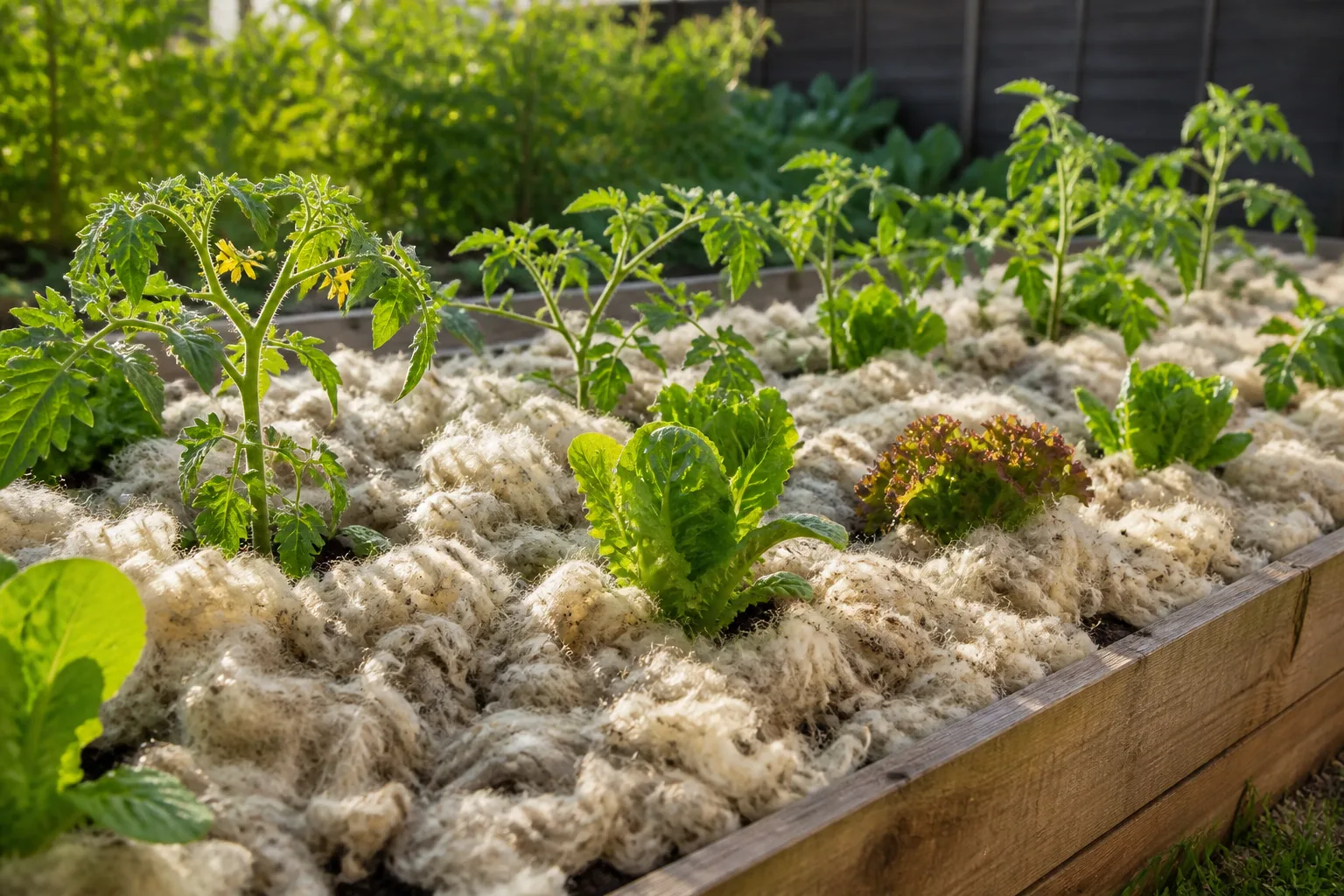
Sheep fleece is showing up in raised beds, tomato rows, and compost bins for a simple reason: wool in the garden solves real jobs—holding moisture through heat waves, feeding soil slowly, blocking slugs on hostas, and keeping belly wool out of landfills. Nearly half of the roughly 2 billion kilograms of wool produced globally each year is discarded as waste or low-value clip, according to Harvard researchers studying wool upcycling (Salata Institute). Gardeners who learn to use untreated wool or commercial wool pellets tap a biodegradable fiber extension specialists and sheep ranchers have been experimenting with for decades—not a Pinterest novelty.
The Quick Answer: Match Wool Form to the Job You Need Done
Use untreated raw fleece or purchased wool mulch mats on the soil surface when you need weed suppression and moisture retention. Mix wool pellets into potting soil or transplant holes when you want slow nitrogen near roots. Scatter coarse wool rings around slug-prone plants as a physical barrier—not a guarantee. Offer 2–3-inch snippets of clean, undyed wool in a mesh suet feeder for nesting birds. Skip anything dyed, moth-treated, or blended with synthetic fiber. Wool is listed as an organic input under the USDA National Organic Program (NOP), but only natural, untreated material qualifies.
If you are new to the idea, buy garden-grade wool pellets first—they are easier to measure and less likely to mat than a garbage bag of raw belly wool from a farm stand.
Untreated Fleece, Pellets, and Mats at a Glance
Raw fleece is the full lock as shorn from the sheep—great for mulch layers and slug collars, harder to measure for fertilizer. Pellets are shredded, compressed wool roughly dime-sized or smaller; ranchers developed them partly from “waste wool” (belly and hindquarter clip that may represent up to 20% of a fleece) that textile markets reject (Ohio State University Small Ruminant Team). Woven wool mats—sold as mulch squares—last about two years in vegetable beds before breaking down, longer than straw that can collapse in a single season (Gardening Know How). Match form to patience: mats and fleece mulch work on the surface; pellets work in the soil profile.
Why Wool Belongs in Modern Garden Beds Again
Wool fiber is built like a tiny sponge wrapped in a water-repellent sleeve. Lanolin and other waxes on the outer cuticle shed initial downpours; the inner cortex holds and releases water slowly—exactly the behavior you want in mulch and soil amendments (Ohio State University). In wilt studies cited by wool pellet producers and relayed through OSU extension channels, potting mix amended with wool kept small containers from wilting for roughly a week longer than plain soil before stress showed—because wool can hold 20–30 times its weight in water and release it gradually rather than drowning roots.
Gardeners also reach for wool as part of the peat-free compost movement. Peat extraction releases stored carbon and damages bog habitats; wool-based compost blends (often wool plus bracken or other browns) aim to replace peat’s water-holding role with a renewable, biodegradable fiber (Ohio State University). You do not need to replace your entire potting program overnight—but a wool layer or pellet dose is a legitimate step toward less peat-dependent beds.
Waste Wool, Water Retention, and the Peat-Free Shift
When sheep are shorn, not every lock goes to yarn. Belly wool, stained tips, and coarse hill-breed fleece historically sold for pennies or went to landfill. Putting that stream into gardens gives ranchers value and gives you local, carbon-smart organic matter. Pair wool mulching with other water-smart habits—deep morning irrigation, drip lines, and shade cloth during heat spikes—for beds that stay evenly moist without daily panic watering. Our container plants in summer guide covers complementary tactics when pots dry faster than in-ground rows.
Which Wool Is Safe—and Which Fiber to Keep Out of Soil
Safe: raw sheep wool with no dye, no mothballs, no permanent chemical mothproofing, and no polyester or nylon blends. Garden-specific wool pellets from reputable suppliers (processed for horticulture, not craft felt). Soiled belly wool or daggings can go in hot compost where manure and urine residues break down with the fiber—extension summaries note daggings add organic matter alongside nitrogen (Ohio State University).
Not safe: thrift-store sweaters (synthetic blends, detergents, fabric softeners), carpet offcuts with latex backing, dyed craft roving, or wool treated with long-lasting pesticides. Those introduce plastics, surfactants, or residues you do not want near food crops. If you cannot trace the fleece to a sheep and a scouring process you trust, do not bury it in a vegetable bed.
1. Wool Mulch That Holds Moisture and Suppresses Weeds
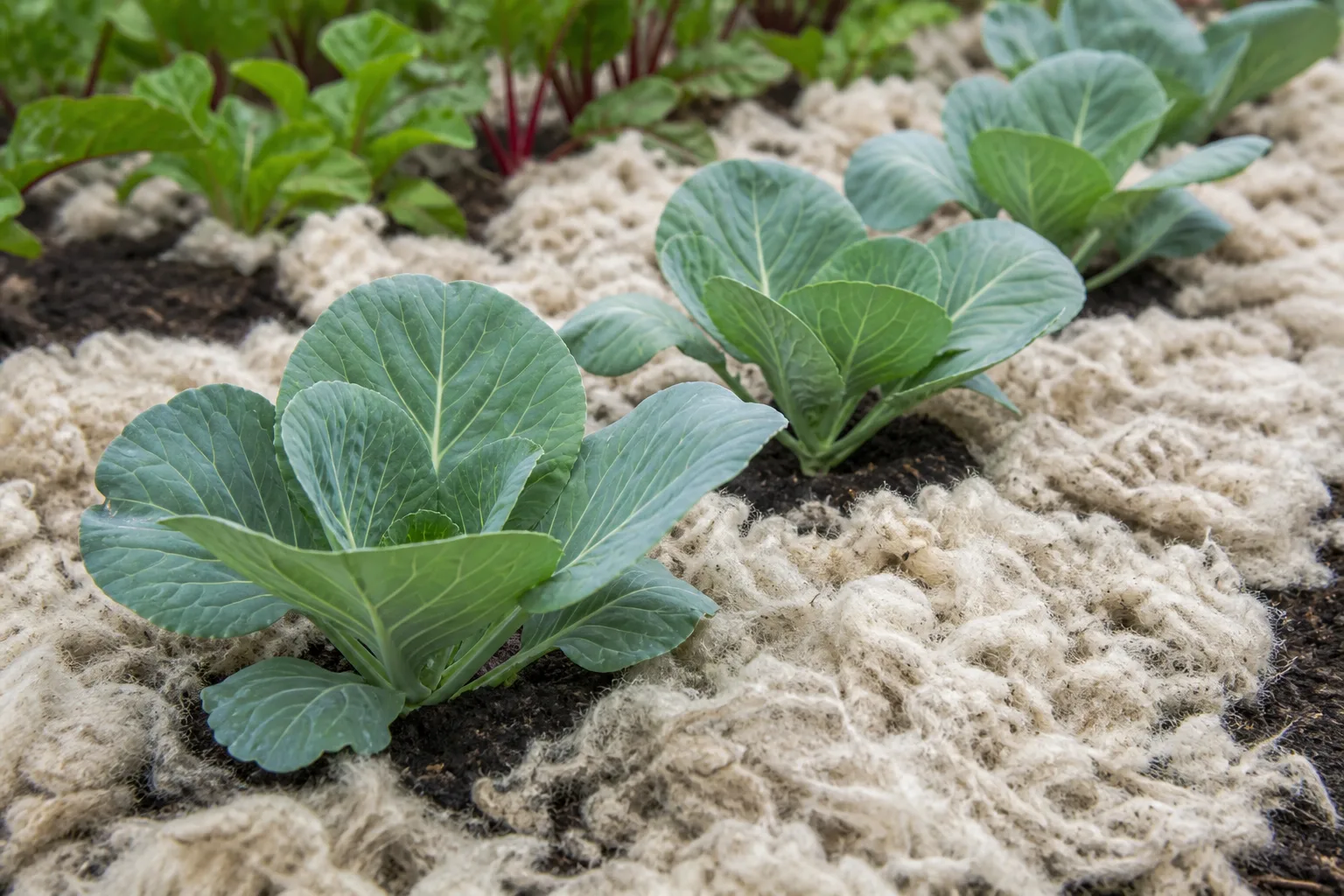
Wool mulch behaves like premium organic mulch with a longer resume. Spread on the soil surface, it reduces evaporation, blunts temperature swings (cooler midsummer highs, warmer late-winter lows near crowns), and blocks light weeds need to germinate—similar goals as bark or straw, with slower breakdown (Ohio State University). Research on wool fabric in strawberry rows found near-complete weed suppression compared with hand-weeded controls, plus less daily soil temperature variation under the fiber layer (University of Minnesota conservancy archive).
Compared with straw, wool mats often last at least two years before fully integrating into soil—straw can collapse and expose bare soil within a season (Ohio State University). That longevity means less remulching labor, though it also means you must plan placement carefully because lifting a mat midseason can disturb roots.
How to Lay Raw Wool or Mats Without Smothering Plants
For commercial wool mats, cut strips with heavy shears so each piece fits the bed with a gap at the plant crown—never pile fiber against stems where rot can start (Gardening Know How). Stake edges if wind is an issue. Apply granular fertilizer or a compost top-dressing before laying mats; it is awkward to fork amendments under a staked mat later. Pour liquid feed onto the wool surface and let it seep through slowly rather than blasting the crown with a hose.
For loose raw fleece, tease locks apart so you get a fluffy 1–2 inch layer, not a dense felt pad. Compact bundles shed water on top while staying dry underneath—the opposite of what you want. Leave 3–4 inches clear around woody stems and seedlings. In vegetable rows, some growers plant through holes cut in mats at install time so they never move the mulch midseason. If weeds poke through gaps, spot-pull; wool is a strong barrier, not a plastic sheet. For broader mulch strategy, see does mulch prevent weeds—wool fits the same rules about depth and crown clearance.
2. Slow-Release Wool Fertilizer as Fiber Breaks Down
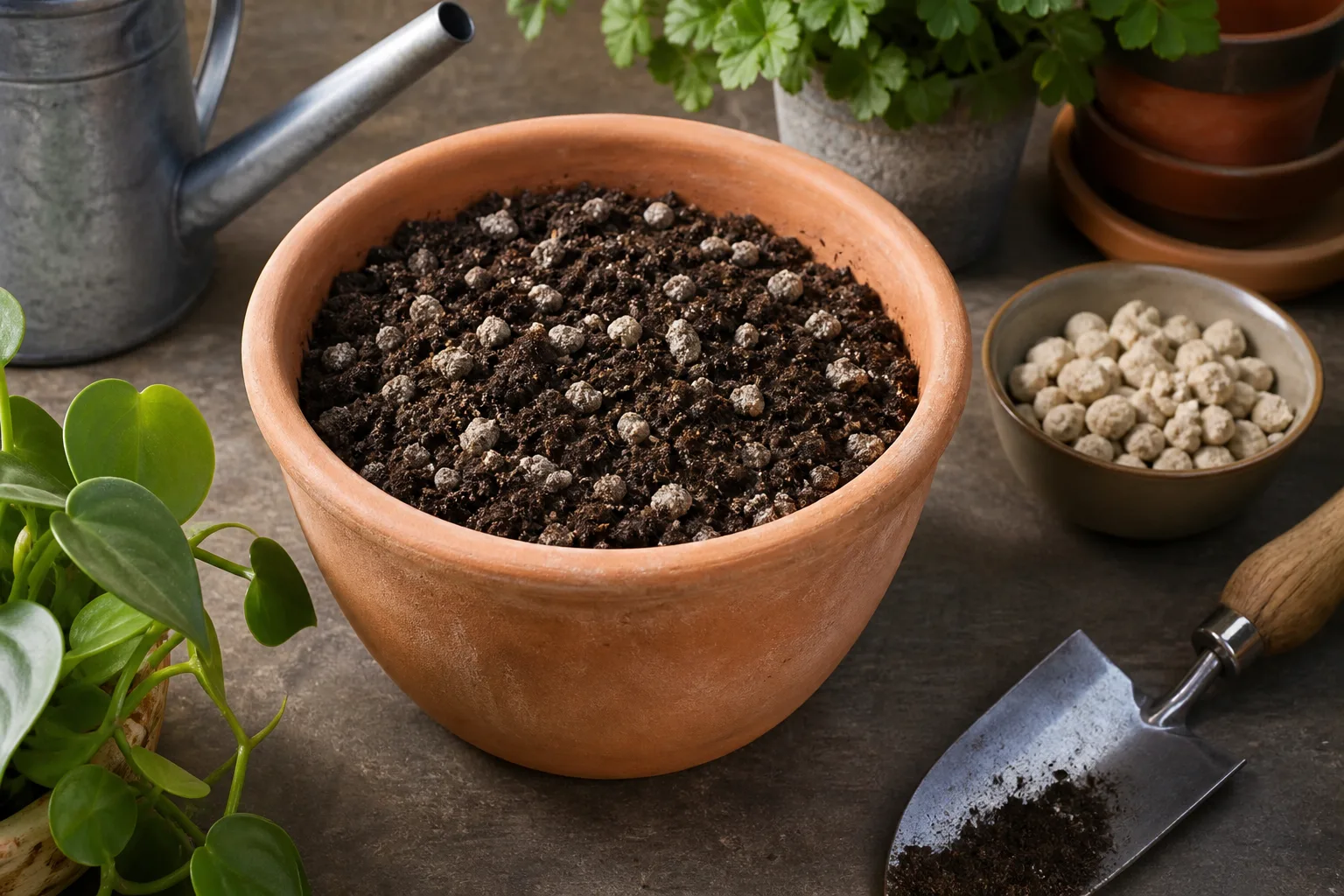
As wool biodegrades, it releases nitrogen, smaller amounts of potassium and phosphorus, and trace minerals including iron and sodium from suint (wool grease salts) (Ohio State University). Average wool contains roughly 10–11% nitrogen by weight—more than many composts and comparable to strong organic amendments (Acta Horticulturae). Small-ruminant specialist Brady Campbell at Ohio State notes wool commonly tests around 9-0-2 N-P-K—heavy on nitrogen, light on phosphorus, modest potassium—making it a supplemental leafy-growth feed, not a complete balanced fertilizer for fruiting crops alone.
Breakdown speed depends on climate and wool grade: three months to two years is the realistic range (Woolmark). Fine wool disappears faster; coarse hill-breed wool persists longer—useful when you want extended slow release in perennial beds. Container trials cited in wool-compost literature even show roots growing directly along wool fibers used as a growth medium, suggesting the fiber can act as both structure and nutrient source in pot mixes (ScienceDirect compost research).
Reading N-P-K Numbers and Setting Realistic Expectations
Treat wool as background fertility, not a rescue dose for yellow, starving tomatoes mid-July. Pellet makers report greenhouse tomato trials where wool-amended mix shortened days to market compared with low-nitrogen compost alone—but your backyard will not mirror a commercial greenhouse (Ohio State University). A practical starting point for wool pellets: mix ½ cup per gallon of potting soil for containers, or 1–2 cups in each transplant hole for hungry feeders like brassicas and corn. For raw wool worked into soil, aim for no more than 10–15% of mix volume in a raised bed; higher ratios risk matting and temporary nitrogen tie-up while microbes digest the fiber.
Because release is slow, soil tests still matter. Wool will not fix alkaline clay or phosphorus deficiency by itself. Pair it with compost and targeted amendments based on lab results—not guesswork.
3. Wool to Improve Soil Structure and Long-Term Tilth
Beyond nutrients, decomposing wool feeds earthworms, adds porosity as fibers create channels, and helps clay soils soften over repeated seasons (Ohio State University). Wool’s absorb-release cycle reduces crust formation on bare soil and buffers swings that stress shallow-rooted crops. In compost piles, shredded wool mixed with grass clippings and manure (roughly 25% wool, 25% manure, 50% clippings by volume in large-scale studies) produced stable moisture and temperature profiles (Springer compost research). Home gardeners can mimic the idea at scale: shred fleece before composting so it does not clump into waterproof balls.
pH, Sulfur, and the Acid-Loving Plant Caveat
Wool contains sulfur-rich proteins; as they break down, localized acidification can occur. University of Wyoming extension educator Jedidiah Hewlett reported a small raised-bed trial mixing 10 pounds of raw wool into a 3×3-foot bed of store potting soil; soil tests the following spring showed pH 5.3 in the wool bed versus 6.4 in untreated soil—potentially helpful for blueberries, potatoes, and rhododendrons, but worth monitoring elsewhere. Treat that as one trial, not a universal rule: your starting pH, water chemistry, and wool amount will differ. If you already struggle with acid soil, skip heavy wool incorporation in lime-loving vegetable plots (cabbage family in high pH regions) until you retest. For grandparents’ low-tech soil tricks that pair well with organic matter experiments, browse forgotten gardening tips.
4. Coarse Wool as a Slug and Snail Barrier
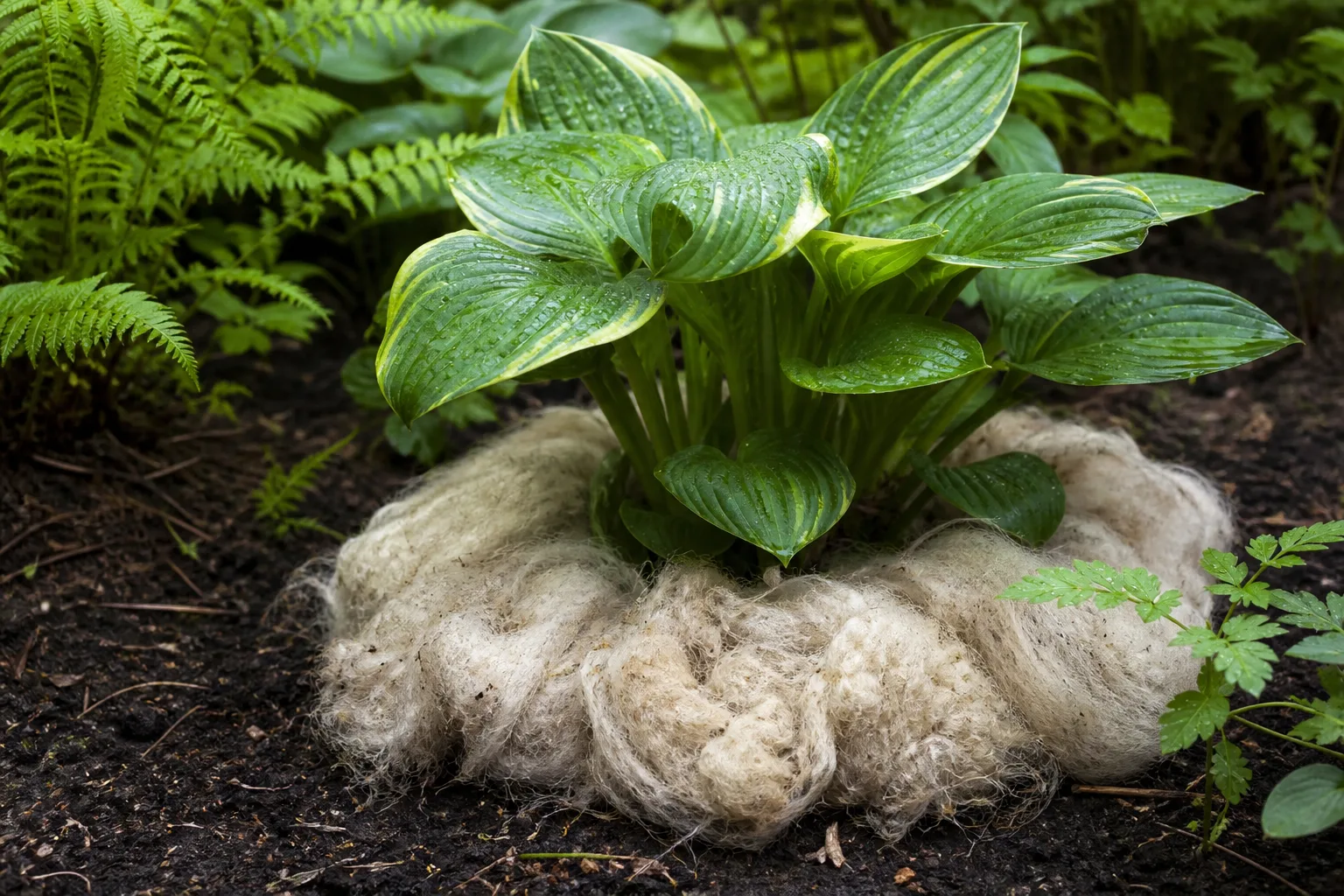
Slugs hate crawling over microscopic barbed wool scales—soft to your hand, abrasive to a slug’s belly. Extension summaries and rancher field reports consistently list slug and snail deterrence among wool’s side benefits (Ohio State University). Pelleted wool around crowns may help; loose coarse locks in a 6–12 inch ring around slug magnets work better because the barrier is physically tall and tangly.
Where the Barrier Works Best (and Where It Does Not)
Target hostas, dahlias, cabbage, strawberries, and young lettuce—crops slugs attack first in damp weather. Dry the ring after heavy rain; soggy, flattened wool loses texture. Do not rely on wool alone in a slug epidemic: hand-pick at dusk, use iron phosphate baits where allowed, and remove hiding spots (boards, dense weed mats). Wool is integrated pest management padding, not a chemical replacement. Barriers fail on tree trunks, stone walls, and fence lines where slugs descend from above—block ground routes only.
5. Untreated Wool Scraps for Backyard Bird Nesting Material
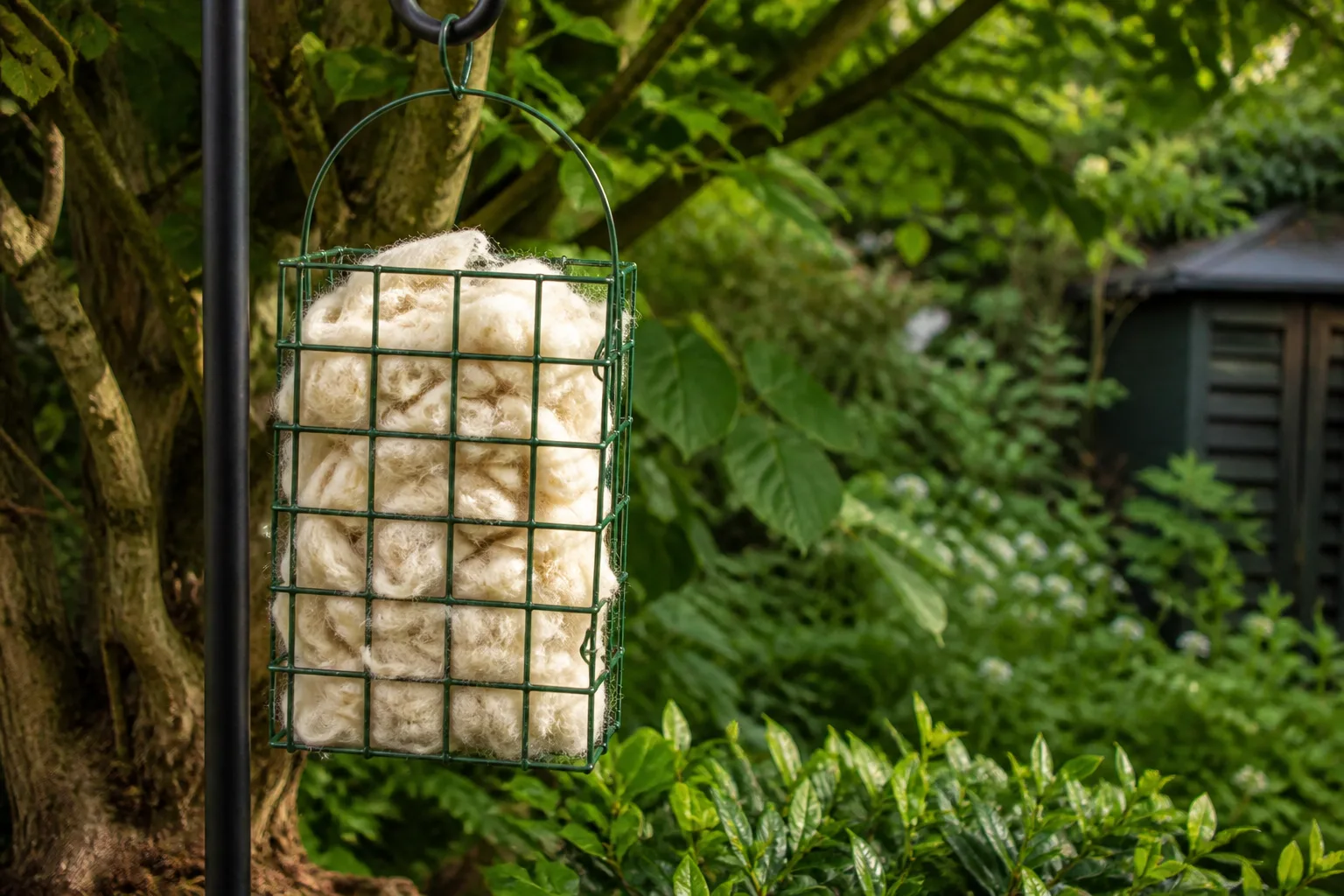
Clean wool makes excellent bird nesting fiber—warm, breathable, and natural. Offer it alongside your habitat plantings, not instead of native shrubs birds already use. Avoid long dangling strands that can wrap toes or nestlings; cut fleece into 2–3 inch pieces and place them loosely in a wire suet cage or mesh bag where species can pull fibers without entanglement.
Cutting Length and Display Rules That Protect Small Birds
Use sharp scissors on dry fleece. Remove twine, tags, or baling wire from farm fleeces before offering. Refresh the feeder monthly during nesting season; wet, matted wool in a cage helps nobody. This pairs naturally with other wildlife-friendly garden habits—water sources, native seed heads, and untreated nesting materials only. Skip pet hair unless you know it is free of flea treatments; wool from your own untreated clip is the safer choice.
Wool Pellets vs. Raw Fleece: Choose the Right Form
| Your situation | Best choice | Why |
|---|---|---|
| Container tomatoes or peppers | Pellets mixed into soil | Measured nitrogen, less matting |
| Permaculture orchard mulch | Raw fleece or mats | Long-lasting surface cover |
| Slug-prone shade bed | Coarse raw locks in rings | Texture height deters slugs |
| Compost boost | Shredded belly wool / daggings | Nitrogen + browns balance |
| Bird nesting station | Clean scraps in mesh feeder | Not a soil application |
| First-time wool user | Commercial pellets | Predictable, horticulture-grade |
Pellets cost more but save labor and integrate cleanly. Raw fleece is cheap or free from local shepherds yet demands fluffing and thoughtful placement. Mats excel in vegetable rows where you want two seasons of weed control. If you must pick one experiment this year, pellets in one raised bed plus a fleece mulch strip in another teaches you more than guessing.
Common Mistakes That Cancel Wool’s Benefits
Using treated or blended fiber is the biggest error—one polyester sweater shred persists for years. Packing wool tight creates a water-shedding cap; always fluff. Expecting instant fertilizer leads to disappointment; mark your calendar for 90-day check-ins instead. Smothering crowns invites stem rot; keep gaps. Over-applying in already-acid soil without testing can push pH too low for beans and beets. Assuming slug proofing invites crop loss—scout anyway. Composting bundled whole fleeces produces anaerobic clumps; shred first. Finally, ignoring the season: apply surface mulch after soil warms in spring for heat lovers; lay winter protection after a hard freeze for marginally hardy perennials.
Conclusion
Wool in the garden earns its place when you treat it like a multi-tool organic input—mulch for water and weeds, slow fertilizer as it rots, slug texture where damp shade breeds pests, compost bulk that replaces peat-dependent mixes, and clean nesting fiber for birds—not a magic substitute for soil tests, crop rotation, or integrated pest control. Start with untreated wool or horticultural pellets, match form to bed type, and measure results over a full season. You reduce waste from an underused natural fiber, support sheep producers sitting on low-value clip, and build soil that holds moisture longer between waterings—the kind of practical win pro gardeners chase when bark mulch alone is not enough.