Worst Lawn Mistakes During a Heat Wave
Landscaping pros agree: the worst heat-wave lawn mistake is mowing when grass is already wilting. Get a clear do-and-don't plan here.
The worst thing you can do to a lawn during a heat wave is mow it while the grass is already stressed—especially if blades are wilting, footprints linger, or the turf has shifted from rich green to dull blue-gray. Mowing is never a neutral chore. It removes leaf tissue that shades soil, opens wounds on dehydrated plants, and invites traffic that compacts hot, dry ground. During a multi-day stretch above normal for your region, that routine cut can push turf from recoverable dormancy into crown damage that shows up as tan stripes, tire tracks, and bare patches long after temperatures drop.
This guide is for homeowners with established cool-season or warm-season turf—not vegetable beds or container plants. If your priority is the edible garden, pair these lawn rules with our heatwave vegetable garden guide. For August timing and deck-height basics any month, see should you mow the lawn in August.
Why Extreme Heat Hits Lawns Harder Than It Looks
Turfgrass looks simple from the kitchen window, but it is a living surface engineered to balance photosynthesis, transpiration, and root uptake every hour. When air temperature climbs and humidity drops, leaves lose water faster than roots can replace it—even when the top inch of soil still feels cool. University of Maryland Extension notes that efficient lawn watering depends on matching output to what roots can actually absorb, which shrinks when soil heats and oxygen drops near the surface.
Heat also changes where roots live. Under prolonged stress, roots retreat toward the surface and stop extending downward—the opposite of what you want before drought. Cultural practices that remove leaf area or compact soil during that retreat accelerate damage. That is why the same mower setting that worked in May can scalp stressed turf in July.
Cool-Season vs Warm-Season Grass Under Stress
Cool-season grasses—Kentucky bluegrass, tall fescue, perennial ryegrass, fine fescues—grow best in spring and fall. They slow or enter summer dormancy when soil dries and air stays hot. Iowa State University Extension explains that dormancy is a survival strategy: shoots brown while crowns and roots stay alive, waiting for cooler weather and moisture. These lawns suffer most when you mow short, water shallowly, or fertilize into brown turf.
Warm-season grasses—bermudagrass, zoysiagrass, St. Augustinegrass, centipedegrass—peak in summer heat but still have limits. They tolerate higher temperatures than fescue, yet extreme drought plus heavy traffic can thin them fast. Mowing during midday heat on either grass type adds mechanical stress on top of environmental stress—the combination landscaping pros warn against.
If you are unsure which grass you have, check whether the lawn greens fastest in April or in June. Mixed lawns are common; treat the weakest grass in the mix as your limiting factor and favor shade and height over aggressive grooming.
The Worst Mistake: Mowing an Already Stressed Lawn
Landscaping and extension specialists consistently rank mowing heat-stressed turf among the most damaging homeowner moves in a heat wave—not because mowing is always wrong, but because it is almost always mistimed. Every pass removes leaf blades that act as a living mulch. Shorter grass exposes soil to direct sun, which raises root-zone temperature and speeds evaporation. University of Illinois Extension emphasizes that removing more than one-third of the leaf blade in a single cut shocks plants and forces regrowth when they should be conserving energy.
Mowing also repeats a common misconception: you cannot mow your way out of heat stress. A neat stripe pattern does not restore moisture. It just lowers the canopy that was protecting crowns.
What Mowing Removes When Turf Is Wilting
Healthy turf uses leaf area to feed roots and shade the crown—the growing point at the base of each plant. When blades wilt, that factory is already offline. Cutting further:
- Strips shade so soil surface temperature spikes, especially next to pavement and south-facing slopes.
- Opens ragged wounds if blades are dull, increasing water loss and fungal entry (University of Minnesota Extension on mowing practices).
- Forces the plant to reroute reserves from roots to new leaf tissue when roots are already pulling back from dry soil.
RHS drought guidance recommends raising the cutting height and reducing mowing frequency during dry spells—implicit acknowledgment that less cutting is safer than more. If your lawn fails the footprint test (below), the mower stays in the garage.
Foot Traffic, Mowers, and Heat Tracking
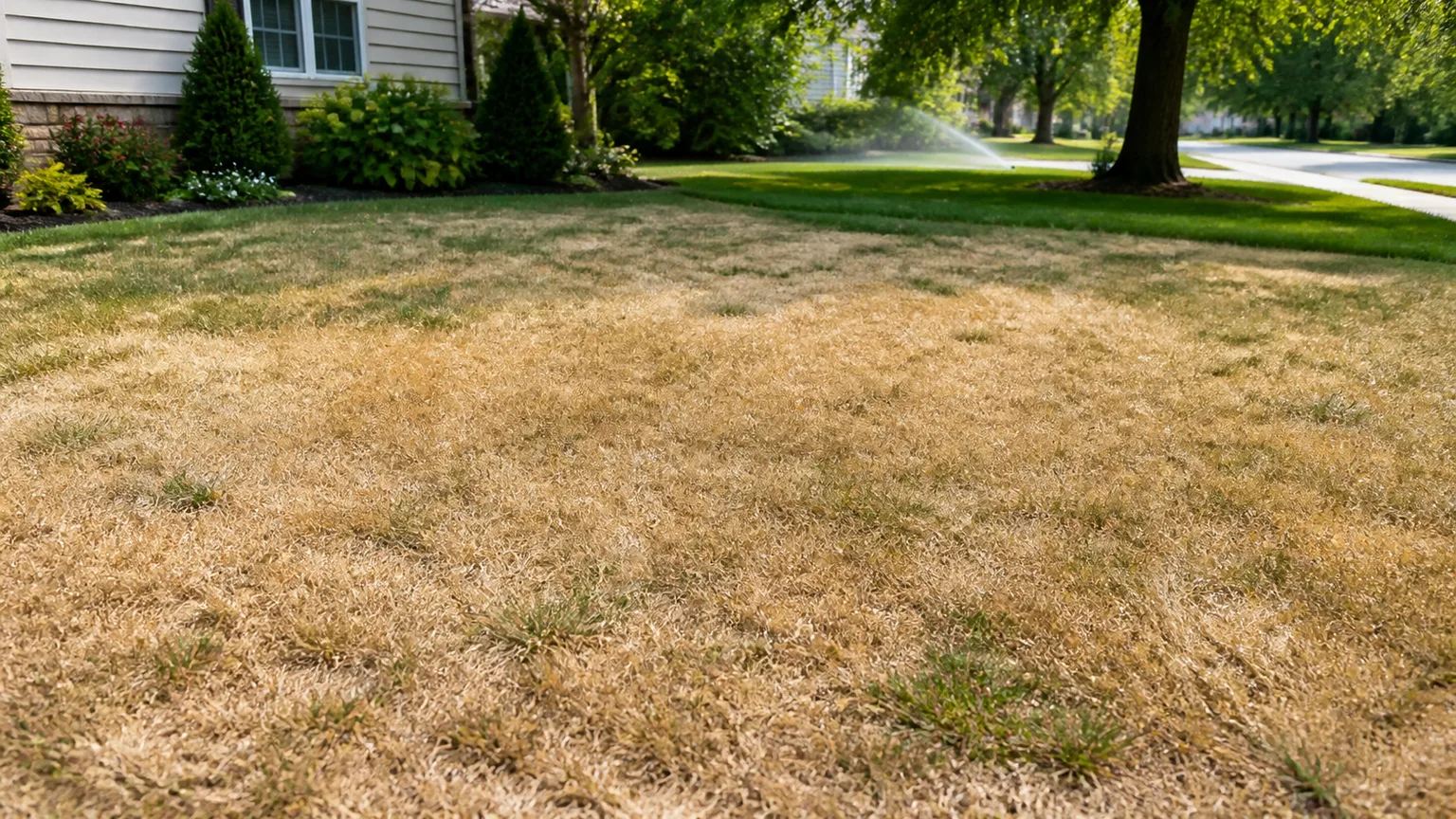
Walking on wilted turf or running a mower over it causes heat tracking—persistent brown footprints or tire stripes that mirror your path. Those marks are not just cosmetic; they reflect crown bruising on plants too dehydrated to spring back. Heavy foot traffic during heat waves also compacts soil so irrigation and rain cannot penetrate evenly—a problem Positive Bloom’s extreme-heat mowing coverage ties to thin, weedy recovery zones.
Redirect kids, pets, and delivery shortcuts off the lawn until grass firms overnight again. If you must cross it, use established paths and accept temporary discoloration rather than dragging equipment across the same wilted strip twice.
Other High-Impact Mistakes During a Heat Wave
Mowing is the headline error, but panic responses cause plenty of secondary damage. Treat these as a pause list until temperatures normalize or you commit fully to an irrigation plan.
Fertilizing or Herbicide Applications on Shut-Down Turf
Hold nitrogen fertilizer when turf is brown or barely growing. Salts concentrate in drying surface soil, and new top growth demands water the plant cannot afford. Illinois Extension drought guidance recommends letting cool-season lawns go dormant rather than pushing growth with fertilizer during dry heat.
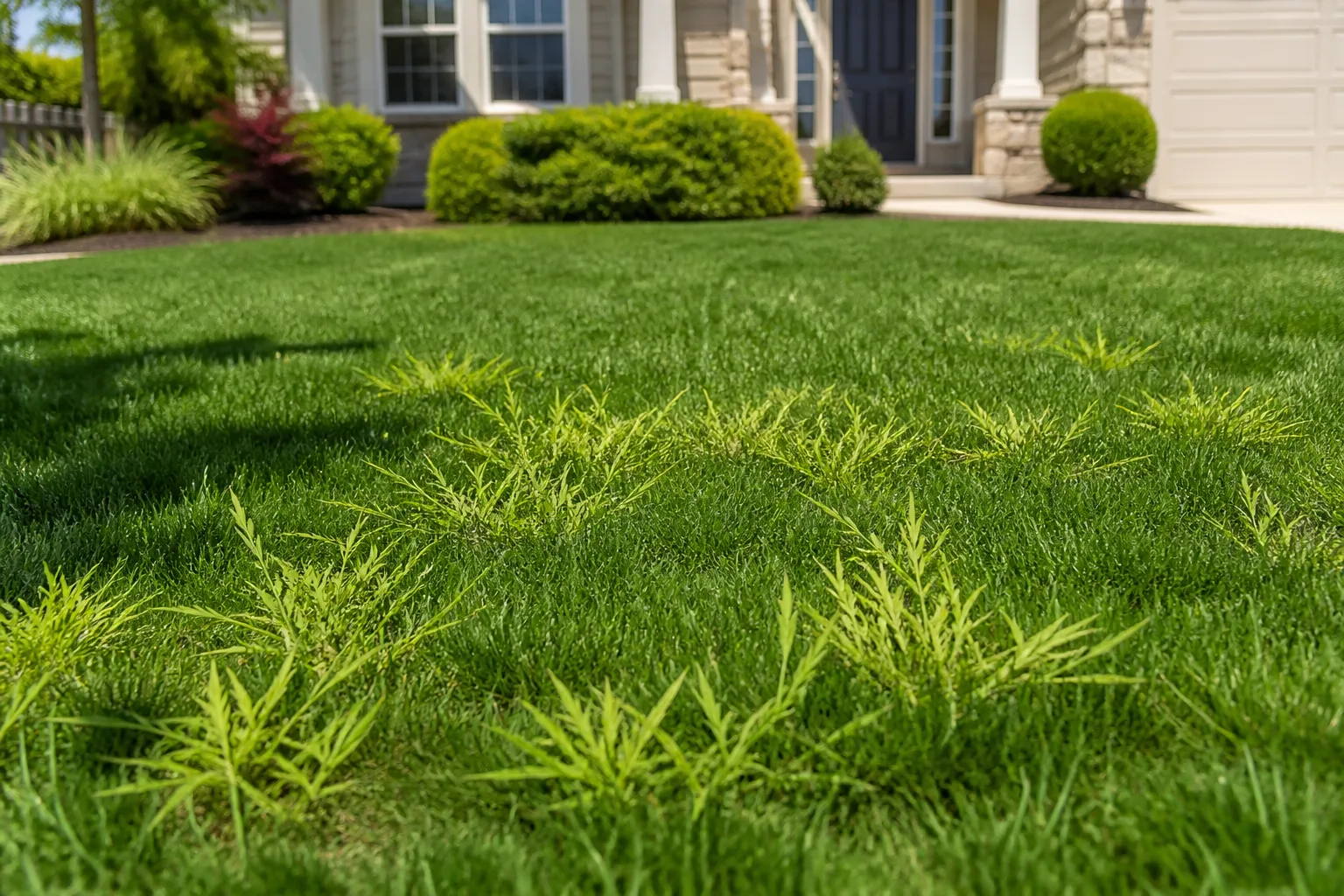
The same pause applies to broadleaf herbicides and grub controls unless product labels explicitly allow stressed turf—and many do not. Chemical burns on heat-stressed grass show up as uniform tan patches that mimic drought but do not recover with rain alone. Weed invasion in thin areas is real; hand-pull isolated crabgrass after temperatures drop rather than spraying on a 95°F afternoon.
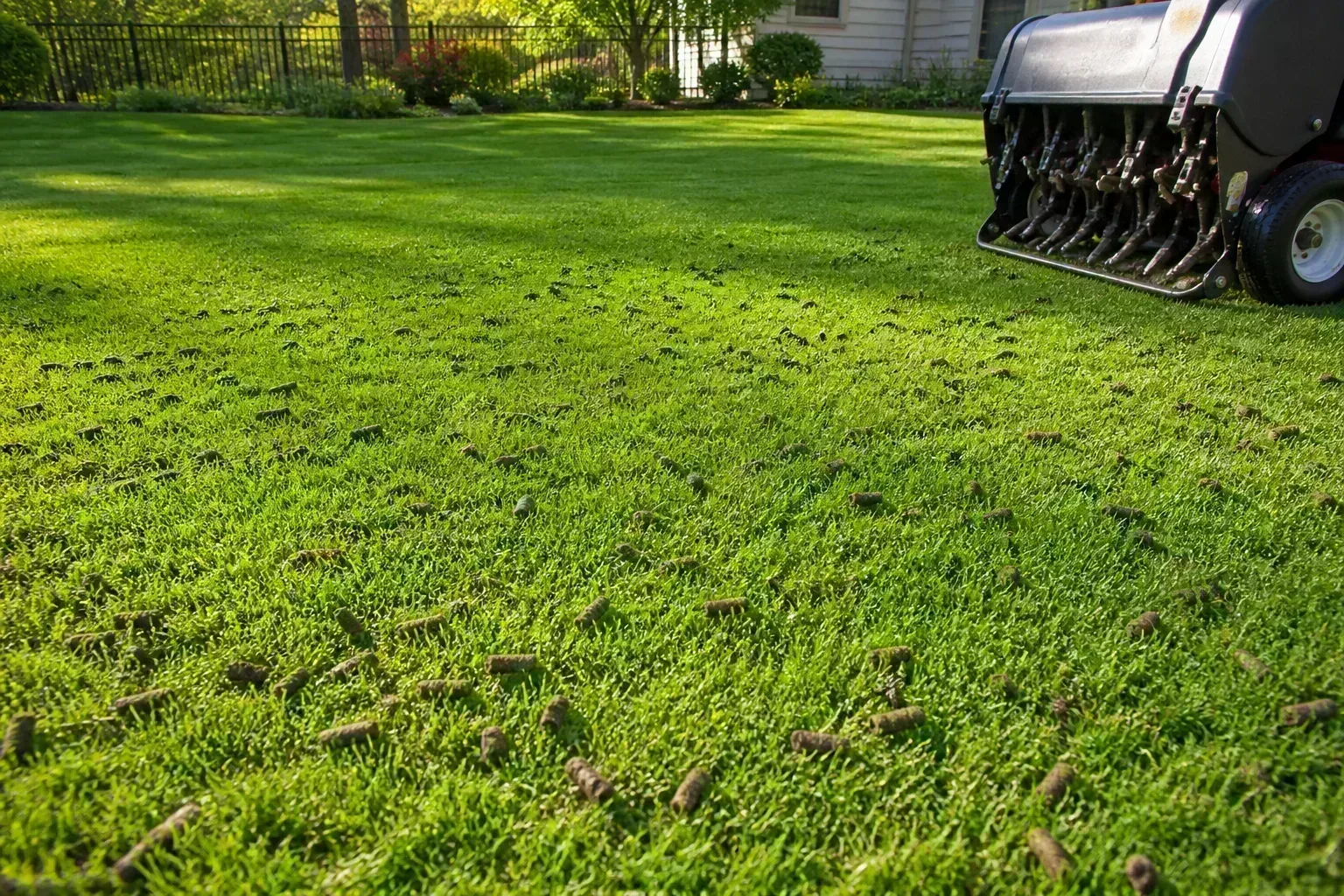
Core aeration and dethatching are valuable recovery tools in early fall, not mid-heatwave rescue moves. Wait until soil moisture returns and grass actively grows again.
Daily Shallow Sprinkles and Mid-Afternoon Soaks
The second-most-common heat-wave mistake is watering on autopilot—especially short daily sprinkles at noon or dusk. Shallow water trains roots to stay near the surface where soil bakes first, which makes every afternoon wilt worse. Gardzen’s hot-weather lawn guidance notes that most lawns need about an inch of water weekly under normal conditions and may need more in heat—but depth and timing matter more than frequency on a calendar.
Evening irrigation keeps blades wet overnight, inviting fungal issues on stressed turf in humid regions. Mid-afternoon overhead watering loses much of what you apply to evaporation and can scald leaf tips when droplets act like magnifiers on intense sun—another reason extension programs push early-morning deep watering instead.
If you are trying to save money and water, read how lawn pros save on water in summer before you copy a neighbor’s sprinkler schedule.
Read the Warning Signs Before You Touch the Mower
Heat-stressed lawns signal before they fail. Run this 60-second check on a hot afternoon, then again at dawn:
Footprint test: Walk across the lawn and look back. If footprints or mower tire impressions remain visible for more than 30 seconds, turf lacks turgor pressure—internal water tension that keeps blades upright. That is a do not mow flag.
Color shift: Healthy green fading to blue-gray or olive often precedes uniform brown. Edge zones next to driveways and sidewalks usually change first because pavement radiates heat.
Leaf fold: Blades rolling lengthwise or feeling crisp underfoot mean the plant is conserving water aggressively.
Patchy vs uniform brown: Even tan across a cool-season lawn often means dormancy. Sharp circles or rings may mean disease—see brown patches on lawn before you soak diseased turf.
If morning footprints disappear and color improves overnight, you may only be seeing afternoon heat wilt on an irrigated lawn—not full dormancy. That distinction saves you from drowning grass that was fine at the root zone. When brown persists into cool mornings, switch to the dormancy or deep-watering path below—not the mower.
Dormancy vs Irrigation: Pick One Strategy
The biggest strategic error is half-measures: watering enough to prevent dormancy but not enough to keep roots deep, while still mowing on schedule. Choose deliberately.
Letting Cool-Season Turf Go Brown on Purpose
For many Kentucky bluegrass and fescue lawns, planned summer dormancy is healthier than weak irrigation. Iowa State Extension notes that healthy dormant turf can survive roughly four to six weeks without rain or irrigation before crowns begin dying—longer on well-established lawns, shorter on new sod or sand-heavy soil.
During dormancy:
- Stop mowing until growth resumes or you commit to full irrigation.
- Minimize traffic on brown turf; crowns are fragile even when blades look dead.
- Do not fertilize brown grass to “wake it up.”
- Accept temporary brown in exchange for fall green-up when nights cool.
If your lawn is still brown after watering in fall, read why your lawn is still brown after watering—the issue may be compaction, disease, or irrigation gaps rather than heat alone.
Committing to Keep a Lawn Green Through the Spike
If curb appeal, new sod, or heavy use requires green turf, you must irrigate completely—not sprinkle heroically on weekends. That means measuring output, auditing overlap, and accepting higher water bills or restriction limits. Penn State Extension’s seasonal lawn management guidance ties summer color to consistent cultural care, not emergency fixes.
Green-path checklist:
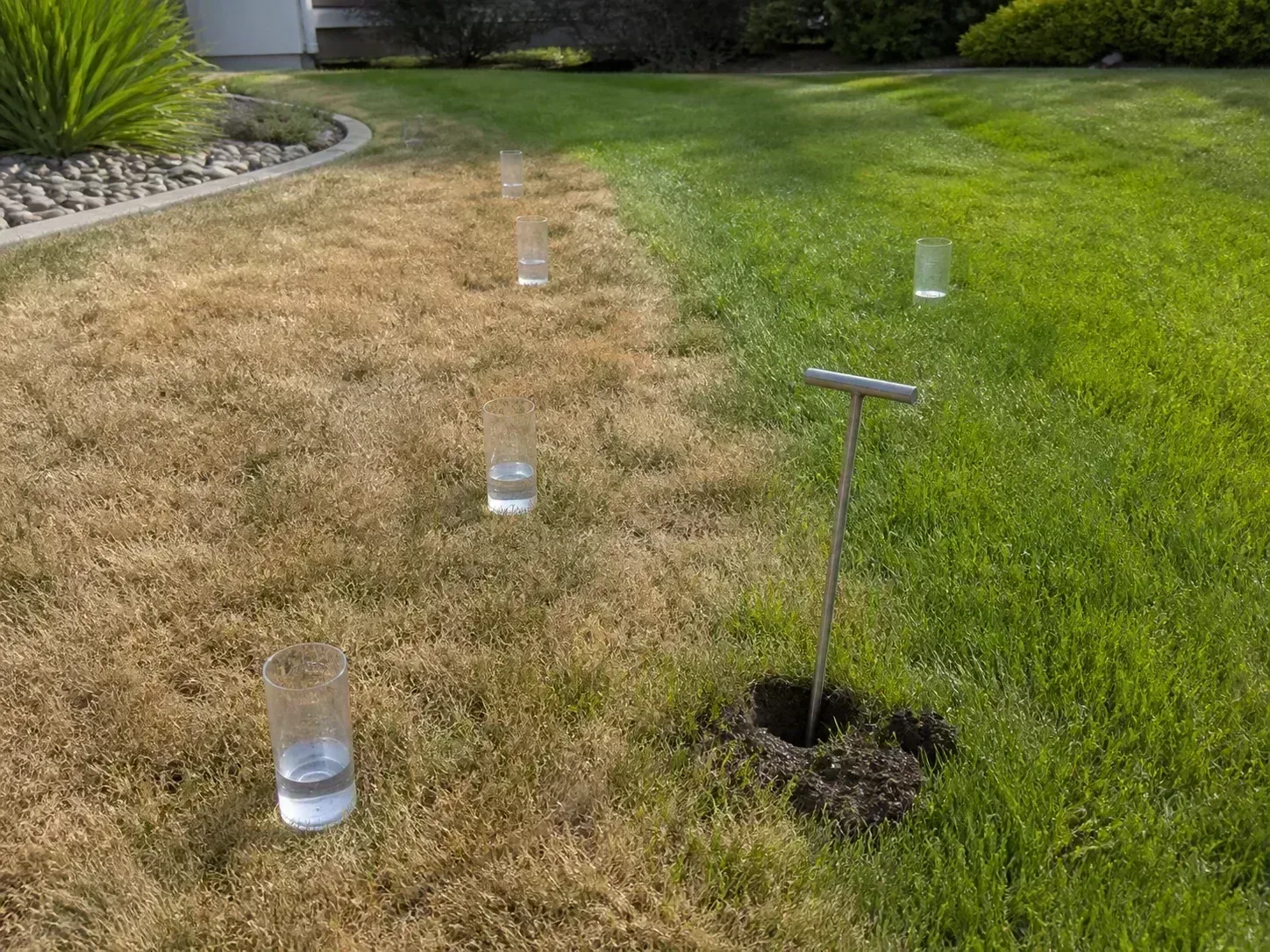
- Probe soil 4–6 inches deep after irrigation; adjust runtimes until moisture reaches root depth.
- Keep mower height at the upper end of your species range—often 3–4 inches for cool-season turf (Illinois Extension mowing guidance).
- Sharpen blades before the first post-heat cut; dull steel tears heat-weakened leaf tissue (when to replace lawn mower blades).
- Pause mowing during the hottest 3–5 days of the forecast even if grass gets shaggy.
You cannot keep a lawn emerald on half an inch of mist every evening. Either budget water or choose dormancy.
How to Water a Lawn During Extreme Heat
Watering rules depend on which strategy you picked, but the mechanics overlap.
Deep, Infrequent Morning Watering
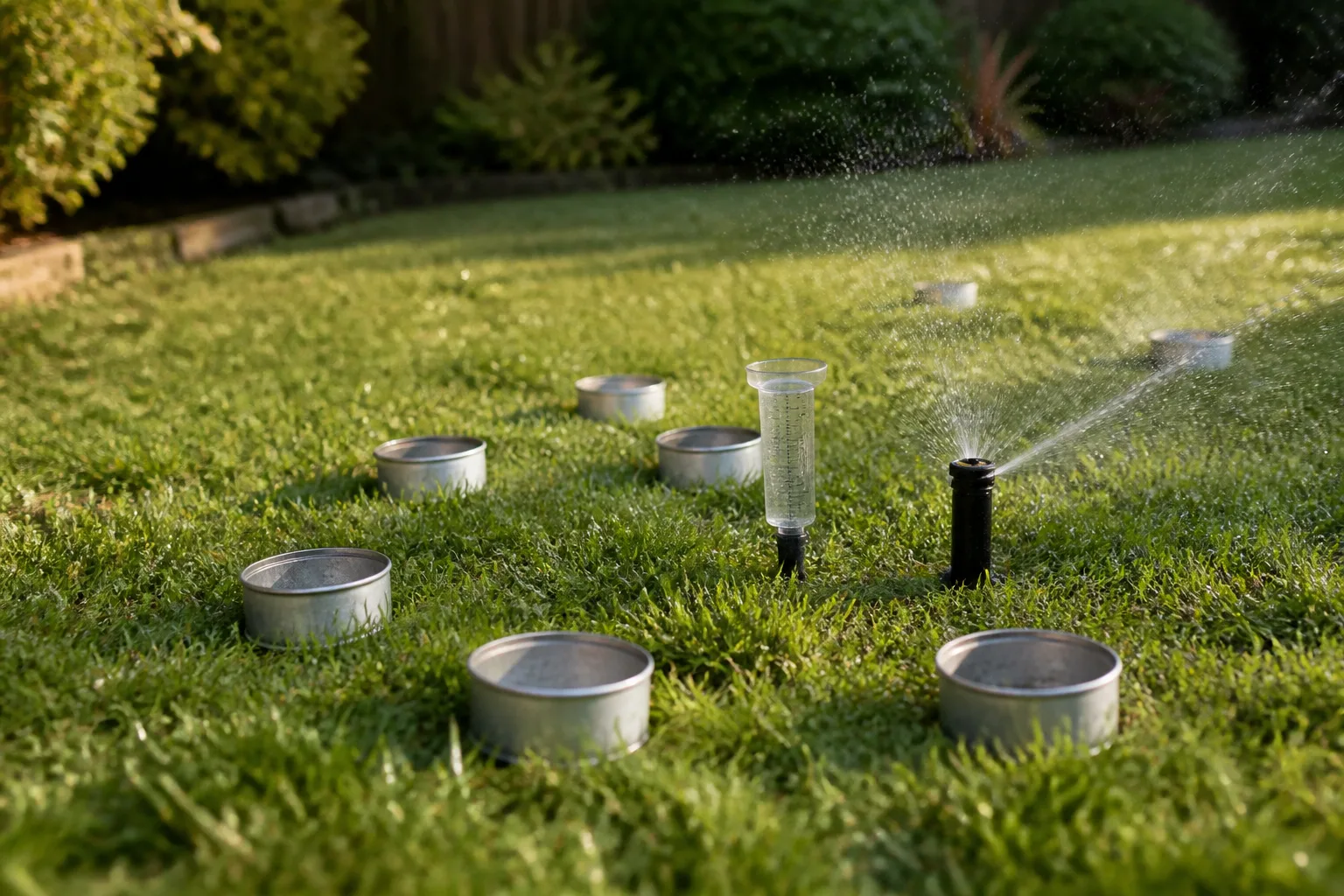
For lawns you are actively keeping green, water deeply and infrequently in early morning—typically between 4 a.m. and 9 a.m.—so soil absorbs moisture before peak evaporation. University of Maryland Extension recommends wetting soil to root depth rather than wetting leaves on a timer copied from last season.
Practical targets:
- About 1 inch of water per week from rain plus irrigation combined under normal summer conditions; heat and wind may push demand higher on sandy soil.
- Use catch cups or a rain gauge to measure sprinkler output; adjust zone runtimes until you hit depth, not minutes (how lawn pros save on water).
- Water only when soil is dry at 4–6 inches—not every time blades wilt at 3 p.m.
- On slopes and clay, cycle-soak (run short cycles with breaks) to prevent runoff.
Hose watering can work for small lawns if you move sprinklers and measure output; see best way to run your garden hose without spiking your water bill for flow and placement basics.
Syringing: When a Quick Midday Cool-Down Helps
Some turf managers run a brief midday syringing cycle—a few minutes of mist to cool leaf tissue—not to replace deep watering but to reduce extreme canopy heat on bentgrass or high-value turf. Gardzen’s hot-weather lawn notes acknowledge that timing and technique matter more than calendar habits; syringing fits that same precision mindset.
For typical home lawns, syringing is optional and easy to misuse. Skip it unless:
- You are already deep-watering correctly on a green-keeping path.
- Grass is wilting on hot afternoons but soil at depth is moist (afternoon heat wilt, not drought).
- You can run irrigation 5–10 minutes without creating puddles or runoff.
If soil is dry at depth, midday mist is a bandage. Deep water tomorrow morning instead. Never syringe on a dormant brown lawn—you waste water without waking crowns meaningfully.
Recovery After the Heat Breaks
When highs drop back toward normal for your area and nights cool, resist the urge to aggressively water, fertilize, and mow in one weekend. Burnt-looking lawns are often dormant, not dead—crowns remain alive while blades are tan (Iowa State dormancy guidance).
First week after the spike:
- Wait for natural rehydration from rain or one deep irrigation cycle before judging survival.
- Pull-test cautiously: Resistance suggests live crowns; turf that pulls up in mats may be dead patches needing reseed.
- Hand-pull weeds in thin areas; hold broad herbicides until grass grows steadily.
- Do not aerate on baked concrete-dry soil—wait until a screwdriver penetrates 4 inches easily.
Weeks two to four:
- Resume mowing at raised height, removing no more than one-third of green tissue per pass.
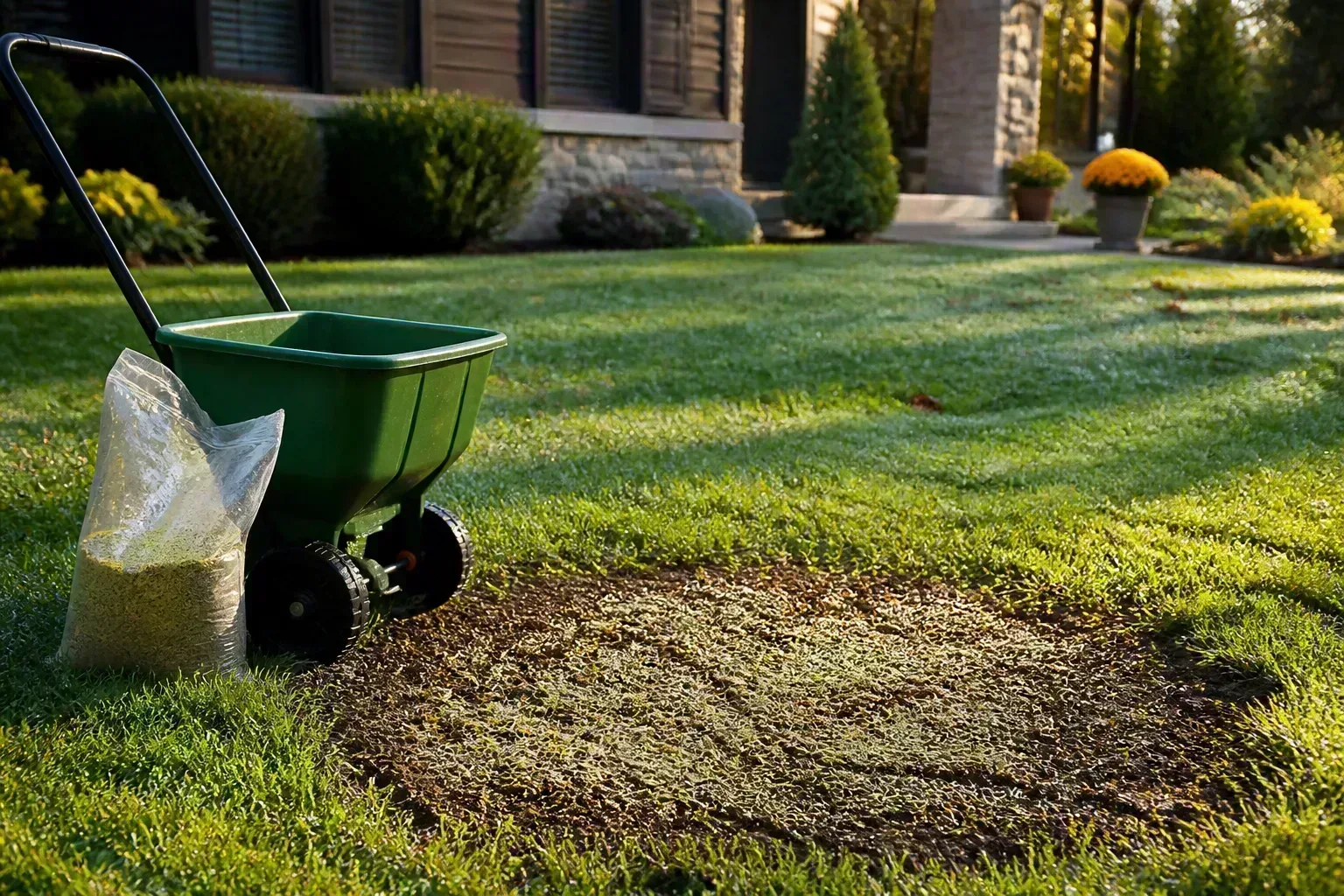
- Overseed bare spots in late summer to early fall for cool-season lawns—the window Illinois Extension and regional calendars favor for repair.
- Apply compost topdressing or balanced fall fertilizer only after consistent new growth—not while soil is still dust-dry.
If heavy rain preceded the heat wave, avoid compounding damage by treating saturated soil like drought—see what not to do to grass after heavy rain for the post-storm sequence.
When You Can Safely Mow Again
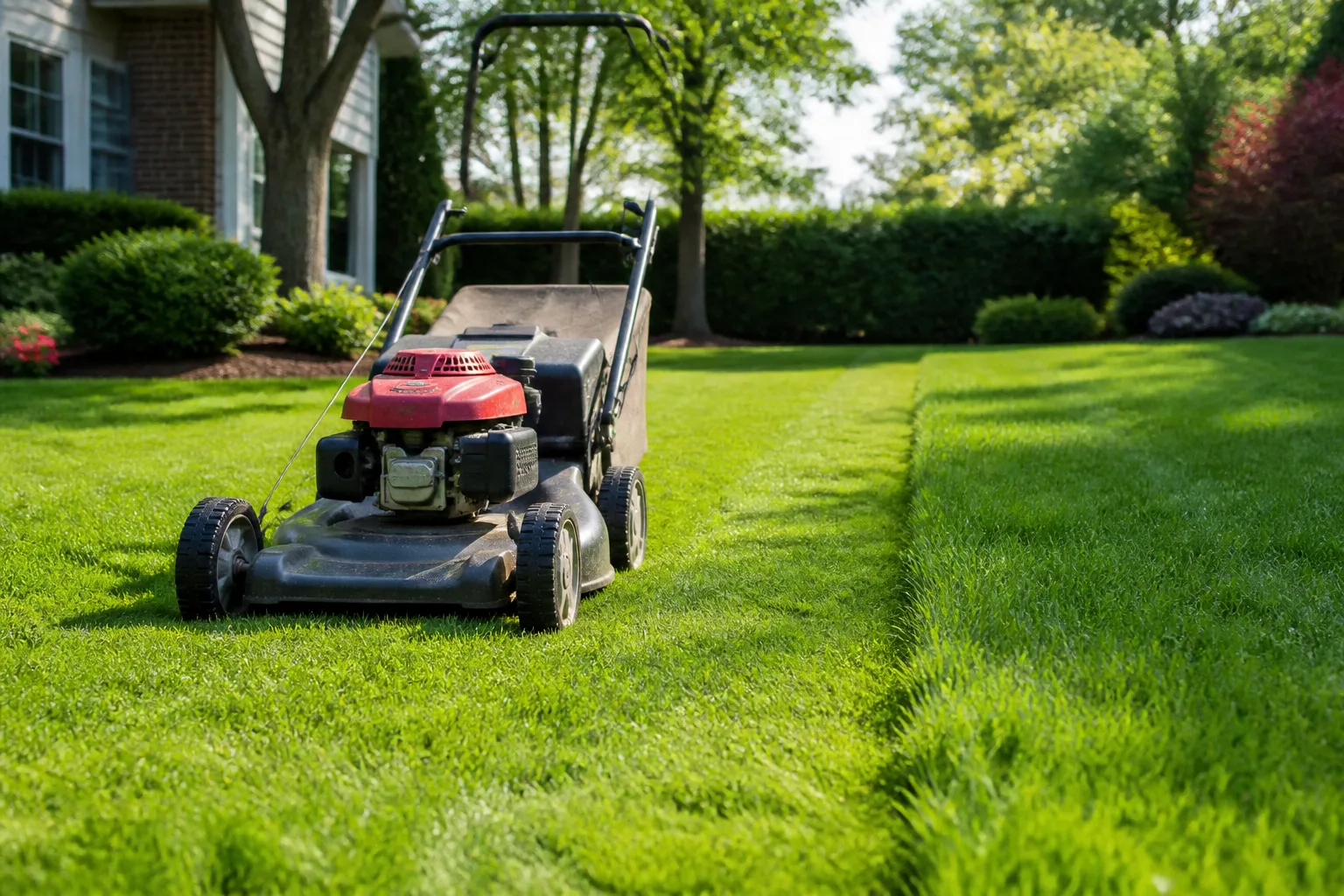
Resume mowing when all three are true:
- Forecast highs are back within normal summer range for your region—not just one cooler day in a still-brutal week.
- Morning footprint test passes: grass springs back within seconds.
- Blades are dry and you can set the deck to the highest practical height for your species.
First cut after heat:
- Raise deck one notch above your usual summer setting.
- Ensure blades are sharp; torn tips lose water fast on recovering turf.
- Mow early morning, not mid-afternoon on still-warm soil.
- Leave clippings if they do not clump; they shade soil and return nitrogen (Colorado State University Extension lawn basics on recycling clippings).
If grass was dormant brown and you chose not to irrigate, wait until green shoots appear at the base before the first cut—often after soaking rain or a deep irrigation cycle. One skipped mow during the worst week beats months of striped heat tracking.
Conclusion
During a heat wave, protect crowns before aesthetics. The worst lawn mistake is mowing stressed turf—especially short, on wilted grass, in midday heat—because it removes shade, damages growing points, and compacts soil when roots are most vulnerable. Pair that pause with a clear strategy: let cool-season lawns go dormant with minimal traffic, or commit to measured deep morning watering if green turf is non-negotiable.
Read footprints and color before you act, hold fertilizer and herbicides until growth returns, and treat brown as survivable until crowns tell you otherwise. When temperatures break, raise the mower, sharpen blades, and repair thin areas in fall—not in the panicked middle of the hottest afternoon. Your lawn’s summer story is written in what you stop doing when the thermometer spikes.