Best and Worst Times of Day to Water Plants
Morning, afternoon, or evening? A practical guide to watering time of day—evaporation, leaf scorch, fungal risk, and the moisture-first rule that beats any clock.
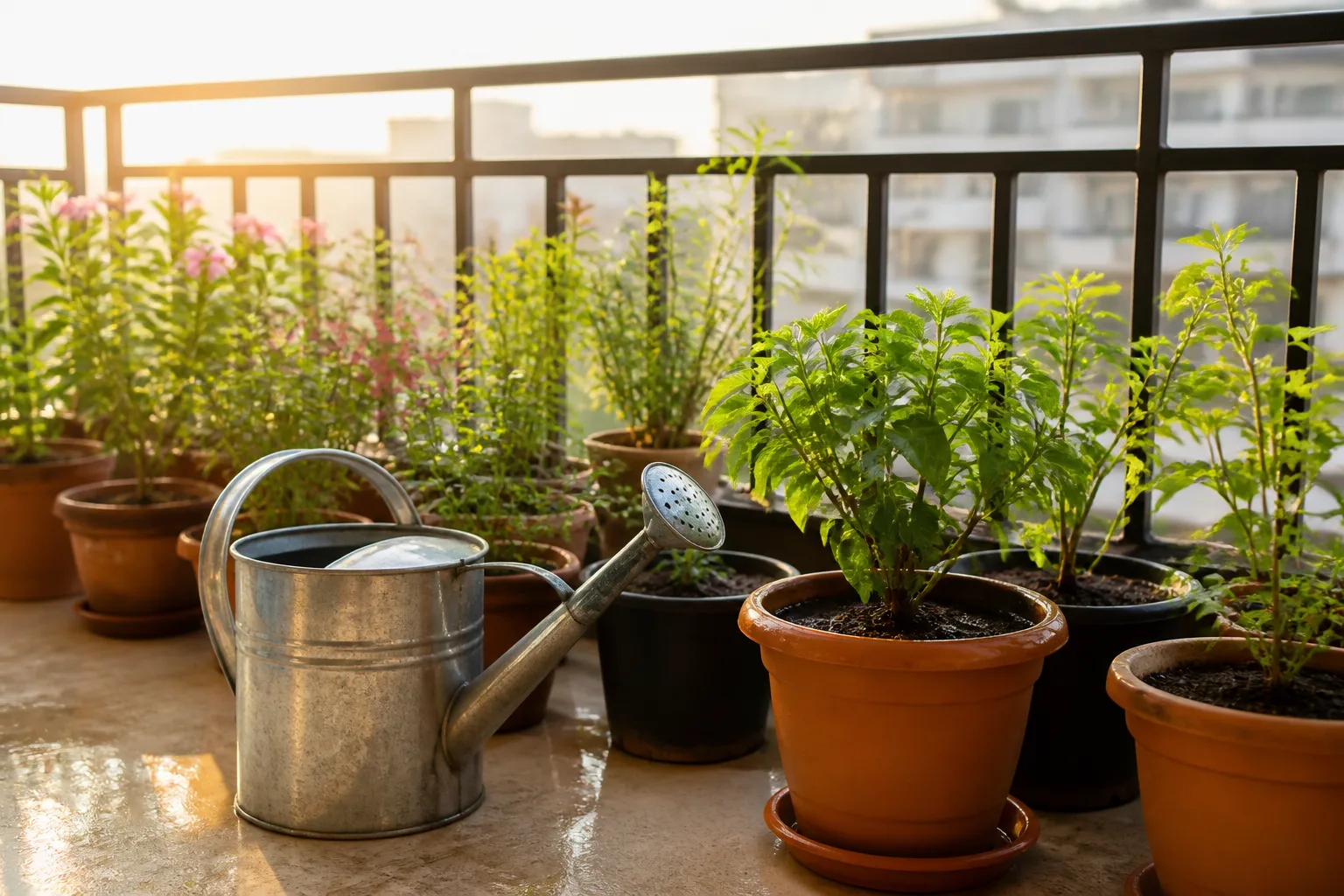
You checked the soil. The pot is light. The leaves look thirsty. Then you glance at the clock—it is 2 p.m., the sun is hammering the patio, and you wonder whether now is the wrong moment to pour water on everything. That hesitation is useful. Time of day changes how much water reaches roots, how long leaves stay wet, and how hard your plants work to recover from heat. Get the window wrong often enough and you waste water, invite disease, or stress roots that were already fighting afternoon temperatures.
This guide answers the timing question for outdoor beds, containers, lawns, and indoor houseplants—without treating every plant like it lives in the same garden. Use it alongside our indoor plant watering basics cheat sheet, how to water indoor plants the right way for year-round method, and hot-weather plant watering guide when a heat wave compresses your options.
The Short Answer: Morning Wins, Mid-Afternoon Loses
The worst routine time to water most plants is mid-afternoon—roughly 11 a.m. to 3 p.m. on hot, sunny days—when evaporation is fastest, roots are already heat-stressed, and wet foliage plus strong sun raises leaf scorch risk. The best default for in-ground gardens, lawns, and most foliage houseplants is early morning, before heat builds, so water can move into the root zone and surface moisture can dry before night.
Evening and late afternoon are acceptable backups when you water at the soil line, keep leaves as dry as possible, and air can circulate afterward—but they are not equal to morning in humid, still conditions where foliage stays wet for hours.
| Time window | Efficiency | Disease risk | Best for |
|---|---|---|---|
| Early morning (dawn–10 a.m.) | High — cool air, lower evaporation | Low — leaves dry through the day | Vegetables, lawns, most houseplants after lights-on |
| Late morning (10 a.m.–noon) | Moderate | Low–moderate | Schedule-constrained gardeners; still before peak heat |
| Mid-afternoon (11 a.m.–3 p.m.) | Lowest — rapid evaporation | Moderate — scorch if foliage wetted | Avoid for routine watering; emergency wilt only |
| Late afternoon (3–6 p.m.) | Moderate | Moderate | Containers that dried out; soil-only watering |
| Evening (after 6 p.m.) | Moderate–high | Higher if leaves stay wet overnight | CAM succulents; backup when mornings are impossible |
Important nuance: Clock time is secondary to whether the plant actually needs water. A dry pot at 4 p.m. beats a soggy pot at 7 a.m. every time. The table above assumes the soil or root zone is genuinely dry at depth—not surface dust over wet mix.
Why Clock Time Matters for Plant Health
Watering is not just about volume. It is about when moisture is available relative to transpiration—water vapor leaving leaves—and evaporation from soil and droplets. During peak sun, plants may lose water faster than roots can replace it even when soil holds moisture (temporary heat wilt). Pouring water at the wrong moment can mean half your hose water never reaches roots, or leaves stay wet long enough for fungal spores to germinate.
Savvy Gardening puts it plainly: offering lawn, ornamental, and vegetable beds water at the right time of day does make a difference—not because plants watch clocks, but because temperature, light, and humidity shift the math.
Transpiration, Evaporation, and Root Uptake
Plants pull water upward from roots to leaves, where it exits through stomata—tiny pores—during gas exchange. That transpiration stream cools leaves and moves nutrients. When air is hot and dry, transpiration speeds up. University of Georgia Extension illustrates the relationship: at the same humidity, hotter air drives more water loss from leaves; at the same temperature, drier air does the same.
Meanwhile, soil evaporation spikes when sun hits bare ground or warm pot surfaces. Water applied at midday on a 95°F (35°C) patio can vanish from the surface before it percolates to roots—especially in shallow containers. Morning watering aligns with lower evaporative demand: roots get a head start before the afternoon pull, and any splash on foliage has hours to dry.
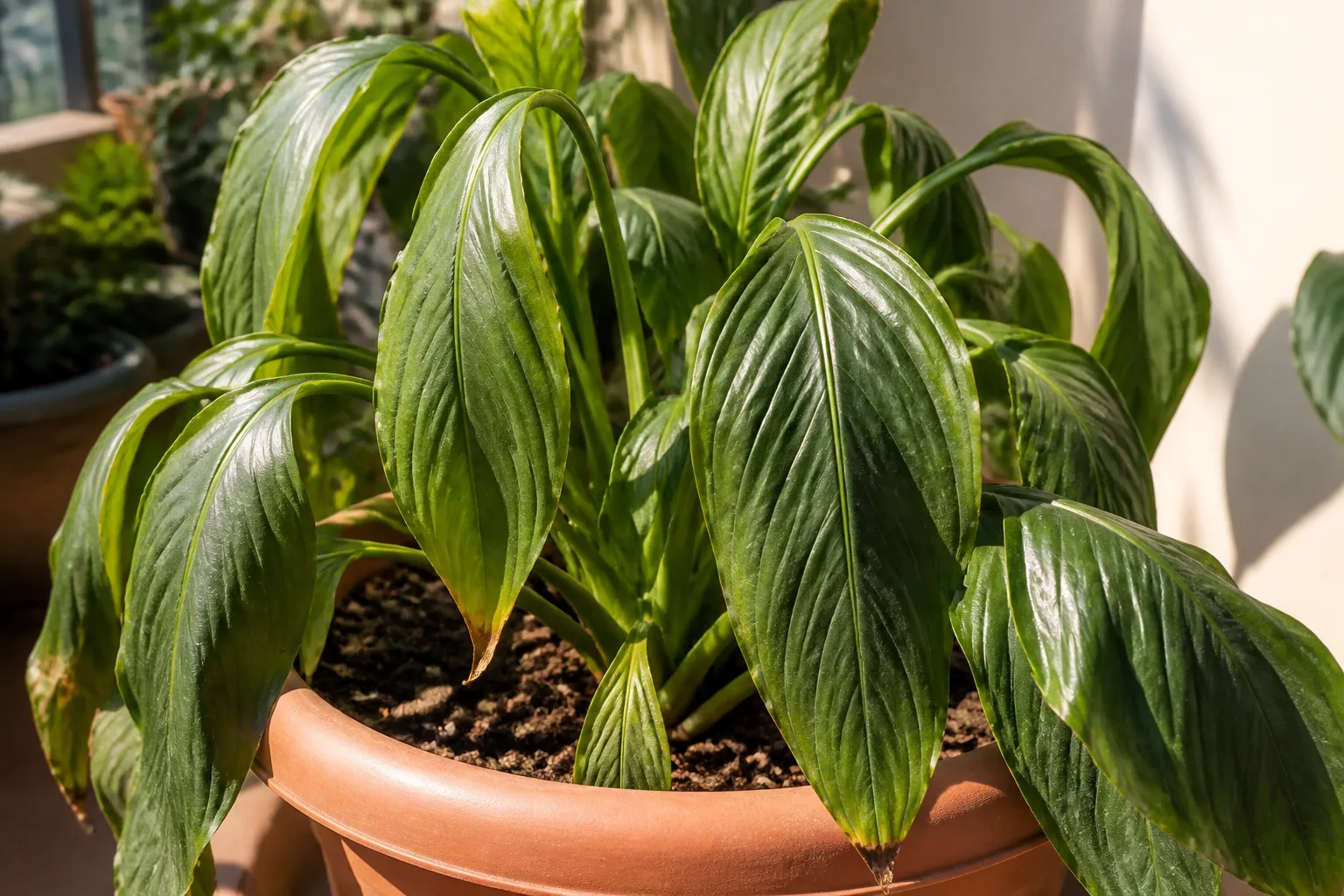
Why Mid-Afternoon Is the Worst Time to Water
Mid-afternoon combines three problems: wasted water, stressed roots, and risky wet foliage. That is why extension offices and experienced gardeners converge on the same advice even when their climates differ.
Lost Water and Heat Stress on Roots
When the sun is high, evaporation outruns infiltration. Water sits on the surface, steams off, and the root zone gains less than you think—while you pay for the waste on a meter or sweat through the chore for nothing. Container roots suffer doubly: limited soil volume heats quickly, and dry pockets can form above still-moist centers, fooling a surface finger test.
Savvy Gardening calls midday the worst time to water specifically because hot days let you lose a lot of water to evaporation before plants benefit. That does not mean roots never need help at 2 p.m.—a wilted tomato in dry soil may need an emergency soak—but it means midday should not be your default schedule.
Leaf Scorch When Sun Hits Wet Foliage
Penn State Extension warns that water on plant leaves evaporates quickly—and can cause burn on the leaves when the sun hits the water droplets. The mechanism is straightforward: droplets concentrate light like tiny lenses on tender tissue, especially on hairy or thin leaves. Penn State recommends guiding water as close as possible to the ground so most sinks in where roots can use it.
Mid-afternoon plus overhead sprinkling is the highest-risk combo: maximum sun angle, maximum droplet persistence on foliage, and maximum heat. Soil-line delivery (wand, drip, soaker) reduces but does not eliminate scorch if you soak leaves accidentally—another reason to reserve this window for emergencies, not habit.
Why Early Morning Is Usually the Best Window
Early morning—after dew dries but before air temperature climbs—is the best default for most gardens and houseplants. Cooler air slows evaporation enough that water infiltrates deeply; transpiration ramps up as the day progresses, pulling that moisture through the plant; and any incidental leaf wetness dries before evening humidity rises.
The RHS heatwave guidance for community gardens recommends watering deeply in the early morning or evening, ideally with stored rainwater, during cooler parts of the day rather than little-and-often spritzes at peak heat. Morning satisfies that “deep and cool” brief while giving foliage the longest dry window.
NC State Extension adds the heat-stress angle: slow, deep watering during cooler hours (for example, 6 p.m. to 8 a.m.) minimizes water loss and encourages deep root growth—morning sits squarely in that band.
What “Morning” Means for Indoors vs Outdoors
Outdoors, morning means roughly one to two hours after sunrise through mid-morning, adjusted for season. In June at high latitude, that might be 6–9 a.m.; in winter, 8–10 a.m. The signal is air still cool, sun low, evaporation moderate—not a fixed clock.
Indoors, “morning” is when your plant’s light turns on. Under grow lights, stomata and transpiration follow the photoperiod, not the wall clock. Water within one hour of lights-on for tropical foliage plants so uptake matches active transpiration. A monstera under a 14-hour timer at 8 a.m. treats 8 a.m. as dawn even if your kitchen is dark until noon.
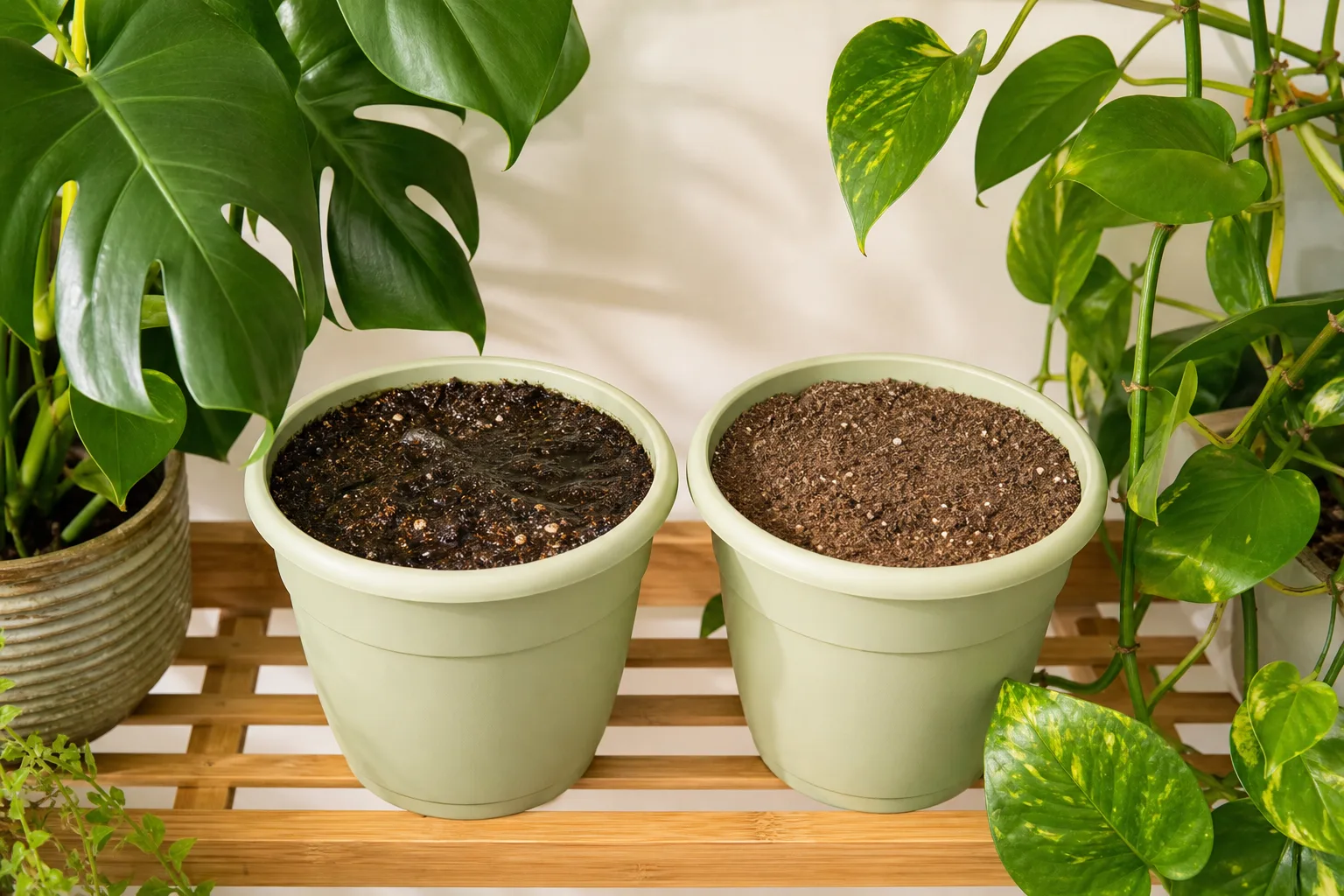
Consistency matters indoors and out. Penn State Extension notes that alternating morning one day and evening the next leaves container plants enduring two full days of sun and heat with only one watering if you miss the second slot. Pick a daily window you can keep, then adjust seasonally by 30 minutes rather than bouncing randomly.
When Late Afternoon or Evening Watering Makes Sense
Evening is not “bad” in all contexts—it is riskier for disease when leaves stay wet overnight in humid, still air. Savvy Gardening ranks early evening as the next best time after morning, with a clear caveat: avoid getting a lot of water on plant leaves, because wet leaves plus dropping evening temperatures are a recipe for fungal disease. Use a wand and aim at soil, not foliage.
Late afternoon (3–6 p.m.) can work when heat has peaked and evaporation slows, especially for containers that bake on pavement. It is a reasonable compromise when mornings are impossible—commute, school run, or shared garden taps—provided you do not soak crowns or dense rosettes before a still night.
Succulents, CAM Plants, and the Evening Exception
Succulents, cacti, snake plant, ZZ plant, and many bromeliads use CAM photosynthesis: stomata open at night to conserve water. For these species, early evening watering—when soil is fully dry—can align with upcoming nocturnal gas exchange. The trade-off is rot risk if soil stays wet too long in a cold, dim room. Use fast-draining mix, pots with drainage holes, and skip evening water entirely if humidity stays above ~60% with poor airflow.
This is narrower than “all plants like evening water.” Tropical foliage—peace lily, pothos, ferns—still prefer morning or lights-on so roots and crowns dry through the day. When in doubt, check our how often to water aloe vera guide for CAM-style soak-and-dry rhythm versus tropical wet-dry cycles.
Indoor vs Outdoor: Different Rules, Same Physics
The physics do not change indoors—evaporation, transpiration, and leaf wetness duration still apply—but the scale does. Glass filters ultraviolet, so indoor midday watering is less scorch-prone than outdoor overhead sprinkling, though cold tap water on heat-stressed roots can still shock uptake. What indoor plants lack is wind and direct sun to dry leaves quickly, so evening overhead watering indoors can leave foliage wet for 12+ hours in a closed room.
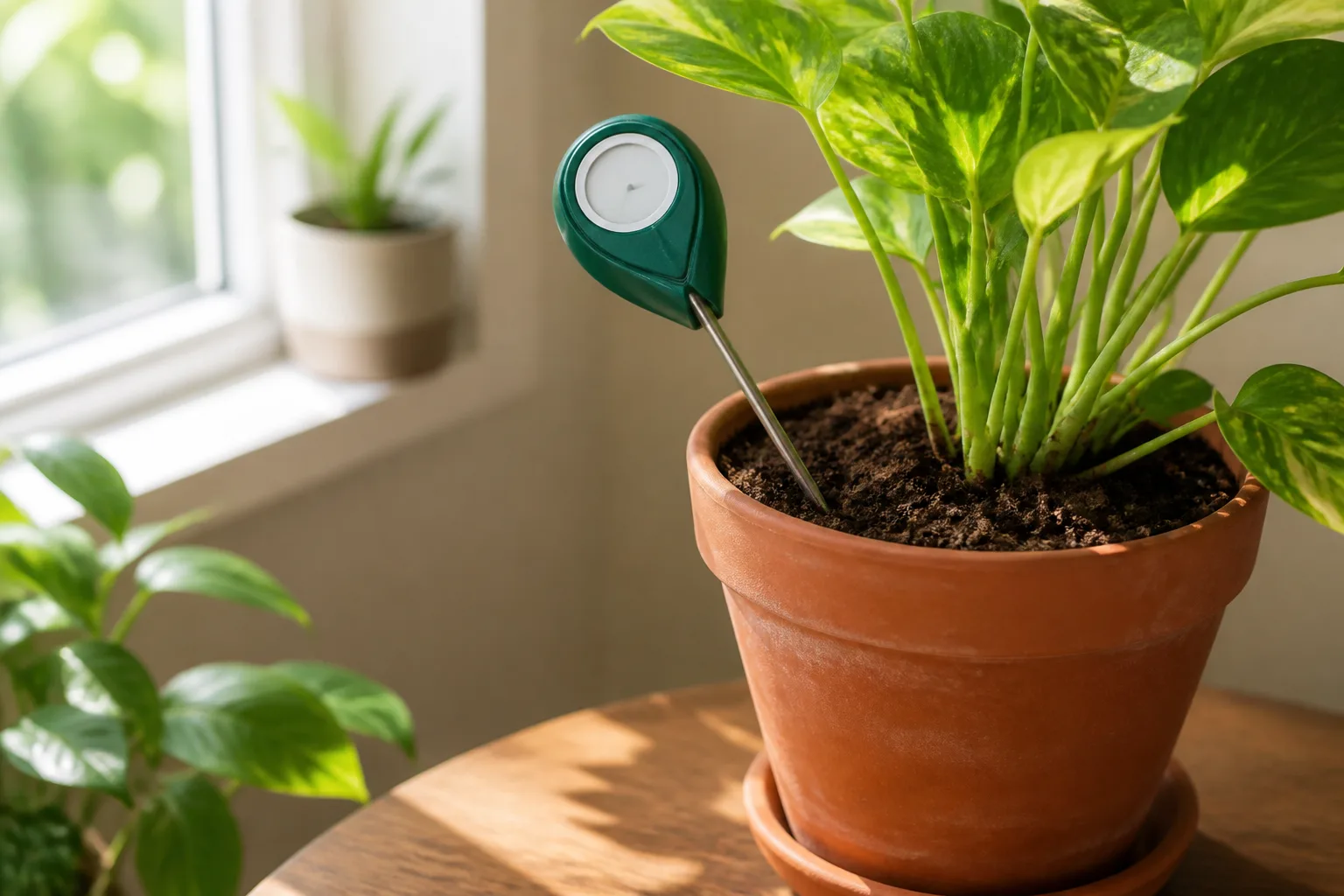
Outdoor in-ground beds benefit most from deep morning soaks and mulch that locks moisture (RHS heatwave tips recommend mulching after watering to reduce loss). Outdoor containers may need both morning deep water and a late-afternoon check in heat—they dry faster than beds. Indoor pots need moisture testing first (moisture meter vs finger test); time of day matters only after the plant is actually dry at depth.
If you bottom-water, timing is slightly more flexible because foliage stays dry—see top watering vs bottom watering for when each method fits. Either way, empty saucers within 30 minutes so roots are not sitting in stagnant water overnight.
What to Do When You Missed Your Morning Window
Life happens. When you cannot water until afternoon or evening, use this priority order:
- Check need first. Dry at 2 p.m. warrants water; moist at 7 a.m. does not—regardless of “perfect” timing.
- Water soil only. Wand, drip, or watering can spout buried under foliage; never broadcast overhead on vegetables or hairy-leaved ornamentals in sun.
- Use room-temperature water. Cold water on hot roots slows uptake; let the can sit indoors for an hour if taps run cold.
- Apply less, then revisit. A partial soak now plus a full morning soak tomorrow beats one flooded pot at midday that runs off baked soil.
- Move wilted containers to shade before watering if they sit on hot concrete—roots absorb better when the pot is not radiating heat into the mix.
Temporary heat wilt—limp leaves on still-moist soil—does not always mean “water now.” Move the plant out of direct sun and recheck in the morning; our hot-weather plant watering guide walks through wilt triage so you do not drown a plant that was only overheated.
Best Watering Methods by Time of Day
Method matters as much as hour. Delivering water to the root zone slowly beats a fast overhead blast at any clock time.
Soaker Hoses, Drip, and Hand Watering at the Soil Line
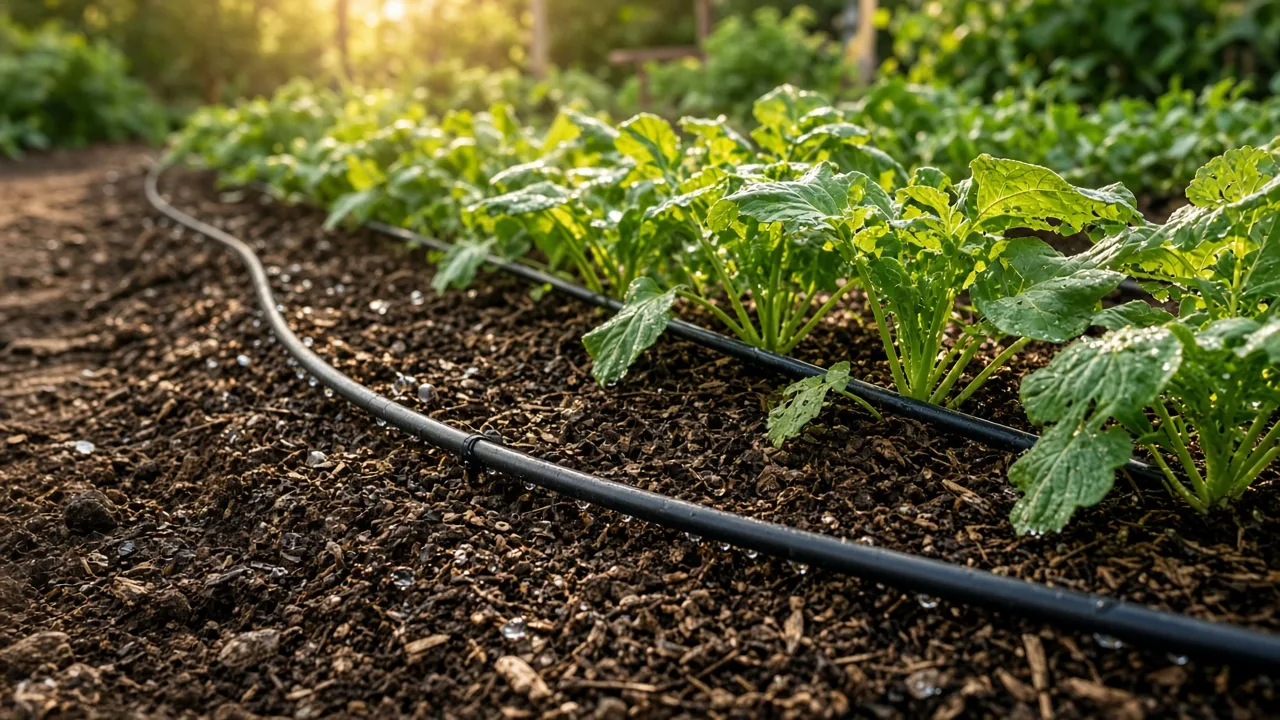
Soaker hoses and drip irrigation shine in morning schedules: low pressure sends water into soil, not air; timers can run at 5–7 a.m. before you leave for work; and evaporation loss stays minimal. Penn State Extension recommends guiding hose water close to the ground, using a long-handled wand with a shut-off valve for hand watering between closely spaced plants.
Set automatic sprinklers for early morning, not midday—both for efficiency and because night-only lawn irrigation in humid regions can prolong leaf wetness on turf. If you must use sprinklers, finish by mid-morning so grass blades dry before evening.
For containers on a balcony, drip stakes or slow bottles (pierced plastic, regulated emitters) decouple your commute from wilt. Pair with grouping pots to create a cooler microclimate—the RHS notes that grouping containers in trays reduces runoff and shared shade lowers evaporation.
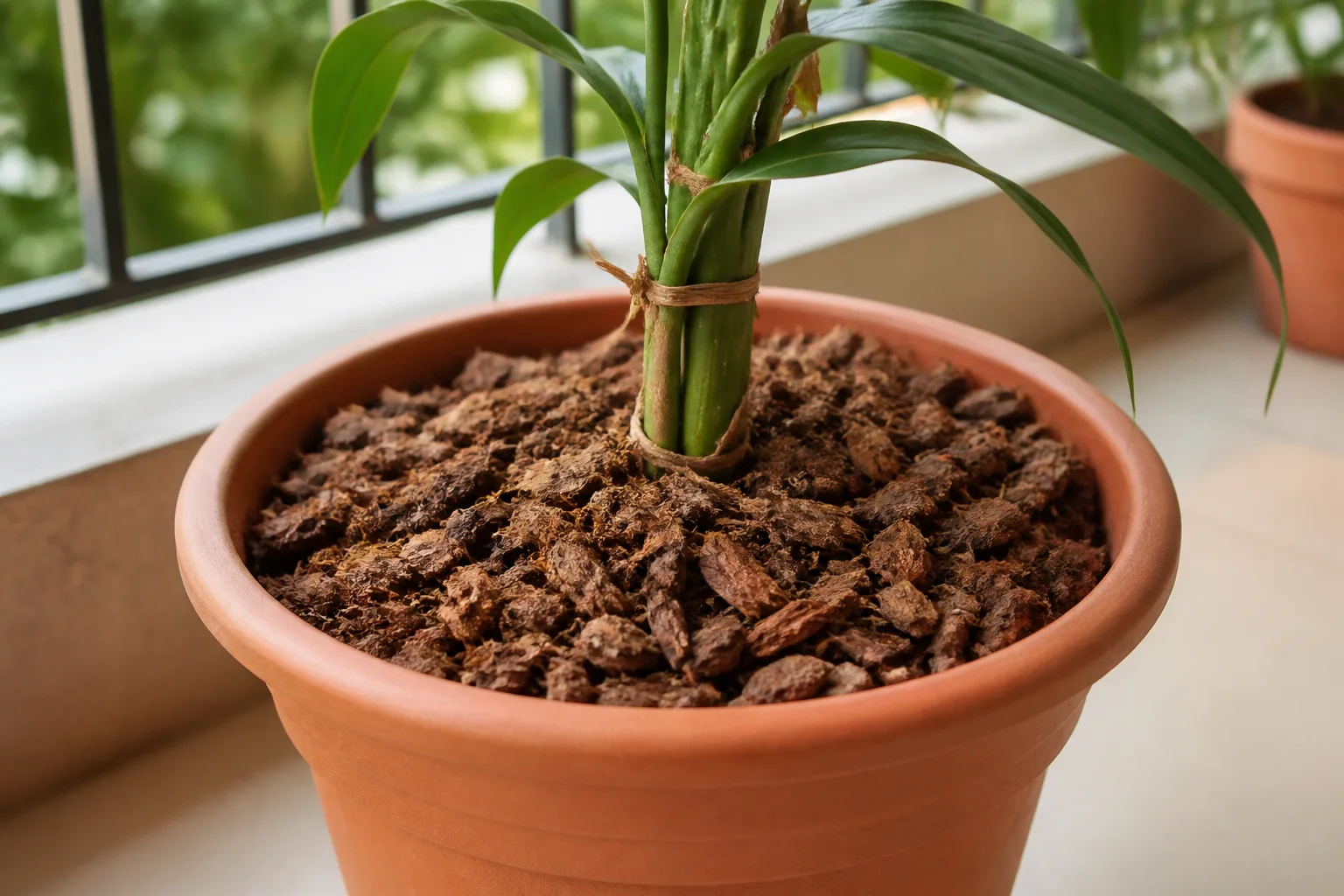
Hand watering remains the most precise tool for mixed beds where drip zones do not match plant spacing. Count seconds per pot or bed section (Penn State Extension suggests timing hose flow into a bucket first) so your volume stays consistent even when your schedule shifts between morning and late afternoon.
Special Cases: Heat Waves, Containers, and Lawns
Heat waves: When soil is dry at depth and plants wilt, water when needed—even at midday—using soil-only delivery and shade where possible. NC State Extension’s cooler-hour guidance is the daily default, not a ban on saving a crispy tomato. After the emergency, return to morning deep soaks and mulch.
Containers: Terracotta and small pots on hot surfaces may need morning deep water plus a late-afternoon check. Limited soil volume heats fast; afternoon watering here is sometimes efficiency trade, not laziness—provided leaves stay dry and you are not replacing a skipped morning habit daily.
Lawns: Turf prefers early morning irrigation (4–9 a.m. in many climates) to reduce disease and wind evaporation. Midday lawn sprinklers waste the highest percentage to drift and evaporation; night watering can encourage fungal patches in humid regions. Use a rain gauge—Penn State Extension notes one inch per week is often enough for in-ground plants if rain is counted—and skip irrigation when storms delivered enough.
The Moisture-First Rule That Beats Any Clock
The strongest timing rule is not on a clock—it is in the soil: water when the root zone is dry for that species, not when the calendar says Tuesday. Morning optimization only helps when the plant needed water in the first place. Watering a still-moist pot every morning is how overwatered plants die with “perfect” timing.
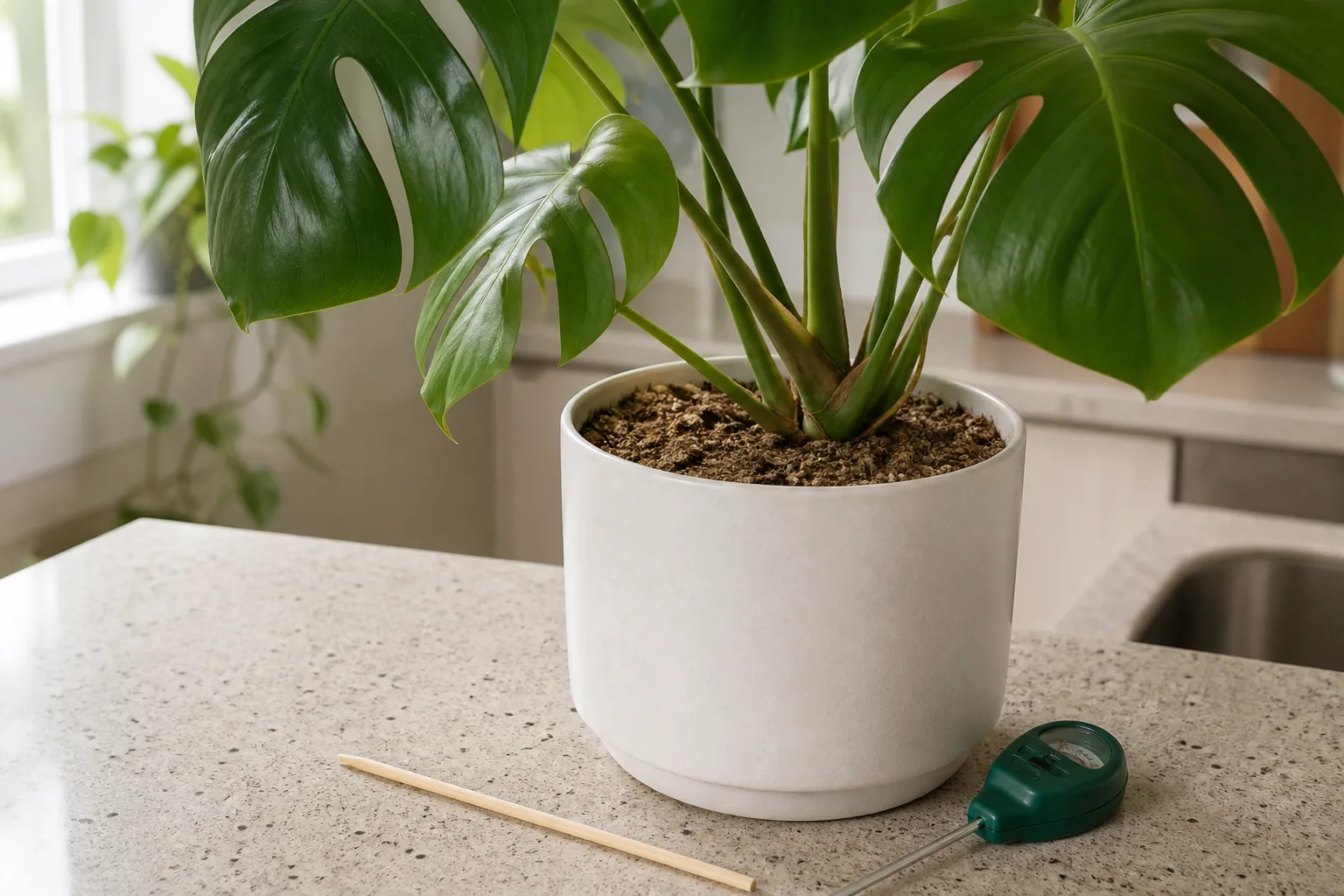
Run a finger or skewer test 1–2 inches deep (deeper for large outdoor beds) before every session. Penn State Extension advises putting your finger into container soil to the first knuckle because surface appearance lies—crusty dry tops over wet cores is common in peat-heavy mixes.
If the probe is dry, water at the next best available window using soil-line methods. If moist, wait—even if it is the “perfect” morning hour. Conversely, a dry, lightweight pot at 4 p.m. should get water today, not a lecture about mid-afternoon. Time-of-day rules modulate efficiency and disease risk; moisture need triggers the event.
Seasonal shifts change dry-down speed more than clock labels. Winter indoor plants may go weeks; summer balcony peppers may need daily morning checks. Adjust frequency, keep the moisture-first gate, and let morning remain the default when that gate opens.
Common Watering-Time Mistakes
Treating mid-afternoon as “catch-up hour” because mornings were busy stacks two hot days of stress onto containers that got one rushed sprinkle. Fix the schedule or install a timer—not a hotter watering time.
Overhead sprinkling vegetables at noon combines maximum scorch risk with minimum root delivery. Switch to soil-level delivery or drip; your leaves and water bill will thank you.
Evening overhead misting “for humidity” wets leaves without meaningfully raising room humidity and extends fungal windows. Use a humidifier or pebble tray instead; mist only in morning if you must.
Watering on a calendar without testing kills more houseplants than wrong clock time. A weekly Sunday soak on still-wet snake plant soil causes rot; see underwatered plant recovery only after you confirm dryness.
Ignoring rain and watering morning plus afternoon “just because it is hot” doubles waterlogging risk in clay soil. Track rainfall with a gauge; skip irrigation when the week already hit target depth moisture.
Cold tap blasts at dawn on tropical roots can stall uptake. Fill the can the night before or let water warm to room temperature—especially in winter.
Conclusion
Mid-afternoon on hot, sunny days is the worst routine time to water most plants—evaporation steals your effort, roots fight heat, and wet foliage plus strong sun invites scorch. Early morning is the best default for gardens, lawns, and most houseplants (or within an hour of lights-on indoors), with late afternoon and careful evening soil-only watering as backups when mornings fail. Succulents and CAM species are the main evening exception, and any genuinely dry, wilted plant may need water off-schedule during heat—delivered at soil level, not as an overhead habit.
Keep moisture need as the gate and time of day as the dial. Pair that with soil-line methods, mulch outdoors, consistent daily windows, and the deeper guides linked above, and you will waste less water, see fewer fungal spots, and stop guessing whether the hose is helping or hurting at 2 p.m.