Top Watering vs Bottom Watering for Houseplants
Decide top vs bottom watering for houseplants—salt flushes, African violets, hydrophobic mix, and a simple hybrid routine.
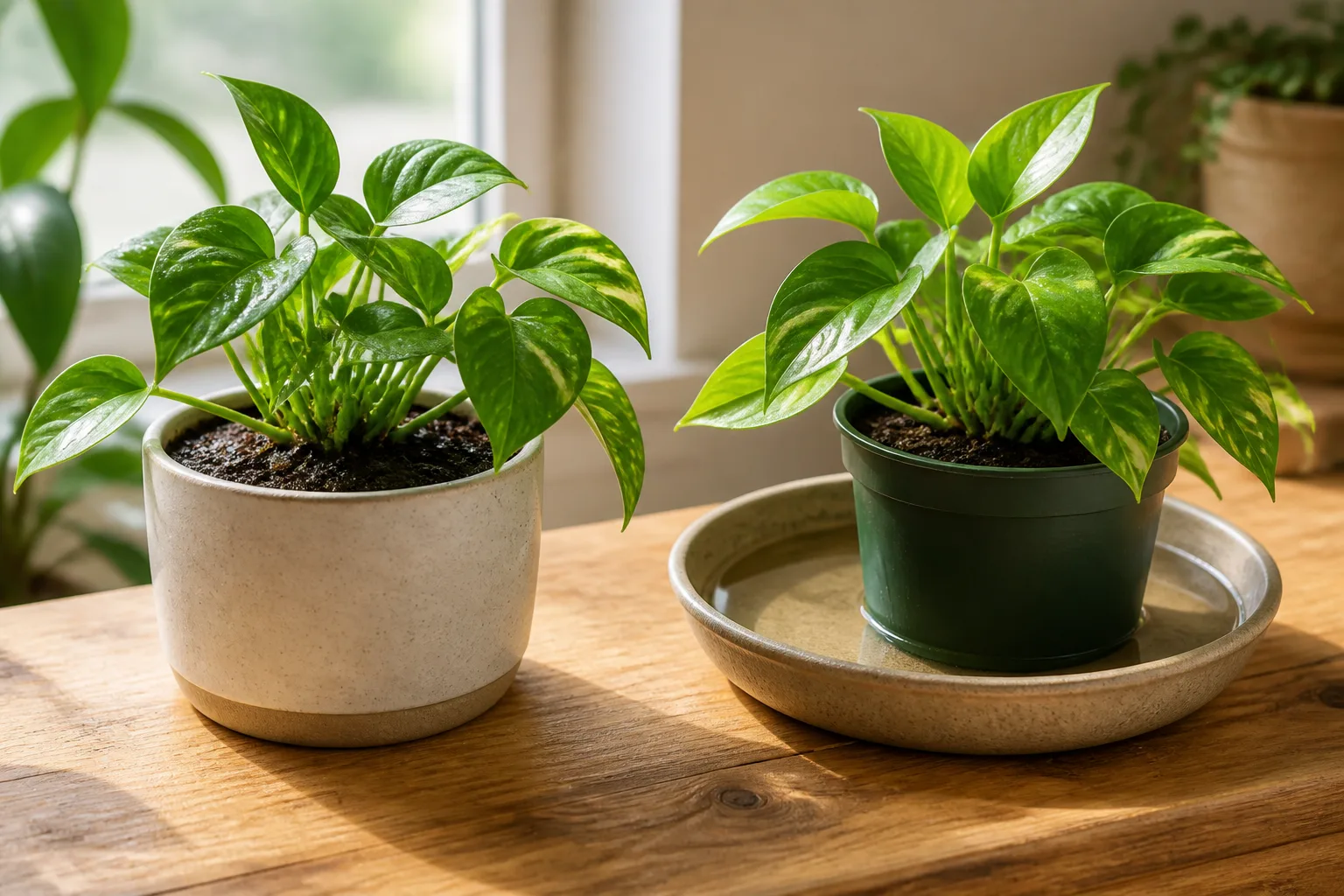
Influencers often sell one forever answer: always bottom water, or never bother with a basin. Real pots disagree. Neither top watering nor bottom watering is universally better for houseplants. Top watering is the stronger default for most pots because it wets the root ball downward and can leach soluble salts out the drainage holes. Bottom watering is the better tool when leaves hate splash, the canopy blocks the soil, or dry peat-based mix is repelling water from above. The winning choice is situational—and many healthy collections use both on purpose.
If crusty mix, fungus gnats, or wet crowns already have you stuck between methods, stay here. If you still need the core skills—when to water, how wet is “enough,” and how to empty saucers—use how to water indoor plants the right way first. This guide assumes those basics and focuses on the method decision: top vs bottom, when each wins, what goes wrong, and how to combine them without creating a second full watering tutorial.
Written by Sai Ananth; horticulture review by Dr. Ananya Rao (Ph.D. Horticulture; LeafyPixels Editorial Review Board).
Quick Decision: Neither Method Wins Every Time
Use this as your one-screen answer, then read the sections that match your plant.
Choose top watering when you want a salt flush, the mix still accepts water from above, the pot is large or hard to lift into a basin, or you are feeding and want water to move fertilizer through the profile. Colorado State University’s PlantTalk guidance is direct: for most houseplants, watering from the top is generally better than subirrigation. (PlantTalk Colorado)
Choose bottom watering when foliage or crowns cannot stay wet (African violets, many begonias, cyclamen), dense leaves make overhead watering awkward, or the mix has gone hydrophobic and water races down the pot wall. Virginia Cooperative Extension describes bottom watering as a timed soak in a shallow basin—typically about 2–3 inches of water for roughly 15–30 minutes, not an all-day bath. (Virginia Cooperative Extension)
The trap is treating either method as a personality. Top watering done poorly still leaves dry cores. Bottom watering done constantly still builds salts and can keep the surface inviting to fungus gnats. Method does not replace moisture checks, drainage holes, or emptying runoff.
What Top Watering and Bottom Watering Actually Mean
Both methods can hydrate a pot thoroughly. They move water through the mix in opposite directions, and that direction changes salt movement, leaf wetting, and how easy it is to spot incomplete watering.
Top Watering (Overhead Irrigation)
Top watering means you pour water onto the potting mix surface and let gravity carry it down through the root zone until excess exits the drainage holes. Virginia Extension calls this overhead watering and notes the practical rule: deliver water onto the soil below the leaves, not as a shower across the canopy. (Virginia Cooperative Extension)
Done correctly, you water until runoff appears, confirm the mix is moist deeper than the surface crust, then discard water sitting in the saucer. Clemson HGIC ties thorough watering to two jobs at once: wetting the lower root zone where most roots live, and washing excess salts out of the container. (Clemson HGIC) That dual job is why top watering remains the default in most extension watering advice.
Bottom Watering (Subirrigation)
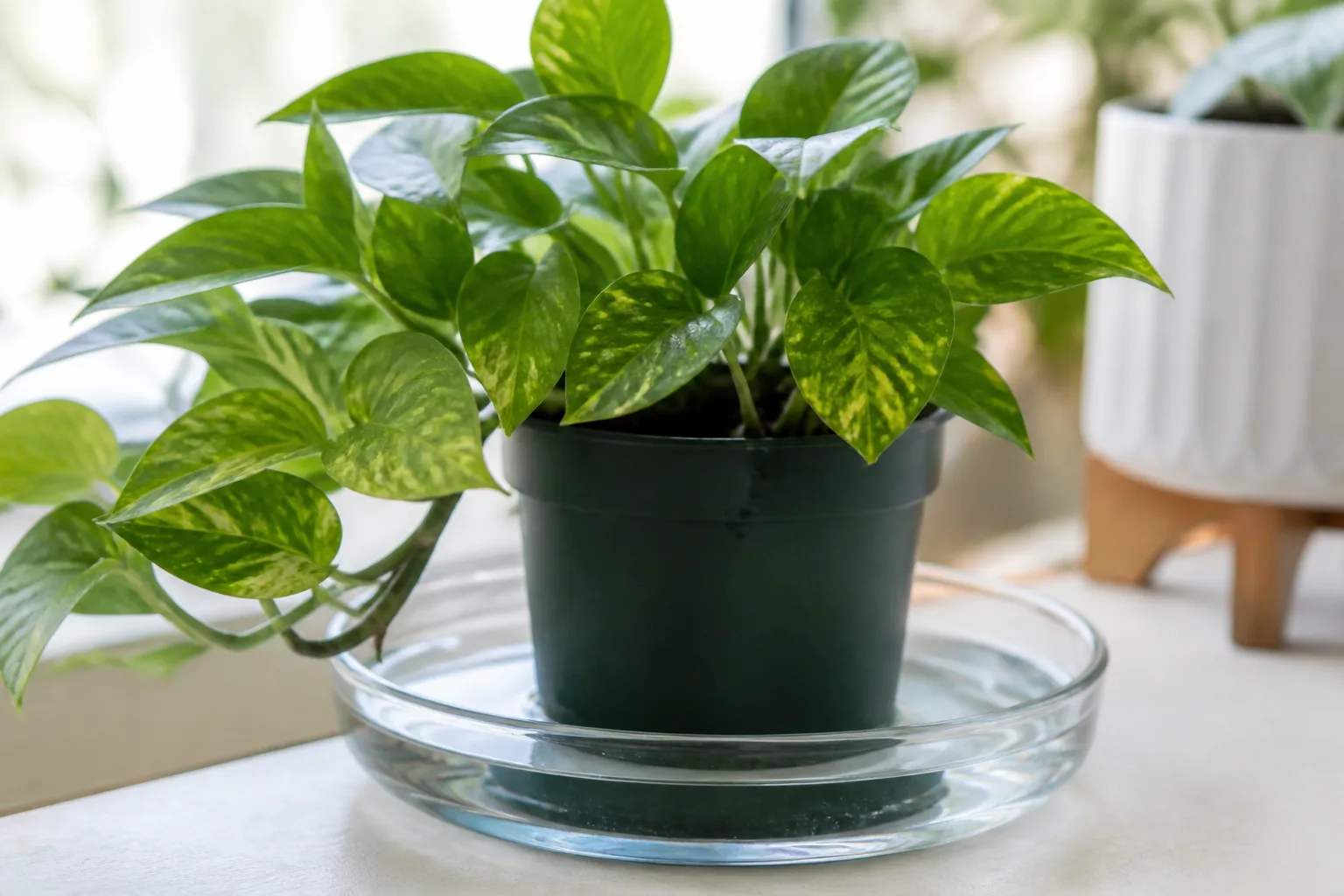
Bottom watering—also called subirrigation—means the nursery pot sits in a shallow basin so dry mix pulls water upward through drainage holes by capillary action. You remove the pot when the surface moistens or a wilted plant firms up, then let it drain. Virginia Extension warns against leaving containers in basins longer than about 60 minutes because prolonged saturation invites root rot. (Virginia Cooperative Extension)
This is not the same as leaving a decorative cache pot filled with old runoff for days. A timed soak is a technique. A permanent puddle is a risk. For the step-by-step soak method, use how to bottom water houseplants; here we only decide when that tool belongs in the routine.
When Top Watering Is the Better Choice
Top watering wins whenever you need downward flow, speed, or a flush. It is also simply more practical for large floor plants you will not hoist into a sink every week.
Flushing Soluble Salts and Hard-Water Minerals
Fertilizer residues and minerals from tap water concentrate in potting mix over time. When salts get high, roots take up water less efficiently and leaf edges can burn. Clemson’s watering factsheet recommends watering thoroughly until water runs from the bottom specifically to wash out excess salts—and emptying the saucer afterward so those salts do not reabsorb. (Clemson HGIC)
Bottom-only routines reverse that helpful flow. Water enters from below and evaporates from the surface, so salts tend to accumulate near the top of the profile. PlantTalk Colorado links subirrigation to soluble-salt buildup and recommends periodic top watering to leach salts if you water from the bottom regularly. (PlantTalk Colorado) UGA Extension makes the same point for African violets: bottom watering works well, but it does not leach salts, so plants still need occasional warm top watering to wash salts and dust. (UGA Extension)
If your tap is mineral-heavy, top flushes matter even more—use the hard water for houseplants guide when tip burn keeps returning despite good wet-dry cycles, and pair salt management with sensible fertilizer habits rather than feeding harder to “fix” tip burn. Concrete flush triggers beat a vague calendar: after every two to four fertilizer applications on a bottom-watered plant, when white crust appears on the mix or pot rim, or when hard-water spots keep showing up on foliage after splash.
Getting an Even Wet Through the Full Root Ball
For plants that accept overhead water, a careful top soak is the fastest way to wet the whole column of mix. You can see runoff. You can feel the pot get heavier. You can pause and resume if the first pass channels down the side of a shrunken peat ball.
Clemson notes that if peat dries completely, it becomes hard to rewet and holds less water afterward; their recovery options include a second watering half an hour later or setting the pot in a sink or bucket until the surface moistens. (Clemson HGIC) That second pass is still top-side rehydration logic—slow, repeated wetting—before you escalate to a dedicated bottom soak. For moisture checks, drainage, and species dry-down ranges, stay with the indoor watering pillar rather than inventing a second schedule system here.
When Bottom Watering Helps More
Bottom watering is not a trend replacement for top watering. It is the better answer when top watering creates leaf damage, misses the root ball, or cannot get water into a water-repellent mix.
Fuzzy Leaves, Crowns, and Splash-Sensitive Plants
Some houseplants pay a real price for wet foliage. Virginia Extension lists African violets, begonias, and cyclamen among plants that do not tolerate wet leaves well, and notes that mineral residues from some water sources can spot foliage. (Virginia Cooperative Extension) UGA Extension adds a cold-water detail for African violets: water at 55°F or below can cause ring spot on leaves, and even a roughly 10°F difference between leaf and water temperature can mark tissue. (UGA Extension)
For those plants, bottom watering keeps the crown and leaf hairs dry while the mix rehydrates. Pair that technique with species care—not a one-size “always bottom water everything” rule. African violet culture, bloom, and crown-safe habits live in the African violet care guide, with watering specifics also covered on the African violet watering page.
Dense Canopies and Hydrophobic Mix Restarts
Dense foliage can turn top watering into a leaf bath even when the plant is not especially disease-prone. Virginia Extension recommends bottom watering for houseplants whose canopy makes overhead watering difficult. (Virginia Cooperative Extension) If you cannot aim a spout at soil without soaking every leaf, a basin soak is cleaner and often more even. This is also where bottom watering helps apartment growers who water on a tray away from furniture: less splash, less cleanup, and less temptation to under-water because the job is annoying. Still remove the pot from the basin and drain it.
Dry peat- or bark-based mixes can become hydrophobic—they repel water the way two like magnets push apart. Virginia Extension says excessive, quick drainage after a top pour often means the mix never hydrated; the pot still feels light, or the core stays dry while water ran down the sides. (Virginia Cooperative Extension) Bottom watering can rehydrate that sponge from below, though severely hydrophobic mix may need a longer soak or a repeat cycle until the surface finally moistens. Small 4-inch pots often finish in closer to 15 minutes; chunky 8–10 inch aroid pots may need the full 30 minutes Virginia cites, and sometimes a second timed cycle after a short drain—not a weekend soak.
Caveats matter. Bottom watering a hydrophobic pot is a restart, not a forever lifestyle. Once the mix accepts water again, many plants return to top watering for salt control. If the mix sheds water every time even after careful rewetting, the real fix may be fresh mix or a better soil structure, not endless emergency soaks. Also confirm the plant actually needed water—bottom-soaking an already wet pot is just overwatering with extra steps, and chronic wetness is a fast path to root rot and overwatering symptoms. If the plant was truly bone-dry and limp before the soak, recover with the same moisture checks used for underwatered plants, then resume a normal interval.
Myths That Skew the Decision
| Claim you hear | Reality check |
|---|---|
| Bottom watering is always better | No. PlantTalk prefers top watering for most houseplants; bottom watering is situational. (PlantTalk Colorado) |
| Bottom watering always builds deeper roots | Not a reliable rule. Thorough top watering that wets the full root ball also hydrates deep roots; shallow “sips” from either method keep roots lazy. Treat “deeper roots” claims as marketing unless you also changed how thoroughly and how often you water. |
| Bottom watering stops fungus gnats | Only if the surface actually dries. Larvae live in the moist top inches; spout direction is secondary to dry-down. (Colorado State Extension) |
| Top watering always causes crown rot | Poor frequency and standing wetness cause rot—not the act of pouring onto soil carefully under the leaves. |
If someone sells bottom watering as a personality upgrade, ask what problem they are solving: splash, hydrophobic cores, or salts. Those problems need different tools.
Risks That Tip the Scale
The method debate gets useful when you price the failure modes. Most “bottom watering is always better” advice underweights salts and gnats. Most “never bottom water” advice underweights splash-sensitive plants and hydrophobic cores.
Salt Buildup, Fungus Gnats, and Incomplete Wetting
If bottom watering is your only method for months, expect salts to concentrate near the surface as water evaporates upward. PlantTalk Colorado lists the plant costs of high salts: reduced water uptake, restricted roots, burned foliage, and weaker flowering. (PlantTalk Colorado) UGA’s African violet guidance is the practical fix in one sentence: water occasionally from the top with warm water to wash out salts. (UGA Extension) A workable home rule: if a plant is mostly bottom watered, schedule a thorough top flush on the triggers above—water until excess drains, discard runoff, then resume your usual method. White crust on the soil or pot rim is a late visual cue; do not wait for crust if you fertilize regularly. Persistent tip burn after flushes may need the brown tips differential, not another fertilizer bump.
Fungus gnat adults are strongly attracted to moist growing media, especially peat-rich mixes. Colorado State Extension notes larvae usually live in the top 2–3 inches depending on moisture, and the most important cultural control is allowing the medium to dry between waterings—especially the top 1–2 inches. (Colorado State Extension) Penn State Extension likewise ties indoor fungus gnat pressure to moist media and cultural dry-down as the first control step. (Penn State Extension) Bottom watering is sometimes sold as a gnat cure because it can leave the surface drier than a heavy top pour. That only helps if the surface actually dries and you are not keeping the whole pot constantly wet. Method is secondary to the wet-dry cycle. Full diagnosis and treatment steps belong in the fungus gnats houseplants hub.
Bottom watering fails quietly when the soak is too short, the water is too shallow, or the mix is so hydrophobic that moisture never reaches the top. Virginia Extension’s success checks are simple: the surface should feel moist, or a wilted plant should perk up; if not, repeat rather than assume the first cycle worked. (Virginia Cooperative Extension) The other failure mode is forgetting the pot. A 20-minute basin is bottom watering. A weekend in a full saucer is oxygen starvation. NC State Extension’s Lee County guidance on overwatering reminds growers that root-rot pathogens thrive in wet, poorly drained mix and that pots in deep planters need checks for standing water. (NC State Extension) If leaves wilt while the mix smells sour or roots look brown and mushy, switch from method debates to overwatering recovery and drainage fixes.
How to Combine Both in One Routine
Most homes do best with a hybrid habit, not a loyalty pledge.
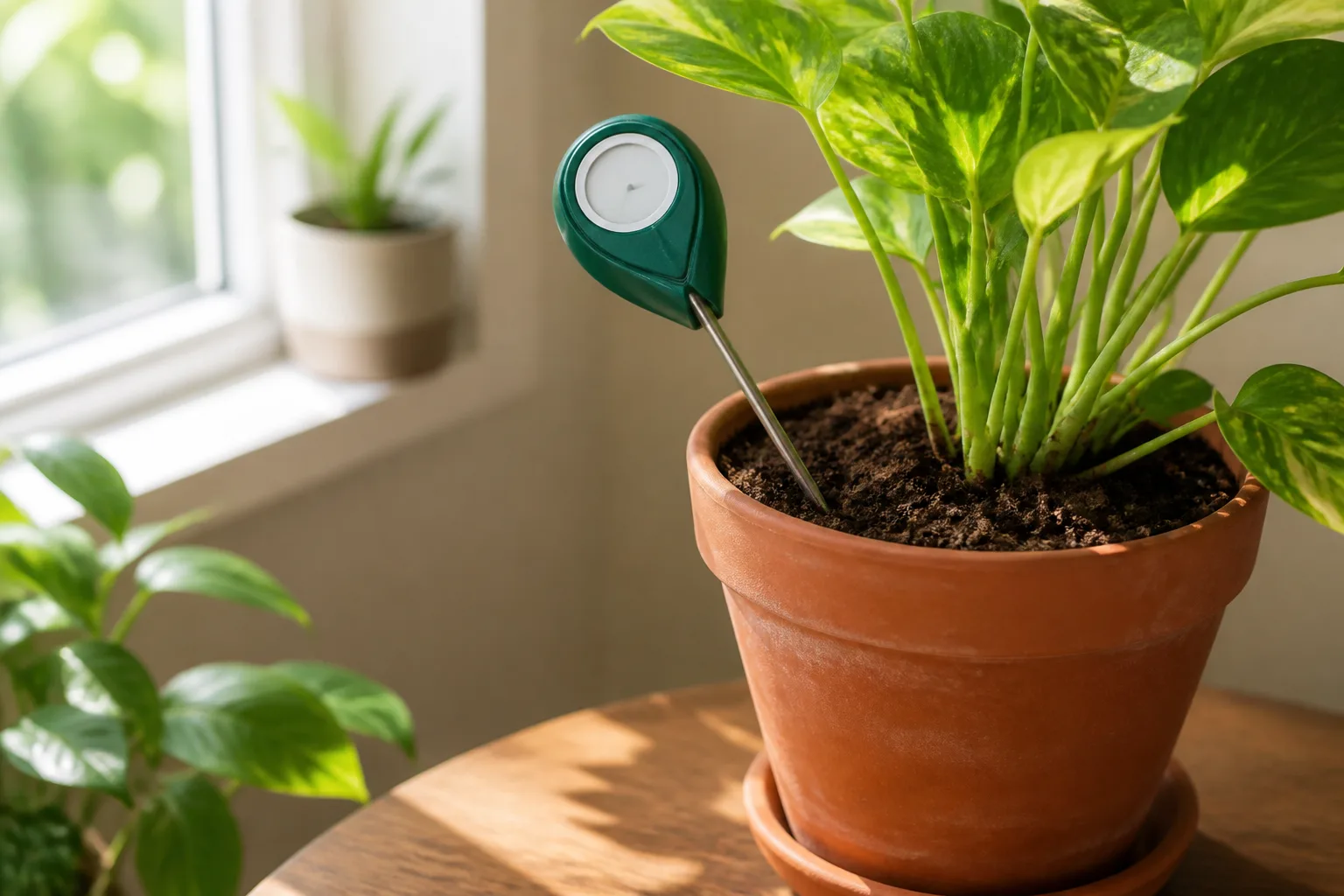
Make top watering the default for ordinary tropicals that tolerate wet soil surfaces: pothos, many philodendrons, monsteras, snake plants on their slower schedule, and anything in a pot too heavy to soak weekly. Use the moisture-check framework in how to water indoor plants the right way—method choice comes after “does this plant need water today?”
Use bottom watering as the exception for splash-sensitive plants, dense canopies, and hydrophobic restarts. Keep soaks timed. Drain fully. For the mechanics and soak timing details, lean on how to bottom water houseplants instead of reinventing basin depth here.
Add a salt-flush cadence whenever bottom watering dominates a plant’s month. Tie flushes to fertilizer frequency, visible crust, and hard-water stress—not a random “every Sunday” ritual that ignores whether the mix already needed a leach. Watch the surface dry-down if fungus gnats are active in the room. Whether you top or bottom water, let the top inch or two dry for plants that can handle it, and treat ongoing fly pressure with the steps in the fungus gnats guide.
Self-Watering Reservoirs Are Not Timed Bottom Soaks
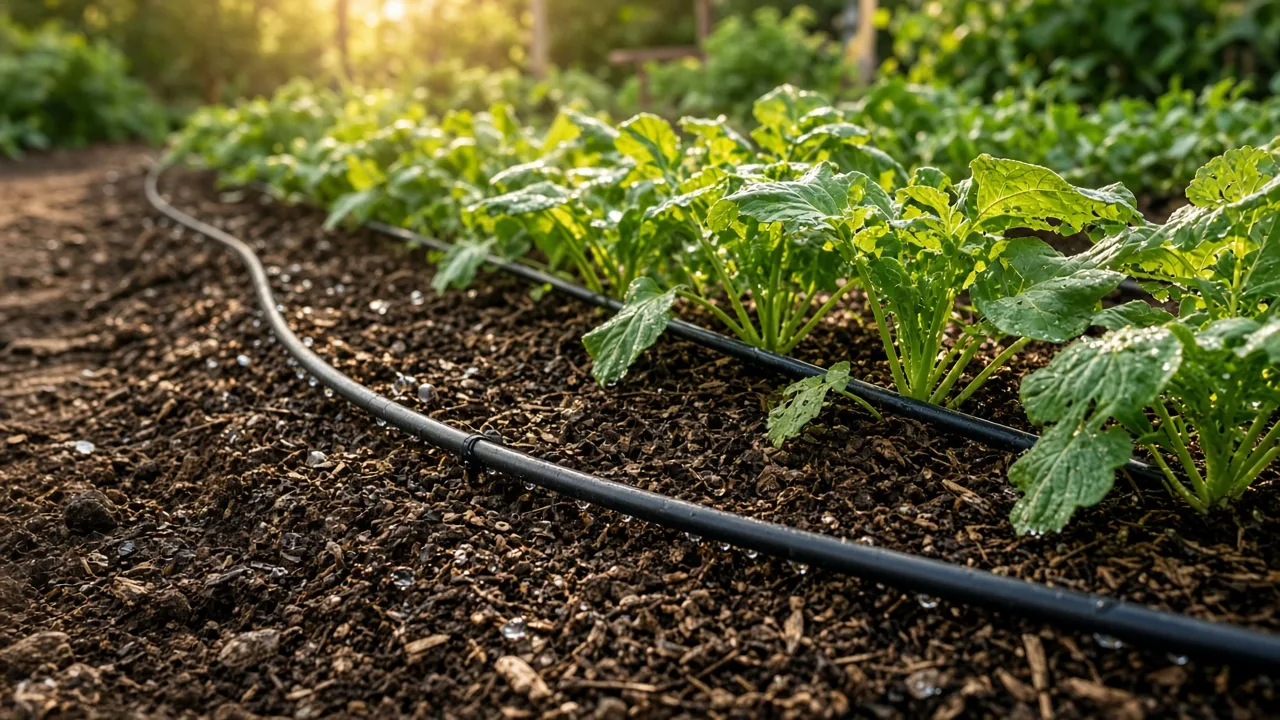
Do not confuse a timed bottom soak with a self-watering reservoir. Virginia Extension describes reservoir/wick containers as systems designed to keep potting soil evenly moist over time—useful for travel or thirsty plants, not a salt-flushing strategy. (Virginia Cooperative Extension) A 15–30 minute basin soak ends when you lift the pot and drain. A reservoir keeps capillary moisture available for days. If salts already worry you, a permanent reservoir can make mineral management harder unless you still plan occasional top flushes and reservoir cleaning. Choose the tool for the job: restart hydration, keep foliage dry, or cover a trip—not because “bottom” sounds modern.
Decision Table by Plant Situation
| Situation | Prefer | Why |
|---|---|---|
| Routine water, mix accepts surface water | Top water to drain | Faster, flushes salts, easy confirmation |
| Mostly bottom watered for weeks | Top flush on fertilizer/crust/hard-water triggers | Leaches salts that rise with subirrigation |
| African violet / fuzzy leaves / crown risk | Bottom soak, occasional warm top flush | Keeps foliage dry; still needs salt wash |
| Water runs down pot sides; pot stays light | Bottom soak or slow repeated top passes | Rewets hydrophobic core |
| Active fungus gnats | Either method + longer surface dry-down | Moisture cycle matters more than spout direction |
| Large floor pot you cannot lift | Top water | Practical; flush visible at drainage holes |
| Self-watering reservoir pot | Reservoir rules + occasional top flush | Continuous capillary moisture ≠ timed soak |
| No drainage holes | Neither (fix the pot first) | Bottom watering needs holes; sealed pots overwater easily |
Use the table as a starting bias, then verify with pot weight and finger checks. A peace lily in bright warmth and a snake plant in a cool corner can share a method and still need completely different intervals—covered in indoor plant watering basics and how to water indoor plants the right way.
First-Hand Notes From Switching Methods
These are single-apartment editorial observations from LeafyPixels plants in a north-central Ohio setup—not universal lab results. Treat them as lived failure modes that shaped the hybrid advice above.
Hydrophobic peat core (March 2026): A 4-inch African violet in peat-heavy mix looked “watered” after a top pour because water exited the holes in under ten seconds, yet the pot still felt light. A 20-minute basin soak left the top surface damp while a finger probe at mid-depth still found dry peat. A second 20-minute soak after a five-minute drain finally moistened the core. Lesson: one short soak is not always enough on severely dry peat; confirm with finger depth, not runoff alone.
Salt crust after bottom-only months (winter 2025–2026): Two Optimara-type violets bottom-watered for roughly three months with monthly dilute feed developed a chalky white rim crust before leaves declined. A warm top flush until clear runoff, then saucer emptying, reduced crust over two cycles. Growth did not “fix” from more fertilizer—salts were the issue, matching UGA’s occasional top-water advice.
Gnats vs spout direction (April 2026): Switching three pothos pots to bottom watering alone did not drop sticky-card counts while the top inch stayed dark and damp. Extending dry-down until the surface felt dry to the first knuckle cut new adult landings within two weeks more clearly than the method change itself. Bottom watering helped only after surface dry-down returned.
Common Mistakes When Choosing a Method
Declaring a forever winner. The same plant can need bottom watering after a vacation dry-out and top watering the rest of the season. Re-decide when the mix, pests, or leaf spotting change.
Bottom watering on a calendar. If the mix is still wet, a soak adds stress. Virginia Extension’s core overwatering point applies to both methods: overwatering is about how often you water, not how much you apply in a single thorough session. (Virginia Cooperative Extension)
Skipping the flush on African violets. Growers often bottom water violets correctly for leaf safety, then never top water, and wonder why the mix crusts or growth stalls. UGA’s “occasional top watering to wash salts” rule exists for that exact pattern. (UGA Extension)
Using bottom watering to hide a bad pot. Cache pots without drainage, clogged holes, and permanently wet decorative sleeves defeat both methods. Fix drainage—and repot when mix has collapsed—before optimizing technique.
Expecting bottom watering alone to end fungus gnats. If the surface stays moist, adults still find the pot attractive. Dry-down and sanitation beat spout direction. Escalate with the fungus gnats hub when flies persist after cultural changes.
Treating a self-watering pot as a salt-safe forever soak. Reservoirs keep moisture available; they do not leach salts the way a top flush does. Clean reservoirs and plan occasional overhead leaching if you fertilize.
For moisture checks and drain rules, stay with how to water indoor plants the right way. For basin steps, use how to bottom water houseplants. For travel reservoirs, see DIY self-watering systems. For mineral-heavy tap stress, use hard water for houseplants. For crown-safe violet habits, use the African violet care guide.
Conclusion: Hybrid Default Checklist
Top watering is the better everyday method for most houseplants because it thoroughly wets the root zone and can flush salts. Bottom watering is the better situational tool for splash-sensitive plants, awkward canopies, and hydrophobic restarts—as long as soaks stay timed and you still schedule top flushes. Do this tomorrow:
- Check moisture first—method is step two, not step one (watering pillar).
- Default to top watering for ordinary tropicals; bottom-soak only for splash, canopy, or hydrophobic cases.
- If a plant is mostly bottom watered, top-flush on fertilizer, crust, or hard-water triggers and empty runoff.
- Keep soaks under about 60 minutes, drain fully, and never confuse a timed basin with a self-watering reservoir.
Return to the full watering framework whenever you need timing, species dry-down, or recovery steps beyond the top-versus-bottom decision.