How to Grow and Care for Star Jasmine
Learn how to grow star jasmine with the right light, soil, watering, support, pruning, winter protection, propagation, and no-flower fixes.
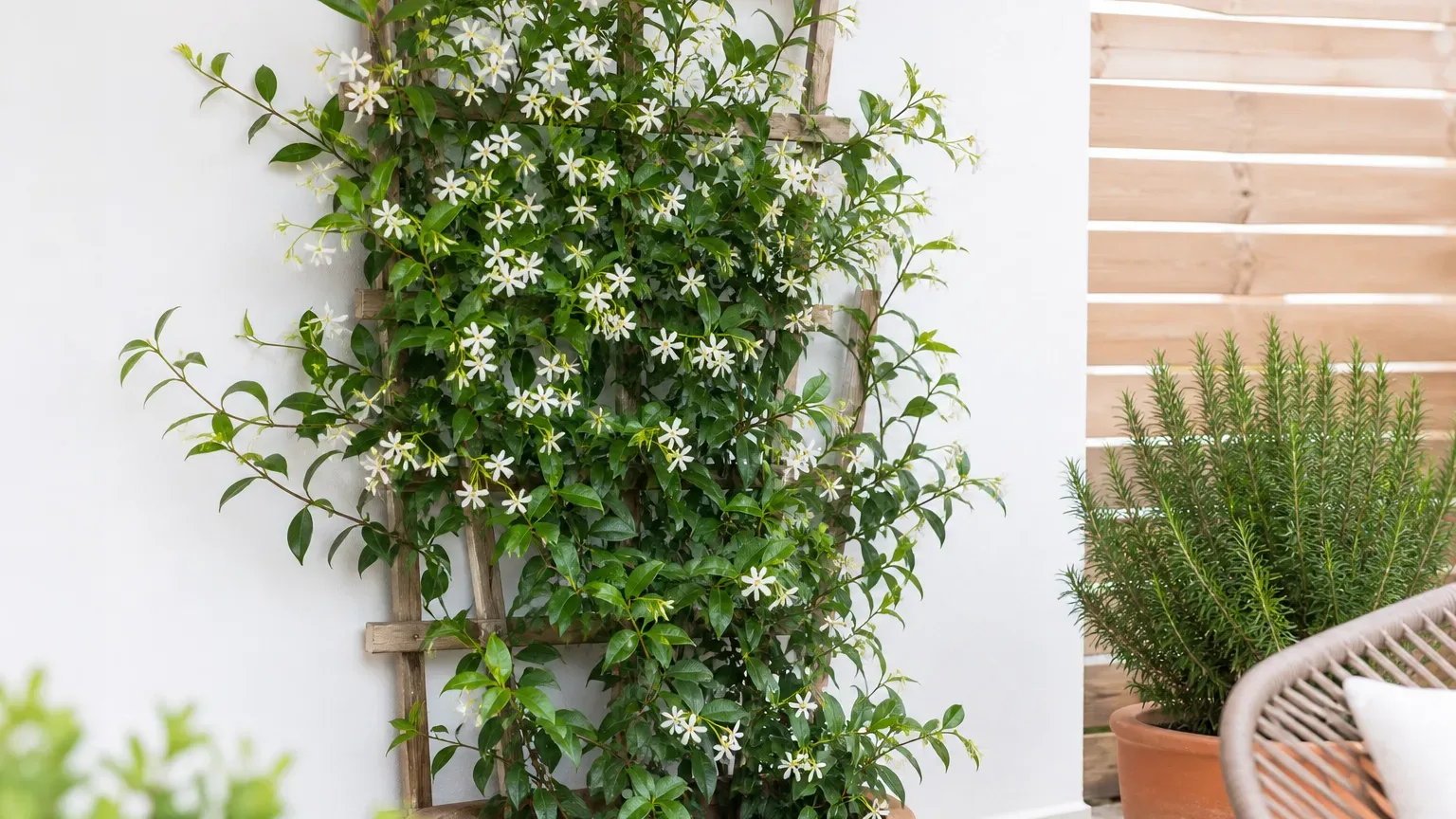
Star jasmine (Trachelospermum jasminoides) earns its place near a path, patio, or entry because its small white flowers can perfume the air from late spring into summer. It is also a vigorous, woody vine: given support, it can climb about 20 feet or more, while regular pruning can keep it as a compact shrub, ground cover, or container plant. The trick is to plan for both sides of its personality—slow establishment at the root ball and fast expansion once it is settled.
This is not true jasmine in the genus Jasminum. Star jasmine belongs to the dogbane family, Apocynaceae, and its evergreen leaves, twining stems, milky sap, fragrance, and cold tolerance are different enough to change the care plan. NC State Extension lists it as a perennial evergreen vine for warm regions, with fragrant creamy-white flowers, a twining habit, and a mature range from a compact plant to roughly 20 feet on support (NC State Extension).
Know which jasmine you have before planting
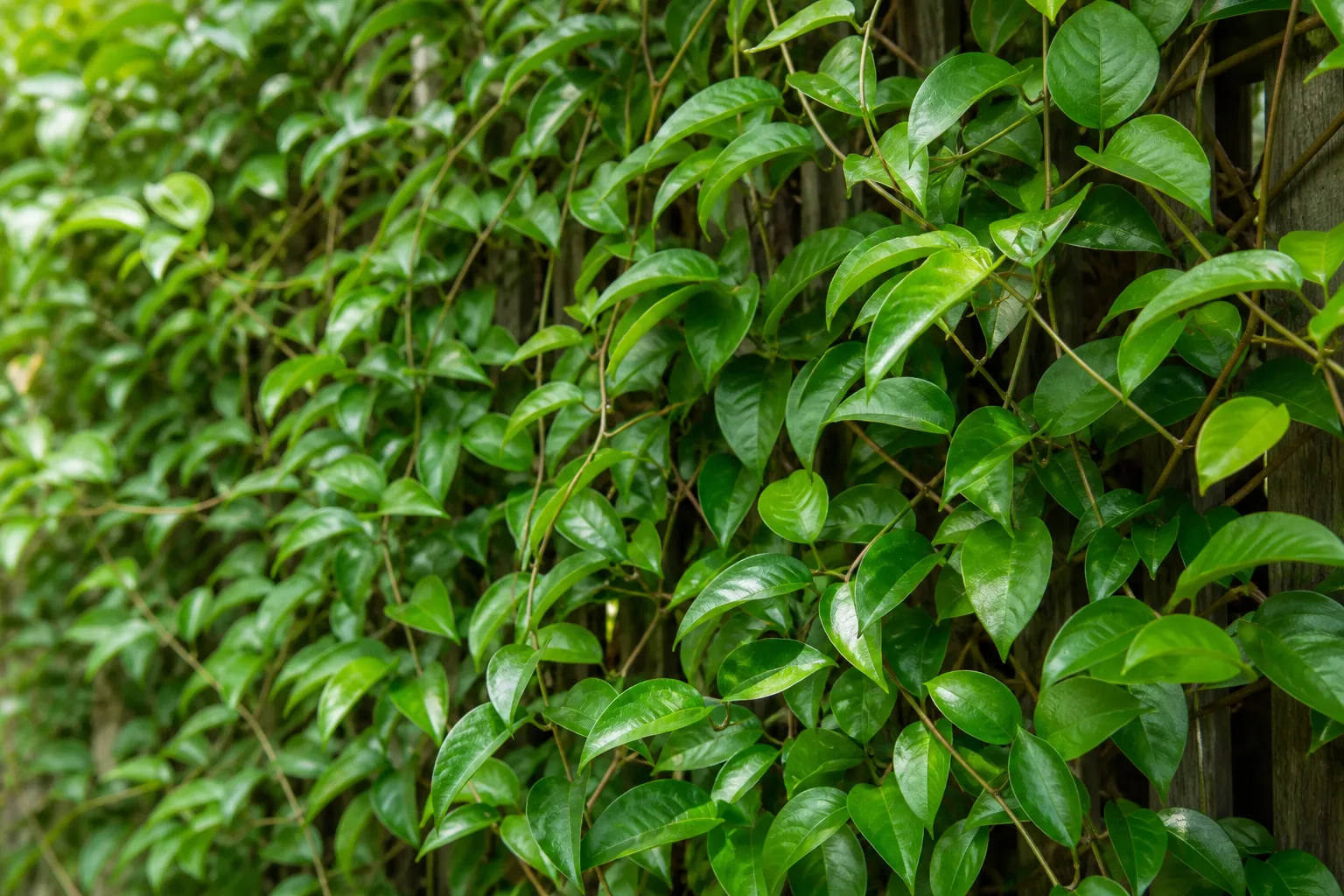
The name on the plant tag matters more than the word “jasmine” on the front of the pot. Star jasmine has opposite, leathery, glossy leaves and five-lobed, pinwheel-like flowers. New leaves can have a bronze or purplish cast, and mature foliage is usually deep green; in cold weather, established plants may bronze further without being dead.
The vine is evergreen where winters are mild, but “evergreen” does not mean frost-proof. Oregon State University describes star jasmine as a broadleaf evergreen twining vine that can reach 10–20 feet when supported and notes hardiness around USDA zone 7–8 depending conditions; NC State’s plant profile lists it for zones 8a–10b (Oregon State University, NC State Extension). Treat those ranges as a planning guide, not a guarantee: a sheltered wall, cold wind, container mobility, cultivar, and the duration of a freeze can matter as much as a zone label.
Star jasmine versus true jasmine
True jasmine is in the genus Jasminum, while star jasmine is Trachelospermum jasminoides. They may both have white fragrant flowers, but they do not have identical light, temperature, or pruning calendars. If you bought a plant labeled only “jasmine,” check the botanical name before moving it outdoors or assuming that advice for pink jasmine, winter jasmine, or common jasmine applies.
Choose ground, container, or indoor display
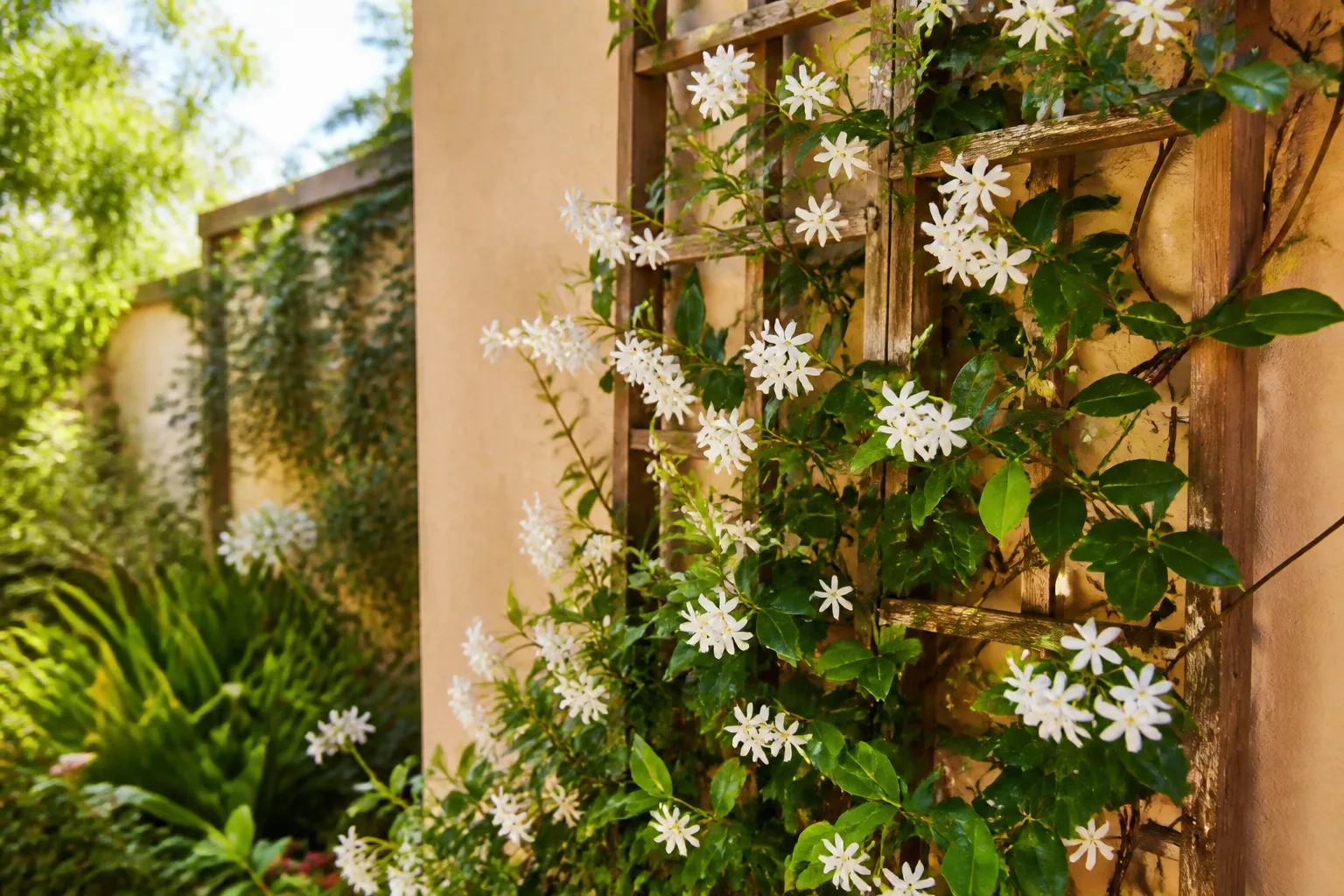
Plant star jasmine in the ground when you want a long-term screen, wall covering, arbor vine, or spreading ground cover and your winters are suitable. A sheltered site with room for a trellis is the lowest-maintenance choice after establishment, but it is also the least reversible. The runners and twining stems can extend into nearby shrubs, under fences, or across a bed, so do not place it where you cannot reach the back and sides for pruning.
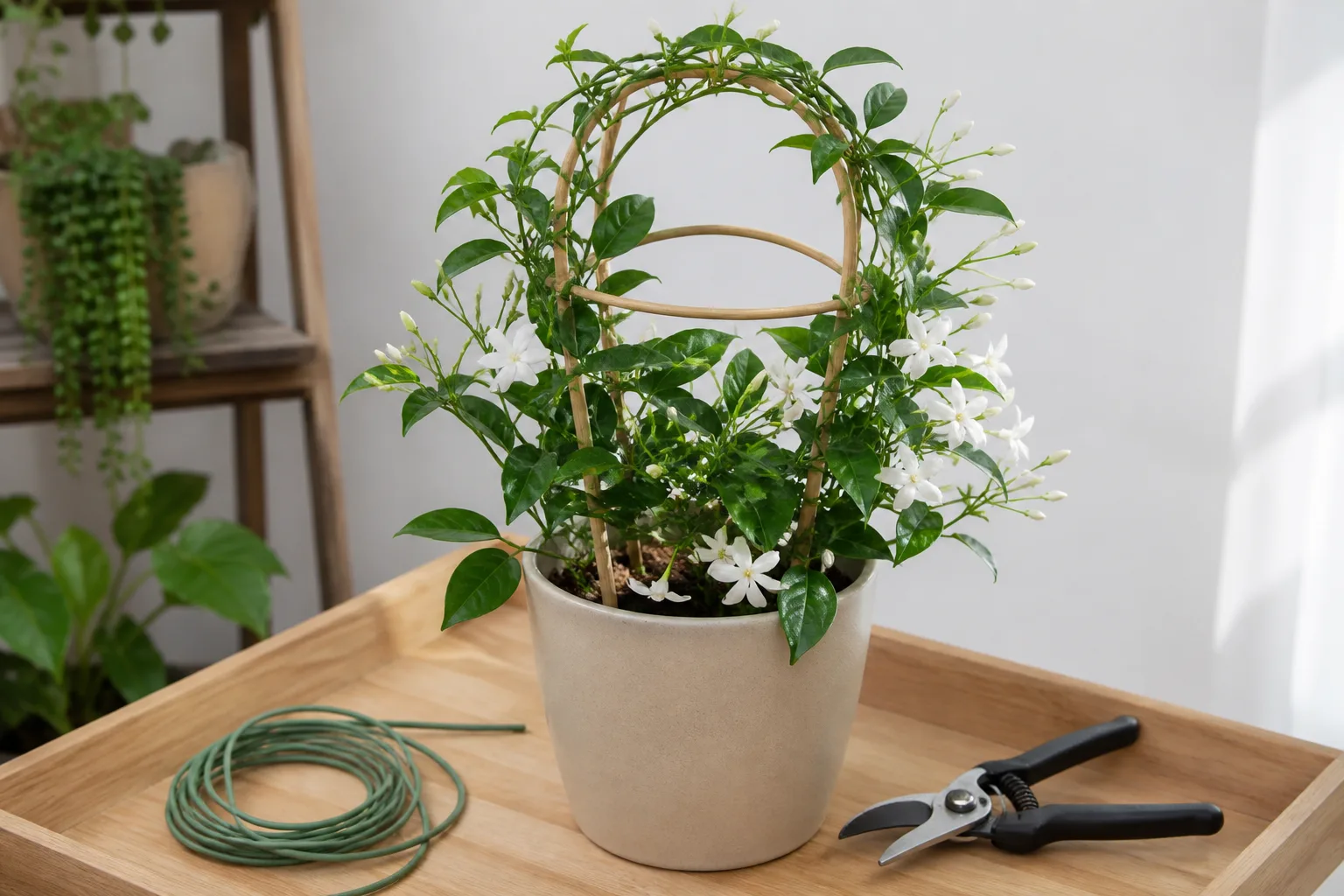
A container is better when your winter is marginal, your soil stays wet, or you want to move the plant. Use a heavy pot with drainage and a support that goes in before the vine becomes tangled. Container plants dry faster than in-ground vines and need more frequent root-zone checks, but they let you protect the plant from a hard freeze and keep the final size more predictable.
Indoor growing is possible near a very bright window, especially for a young plant clipped as a small vine. Flowering is the difficult part indoors: a distant window may maintain leaves but not provide enough direct light on the growing tips. An outdoor summer can give a potted plant more light and airflow, provided you acclimate it gradually and bring it back before frost.
Plant star jasmine for healthy roots and future support
Choose spring or early fall for planting so the root system has moderate weather in which to establish. A plant that goes into cold soil just before a freeze or into hot, dry soil at midsummer needs more aftercare and has less margin for error.
Outdoor planting sequence
- Pick the microclimate first. Look for sun or bright partial shade, protection from cold drying winds, and enough clearance for the mature vine. A warm wall can help in a marginal climate, but avoid a site that turns into a heat trap with reflected afternoon sun.
- Test the drainage. Dig a hole roughly as deep as the root ball and fill it with water. If water remains for hours in heavy soil, improve the planting area or choose a raised site; do not bury the vine in a permanent basin.
- Dig wide, not excessively deep. Make the hole about twice the root-ball width, with the bottom firm enough that the plant will not settle below grade. The top of the root ball should finish level with, or just slightly above, the surrounding soil.
- Loosen circling roots gently. Tease apart a few outer roots rather than shredding the entire root ball. Backfill with the native soil amended modestly with finished compost; a pocket of rich, very different soil can hold water around the roots.
- Install support immediately. Set a trellis, wire grid, arbor, or fence support before the stems become long and difficult to direct. Leave a little space between a wall and the support so air can move and stems can be reached.
- Water in deeply. Apply enough water to settle the soil around the root ball, then mulch the root zone with a thin, even layer. Keep mulch away from the stems to reduce persistent wetness at the crown.
This planting sequence follows the practical guidance from Epic Gardening—wide planting hole, root ball level with the surrounding soil, thorough settling water, mulch held away from the stem, and support for a climbing plant (Epic Gardening). For a ground-cover planting, leave enough space between starts for air and access; planting too densely creates a pruning problem before it creates a finished carpet.
Give it light that supports flowers
For the most flowers, aim for at least six hours of direct sun on an outdoor plant, with partial shade acceptable where the afternoon heat is severe. NC State lists full sun and partial shade, while Epic Gardening notes that star jasmine likes strong light but may appreciate afternoon protection during very hot weather (NC State Extension, Epic Gardening). Morning sun with bright afternoon light is a sensible compromise in a hot climate.
Shade changes the plant in two ways: shoots become longer and less sturdy, and flower production usually drops. If the leaves look healthy but the vine is producing foliage without buds, measure light at the growing tips rather than judging the brightness of the room. Move a container closer to the brightest glass slowly over a week or two; a sudden move from shade to hot reflected sun can scorch leaves.
Indoors, put star jasmine in the brightest window available, preferably where some direct sun reaches the foliage. Turn the pot every week or two so one side does not stretch toward the glass. If winter light is weak, a supplemental grow light can help maintain compact growth, but light cannot compensate for cold damage, waterlogged roots, or pruning that removed the flowering growth.
Water by soil condition, not a calendar
Newly planted star jasmine needs consistent moisture while roots move into surrounding soil. Water deeply when the upper layer begins to dry, then check again before repeating. In-ground plants that are established can tolerate short dry periods better than newly planted vines; NC State specifically notes that established plants become drought-tolerant (NC State Extension). That does not mean a mature vine should be left dry through a prolonged hot spell.
For a container, push a finger into the top inch or two of mix. If it is dry at that depth and the pot feels noticeably lighter, water slowly until some drains from the bottom. Empty the saucer after the soil has finished draining. A plant that wilts at midday but recovers by evening may be responding to heat rather than needing repeated shallow drinks; check the root zone before watering again.
The common failure is an alternating cycle of drought and saturation. A large pot, dense mix, or blocked drainage hole can keep the center wet even when the surface looks dry. Yellowing, sour-smelling mix, soft roots, and a plant that wilts despite wet soil point toward root stress rather than thirst. Correct drainage and watering rhythm before adding fertilizer.
Use fertile, well-drained soil
Star jasmine is adaptable, but it performs best in fertile soil that drains freely and holds some moisture between waterings. NC State specifies fertile, well-drained soil, Oregon State describes it in loamy soil, and RHS lists loam, sand, or chalk as possible soil types when moisture is well controlled (NC State Extension, Oregon State University, Royal Horticultural Society). The useful lesson is drainage, not a single magic pH number.
In heavy clay, plant on a slight mound or raised bed and improve the wider planting area with organic matter rather than filling only the hole with fluffy compost. In a container, use a quality potting mix with extra aeration, such as a modest amount of perlite, pumice, or fine bark. Do not put a layer of gravel in the bottom of a pot; it does not fix a waterlogged root zone. Make sure the drainage holes are open and the pot is not sitting in a permanently full saucer.
Protect star jasmine from cold and hot exposure
In a suitable warm climate, star jasmine can remain outside year-round and keep its evergreen character. In a marginal climate, site it against a sheltered wall, protect the root zone with mulch, and be ready to cover or move a container when a hard freeze is forecast. Bronze winter leaves can be a normal cold response; blackened stems, collapsed leaves, and dieback after a freeze are more serious signs.
The safest approach in colder areas is a container that can move into a bright, cool, protected space. BBC Gardeners’ World recommends well-drained soil, shelter from cold drying winds, and greenhouse or conservatory protection in areas prone to severe frost; it also advises lighter winter watering for indoor plants (BBC Gardeners’ World Magazine). Keep the winter location bright, ventilated, and cooler than a hot radiator zone, and reduce watering as growth slows without allowing the root ball to become bone dry.
Hot exposure needs management too. In regions where summer afternoons are extremely hot, temporary afternoon shade and a deeper mulch layer can reduce leaf scorch and moisture swings. Avoid moving a shade-grown container directly into full midday sun; acclimate it in stages.
Fertilize sparingly after establishment
Do not rush to feed a newly planted vine. The first priority is root contact, moisture consistency, and support. Once star jasmine is established and actively growing, a balanced slow-release fertilizer in spring is reasonable if the soil is poor or growth is weak; NC State recommends spring fertilizer when soil fertility is lacking (NC State Extension). Follow the product label for the container size or planting area rather than increasing the dose because the vine looks slow.
Too much nitrogen can produce long, soft, leafy growth at the expense of a compact shape and may increase watering demand. Pale leaves are not automatically a fertilizer signal: waterlogged roots, poor light, cold, and high-pH-related nutrient availability can look similar. Check light and drainage first, and avoid feeding drought-stressed, freshly repotted, or heat-damaged plants until they recover.
Train and prune without sacrificing flowers
Star jasmine twines around a support; it does not attach to a wall in the same way ivy does. Guide young stems across the trellis and secure them loosely with soft ties. Space stems so the finished cover is not a dense mat pressed against the wall. Directing a few main shoots early is easier than trying to separate a woody tangle later.
Pruning has three jobs: remove damage, keep the vine within its allotted space, and renew the framework. The best general timing is after the main flush of flowers has faded. Oregon State University gives an annual post-flowering prune for keeping the vine in bounds, and NC State likewise recommends pruning after flowering (Oregon State University, NC State Extension). A regional pruning calendar may differ—RHS lists early spring for its pruning group—so use the plant’s actual flowering cycle as the deciding signal (Royal Horticultural Society).
The post-bloom pruning sequence
- Remove dead, broken, diseased, or badly rubbing stems first.
- Trace runners that have rooted where they touch soil and cut unwanted sections before they become difficult to remove.
- Shorten long flowering shoots back to a side shoot or healthy pair of leaves, keeping the overall framework.
- Thin a few crowded stems at their origin instead of shearing every tip at the same height.
- Step back frequently and stop when the plant fits its support; a severe haircut is rarely necessary for routine control.
Use sharp, clean pruners and clean the blade between plants, especially when removing suspicious growth. The stems can exude milky latex when cut, so wear gloves, avoid touching your eyes, and wash sap from skin and tools. Save healthy, non-flowering cuttings for propagation instead of taking material from diseased or drought-stressed growth.
Propagate from cuttings or layering
Layering is often the least stressful method when a flexible stem already reaches the soil. Pin a section of stem to the soil surface or just beneath it while leaving the growing tip exposed. Keep that contact area moist, and separate the new plant only after it has formed a useful root system. NC State lists both layering and stem cuttings as recommended propagation strategies (NC State Extension).
For a stem cutting, take a roughly 4–6-inch piece from healthy, actively growing material, ideally after flowering and below a node. Remove the lower leaves, place the base in a clean, airy, moist rooting medium, and keep the cutting warm, bright, and out of harsh direct sun. A clear cover can retain humidity, but it must not keep the medium saturated; briefly ventilate it if condensation is constant.
Check for resistance after several weeks rather than tugging every few days. New growth is encouraging, but roots are the real test. Once a cutting holds its mix, acclimate it gradually to brighter light and transplant it into a small pot before moving it into a large container or the ground. RHS specifically recommends layering or semi-ripe cuttings for this plant, while Epic Gardening describes summer stem cuttings in well-drained soil kept consistently moist during rooting (Royal Horticultural Society, Epic Gardening).
Repot and overwinter container plants
Repot when roots circle densely, emerge from drainage holes, the mix has collapsed, or the plant dries much faster than it used to. Spring is the easiest time because the plant can recover during active growth. Choose a pot only one size larger and refresh the mix around the root ball; a much larger container stays wet longer and can delay recovery.
Install or secure the trellis before lifting a large vine. If the plant is badly tangled, prune a little after flowering rather than forcing woody stems through a support. After repotting, water the mix through once, let it drain fully, and keep the plant in bright but less intense light for several days while disturbed roots recover.
Before bringing a patio plant indoors, inspect leaf joints and stems for scale or mealybugs and check the underside of leaves. Move it before cold nights, not after frost has already damaged tender growth. Indoors, give it the brightest light available, maintain airflow, and let the surface dry modestly between waterings as growth slows.
Solve no flowers with a diagnostic sequence
A leafy star jasmine with few or no flowers is usually telling you that one part of the growing system is out of balance. Work through these checks in order:
- Confirm the name. A true jasmine, winter jasmine, and star jasmine can have different bloom seasons and cold requirements. Read the botanical name.
- Check light at the tips. If the plant receives only filtered indoor light or deep shade outdoors, move it toward stronger light gradually. This is the most common correctable reason for a healthy-looking, non-blooming vine.
- Review pruning date. If you cut heavily just before the expected bloom period, you may have removed the shoots that would have carried flowers. Wait through the next growth cycle, then prune after flowering.
- Inspect roots and moisture. Constantly wet soil, a blocked pot hole, or repeated drought can interrupt bud development. Improve drainage and watering rhythm before feeding.
- Consider age and weather. A recently planted or heavily pruned vine may need time to establish. An unusually cold winter, heat wave, or sudden exposure change can also reduce one season’s flowering.
- Feed only if evidence supports it. Fertilizer is not a substitute for sun. If foliage is vigorous and green, extra nitrogen may make the no-flower problem worse.
Flowers are small, white, and pinwheel-shaped, usually appearing in clusters with a strong sweet fragrance. NC State records the main bloom in spring with occasional summer flowers, while Oregon State and RHS describe summer or mid- to late-summer flowering in their regional profiles (NC State Extension, Oregon State University, Royal Horticultural Society). That difference is a useful reminder to judge bloom timing against local climate, plant age, and the cultivar—not a single universal month.
Manage pests, disease, and sap safely
Star jasmine is generally resilient, but it can host scale, mealybugs, mites under glass, and occasional beetle damage. NC State flags Japanese beetles, while RHS lists cushion scale, mealybugs, glasshouse red spider mite, and possible honey fungus; the two profiles reflect different climates and growing settings rather than a guarantee that every pest will appear (NC State Extension, Royal Horticultural Society).
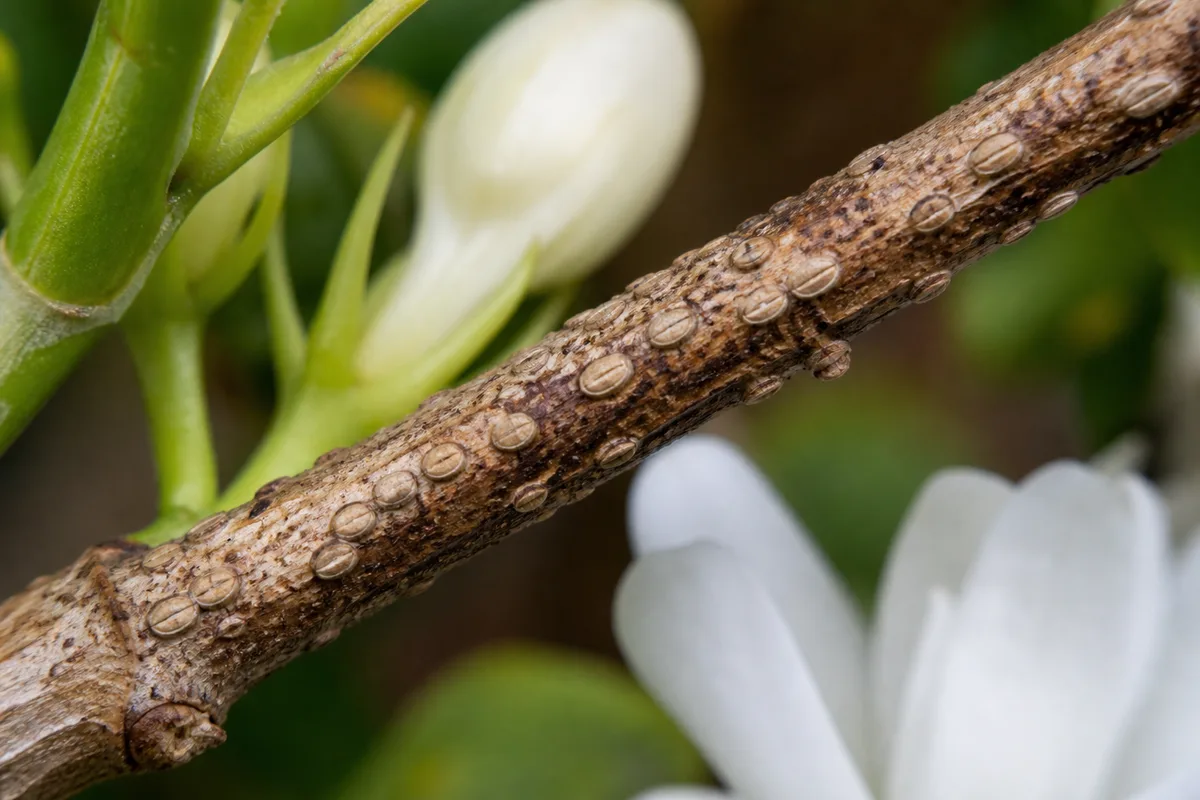
Start with inspection. Scale looks like small fixed bumps on stems or leaves; mealybugs look cottony and often gather at joints. Honeydew can leave a sticky surface, followed by dark sooty mold. Rinse foliage when appropriate, prune a badly infested tip, improve airflow, and control the sap-feeding insect rather than treating the mold as the primary disease. A plant kept too wet or crowded is harder to diagnose and recover.
If you use horticultural oil, insecticidal soap, or another pesticide, choose a product labeled for the pest and the plant, follow its directions, and test a small area first. Do not spray during heat, drought stress, or strong sun unless the label specifically permits it. The milky latex in cut stems is another reason to wear gloves and keep prunings away from children and pets; wash hands after handling and seek professional advice if sap enters an eye or causes a persistent reaction.
Conclusion
Grow star jasmine as a long-term vine only after choosing a site that can handle its eventual reach. Give it sun, fertile but well-drained soil, a support installed early, and steady moisture while it establishes. Once it is settled, the maintenance rhythm is simple: water when the root zone begins to dry, feed lightly only when fertility calls for it, prune after flowering, and cut unwanted runners before they root.
For colder climates or uncertain soil, a container is the more forgiving choice. If flowering is disappointing, check the botanical name, light, pruning timing, and roots in that order before reaching for fertilizer. Those few decisions turn star jasmine from a tangled, leafy vine into the fragrant, manageable plant it can be.