Best Soil for Indoor Plants: DIY Recipes & Top Brands That Work
Compare the best indoor plant potting mix brands, learn DIY soil recipes by plant type, and understand what to look for on a bag label before you buy.
The Short Answer
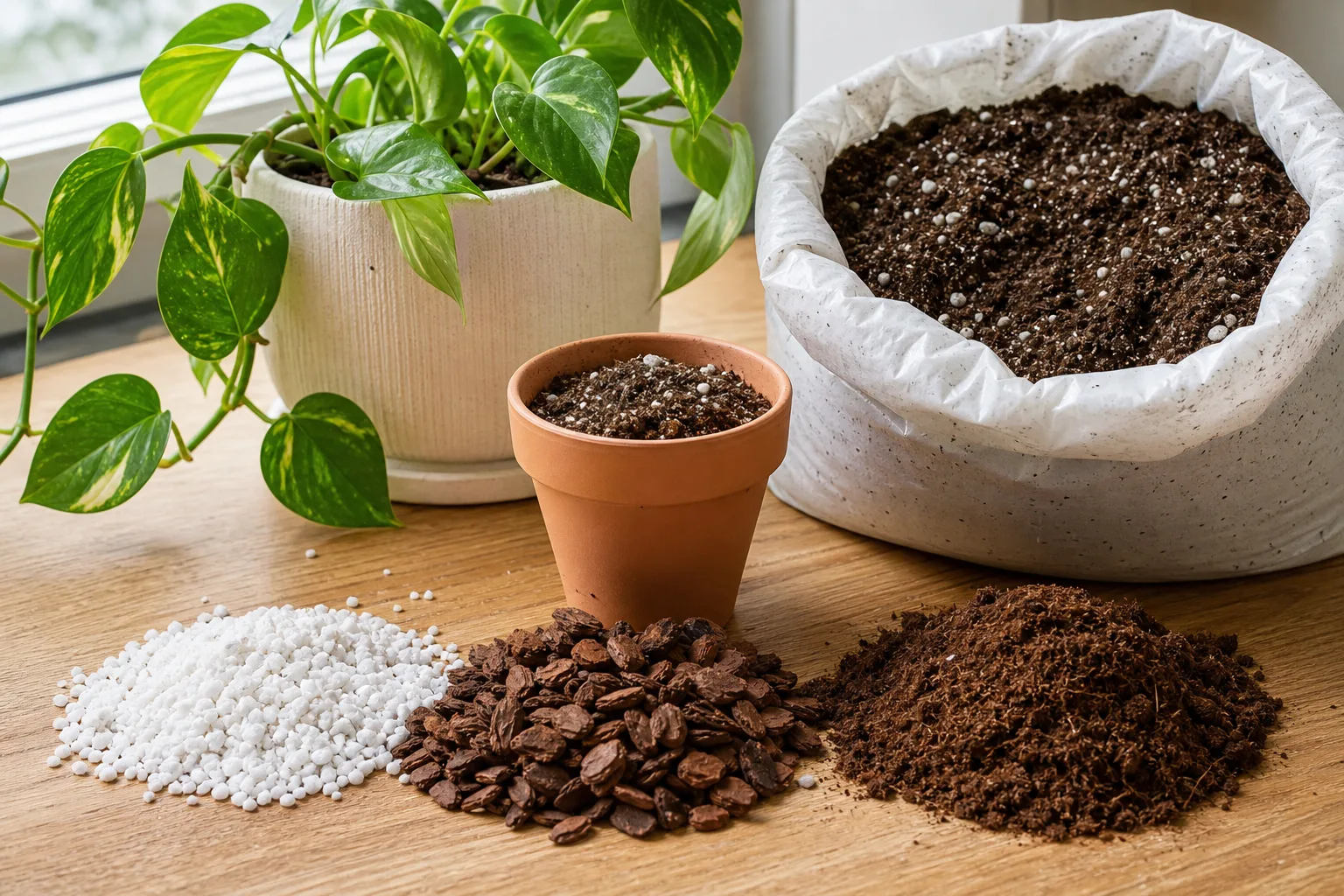
The best soil for indoor plants starts with a high-quality potting mix — one that is light, airy, and designed for containers. For most common houseplants, a strong ready-to-use option is Espoma Organic Potting Mix, which combines peat moss, perlite, earthworm castings, and mycorrhizae in a blend that drains well while holding enough moisture for tropical foliage plants. If you prefer to build your own, a reliable DIY recipe is 2 parts indoor potting mix or coco coir, 1 part perlite or pumice, and 1 part fine orchid bark.
No single bag works for every plant. A Monstera deliciosa needs a chunkier, bark-heavy mix than a peace lily. A snake plant needs faster drainage than a calathea. The right choice depends on the plant’s root type, your home’s light level, the pot material, and your watering habits.
University of Maryland Extension guidance emphasizes that potting medium for indoor plants should be porous enough for aeration and drainage while still holding water and nutrients. It also notes that products labeled “potting soil” can be too dense unless amended with perlite or vermiculite. (University of Maryland Extension)
The practical takeaway: a good commercial indoor mix saves time, but most bagged products benefit from an extra handful of perlite or bark. The brands and recipes below help you match the right medium to your plants and growing conditions.
What Indoor Plant Roots Actually Need
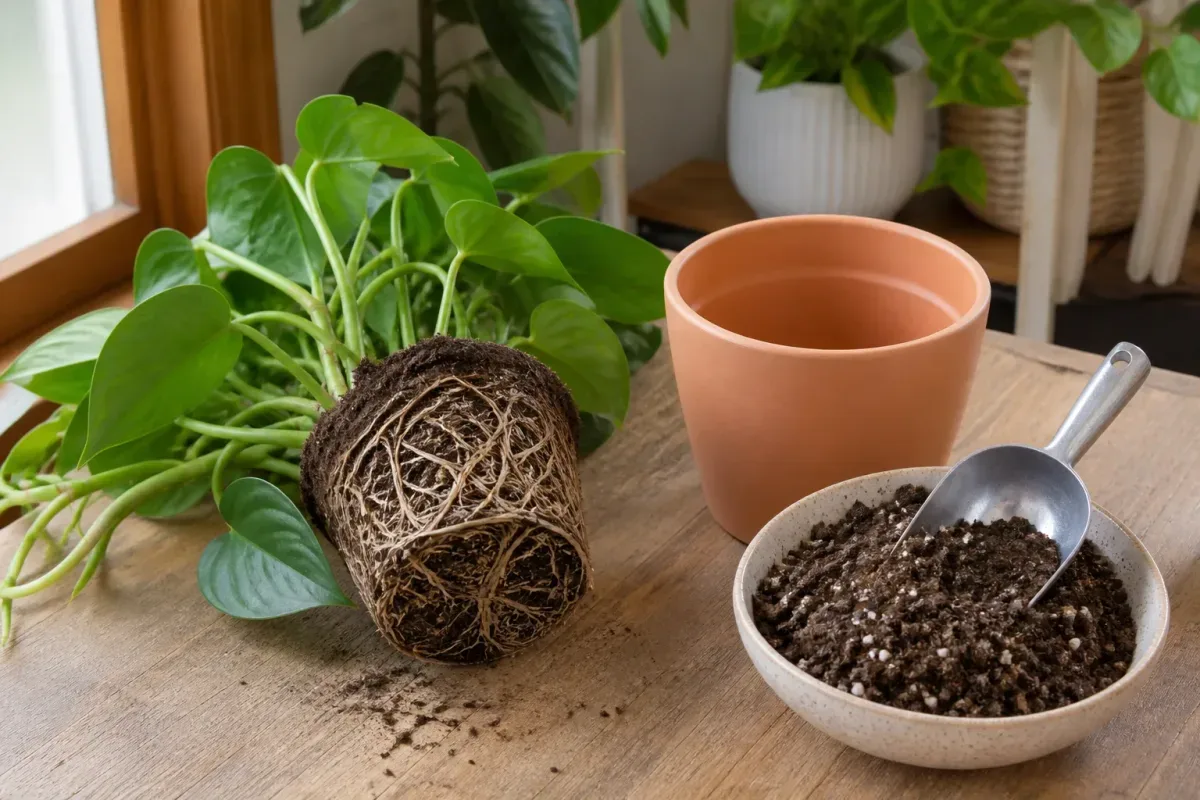
Indoor plant roots do three things: absorb water, absorb dissolved nutrients, and exchange gases. The one beginners often overlook is gas exchange. Roots need oxygen. When a mix stays dense and wet, water fills the spaces where air should be. That creates the conditions for weak roots, stalled growth, and root rot.
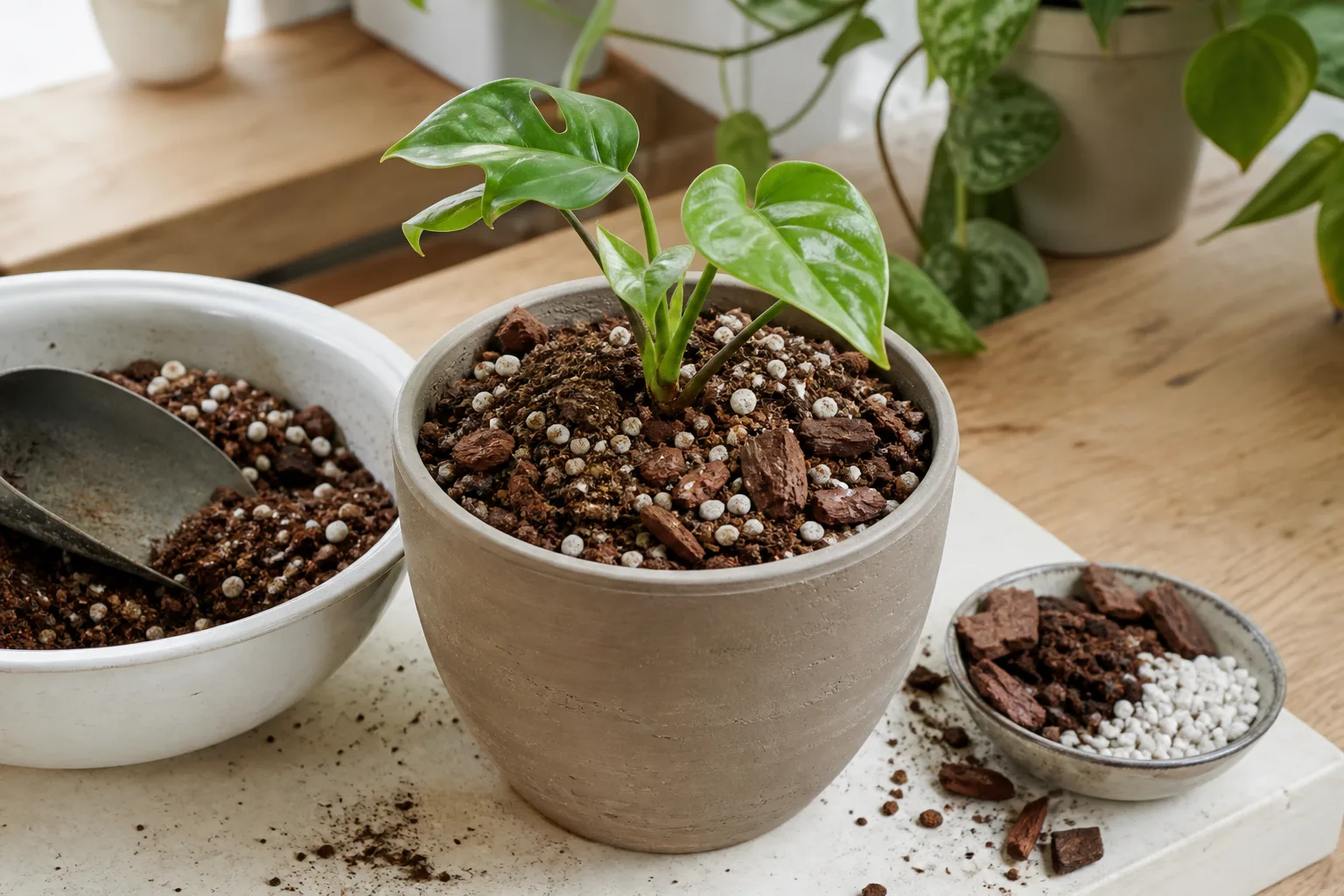
A container is not the ground. Outdoor garden soil drains into a wider soil profile and supports a whole ecosystem. In a pot, the root zone is trapped. The mix has to do everything: support roots, drain excess water, hold enough moisture between waterings, and avoid becoming a brick after repeated watering.
Clemson Cooperative Extension notes that many indoor gardeners use peat-lite mixes — blends of peat moss with perlite or vermiculite — while coco coir has become a popular alternative. Soilless media are lightweight, sterile, and easy to handle, and some include slow-release fertilizer that feeds plants for a few months. (Home & Garden Information Center)
Think of potting mix as root architecture. Glossy leaves and steady growth depend on roots that are neither suffocating in mud nor drying out every few hours. The best soil for indoor plants gives roots a stable, oxygen-rich zone while letting you water on a normal schedule.
Aeration: Why Air Pockets Matter
Aeration is the amount of air space inside the mix. Ingredients like perlite, pumice, coarse bark, and horticultural grit create physical gaps that prevent the mix from becoming dense. Those gaps let oxygen reach roots and let excess water escape.
The University of Wisconsin-Madison Division of Extension explains that root rot prevention starts with proper repotting, drainage holes, and a pasteurized commercial potting mix rather than garden soil. It also warns against putting rocks or gravel at the bottom of pots because that can inhibit drainage instead of improving it. (Wisconsin Horticulture)
A well-aerated mix should feel loose, not sticky or heavy. When dry, it should not shrink into a hard block. When watered, it should absorb moisture but still let water exit the drainage holes within a reasonable time.
Drainage vs. Moisture Retention
A good indoor mix should not drain like a basket of stones. Roots need access to water long enough to use it. The problem is not moisture itself — it is stagnant moisture without air. This is why the best potting mix combines water-holding materials with drainage materials.
Coco coir and peat moss hold moisture well. Vermiculite holds more water than perlite and can help moisture-loving plants, though it is not ideal for plants that hate wet feet. Fine bark and compost can hold moisture, but too much fine organic material makes a mix dense over time.
Your growing conditions change the answer. A plant near a bright warm window uses water faster than the same plant in a dim corner. A terracotta pot dries faster than glazed ceramic or plastic. A plant in active growth uses more water than one resting in winter. The best soil for indoor plants must fit the actual conditions, not just the plant label.
If your soil stays wet more than a week after watering, the mix is probably too dense, the pot is too large, the room is too dim, or the plant is not using much water — often a combination. Adding perlite, pumice, or bark helps, but it will not fix a pot with no drainage holes.
Structure That Lasts
A mix that feels fluffy on repotting day may not stay that way. Cheap mixes with too much fine compost or peat dust can collapse after repeated watering. Once the small particles settle into the lower part of the pot, the bottom becomes wet, dense, and poorly aerated.
A stable indoor mix contains particles of different sizes. Fine material holds some moisture, medium particles support roots, and coarse particles create air channels. The Royal Horticultural Society explains that bark is commonly used for orchids and is also useful in mixes because it adds air, improves drainage, and can lower pH. Its houseplant growing media guidance also describes how different ingredients can be combined for different plant needs. (RHS)
Bark, pumice, perlite, and coarse coir chips resist compaction better than very fine organic matter. This is why a plant may decline six months after repotting even if the mix seemed fine at first: the medium broke down, fertilizer salts built up, or roots filled the container. A good mix buys you time, but it does not stay perfect forever.
Best Indoor Potting Mix Brands Worth Buying
A quality store-bought potting mix is the easiest path for most indoor gardeners. It is consistent, pasteurized, and usually well-formulated. But not every bag labeled “indoor potting mix” performs the same way. Some are too dense out of the bag. Others lack enough aeration for tropical plants. A few deliver genuinely excellent results across a wide range of houseplants.
Independent product comparisons consistently favor indoor mixes that combine aeration from perlite or bark with enough organic material to hold moisture. Budget options can work well for common foliage plants but often need extra perlite for aroids or plants in low-light rooms.
HGTV’s 2026 review highlighted the growing number of peat-free options, including Rosy Soil, which uses biochar and pine bark fines to maintain aeration without peat. It also noted that Espoma Organic remains a consistent top pick for all-purpose indoor use. (HGTV)
Here is how the most widely available brands compare for indoor houseplants:
| Brand | Best For | Key Strength | Organic | Approx. Price | Notes |
|---|---|---|---|---|---|
| Espoma Organic Potting Mix | All-purpose, beginners | Mycorrhizae + worm castings | Yes | ~$22 / 16 qt | Performs well for 90% of common houseplants |
| Miracle-Gro Indoor Potting Mix | Budget, multiple repots | Widely available, low cost | No | ~$6 / 6 qt | Add 20-30% perlite for better drainage |
| FoxFarm Ocean Forest | Fast growers, aroids | Nutrient-dense, composted forest humus | Yes | ~$20 / 12 qt | Very rich; may be too strong for seedlings |
| Back to the Roots Succulent Mix | Succulents, cacti, snake plants | Fast-draining, perlite + sand | Yes | ~$11 / 6 qt | Best ready-made gritty mix for desert plants |
| Rosy Soil Houseplant Mix | Peat-free, eco-conscious | Biochar + coir, carbon-negative | Yes | ~$20 / 12 qt | Comparable growth to peat-based premium mixes |
| Dr. Earth Gold Premium | Tropicals, rare plants | Probiotic + kelp formula | Yes | ~$19 / 16 qt | Excellent for high-value aroids and variegated plants |
Espoma Organic Potting Mix — Best All-Purpose Choice
Espoma Organic is the most reliable all-around indoor potting mix for common houseplants. It contains peat moss, perlite, earthworm castings, and mycorrhizae — beneficial fungi that help roots absorb nutrients more efficiently. The texture is loose and consistent straight out of the bag.
This mix works well for pothos, peace lilies, spider plants, philodendrons, dracaenas, and most tropical foliage plants. It holds moisture for about a week in average indoor conditions without becoming soggy. For aroids like Monstera, adding a handful of orchid bark improves drainage further.
If you want one bag that covers most of your collection, Espoma is the practical choice. It is widely available online and at garden centers, and it includes slow-release fertilizer that feeds plants for several months.
Miracle-Gro Indoor Potting Mix — Best Budget Option
Miracle-Gro Indoor Potting Mix is the most accessible option and works well for beginners repotting multiple plants on a budget. It uses coconut coir, perlite, and peat moss with a slow-release fertilizer. The texture is lighter than outdoor Miracle-Gro products, and it drains reasonably well for common foliage plants.
Editorial note: In side-by-side tests, unamended Miracle-Gro Indoor Mix held moisture longer than amended Espoma in the same pot size and light conditions. For plants in medium-to-low light, or for anyone who tends to overwater, adding 25-30% extra perlite noticeably improved drainage without affecting plant health. If you use this mix straight from the bag, let the top inch or two dry before watering again.
This is a good choice if you are repotting several plants at once and want a reliable product without spending heavily. It is available at most hardware stores and big-box retailers.
FoxFarm Ocean Forest — Best for Fast-Growing Tropicals
FoxFarm Ocean Forest is a nutrient-rich mix built around composted forest humus, sphagnum peat moss, earthworm castings, bat guano, fish meal, and crab meal. It is potent — plants often show visibly deeper green foliage and faster growth within weeks of repotting.
This mix is especially useful for fast-growing tropicals like Monstera, bird of paradise, alocasia, and large philodendrons. Its nutrient density means you can skip fertilizer for the first 6-8 weeks after repotting. However, it is too strong for seedlings, young cuttings, or slow-growing succulents. For new plants, cut it 50/50 with a lighter indoor mix.
FoxFarm is more expensive per quart than Espoma or Miracle-Gro, but it delivers noticeable results for the plants that benefit from it. If you grow mostly aroids and large tropicals, the premium is justified. For a shelf of pothos and spider plants, it is overkill.
Back to the Roots Succulent & Cacti Mix — Best for Desert Plants
Back to the Roots Succulent Mix is specifically engineered for plants that need fast drainage — succulents, cacti, jade plants, aloe vera, snake plants, and ZZ plants. It uses perlite, horticultural sand, aged bark, and dolomitic limestone to create a gritty texture that dries quickly between waterings.
Many cactus mixes on the market still look and feel like regular potting soil with a little sand mixed in. Back to the Roots is noticeably grittier. It drains fast enough that plants in terracotta pots in bright light may need slightly more frequent watering, but the trade-off is worth it: fast drainage is the single best protection against root rot in succulents.
If you grow a mix of tropicals and succulents, keep one bag of this on hand alongside your regular indoor mix. You will use less of it, but it prevents the most common succulent-killing mistake — wet soil.
Rosy Soil Houseplant Mix — Best Peat-Free Option
For readers looking to reduce peat use, Rosy Soil is a peat-free indoor mix built on coconut coir, biochar, perlite, pumice, and compost. IUCN reports that peat soils contain more than 600 gigatonnes of carbon, exceeding the carbon stored in all other vegetation types including forests. (IUCN) UNEP has highlighted that drained peatlands release large amounts of greenhouse gases. (UNEP - UN Environment Programme) Choosing a peat-free mix is one practical way to reduce that impact.
In testing, Rosy Soil performed comparably to peat-based premium mixes for common foliage plants. The biochar helped maintain root health, and the pumice and perlite combination provided good aeration. The mix dries slightly faster than peat-based alternatives, so it may require slightly more frequent watering in bright, warm rooms. It is primarily available online rather than in local stores.
Dr. Earth Gold Premium — Best for Rare and High-Value Plants
Dr. Earth Gold uses a probiotic formula with beneficial microbes, worm castings, coconut coir, kelp, perlite, and aged bark. The kelp provides natural growth hormones that support root development, and the microbial activity keeps the soil biology active over time.
This is the premium pick for rare aroids, variegated plants, indoor citrus, and any plant where the investment justifies a higher-quality medium. It is also OMRI-listed organic and consistently well-reviewed by specialty growers. For everyday pothos or spider plants, a less expensive option works fine. For a Thai Constellation Monstera or a mature fiddle-leaf fig, the extra cost buys meaningful root support.
How to Read a Potting Mix Bag Label Before You Buy
Bag labels vary widely in quality. Some list every ingredient clearly. Others rely on vague marketing terms without explaining what is inside. Learning to read the label prevents you from buying a heavy, poorly draining mix by mistake.
The first three ingredients listed usually make up most of the product. If the list starts with peat moss, perlite, and bark, the mix is likely well-structured. If it starts with composted organic matter and mentions nothing about aeration, plan to add perlite before using it indoors.
What to look for on a good label:
- “Potting mix” or “container mix,” not “garden soil” or “topsoil”
- Perlite, pumice, or bark listed among the first few ingredients
- Coco coir or peat moss for moisture retention
- Worm castings or compost for slow-release nutrients
- Mycorrhizae or beneficial microbes (a bonus in premium mixes)
Warning signs on a label:
- Only vague terms like “composted organic matter” or “humus” without specifics
- No visible perlite or bark in the product photo or description
- “Garden soil” anywhere on the bag — too dense for indoor containers
- Strong sour smell when opening (signals poor processing or anaerobic conditions)
- Excessive dust, large wood chunks, or inconsistent texture
The University of New Hampshire Extension emphasizes that knowing what is in the mix helps determine whether it matches the plants being grown. It also notes that good potting mixes combine an organic component such as peat moss, compost, or bark with materials like vermiculite or perlite to manage moisture and structure. (Extension | University of New Hampshire)
Editorial note: If you are buying online and cannot touch the bag, zoom in on product photos. A good indoor potting mix should show visible white perlite specks and bark pieces. A uniformly dark, fine-textured surface with no visible aeration materials is a red flag.
DIY Potting Mix Recipes by Plant Type
Building your own mix gives you full control over drainage, aeration, and nutrient content. It also costs more upfront because you are buying individual ingredients, but those ingredients last through multiple repotting sessions. The recipes below use standard measurements — parts can be cups, scoops, or any consistent container.
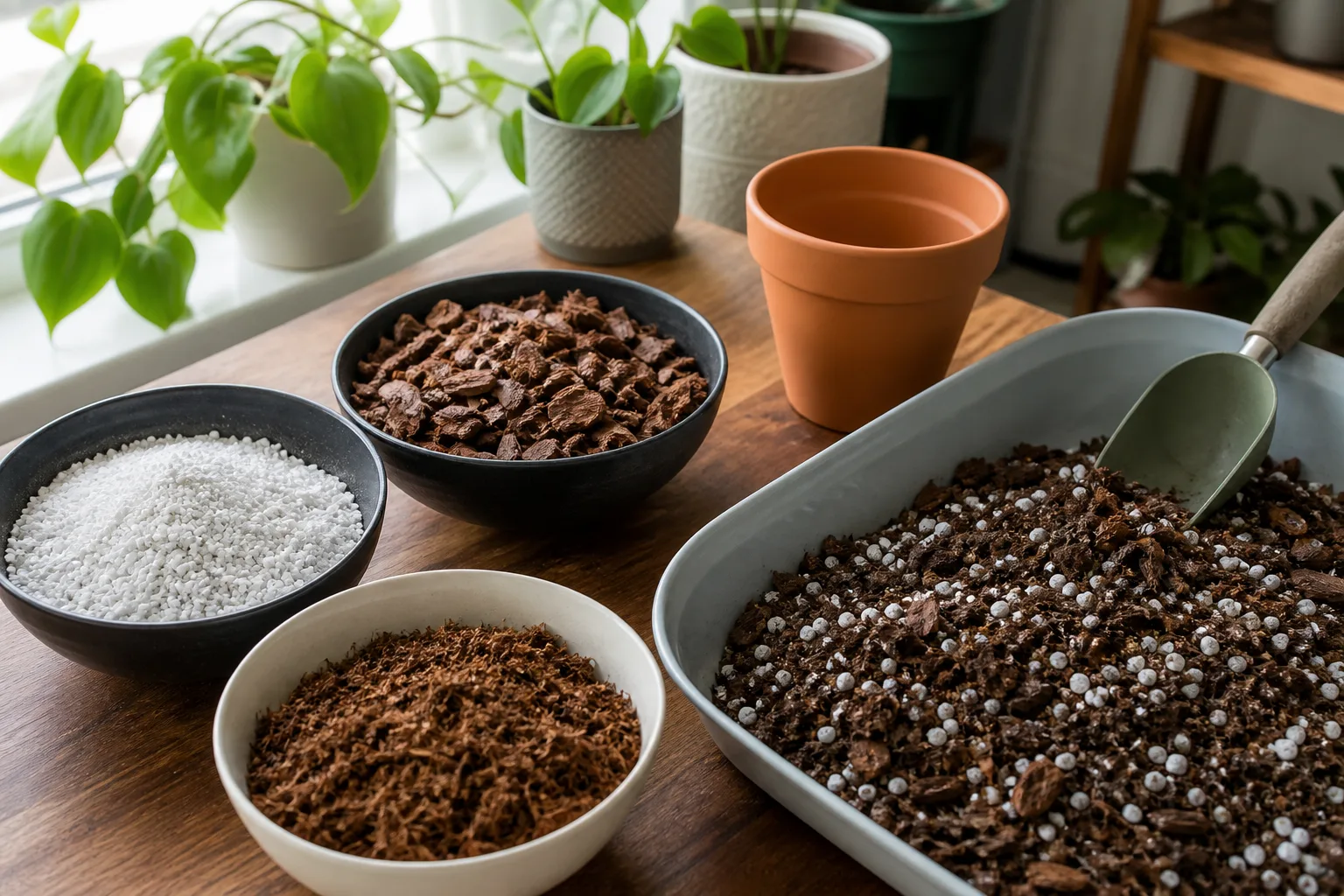
The University of Florida IFAS Extension recommends starting with tested recipes and trying small batches before scaling up. Its example recipes include foliage plant mixes using peat with perlite and coarse sand, or peat with pine bark and coarse sand, plus separate formulas for succulents and bromeliads. (Solutions For Your Life)
All-Purpose Foliage Mix
For pothos, peace lily, spider plant, Chinese evergreen, dracaena, dieffenbachia, and most common tropical foliage plants:
- 2 parts indoor potting mix or coco coir base
- 1 part perlite or pumice
- 1 part fine orchid bark
- Optional: small handful of worm castings
This blend holds moderate moisture while giving roots more air than a dense bagged mix. If your home is dry or you tend to underwater, use slightly less bark. If your plants often stay wet, increase perlite or pumice.
Single 6-inch pot batch: 2 cups base mix, 1 cup perlite, 1 cup fine bark, 2–3 tablespoons worm castings.
Aroid Mix for Monstera, Pothos, and Philodendron
Aroids like Monstera deliciosa, Philodendron, Anthurium, and trailing pothos appreciate a chunkier medium with more air pockets:
- 2 parts indoor potting mix or coco coir base
- 1 part medium orchid bark
- 1 part pumice or perlite
- ½ part worm castings
This mix mimics the loose organic debris aroids encounter in nature. Bark chunks create air pockets that prevent the pot from becoming waterlogged, and they resist compaction over the year or more these plants may stay in the same pot. For Monstera-specific ratios and bark sizing, see our dedicated Monstera soil mix guide.
Succulent and Cactus Mix
For succulents, cacti, snake plants, ZZ plants, and other drought-tolerant species that store water in leaves or rhizomes:
- 1 part cactus/succulent mix
- 1 part pumice or perlite
- ½ part coarse sand or fine bark
Many store-bought cactus mixes are not gritty enough for indoor conditions. Even a bag labeled “cactus mix” often needs additional pumice or perlite to drain fast enough in humid rooms or plastic pots. For full care context, see Indoor Succulent Care.
Moisture-Loving Plant Mix
For ferns, calatheas, marantas, and similar plants that dislike drying out completely but still suffer in soggy soil:
- 2 parts coco coir or fine indoor mix
- 1 part perlite
- ½ part fine bark
- Small handful of worm castings
Vermiculite can replace part of the perlite for extra moisture retention, but use it carefully — too much keeps the mix wet for too long in low light. Calatheas are especially sensitive to inconsistent moisture. If the mix dries into a hard block, water runs around the edges instead of soaking the root ball. A moisture-retentive but loose mix is better than either a very chunky aroid mix or a dense all-purpose mix.
Orchid and Epiphyte Mix
For Phalaenopsis orchids and other epiphytic plants:
- 4 parts orchid bark (medium to coarse grade)
- 1 part perlite or pumice
- 1 part sphagnum moss (optional, increases moisture retention)
Orchid roots are adapted to cling to trees and experience strong airflow. Standard indoor potting mix suffocates them. Bark provides the large air spaces they need. Sphagnum moss holds more water but requires careful watering — it can stay wet inside even when the surface looks dry. For beginners, bark alone is often easier to manage.
How to Match Soil to Your Growing Conditions
The best soil for indoor plants is not just about the plant species. Your home environment changes how any mix performs. A blend that works perfectly in a bright sunroom may stay wet too long in a north-facing apartment. A mix that drains well in terracotta may dry too fast in plastic.
| Condition | What Changes | Soil Adjustment |
|---|---|---|
| Bright, warm room | Soil dries faster, plant uses more water | Slightly more moisture retention; less perlite |
| Low-light room | Soil dries slowly, less water uptake | Extra perlite or pumice; chunkier mix |
| Humid room or bathroom | Evaporation is slower | Faster-draining mix; more bark or pumice |
| Dry air or winter heating | Soil dries quickly | More coir or peat; consider vermiculite |
| Terracotta pots | Porous walls wick moisture away | Slightly more moisture-retentive mix |
| Plastic or glazed pots | Walls hold moisture in | Extra perlite or bark for aeration |
| Large pot (10+ inches) | Bottom stays wet longer | Chunky materials throughout; avoid fine dense mix |
The goal is to match the mix to the whole picture: plant type, light level, pot material, and your watering habits. Someone who waters lightly once a week needs a different mix than someone who drenches every three days. Start with the recipes above and tweak by watching how long the soil stays moist.
Common Potting Mix Mistakes and How to Avoid Them
Using garden soil indoors. Garden soil compacts in containers, drains poorly, and may carry pests or pathogens. Wisconsin Extension specifically recommends pasteurized commercial potting mix rather than garden soil for houseplants because garden soils can contain root rot fungi. (Wisconsin Horticulture)
Adding gravel to the bottom of pots. This advice is common but wrong. University of Illinois Extension explains that gravel at the bottom creates a perched water table effect — water gathers in the soil above the gravel instead of draining away. (Illinois Extension) Use a pot with drainage holes and a well-aerated mix instead.
Using pots without drainage holes. It can work for expert growers with specific setups, but for most indoor plants it is risky. Water collects unseen at the bottom while the surface looks dry. The plant rots while the owner thinks it needs more water.
Overloading on compost or worm castings. These are useful in small amounts, but too much makes the mix heavy, wet, and attractive to fungus gnats. Indoor plants are not heavy-feeding vegetables. Stick to 10–20% castings or finished compost in a DIY mix.
Using the same mix for every plant. A cactus in fern mix rots. A fern in cactus mix dries out. An orchid in standard potting soil suffocates. Matching mix to plant type prevents most root problems before they start.
Ignoring old potting mix. Organic components break down, roots fill the pot, and the mix loses air space. If water suddenly runs straight through or sits on the surface without soaking in, the structure has failed. Refreshing the mix may help more than fertilizing. Top-dressing with fresh mix buys time on a healthy plant, but a full refresh or replacing the outer third of the root ball is better when the medium has collapsed or smells sour.
Buying by price alone. A cheap bag can become expensive if it leads to root rot, fungus gnats, or repeated repotting. A mid-range mix with perlite and bark saves money in replacement plants and time spent troubleshooting.
What to Do Next
- Choose your base — Espoma Organic for most plants, Miracle-Gro Indoor for budget repots, FoxFarm for fast growers, or a peat-free option like Rosy Soil.
- Amend as needed — add 25–40% perlite, pumice, or bark to any dense bagged mix before repotting.
- Match mix to plant — chunky for aroids, gritty for succulents and snake plants, moisture-retentive but airy for ferns and calatheas.
- Repot at the right time — active growth in spring or early summer is safest; see Repotting Houseplants for step-by-step guidance.
- Adjust watering to the new mix — a chunkier blend dries faster; see How to Water Indoor Plants the Right Way.
- Plan fertilizer timing — many fresh mixes already contain starter nutrients; see Fertilizing Indoor Plants before feeding.
Related Guides
- Best Potting Mix for Indoor Plants: Soil Ingredients That Work — deeper dive into ingredient functions and soil science
- Repotting Houseplants — when and how to move plants into fresh mix
- How to Do Monstera Soil Mix — chunky aroid ratios in depth
- How to Water Indoor Plants the Right Way — match watering to mix drainage
- Indoor Succulent Care — gritty mixes for drought-tolerant plants
- Fertilizing Indoor Plants: Complete Care Guide — feeding after repotting
Conclusion
Use this checklist before your next repot:
- Pick a quality base — Espoma Organic for all-purpose use, FoxFarm for heavy feeders, Back to the Roots for succulents, or a peat-free option if sustainability matters.
- Read the label — look for perlite, bark, or pumice among the first ingredients. Skip bags that say “garden soil” or use vague ingredient descriptions.
- Amend dense mixes — add 25–40% perlite, pumice, or bark unless the label already lists strong aeration ingredients.
- Match mix to plant type — chunky for aroids, gritty for succulents, moisture-retentive but airy for ferns and calatheas.
- Use drainage holes — never rely on gravel layers or careful watering alone in sealed pots.
- Refresh every 1–2 years — or sooner if the mix smells sour, drains poorly, or the plant stalls despite good light and water.
The best soil for indoor plants is one that keeps roots oxygenated while holding enough moisture for your plant, your pot, and your home. Spending a few extra dollars on a quality mix — or five extra minutes amending a budget one — prevents the dense-soil trap that causes most beginner root problems.