Terracotta vs Plastic Pots for Houseplants
Compare terracotta vs plastic pots for houseplants by watering habit, climate, plant type, drainage, salt, and cachepot mistakes.
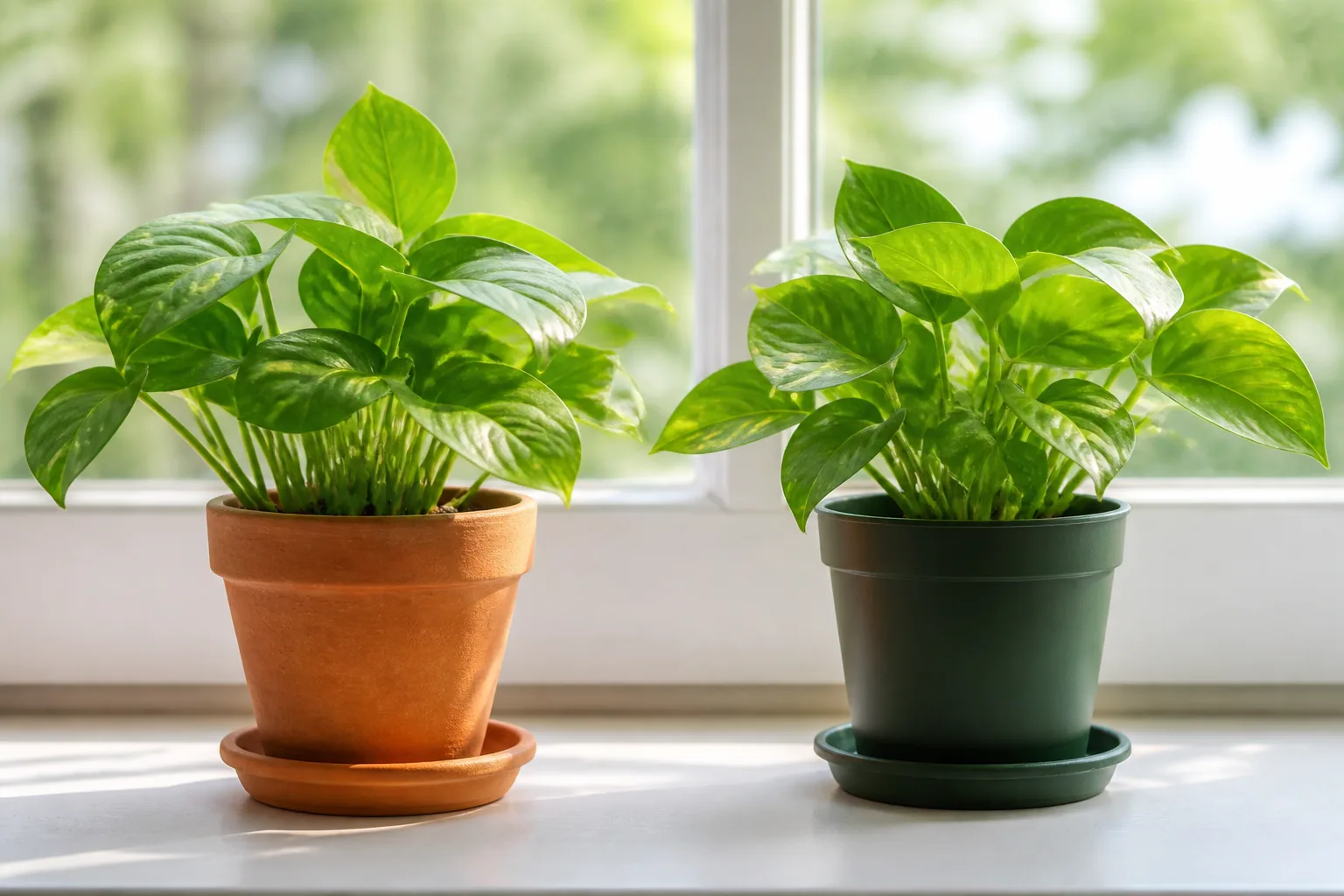
The better pot is the one that matches how wet your mix stays between waterings—not the one that looks more “plant person.” Terracotta and plastic change evaporation, weight, salt behavior, and how forgiving your routine feels. Get that match wrong and healthy roots can tip into chronic sogginess or constant drought stress.
Quick Verdict: Neither Wins Universally
Terracotta (unglazed clay) is porous, so mix usually dries faster and roots get more air exchange through the pot wall. That helps dry-loving plants and people who water a little too eagerly—but it is not a cure for bad watering technique. Nebraska Extension notes that media in clay pots dry out faster than in plastic, and that clay helps overwaterers without fixing incorrect watering. Plastic is nonporous, holds moisture longer, weighs less, and is easier to clean and move. That helps moisture-loving plants, dry heated rooms where clay dries too fast, and anyone who travels or waters inconsistently.
If you want one rule before the details: choose terracotta when you need the mix to dry sooner, and plastic when you need moisture to last longer—then confirm the pot still has real drainage holes. Glazed ceramic usually behaves like plastic for moisture, even when it is painted the color of clay.
Comparison at a Glance
Use this table as a first filter, then read the habit and climate sections before you buy.
| Factor | Unglazed terracotta | Plastic | Glazed ceramic |
|---|---|---|---|
| Wall porosity | Porous; evaporates through sides | Nonporous | Nonporous (glaze seals clay) |
| Typical dry-down | Faster for the same mix and size | Slower; moisture lasts longer | Similar to plastic |
| Root-zone air exchange | Higher through pot walls | Mainly via drainage and surface | Restricted vs unglazed clay |
| Weight | Heavy; stabilizes tall plants | Light; easy to move | Often heavy |
| Cleaning / salts | Absorbs salts; harder to scrub | Easy to clean; fewer rim salts | Intermediate; salts less visible |
| Best default for | Succulents, overwaterers, humid rooms | Ferns, calathea, travel weeks, large floor plants | Style-first setups that still need moisture hold |
| Main risk | Dries too fast in arid heat; chips/cracks | Stays wet too long; hides overwatering | Looking like terracotta while watering like plastic |
University of Georgia Extension describes the same split: unglazed pots evaporate water faster, while glazed pots restrict air exchange and plastic generally dries more slowly than clay.
How Terracotta and Plastic Differ
Both materials can grow excellent houseplants. The difference is physics: water and air movement through the container wall, plus practical trade-offs you feel every time you lift, clean, or water the plant.
Porosity, Evaporation, and Root Oxygen
Unglazed terracotta is porous. Moisture evaporates through the sides as well as the soil surface, so the mix typically dries faster than in plastic or glazed ceramic. Clemson HGIC explains that clay pots allow air movement through the sides, which helps the soil dry and lets oxygen reach roots. Plastic, fiberglass, and glazed pots are effectively nonporous. Water leaves mainly through drainage holes and surface evaporation, so the same plant in the same mix often needs less frequent watering.
That stability is useful until the mix stays wet too long and roots run out of oxygen. UConn notes that unglazed clay pots dry out quicker than plastic or glazed pots, which is the practical takeaway for scheduling—not a fixed “days faster” multiplier you can copy from a blog without measuring your room.
Weight, Durability, Cleaning, and Cost
Terracotta is heavier, which helps tall plants resist tipping, but large clay pots become awkward to move once wet soil is inside. Clay chips and cracks more easily, especially with freeze-thaw outdoors, and it absorbs fertilizer salts and residues that show as white crust. Nebraska Extension notes clay absorbs chemicals and salts and is harder to clean; soaking, scrubbing, and a dilute bleach soak are the usual reuse steps.
Plastic is lighter, cheaper in most sizes, chip-resistant, and easier to sterilize for reuse. Arkansas Extension notes plastic pots accumulate fewer salts, need less frequent watering, and are easier to handle. That convenience can hide overwatering longer because the mix stays damp. For big floor plants you rearrange often, lightweight plastic—or a plastic grow pot inside a decorative cachepot—is usually the practical choice.
Decision Framework for Choosing a Pot
Ignore aesthetics for a minute. Score the situation on watering habit, climate, plant type, drainage setup, and salt management. The “right” material is the one that reduces your most common failure mode.
Watering Habit, Climate, and Plant Type
If you water on a calendar, forget to check the mix, or top up whenever the surface looks dry, plastic can keep the root ball wet for days. In that case terracotta’s faster dry-down is a useful buffer. If you underwater, travel, or only water when plants dramatically wilt, plastic’s slower dry-down prevents constant drought cycling. Habit still beats material. Pair the pot with a moisture check—finger test, weight lift, or both—using the same standards as a solid watering routine.
In arid homes, winter heating, or sunny window heat, terracotta can dry so fast that ferns, calathea, and thin-leaved tropicals crisp between waterings. Plastic or glazed ceramic slows that loss. In humid climates, bathrooms, or monsoon-season apartments, plastic keeps mixes wet longer, which raises root-rot and fungus-gnat pressure—so terracotta or a chunkier mix becomes more valuable. Season matters too. The same plastic pot that feels perfect in summer may stay cold and wet for a week in winter low light.
Match porosity to the plant’s preferred dry-down, not to Instagram pot trends. Dry-leaning plants—many succulents, cacti, snake plants, ZZ plants, and rosemary—usually prefer unglazed clay. PlantTalk Colorado notes that cacti and succulents may do better in unglazed clay or terra cotta, while moisture-loving plants like Boston fern grow well in plastic containers or ceramic. Moisture-leaning plants—Boston ferns, many calathea and maranta, maidenhair ferns, and soft tropical foliage—often perform more steadily in plastic or glazed pots.
There are exceptions. A moisture-loving plant in a bright, dry room may still need plastic plus humidity support. A succulent in a dark, cool corner can rot in terracotta if you water on a tropical schedule. Plant type sets the default; environment can override it.
Drainage, Saucers, and Salt Buildup
Material never replaces drainage holes. Roots fail in waterlogged media whether the pot is clay or plastic. Colorado State Extension notes that porous materials lose moisture quickly but allow air movement, while plastic and glazed containers hold water longer, so drainage holes matter even more. If a decorative container has no hole, use it as a cachepot around a nursery pot that drains, or drill holes if the vessel allows it safely.
Saucers are furniture protection, not reservoirs. Empty them after watering so the root ball is not sitting in a salt-rich puddle. Gravel in the bottom of a no-hole pot is a weak substitute for drainage—it creates a perched water zone more often than it “fixes” saturation.
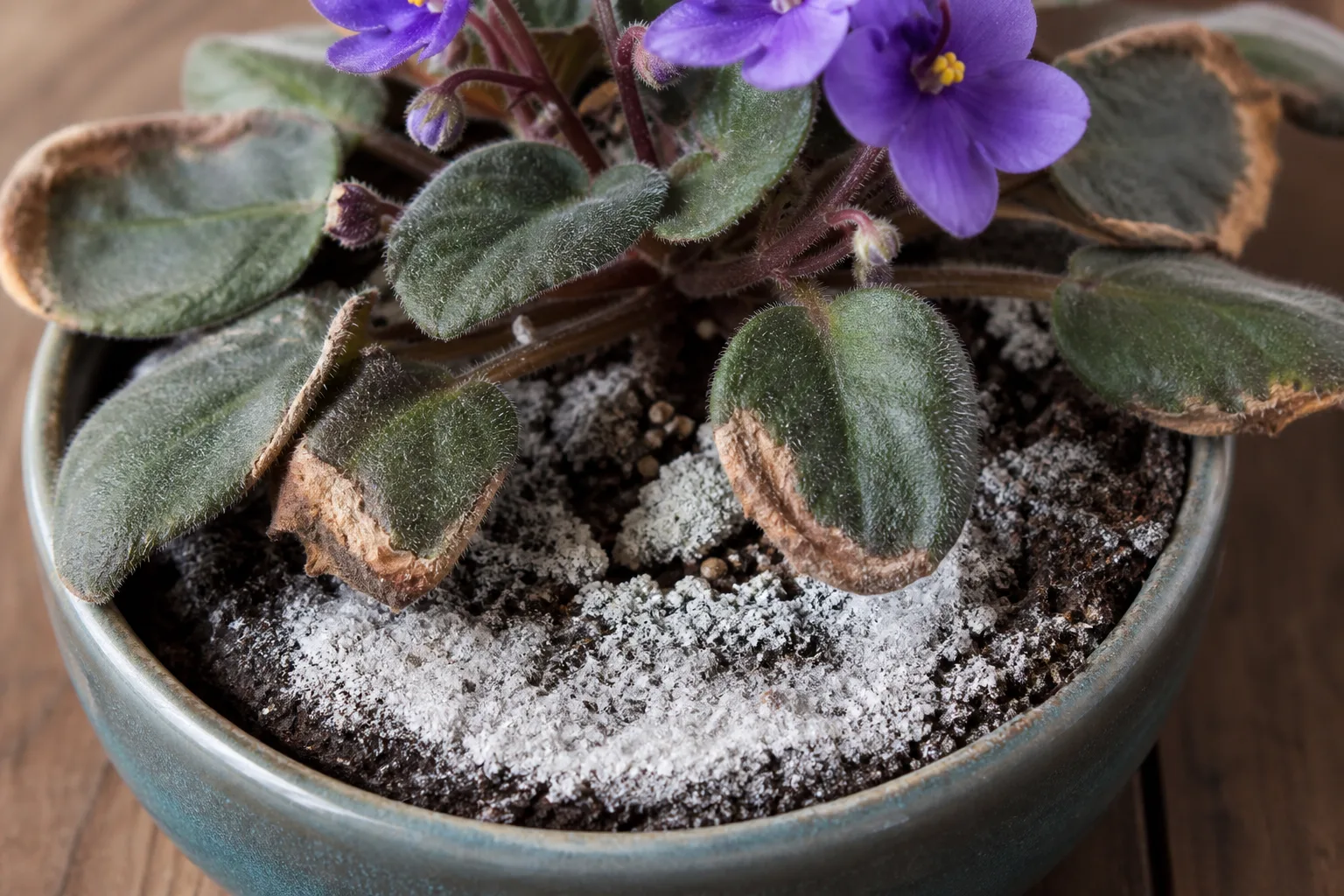
Fertilizer and hard water leave soluble salts. On terracotta, salts often appear as white crust on the rim and outer wall because the clay wicks moisture outward. That staining is ugly but useful: it advertises buildup. Plastic shows less crust and can feel “cleaner,” yet salts still concentrate in the mix if you never leach. Leach occasionally by watering thoroughly until excess runs out, then discard the runoff. If white crust is thick on clay, scrub and consider a fresh mix at repotting time rather than scraping and hoping. If your tap water is mineral-heavy, also review hard water for houseplants alongside pot choice.
When Terracotta Helps Most
Choose terracotta when the main risk is a mix that stays wet too long.
It helps chronic overwaterers, beginners who water from anxiety, and dry-loving plants that need a decisive dry-down. It also helps in humid rooms, dense peat-heavy mixes that already hold water, and situations where root rot or soggy soil has already been a problem. Terracotta’s weight stabilizes top-heavy specimens on narrow stands, and its breathability is a quiet advantage for succulents that hate stagnant roots.
Use it with eyes open: you will water more often in bright heat, pots can crack if dropped, and salt stains will show. If you move clay outdoors for summer, bring it in before hard freezes—waterlogged terracotta can crack when ice expands in the walls. If a plant is already underwatered in clay, moving it to plastic may be kinder than watering more aggressively in a pot that evaporates from every side.
When Plastic Is the Better Choice
Choose plastic when moisture retention, weight, or logistics matter more than maximum porosity.
It wins for calathea, ferns, and other high-humidity plants in dry homes; for nursery production and propagation where you need consistent moisture; for large plants you move for cleaning or light; and for travel weeks when nobody is home to water daily. Plastic is also easier to keep sanitary between plants and usually cheaper when you need many matching sizes. WSU Extension notes plastic and fiberglass are lightweight and relatively inexpensive, and cache pots help manage large or heavy plants.
Plastic wins for double-pot systems too: keep the plant in a lightweight draining grow pot, then drop it into a decorative outer pot. You get the look without planting directly into a sealed vase. Just do not let the inner pot sit in trapped runoff.
Cachepots and Double-Potting Caveats
Cachepots (decorative outer pots) and double-potting are excellent when done carefully—and a common cause of silent root rot when done casually.
Keep the inner pot as the functional container: drainage holes required. Clemson HGIC describes double potting so a smaller interior pot drains inside a decorative outer container. If the outer pot has no hole, elevate the inner pot on a trivet, pot feet, or a shallow gravel layer so the drainage hole is not sealed against a flat base, and empty any water that collects after watering. Never assume “a little water in the cachepot” is humidity help; for most houseplants it is an oxygen thief, because surplus water in a cachepot keeps media saturated.
Double-potting can reduce evaporation in hot weather when you pack moist moss between pots, but that same trick keeps mixes wet in winter. Use it as a seasonal tool, not a permanent wet jacket. If you plant directly into a hole-less decorative pot, you are gambling every watering—reserve that only for plants that truly tolerate wet feet, and even then water with restraint.
How Pot Material Interacts With Soil Mix
Pot material and soil mix are a paired system. Terracotta plus a dense, peat-heavy mix may still dry slowly in low light. Plastic plus a chunky aroid or cactus mix can dry reasonably fast if the room is bright and warm.
If you insist on plastic for a dry-loving plant, open the mix: more bark, perlite, pumice, or grit. If you insist on terracotta for a fern, use a moisture-retentive but still airy mix and expect more frequent watering. Changing only the pot while keeping a failing mix often disappoints. For mix fundamentals, start with a practical soil guide or potting-mix guide and adjust particle size to the plant—not the bag’s marketing label.
Fungus Gnats, Mold, and Wet Mixes
Fungus gnats and surface mold thrive when the top layer stays damp. Plastic pots and cachepots that hold runoff make that dampness last longer. Terracotta can shorten the wet window, which helps—but only if you also water less often, improve airflow, and avoid leaving saucers full.
If gnats or fuzzy soil keep returning, treat pot choice as one lever beside watering depth, topdress dryness, and drainage. A porous pot will not outrun weekly saturation. Pair material changes with the same moisture discipline you would use for mold on soil or fungus gnat outbreaks.
Mistakes That Make Either Pot Fail
The most common failure is buying a pot two sizes too large. Extra unused mix stays wet for days in plastic and still stays wet too long in clay if light is low. Penn State Extension reminds growers that containers should be only slightly larger than the current pot when repotting. Another mistake is treating terracotta as permission to water more. A third is decorating with sealed cachepots and never checking the reservoir underneath.
People also mix up glazed and unglazed clay. A glossy ceramic “terracotta-colored” pot behaves like plastic for moisture—glazed pots restrict air exchange while unglazed pots evaporate water faster. And reusing dirty clay without scrubbing can reintroduce salts and pathogens to a fresh plant. Clean containers before every repot, especially clay.
First-Hand Notes From Side-by-Side Pots
These are LeafyPixels editorial observations from a north-central Ohio apartment (forced-air heat in winter, east and south windows). They are single-setup notes, not universal multipliers.
On 2026-01-12 we watered matched 4-inch pots of the same peat-perlite mix with no plant, then tracked dry-down by weight and finger test at 68–70°F and roughly 30–35% RH near an east window. The unglazed terracotta pot felt light and finger-dry at about day 3. The plastic twin still felt cool and damp at day 5 and only matched the clay weight cue around day 6–7. In brighter south-window heat later that week, both sped up, but plastic still lagged clay by roughly two days. Treat those intervals as a reminder to measure your room—not as a rule for every plant.
On 2026-02-03 a pothos left overnight in a cachepot with about half an inch of runoff had soft, waterlogged roots at the base when we emptied it the next morning. Elevating the nursery pot on a small trivet and dumping the outer pot within an hour after watering stopped the soft-root repeats on that plant. In March 2026, winter plastic pots of ZZ and snake plant stayed heavy for more than a week under low light; the same cultivars in terracotta returned to a light pot weight faster, which made it easier to avoid calendar watering.
Salt crust also showed the material difference: after several fertilized waterings with our municipal tap, the terracotta rim developed a visible white film first, while the plastic rim looked clean even when the mix needed a leach. The crust was a useful early warning, not proof the plant was doomed.
A Simple Choosing Workflow
- Name the plant’s dry-down preference: likes to dry thoroughly, likes even moisture, or hates drying out.
- Name your habit: overwater, underwater, or inconsistent.
- Name the room: dry heat, average home, or humid.
- If dry-loving plant + overwatering habit + humid room → lean terracotta.
- If moisture-loving plant + travel/underwatering + dry room → lean plastic.
- Confirm drainage holes, a saucer you will empty, and a mix that matches the material.
- If you want a decorative finish, use a draining grow pot inside a cachepot and empty standing water.
Write the choice down once. Most “mysterious” declines after a pot swap are just a new dry-down speed the owner never adjusted to.
Switching Materials Without Shocking the Plant
When moving from plastic to terracotta, expect faster drying within days. Water thoroughly after repotting, then wait longer than your old plastic schedule before watering again—check the mix instead of copying dates. When moving from terracotta to plastic, assume the mix will stay moist longer; reduce frequency and watch the pot’s weight.
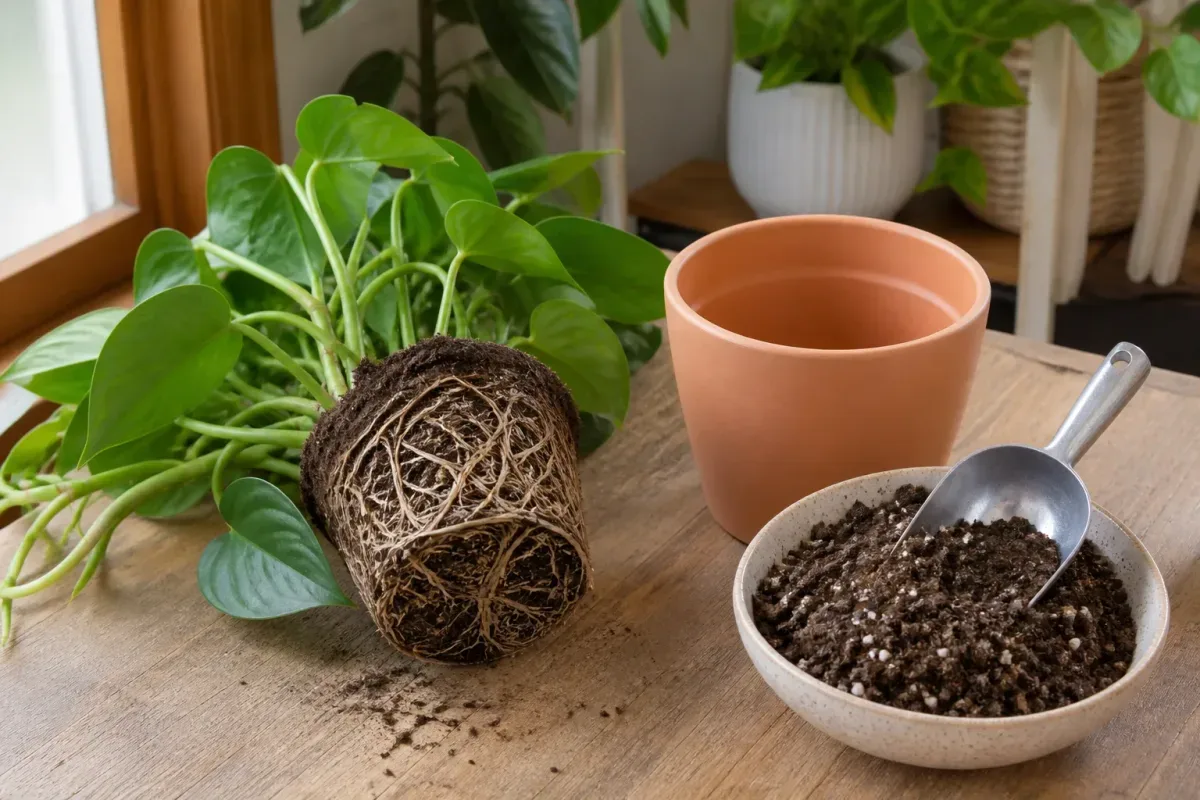
Repot in the plant’s active season when possible, step up only one pot size, and refresh compacted mix rather than dropping an intact waterlogged root ball into a prettier container. If the plant was already stressed by rot, fix roots and mix first; a material upgrade alone rarely resurrects damaged roots. For timing and sizing details, see the full repotting houseplants guide.
Related Guides
- How to Water Indoor Plants the Right Way — moisture checks that match pot dry-down speed
- Best Soil for Indoor Plants — mix recipes that work with plastic or terracotta
- Repotting Houseplants — pot size, timing, and container prep
- Root Rot — what to do when soggy media already damaged roots
- Hard Water for Houseplants — mineral load that shows up as salt crust on clay
Conclusion
After you choose a material, adjust watering to the pot you own—not the one you wish you had.
Check the mix or pot weight before every watering for the first two to three cycles after a swap. Expect terracotta to ask for water sooner in bright, dry rooms, and expect plastic to stay heavy longer in winter low light. Empty saucers and cachepots within about an hour. If the surface stays damp and gnats appear, reduce frequency or open the mix before blaming the plant. If leaf tips brown and a white rim crust returns quickly, leach thoroughly and review fertilizer strength and water quality.
Terracotta is better when you need faster dry-down, more wall porosity, and a buffer against soggy roots. Plastic is better when you need moisture to last, less weight, easier cleaning, and steadier care for humidity-loving plants or busy schedules. Drainage, mix, and watering judgment still decide the outcome. Pick the material that corrects your real risk, then water for that physics.