Best Water for Houseplants: A Pro's Guide
Most houseplants tolerate tap water—but sensitive species, softened water, and fluoride can cause brown tips. Learn which water pros use and when to switch.
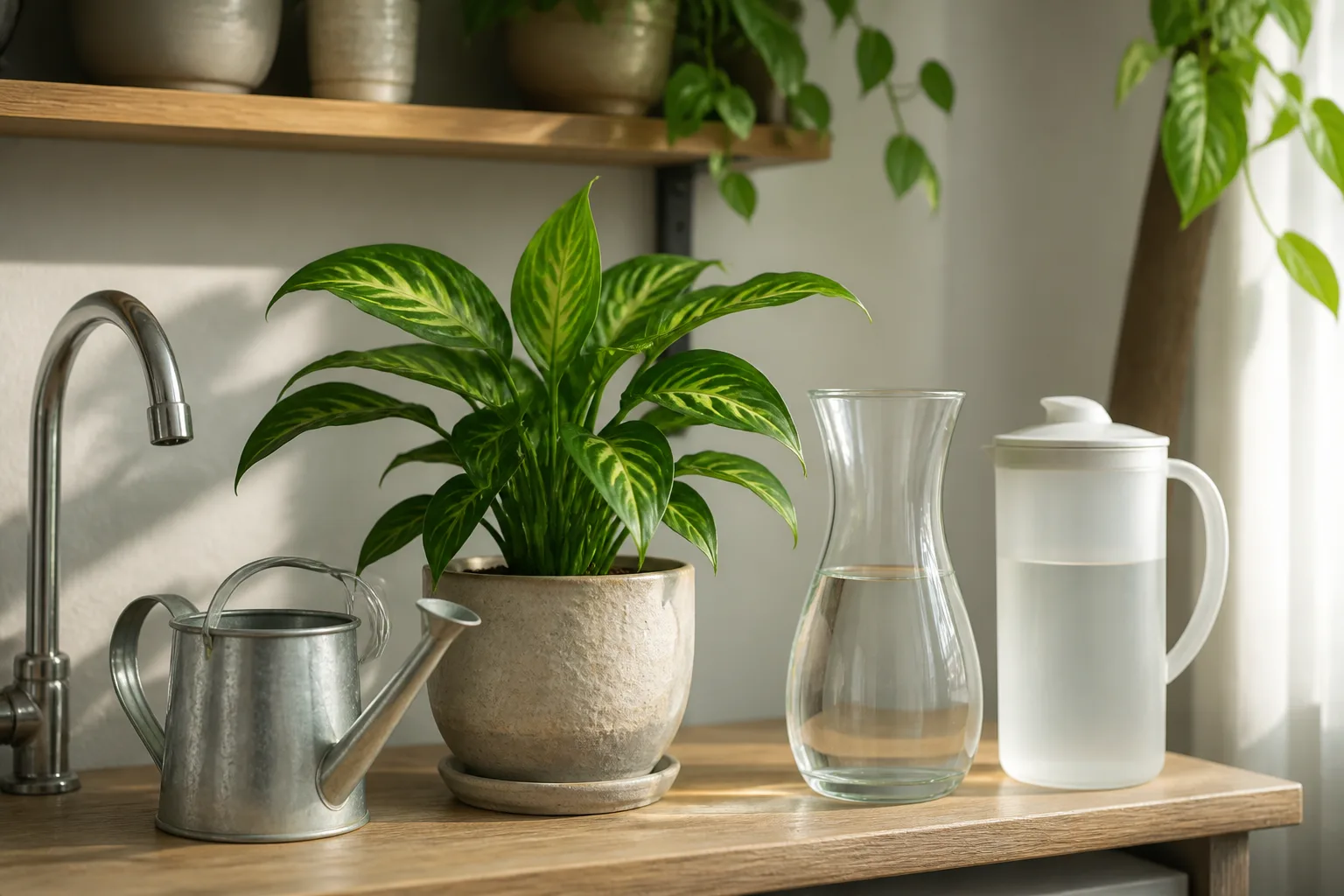
You filled the watering can at the kitchen sink, gave your pothos a drink, and noticed crispy brown edges on your calathea a week later. Was it the water—or did you underwater again? The best water for houseplants is not one bottled answer. It is the water that matches your local supply and each plant’s tolerance. For most collections, that still means room-temperature tap water on a sound watering schedule. For sensitive foliage, bloomers, and carnivorous plants, pros switch to rainwater, reverse-osmosis (RO), or distilled water when chemistry—not humidity or timing—is the limiting factor.
Quick Answer: Match Water to the Plant—and Your Tap
If your plants look healthy on tap water, keep using tap water. Upgrading water is a troubleshooting move, not a default upgrade. Change sources when you see recurring brown leaf tips or margins, white mineral crust on soil or terracotta, slow growth despite good light, or you know your household runs ion-exchange softened water through every faucet.
| Water source | Best for | Main caveat |
|---|---|---|
| Tap water | Pothos, ZZ plant, snake plant, rubber tree, most philodendrons | Softened sodium, high fluoride, or very hard water can build salts |
| Filtered (carbon) | Reducing chlorine taste; mild sensitivity | May not remove minerals, fluoride, or chloramine |
| Reverse osmosis / distilled | Calatheas, many orchids, carnivorous plants, chronic tip burn | Almost no minerals—fertilize on schedule |
| Rainwater | Broad sensitive-houseplant use; naturally soft | Collection surface and storage hygiene matter |
For a deeper side-by-side on chlorine, chloramine, and softener bypasses, see our tap vs filtered vs rainwater guide. For technique—how much, how often, and saucer discipline—start with how to water indoor plants the right way.
The Three-Question Rule Before You Buy Fancy Water
Ask three questions before you haul jugs home:
- Are my plants actually struggling, or am I solving a problem I do not have? Healthy growth on tap means your chemistry is probably fine.
- Is my tap softened? If yes, route houseplants to an unsoftened outdoor spigot, rainwater, RO, or bottled water—not the kitchen tap.
- Which plants are in the pot? A mixed shelf with pothos and calathea may need split sourcing: tap for the tough ones, low-mineral water for the prima donnas.
Why Water Chemistry Matters More Than the Watering Calendar
Houseplant advice often fixates on when to water. Water quality is quieter—and it shows up as chronic edge burn that humidity trays never fix. Municipal supplies add chlorine or chloramine to disinfect. Many regions deliver hard water rich in calcium and magnesium. Some homes run water softeners that swap those minerals for sodium. Over months of watering, what is dissolved in your water stays in your potting mix unless you flush it out.
What Dissolved Minerals and Disinfectants Do in Potting Mix
Each watering deposits a little chemistry in the root zone. Hardy plants tolerate a wide band. Sensitive plants—especially those adapted to rainwater in nature—react when fluoride, sodium, or alkaline minerals accumulate. Penn State Agricultural Sciences notes that excess sodium damages soil structure around roots, reducing drainage. The Pacific Northwest Pest Management Handbooks describe fluoride as an accumulative toxin that produces tip and margin necrosis on sensitive indoor species, sometimes at municipal concentrations around 1 ppm.
That does not mean tap water is poison. It means the wrong water for the wrong plant over time produces symptoms that look like underwatering, sunburn, or low humidity—but persist after you fix those variables.
Tap Water: The Default That Works for Most Collections
Most low-maintenance houseplants tolerate regular tap water when it is not softened and you water thoroughly at room temperature. Pothos, heartleaf philodendron, ZZ plants, rubber trees, and many everyday tropicals fall in this camp. If they are pushing new leaves and roots look white when you peek after a dry-down, your tap is doing its job.
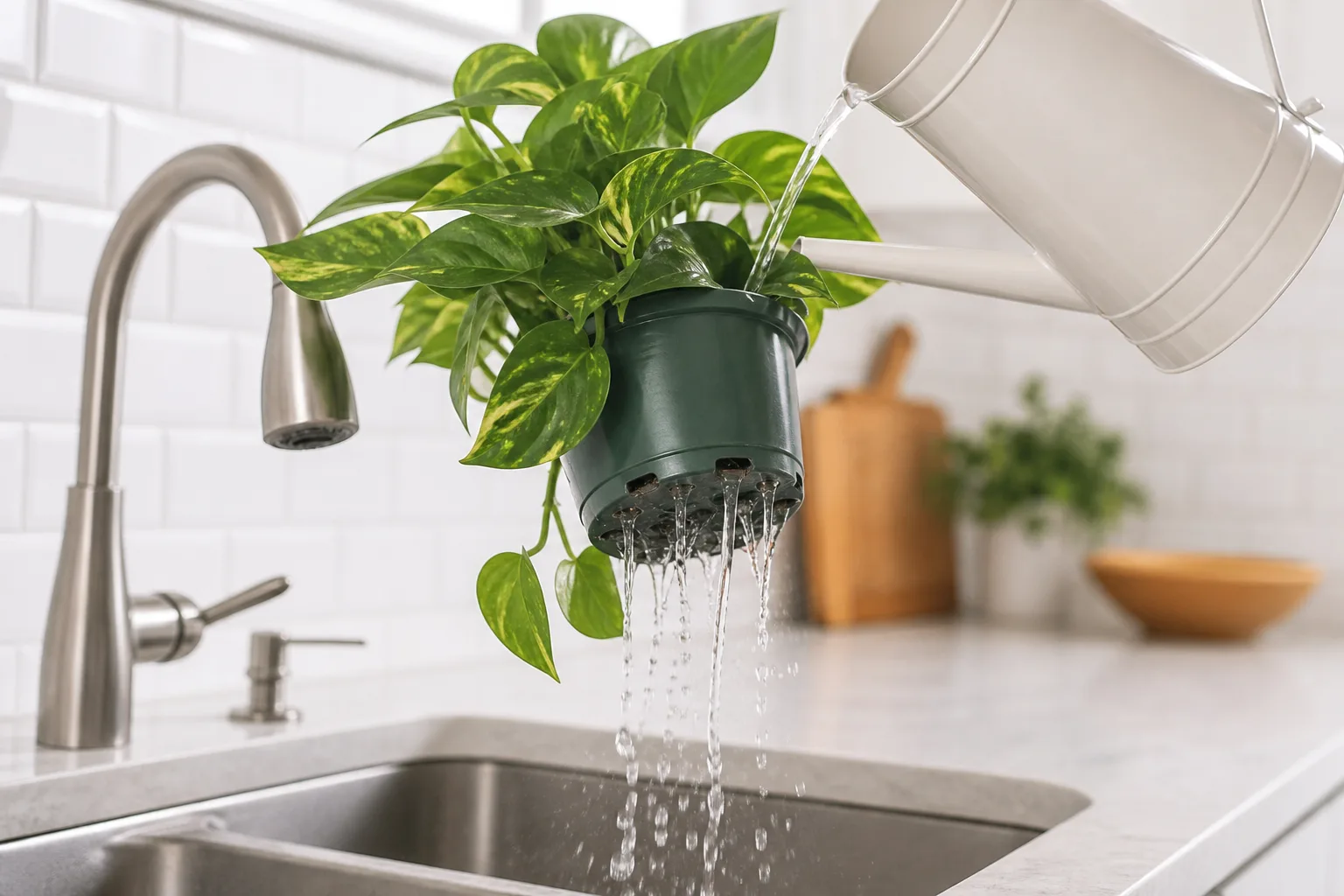
When Tap Water Is Clearly Good Enough
Stay on tap when:
- New growth is normal color and size.
- No persistent white crust rings the pot or soil surface.
- Your home does not soften all interior taps—or you already bypass softeners for plants.
- You empty saucers after watering so salts do not wick back up.
Tap loses its “default” status when softener sodium, high fluoride, or extreme hardness keeps showing up in the same symptoms on sensitive species. Our hard water and houseplants guide walks through hardness-specific fixes.
Chlorine, Chloramine, and the Overnight Trick
Free chlorine can dissipate when you fill an open container and let it stand 12–24 hours, especially if you warm it slightly or aerate it. Penn State lists heating, aeration, or overnight standing as ways to reduce chlorine before watering.
Chloramine—chlorine bonded with ammonia—is increasingly common because it stays stable in pipes longer. Standing water does not reliably remove chloramine, and it does not remove fluoride, sodium, or hardness minerals. Treat overnight resting as a chlorine and temperature helper, not a universal purifier. If tip burn continues on chlorine-sensitive plants after resting, move those pots to rainwater or RO instead of waiting longer.
Always use room-temperature water. Cold tap can shock tropical roots and slow uptake—another reason the overnight jug doubles as a temperature buffer.
Filtered Water and Reverse Osmosis: Know What Your Filter Removes
“Filtered” describes a range, not a guarantee. A basic carbon pitcher improves taste and can reduce free chlorine and some organics. It usually does not strip calcium, magnesium, fluoride, or chloramine. That may be enough for mildly sensitive plants if your tap is otherwise reasonable.
Carbon Pitchers vs RO Systems
Reverse-osmosis systems push water through a membrane that removes most dissolved solids—often bringing total dissolved solids (TDS) down dramatically. That is why growers reach for RO when calatheas, dracaenas, or spider plants keep tip-burning despite good culture. The trade-off: RO water is mineral-poor, so nutrition must come from fertilizer on a sane schedule, not from the water itself. The RHS notes that plants on purified water still need appropriate feeding.
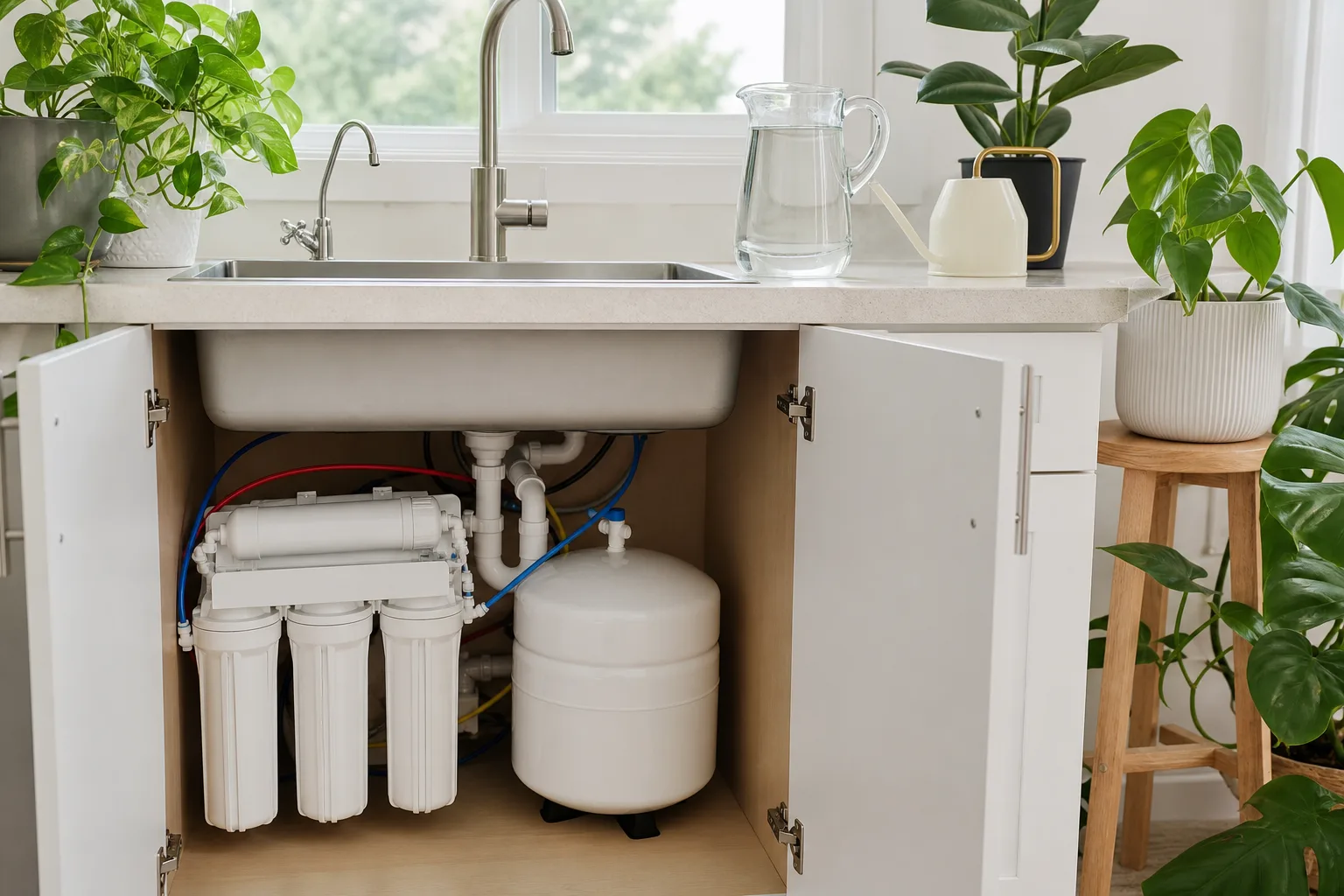
If you already run RO for drinking water, dedicating a clean container for plant water is often the most practical “pro” setup for sensitive collections. See our full RO water for indoor plants breakdown for remineralizing debates and when RO is overkill.
Distilled and Deionized Water: Low Minerals, Higher Responsibility
Distilled water is essentially free of minerals and disinfectant residues—excellent for carnivorous plants, some orchids, and any pot where you are fighting chronic salt crust. Because it contains almost no calcium or magnesium, it does not buffer the root zone. Over time, nutrient gaps can appear if you never fertilize.
Fertilizer Becomes Non-Negotiable
Using distilled or RO on mineral-sensitive plants is not the same as using it on fertilizer-hungry tropicals you already feed monthly. If you switch a calathea to distilled because of fluoride, keep a dilute, balanced fertilizer during active growth—just not at full strength on dry soil. Distilled is a water-quality tool, not a replacement for complete care. For species-specific feeding rhythms, pair this page with the relevant plant guide—calathea orbifolia, Phalaenopsis orchid care, or African violet care.
Rainwater: Naturally Soft, but Not Automatically Perfect
Rainwater is the water many pros reach for first on sensitive shelves: low in dissolved minerals, slightly acidic in many regions, and free of added fluoride. Clemson HGIC and the RHS both recommend rainwater for houseplants that struggle with hard or treated tap—especially orchids and carnivorous species.
Lightning during storms can fix a trace of nitrogen in rainwater—a minor bonus, not a fertilizer program. The bigger win is what rainwater lacks: softener sodium, added fluoride, and most hardness minerals.
Safe Collection and Storage Rules
Collect responsibly:
- Roof material matters. Avoid fresh asphalt shingle runoff and questionable metal coatings if water will go on finicky plants. Clean, established hard surfaces or dedicated rain barrels are safer.
- Use food-grade or plant-dedicated storage. Lidded barrels reduce mosquito breeding and keep debris out.
- Use stored rain within a week or two in warm weather, or keep it cool and shaded. Algae and anaerobic smells mean it is time to clean the barrel and refresh.
- Never let pots stand in rainwater in the saucer long-term—salts are lower, but root rot from standing water is still root rot.
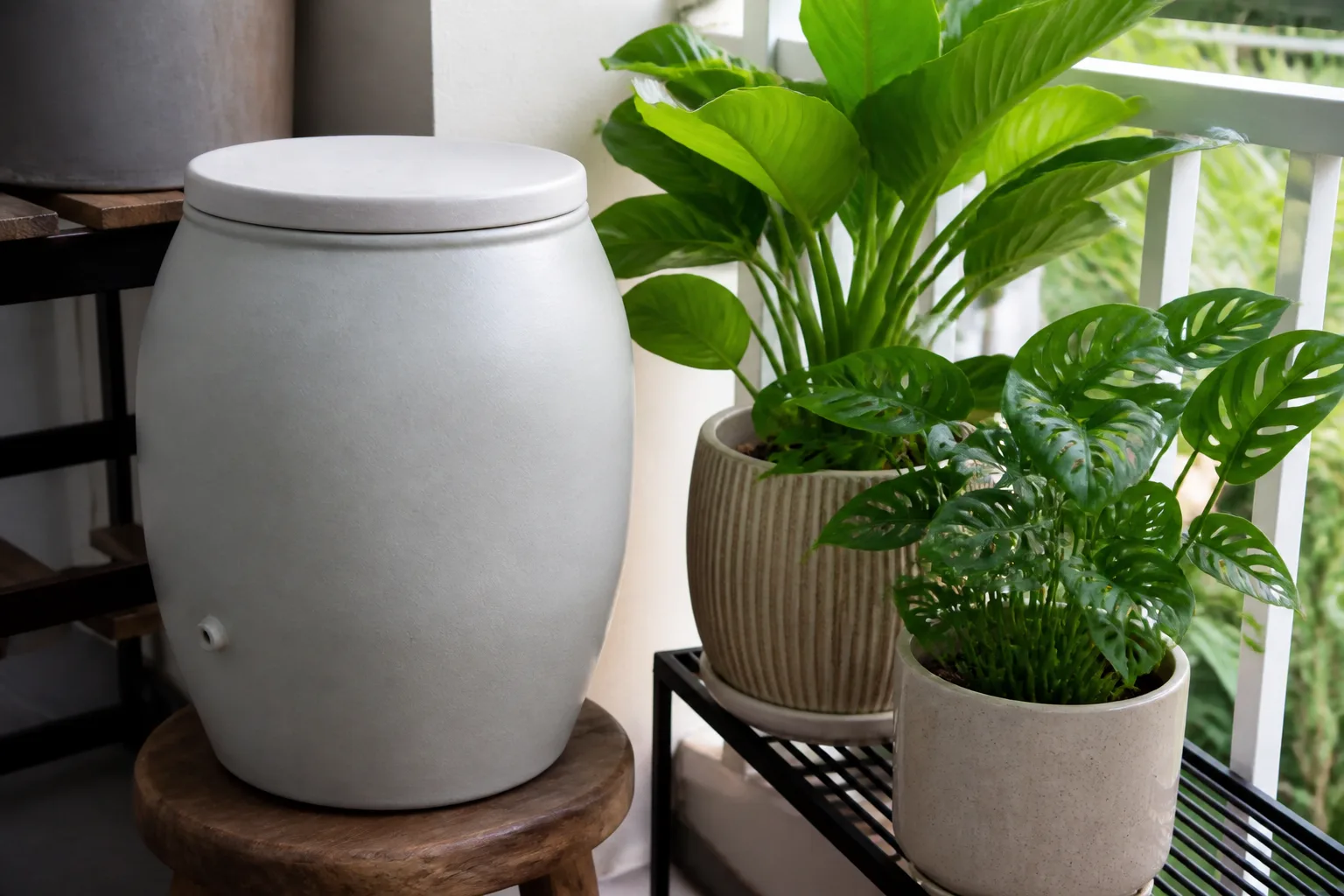
If you cannot collect rain, buying distilled or RO in bulk for a small sensitive shelf is still cheaper than replacing plants.
Hard Water, Softened Water, and Salt Buildup
Hard water carries calcium and magnesium—plant nutrients in the right dose, but deposit formers when they accumulate in porous pots and peat mixes. Softened water trades those minerals for sodium, which plants use only in tiny amounts. Penn State warns that sodium becomes toxic over time and breaks down soil structure, reducing drainage around roots.
Never water houseplants with ion-exchange softened tap if you can avoid it. Clemson HGIC and UConn’s houseplant watering guidance are blunt: softener water injures indoor plants. Run a hose from an unsoftened outdoor tap, use rainwater, or use RO/distilled for indoor pots.
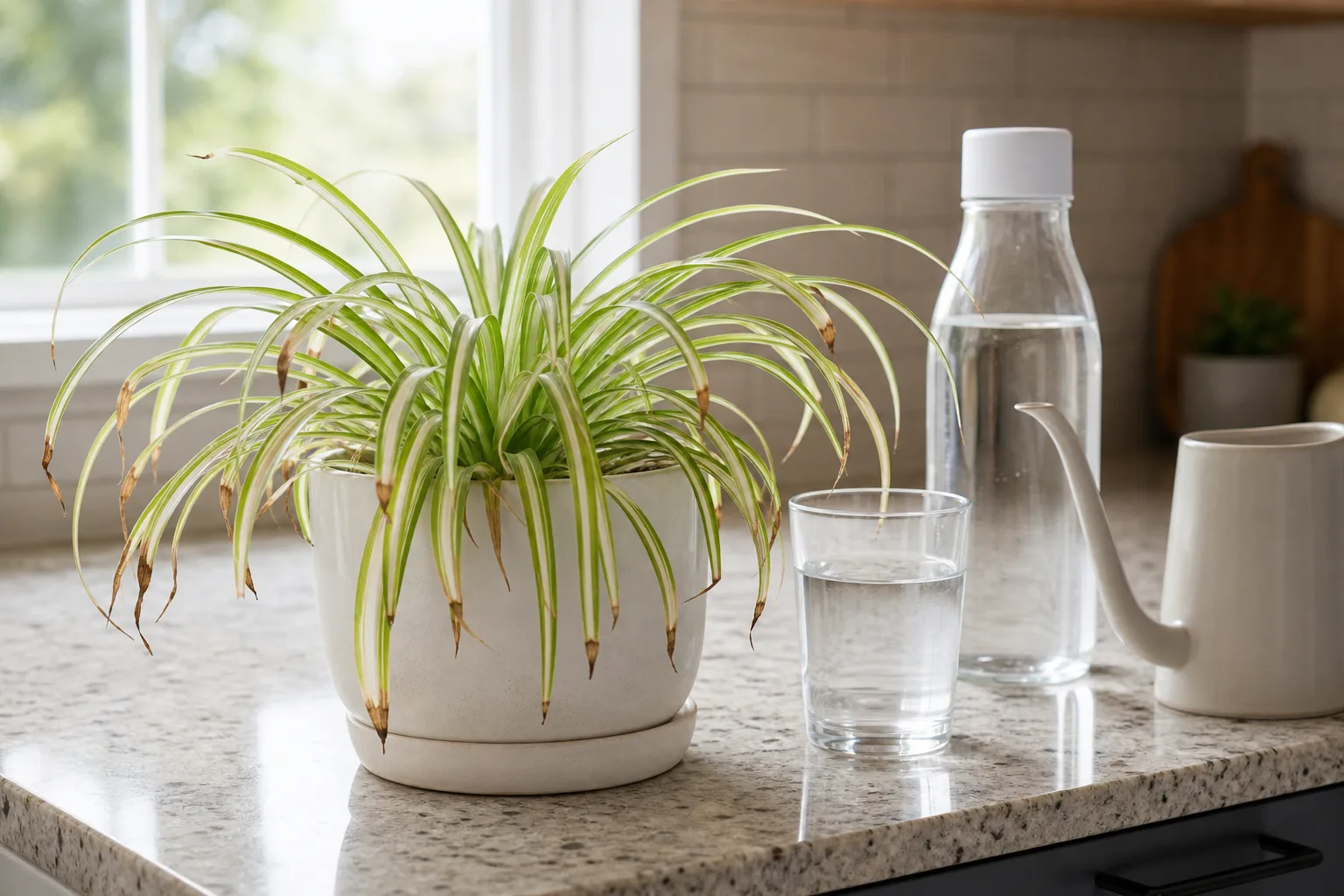
Signs Water Chemistry—not Humidity—is the Problem
Suspect water—not dry air—when:
- Brown tips or margins return on spider plants, dracaenas, peace lilies, or calatheas after you fixed humidity and watering rhythm. Penn State singles out spider plants (Chlorophytum) as fluoride indicators with spotted or burned tips.
- White haze on soil or crust inside terracotta appears even when you fertilize lightly.
- Growth stalls on one sensitive plant while a neighboring pothos thrives on the same schedule—classic split-tolerance signal.
- You recently started using a water softener and multiple plants declined together.
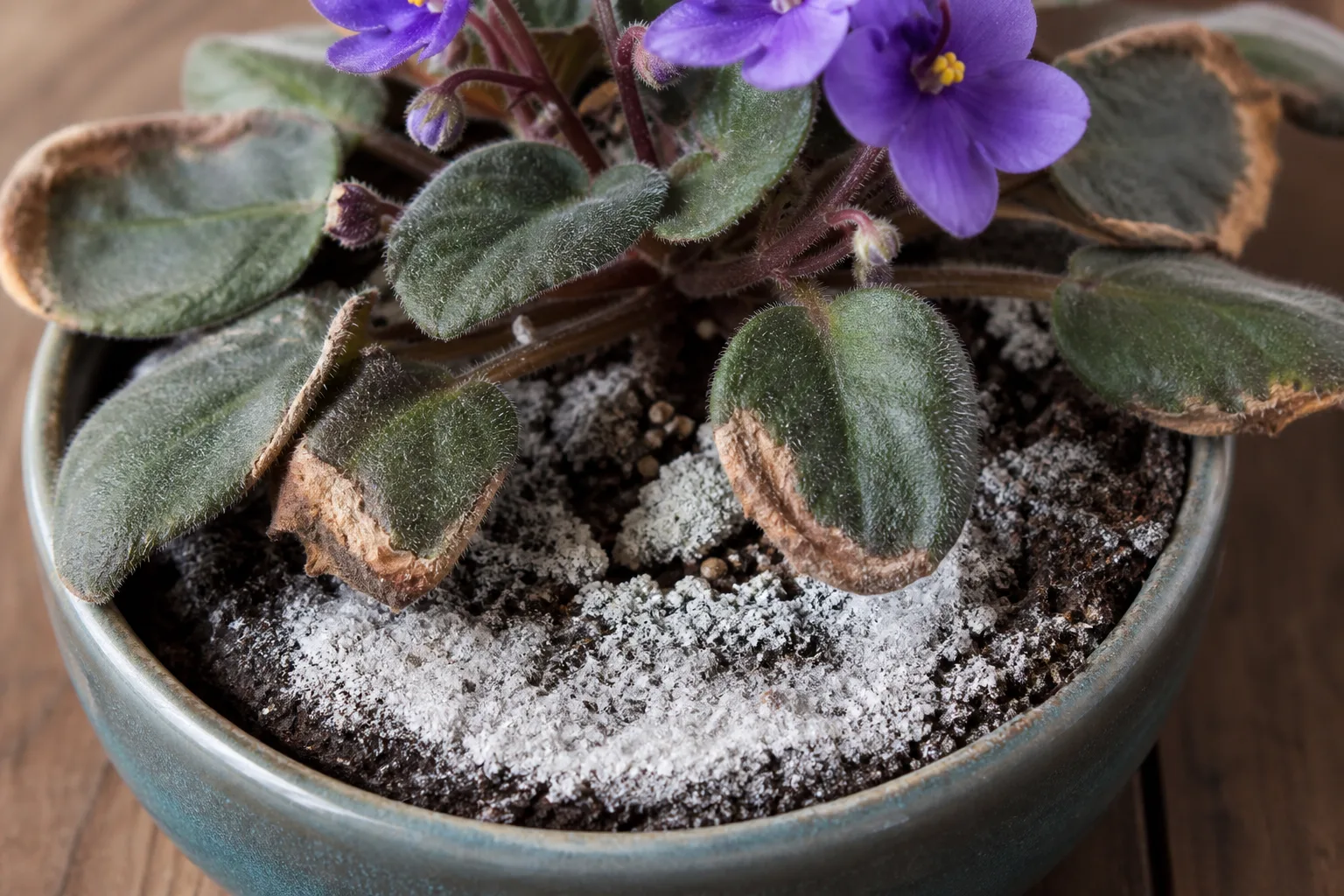
Humidity fixes tip burn that is uniform and seasonal; chemistry fixes tip burn that is chronic and variety-specific. If you are unsure, read should you actually mist your plants before blaming water alone.
How to Leach Salts and When to Repot
When salts have already built up:
- Stop softened water immediately. Switch source before you flush, or you are rinsing with the problem.
- Water heavily with clean rain, RO, or unsoftened tap until water runs freely from drainage holes for several minutes. PlantTalk Colorado’s leaching guidance describes repeating until the crust softens.
- Empty saucers and do not let plants sit in runoff.
- Repot into fresh mix if crust is thick, roots are brown and limp, or leaching twice in a month does not help. Pair repotting with our repotting mistakes checklist—not old, salty mix from the compost pile (can you reuse potting soil explains when that’s a bad idea).
- Resume fertilizing only after the plant shows new growth on the new water regimen.
For fluoride-sensitive spider plants, Penn State notes that two teaspoons of limestone per six-inch pot can raise soil pH and bind fluoride into a form roots take up less readily—a targeted fix, not a substitute for better water.
Plant Sensitivity Tiers: Who Needs an Upgrade
Tier 1: Tough Plants That Rarely Care
Pothos, ZZ plant, snake plant, rubber tree, many philodendrons, and schefflera usually accept municipal tap if it is not softened. Focus on drainage and dry-down before you shop for water. If these plants struggle, suspect overwatering, low light, or cold drafts first.
Tier 2: Fussy Foliage and Bloomers
Calatheas, maidenhair ferns, African violets, anthuriums, peace lilies, many dracaenas, and Phalaenopsis orchids often perform better on rainwater, RO, or distilled when tap is hard or fluoridated. Missouri Botanical Garden’s Phalaenopsis culture sheet emphasizes consistent moisture in fast-draining bark—water quality matters because roots see every chemical in each soak.
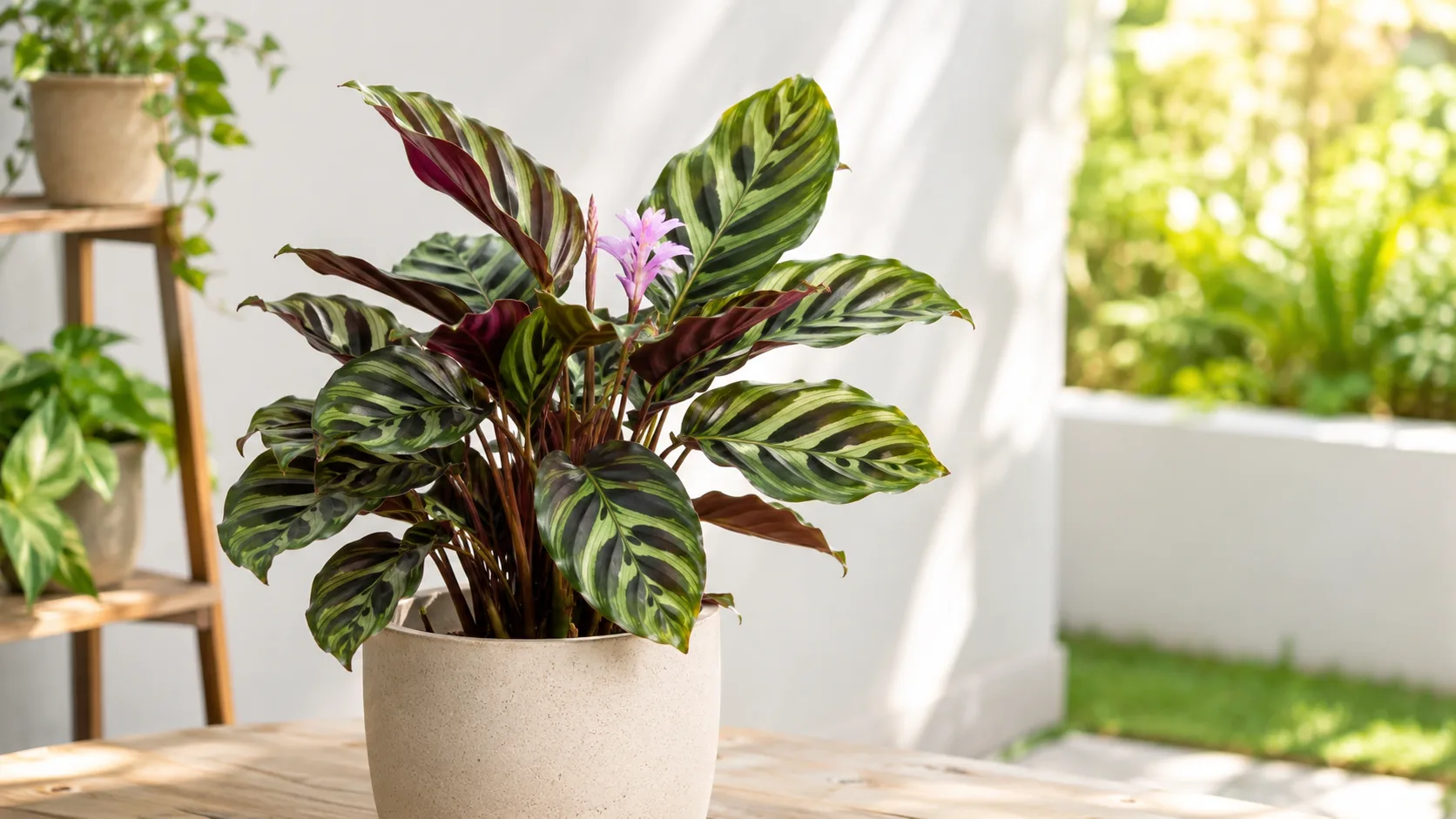
You do not need a laboratory to act: if a $20 calathea and a $200 philodendron share a shelf, give the sensitive ones the good water and let pothos drink tap.
Tier 3: Carnivorous and Mineral-Hating Specialists
Venus flytraps, pitcher plants, sundews, and butterworts evolved in nutrient-poor, mineral-free bogs. Tap, softened, or hard water can burn roots and kill traps quickly. Use distilled, RO, or clean rainwater only—no exceptions. Fertilizer is usually off the table; they catch their own nutrition.
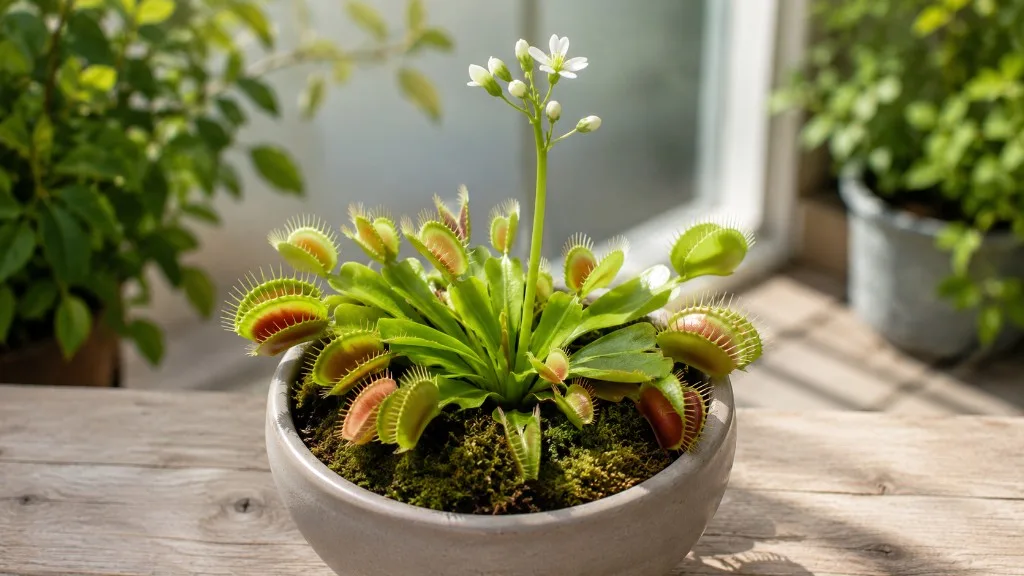
If you keep carnivores indoors, think of water sourcing as part of the purchase price—like grow lights for succulents.
How to Test and Compare Your Options Without Guessing
You do not need a lab coat. You need a little data and your plants’ feedback loop.
pH, TDS, and Your Local Water Report
- Read your municipal Consumer Confidence Report (CCR) online—fluoride, hardness, and disinfectant type are usually listed.
- A TDS meter ($15–25) compares tap, filtered, RO, and rain. Big drops in TDS after RO confirm the membrane is working. TDS alone does not name every ion, but it flags when tap and “filtered” are nearly identical.
- A pH meter helps explain why some mixes drift alkaline over time—not decisive alone, but useful with symptom photos.
Test on the same day, same room temperature, three readings averaged—then water identical plants with different sources for a month if you are still unsure. Pros trust replicated pots more than internet absolutes.
Keep leaves dust-free while you experiment; grime blocks light and mimics stress. Does dust hurt houseplants is worth a read during any troubleshooting month.
Conclusion
The best water for houseplants is the one that keeps your specific plants healthy—not the one that sounds purest in a headline. Stay on room-temperature tap while growth is strong and your water is not softened. Move sensitive species to rainwater, RO, or distilled when tip burn, salt crust, or fluoride indicators keep returning after you fix watering and humidity. Ban softened water from plant saucers entirely. Flush or repot when salts have already accumulated, then fertilize thoughtfully on low-mineral sources.
Water is one lever. Light, pot size, mix, and dry-down still matter more for most beginners. Get those right, upgrade water only where symptoms demand it, and you will spend less on jugs—while the plants that actually need pristine water finally stop arguing with your tap.



