Can You Use RO Water for Indoor Plants? Complete Guide
Reverse osmosis water removes nearly everything from tap water — good and bad. Learn which houseplants benefit from RO water, which don't need it, and how to prevent mineral deficiencies.
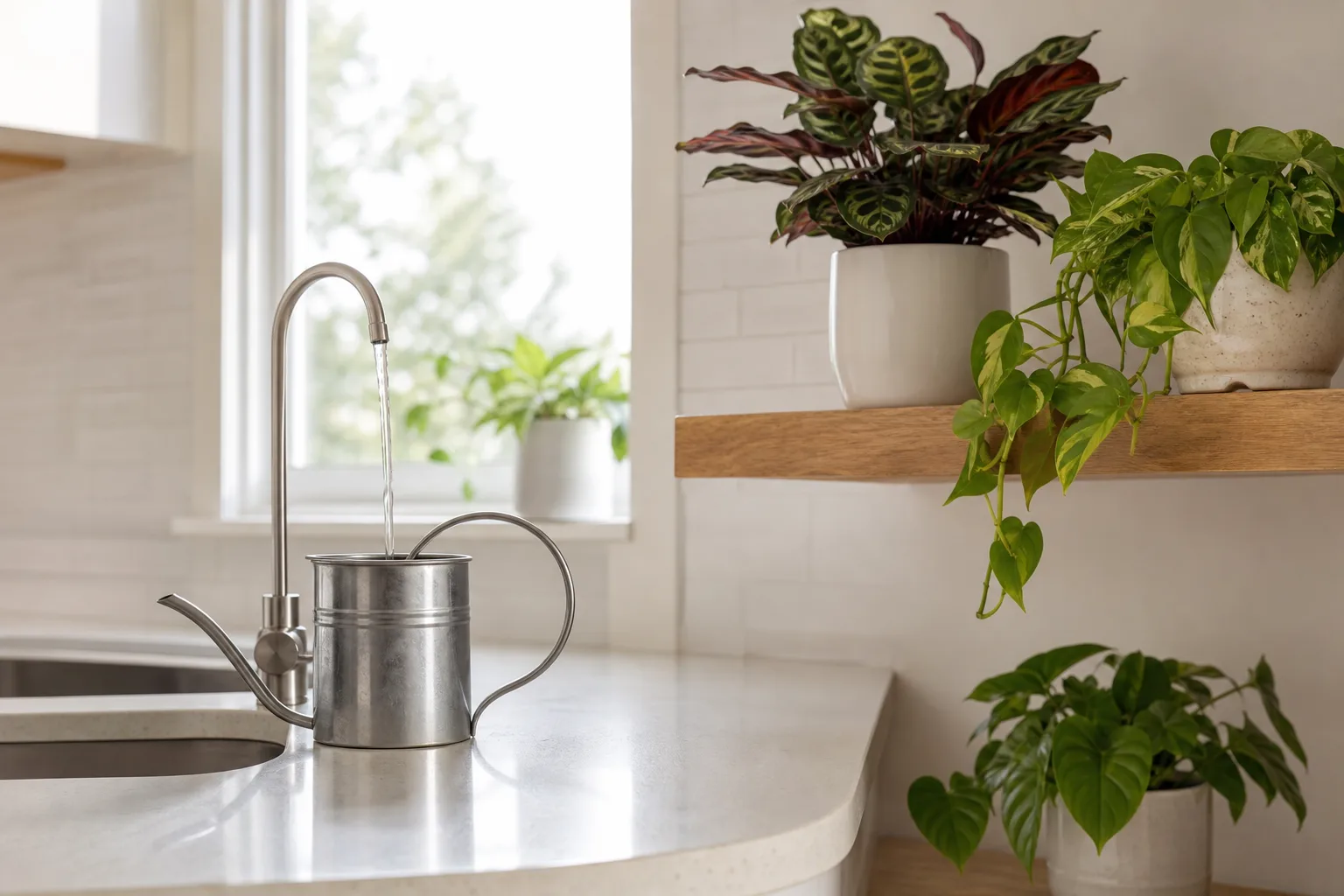
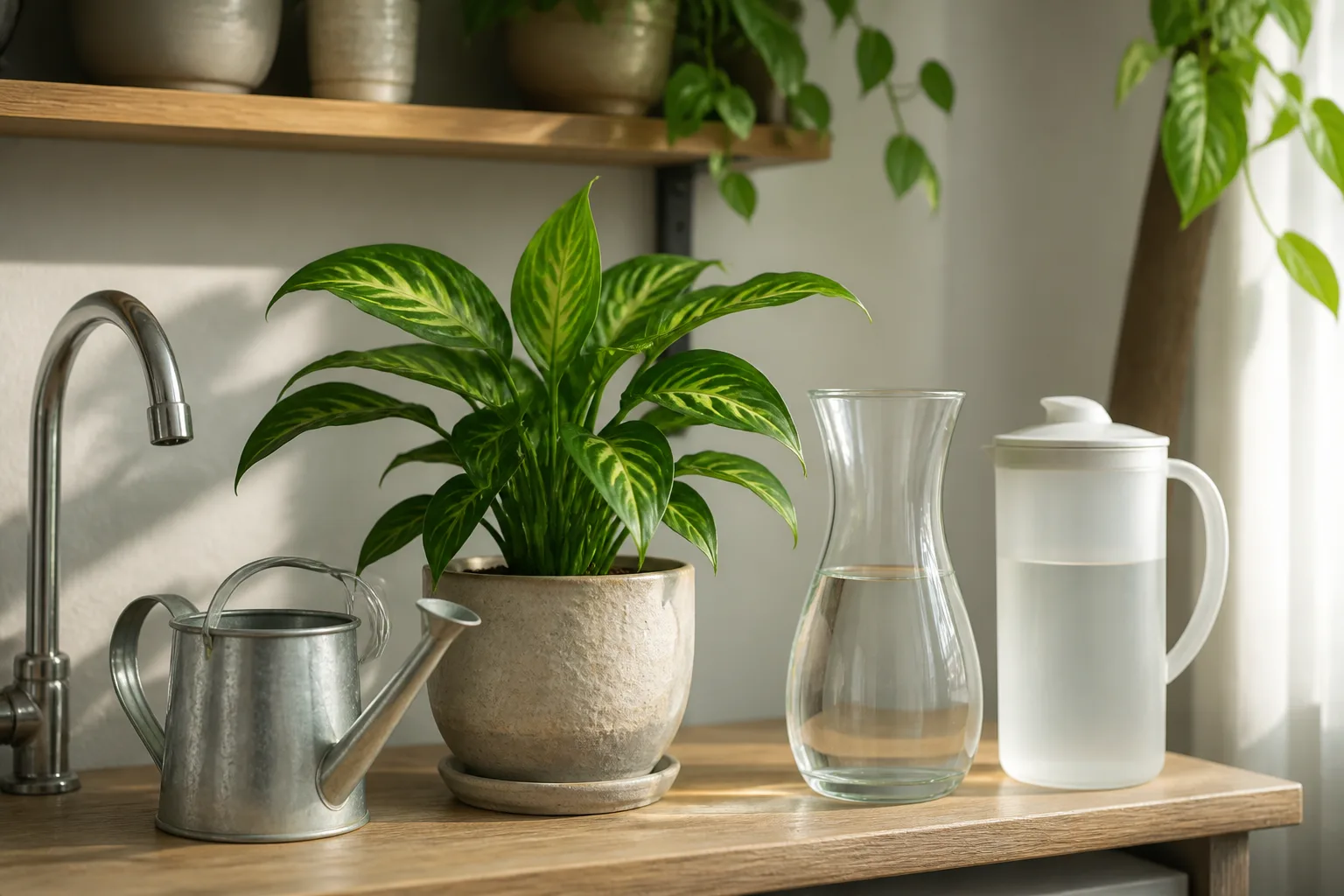
If you already have a reverse osmosis system under your kitchen sink, you have probably wondered whether that purified water is good for your houseplants too. The short answer is yes — you absolutely can use RO water for indoor plants. But whether you should, and when it actually makes a difference, depends on what you grow, what is already coming out of your tap, and how you feed your plants.
RO water strips out nearly everything dissolved in your tap water. That is both its greatest strength and the reason it demands a little more thought than just filling up the watering can.
What Reverse Osmosis Actually Removes
Reverse osmosis pushes water through a semi-permeable membrane at pressure. The membrane lets water molecules pass through but rejects dissolved solids, heavy metals, chlorine byproducts, pesticides, and most microorganisms. A well-maintained under-sink RO system typically removes 92 to 99 percent of total dissolved solids, dropping tap water from 150 to 500+ ppm TDS down to roughly 10 to 50 ppm.
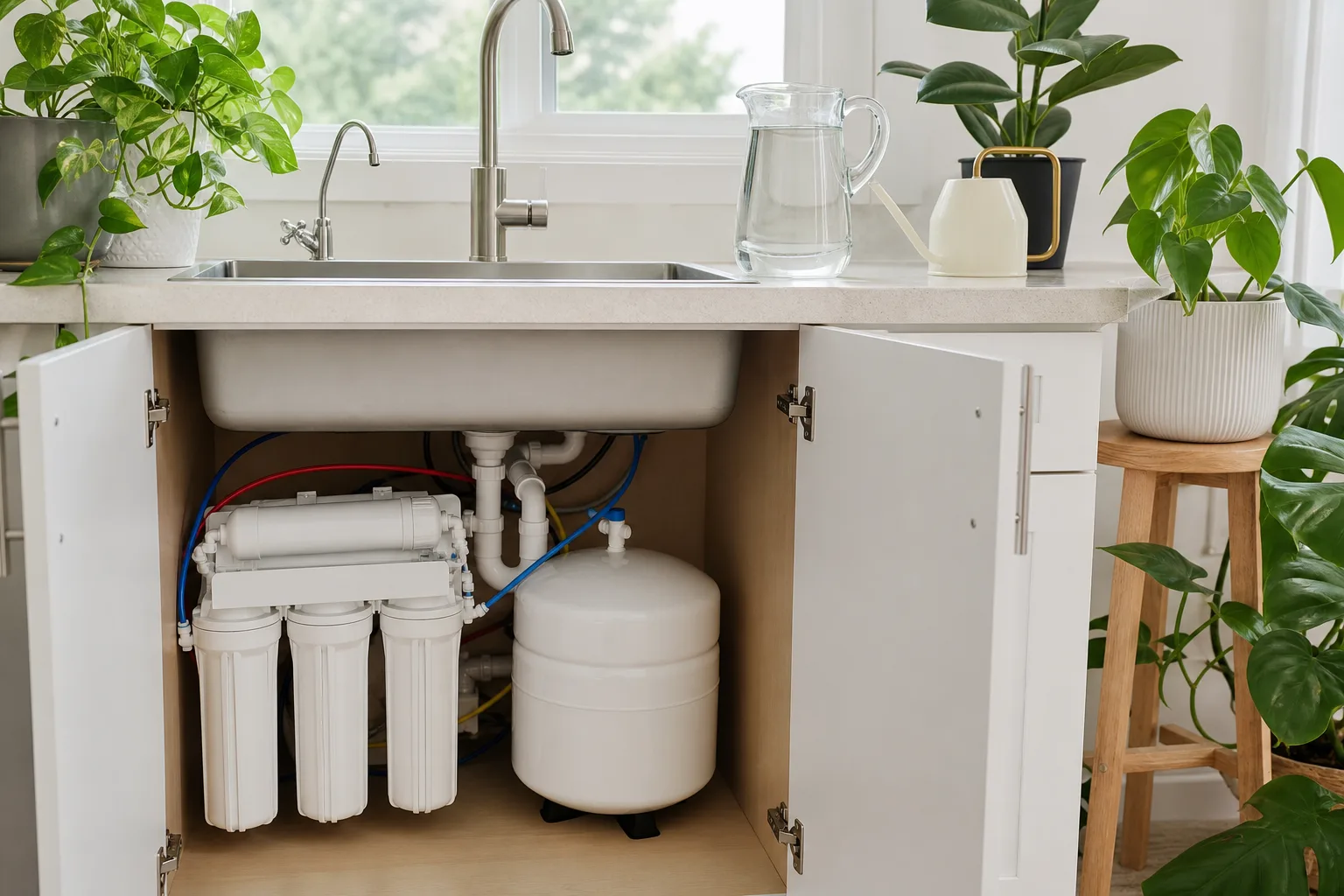
Along with the contaminants you want gone — chlorine, chloramine, fluoride, lead, copper, nitrates — the membrane also strips out calcium, magnesium, potassium, and trace minerals that plants actively use. RO water is essentially a blank slate. There is nothing harmful in it, but there is nothing nourishing either. That blank-slate quality is the entire story. When it helps, it helps because the plant is better off without what the tap water brings. When it hurts, it hurts because the plant needs those missing minerals from somewhere else.
Why Tap Water Causes Problems for Some Houseplants
Most municipal tap water is treated with chlorine or chloramine for disinfection. Many municipalities also add fluoride. Neither is uniquely toxic at drinking-water concentrations, but several common houseplants accumulate these compounds in their leaf margins over repeated watering cycles. The result is the browning leaf tips and crispy edges that frustrate so many indoor gardeners.
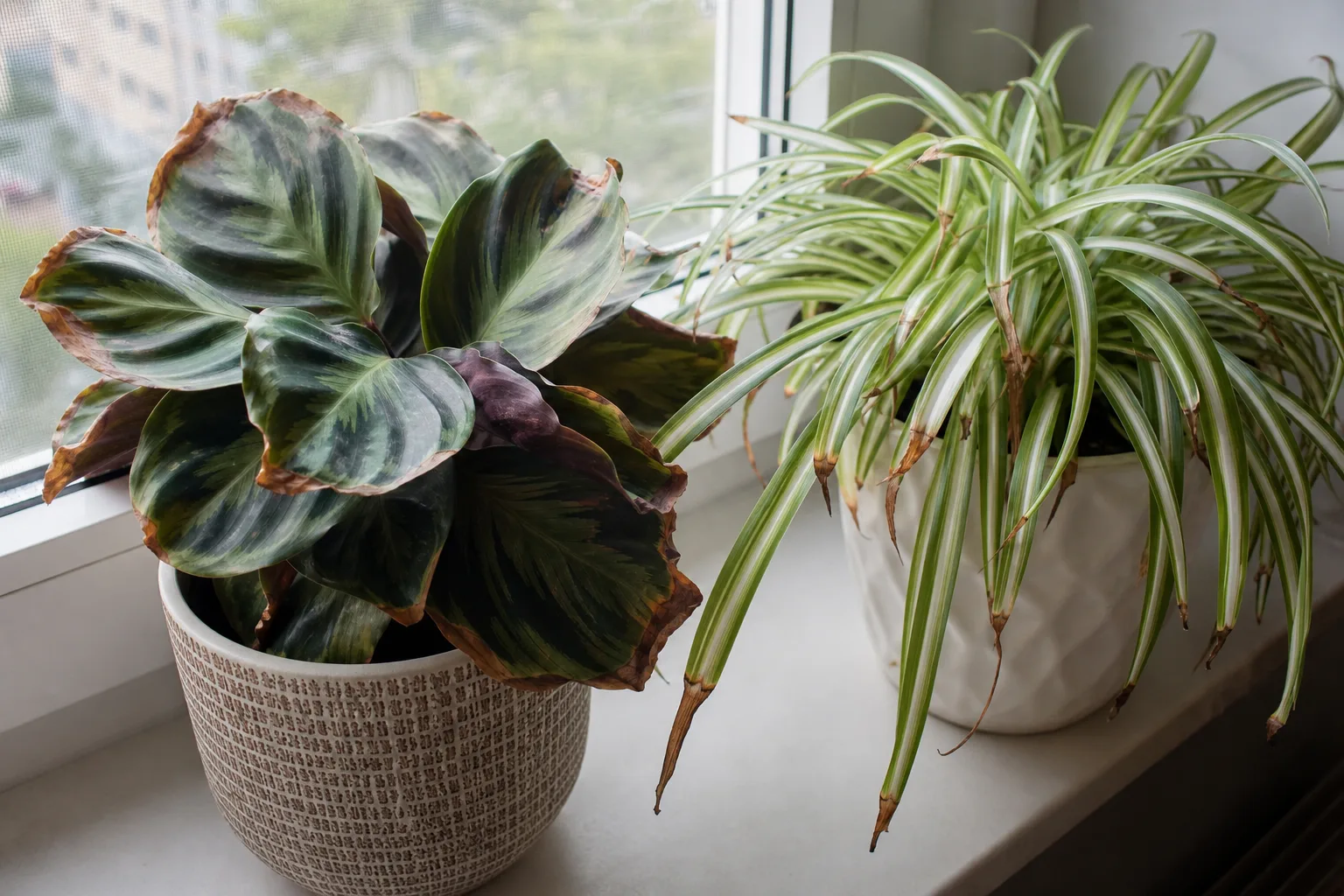
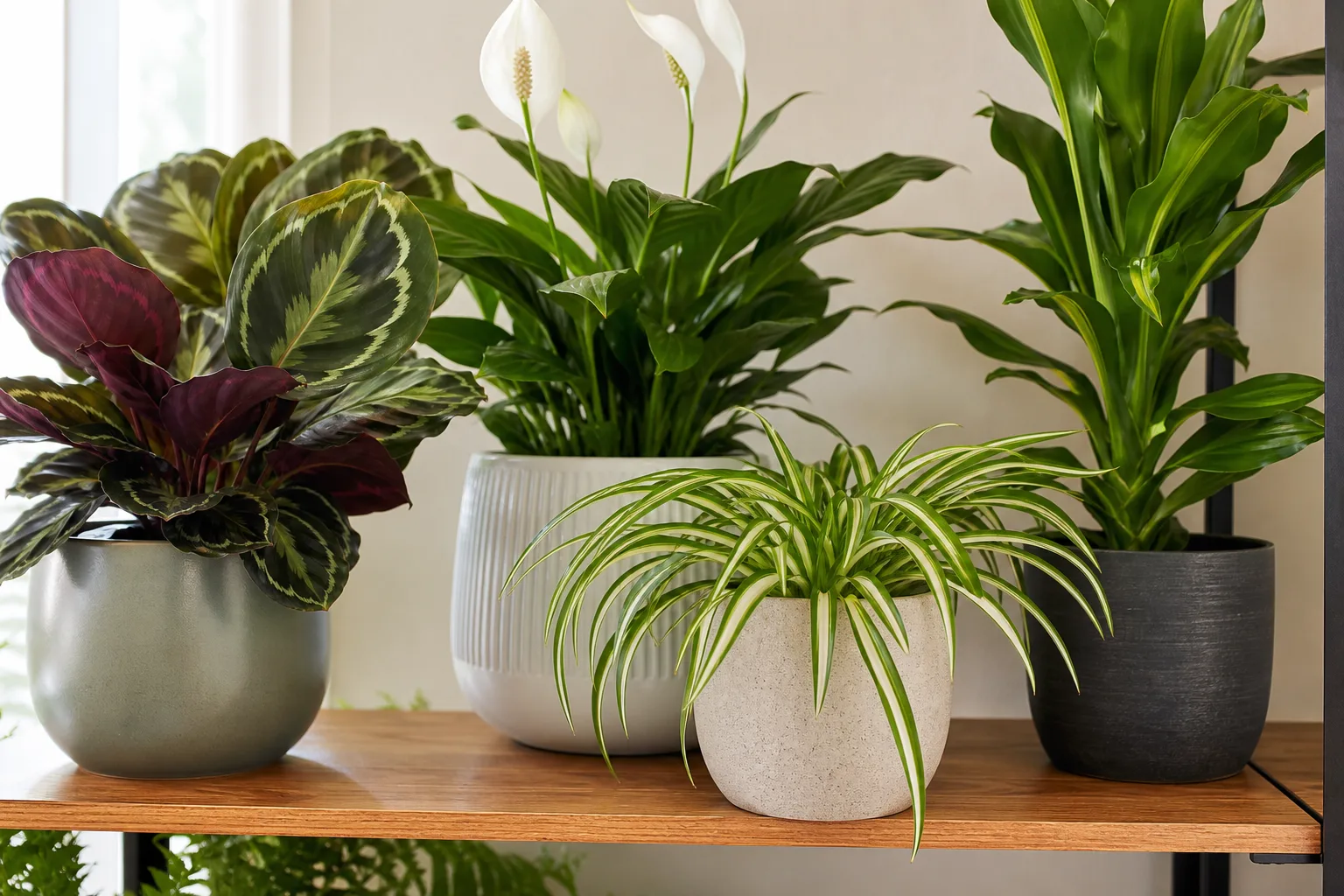
The plants most affected by tap water quality are monocots — plants with parallel-veined, strappy leaves — and a handful of tropical ornamentals from the Marantaceae family. Calatheas and marantas are infamous for developing brown, papery margins when watered with fluoridated water, even when humidity, light, and soil moisture are all dialed in correctly. Dracaenas, including the popular corn plant (Dracaena fragrans) and lucky bamboo (Dracaena sanderiana), show fluoride toxicity as yellowing leaf tips that progress to brown necrosis. Spider plants (Chlorophytum comosum) are equally sensitive, developing tip burn that does not correlate with watering frequency or light exposure. Peace lilies (Spathiphyllum), cordylines (Cordyline fruticosa), and many tropical ferns also react to chlorine, chloramine, or dissolved salts that accumulate in the potting mix over weeks and months. If you have been chasing brown tips across multiple care variables and the problem persists, high-TDS tap water is often the hidden culprit.
Which Plants Benefit Most from RO Water
If your collection centers on calatheas, marantas, dracaenas, spider plants, peace lilies, or ferns, RO water directly addresses the single most common cause of chronic tip burn. Owners of these plants often report visible improvement in new leaf quality within a month or two of switching from tap to RO or distilled water. The old damaged tissue will not recover — brown tips stay brown — but the new growth emerges clean.
Carnivorous Plants — The Non-Negotiable Case
Venus flytraps, sundews, pitcher plants (Sarracenia and Nepenthes), and butterworts evolved in nutrient-poor bogs. Their root systems are not adapted to handle dissolved minerals. Water with any measurable TDS — tap water, spring water, even some filtered water — will eventually sicken and kill them. These plants require water with TDS below roughly 50 ppm. RO water, distilled water, and clean rainwater are the only reliable choices. The University of Minnesota Extension recommends reverse-osmosis water for plants that demand low-mineral conditions, and commercial carnivorous plant growers universally instruct customers to use RO, distilled, or rainwater exclusively.
High-TDS Tap Water Scenarios
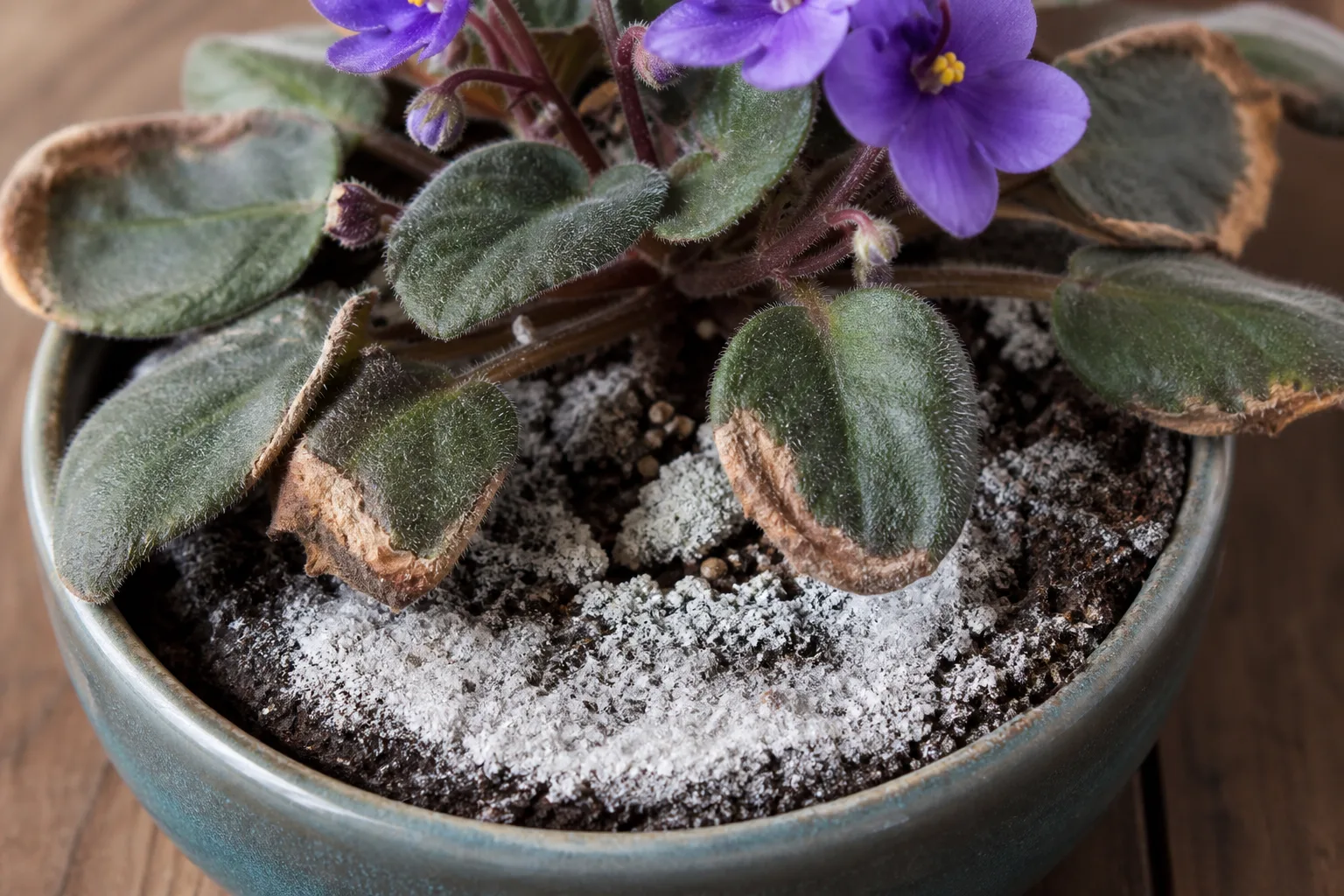
If your municipal supply measures above 400 to 500 ppm on a TDS meter — common in areas with hard groundwater — the dissolved salts can build up in potting mix faster than plants can use or flush them. This creates a slow-burn problem: salt crust on the soil surface, impaired root function, and persistent nutrient lockout even when you are fertilizing. RO water eliminates that salt loading entirely and lets you control exactly what goes into the root zone.
When RO Water Is Unnecessary
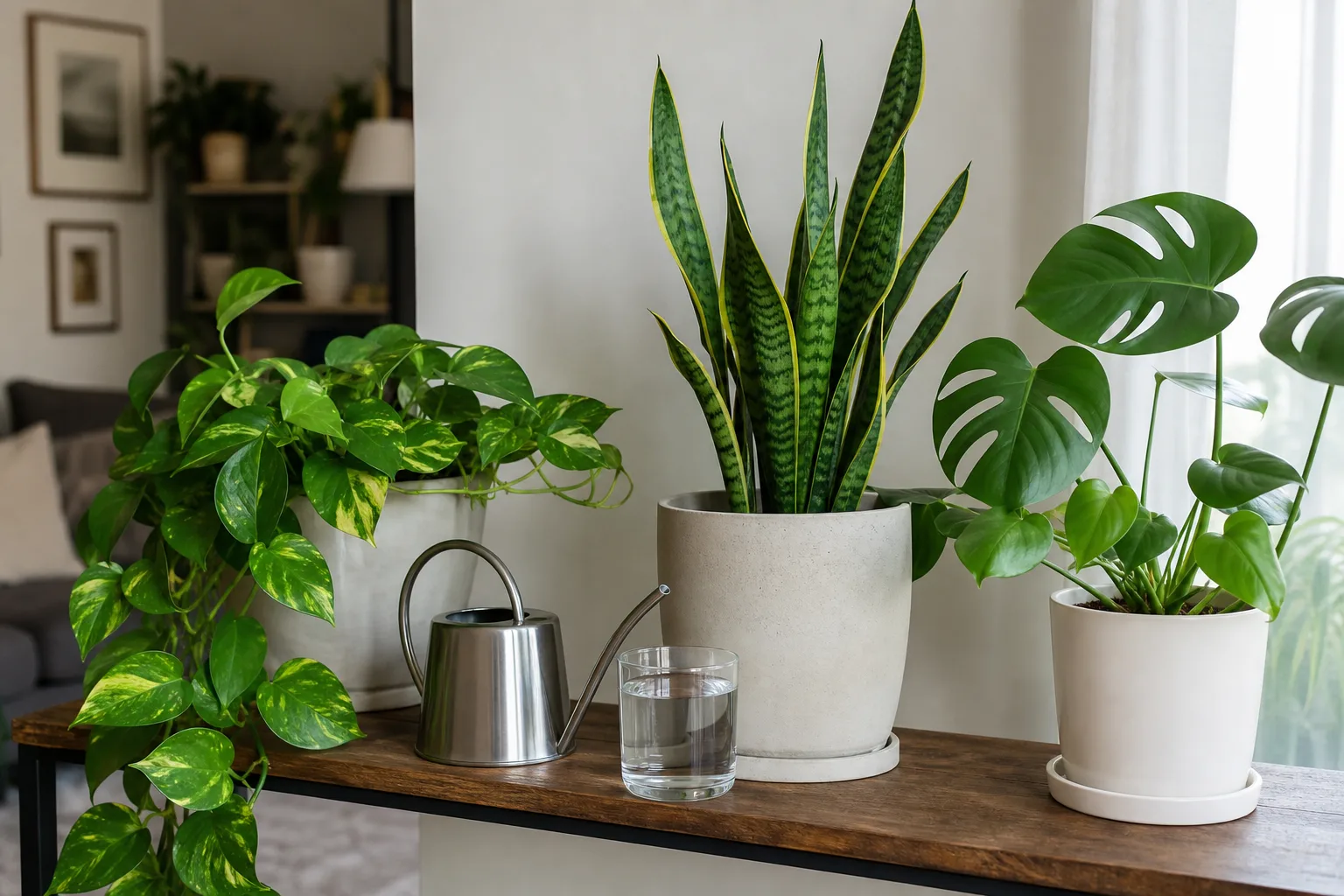
For the majority of common houseplants — pothos, philodendrons, snake plants, ZZ plants, monsteras, hoyas, most succulents — RO water solves a problem that does not exist. These plants tolerate a wide range of water quality. As long as your tap water TDS is under about 350 ppm and you are using a quality potting mix refreshed every 12 to 18 months, plain tap water works fine.
Switching exclusively to RO water without adjusting your feeding routine can create a new problem. A standard indoor potting mix with perlite, peat or coir, and some compost typically carries enough exchangeable calcium, magnesium, and micronutrients to buffer unfertilized RO water for a few months. But that buffer depletes. If you are only watering with pure RO water and not fertilizing regularly, calcium and magnesium deficiencies will show up — distorted new leaves, interveinal chlorosis on older growth, weak stems. There is nothing in the water to replenish what the plant withdraws from the soil. This is why commercial greenhouse operators who run RO systems always pair them with precise fertilizer injection. The blank slate is powerful, but it requires you to actually fill the slate.
RO Water and Soil pH
Pure RO water typically lands between pH 5.0 and 7.0 immediately after filtration, but it has almost no buffering capacity. It will rapidly equilibrate with whatever it touches. When you pour it through potting mix, the pH of the root zone — not the water itself — is what drives nutrient availability.
Most indoor potting mixes are formulated to buffer in the slightly acidic range of roughly pH 6.0 to 6.8, which is where the majority of essential plant nutrients are most soluble. RO water does not actively push pH outside that range in a well-buffered mix. But over many months in an unbuffered or heavily depleted medium, the lack of carbonate hardness can allow the soil to drift more acidic, particularly if you are using an ammonium-based fertilizer. This is a slow process and not a practical concern for plants repotted every year or two. If you are growing plants that need distinctly alkaline or acidic root conditions, a TDS and pH meter gives you the data you need instead of guessing.
The Calcium and Magnesium Gap
Of all the minerals RO water removes, calcium and magnesium are the two that most commonly run short in container-grown houseplants. Calcium is an immobile nutrient — the plant cannot shuttle it from old leaves to new growth. When calcium runs low, you see distorted, crinkled new leaves, weak stems, and poor root development. Magnesium is mobile and central to chlorophyll production; a magnesium deficit shows up as yellowing between the leaf veins on older leaves while the veins themselves stay green.
A quality complete fertilizer that lists calcium and magnesium on the guaranteed analysis — or a separate calcium-magnesium supplement — closes this gap. The most reliable approach is to treat RO water as a component of your feeding system, not a standalone solution. If you water with RO, you should be using a fertilizer that supplies secondary macronutrients, or supplementing separately.
How to Use RO Water Safely
There is no single right way to use RO water for houseplants. The right approach depends on how many plants you are watering, what kinds they are, and how much effort you want to invest. Three strategies cover most situations.
Blend RO with Tap Water
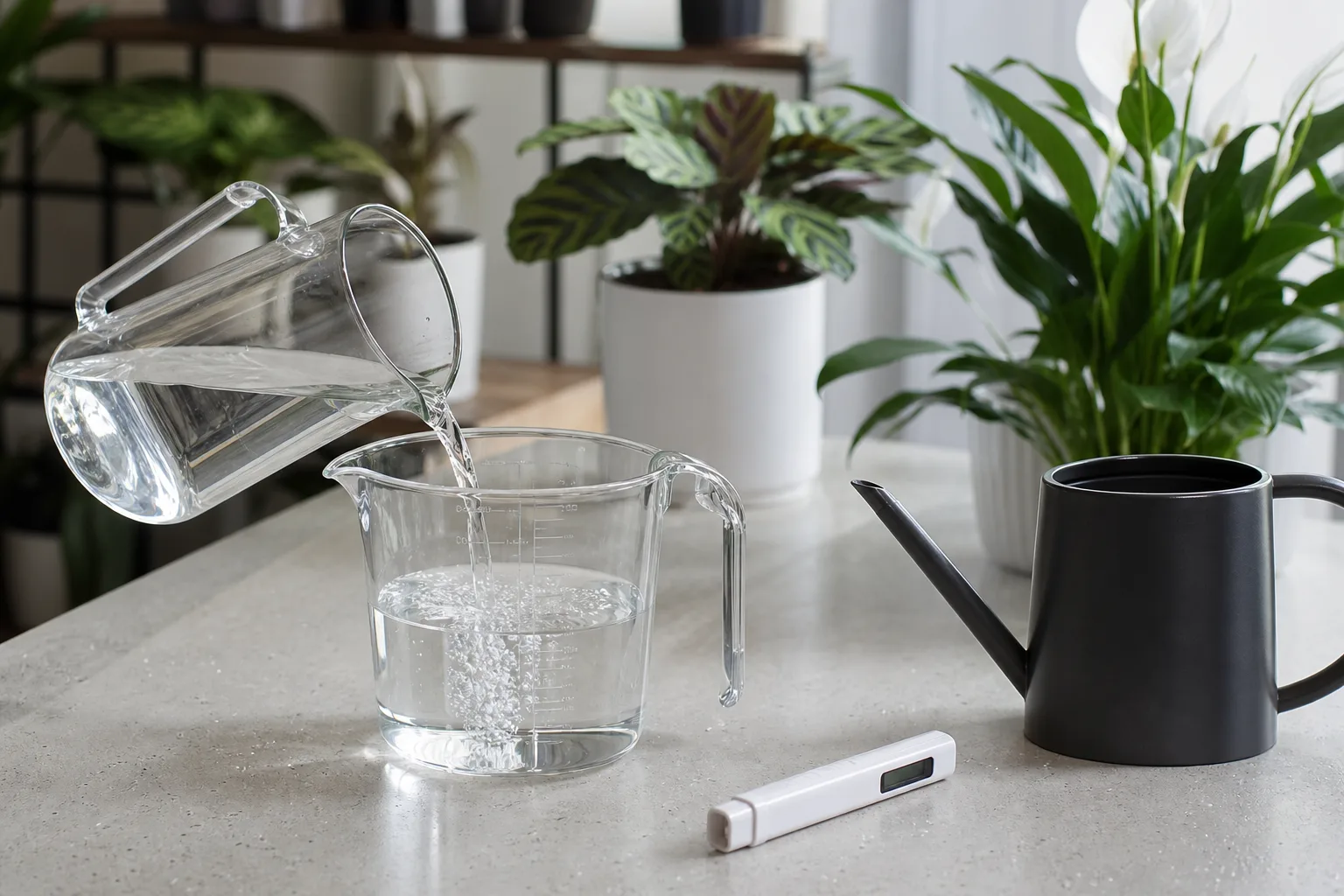
This is the simplest method and requires no extra products. Mix RO water with your regular tap water at roughly a 1:1 to 1:3 ratio, RO to tap. The tap water contributes enough calcium and magnesium to cover baseline needs, while the RO half cuts the fluoride and chlorine load by the same proportion. Use a TDS meter to target roughly 100 to 200 ppm in the final blend. For a modest collection of mixed plants, this is usually sufficient.
Remineralize with a Calcite Filter or Mineral Drops
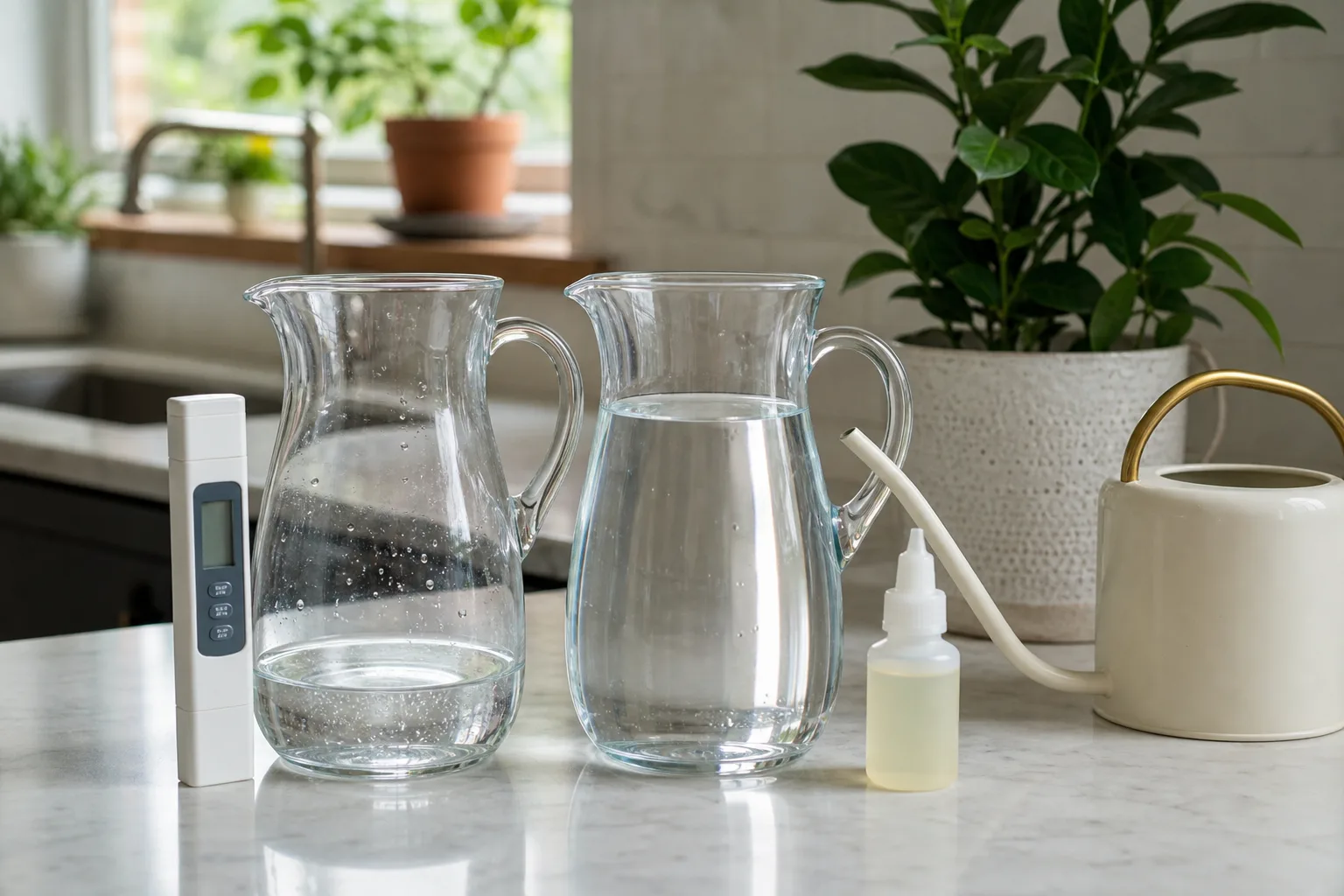
If you prefer to use straight RO water, install an inline remineralization cartridge after the RO membrane. These cartridges contain calcite (calcium carbonate) or a calcite-magnesium oxide blend that dissolves slowly into the permeate, raising TDS back to roughly 30 to 80 ppm and adding back the most important minerals. Alternatively, a few drops of a concentrated mineral supplement per gallon — sold for drinking water remineralization — achieves the same effect with more manual control.
Supplement with Fertilizer at Every Watering
This is the precision approach used by serious collectors and in commercial horticulture. Use a complete water-soluble fertilizer that lists calcium and magnesium on the label — many standard houseplant fertilizers do not — at quarter to half the recommended strength at every watering during the growing season. This turns RO water into a dilute nutrient solution that supplies everything the plant needs in controlled amounts. Flush the pot with plain RO water every fourth or fifth watering to prevent salt accumulation. During the dormant season, cut back to fertilizer every second or third watering or pause entirely, depending on the species.
The Carnivorous Plant Exception
Carnivorous plants deserve their own section because the rules for them are absolute. Venus flytraps (Dionaea muscipula), North American pitcher plants (Sarracenia), sundews (Drosera), tropical pitcher plants (Nepenthes), and butterworts (Pinguicula) evolved in acidic, nutrient-poor bogs. Their roots actively reject dissolved minerals, and they obtain nitrogen and phosphorus from prey capture rather than root uptake.
Water these plants with anything containing more than roughly 50 ppm TDS and you will see steady decline — stunted growth, browning pitchers, and eventually root death. Tap water is lethal to most carnivorous species. Bottled spring water is also unsafe because it contains dissolved minerals. The only acceptable water sources are RO water, distilled water, or clean rainwater collected from a non-polluted surface. If you are serious about keeping carnivorous plants indoors, an RO system is the most practical long-term solution.
Signs You Are Getting the Balance Wrong
If you have recently switched to RO water and are not supplementing minerals, watch for these signs. Calcium deficiency shows up on the newest leaves first — they emerge distorted, cupped, or with necrotic spots and edges. Magnesium deficiency appears on older leaves as yellow patches between green veins. Generalized slow growth, pale foliage, and weak, thin stems across multiple plants suggest broad nutrient insufficiency.
On the other side, if you are blending or supplementing correctly and still seeing problems, check your fertilizer formulation. Many popular liquid houseplant fertilizers are incomplete — they supply nitrogen, phosphorus, and potassium but little or no calcium and magnesium. If the label does not explicitly list calcium and magnesium with percentage guarantees, the product is not covering the gap RO water creates. Switch to a complete formula or add a separate calcium-magnesium supplement.
RO Reject Water: Should You Use It?
A typical under-sink RO system produces three to five gallons of reject water for every gallon of purified permeate. That reject water contains all the dissolved solids the membrane rejected, at roughly three to five times the concentration of your incoming tap water.
Because it is more concentrated in salts, minerals, and disinfection byproducts than tap water, it is not a good choice for fluoride-sensitive species or carnivorous plants. It may be acceptable for the most tolerant houseplants — pothos, snake plants, mature monsteras — if your source water TDS is low to begin with, but the salt load accumulates faster in the pot. If your tap water already has hard-water issues, reject water will make them worse. Collecting reject water for outdoor ornamentals, lawns, or flushing toilets is a better use than watering indoor plants you care about.
A Practical Decision Framework
If you already have an RO system in your kitchen, here is how to decide what to use where.
Water your calatheas, marantas, dracaenas, spider plants, peace lilies, ferns, and any carnivorous plants with RO water exclusively. Supplement with a complete fertilizer or cal-mag at every watering during the growing season. Water everything else — pothos, philodendrons, monsteras, hoyas, snake plants, ZZ plants, succulents, cacti — with tap water left out overnight to off-gas chlorine, unless your tap water TDS exceeds roughly 400 to 500 ppm.
If you do not already own an RO system and are considering buying one primarily for your houseplants, start with a TDS meter. They cost under $15. Test your tap water. If it reads under 200 ppm and you are not keeping fluoride-sensitive or carnivorous species, you probably do not need RO water for your plants. If your TDS reads above 400 ppm, or your sensitive plants persistently show tip burn despite good care, RO water — either from a system you install or from purchased distilled water — is worth testing on a subset of plants before committing to a full switch.
Collection of rainwater in a clean container is a free alternative that produces water quality comparable to RO for the plant species that benefit from it most.
Conclusion
RO water is a high-quality tool, not a universal requirement. It eliminates the fluoride, chlorine, and dissolved salts that cause chronic leaf-tip damage on sensitive species, and it is non-negotiable for carnivorous plants. But because it contains no calcium, magnesium, or other mineral nutrients, using it without supplementation gradually depletes the potting mix and starves the plants you are trying to help.
The key is pairing blank water with deliberate feeding. Use RO water where the sensitivity demands it, remineralize or fertilize appropriately, and do not overcomplicate things for the many houseplants that have been drinking tap water happily for decades. Your calathea and your pothos live on the same shelf, but they do not need the same water.