Tap vs Filtered vs Rainwater for Houseplants
Compare tap, filtered, and rainwater for houseplants. Match chlorine, chloramine, fluoride, hardness, and softener sodium to the right source.
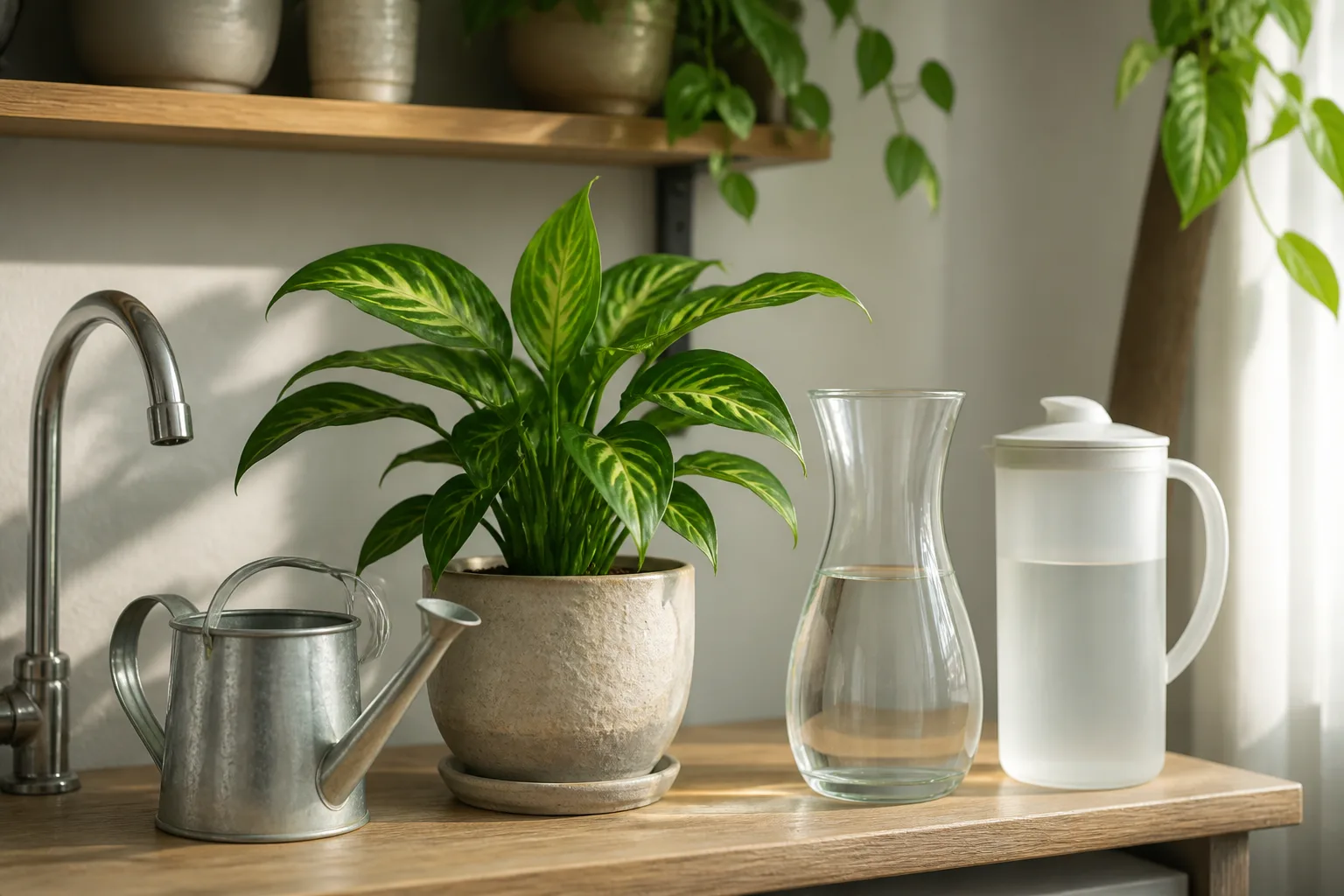
Your watering can is not “just water.” Tap, filtered, and rainwater carry different loads of chlorine, chloramine, hardness minerals, fluoride, and — if you use a softener — sodium. Most houseplants tolerate ordinary municipal tap when you water thoroughly and empty the saucer. Sensitive tropicals, fluoride reactors, and anything already fighting chalky pot rims need a smarter source.
This decision guide helps you pick tap, filtered, or rainwater based on what is in your supply and which plants are complaining — including the softener ban, fluoride tip burn, when a pitcher is the wrong buy, and how to skim a water-quality report without a chemistry degree.
Written by Sai Ananth; horticulture review by Dr. Priya Menon (botanist and indoor plant specialist).
Quick Verdict: Match Water to Contaminant and Plant
Tap water is the default for tough foliage plants if it is not softened, you bring it to room temperature, and you leach occasionally in hard-water homes. Resting overnight mainly helps free chlorine and temperature, not hardness or fluoride.
Filtered water only helps if the filter removes the contaminant you care about. A pitcher carbon filter often reduces chlorine taste and some organics; it usually does not fix hardness or fluoride. Reverse osmosis (RO) and distillation strip almost everything — useful for sensitive and carnivorous plants, but then you must fertilize so plants still get calcium and magnesium.
Rainwater is the best everyday upgrade for salt- and fluoride-sensitive houseplants when you can collect and store it cleanly. The RHS calls rainwater naturally soft and low in minerals, and notes it is especially good for houseplants such as orchids and carnivorous plants. Clemson HGIC likewise recommends rainwater when possible to reduce tip burn from fluoride, chlorine, and salt buildup.
Softened water is not a third option. Do not use it on houseplants. Softeners swap calcium and magnesium for sodium; that sodium accumulates in pots and injures roots. Use an unsoftened outdoor tap, rainwater, filtered/RO, or bottled water instead.
If chalky rims and mineral crust are your main story, read the dedicated hard water for houseplants guide after this comparison. If brown tips are the symptom and humidity is already fine, pair this page with brown tips on houseplants.
Source Capability at a Glance
Use this matrix before you buy a filter. “Filtered” is not one product class.
| Contaminant / goal | Rested tap | Carbon / pitcher | Catalytic carbon (chloramine-rated) | RO / distilled | Clean rainwater | Softener (Na ion exchange) |
|---|---|---|---|---|---|---|
| Free chlorine | Often reduces | Often yes | Yes | Yes | Yes (absent) | Not the goal |
| Chloramine | Unreliable | Often weak | Better match | Yes | Yes (absent) | Not the goal |
| Hardness (Ca + Mg) | No | Little to none | Little to none | Yes | Yes (naturally soft) | Removes Ca/Mg, adds sodium |
| Fluoride | No | Usually no | Usually no | Yes | Yes (absent) | No |
| Softener sodium | Avoid if on softener line | No | No | Avoid softener feed; use RO/rain/unsoftened | Avoid softener feed | Creates the problem |
| Taste / odor | Mild help | Strong | Strong | N/A | Clean when stored well | Soft feel for laundry, not plants |
Scan left to right for your problem row, then pick the cheapest source that actually clears that row. Pitcher-for-fluoride and “overnight rest for hardness” are the two most expensive mistakes in this table.
What Is Actually in Your Watering Can
Houseplant water problems almost always trace to one of four chemistry stories: disinfectant (chlorine or chloramine), hardness minerals, fluoride, or softener sodium. Knowing which story you have stops you from buying the wrong filter or blaming “bad soil” for a water issue.
Chlorine vs Chloramine
Many utilities add chlorine as a disinfectant. Free chlorine can stress sensitive roots and contribute to tip browning when levels are high or plants are already stressed, which is why extension guides often suggest filling the watering can and letting water stand before use. Clemson notes that some houseplants are sensitive to fluoride or chlorine in tap water and recommends resting water at room temperature for 24 hours before use. For tip triage that includes chlorine, fluoride, and humidity look-alikes, start with brown-tips water-quality checks and, when dry air is the real culprit, the houseplant humidity guide.
Chloramine (chlorine bonded to ammonia) is more stable. Sitting overnight does not reliably remove it the way it can reduce free chlorine. If your water report lists chloramine (or “combined chlorine”) and sensitive plants keep tip-burning after resting tap, treat that as a signal to change source — rainwater, RO, distillation, or a filter class documented for chloramine (often catalytic carbon, not a basic pitcher cartridge) — rather than waiting longer in an open jug.
Hardness Minerals in Closed Pots
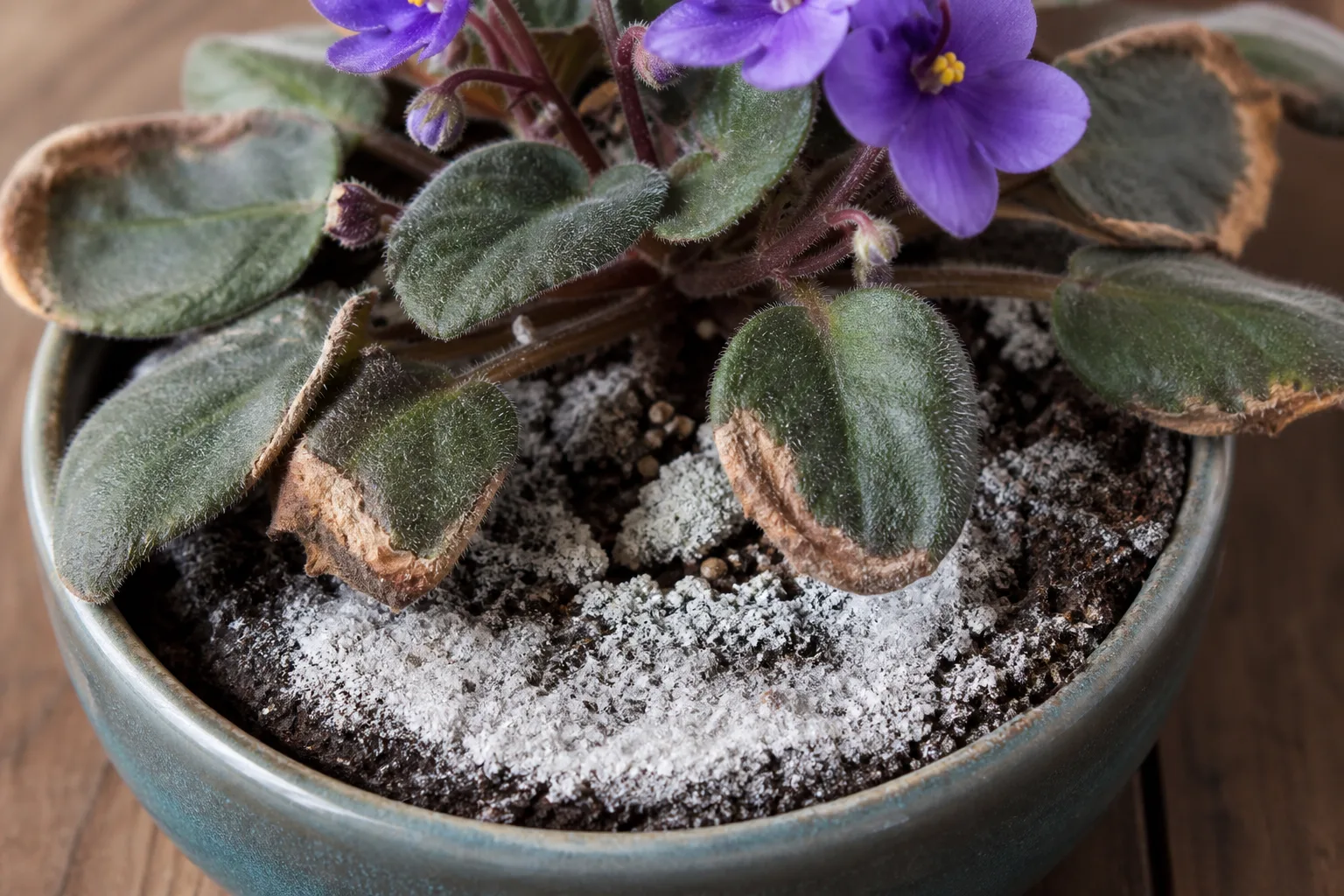
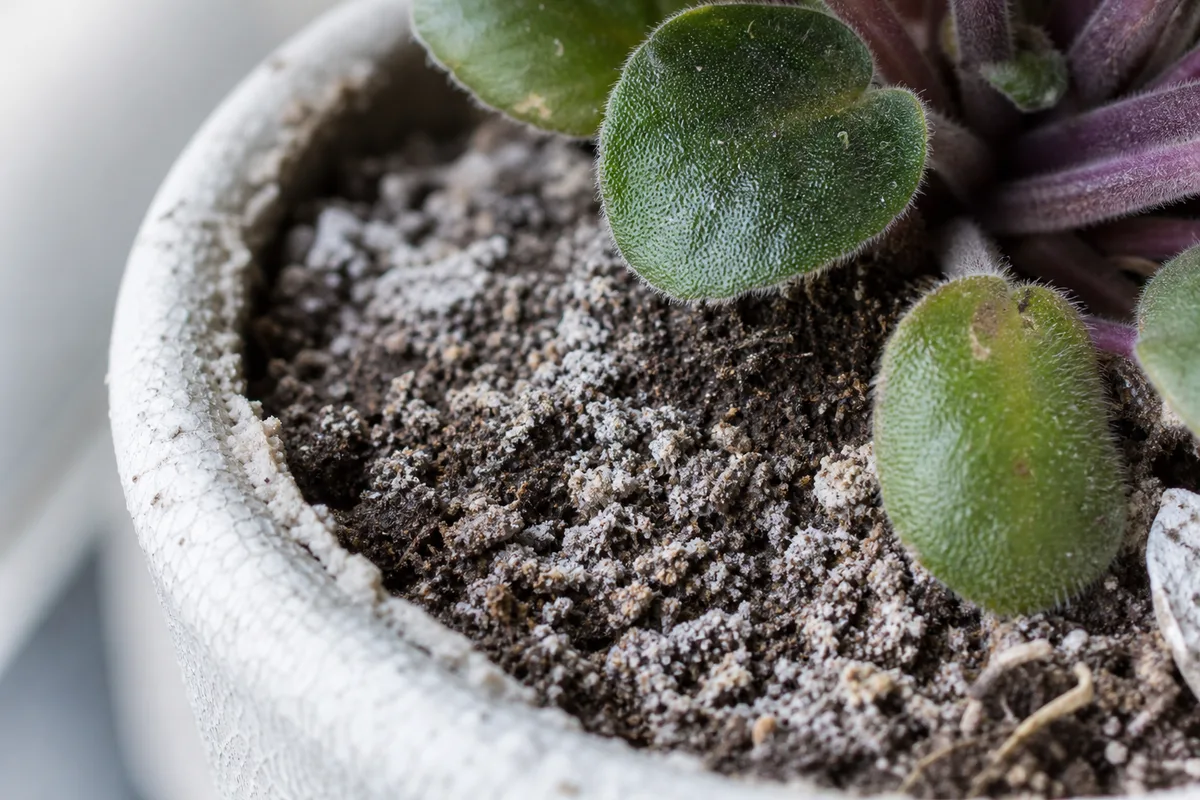
Hard water carries dissolved calcium and magnesium. In garden beds those minerals can leach downward. In a closed pot they stay behind as water evaporates, stacking with fertilizer salts until you see white crust on the rim or mix surface. RHS warns that watering with tap water in hard-water areas can lead to nutrient deficiencies and prefers room-temperature rainwater when possible.
Hardness is why “I already let it sit overnight” does not fix chalky pots. Resting does not remove calcium or magnesium. For crust, pale new growth in hard-water apartments, and plants that only improve after a water-source change, dig into the hard-water hub next and consider rainwater, RO blends, or distilled water for the sensitive shelf.
Fluoride Tip Burn and Sensitive Plants
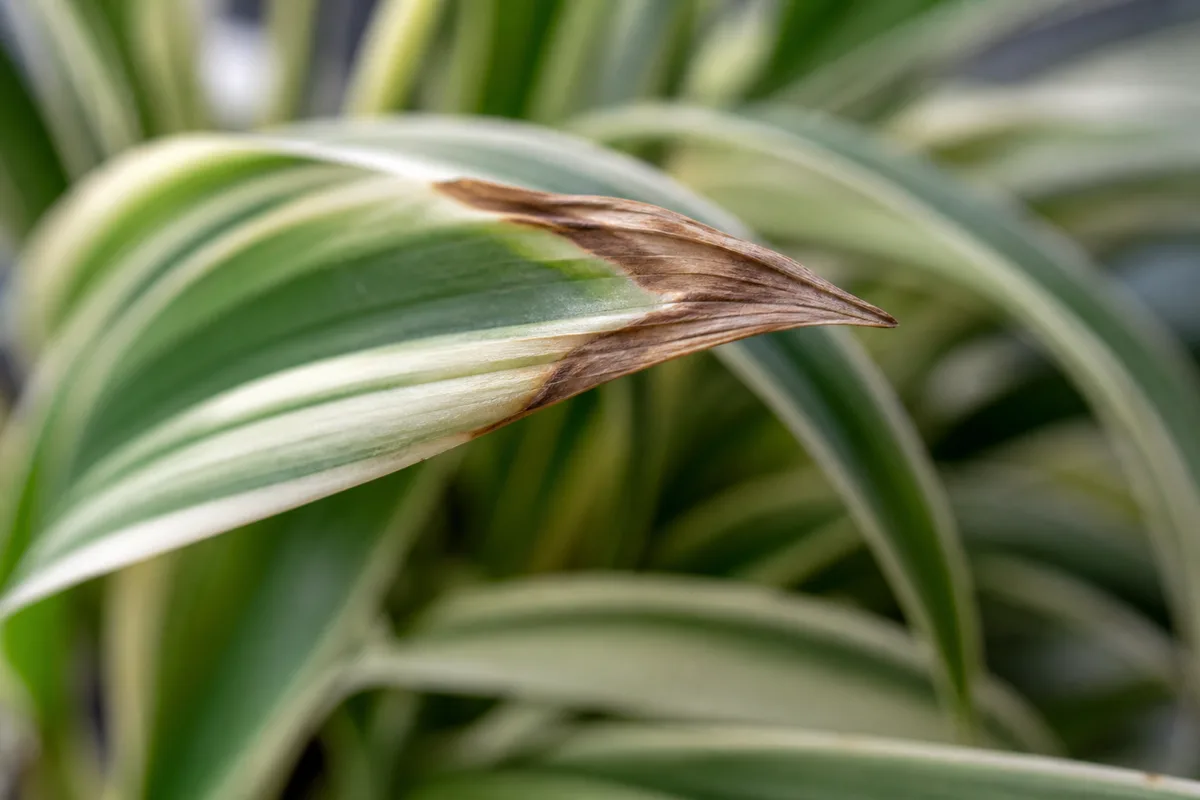
Municipal systems often add fluoride around 1 ppm for dental health. That level is safe for people and most plants, but some foliage species accumulate fluoride at leaf tips and margins until tissue browns. The Pacific Northwest Pest Management Handbooks list Dracaena, spider plant (Chlorophytum comosum), and Tahitian bridal veil among typical sensitive indoor plants, and note that fluoride is an accumulative foliar poison moved in the transpiration stream to leaf margins. Their fluorine toxicity overview adds that RO, condensation, or charcoal treatment can reduce the problem — but ordinary drinking pitchers are not a reliable fluoride prescription for a full shelf of reactors.
Sitting tap water overnight does not remove fluoride. Practical fixes for sensitive plants are rainwater, reverse osmosis, distilled water, or another method documented to reduce fluoride. Avoid high-fluoride fertilizer sources (some superphosphates) and chronically acidic, low-calcium mixes if tip burn persists even after a water change.
Classic complainers include spider plant, dracaena / corn plant, calathea, peace lily, maidenhair fern, and prayer plants such as maranta. Old browned tips will not green again; judge success on clean new leaves.
Softener Sodium — The Hard Ban
Ion-exchange softeners do not “purify” water for plants. Penn State Extension explains the process: resin trades sodium ions for calcium and magnesium, so the water feels soft for soap and skin but carries more sodium. In a container, that sodium is a salt load plants did not ask for.
Clemson HGIC is blunt: do not water plants with softened water because sodium and chloride are added to the mix and can damage plants. UConn makes the same point and recommends outdoor taps (often unsoftened), rain-gutter water, or bottled water for sensitive houseplants. PlantTalk Colorado lists softened water among salt sources that leave crust and tip burn.
The RHS allows softened water only as a short-term stopgap and advises against long-term use because sodium can build up and reduce nutrient availability. For houseplants in small pots, treat that as a ban: bypass the softener for plant water, or switch sources entirely. If tips burn and the mix stays moist after softener waterings, leach once and follow the salt/softener path in nutrient lockout.
How to Read a Basic Water Report
You do not need a lab coat. You need three fields and a softener check.
- Ask for the report. In many places this is a Consumer Confidence Report (CCR), utility water-quality summary, building society test, or borewell panel. Apartment managers sometimes have a recent tank or RO-reject note even when the city report is vague.
- Find disinfectant type. Look for free chlorine vs chloramine / combined chlorine / monochloramine. Chloramine means overnight resting is a weak strategy.
- Find fluoride and hardness. Fluoride near the common ~1 ppm municipal framing matters for spider plants and dracaenas. Hardness (often as mg/L CaCO₃) or a “hard / very hard” label matters for chalky rims. A home TDS meter estimates total dissolved solids — useful for before/after RO checks, not a pure hardness certificate.
- Trace the plant tap. Confirm whether the kitchen or bathroom spout you use for plants is after a softener. If yes, that line is disqualified for houseplants regardless of how soft the soap feels.
If the report is missing those rows, treat plant symptoms as your evidence: crust → hardness or fertilizer salts; progressive tip burn on fluoride reactors → source change; softener-fed tap → immediate bypass.
Tap Water for Houseplants
Tap is convenient, cheap, and fine for a large share of common houseplants when chemistry cooperates. The goal is not perfection. It is knowing when tap is enough and when it is the reason tips keep browning.
When Plain Tap Is Fine
Use rested, room-temperature tap for:
- Tough plants such as pothos, snake plant, ZZ plant, and many philodendrons that show no tip burn on your supply
- Homes with soft-to-moderately hard water and no softener on the plant tap
- Collections where you already water thoroughly to runoff and empty saucers, which Clemson emphasizes for washing excess salts
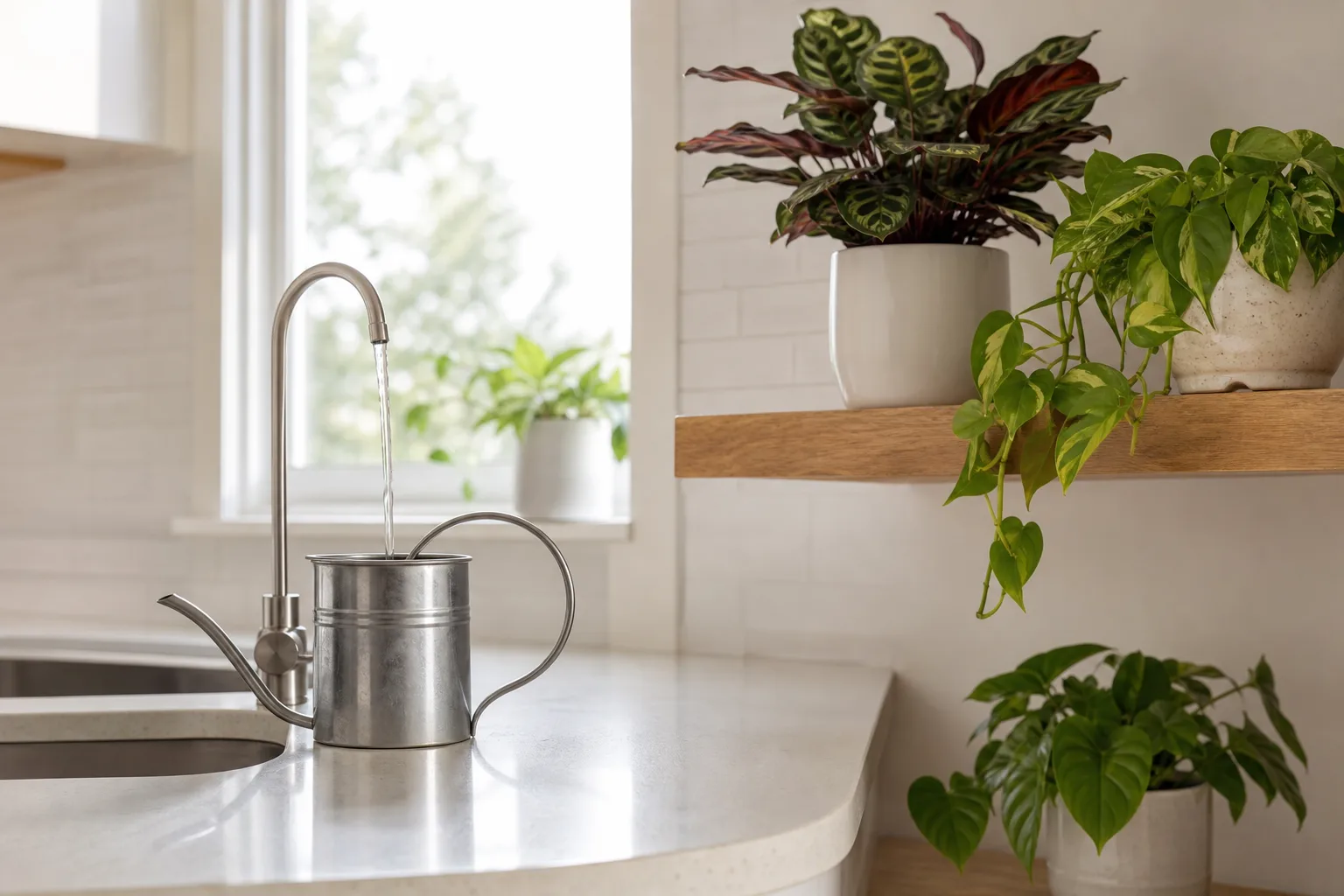
Keep water between about 62–72°F (16–22°C). Cold shock and hot water both stress roots. If your only kitchen tap is after a softener, do not “make do” — find an unsoftened line or change source. University of Minnesota Extension’s houseplant care guidance likewise treats water quality as part of routine indoor care, not an exotic afterthought.
When Resting Overnight Helps — and When It Does Not
Fill the can, leave it uncovered at room temperature for about 24 hours, then water. That habit mainly:
- Lets free chlorine off-gas
- Brings cold tap up to a root-friendly temperature
- Makes it easier to water on a consistent routine
Resting does not remove hardness minerals, fluoride, softener sodium, or reliably remove chloramine. If your problem is white crust, progressive tip burn on fluoride-sensitive species, or a softener-fed tap, overnight waiting is theater. Change the source.
Filtered Water: Pitcher, Carbon, and RO Are Not the Same
“Filtered” is a marketing word, not a plant prescription. Match the filter to the contaminant.
Activated carbon / pitcher filters often improve taste and reduce free chlorine and some organic compounds. They are a reasonable step when chlorine smell bothers you or mild disinfectant stress is the only issue. They usually leave hardness and fluoride largely intact, so chalky rims and fluoride tip burn often continue.
Chloramine-rated carbon (often catalytic carbon) is the next step up when your report lists chloramine and you want filtered tap rather than RO. Confirm the cartridge claims chloramine reduction — do not assume a grocery-store pitcher cartridge does.
Reverse osmosis and distillation remove the vast majority of dissolved solids, including hardness and fluoride. That is why they help calatheas, spider plants, dracaenas, orchids, and carnivorous plants when tap chemistry is harsh. Pure RO or distilled water also removes useful calcium and magnesium, so feed with a complete fertilizer at modest strength during active growth, or blend a little filtered tap back in. The dedicated RO water for indoor plants guide covers blending and remineralization in more depth. The RHS notes that purified water lacks minerals and needs fertilizer to meet plant nutrient needs.
“Softener filters” are not plant filters. Softening is ion exchange for comfort water, not purification. Do not confuse a kitchen softener with an RO under-sink unit.
Filter or otherwise upgrade water when any of these are true:
- Sensitive plants show progressive tip burn and humidity/watering are already dialed in
- Hard-water crust returns quickly even on light fertilizer schedules
- Your plant tap is on a softener line (then filter/RO/rain/bottled — never softener water)
- You grow carnivorous plants, many orchids, or a large fluoride-sensitive shelf
- Your utility uses chloramine and resting tap has not helped
If only one or two plants complain, it is often cheaper to buy distilled water by the gallon for that shelf than to filter the whole apartment. If half the collection shows mineral stress, rainwater storage or RO makes more sense.
Rainwater for Houseplants
Rainwater is the source most extension and horticulture guides prefer when quality matters. It is typically low in dissolved minerals, free of municipal fluoride and softener sodium, and closer to what many tropical understory plants “expect” than hard city tap.
Clemson lists rainwater among the steps that decrease salt buildup and tip injury. RHS calls rainwater the best option for garden watering and explicitly recommends it for houseplants, especially orchids and carnivorous plants. UConn suggests rain-gutter water as an alternative when softener chemistry is a problem.
Collection, Storage, and Safety Caveats
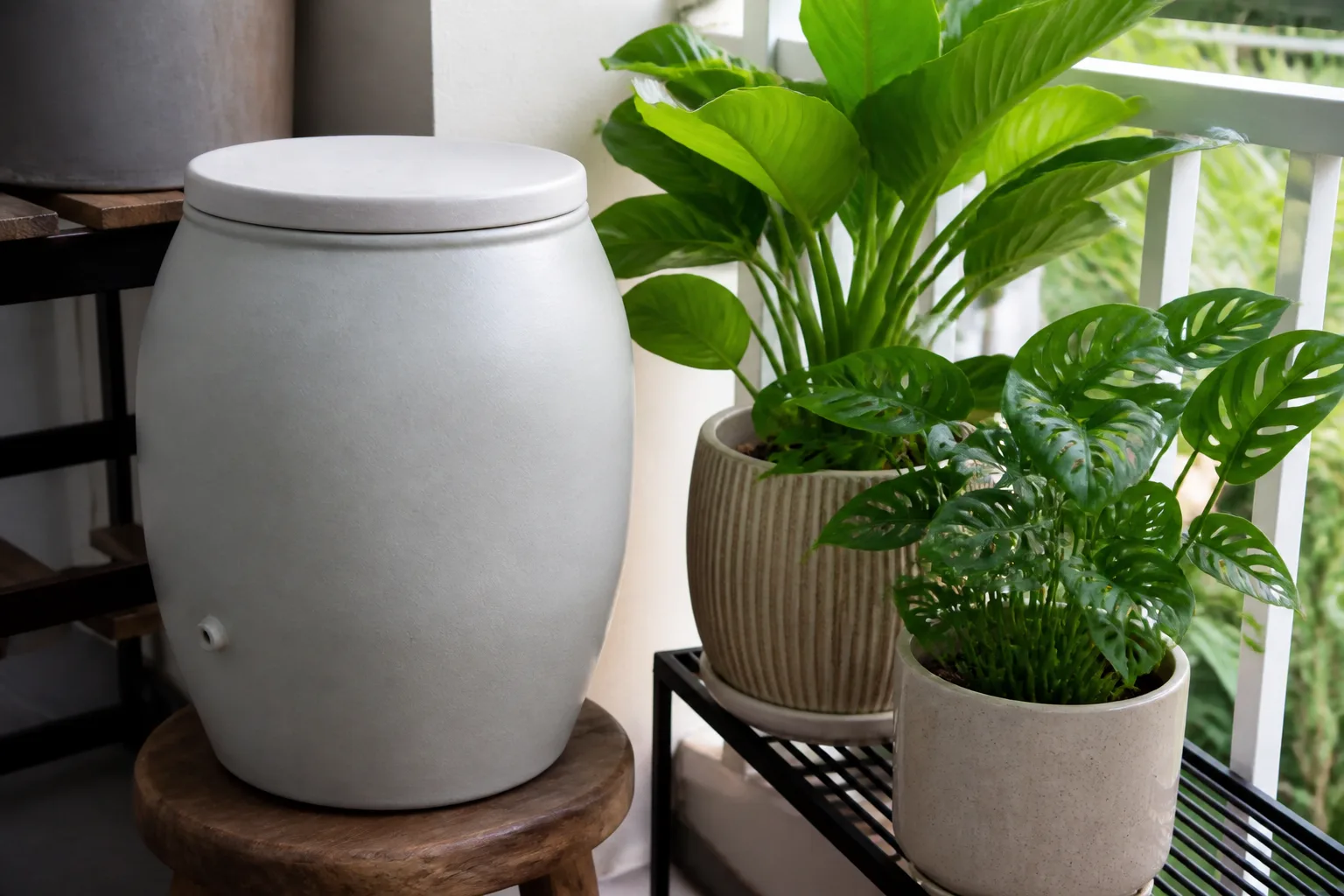
- Collect from a relatively clean roof surface into a covered barrel or jug; first-flush diversions help when roofs are dusty
- Keep storage opaque or shaded with a close-fitting lid to limit algae and rain-borne disease spores — the RHS is explicit about lids and annual cleaning
- Bring rainwater to room temperature before watering indoor plants
- Use it preferentially on the sensitive shelf: calatheas, ferns, peace lilies, spider plants, dracaenas, orchids
- In dry seasons, stretch supply by blending rainwater with rested tap for tolerant plants and saving pure rain for the complainers
- Elevate dirty-gutter and chemically treated roof risk early: keep gutters clear; do not harvest from roofs with harmful coatings or heavy bird contamination without settling/filtering judgment
Even a small catchment adds up. The point for houseplants is quality more than volume — a few watering cans of clean rainwater can cover a fluoride-sensitive shelf for weeks.
Rainwater is not sterile. The RHS advises against using stored rainwater on seedlings because it may carry damping-off pathogens, and notes that dirty gutters and tanks raise disease risk. For established houseplants this is rarely a deal-breaker, but scrub barrels, keep lids on, and reserve clean municipal or bottled water for seed trays.
Legal and practical notes vary by region. Collecting roof runoff for plants is widely encouraged in many places; check local rules if you install large cisterns. Never assume balcony runoff caught from polluted street spray equals clean roof water.
If rain is scarce for months, a rainwater-first strategy still works as a hybrid: rain when available, RO or distilled for sensitive plants, rested unsoftened tap for tough plants.
Decision Table: Choose by Symptom and Plant Type
| Situation | Best first source | Avoid | Next guide |
|---|---|---|---|
| Tough plants, no tip burn, soft–moderate tap | Rested tap | Softener line | — |
| Chlorine smell / mild disinfectant stress | Rested tap or carbon filter | Panic-buying RO | — |
| Chloramine on the water report | Rain, RO, or chloramine-rated carbon | Overnight rest as only fix | — |
| Chalky rims, hard-water crust | Rainwater, RO blend, distilled | Softener; “overnight” as only fix | Hard-water guide |
| Tip burn on spider plant, dracaena, calathea | Rainwater, RO, distilled | Pitcher-only if fluoride is the issue | Brown-tips guide |
| Softener-fed kitchen tap | Outdoor unsoftened tap, rain, bottled, RO | Softened water always | Nutrient lockout / salts |
| Carnivorous plants / many orchids | Rainwater, RO, distilled | Hard tap, softener | RO water guide |
| Whole shelf pale after pure RO, no feed | RO + light fertilizer or blend | Pure RO forever with zero nutrients | Fertilizer guide |
Use the table as a triage tool, not a personality test. One home can run two watering cans: rested tap for the resilient shelf, rain or RO for the sensitive shelf.
Common Mistakes That Waste Good Water
Treating softener water as “better for plants.” Soft for laundry is not soft for roots. Sodium is the hazard.
Assuming overnight resting fixes everything. It helps free chlorine and temperature. It does not fix hardness, fluoride, chloramine, or sodium.
Buying a pitcher filter for fluoride tip burn. Wrong tool. Use rain, RO, distilled, or a system documented to reduce fluoride.
Bottom-watering forever with hard or softener water. Subirrigation can concentrate salts at the surface; PlantTalk recommends periodic top watering to leach. Pair better water with occasional flush-to-runoff, and see top watering vs bottom watering when method choice is part of the salt story.
Switching to pure RO and never fertilizing. Tip burn may stop while new growth goes thin and pale. Remineralize through fertilizer or blending.
Judging success by old leaves. Brown tips stay brown. Watch the next two leaves.
Forgetting the softener bypass. A “plant tap” that still runs through the softener after you “switched” sources will undo every other good habit.
First-Hand Notes From Our Shelves
These are single-setup LeafyPixels observations, not city averages or brand endorsements.
Softener-line near-miss (Bengaluru apartment, February 2026): The kitchen drinking tap sat after a whole-house softener. A quick soap-lather check felt “nice,” which is exactly the trap. We confirmed the outdoor wash-area tap was unsoftened, then moved all plant watering to that line plus stored rain. Within one flush cycle, white rim crust on a peace lily stopped rebuilding as fast; new leaves still needed rain/RO for clean margins. Softener water was never “gentle” — it was sodium delivery.
Pitcher bought for fluoride (March 2026): A Brita-style carbon pitcher dropped the chlorine smell and made tea taste better. A TDS meter on pitcher output barely moved versus tank water (~850–900 ppm both). Spider plant tip burn continued on new leaves for four weeks. After switching that plant to rested RO blend (~120–150 ppm) plus a light complete fertilizer, the next two leaves opened with intact tips. Old brown tips stayed brown. Lesson: taste improvement ≠ fluoride or hardness removal.
Rain storage algae note (monsoon catch, June–July 2026): A translucent jug on a bright balcony grew green film in under two weeks. Opaque covered barrels stayed clearer. We dumped the algae jug, scrubbed, and moved storage to shade with a tight lid. Established calathea and maranta were fine on the clean rain; we kept seed trays on municipal/bottled water per the RHS seedling caution.
RO without fertilizer pale growth (April 2026): A small RO jug shelf looked perfect for two weeks, then new calathea leaves came in thin and pale. Adding a dilute complete fertilizer at the next watering (and blending ~20% rested unsoftened tap) restored color on subsequent growth. Pure RO fixed tip burn and then created a second problem.
Small-Shelf Cost Reality: Distilled vs RO vs Rain
For two to six sensitive plants, distilled water by the gallon is often cheaper than installing RO “for the plants alone,” especially if you already have rested unsoftened tap for tough plants. RO makes sense when you already drink RO, share a unit with the kitchen, or water a large fluoride-sensitive shelf weekly. Rainwater wins on cost when you can collect cleanly — the limiting factor is storage hygiene and dry-season gaps, not chemistry.
Rough decision:
- 1–3 complainers → distilled jugs or rain cans
- Half the collection + hard/fluoridated tap → rain storage and/or RO blend
- Softener on every indoor tap → fix the bypass first; then choose rain/RO/bottled
Related Guides
- Hard water for houseplants — crust, hardness testing, and safer options when minerals dominate
- RO water for indoor plants — blending, remineralizing, and when pure RO needs fertilizer
- Brown tips on houseplants — tip triage across humidity, salts, fluoride, and watering
- How to water indoor plants — moisture checks and thorough watering that make any source work better
Conclusion
Pick one shelf change this week — not a perfect whole-home system.
- Confirm the plant tap is not on a softener. Bypass or switch sources if it is.
- Skim your water report for chloramine, fluoride, and hardness (or use crust + tip-burn patterns as evidence).
- Match the source: rested unsoftened tap for tough plants; carbon only for chlorine-type issues; rain, RO, or distilled for hardness/fluoride reactors.
- If crust is present, leach once to runoff and empty the saucer.
- Judge success on the next two new leaves, not the tips that already burned.
Rested unsoftened tap is enough for many tough plants. Filter only when the filter removes the problem you actually have. Prefer rainwater for sensitive tropicals, orchids, and carnivorous plants when you can store it cleanly. Keep softened water off every pot.