Is Distilled Water Necessary for Houseplants?
Distilled water is not required for most houseplants. See when to use it, how it compares with tap and rainwater, and how to avoid nutrient gaps.
The short answer: most houseplants do not need distilled water
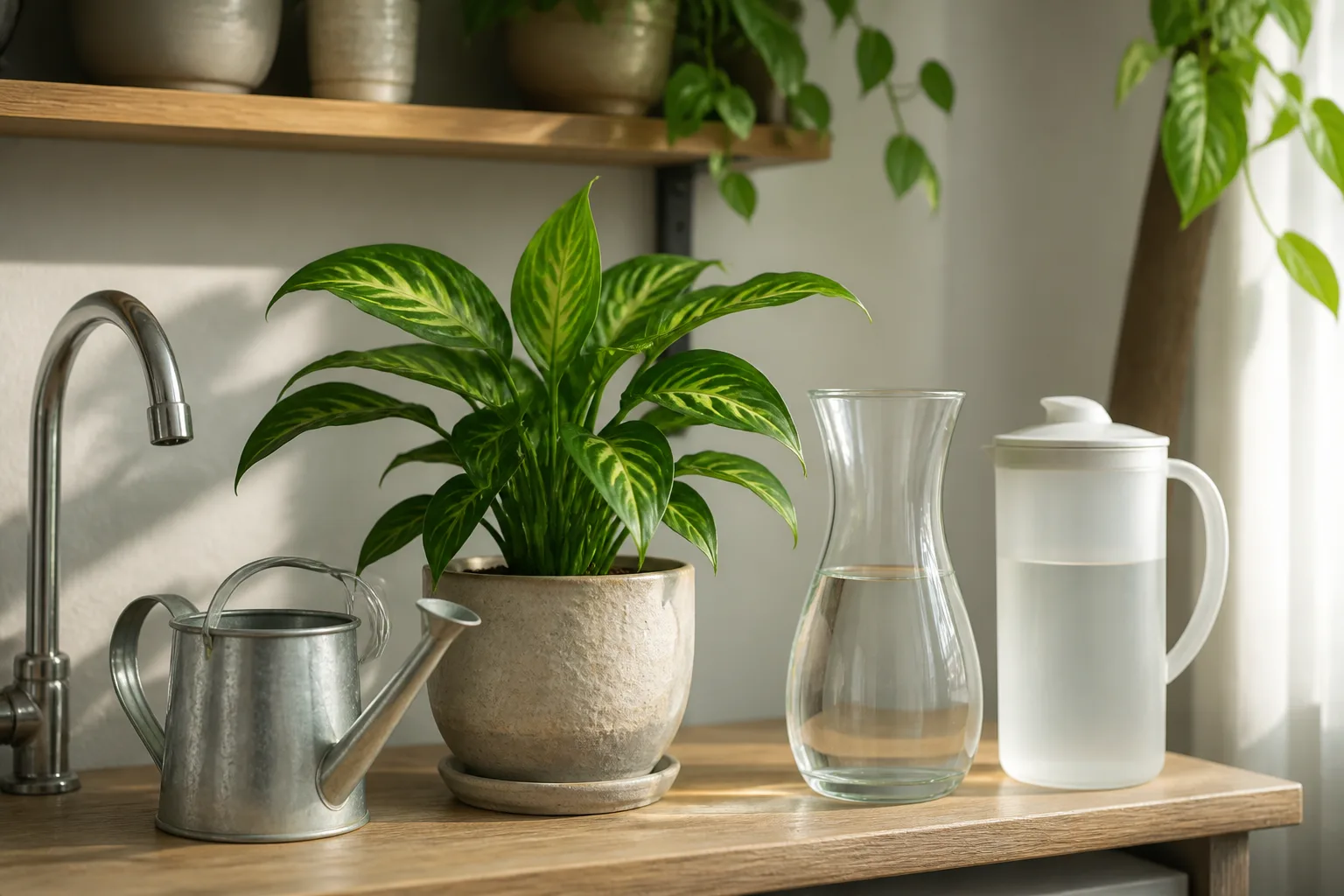
No. Most common houseplants can grow well with ordinary, unsoftened tap water if it is safe municipal water and the plant shows no recurring water-related symptoms. You do not need to buy jugs of distilled water for a healthy pothos, monstera, philodendron, snake plant, or similar foliage plant just because distilled water contains fewer minerals. Better Homes & Gardens likewise treats tap water as suitable for most indoor plants, with softened water as an important exception.
Distilled water becomes useful when you have a specific reason: you grow a plant that is unusually sensitive to dissolved minerals, your supply is very hard or strongly alkaline and leaves deposits over time, or the water passes through a sodium-based softener. Carnivorous plants are the clearest group that need very low-mineral water. For other plants, distilled water is an option, not a universal upgrade.
If a plant is thriving, its new leaves are clean, and the potting mix is not crusting over, keep using the water that already works. If you are seeing brown tips, white deposits, or stalled growth, do not diagnose the water from one symptom. First separate water quality from humidity, watering frequency, fertilizer salts, root trouble, and the potting mix. This guide helps you make that call without turning a simple routine into a costly water-treatment project.
What distillation changes in water
Distillation heats water until it becomes vapor, then cools that vapor back into liquid. Most nonvolatile dissolved minerals and salts remain behind during that process, so distilled water contains very little dissolved mineral matter compared with many tap-water supplies. That makes it useful when a plant or growing medium is sensitive to mineral accumulation.
The Royal Horticultural Society describes purified water, including distilled and deionized water, as having almost no dissolved minerals. It treats that water as helpful for some plants that need very soft water when rainwater is unavailable, not as a requirement for every houseplant. Distillation also does not repair bad drainage, reverse root rot, correct a plant’s light level, or compensate for an unsuitable potting mix.
Distilled water and reverse-osmosis water are both low-mineral choices, but they are produced differently. Distillation separates water from many dissolved substances by evaporation and condensation; reverse osmosis pushes water through a membrane that reduces many dissolved substances. A well-maintained RO system can be a convenient source for a plant shelf, while bottled distilled water may be simpler if you only have one or two sensitive plants. Neither process is the same as putting tap water through any filter labeled “filtered.”
Dissolved minerals are not the same as plant food
Distilled water is not a fertilizer, and tap water is not a complete fertilizer. Plants need mineral nutrients such as nitrogen, phosphorus, potassium, calcium, magnesium, and trace elements, but water from a household tap does not provide those in a consistent, balanced amount. Most indoor plants get the nutrients they need from an appropriate potting medium and a suitable fertilizer used according to its label.
That distinction matters because “distilled water has no minerals” can sound as if it will starve a plant. It will not automatically do that. If you use distilled or RO water for a plant that is normally fertilized, keep following the plant’s usual feeding plan during active growth; do not compensate by adding extra fertilizer to every watering. Mineral-free water may make the fertilizer’s contribution more important, but overfeeding can create soluble-salt buildup and burnt tips too.
Carnivorous plants are a special case. Their low-nutrient growing conditions are part of their normal care, and feeding them regular houseplant fertilizer can harm them. For those plants, use the low-mineral water and specialized growing medium their species needs rather than treating them like a pothos that happens to live in a bog.
Which houseplants benefit from low-mineral water?
Low-mineral water is most useful when a plant’s biology or the actual water supply gives you a clear reason to use it. It is easy to overgeneralize from a brown leaf tip or a white ring on a pot, but those signs do not mean every plant in the home needs distilled water. Think in two groups: plants that need consistently low-mineral conditions and foliage plants that may react to a particular contaminant such as fluoride.
Carnivorous plants are the clearest exception
Venus flytraps, sundews, pitcher plants, and many other carnivorous plants evolved in wet, nutrient-poor habitats. They generally need rainwater, distilled water, or suitably low-mineral RO water because the dissolved compounds in tap water can accumulate in their specialized growing medium. The RHS’s carnivorous-plant guidance says these plants prefer rainwater and warns against tap water, particularly in hard-water areas.
Do not fertilize carnivorous plants with ordinary houseplant fertilizer just because you switched to distilled water. Their potting medium, water level, light, and winter dormancy requirements vary by species, so follow a species-specific care source. If you cannot collect clean rainwater, a reliable distilled or RO source is a practical substitute; the point is to avoid adding mineral-rich water repeatedly to a small, low-nutrient root zone.
Some foliage plants are fluoride-sensitive
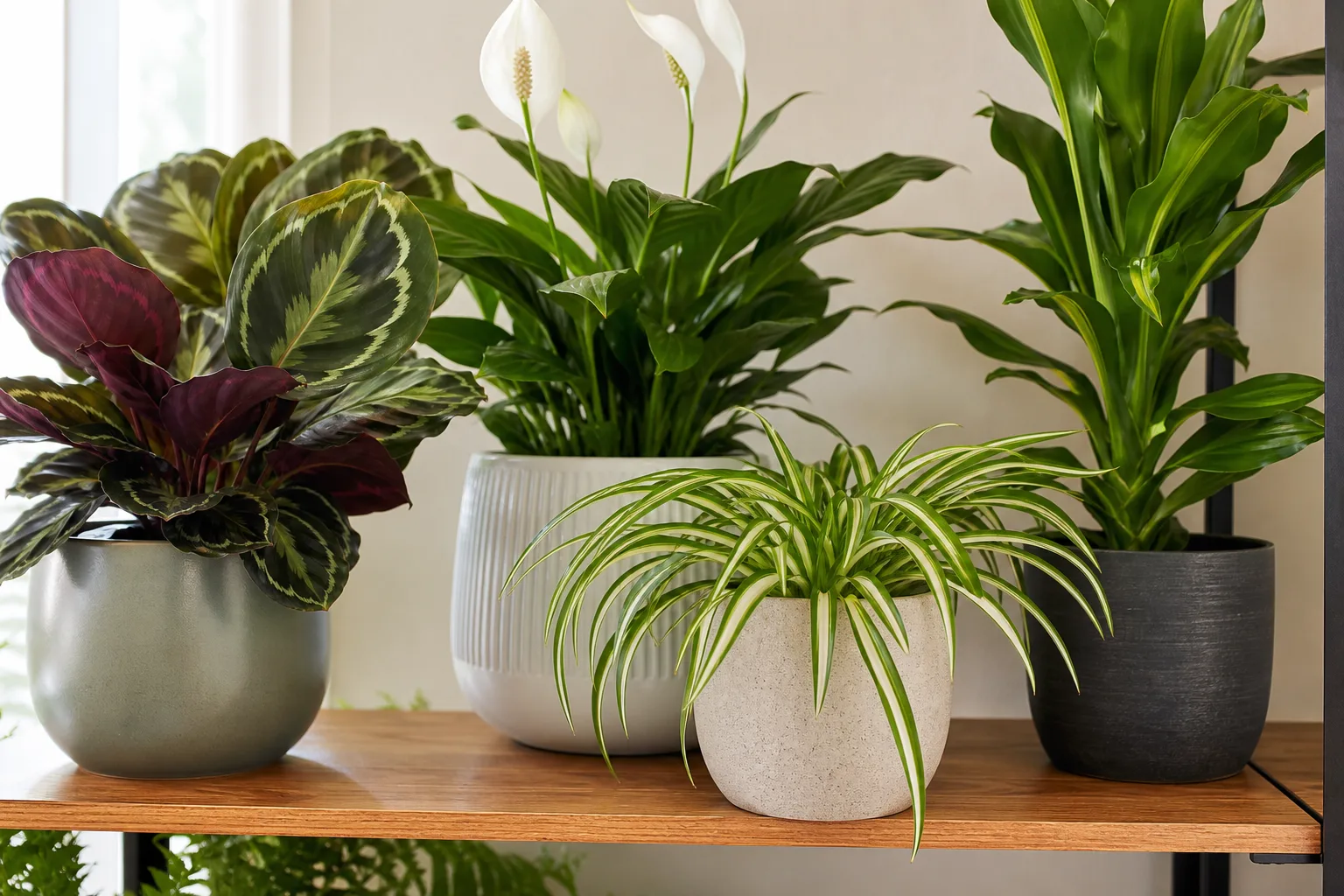
Some houseplants can accumulate fluoride in leaf tips and margins. The Pacific Northwest Pest Management Handbooks identify Dracaena and spider plants as typical sensitive indoor foliage plants; the same source explains that fluoride can move through the plant and build up in leaf margins. Clemson Cooperative Extension also notes that some houseplants are sensitive to fluoride or chlorine in tap water.
That does not mean every Dracaena or spider plant will be damaged by every tap supply. The amount of fluoride and other dissolved material varies by location, and plant response varies with species, growing medium, root condition, and time. If a known sensitive plant develops progressive brown tips while the rest of its care is stable, changing to rainwater, distilled water, or RO water is a reasonable trial. Judge the change by future growth: the dead tissue will not turn green again.
Other tropical foliage plants are often described as “sensitive to tap water,” but the exact problem may be high alkalinity, fertilizer salts, sodium, or inconsistent watering rather than a universal need for distilled water. When guidance for a particular plant says to use rainwater or soft water, follow that species-specific recommendation. Otherwise, start with your water report and the plant’s pattern instead of switching your whole collection.
Tap water varies by home and utility
“Tap water” is not one fixed recipe. A municipal supply may contain disinfectants, fluoride, calcium, magnesium, bicarbonates, or other dissolved substances in amounts that vary by region. Well water can be quite different from city water, and a home softener changes the water again. The right choice therefore depends on both the plant and what comes out of the actual faucet you use.
Hardness, alkalinity, and fluoride are different issues
Hardness mainly describes dissolved calcium and magnesium. Those minerals are not inherently poison; plants use calcium and magnesium as nutrients. In a pot, however, water evaporates while minerals remain. Over many waterings, hard-water minerals can add to fertilizer salts and leave a chalky deposit on the pot rim or soil surface. The RHS notes that minerals in mains water can raise soil pH and affect nutrient availability, especially in hard-water areas.
Alkalinity is related to dissolved bicarbonates and the water’s ability to resist a change in pH. It is not interchangeable with hardness, even though the two may occur together. A pH strip or home pH reading can show the water’s current pH, but it does not tell you how much alkalinity, fluoride, sodium, or total dissolved material is present. A TDS meter estimates total dissolved solids; it cannot identify which specific ions make up that reading.
Fluoride is a separate question from hard water. A supply can have low hardness yet contain fluoride, or be hard without containing a concerning amount of fluoride. The PNW handbooks describe fluoride injury as accumulative and note that drought stress and salt toxicity can look similar. If your utility publishes a water-quality report, look for hardness, fluoride, and the disinfectant type rather than relying on a single “good” or “bad” label.
Sodium-softened water should stay out of houseplant pots
If a household water softener uses ion exchange, it trades calcium and magnesium ions for sodium. That may reduce scale on plumbing fixtures, but it does not make the water a better routine choice for plants in containers. Clemson Cooperative Extension advises against watering houseplants with softened water because the added sodium and chloride can damage plants; Penn State Extension explains the calcium-magnesium-to-sodium exchange behind a conventional softener.
Check which faucet supplies your plants. A softener may treat most indoor plumbing while an outdoor spigot bypasses it, but do not assume that without checking the installation. If the only tap you know is softened, use an unsoftened source, clean rainwater, distilled water, or RO water instead. Boiling softened water will not undo the sodium exchange, and leaving it out overnight will not remove sodium.
Choose a water source that fits the problem
Choose the least complicated source that addresses the issue you actually have. A practical ranking for many homes is: unsoftened tap water for plants that tolerate it; rainwater or a correctly matched filter when a specific tap-water component is a concern; and distilled or RO water for plants that need consistently low-mineral water. The goal is not to chase the theoretically purest water. It is to give the plant suitable water without adding unnecessary cost or making the feeding routine harder.
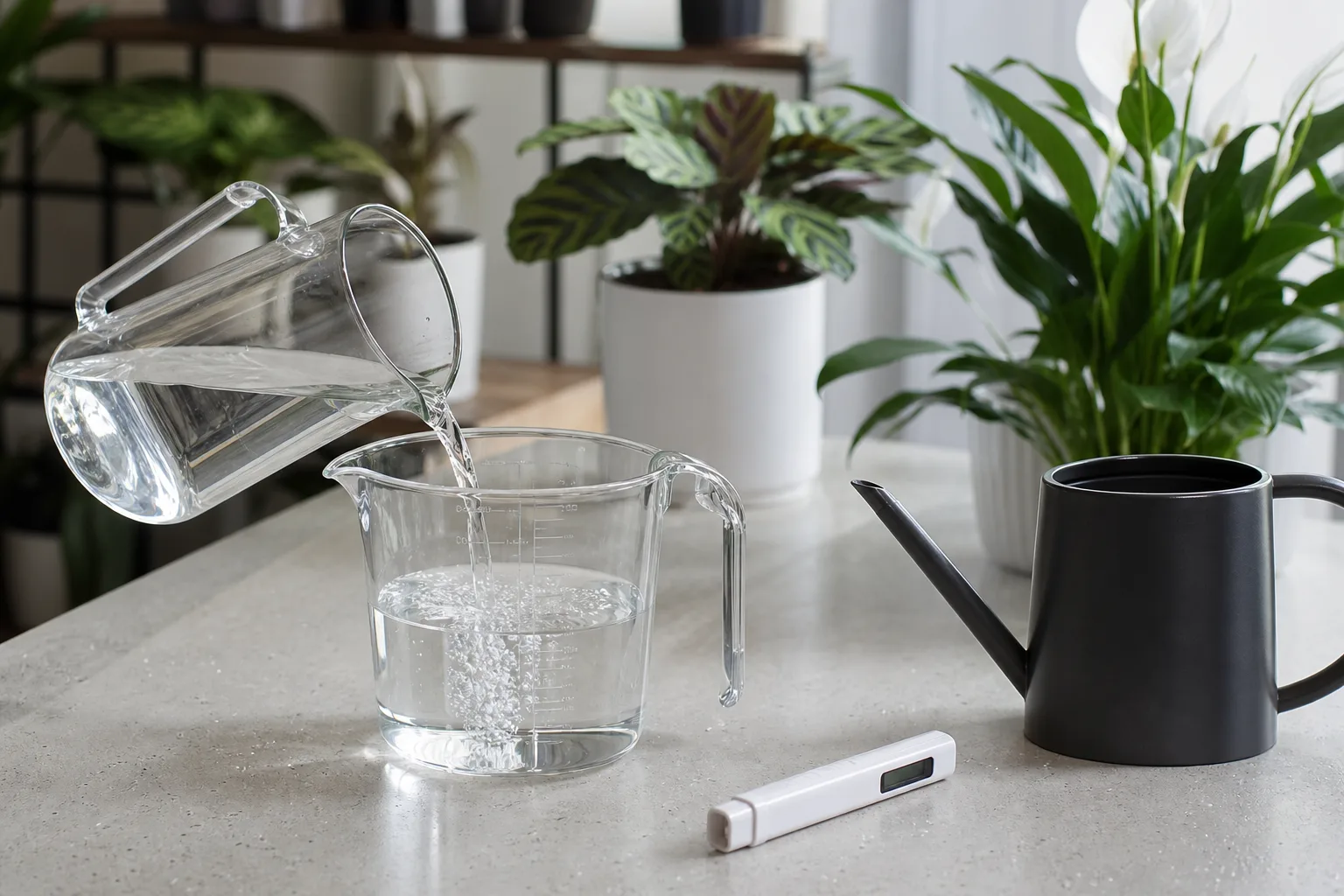
When ordinary or rested tap water is enough
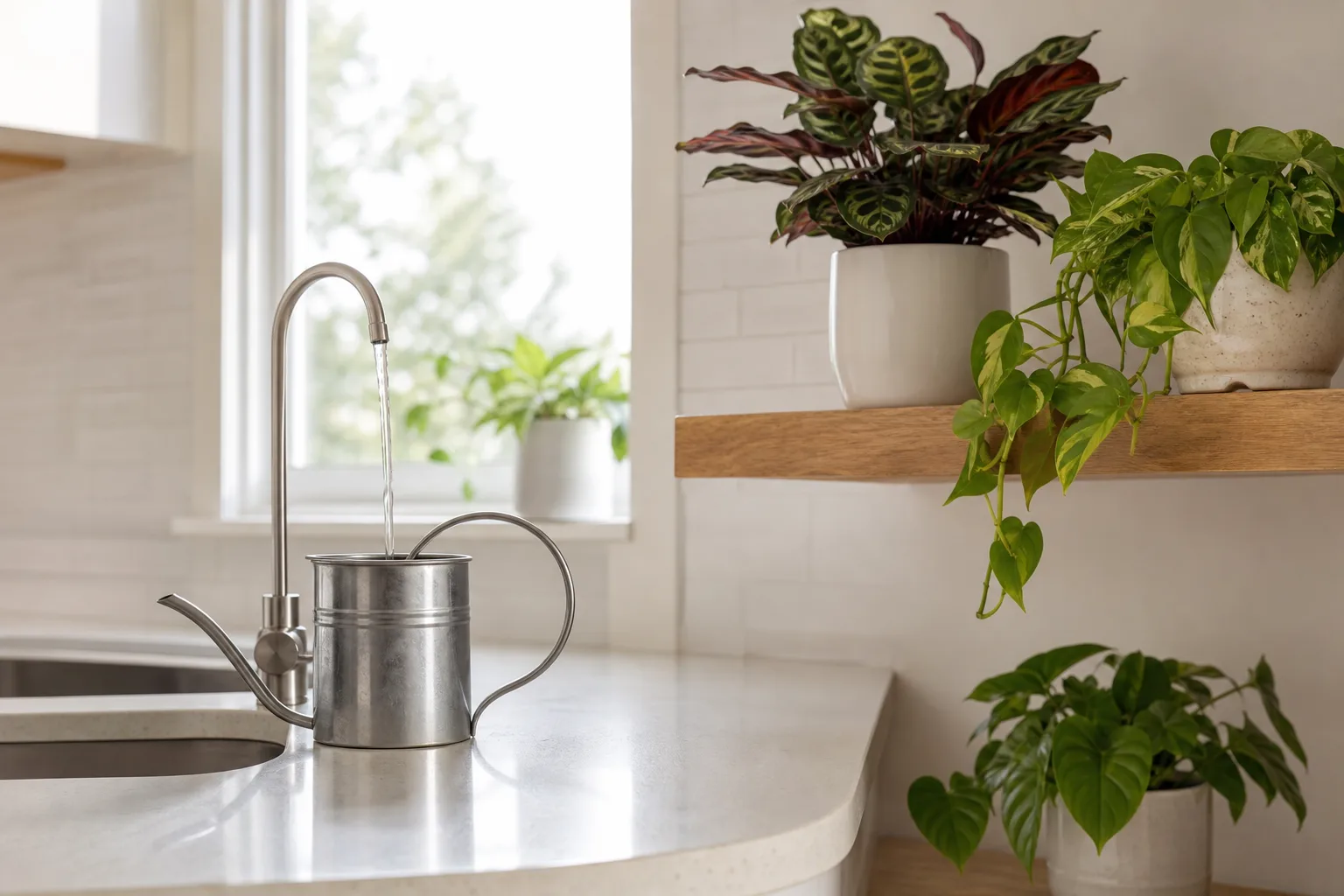
For many common houseplants, use tap water at room temperature and focus on watering well. Better Homes & Gardens recommends room-temperature water and a thorough soak until excess drains from the pot; it also notes that ordinary tap water suits most plants, while softened water can add salts over time. Clemson’s houseplant-disorders guidance similarly emphasizes watering thoroughly and emptying the saucer rather than letting the pot sit in runoff.
Letting a jug of tap water stand uncovered can help free chlorine dissipate and gives cold water time to warm up. Clemson Cooperative Extension suggests allowing water to stand at room temperature for 24 hours when some plants are sensitive to chlorine or fluoride. But resting water does not remove hardness minerals, fluoride, or sodium, and it is not a reliable way to remove chloramine. Check your utility report if the disinfectant matters; when the report lists chloramine, switch sources or use treatment specifically documented for it rather than waiting longer.
If your tap supply is ordinary and your plant has no recurring symptoms, you do not need to let every watering can stand overnight as a ritual. Avoid water that is very hot or cold, and keep your focus on soil moisture, drainage, and the needs of the species. When tap water works, it is usually the simplest and least wasteful option.
When rainwater, distilled water, or RO makes sense
Rainwater is a good low-mineral option when collected cleanly. It can be useful for carnivorous plants, orchids, and foliage plants that react to a particular municipal supply. The RHS recommends keeping collection equipment clean and using stored water while it remains fresh. For a small indoor collection, a clean lidded container is usually enough; do not use foul-smelling or debris-filled water.
Distilled water is practical when you need a dependable low-mineral source for just a few pots or cannot collect rainwater. RO water can be more convenient if you already have a maintained system, but performance depends on the membrane and its upkeep. If the water is for a carnivorous plant, use a source intended to be low-mineral rather than guessing from taste or appearance.
Do not assume dehumidifier or dryer condensate is automatically equivalent to distilled water. It may be low in dissolved minerals because it condensed from vapor, but its cleanliness depends on the appliance, collection tray, dust, and any residues in the system. It can be reasonable for some ornamental plants when fresh and clean, but choose a known source for sensitive carnivorous plants or valuable plants with strict water requirements.
There is also a cost and convenience tradeoff. Buying distilled water for a whole shelf can add up, and carrying, storing, and pouring many jugs is easy to abandon. In a 2026 expert roundup from Martha Stewart, houseplant-care experts discuss distilled water as one possible option when tap water is unsuitable while noting the extra storage and feeding considerations. Use it where it solves a real problem; do not feel obliged to replace adequate tap water everywhere.
Why “filtered” is not a precise promise
A filter is useful only if it reduces the substance you want to remove. “Filtered water” might mean an activated-carbon pitcher, a refrigerator cartridge, a faucet filter, or an RO system. Those products do not all remove the same things. A carbon filter can improve taste and reduce some disinfectants, but you should not assume that a generic pitcher removes fluoride or hardness unless its documentation says so.
Before buying a filter for plants, check the model’s contaminant-reduction claims and replacement schedule. If your issue is fluoride, look for a treatment that specifically reduces fluoride; if it is hardness minerals, ordinary carbon is not a water softener or RO membrane. When the only goal is to water one sensitive plant, a small supply of distilled water or clean rainwater may be cheaper and simpler than purchasing a new filtration system.
For more detail on how to match each treatment to chlorine, chloramine, hardness, fluoride, and softener sodium, see our tap, filtered, and rainwater guide. If mineral scale is the main problem, the hard-water guide for houseplants explains how to reduce accumulation without changing every part of your care routine.
Brown tips and white crust do not prove tap water is the cause
Brown tips are a symptom, not a diagnosis. Fluoride and salt accumulation can burn leaf tips or margins, but low humidity, dry potting mix, damaged roots, excess fertilizer, pests, or abrupt environmental changes can produce similar damage. Clemson Cooperative Extension lists several potential causes of brown tips and edges, including dry air, improper watering, insects, and salt accumulation. Switching to distilled water may help only if water chemistry is actually contributing.
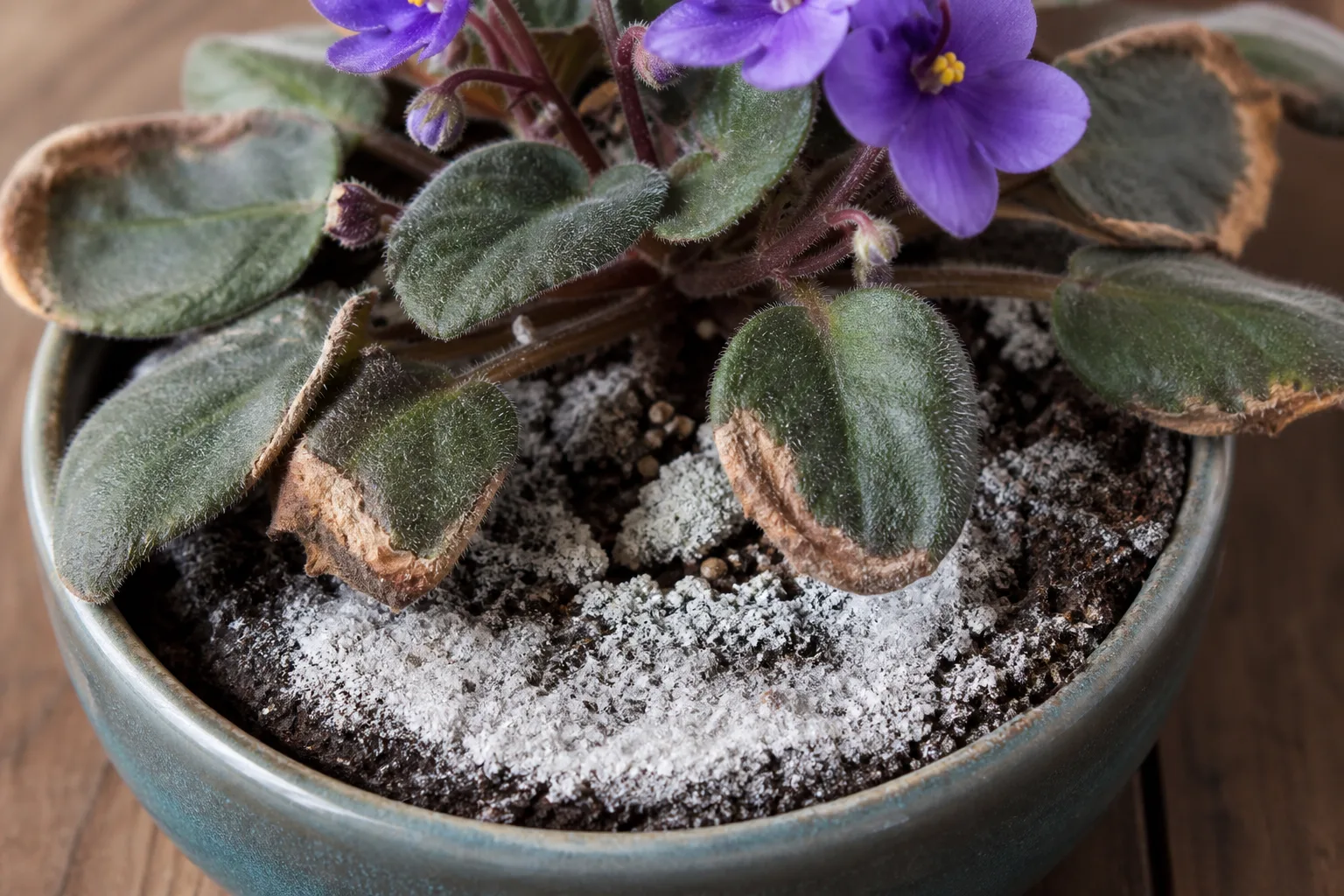
Look for a pattern. A thin, dry brown tip on one older leaf is weak evidence; repeated marginal burn on new leaves of a fluoride-sensitive plant is a stronger reason to investigate the supply. A white, chalky crust on the soil or pot rim points toward mineral or fertilizer residue, but it does not tell you which one by itself. Clemson notes that salts can leave white-to-gray crust and cautions against confusing it with fuzzy soil fungi.
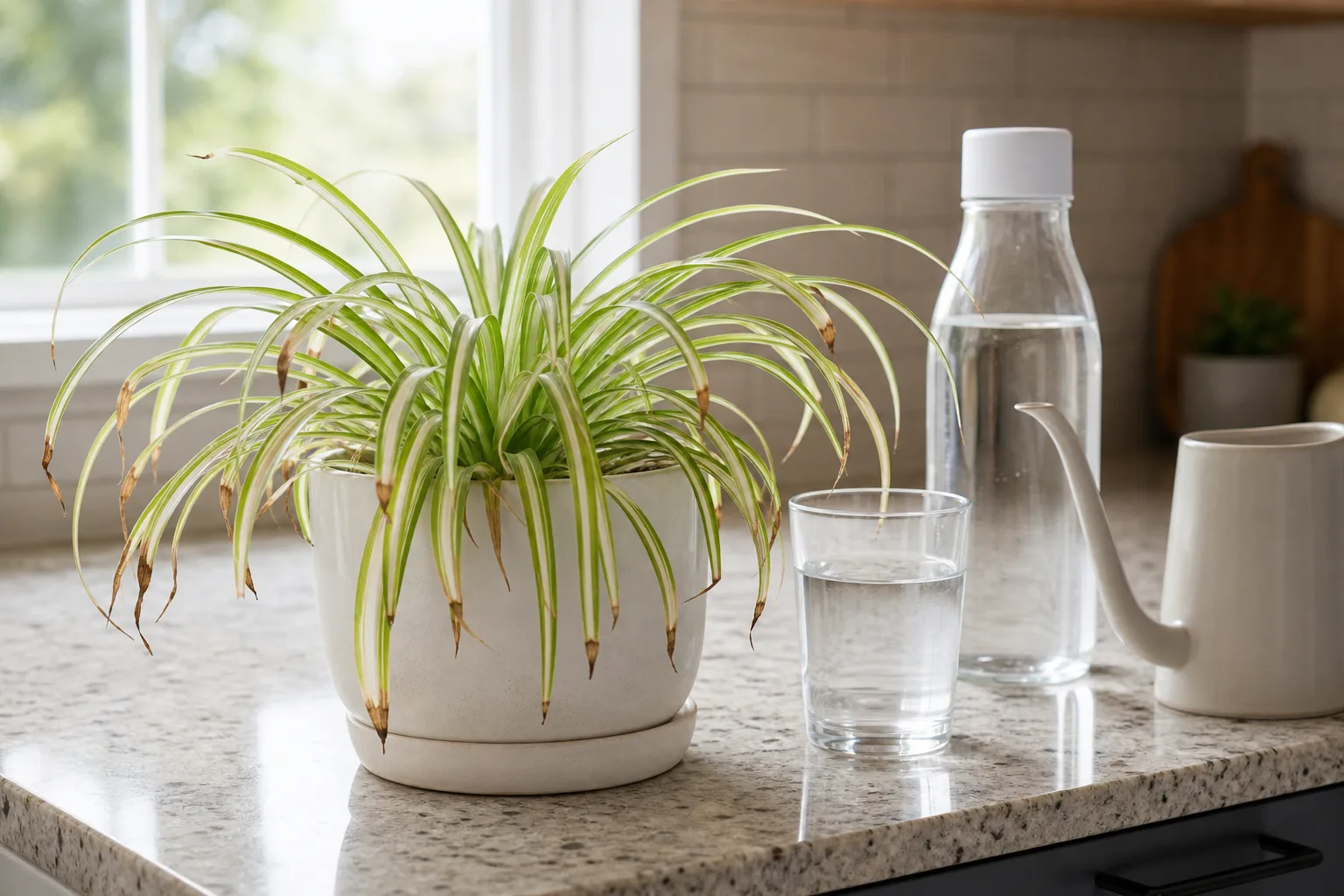
Use this short troubleshooting order before changing water:
- Check the whole care setup. Feel the mix below the surface, confirm the pot drains, and empty standing water. Consider whether the plant is too dry, staying wet too long, near a heater, or receiving more fertilizer than its label recommends.
- Look for a repeatable pattern. If several fluoride-sensitive plants on the same tap develop new tip burn, water quality becomes more plausible. If only one plant is affected, inspect its roots, soil, light, humidity, and recent changes first.
- Check your source. Look at the utility’s water report for fluoride, hardness, and chlorine or chloramine. Confirm whether the plant tap passes through a sodium softener.
- Run a controlled source change. For a plant that can tolerate it, use rainwater, distilled, or RO water for future waterings while leaving light, fertilizer, and watering timing steady. Compare the next leaves, not the old damaged ones.
If white residue has built up in a well-draining pot, occasional thorough watering that lets excess drain can wash some soluble salts from the mix. Empty the saucer afterward; do not leave the roots standing in runoff. Do not try to flush a pot without drainage, a plant already suffering from root rot, or a medium that stays saturated. If the crust and decline are severe, repotting into fresh, appropriate mix may be a better reset than repeated flushing.
If tips continue browning after you switch water, revisit humidity, root health, light, and fertilizer before buying another filter. Plant damage already present will remain visible until that leaf is replaced, so a fair test follows the condition of new growth. This is one reason “I changed the water yesterday and the brown tips are still there” does not prove the change failed.
How to use distilled water without creating a new problem
For an ordinary tropical or foliage houseplant, use distilled water at room temperature and water when the plant’s mix is ready, not on a fixed calendar. Apply enough to moisten the root zone and let excess drain from the pot. Empty the saucer. The water source does not change the plant’s normal need for an air-filled root zone between waterings.
Keep the fertilizer routine appropriate to the plant and season. The RHS notes that purified water contains almost no dissolved minerals, so fertilizer may be needed to meet the plant’s nutrient requirements. That means a normal, balanced feeding plan for the plant, not adding a stronger dose to every jug. If you have a salt-sensitive plant, follow the label conservatively and periodically refresh or leach the potting mix when its condition and drainage allow.
Do not apply that fertilizer advice to carnivorous plants. Their low-nutrient growing medium and water needs are different, and standard fertilizer can injure them. Orchids also vary in growing medium, feeding needs, and tolerance of dissolved minerals; a species-appropriate orchid fertilizer routine matters more than assuming every orchid needs distilled water.
You can change water sources gradually without changing your whole care system. If your plant has no urgent problem, use the new water on the next watering and observe its next growth. If you are testing a suspected source issue, keep other variables steady and record which pot received which water. That simple comparison is more informative than changing water, fertilizer, light, and humidity on the same weekend.
For plants that do not need low-mineral water, there is no special benefit to using distilled water every time. Water quality can influence mineral buildup, but watering frequency, pot drainage, root health, light, and fertilizer still determine whether the plant grows well. If your goal is to prevent brown tips, our houseplant water-quality guide covers when RO water is useful and when it adds cost without solving the actual problem.
Conclusion
Distilled water is not necessary for most houseplants. Use ordinary, unsoftened tap water for plants that tolerate your supply; save distilled, RO, or clean rainwater for carnivorous plants, genuinely sensitive foliage, or a confirmed water-quality issue. Do not use sodium-softened water in houseplant pots.
If a plant has brown tips or mineral crust, check the care routine and water report before switching the whole collection. When low-mineral water is warranted, keep it at room temperature, continue the plant’s appropriate fertilizer plan, and judge the result by new growth. The best water is the simplest safe source that suits that plant and your home.