10 Annuals You Can Grow as Houseplants This Winter
Discover 10 annuals that can live indoors this winter, with light, watering, pest-quarantine, pruning, and spring move-out advice for each type.
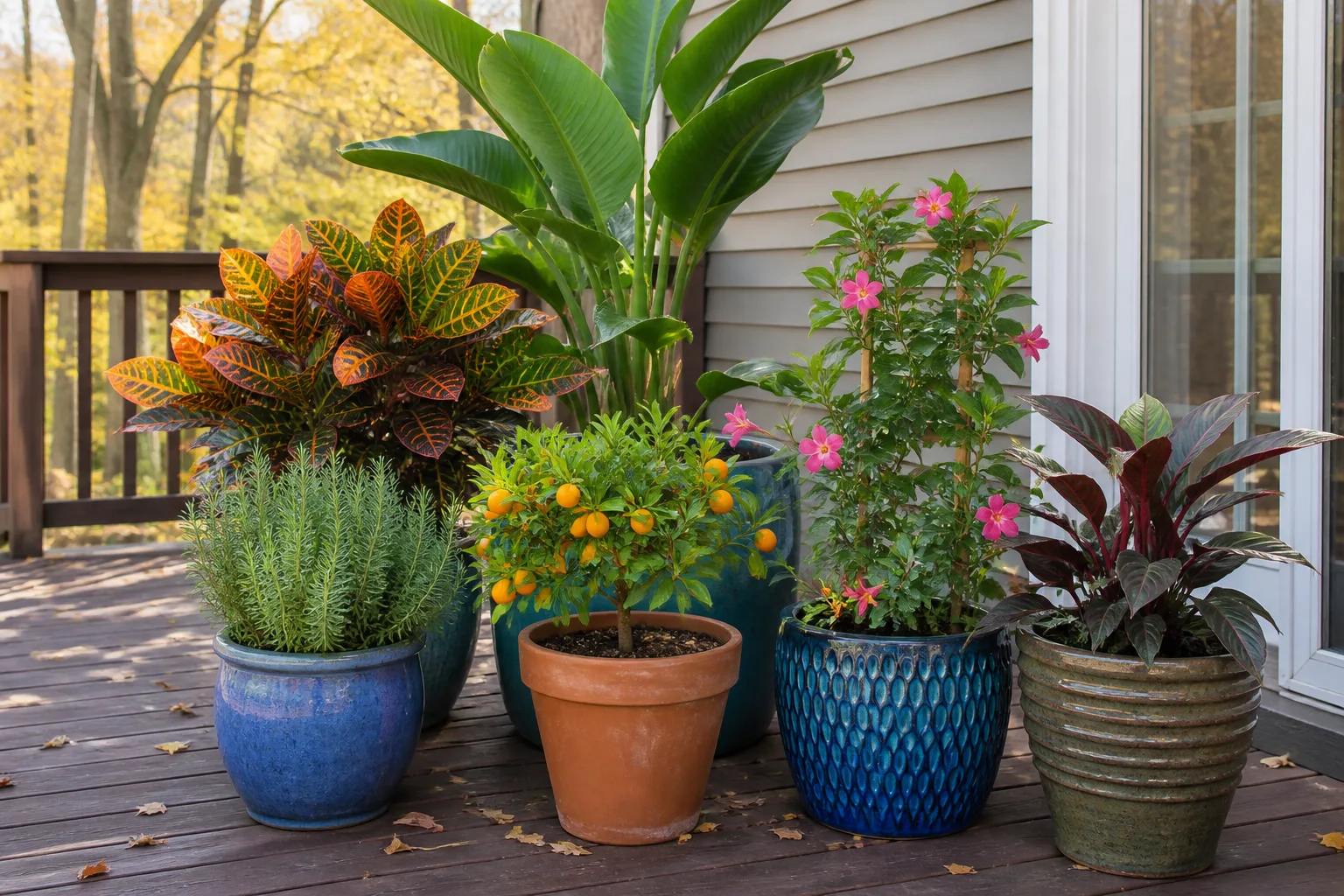
The best candidates for a winter windowsill are not always true annuals. Many plants sold as summer annuals are actually tender perennials that only die because frost arrives before they can complete another season. Move those plants indoors at the right time and you may keep the original plant, harvest fresh leaves, or root cuttings for a stronger spring display.
There is an important limit: an indoor room does not magically cancel a plant’s life cycle. A true annual that has already flowered, set seed, and begun to age may still finish its season indoors. The practical question is not “Can I keep every annual alive forever?” but “Which plants reward the space, light, and attention I can provide this winter?”
What makes an “annual” worth overwintering?
In horticultural terms, a true annual completes its life cycle—from germination to flowering, seed production, and death—in one growing season. The Royal Horticultural Society’s annuals guide also points out that annuals can be hardy, half-hardy, or tender; the label describes a life cycle, while frost tolerance describes whether the plant can survive your climate.
That distinction explains why garden geraniums, lantana, coleus, and croton can be treated as annuals in a cold region but persist as perennials in warmer ones. Basil, parsley, cilantro, chervil, and some flowering plants are also useful winter candidates because they can be grown in containers and harvested or enjoyed indoors for part of their natural season.
Overwintering works best when the plant is healthy, compact, and not already exhausted by a heavy seed crop. A vigorous coleus with fresh shoots is a better project than a sunburned petunia covered in spent flowers. If a plant has fungal spotting, severe pest pressure, or a collapsing crown, discard it or take only clean, healthy cuttings rather than moving the problem into your home.
Which winter strategy fits your home?
There are three ways to save a summer plant, and they suit different homes. Growing the whole plant as a houseplant gives you the fastest visual payoff and lets you continue harvesting herbs or enjoying foliage. Taking cuttings uses less space and gives you several young plants, but you trade immediate size for a rooting period. Cool dormancy or bare-root storage is the most space-efficient option for suitable plants such as pelargoniums, but the plant will look more like stored material than a houseplant.
Whole plant, cuttings, or cool dormancy
Choose the whole-plant method when you have a bright window, a grow-light shelf, and enough room to keep a container away from drafts. Choose cuttings when the mother plant is large, when you want insurance against winter losses, or when you have only a small propagation shelf. Choose dormancy only when you can keep the storage area frost-free, relatively dry, and easy to check.
The goal also changes the method. If you want winter flowers, keep petunias, geraniums, and lantana actively growing with strong light. If you mainly want spring stock, prune harder and allow the plant to rest. Garden Gate’s practical geranium method uses cool, dry storage and then pots plants up several weeks before the last average frost; NC State Extension describes pelargoniums as overwinterable in a cool greenhouse while kept very dry. Neither method is “the one correct way”—the right choice depends on whether you are maintaining a display or preserving a plant for spring.
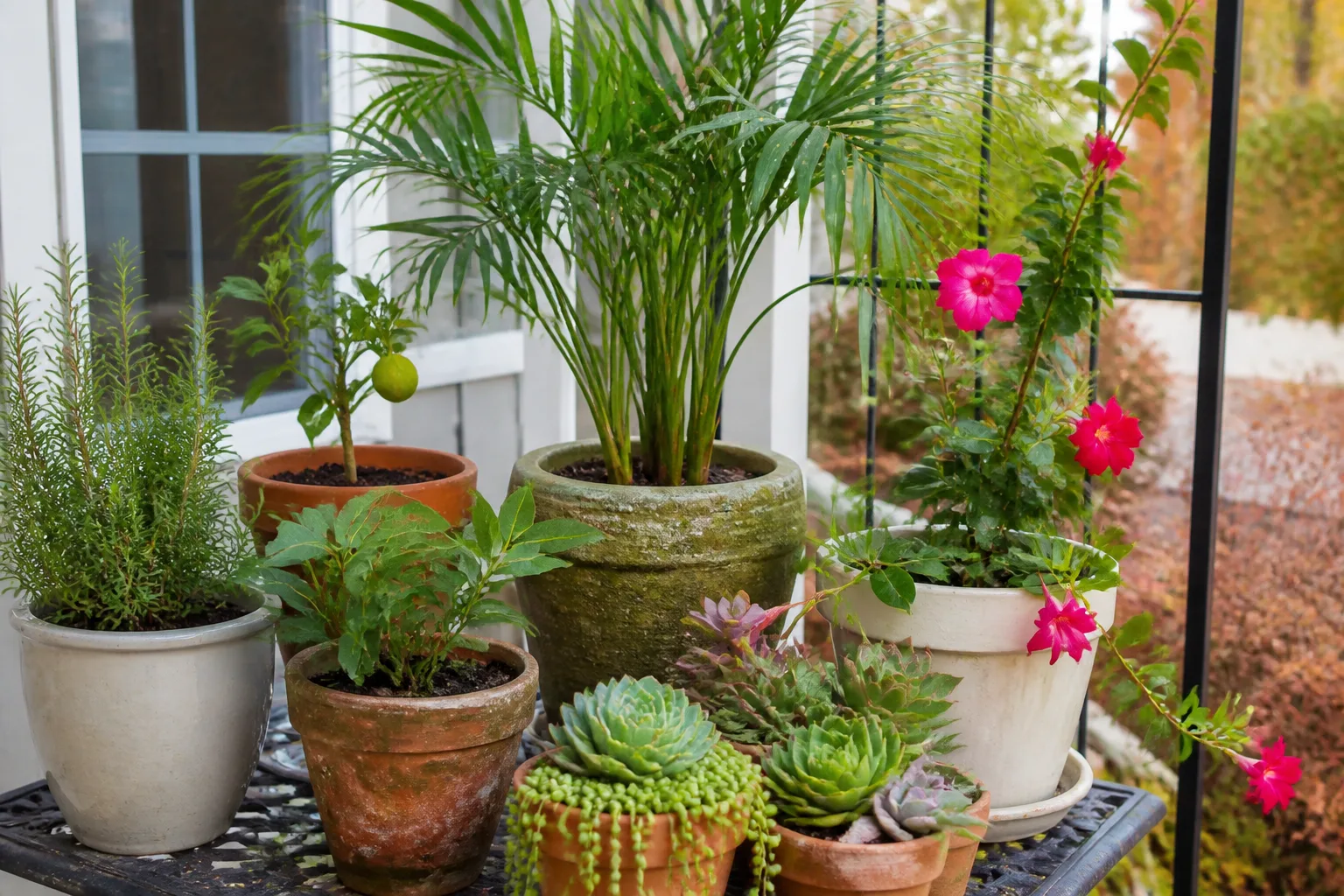
Bring plants in before cold shock
Use your local average first frost date as a planning marker, not as permission to wait for the first icy night. Start moving tender plants toward shelter roughly one to two weeks before that date, then adjust for your actual forecast. A sudden move from warm sun and moving air into a dry, dim room is stressful even when the plant avoids frost.
Before the final move, place containers in a bright, protected area for several days. Reduce the contrast between outdoor and indoor conditions by avoiding a hot afternoon-to-heated-room jump, and do not place a recently moved plant directly beside a radiator, heat pump, or cold pane of glass. The RHS guidance on overwintering tender plants recommends giving them good light and frost-free conditions; that is a better baseline than treating “indoors” as one uniform environment.
Quarantine and clean before plants meet houseplants
Outdoor plants bring outdoor passengers. Inspect stems, leaf undersides, flower buds, and the soil surface for aphids, whiteflies, scale, spider mites, snails, and fungus gnat activity. Remove dead leaves and spent flowers, wash dusty foliage with a gentle stream of room-temperature water when the plant tolerates it, and let the container drain fully.
Keep the newcomer separate from established houseplants for at least a couple of weeks. A bright bathroom, spare room, enclosed porch, or isolated shelf works if the temperature and light are suitable. Check twice a week with a flashlight: stippling or fine webbing suggests mites, sticky residue may indicate sap-feeding insects, and tiny flies rising from the soil point to fungus gnats.
Do not automatically spray every plant with a homemade mixture. Start with physical removal and isolation, then identify the pest before choosing a treatment that is labelled for the plant and indoor use. This is especially important for edible herbs, which should not be treated casually with ornamental-plant products.
Set up the winter station
A winter station does not need to look like a greenhouse, but it does need to solve four constraints: light, water, temperature, and air movement. Arrange plants so foliage is not pressed against cold glass, leaves are not touching one another, and drainage water cannot sit beneath pots.
Light is the first constraint
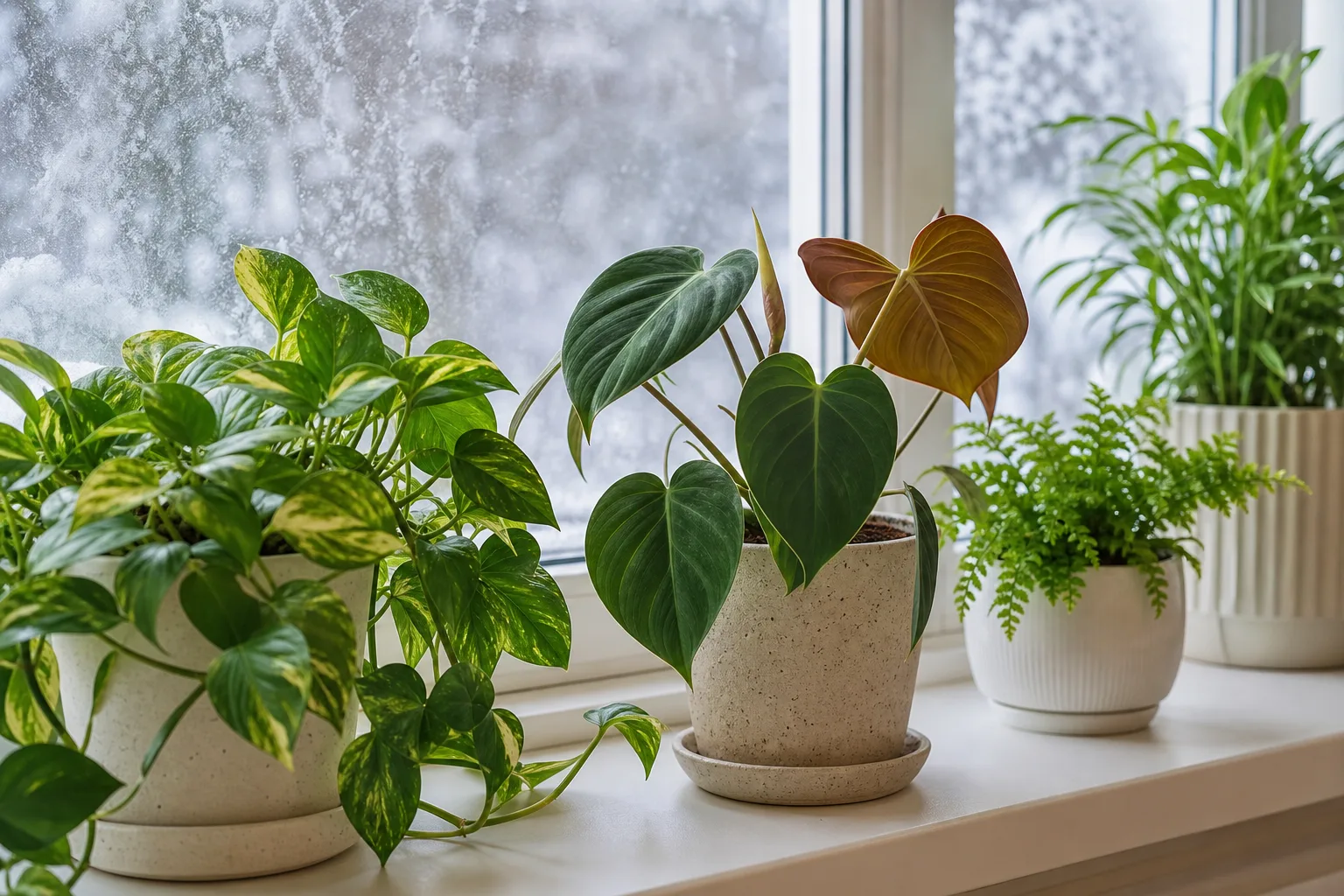
Light is usually the reason a plant that looked full outdoors becomes pale and floppy inside. Winter sun arrives at a lower angle, days are shorter, windows filter some usable light, and indoor plants may sit several feet back from the glass. A sunny south- or west-facing window is the strongest starting point in the Northern Hemisphere; an east window is gentler and often suitable for coleus, parsley, and leafy herbs.
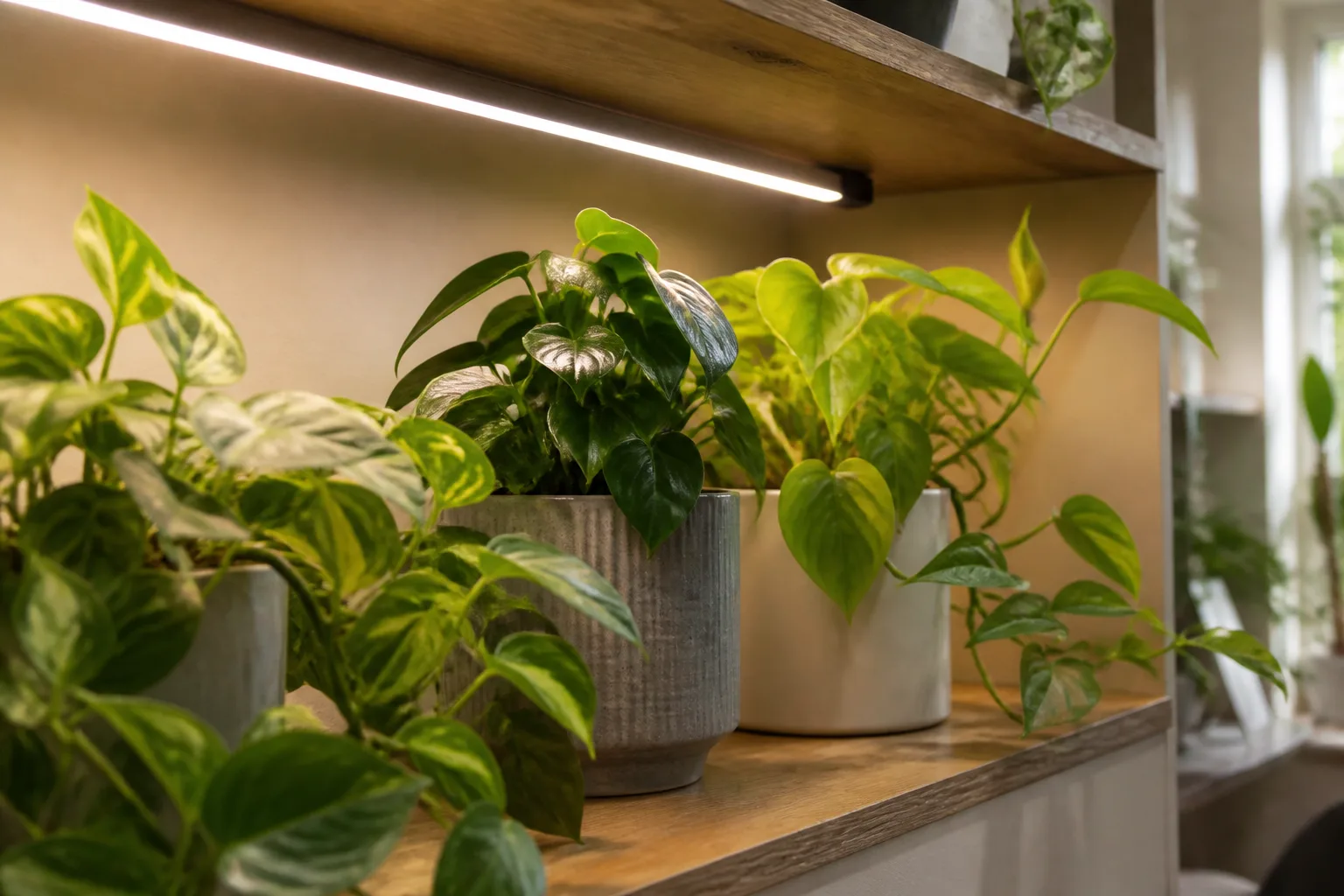
If stems stretch, leaf color fades, new leaves shrink, or flower production stops, correct light before adding fertilizer. A full-spectrum LED on a timer is often more useful than a decorative low-output bulb. As a practical starting schedule, run supplemental lights for about 12 to 14 hours a day, keep them close enough to illuminate the foliage without heating or bleaching it, and adjust based on the plant’s response. The RHS winter houseplant guidance likewise emphasizes moving plants toward the brightest available window during winter rather than leaving them in a dim spare room.
Water and soil after the move
Indoor winter watering is a response to drying, not a calendar appointment. Lower light, cooler soil, and slower growth usually mean the pot stays wet longer than it did outdoors. Water thoroughly when the plant’s preferred dry-down point is reached, then allow excess water to escape and empty the saucer.
Use a container with a drainage hole and a fresh, porous potting mix when the existing soil is compacted, smells sour, holds water for many days, or contains visible pests. Do not automatically move every plant into a much larger pot before winter; extra wet soil around a small root system is a common route to root trouble. The exception is a severely root-bound plant whose roots cannot absorb water evenly, but even then, move up modestly.
Winter fertilizer should be restrained. A plant under weak light cannot use a heavy feed to manufacture strong growth; it may instead produce soft, elongated shoots. Feed only when the plant is actively growing and the label supports indoor container use, then return to a fuller feeding program when light and growth increase in spring.
Temperature, humidity, and airflow
Most of these plants prefer a stable, frost-free room rather than a dramatic temperature swing. Keep them away from exterior doors, cold drafts, and direct blasts from heating equipment. A cool sunroom can be excellent if it stays above freezing, but a cool, wet root ball is more dangerous than a slightly dry one.
Humidity helps some tropical plants, but it cannot compensate for poor light or soggy soil. Grouping plants can modestly soften dry air, while a humidifier is more controllable than repeated misting. Always leave enough space for air to move around leaves. The RHS notes that ventilation in a greenhouse helps reduce fungal problems, and the same principle applies to a crowded indoor shelf.
10 annuals that make surprisingly good winter houseplants
The ten plants below are not equally easy, and “good” means a different thing for each one. Some are excellent for foliage, some for harvest, and some are worth keeping only as small cuttings. Start with the plants that match your room rather than trying to save all ten.
Flowering and foliage picks
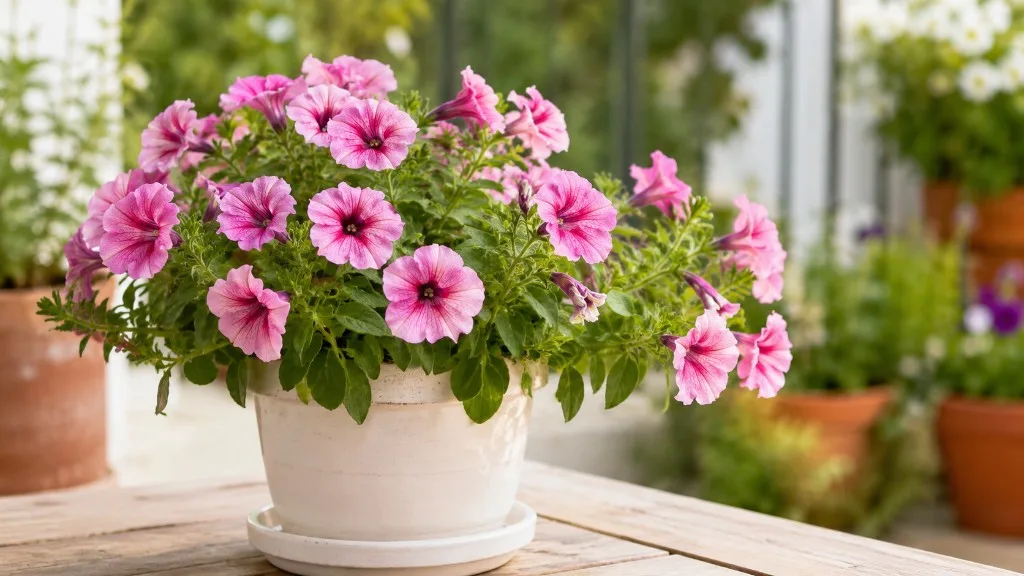
1. Petunias. Petunias are better candidates for a bright, actively growing setup than for a dim living-room windowsill. Choose a compact, healthy plant before it becomes badly leggy, remove spent flowers, and cut long stems back to fresh nodes. With strong light and careful watering, it may continue to flower, but bloom will slow as winter light drops. If you have no bright window or grow light, take a few clean cuttings or save seed instead of expecting the whole plant to look like its summer container.
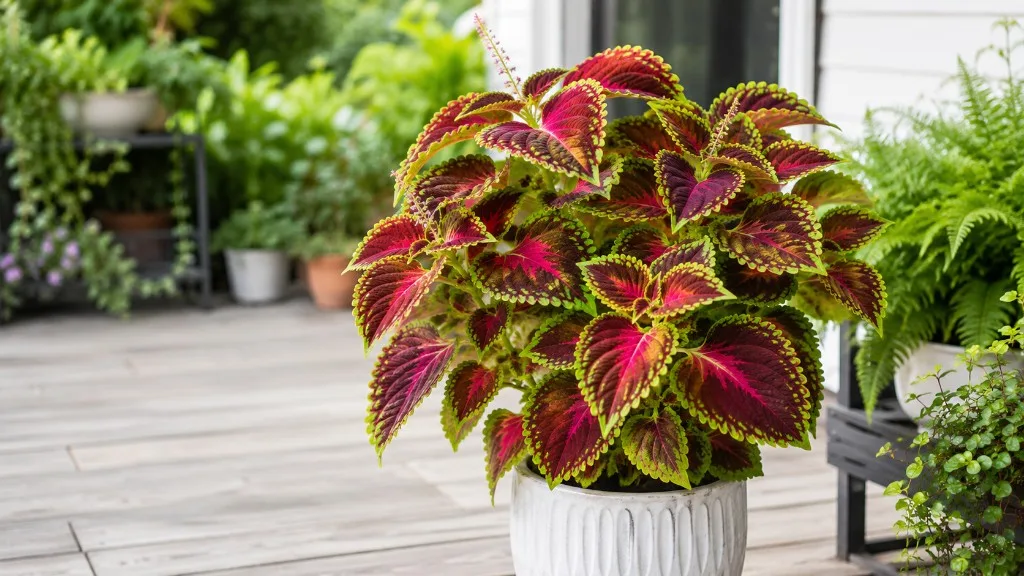
2. Coleus. Coleus is one of the most forgiving foliage choices because it roots readily from stem cuttings and does not need to flower to be attractive. Bring in a compact plant, pinch out flower spikes, and trim stretched stems above a leaf pair. Bright indirect light keeps color strong; too much low winter light produces soft green growth and bare lower stems. If the plant is large, a handful of cuttings is often a better insurance policy than carrying the entire container inside.
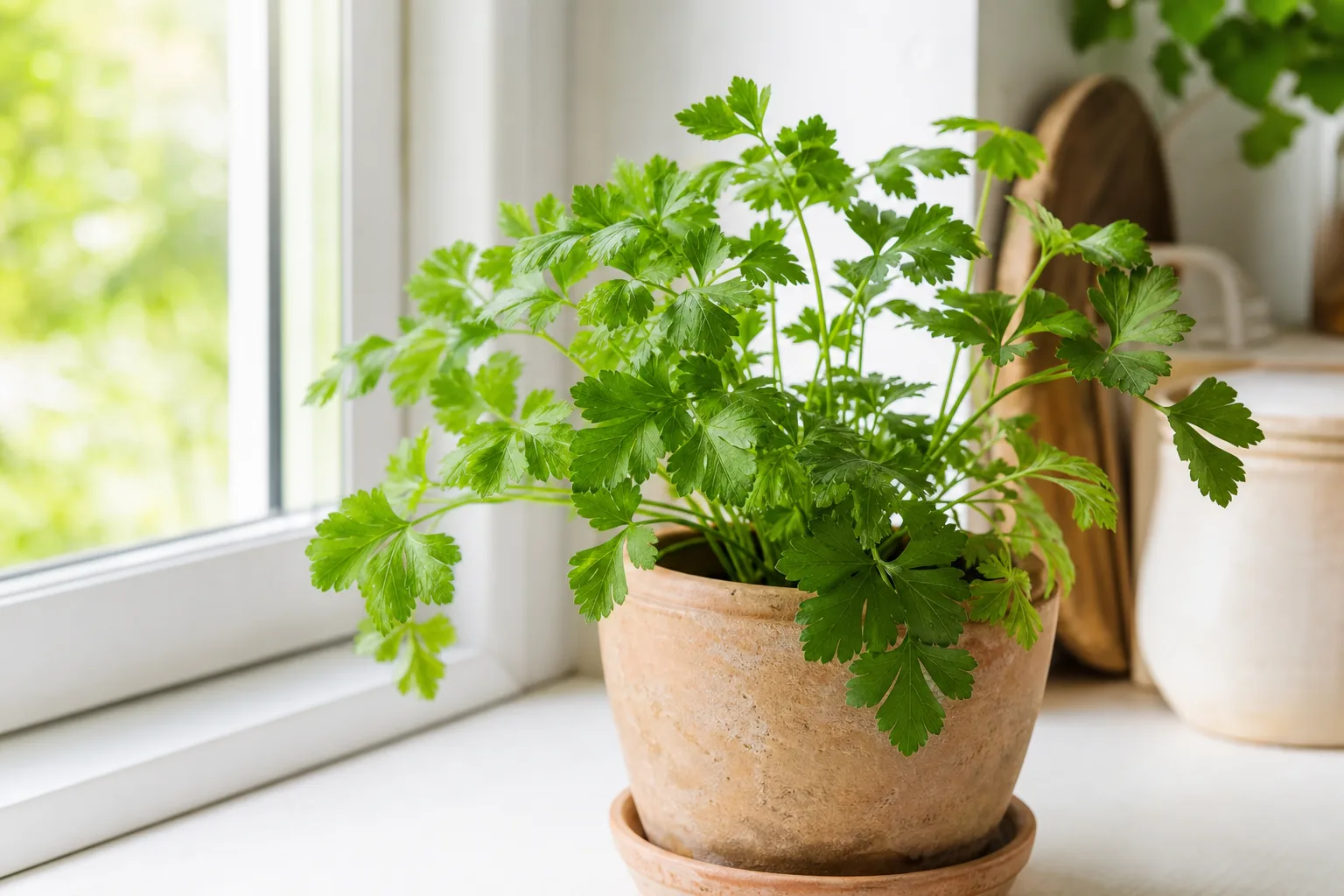
3. Parsley. Parsley is a useful winter herb, but it develops a substantial root and dislikes being repeatedly disturbed. Pot a young plant carefully or sow a fresh container, using a rich but well-drained mix. Give it the brightest window available, harvest outer stems first, and avoid cutting the entire crown at once. Curly and flat-leaf types both work, although a crowded outdoor clump may sulk briefly after transplanting.
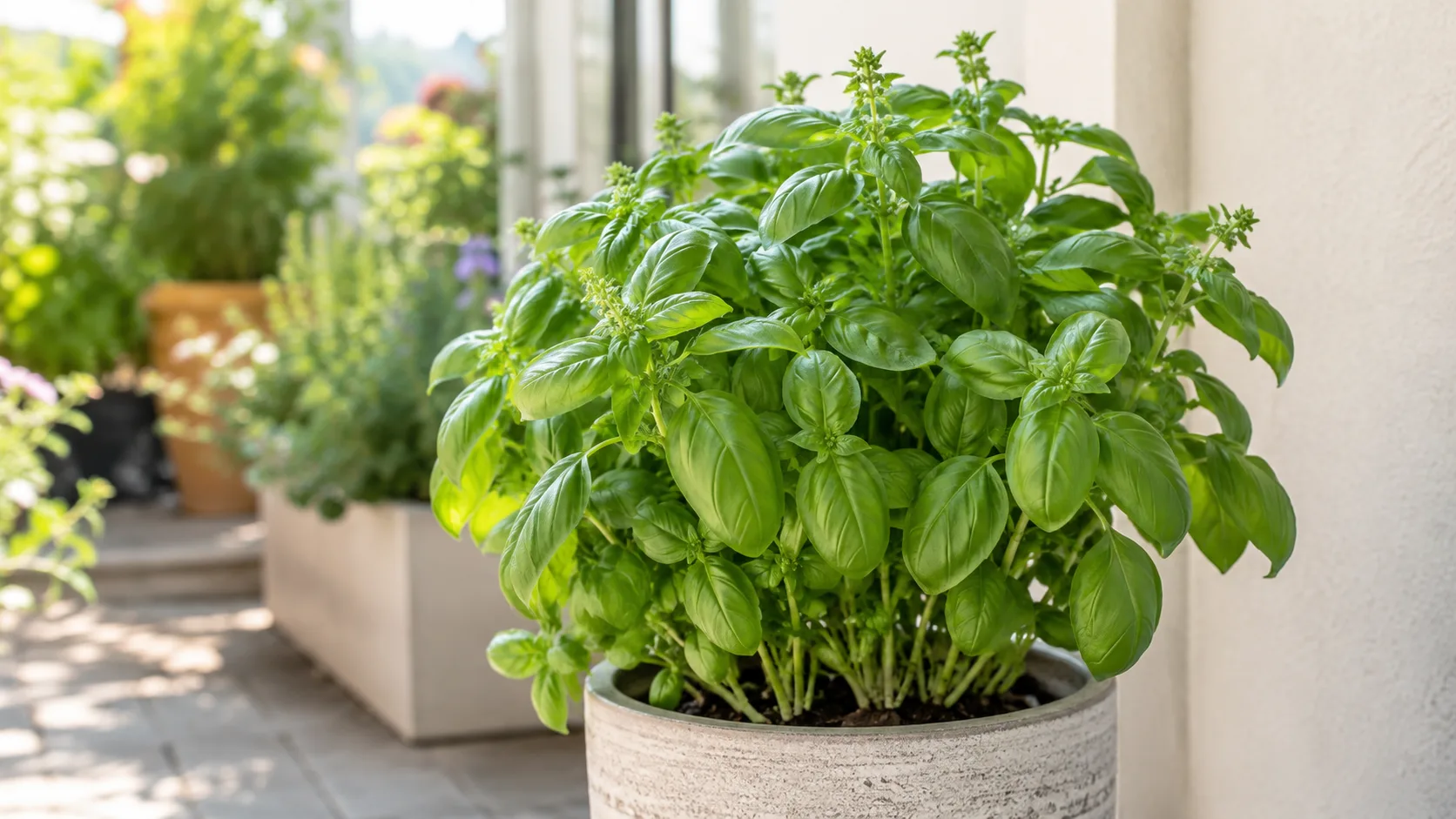
4. Basil. Basil is a warm-season annual that can supply winter leaves when it receives warmth, light, and regular pinching. NC State Extension’s sweet basil profile lists basil as a full-sun herb and recommends pinching long stems and flower buds to maintain a bushy form; that advice is even more important in a room where weak light encourages stretching. Keep the mix evenly but not constantly wet, harvest above a leaf pair, and treat yellowing or a gray, fuzzy coating as a signal to improve airflow and investigate disease rather than simply watering more.
5. Sweet alyssum. Sweet alyssum is a small, fragrant edging plant that can be pleasant indoors for a short cool-season display. It prefers bright light and cooler conditions than a hot, dry room beside a radiator. Trim tired stems after flowering and keep the plant lightly, evenly hydrated without leaving the pot saturated. It is a good experiment for a sunny, cool windowsill, but it is not the best choice for a dark apartment or a warm room where the foliage dries quickly.
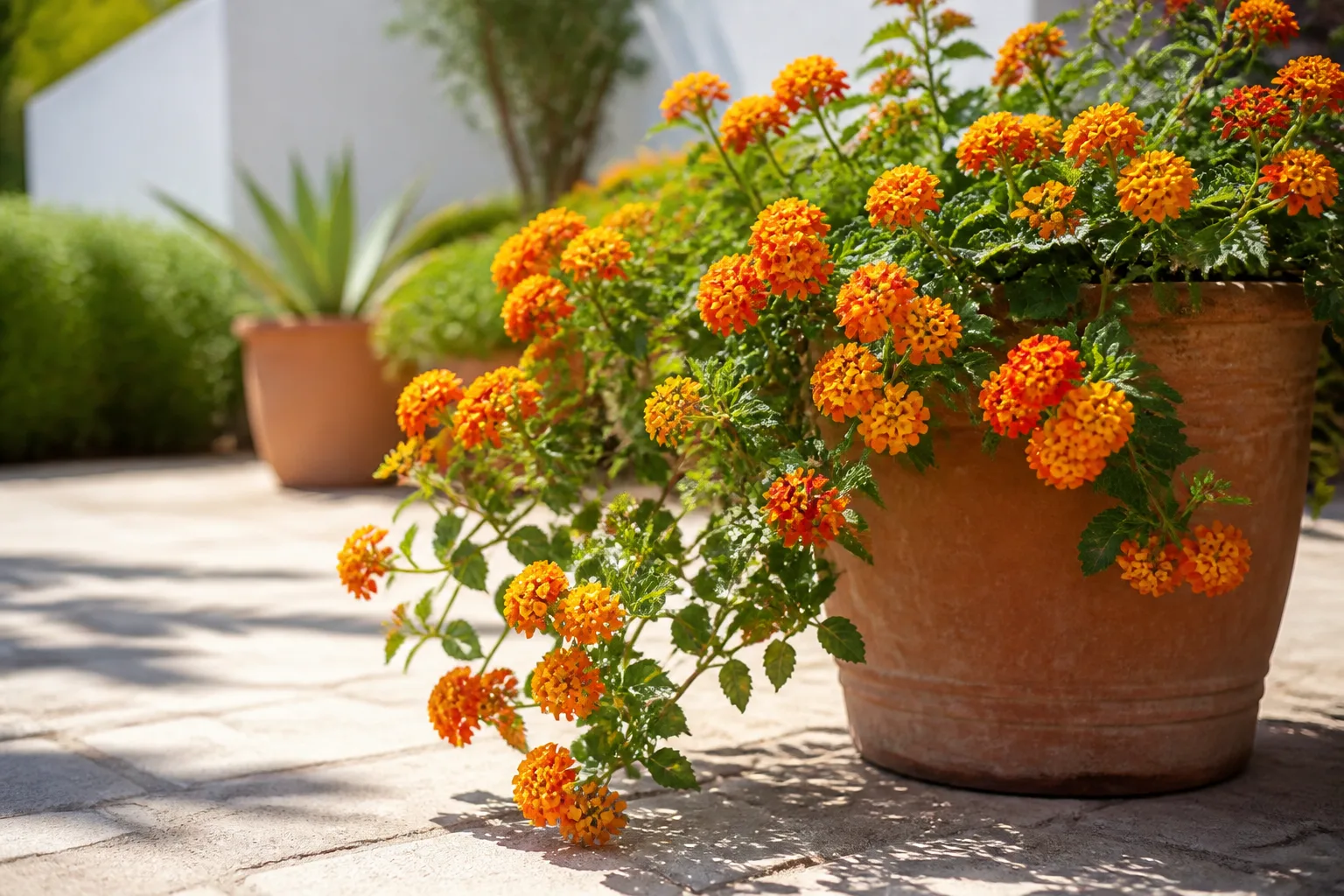
6. Lantana. Lantana is a woody, warm-climate perennial often grown as an annual in colder regions. It needs considerably more light than many foliage plants, so place it in the brightest window or under a grow light. You can keep it actively growing, pruning it to control size, or reduce watering and let it rest in a cool, frost-free location. Do not keep watering a leafless or nearly dormant lantana as though it were in summer; wet soil around inactive roots is an invitation to rot.
Culinary herbs for a winter windowsill
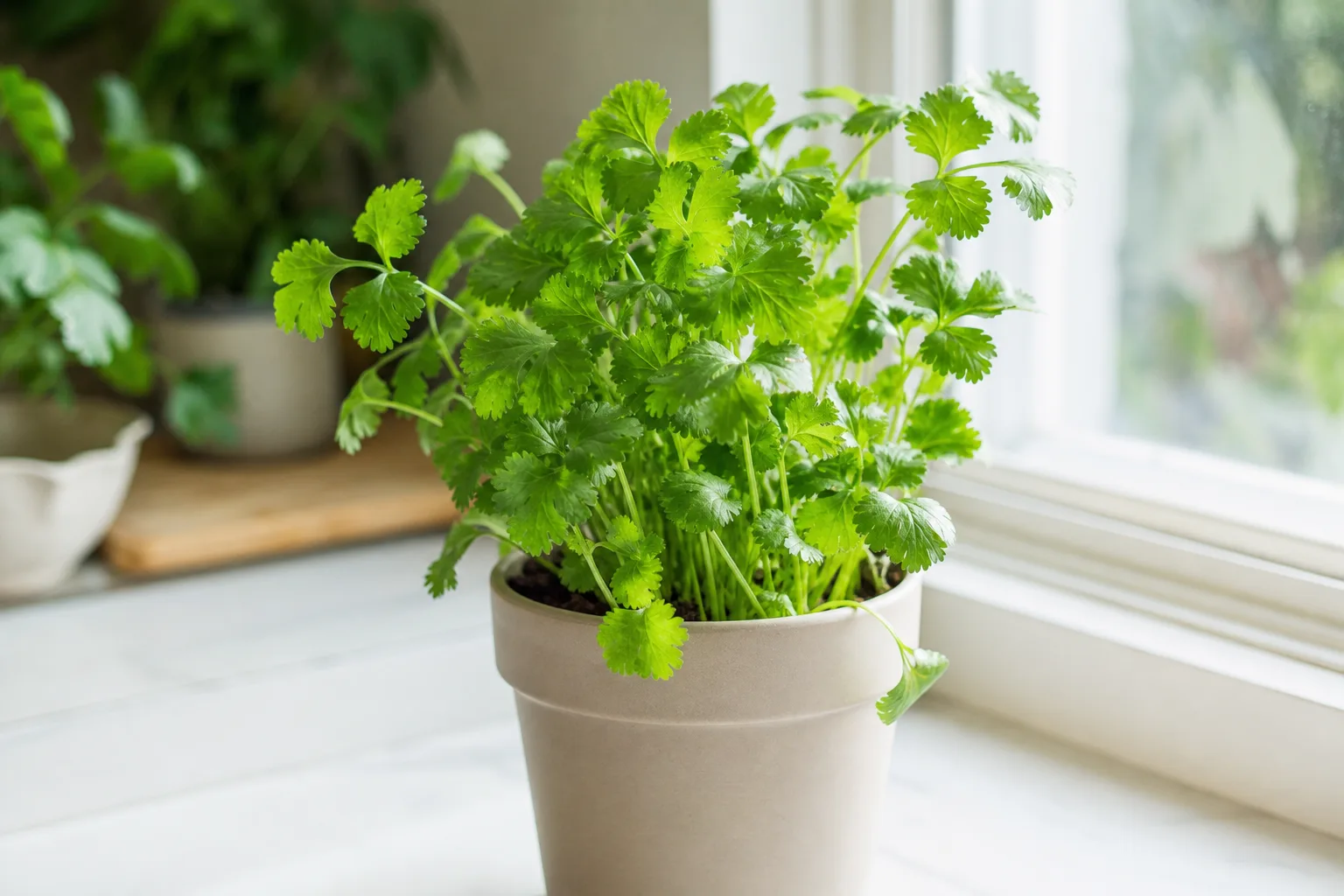
7. Cilantro. Cilantro is usually most rewarding when sown in a fresh pot for cool-season harvest rather than dragged indoors as a mature summer plant. It grows quickly, prefers bright light, and tends to bolt when stressed by heat, crowding, or age. Sow several seeds every few weeks if you want a steady supply, and harvest outer stems gently. A grow light can keep seedlings compact when a winter window is weak.
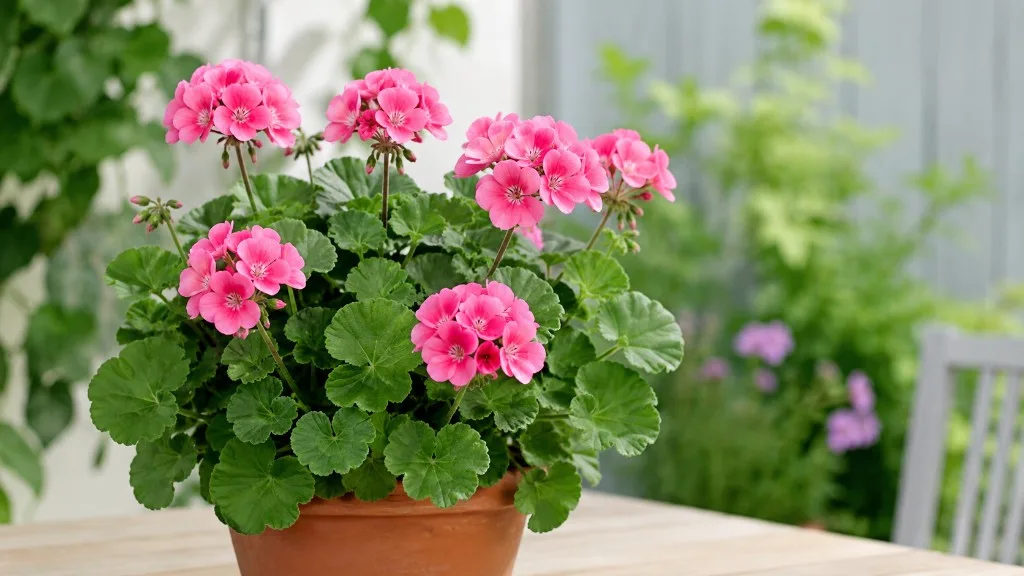
8. Garden geraniums, or pelargoniums. The plants commonly called annual geraniums are usually pelargoniums, not the hardy border geraniums that stay outdoors in colder regions. NC State Extension’s pelargonium profile describes them as tender perennials and notes that insufficient light causes legginess and poor flowering. Bring them in before frost, remove dead material, and choose between an actively growing sunny-window plant, compact cuttings, or a cool dormant setup. Water sparingly when stored cool; if the plant is warm and growing, check the soil more often but never leave it wet.
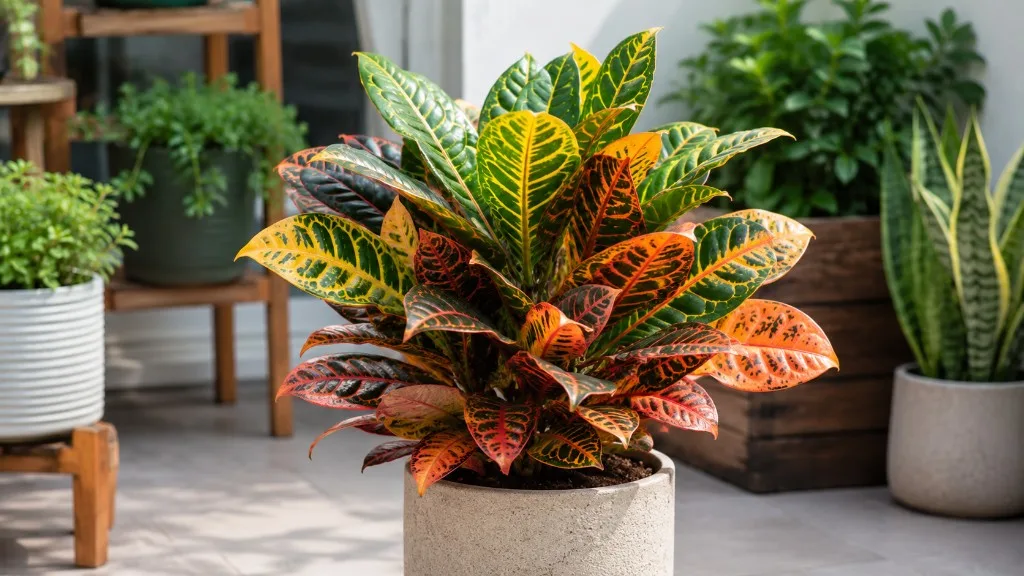
9. Croton. Croton is not a true annual, but it is frequently used outdoors as a seasonal color plant in places where winter is too cold. Its brightly patterned leaves need bright light to hold their color, and a sudden move can trigger leaf drop. NC State Extension’s croton profile advises bringing crotons indoors when temperatures reach about 50°F and identifies low-severity poison characteristics and irritating sap. Wear gloves if your skin is sensitive, keep the plant away from children and pets that chew, and wash sap from skin promptly.
10. Chervil. Chervil is a cool-season culinary herb with delicate foliage and a mild flavor. It is often easier to grow from seed indoors in a shallow container than to transplant a mature plant with a disturbed root system. Give it bright indirect light, avoid a hot windowsill, and harvest lightly so the plant can keep producing leaves. If it bolts or becomes coarse, start a fresh sowing rather than trying to force it back into a youthful form.
These choices cover three different winter jobs: color and flowers from petunia, lantana, and pelargonium; decorative foliage from coleus and croton; and edible leaves from parsley, basil, cilantro, and chervil. Sweet alyssum sits between them as a fragrant, short-term display plant. That grouping is more useful than a simple ranking because the brightest window in your home may be better used for herbs or a flowering pelargonium than for a plant that merely tolerates shade.
Troubleshoot decline before discarding a plant
Indoor decline often begins with the move, not with one dramatic mistake. Give a recently relocated plant time to shed a few old leaves, then look for a pattern in the new growth, soil moisture, and stems. A plant that loses older leaves but produces firm new growth may be acclimating; a plant that keeps losing leaves while the soil stays wet needs a faster intervention.
Leggy growth, leaf drop, and failed flowers
Leggy stems usually mean the plant is reaching for more usable light. Move it closer to the window, clean dust from the glass, add a grow light, or prune back only after the new light is in place. Pruning a low-light plant without improving the light simply gives you shorter stems that stretch again.
Leaf drop has several possible causes: a cold draft, a sudden light change, dry roots, wet roots, pests, or a species that is naturally resting. Check temperature and pot moisture first, then inspect the undersides of leaves. Croton and lantana are especially prone to looking dramatic after relocation, while a small amount of older-leaf yellowing on an established plant is not automatically fatal.
Failed flowers are not proof that the plant is dead. Petunias, lantana, and pelargoniums may maintain foliage while winter light is too weak for abundant flowering. Keep the plant compact, improve the light, and decide whether you want winter bloom or healthy spring structure; pushing fertilizer rarely fixes a light shortage.
Pests, mold, and root problems
If leaves feel sticky, show fine stippling, or curl around new growth, isolate the plant again and inspect with a flashlight. Remove heavily infested leaves, rinse suitable foliage, and use only an identified, labelled treatment. A pest-free cutting from a healthy stem can sometimes be a cleaner reset than repeated treatment of a badly infested mother plant.
Gray mold, blackened stems, or a sour-smelling pot usually points to excessive moisture, poor airflow, or damaged tissue. Remove diseased debris, increase space between containers, and let the mix dry to the level appropriate for that plant. Do not place a saucer of standing water under a winter container. If roots are brown and mushy, save firm cuttings when possible and repot only the healthy portion into a clean, well-drained mix.
Wake plants up and move them outdoors in spring
The move back outside deserves as much care as the move inside. Start when days are lengthening and night temperatures are reliably mild for the specific plant. If a plant spent winter in low light, do not put it straight into strong midday sun; begin in bright shade or a sheltered porch and increase exposure over about a week or two.
Resume watering and feeding gradually as new growth starts. Repot dormant pelargoniums several weeks before the local last frost if you want a larger spring plant, following the practical timing described by Garden Gate. For a cool-stored plant, look for firm stems and living buds before watering heavily. For an actively growing plant, pinch long indoor shoots so the spring plant begins with a compact framework.
Cuttings can be moved out only after they have a functioning root system and have been hardened off. Hobby Farms describes starting several short cuttings rather than relying on one, which is sensible because not every cutting roots or survives winter. For pelargoniums, Thompson & Morgan also recommends choosing between space-saving cuttings and whole plants according to the room you have, not according to a one-size-fits-all storage rule.
If a plant truly completed its annual life cycle, let it go. Save mature seed when it is dry and viable, label the envelope with the plant and year, and start new plants in spring. Seed saving is not a consolation prize; for true annuals such as marigolds, zinnias, cosmos, and many sunflowers, it is the biologically appropriate way to carry the garden forward.
Conclusion
The most reliable annuals to grow as houseplants in winter are the ones that match your conditions: coleus and cuttings for a smaller setup, herbs for a bright kitchen window, pelargoniums for a sunny display, and croton or lantana for a warm, bright room. Petunias and sweet alyssum can work, but they need a more deliberate light and pruning plan, while cilantro and chervil are often better restarted from seed than carried in as mature plants.
Bring plants inside before frost, inspect and isolate them, then solve light before fertilizer. Keep winter watering measured, give roots air, and choose whole plants, cuttings, or dormancy based on your space and your spring goal. That small amount of triage turns “Can this annual survive indoors?” into a useful seasonal plan.



