Angelonia Care for Fast, Heat-Loving Coverage
Angelonia thrives in summer heat. Get a practical plan for planting, spacing, watering, containers, companion flowers, and keeping spikes blooming.
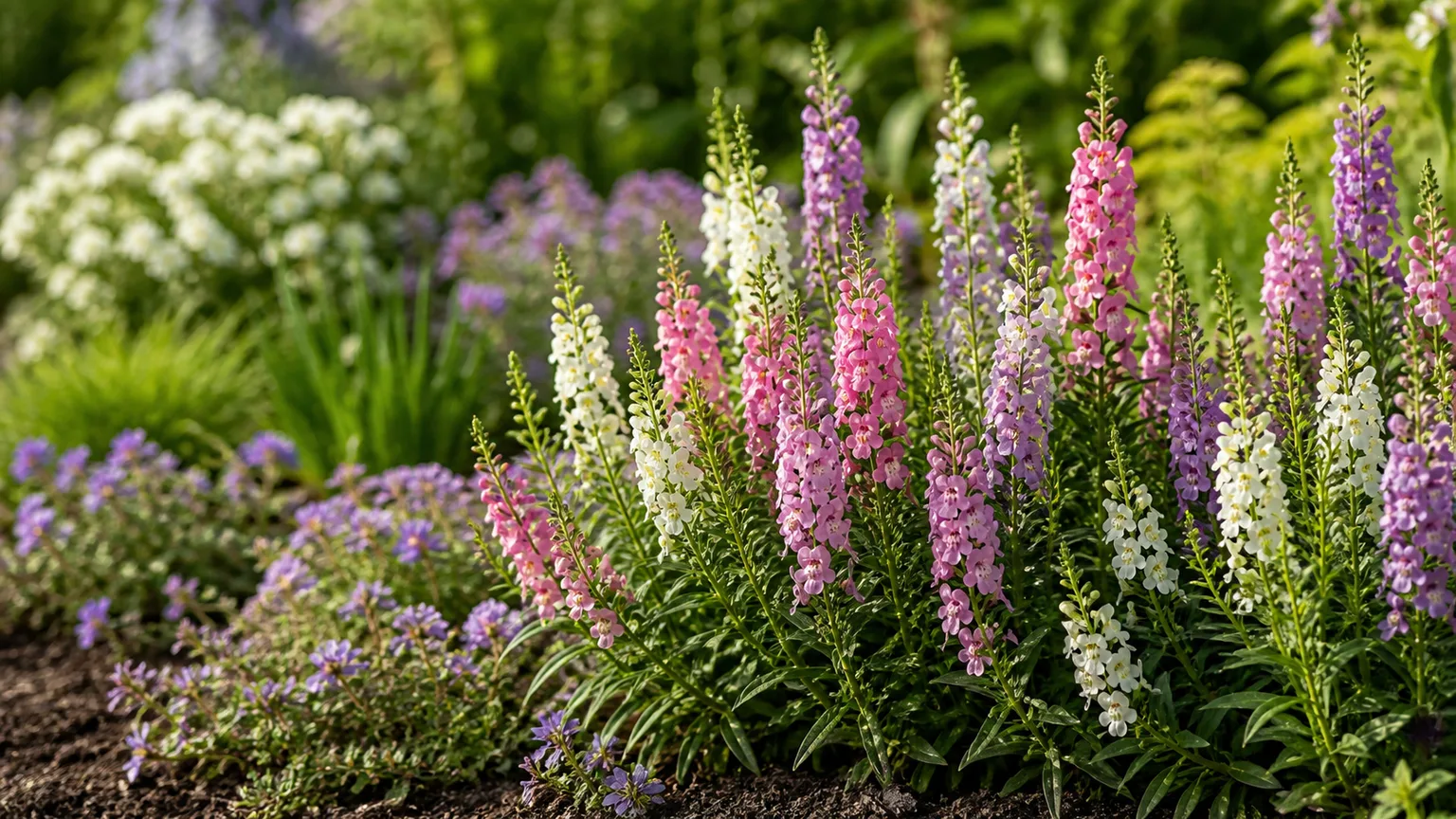
If a sunny bed looks unfinished in early summer, angelonia is one of the quickest ways to add a column of color without signing up for constant grooming. Its narrow, snapdragon-like flower spikes rise above tidy foliage, and established plants keep producing flowers through hot weather, humidity, and the dry spells that make cooler-season flowers fade.
Angelonia is often called summer snapdragon, but it is not the same plant as a traditional snapdragon. That distinction matters because angelonia wants warm soil and strong light. Give it those basics, along with drainage and a sensible watering routine, and it becomes a remarkably forgiving bedding plant. It can edge a path, fill a gap in a mixed border, or turn a sunny container into a tall, colorful focal point.
The easiest way to grow it well is to match the plant to the job. Use compact or spreading forms at the front of a bed and in mixed containers, upright forms for height, and close-but-not-crowded spacing when the goal is quick coverage. The sections below turn those choices into a simple care plan.
Why Angelonia Is a Summer Workhorse
Angelonia angustifolia and its hybrids are warm-season flowering plants valued for their resilience. The flowers have an orchid-like delicacy, but the plant is not delicate in the way its appearance suggests. Once roots are established, it handles heat and humidity particularly well and can keep making new spikes when many cool-season annuals slow down.
That toughness is useful for a busy garden because the plant does not require a daily round of pinching and deadheading to look presentable. Modern selections tend to branch naturally and keep a narrow, upright shape. The foliage also fills around the lower stems, so a small group can become a coherent patch rather than a collection of isolated stems.
Heat tolerance is not the same as neglect tolerance. A new transplant can wilt in a hot bed before its roots reach surrounding soil, and a container can dry rapidly even when the same variety is comfortable in the ground. Think of angelonia as a plant with a generous margin for summer conditions, not as a plant that never needs water.
Its value is especially clear in spaces that need vertical color quickly: a new border, a sunny foundation bed, a porch pot, or a hanging basket that needs a central upright element. A guide from Gardenia on plants that bloom all summer likewise places angelonia among the heat-loving choices that can keep a sunny display going.
How Fast Angelonia Fills In and Blooms
The fastest route to flowers is a healthy nursery plant. Seed-grown angelonia can take roughly 13 to 15 weeks to reach bloom, so starting from seed requires early planning, warmth, and enough bright light to prevent lanky seedlings. For most gardeners who want immediate summer coverage, established transplants are the practical choice.
Set nursery plants out after the danger of frost has passed and the soil has begun to warm. Do not let a warm afternoon fool you into planting tender annuals while nights are still cold. A short wait can be the difference between a plant that pauses and a plant that begins rooting immediately.
After planting, the first goal is root establishment rather than instant height. Water the root zone thoroughly, settle the soil around the plant, and keep it evenly moist while new roots move outward. Growth usually accelerates once the plant is receiving enough light and its roots can draw water from more than the original nursery plug.
The phrase “fills in fast” still depends on variety, temperature, spacing, and the size of the start. A small plant in cool weather will not cover a bed overnight. A warm, well-lit planting with appropriate spacing can knit together much more quickly than a crowded planting in heavy shade. Judge progress by new side shoots and fresh leaves, not only by the height of the first flower spike.
Choose the Form That Fits Your Space
Angelonia is available in several habits, so choose by mature shape instead of choosing by flower color alone.
- Upright forms are useful for the middle of a border or as the vertical “thriller” in a container. Some can approach 3 feet in a favorable site, while others stay much shorter.
- Compact forms suit edging, small pots, and the front of a mixed planting. They give a neat block of color without overwhelming neighboring plants.
- Spreading forms can soften the edge of a raised bed or act as a low groundcover-like filler. They are especially useful when a container needs color at the rim.
- Taller, vigorous selections are helpful when the problem is a large empty patch rather than a small pot. Give them enough lateral room so their stems do not compete for air.
Cultivar names can help narrow the choice. Angelface selections include pink, white, and bicolored options; Archangel types are known for larger flowers and an upright presence; AngelMist forms are useful when a lower or spreading habit is wanted; and AngelDance selections are suited to gardeners looking for quick, tall coverage. Availability varies by region, so use the plant tag’s mature height and spread as the final authority.
Color also affects how a display reads. White flowers brighten a dim corner or cool down a hot-toned border. Pink and lavender blend naturally with petunias and salvias. A group of one color looks more intentional than a single plant lost among unrelated colors, while a mixed group can make a container feel abundant immediately.
Site and Soil: Sun Above, Drainage Below
Give angelonia strong direct light, aiming for at least six hours and more where practical. Abundant sun supports flowering and helps the plant maintain a compact shape. In an extremely hot climate, some afternoon protection can reduce stress, but dense shade is not a substitute for heat relief: too little light usually means fewer flowers and weaker stems.
Drainage is equally important. Angelonia can tolerate a dry interval after establishment, but its roots still need oxygen. In a bed, loosen compacted soil and correct a low, water-collecting spot before planting. In a container, use a quality potting mix and a pot with an unobstructed drainage hole. Do not fill a pot with native garden soil; it can compact and hold too much water around the roots.
The Colorado State University Extension guide to container gardens explains why drainage and container size influence both root health and maintenance. A porous container loses moisture faster, while a larger container generally gives roots more room and a bigger moisture buffer. Those principles are more useful than a universal watering calendar.
Angelonia is not fussy about a narrow soil recipe. It performs best in soil that is reasonably fertile, loose, and well drained. If a bed is very poor, incorporate mature compost before planting, but do not create a rich, soggy pocket that stays wet after rain. In a container, start with fresh mix rather than trying to make old, compacted mix behave like new soil.
Plant After Frost and Space for Coverage
Prepare the planting area before the plants arrive. Remove weeds, break up a hard surface, and water the bed once if the soil is exceptionally dry. Then set the pots out in their intended pattern so you can adjust the composition before disturbing the roots.
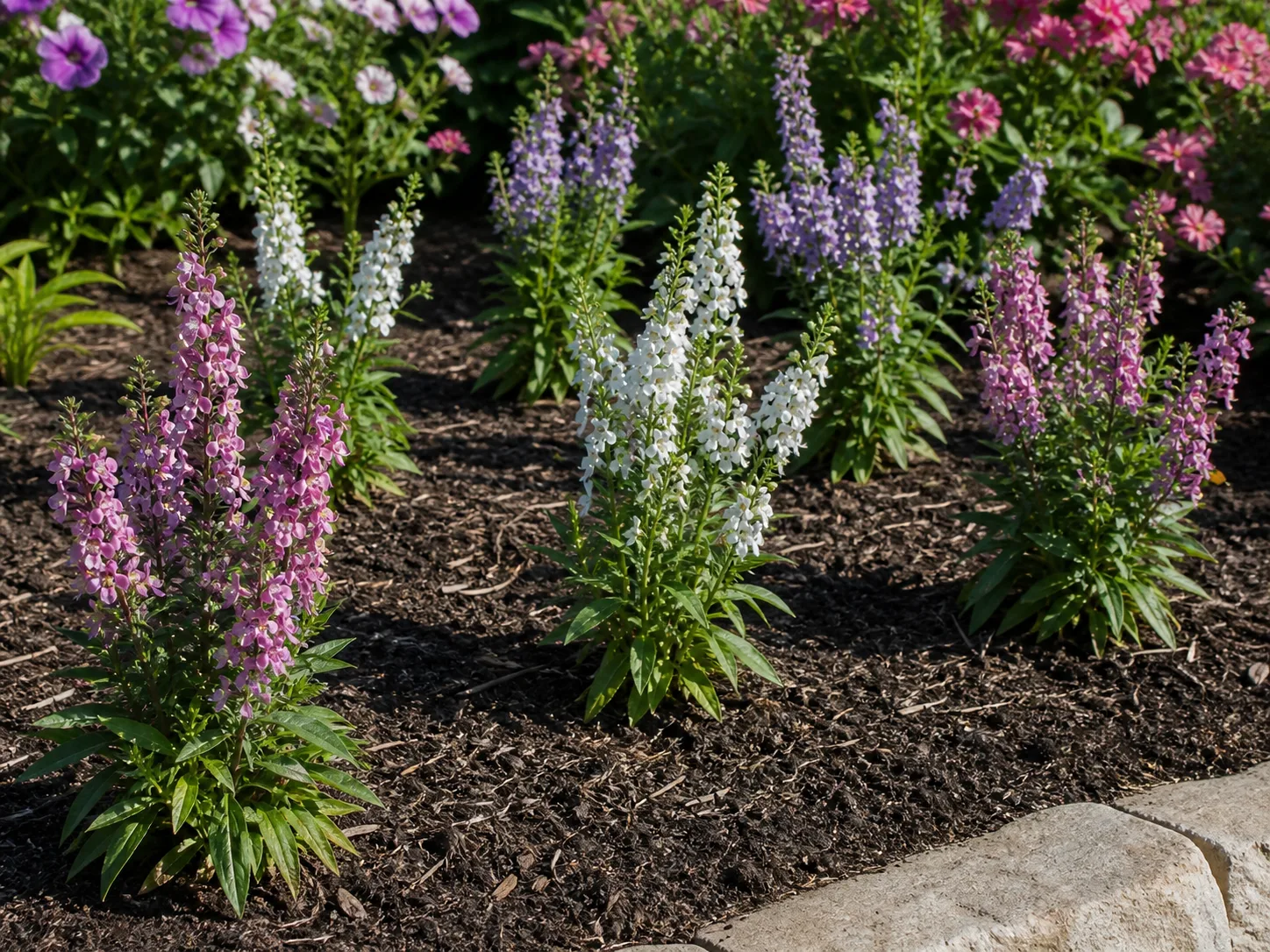
For many angelonia plants, a starting range of 9 to 12 inches apart works well. That leaves enough room for each plant to branch while allowing the group to look full as it grows. If a compact upright variety is specifically being used for a dense mass, spacing closer to 8 or 9 inches may produce a faster visual fill, provided the site has good airflow and the plant tag supports that spacing. Give vigorous or spreading selections more room.
Plant at the same depth as the nursery container. Burying the crown can trap moisture against the stem, while leaving the root ball high can make it dry out faster than the surrounding soil. Press the soil gently around the plug, then water slowly until the full root zone is wet.
The spacing question is really a maintenance question. Very close planting gives an instant-looking display but can increase competition for water and make the center of the group harder to inspect. Wider spacing takes longer to fill but improves airflow and gives each plant a larger root zone. If you want coverage now, use healthy, well-branched starts and a moderate spacing rather than cramming weak plants together.
Container and Hanging Basket Setup
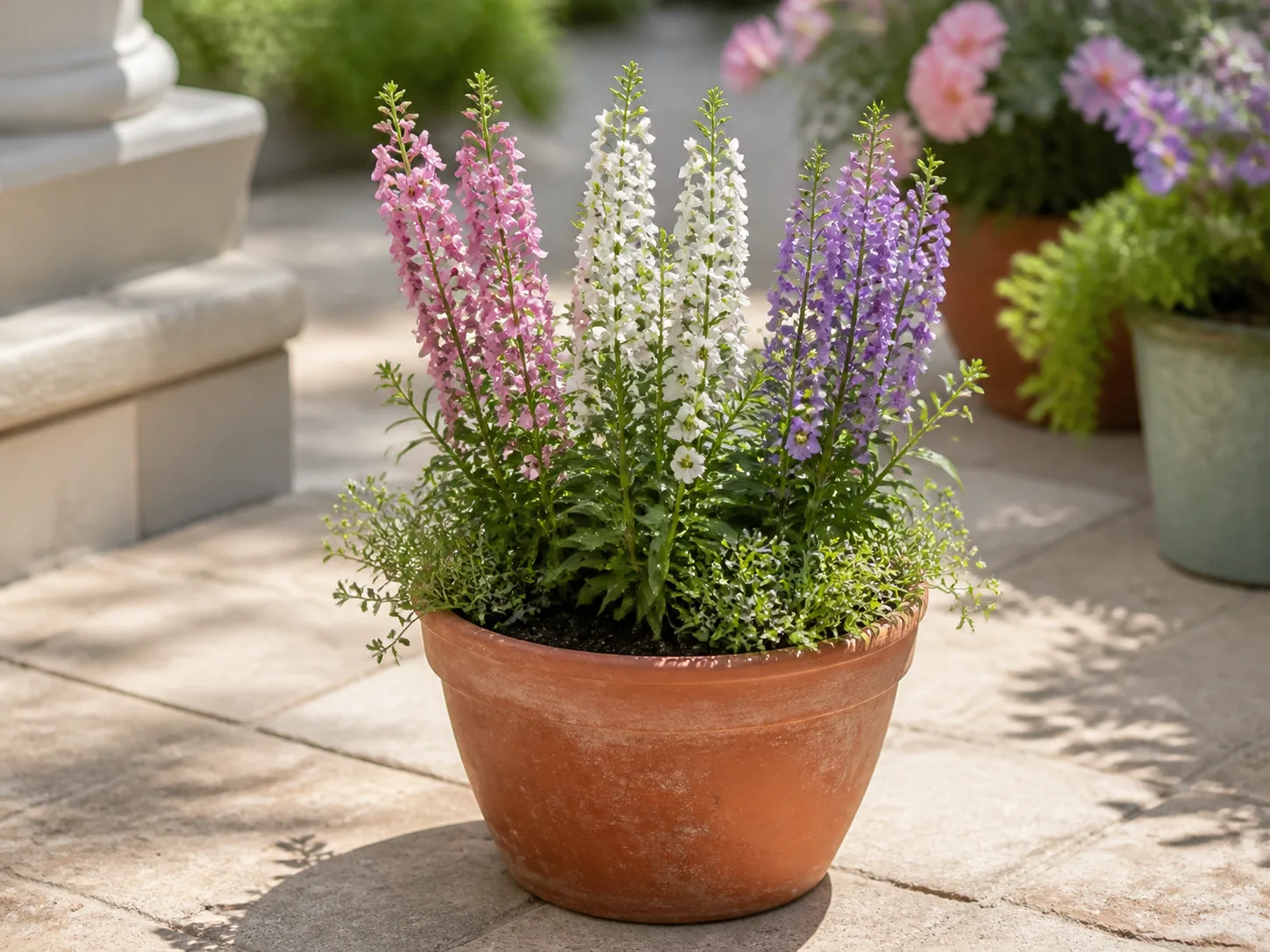
Angelonia makes a strong container centerpiece because its flower spikes add height without requiring a woody shrub. A simple single-variety pot is easy to maintain, while a mixed planter can use angelonia as the thriller, a mounding plant as the filler, and a trailing plant at the rim.
For a 10- to 12-inch hanging basket, three plants can create a full display when the selected variety is compact or moderately sized. In a smaller pot, one plant may be enough. In a larger floor container, use the mature-size information on the tags to decide whether one upright plant or a group of three will look balanced. More plants are not always a shortcut to a fuller result; overcrowding creates a competition problem as soon as summer heat arrives.
Choose a container with a drainage hole and fill it with potting mix designed for containers. Leave enough headspace that water does not immediately run over the rim, and make sure the basket can be lifted or reached safely for watering. A hanging basket exposed to wind may dry faster than a pot on a sheltered patio even when both receive the same sun.
Keep companions compatible. Petunias, calibrachoa, salvia, pentas, and sun-loving coleus can work around angelonia when their water and light needs are similar. Avoid pairing it with a plant that demands constantly wet soil or deep shade. A container should be designed around the plant that is least tolerant of the proposed conditions, not around the most dramatic color combination.
Watering Without Turning It Into a Chore
Water new angelonia deeply enough to wet the entire root ball and the surrounding soil. During the establishment period, check the soil often rather than waiting for leaves to collapse. The surface can look dry while the root ball is still damp, or the opposite can happen when a compact nursery plug sheds water around its edges.
Once established in the ground, angelonia can handle short dry periods better than many soft-stemmed flowering annuals. Water when the root zone is beginning to dry, then soak deeply instead of providing a shallow sprinkle. Mulch can slow evaporation in a bed, but keep it slightly away from the stems so the crown stays airy.
Containers need a different rule. Check the mix with a finger or moisture meter, especially during heat, wind, and periods of rapid growth. Water slowly until some water exits the drainage hole, then empty a saucer so the pot is not left standing in runoff. A small hanging basket may need attention daily during a heat wave, while a large shaded-by-foliage pot may go longer.
Avoid both extremes. Leaves that wilt in dry soil need water and a chance to recover; leaves that wilt in wet soil may be signaling root stress, not thirst. If the mix remains saturated for days, pause automatic watering and investigate drainage before adding more. The goal is a moist root zone with oxygen, not permanently wet soil.
Fertilizing for Flowers, Not Floppy Growth
Start with the fertility already in the potting mix or prepared bed. If the plant is growing steadily and flowering, there is no benefit to feeding every time you walk past it. Excess nitrogen can produce lush foliage at the expense of flower production and can make stems softer or more stretched.
For containers, use either a controlled-release product or a diluted liquid fertilizer according to the product label. A label-based schedule is safer than copying a number of weeks from another garden because products differ in strength and because rain, pot size, and the original mix all change the nutrient supply. If a plant is in a small pot and being watered frequently, nutrients may leach more quickly, but that still does not justify doubling the dose.
Beds may need less frequent feeding, particularly when compost has been incorporated. If growth is pale, unusually slow, or lacking flowers, first check light, watering, root restriction, and pests. Fertilizer cannot compensate for dense shade or a pot that drains poorly. Correct the limiting condition before reaching for a stronger feed.
Deadheading: Optional, Not Required
Angelonia is a good choice for gardeners who want flowers without a daily deadheading ritual. Many modern selections are self-cleaning: spent blooms drop or become visually inconspicuous as new spikes appear. Proven Winners’ explanation of self-cleaning flowers includes Angelface angelonia among plants that generally do not require routine deadheading.
You can still remove an old spike if it looks ragged, interferes with a neighboring plant, or you want to tidy a container before guests arrive. Use clean snips and cut just above a healthy set of leaves. There is no need to strip every faded floret individually.
Pruning is also optional in a different sense. Do not cut a healthy, compact plant simply because the first flush is fading; inspect it for new buds and side shoots first. If a storm breaks a stem or a plant becomes genuinely leggy from inadequate light, trim the damaged or stretched portion back to a branching point and improve the conditions that caused it.
Companion Plants That Make Angelonia Look Fuller
Use angelonia as the vertical punctuation in a sunny planting. Petunias and calibrachoa can spill around the base, while a mounding verbena or a low marigold fills the middle. Salvia and pentas echo its tolerance for heat and add different flower shapes. Echinacea can carry the display into a more perennial-looking border, and sun-tolerant coleus can provide broad foliage contrast.
The best companion is not merely a plant with a matching bloom color. Match the basics first: direct light, drainage, watering expectations, and mature scale. A thirsty plant placed beside an established angelonia can make the container difficult to manage because one root system is always too wet or too dry.
Repeat one or two colors to make a group look deliberate. Pink angelonia can bridge purple salvia and white petunias. White angelonia can separate hot reds and oranges. Lavender or blue-toned flowers can cool a patio composition dominated by terracotta and warm foliage.
In a bed, leave enough negative space for air to move between groups. Fast coverage is attractive, but an uninterrupted wall of foliage is harder to inspect after rain. A little repetition with small gaps often looks fuller over the season than a tightly packed row that collapses in its own humidity.
Heat, Wind, and Storm Troubleshooting
High heat alone is usually not a reason to move an established angelonia. Check the soil and the time of day. Temporary midday droop in a hot container that recovers by evening can be a sign that the roots cannot replace water as quickly as leaves lose it. Persistent wilt, crispy leaf edges, or a dry root ball calls for a thorough watering and a check of whether the pot has become root-bound.
Wind increases water loss and can bend tall flower spikes. Move a portable container to a bright, sheltered location during an unusually windy spell if doing so will not put it in shade. In a bed, close-but-reasonable grouping and a location with some wind protection can help upright plants support one another. Stake only when a tall selection or exposed site truly needs it; unnecessary staking can make the display look rigid.
After heavy rain, inspect the center of the plant and the soil line. Remove broken stems cleanly, clear away debris that is pressing against the crown, and make sure water can leave the bed or pot. Do not respond to storm damage with heavy fertilizer. Let the plant regain balance through light, drainage, and steady moisture.
Why Angelonia Stops Blooming
When an angelonia has leaves but few flowers, light is the first thing to check. Buildings, neighboring annuals, or a hanging basket that has been moved under a covered porch can reduce the direct sun enough to change the display. If possible, relocate a container gradually into brighter light rather than shifting a stressed plant into harsh afternoon sun all at once.
Next check the roots and the feeding history. A pot that dries completely every day may keep a plant in survival mode, while a pot that stays wet may prevent healthy root growth. Heavy nitrogen feeding can also favor leaves over flowers. Correct the soil moisture and pause unnecessary fertilizer before assuming the variety is defective.
Cold nights can temporarily slow a warm-season plant, and a recent transplant may spend energy on roots before it resumes flowering. Remove only damaged material, keep the plant in appropriate light, and give it time to respond. If the plant is healthy, a pause is often less serious than the temptation to overwater or overfeed.
Why Leaves Turn Yellow or the Plant Wilts
Yellow leaves have several possible causes, so diagnose the whole plant instead of treating the color by itself. A few older leaves yellowing as the plant grows can be normal. Widespread yellowing in soil that stays wet points more strongly toward excess moisture or poor drainage. Yellowing paired with very dry soil points toward drought stress, especially in a small container.
Wilting in wet soil deserves special attention. Push a finger into the mix, inspect the drainage hole, and smell for a sour or stagnant odor. If water has nowhere to go, improve the outlet, repot a container into fresh, airy mix if the root system is declining, and remove only roots that are clearly dead or mushy. Do not keep adding water because the leaves look thirsty.
Also look under leaves and around new growth for insects, distorted leaves, or sticky residue. Heat-stressed plants can attract pests, but the remedy depends on what is actually present. Start with a strong water spray where appropriate, remove badly affected growth, and use a labeled treatment only after identifying the pest and checking that the product is suitable for flowering plants.
Is Angelonia an Annual or Perennial?
For most gardeners in frost-prone regions, angelonia is grown as a warm-season annual. It flowers during the growing season and is replaced the following year after frost or cold weather finishes it. That is not a failure of the plant; it is simply how a tender plant fits a seasonal climate.
In frost-free warm regions, angelonia can behave as a tender perennial and may continue growing for more than one season. A short cold snap can still damage it, so local winter conditions matter more than a generic label. If you garden in a borderline climate, treat the first season as a trial and note how the plant responds to the coldest nights.
Overwintering a container plant is possible only when you can provide warmth, strong light, and good drainage. Bringing a pot into a dim room usually trades outdoor vigor for stretched growth and pests. For many gardeners outside a frost-free area, taking cuttings or buying fresh starts in spring is simpler than trying to preserve a plant through an unsuitable winter.
A Two-Minute Weekly Routine
Angelonia care can be reduced to a short inspection rather than a long chore list.
- Feel the soil in the root zone, especially in containers and hanging baskets. Water deeply if it is beginning to dry, and check drainage if it remains wet.
- Look at the newest leaves and flower spikes. Note whether new growth is strong, whether a stem has broken, and whether insects are clustered anywhere.
- Remove storm-damaged material and any spent spike that bothers you. Leave healthy flower spikes alone; routine grooming is optional.
- Check the plant’s light. A growing companion or a moved container may be casting more shade than it did a week ago.
- Feed only when the product schedule and the plant’s growth justify it. Follow the label and avoid compensating for poor light or wet soil with fertilizer.
This routine catches the problems that actually change outcomes: a dry hanging basket, a blocked drain, a newly shaded pot, or a broken stem after rain. It also preserves the main reason to grow angelonia in the first place: the plant can provide a long season of color without demanding constant attention.
Conclusion
Angelonia earns its place in a summer garden by combining fast visual coverage with a forgiving attitude toward heat. Start with a healthy plant, wait for warm conditions, give it strong light and free-draining soil, and space it according to its mature habit. After that, water by checking the root zone, feed modestly, and deadhead only when you want a tidier look.
Use upright forms for height, compact or spreading forms for edges and baskets, and companions that share the same sun and moisture preferences. Watch wet soil as carefully as dry soil, especially in containers, and remember that frost—not a lack of toughness—is what ends the season in many regions. With those few decisions in place, angelonia can turn an empty sunny space into a full, colorful display that carries through summer.