6 Backyard Decor Items to Thrift for a Stylish Yard
Discover six backyard decor items worth thrifting, from wrought-iron furniture to birdbaths, plus inspection, cleaning, and styling tips for outdoor use.
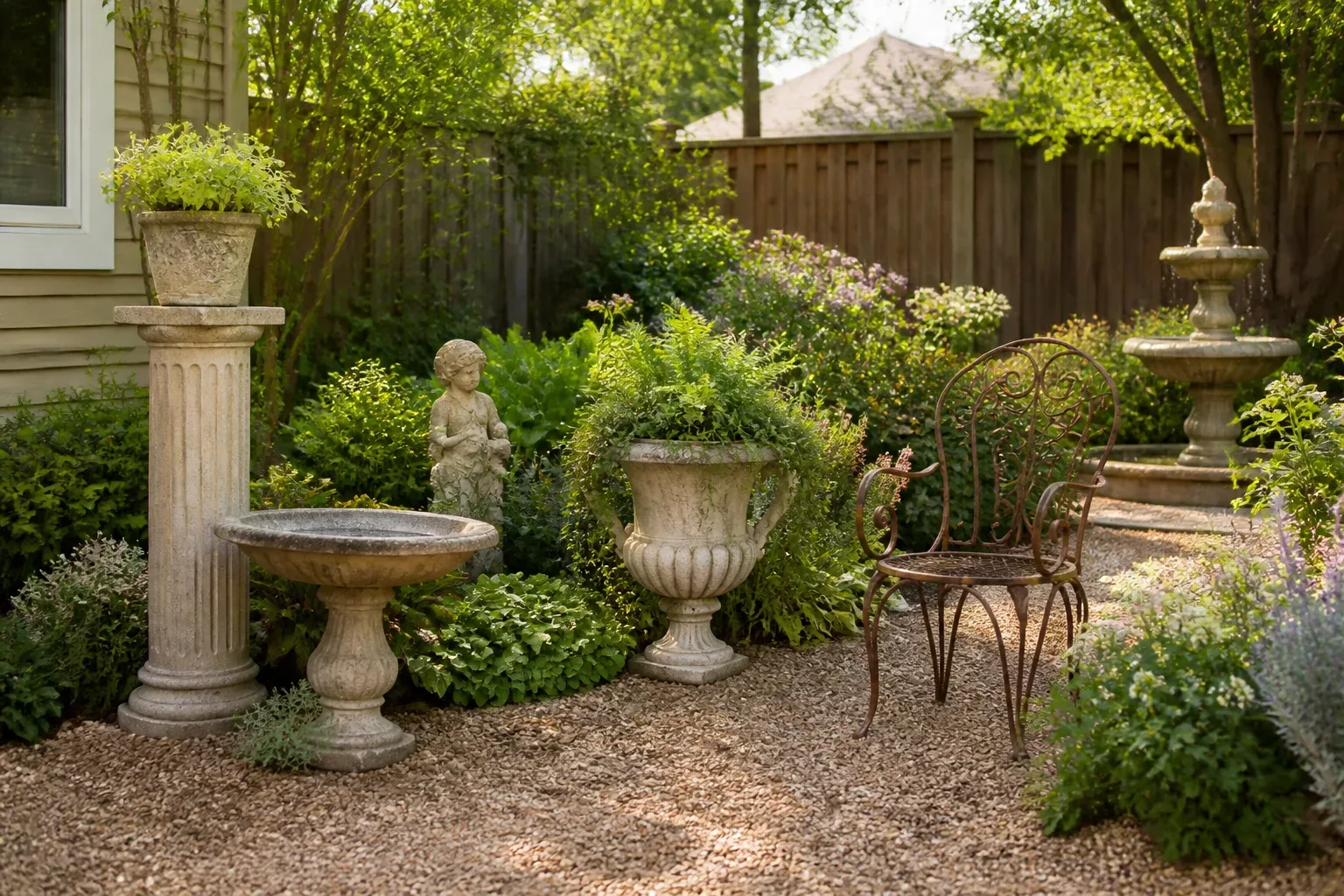
The best backyard decor items to thrift are not the pieces with the loudest paint or the trendiest shape. They are the solid, slightly unusual finds that already have visual weight: a stone basin, an iron chair, a broad planter, or a pedestal that makes an ordinary pot look deliberate.
Ursula Carmona of Home Made by Carmona looks for column pedestals and vintage wrought-iron furniture because they add character without requiring a matched set. Valerie Darden of Brexton Cole Interiors points to birdbaths and distinctive planters for the same reason. Their shared design lesson is simple: buy the shape and material first, then decide whether the finish needs help.
Secondhand shopping still needs a filter. Outdoor pieces live through sun, rain, frost, soil, bird droppings, and sometimes years of neglect, so a bargain only works if the item is stable, cleanable, and suited to the job you have in mind. Use this guide to choose the six finds most likely to earn their space—and to leave the attractive traps behind.
Why these pieces work so well secondhand
Outdoor decor ages in a way that new merchandise often tries to imitate. Weathered stone, softened paint, oxidized metal, and a little surface irregularity can make a new patio feel established, while a mass-produced piece in perfect condition may look anonymous when it is placed alone.
The materials also explain why secondhand shopping can make sense. A heavy concrete basin, metal planter, or iron chair costs more to ship and manufacture than a lightweight seasonal accent, but that weight is exactly what helps it hold a visual anchor outdoors. You are often buying proportions and permanence that are expensive to recreate from new pieces.
Patina is useful; deterioration is not. Chalky color, gentle oxidation, and small scratches can be cosmetic, while a cracked load-bearing base, rust that has eaten through a joint, or a planter that cannot drain is a functional failure. Learn that distinction before the piece reaches your car.
A smarter way to shop for backyard decor
Start with the job the item must do. A pedestal may raise a planter into view, a birdbath may provide clean water, a chair may create a reading corner, and a statue may simply give the eye a stopping point. If you cannot name its location and purpose, the item is probably not a bargain yet—it is just an object you like.
Use a quick four-part test while you are still at the sale:
- Structure: Put weight on the piece where its job will put weight. Rock a chair, press gently on a pedestal, and check whether a basin sits level.
- Material: Look underneath and inside, not just at the front. Rust, rot, hairline cracks, and repaired welds often hide on the least attractive side.
- Maintenance: Ask whether you can clean every surface and reach every drain, seam, or moving part.
- Total cost: Add transport, replacement hardware, paint, sealant, and your time to the sticker price.
Measure before you buy large items. A planter that looks modest on a warehouse floor can overwhelm a small patio, and a concrete statue that fits in a truck may still be too heavy for a deck or balcony. Photograph the item beside a familiar object if you need to think about scale before committing.
1. Column pedestals
A column pedestal is one of the most versatile backyard decor finds because it creates height without asking you to build anything. Use one beneath a planter, a shallow basin, a lantern, or a weatherproof sculpture, and an overlooked corner immediately gains a focal point.
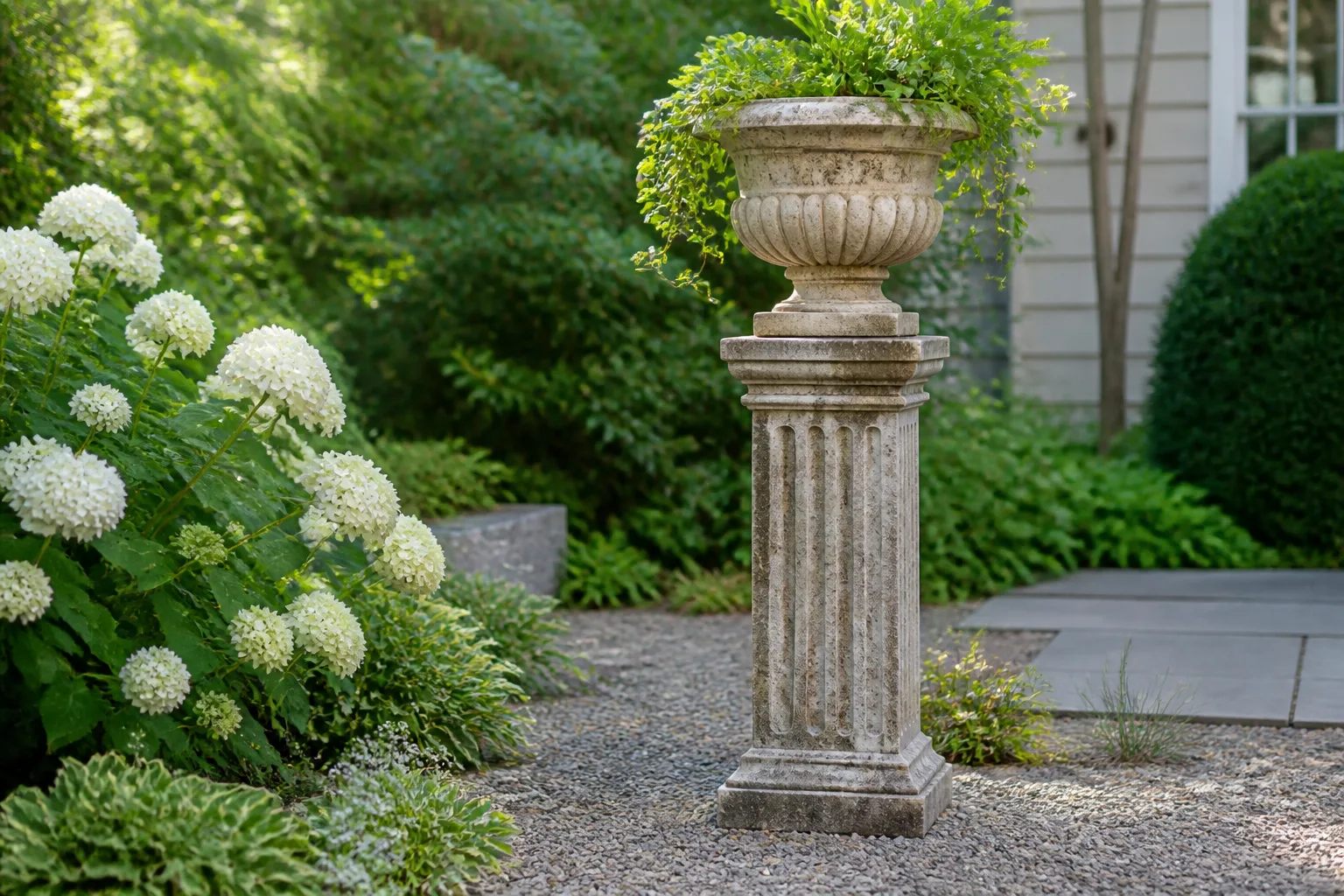
Look for a broad, stable footprint and a top that is wide enough for the object you plan to display. A narrow pedestal can be beautiful but risky beneath a heavy pot, especially on a windy terrace or beside a path where someone could brush against it. Concrete, stone, and dense composite pieces are usually more convincing outdoors than fragile decorative plaster.
Do not confuse a surface crack with a harmless mark until you inspect it closely. A short line in a finish may be cosmetic, but a crack that continues around the column, opens when the piece is moved, or appears where the shaft meets the base deserves a pass. Turn the pedestal over if possible and check for a missing foot, loose insert, or water damage.
Where a pedestal earns its space
Use the pedestal to solve a height problem rather than placing it in the center of an already busy bed. It can lift a dark-leaved plant against a pale wall, frame the entrance to a path, or give a birdbath a clear silhouette above low planting. A pair can flank steps, but one off-center pedestal often feels more collected and less formal.
Keep the top surface level and protect it from trapped water. If the display object has no drainage or leaves a ring, use a discreet saucer or a removable inner pot so the pedestal does not stay wet against its base. Anchor a tall piece in an exposed location, and never put a heavy basin on a pedestal that is even slightly wobbly.
2. Birdbaths
A secondhand birdbath can be both a garden ornament and a working wildlife feature, which is why stone, concrete, iron, and marble versions are worth watching for. The shape that looks most decorative is not necessarily the one birds can use: a shallow basin, textured footing, stable stand, and easy-to-clean surface matter more than elaborate carving.
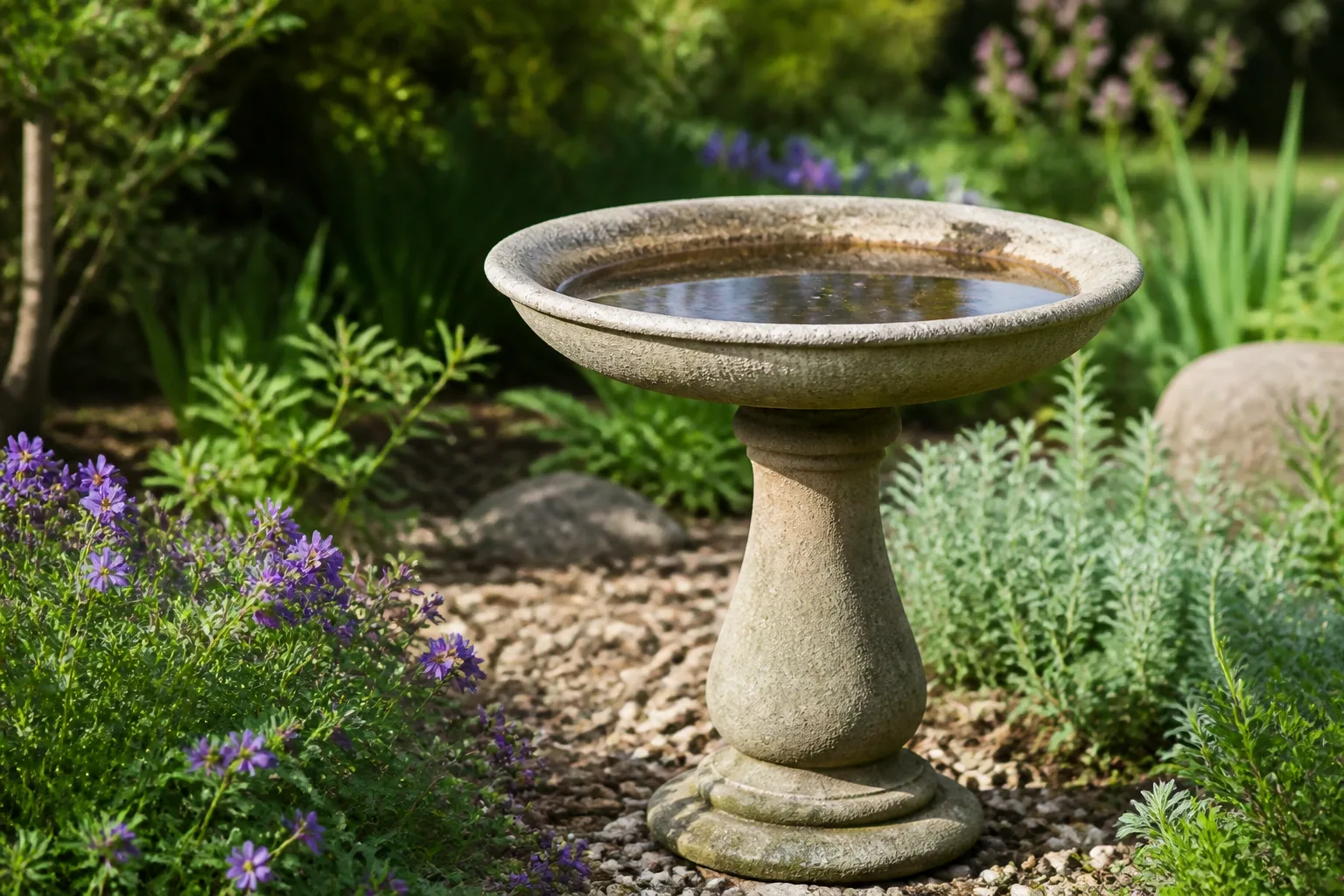
Check the bowl for hairline cracks, flaking surfaces, sharp edges, and a drain or plug that has been sealed shut. Fill it with a little water if the seller allows it, or at least set a straight object across the rim to see whether the basin is warped. A basin that cannot sit level will empty unevenly and may become unstable when birds land on its edge.
Water is only useful when it stays fresh. A local cached bird-garden reference from Fine Gardening treats water as one part of a complete habitat alongside food and shelter, not as an isolated ornament. Give the bath a visible location, some nearby cover without a hiding place for predators, and a maintenance routine you will actually keep.
Buy the basin for the bird, not just the look
Prefer a rough or textured interior over a glossy, slippery bowl. Add a few stable stones if smaller birds need a better foothold, but make sure they cannot roll under the water or tip the basin. Keep the water shallow enough for bathing and drinking, and put the feature where you can empty and refill it easily.
Before using a thrifted birdbath, scrub away dirt and organic residue, rinse it thoroughly, and refill it with plain water. Audubon’s birdbath guidance treats cleanliness as basic stewardship and cautions against leaving cleaning-product residue where birds will touch it. Do not pour vinegar, bleach, soap, or another cleaner into water that birds drink; any cleaner belongs on an empty basin and must be rinsed away completely.
Skip a basin with deep, inaccessible crevices, a finish that is shedding into the water, or a stand that cannot be stabilized. The right secondhand birdbath should be a feature you can maintain in five minutes, not a sculpture that becomes a neglected puddle.
3. Wrought-iron furniture
Vintage wrought-iron furniture gives a backyard instant structure. One chair beside a planter can create a small pause point; a loveseat beneath a tree can define a destination; and a mismatched side table can make an outdoor corner feel furnished without the cost of a full suite.
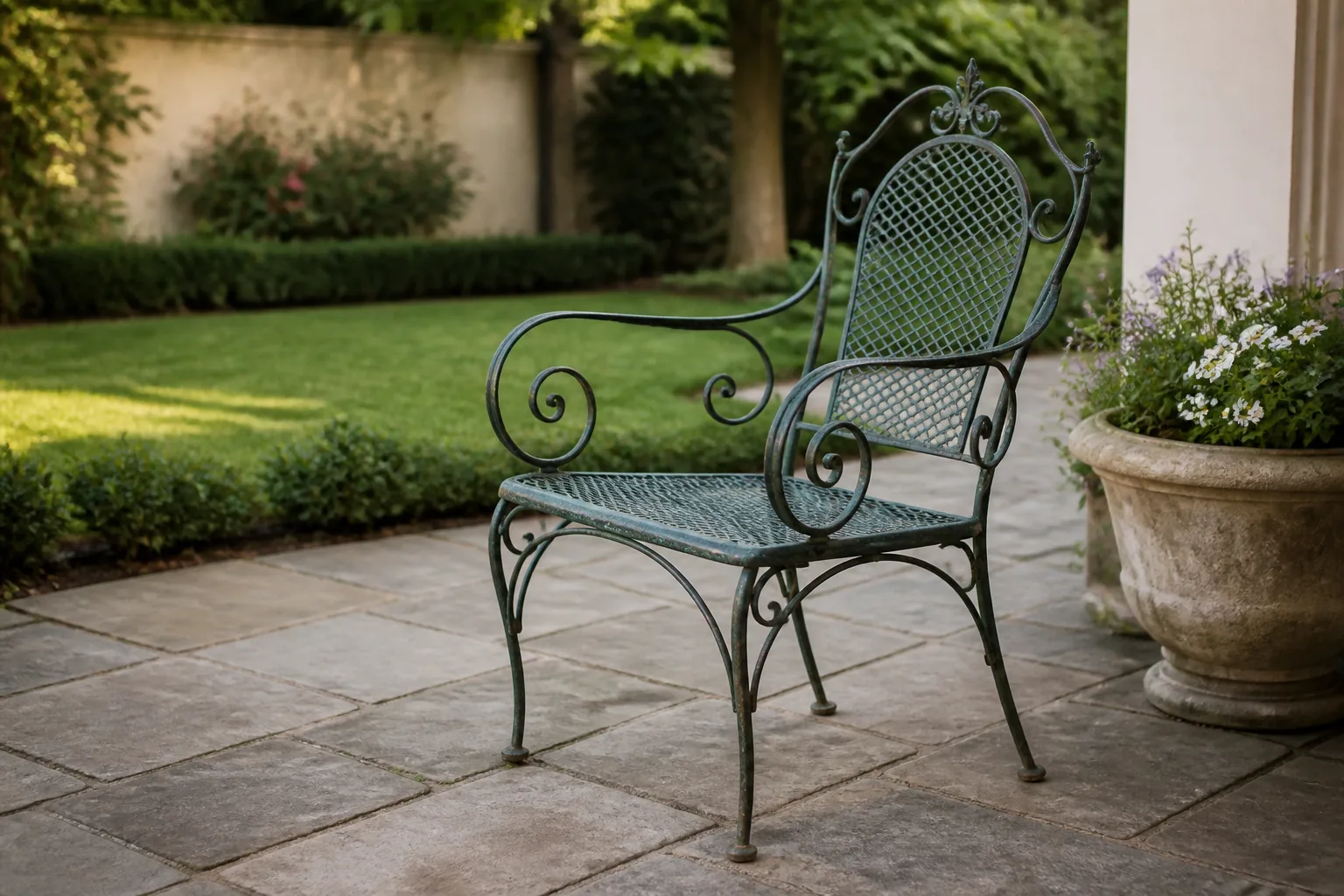
Heavy frames are a benefit when they are sound. Test every chair for wobble, inspect welds and fasteners, and look underneath the seat where water may have collected. Light surface rust is usually a restoration task, but bubbling metal, holes, flaking sections at a joint, or a frame that flexes under modest pressure signals a repair that may not be worth doing.
Treat “wrought iron” as a style description unless the provenance is clear. Many vintage outdoor pieces are made from steel or a mixture of materials, and the practical question is not whether the label is technically perfect. Ask whether the frame is strong, whether rust can be removed, and whether you can protect the finish with an outdoor-rated coating after the metal is clean and dry.
How to tell a repairable finish from a failing frame
Run a cloth over the frame and look for sharp flakes that catch. Check the feet first because they sit in wet soil, on damp pavers, or in pooled water; then check the underside of arms and the lower rails. If rust is confined to the surface and the metal remains solid, you have a manageable cleaning and coating job. If the rust has changed the shape of the tube or eaten through a support, leave it.
Think about comfort before you fall for the silhouette. Replacement cushions can cost more than the chair, and an unusual seat size may be hard to fit. A chair with a sound frame and no cushion can still be a good buy if you are happy with a simple outdoor seat pad, but include that cost before you decide.
Keep metal furniture on a surface that sheds water. Do not bury the legs in mulch, and use compatible foot caps or pads if the piece will sit on a deck. In salty or very humid locations, expect more frequent finish checks and move the furniture under cover during the harshest weather.
4. Large planters and unusual containers
Planters are among the easiest backyard decor items to thrift because their value is mostly in their proportions, texture, and color. A clawfoot planter, painted metal container, old urn, or oversized pot can give a new planting the kind of presence that several small nursery pots cannot create.
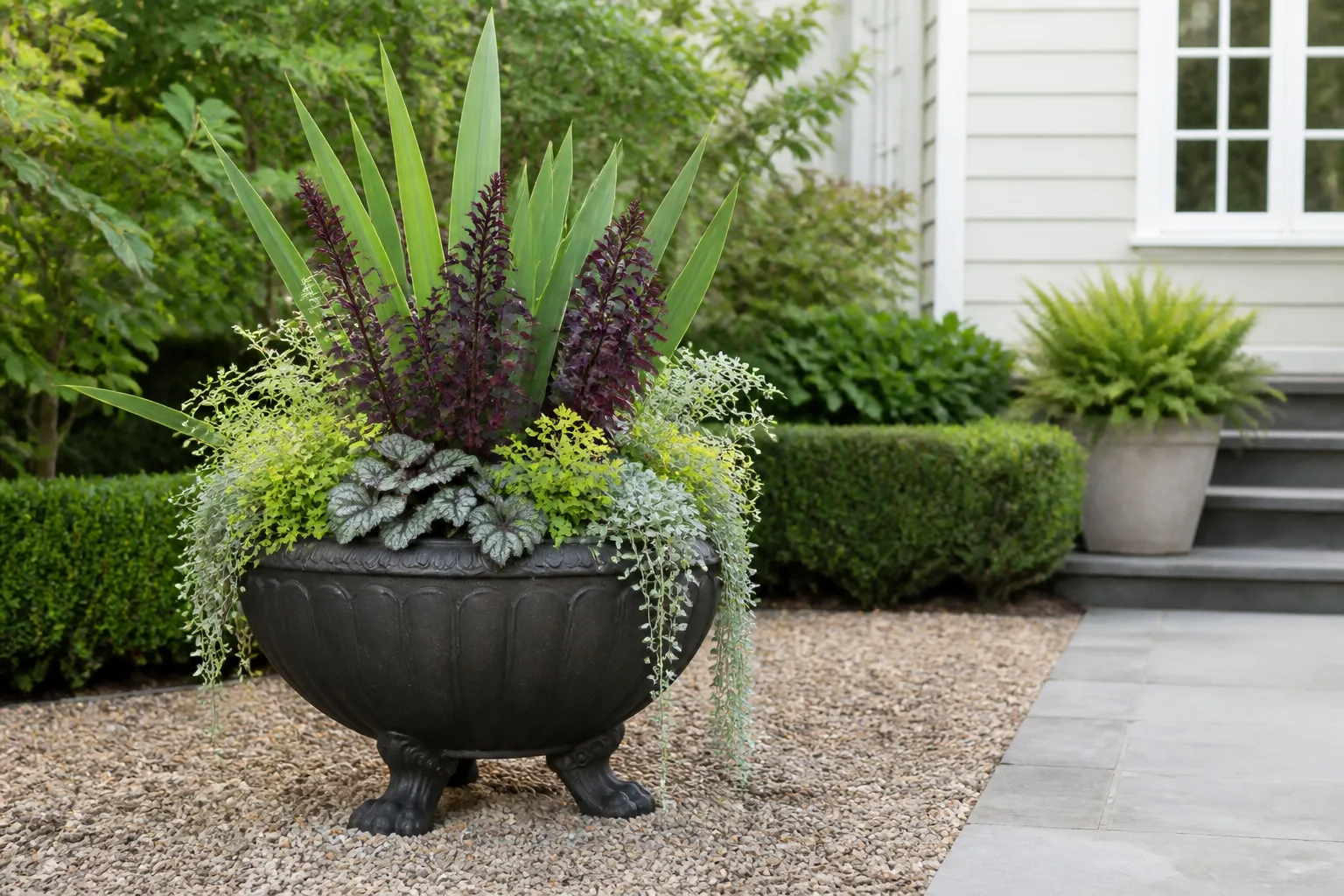
Look beyond the rim. Check the interior for a sour smell, standing water, root residue, flaking liner, or a crack that runs through the base. On ceramic and terra-cotta, a fine surface line may remain stable, but a crack that reaches the bottom or widens when you press both sides can fail once wet soil freezes or the container is moved.
Weight is part of the decision. A heavy pot may resist wind, but it can be a poor choice for a balcony, rooftop, or deck with load limits, and it may be impossible to move after planting. For a large decorative container, use a lightweight inner pot or a well-supported liner rather than filling the entire vessel with soil simply because it is deep.
Check drainage before you buy
Drainage is the fastest useful test. Look for one or more open holes at the lowest point, confirm that they are not blocked with old roots or hardened soil, and ask whether the container can sit on feet or a stand that keeps the opening clear. A decorative container without a drain can still hold a nursery pot, but it should not automatically become a planted pot.
Do not drill an antique or fragile vessel in the parking lot. The material may crack, the finish may splinter, and you may destroy the very feature that made it valuable. Use a removable pot inside the container if you want flexibility, and leave a small air gap so the inner pot does not sit in collected water.
Porous containers need a little more thought in freeze-prone climates. Bring fragile ceramic indoors, place it under cover, or choose a vessel that can tolerate repeated wetting and drying. In hot, sunny locations, dark metal can heat the root zone quickly, so use a heat-tolerant plant, an inner pot, or afternoon protection rather than assuming every plant will be comfortable.
5. Garden statues
Garden statues are easiest to use when you treat them as punctuation rather than a theme. A brass animal, concrete figure, resin cat, or weathered bird can add a small surprise behind a shrub, at the turn of a path, or under trailing vines without making the entire yard feel like a souvenir shop.
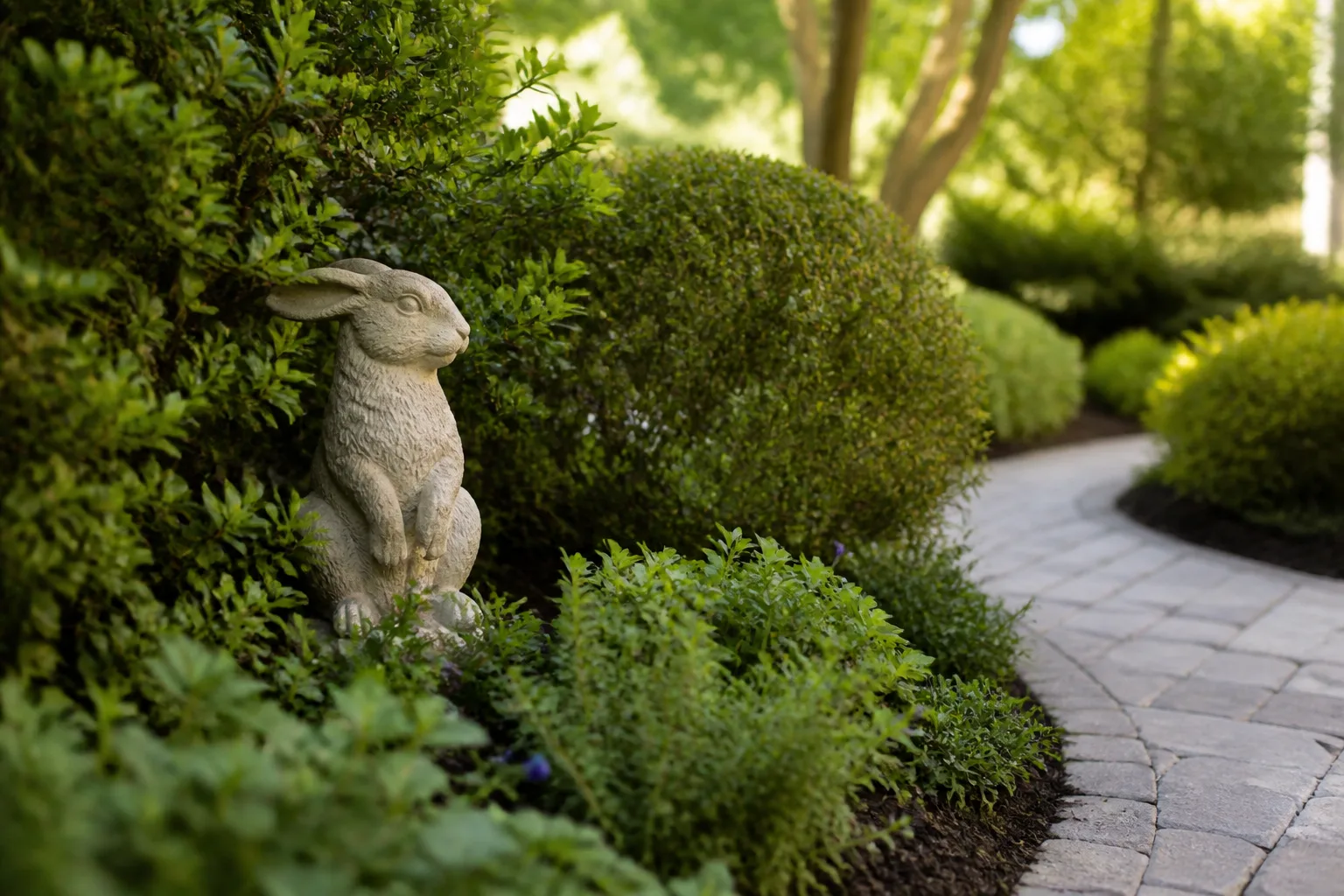
Inspect the underside and the weakest projections. Thin ears, tails, fingers, wings, and plant-like details are the first places to chip, while hollow resin can become brittle after years of sun. A statue that leans because its base is uneven may be repairable on a firm plinth, but a piece with a broken neck, unstable feet, or sharp exposed edges is not a charming bargain.
Surface condition should match the material. Brass can develop an attractive darkened finish, while concrete may show pale mineral deposits or small pits that do not affect stability. Peeling paint, a strong chemical smell, soft spots, or a coating that lifts in sheets deserves more caution, especially if the piece will be near children, pets, or edible crops.
Use one statue as a punctuation mark
Place the statue where it will be discovered, not where it blocks the main view. A figure partly screened by foliage feels integrated; the same figure placed in the middle of a lawn can look like an unrelated object. Use the existing lines of the yard—path turns, a low wall, a tall planter, or the edge of a bed—to make the placement feel intentional.
Repeat one idea rather than collecting every idea. If the yard already has curved planting beds, choose a rounded animal or bowl; if the architecture is formal, a simple stone figure may look more at home than a brightly painted gnome. One strong accent usually adds more character than several unrelated characters competing at the same distance.
6. Small fountains and water features
Small fountains are the sixth find worth adding to a secondhand shopping list, especially when you like the sound of moving water but do not want a large built-in feature. Look for stone bowls, tiered basins, wall-mounted pieces, and small recirculating units that can be repaired or adapted without rebuilding the whole yard.
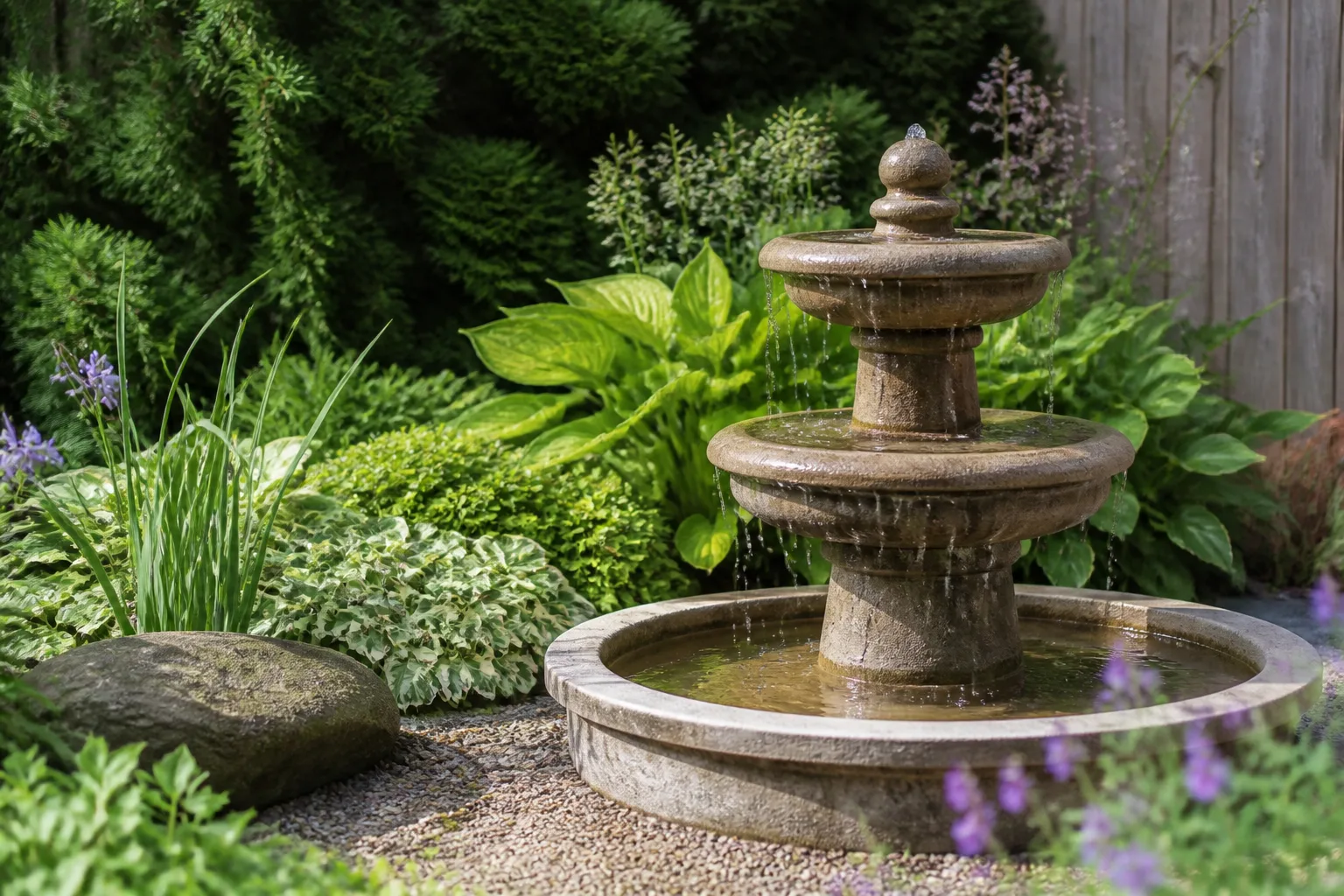
Inspect the basin before you think about the pump. It must hold water without a long crack, sit level, and have a route for the cord or tubing that does not create a trip hazard. Mineral scale is a cleaning job; a split basin, a missing structural piece, or a hole in a place you cannot seal is a different category.
Assume an included pump is unverified. Do not plug in a frayed cord or a wet electrical connection just to test your luck at the sale, and do not treat a missing pump as a free replacement unless you have checked that a compatible model exists. A fountain is only a bargain when the basin, pump access, power route, and ongoing cleaning are all realistic for your space.
When a fountain is a project, not a bargain
Buy a fountain as a project when you genuinely want the project. Replacing a standard pump, cleaning mineral buildup, or repainting a stable exterior can be satisfying; rebuilding a cracked reservoir or chasing a discontinued fitting is often not. Photograph labels, measure the pump cavity, and check the water path before you load the piece.
Think about wildlife and maintenance. Moving water can be attractive, but a fountain still needs clean water, safe placement, and regular attention; it is not automatically a better birdbath. Keep chemical treatments out of water that birds may drink, position the feature where splashes will not damage a wall or foundation, and stop using it if the basin becomes slimy or the pump overheats.
Clean and quarantine every thrifted piece
Give outdoor finds a holding area before they join the garden. Set them on a washable surface, brush away loose dirt, and inspect seams, feet, undersides, and cavities for insects, mold, rot, or residue. This pause also lets you see the piece in daylight instead of making a rushed decision because it looked perfect under a warehouse lamp.
Match the cleaning method to the material:
- Metal: Dry-brush loose rust, wash with a mild detergent if the finish allows it, rinse, and dry completely before repairing or coating. Do not paint over active flaking rust or trapped moisture.
- Stone and concrete: Remove grit with a soft brush and water first. A porous piece may retain residue, so give it time to dry before deciding whether a stain is cosmetic or a sign of contamination.
- Ceramic and resin: Use a non-abrasive cloth or nylon brush, and avoid aggressive scrubbing that creates new scratches. Inspect thin or hollow areas after cleaning because damage may be easier to see when the surface is wet.
- Birdbaths: Drain, scrub the empty basin, rinse until no cleaner remains, and refill with fresh water. Routine soap or chemical residue is not worth the risk; Audubon and local bird-care guidance both put cleanliness ahead of decorative finish.
Drying is part of the restoration, not dead time. Water trapped under a metal foot, inside a planter rim, or beneath a loose coating can restart rust and freeze damage after you think the item is finished. Keep pieces elevated, turn them during drying, and do not place them in the bed until the underside is as clean as the front.
Style the finds as a collection, not a pile
The most expensive-looking outdoor spaces are not necessarily filled with expensive objects. They usually have a clear visual rhythm: one tall piece, one grounded piece, a repeated material or color, and enough empty space for each object to be read.
Build a vignette with three levels. Put a pedestal or tall planter at the back, a chair or low basin in the middle, and a small statue, pot, or lantern near the front. This layered arrangement gives mismatched finds a relationship, even when they came from different sellers and were never intended to be a set.
Repeat one finish across the yard instead of forcing every piece to match. Three different green-painted pieces can feel connected; three competing faux finishes can feel accidental. If your finds are visually loud, quiet them with repeated foliage, gravel, or a simple wall behind them.
Use the house and the plants as the editing tools. A dark iron chair may disappear beneath dense evergreen foliage but look crisp against pale stone; a bright planter can enliven a shaded corner but overwhelm a formal bed. Place each object, step back from the usual viewing position, and remove anything that steals attention from the yard’s best feature.
When to walk away from a secondhand find
Some pieces are too damaged to save, too awkward to use, or too contaminated to justify the work. A low price does not compensate for an item that requires specialist repair, expensive transport, or a new location you do not actually have.
Leave the item behind when:
- a chair, table, or pedestal wobbles after basic tightening;
- rust has perforated a frame or eaten into a load-bearing joint;
- a planter has a structural crack, no workable drainage plan, and no safe inner-pot solution;
- a birdbath has a deep, slippery, or impossible-to-clean basin;
- a fountain has an unsafe cord, a split reservoir, or unavailable fittings;
- a statue has sharp broken edges, soft resin, or a finish you cannot safely remove;
- mold, rot, chemical odor, or residue remains after a reasonable cleaning attempt;
- the final cost is close to buying a sound, appropriately sized new piece.
Be especially skeptical of anything advertised as “just needing a little paint.” Paint can hide a problem rather than solve it, and a thick new coating will not restore metal that has already lost its strength. Ask what the piece needs to do, then pay for the condition it is in—not the story attached to it.
Conclusion
The best backyard decor items to thrift are the ones that bring more than surface charm. Column pedestals add height, birdbaths add a maintainable water stop, wrought-iron furniture creates usable zones, planters add scale, statues supply personality, and small fountains can add movement when their mechanics are sound.
Shop with a job, a measuring tape, and a repair limit in mind. If the structure is stable, the material can be cleaned, the item suits your weather and space, and the total cost still feels fair, bring it home. A few well-chosen secondhand pieces can make a backyard feel layered and personal without making it look overdecorated.