How to Grow and Care for Cineraria Indoors and Out
Grow florist’s cineraria in a cool, bright spot with moisture that drains. Get practical advice on pots, seed starting, deadheading, pests, and after-bloom care.
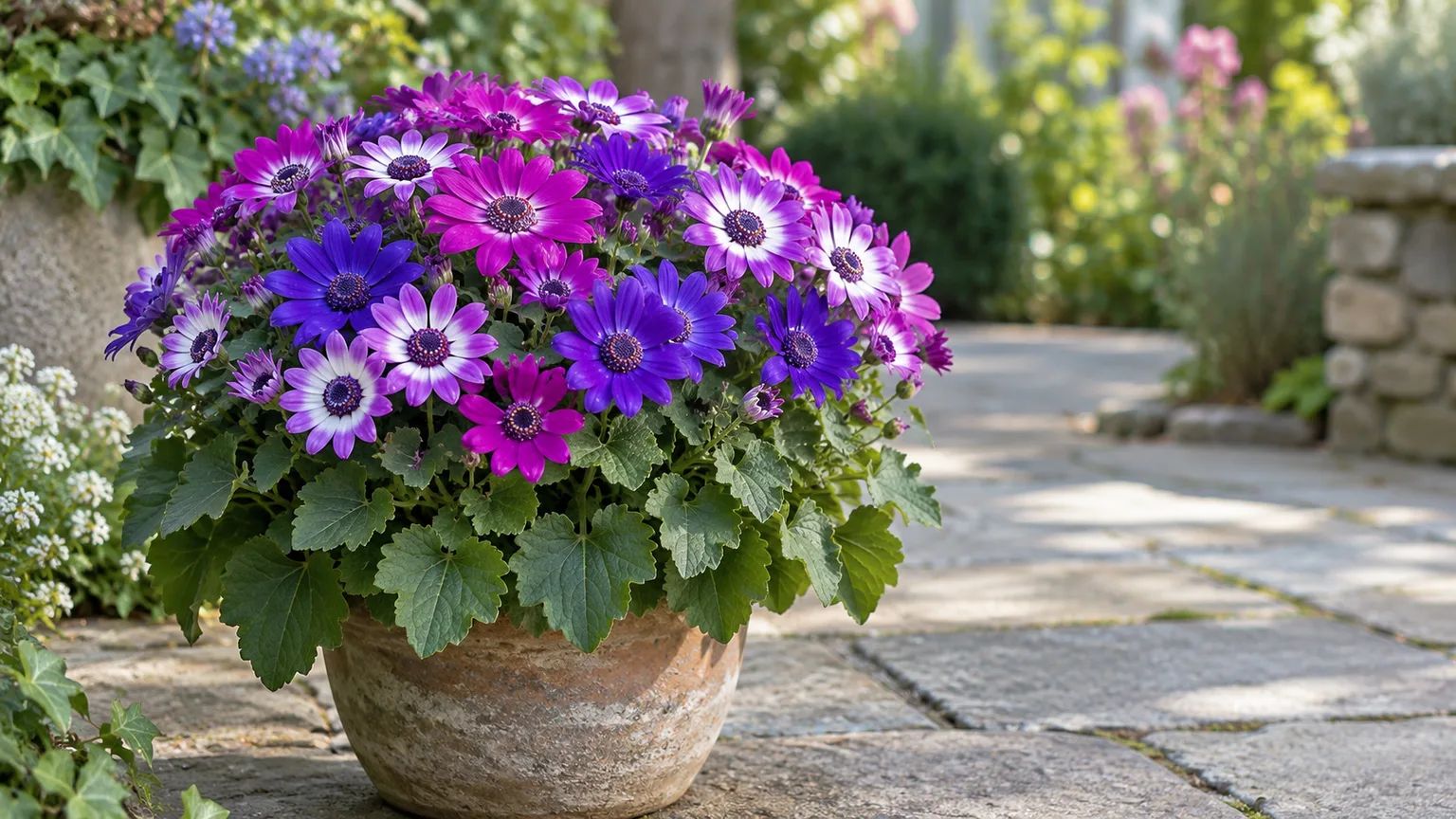
Florist’s cineraria is a cool-season flowering plant with a short, vivid display of blue, purple, pink, red, or white daisy-like blooms. It is easiest to enjoy when you match its conditions to the season: bright light without hot midday sun, a cool spot, and potting mix that stays evenly moist while draining freely.
The plant is commonly sold in bloom as a houseplant, but it is not built for months in a warm living room. If you want a longer display, keep it cool and water carefully; if you want repeat plants, plan for seed or cuttings rather than expecting every flowering pot to rebloom.
Cineraria at a glance
| Need | Practical starting point |
|---|---|
| Common retail name | Florist’s cineraria or cineraria |
| Botanical name | Pericallis × hybrida |
| Plant family | Asteraceae |
| Habit | Compact, mounding perennial, often grown as a seasonal annual |
| Typical mature size | About 12–18 inches tall and 12–24 inches wide; cultivar size varies |
| Best light | Bright indirect light indoors; bright shade or partial shade outdoors |
| Soil | Fertile, moisture-retentive but free-draining potting mix |
| Water | Keep the root ball evenly moist; never leave the pot standing in runoff |
| Bloom season | Often sold in flower in winter or early spring; outdoor timing varies by climate |
| Best use | A cool-room flowering pot, sheltered container, or seasonal border accent |
The familiar cineraria sold by florists is a hybrid in the daisy family, not a plant that needs to be treated like a desert annual or a permanent foliage houseplant. Kew recognizes Pericallis × hybrida as an accepted hybrid derivative of Canary Islands species; garden references list it as a tender perennial that is commonly grown as an annual or short-term potted display. Kew Plants of the World Online North Carolina State Extension
Start by checking which cineraria you bought
“Cineraria” appears on labels for more than one plant. The large green leaves and colorful daisy-like clusters described here identify florist’s cineraria, usually Pericallis × hybrida. It forms a low mound of foliage under a dome of flowers, often with a contrasting ring or eye near the center of each bloom. The plant may be sold simply as cineraria, florist’s cineraria, or under a cultivar or series name.
Florist’s cineraria, dusty miller, and Senetti are not interchangeable
Dusty miller is a different plant, Jacobaea maritima, grown mainly for its silvery, cut foliage. It may also be called “cineraria” in older garden labels, but its care and appearance are different from the flowering florist plant. If a label is unclear, look at the foliage: broad, green, softly lobed leaves with bright flowers point to florist’s cineraria; silver, deeply divided leaves point to dusty miller. Horticulture.co.uk’s cineraria overview
Senetti is a named series of Pericallis hybrids, not a synonym for every florist cineraria. Its breeder describes the series as vigorous, cool-tolerant, and capable of a longer flowering season than older standard forms. That makes a Senetti label useful when you want a spring container plant with a better chance of continuing through mild spells, but it does not mean all plants sold as cineraria will behave the same way. Suntory Flowers
Choose the right season and climate
Although Pericallis × hybrida is botanically perennial, it is tender and usually treated as a seasonal annual outside a mild, protected climate. Many garden references place it in USDA Zones 9–11, but a zone number is not a promise that a particular cultivar will survive summer heat, winter wet, or a hard freeze. In colder areas, grow it in a pot that can be sheltered or enjoy it as a cool-season bedding plant; in warm areas, use it during the milder part of the year and remove it when heat takes over. Missouri Botanical Garden Plant Finder North Carolina State Extension
The calendar depends on where you live. In much of North America, garden centers sell flowering pots from winter into early spring, and cool-summer gardens can use them outdoors in spring. In mild or subtropical locations, cineraria can be grown through the cool season; in the Southern Hemisphere, shift the timing to your local autumn and winter rather than following Northern Hemisphere month names. The practical rule is to plant when days are cool and the site is protected from frost and heat extremes.
Do not try to make cineraria a permanent summer-bedding plant in a region with hot, humid summers. Even where the roots might survive, hot weather can shorten the floral display and stress the foliage. A container is especially useful because you can move it under shelter during a warm spell and take it out again when temperatures moderate.
Light: bright and cool, with shelter from strong sun
Indoors, place cineraria in a bright room with indirect or filtered light. A bright east-facing window is often a good starting point; near a strong south- or west-facing window, set it back from the glass or soften midday sun with a sheer curtain. It needs enough light to hold flowers and compact growth, but a hot sunny window can heat the pot and wilt the plant quickly.
Outdoors, partial shade is a dependable choice, especially in regions where spring days warm quickly. In cooler weather, a few hours of gentle morning sun may be useful; shelter it from intense midday and afternoon sun when temperatures rise. Guidance varies by cultivar and climate: NC State Extension recommends partial shade, while the RHS describes full sun through partial shade in frost-free settings, and the Senetti breeder notes that its own series tolerates more sun during cooler months. For an ordinary florist cineraria, start with bright shade and adjust only if the plant remains cool and hydrated. North Carolina State Extension Royal Horticultural Society Suntory Flowers
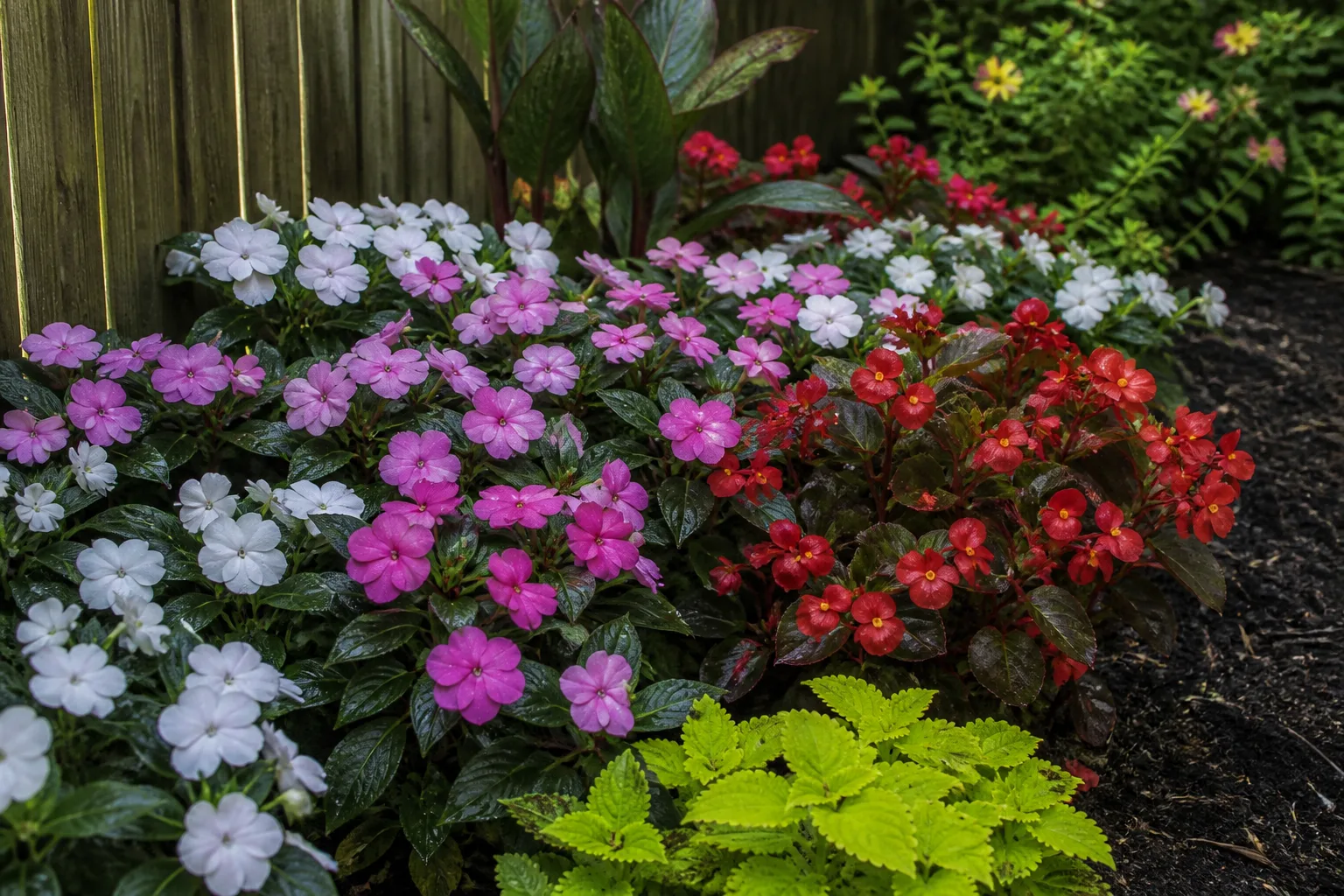
This mixed shade bed shows the kind of sheltered placement to consider in warm weather; the flowers pictured are impatiens, not cineraria.
Soil and pot: drain freely without drying out
Use a fertile, loose potting mix that holds moisture but does not stay sodden. A quality all-purpose container mix is usually adequate; if it compacts or remains wet for days, blend in perlite or fine bark to improve air space. The goal is not a special pH recipe. Professional growers often control pH closely, but home cineraria can grow well in a suitable free-draining mix without adding coffee grounds, peat, or other amendments on speculation. North Carolina State Extension Royal Horticultural Society Murakami Seed’s grower guide
Choose a pot with open drainage holes. A snug nursery pot inside a decorative cachepot is fine if you remove the inner pot to water and let it drain completely before returning it. Do not rely on a layer of gravel at the bottom of a solid pot; it cannot substitute for a drainage hole and can leave the root zone sitting in water.
Avoid repotting a flowering plant just because it came in a small grower’s pot. If water runs through freely and the root ball is not pushing out through the base, leave it alone until the display is over. If the pot is cracked, has no drainage, or dries so quickly that the plant wilts between daily checks, transfer the root ball into a slightly larger pot with drainage rather than jumping to an oversized container.
Watering: keep the root ball evenly moist
Cineraria needs regular moisture, but it cannot use water effectively when its roots sit in saturated mix. Check the pot rather than watering by the week: feel the mix just below the surface, and water when it is beginning to dry but still feels slightly cool and damp farther down. In a small flowering pot, this may mean checking daily in a warm, bright room and less often in a cool room.
When it is ready, water slowly over the soil until water drains from the bottom. Let the pot finish draining, then empty the saucer or cachepot. If only the top of the mix is wetted with small sips, the lower root ball can remain dry; if runoff stays around the roots, they lose air and are more vulnerable to rot. The right rhythm is a thorough drink followed by a short, monitored dry-down, not constant standing water.
Water florist cineraria without leaving it in a sleeve of water
Many florist pots are sold inside a decorative foil or plastic cover that hides the grower’s pot. Before watering, lift out the inner pot, check the mix, water at the sink, and wait until dripping stops before sliding it back into the sleeve. If water has collected inside the cover, pour it away rather than leaving the plant to draw it back up for days. The Senetti breeder’s production guidance also warns against permanently wet soil because it can lead to root infection; at home, the useful lesson is simply to let the pot drain fully. Suntory Flowers’ Senetti production notes
This simple step prevents a common mismatch: the plant wilts because the root ball has dried, but the decorative cover looks wet from old runoff. A wilted cineraria with dry mix needs water; one with wet, heavy mix needs drainage and a cool, airy place while you inspect the roots. The leaves alone cannot tell you which case you have. Iowa State University Extension
Temperature and humidity: keep air cool and moving
A cool room is one of the most useful things you can give a flowering cineraria. Iowa State recommends bright indirect light and a temperature near 60°F for a potted plant; commercial production guidance also finishes cineraria in cool conditions. As a home target, keep it in a bright area around 55–65°F when practical, away from heating vents, radiators, fireplaces, and hot afternoon glass. Avoid treating the range as a hard biological cutoff: cultivars and conditions vary, but cool air generally extends the display better than a warm room. Iowa State University Extension Murakami Seed’s grower guide
The plant prefers a moist root zone, not a constantly wet canopy. Do not mist the flowers or crowd the pot against a damp wall; wet petals and stagnant air can encourage gray mold. If the room is very dry, move the plant away from heat and drafts first. A clean room humidifier can help raise ambient humidity for several plants, but no humidity gadget will compensate for warm air, a dry root ball, or water trapped in the pot cover. Missouri Botanical Garden Plant Finder
Fertilizer: feed lightly while the plant is growing
A newly purchased cineraria in flower does not automatically need fertilizer. The commercial plant has been raised to reach the shelf in bloom, and forcing extra growth with a heavy feed will not make existing flowers last longer. If you keep a plant after its first flush and it continues making healthy leaves, use a balanced liquid fertilizer at half the label strength every two to three weeks during active growth, then stop when growth slows or the plant is declining. The RHS recommends periodic balanced feeding for some cultivated forms; grower rates are designed for production and should not be copied as home-plant doses. Royal Horticultural Society
Do not fertilize a wilted plant until you know the soil is not dry or waterlogged. Fertilizer salts can add stress to damaged roots. If a container has been fed repeatedly and has a white crust on the mix or pot rim, flush the mix with clean water only if drainage is good, and let it drain fully.
Deadheading and light pruning
Remove flower heads as they fade, cutting or pinching the stem back to the next healthy leaf or unopened bud. This keeps the plant tidy and stops spent petals from collecting on foliage, where they can stay damp. Deadheading can preserve the look of the display and allow existing buds to open, but it does not guarantee a new flush on a standard florist’s plant.
Avoid cutting the whole mound back while it is still in flower unless the label identifies it as a reblooming Senetti type and you are following that cultivar’s directions. Once the flowering stems are spent, trim dead or damaged material with clean snips. Do not strip healthy leaves that are still feeding the plant.
Grow cineraria from seed
Growing from seed is the most direct way to raise several plants for a planned cool-season display. It also takes patience: cineraria is not a quick seed-to-bloom annual, and seedlings need to develop through a cool, bright growing period before they flower. Start several months before the display you want; commercial production guidance describes roughly six to seven weeks for the young-plant stage followed by another 11 to 16 weeks to finish, depending on variety and conditions. A home sowing can take longer. Murakami Seed’s grower guide
Sow tiny seeds at the surface and plan backward from bloom
Use a clean tray or small pots filled with fine, premoistened seed-starting mix. Scatter seed thinly across the surface and press it gently into contact with the mix; do not bury it. Cineraria seed needs light during germination, according to the commercial culture guide, and a loose surface sowing is easier to keep evenly moist than a thinly buried seed. Murakami Seed’s grower guide
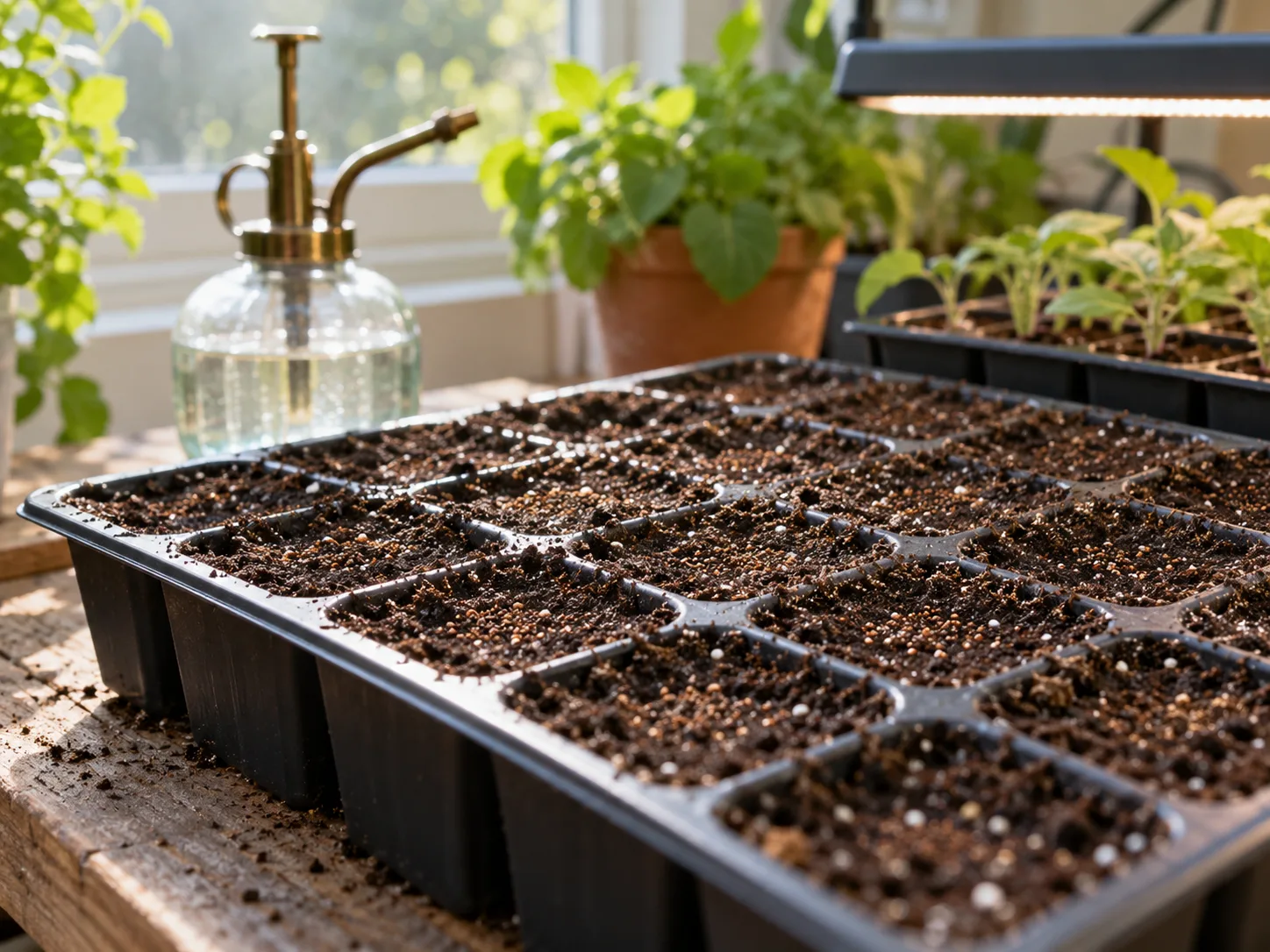
Use a fine, level seed mix for tiny cineraria seed; the tray shown is a general flower seed-starting setup.
Keep the surface consistently moist, not waterlogged. A clear cover can slow drying before germination, but lift it as soon as seedlings emerge so the foliage can breathe. Provide bright light after emergence and keep the seedlings evenly moist; once they have several true leaves, prick them out into individual pots without burying the crown.
Sources differ on the best germination temperature: the RHS advises sowing at 13–18°C, while one commercial seed guide lists 21–24°C during the germination stage and then cooler conditions as seedlings develop. These figures come from different production contexts and cultivars, so follow the packet or seed supplier’s instructions rather than assuming one number is universal. The shared practical points are a clean, well-drained medium, surface sowing, reliable moisture, and good light after emergence. Royal Horticultural Society Murakami Seed’s grower guide
Time sowing backward from the season when the plant can stay cool. For winter or early spring flowers in the Northern Hemisphere, seed is generally started in late summer or early fall; for another climate, use the local cool-season window. A horticulturist’s Pericallis guide gives the same seasonal timing for late-winter and early-spring bloom. Harvest to Table’s Pericallis grow guide A packet may contain a mix of colors, and seed saved from a hybrid may not produce plants identical to the parent. If exact flower color or habit matters, buy seed sold for that purpose or propagate a named selection vegetatively.
Propagate selected plants from cuttings
Cuttings are useful when you want a new plant with the same flower color and growth habit as a selected cineraria. Take a healthy, nonflowering tip in summer, remove the lower leaves, and set the stem into a small pot of moist, free-draining propagation mix. Keep it bright but out of direct sun, warm enough to root, and humid without leaving the mix saturated. The RHS lists summer semi-ripe cuttings as a propagation option. Royal Horticultural Society
Not every flowering pot will have suitable shoots, and cuttings can fail if the parent is already declining or entering heat stress. A clear cover can reduce water loss, but air it regularly and remove it once new growth begins. For one seasonal purchase, buying a fresh plant next year is often easier; cuttings make more sense if you have a vigorous specimen and want to preserve a particular cultivar.
Use cineraria in containers, borders, or indoors
A container gives the most control over soil drainage and makes it easier to move the plant as the weather changes. Use cineraria as the focal point in a cool-season pot, then pair it with low-growing foliage that will not crowd or shade its flowers. In a border, place it near the front where its mound can be seen and where taller plants or a wall can provide afternoon shelter. NC State describes it as an accent or border plant near patios, as well as a flowering pot plant. North Carolina State Extension
For indoor display, treat it as a flowering seasonal plant rather than an easy long-term houseplant. Keep it in a cool, bright room where flowers are visible, but do not leave it on top of a radiator or directly beside a sunny window. If the room is warm, a shaded outdoor porch or cool entryway may hold the flowers longer, provided nights remain frost-free and the plant is not suddenly exposed to strong sun.
The plant is best used when cool conditions are naturally available. If your only outdoor spot is a hot concrete patio and your only indoor spot is a warm room, enjoy the bloom as a short-lived accent and choose a more heat-tolerant plant for a long season.
Troubleshoot wilt, yellowing, and failed blooms
A drooping plant is a symptom, not a watering instruction. First check the mix and the pot: a light, dry root ball calls for a thorough watering; a heavy, wet pot points toward poor drainage, overwatering, or root damage. Move the plant into a cool bright spot while it recovers, and avoid changing fertilizer, light, and watering all at once.
| What you see | Check first | Practical response |
|---|---|---|
| Whole plant droops and mix is dry | Is the root ball dry below the surface? | Water thoroughly, drain the pot, and recheck after a few hours. |
| Wilting with wet, heavy mix | Does runoff remain in a sleeve or cachepot? | Empty standing water; improve drainage and inspect roots if the mix stays saturated. |
| Flowers fade quickly or buds shrivel | Is the room hot or in direct sun? | Move to a cooler, bright position and protect from strong midday light. |
| Lower leaves yellow one at a time | Is the rest of the mound firm and growing? | Remove only fully spent leaves; watch for spreading yellowing or wet soil. |
| Gray or brown petals turn soft | Are old flowers staying wet or crowded? | Remove affected heads and improve air movement around dry foliage. |
| New growth is weak or distorted | Are insects clustered under leaves or at tips? | Isolate the pot and inspect leaf undersides and buds closely. |
If the roots are dark, soft, or foul-smelling, root or crown rot is likely. Remove a badly affected plant rather than trying to save it in the same waterlogged mix; a healthy-looking top cannot recover if most of its roots have decayed. If only a small amount of the root ball is damaged and firm roots remain, trim away mushy tissue with clean tools, repot into fresh airy mix, and water only when the surface begins to dry.
Watch for aphids, mites, whiteflies, and fungal problems
Inspect new growth and leaf undersides when you bring a plant home and every few days while it is indoors. Aphids form soft clusters around buds and stems; spider mites cause fine stippling and sometimes webbing; whiteflies flutter up when foliage is disturbed; leaf miners leave pale winding trails inside the leaf. NC State and the RHS list these insects among the pests that can affect florist’s cineraria. North Carolina State Extension Royal Horticultural Society
Isolate a plant with a visible pest population. For a small infestation, rinse insects from the leaf undersides or remove badly affected leaves, then recheck for several days. If you use insecticidal soap or horticultural oil, choose a product labeled for the plant and pest, follow its directions, and test a small area first; soft foliage and flowers can be sensitive to sprays.
Gray mold (Botrytis) often starts on aging petals and spreads where dead material stays wet. Remove spent flowers promptly, water the soil rather than the blooms, and leave enough room for air to move around the plant. Powdery mildew can show as a dusty coating on leaves; improve light and airflow, avoid overhead watering, and remove badly affected leaves instead of repeatedly wetting the foliage. Persistent saturation also raises the risk of crown and root rots, so solve the drainage problem rather than trying to treat the leaves alone. Missouri Botanical Garden Plant Finder
After the flowers fade: rebloom, overwinter, or replace?
For most florist cineraria, plan on a single flowering display. Iowa State notes that a well-cared-for retail plant may remain attractive for two to three weeks in an average home, and NC State describes reblooming as difficult for greenhouse-forced florist plants. That short life is a consequence of the plant’s cool growing requirements and the shift from greenhouse conditions to a warm room, not proof that you did something wrong. Iowa State University Extension North Carolina State Extension
Some modern Senetti selections are bred to flower for longer and can be cut back after a flush according to the breeder’s directions. The distinction matters: choose a named Senetti series if repeat flowering is a priority, then follow its specific label; do not assume a generic cineraria will respond the same way. The breeder notes that its Senetti series can continue flowering through mild spring and early-summer warmth, while the RHS also identifies Senetti as a distinct series. Suntory Flowers Royal Horticultural Society
If you want to keep an ordinary plant, remove spent blooms and hold it in a cool, bright, frost-free place. It may keep green leaves, but it may not flower again, and warm summer weather can finish it off. In most homes, composting the plant after bloom and sowing seed or buying a fresh plant for the next cool season is the practical choice.
Conclusion
Cineraria rewards gardeners who treat it as a cool-season flowering plant rather than an all-purpose houseplant. Give it bright filtered light, a cool position, a well-drained pot, and steady moisture; empty decorative covers after watering and check the root ball before reacting to wilt.
For a quick indoor display, buy a plant already in bud and keep it away from heat. For a garden container, use it during mild weather and protect it from hard sun or frost. For next season, start seed months ahead or take summer cuttings from a healthy plant; choose Senetti by name if a longer repeat display is important.



