Impatiens Care Guide: Light, Water, Soil and Flowers
Impatiens walleriana
Learn how to grow common impatiens in shade with steady moisture, good drainage, and clear guidance for distinguishing New Guinea types.
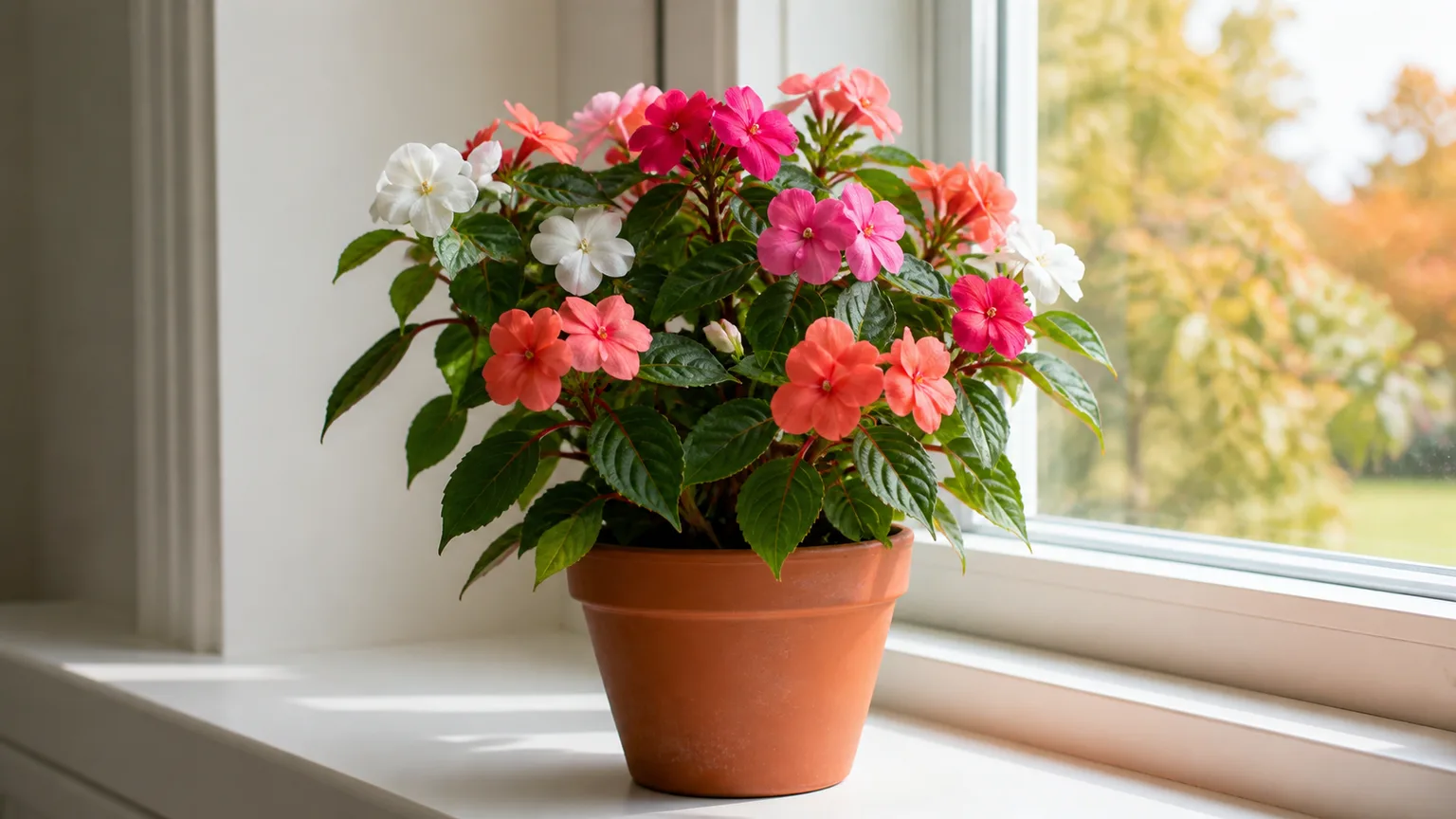
How to Grow and Care for Impatiens
Start with wateringThe most common care mistake for ImpatiensWatering guide →Impatiens care essentials
Light
Part shade to full shade, with bright filtered light for steady flowering
Water
Keep the root zone evenly moist but not waterlogged. Water the soil when the surface begins to dry, and give containers a closer check during hot or windy weather. Impatiens has low drought tolerance and can wilt quickly in heat, but roots left in saturated soil can rot.
Soil
Use moisture-retentive but freely draining soil enriched with organic matter. Common impatiens performs best when roots stay moist without sitting in stagnant water.
Humidity
Temperature
Fertilizer
About Impatiens
Impatiens is native to Tropical East Africa, including Kenya, Mozambique, Tanzania, and Zimbabwe, typically reaches 15–60 cm (6–24 in) tall and about as wide; cultivar size varies indoors, with fast in warm weather growth. Impatiens has a mounding, clump forming tender perennial in frost free climates; grown as an annual where winters freeze growth habit and part of the Balsaminaceae family. It is also known as Garden impatiens, Common impatiens, Busy Lizzie, and Sultana.
| Detail | Information |
|---|---|
| Also known as | Garden impatiens, Common impatiens, Busy Lizzie, Sultana |
| Native region | Tropical East Africa, including Kenya, Mozambique, Tanzania, and Zimbabwe |
| Mature size | 15–60 cm (6–24 in) tall and about as wide; cultivar size varies |
| Growth rate | Fast in warm weather |
| Growth habit | Mounding, Clump Forming Tender Perennial In Frost Free Climates; Grown As An Annual Where Winters Freeze |
| Scientific name | Impatiens walleriana |
| Family | Balsaminaceae |
How to care for Impatiens?
How much light does Impatiens need?
Part shade to full shade, with bright filtered light for steady flowering. Dappled sunlight. A little morning sun when the soil stays evenly moist. low light
- Part shade to full shade - Part shade to full shade, with bright filtered light for steady flowering.
- with bright filtered light for steady flowering - Part shade to full shade, with bright filtered light for steady flowering.
- Dappled sunlight - Dappled sunlight.
- A little morning sun when the soil stays evenly moist - A little morning sun when the soil stays evenly moist.
- low light - low light.
When should you water Impatiens?
Keep the root zone evenly moist but not waterlogged. Water the soil when the surface begins to dry, and give containers a closer check during hot or windy weather. Impatiens has low drought tolerance and can wilt quickly in heat, but roots left in saturated soil can rot.
- Feel the top 2–3 cm (about 1 in) of mix. If it is starting to dry - Water the soil when the surface begins to dry, and give containers a closer check during hot or windy weather.
- water the root zone thoroughly and let excess drain from the pot or bed - Water the soil when the surface begins to dry, and give containers a closer check during hot or windy weather.
- Drain excess water - Keep the root zone evenly moist but not waterlogged.
What soil works best for Impatiens?
Use moisture-retentive but freely draining soil enriched with organic matter. Common impatiens performs best when roots stay moist without sitting in stagnant water.
- For containers - Common impatiens performs best when roots stay moist without sitting in stagnant water.
- use a quality potting mix that holds moisture while draining freely - Use moisture-retentive but freely draining soil enriched with organic matter.
- Add compost or other mature organic matter to improve garden soil structure. - Use moisture-retentive but freely draining soil enriched with organic matter.
Grower notes for Impatiens
Check which kind of impatiens you bought
This profile focuses on common garden impatiens, Impatiens walleriana, often sold as Busy Lizzie or sultana. New Guinea impatiens (I. hawkeri) and sun-tolerant hybrid series have different light and disease responses; use the plant label before choosing a sunny site.
Use shade to protect foliage and flowers
Common impatiens is a dependable flowering choice for part-shade and shade. In a cooler location it may handle some gentle morning sun if the soil stays moist, but hot afternoon sun can scorch leaves and intensify wilting.
Keep moisture steady and drainage open
Impatiens has shallow roots and low drought tolerance, so check pots often in hot or drying weather. Water when the upper mix begins to dry, then let excess drain; adding more water to already-soggy soil can damage roots.
Check the soil before treating midday wilt
Heat and dry soil can make impatiens wilt even when the plant looked fine in the morning. Feel the mix before watering: if it is dry, water thoroughly; if it is wet, pause and check drainage rather than adding more water.
Watch for downy mildew in crowded, damp beds
Downy mildew has affected common impatiens. Buy resistant walleriana varieties where available, give plants room for airflow, and avoid leaving foliage wet overnight. New Guinea impatiens is a separate group with natural resistance noted by horticulture references.
Treat it as a seasonal flower outside warm climates
Impatiens is a tender perennial in frost-free regions but is commonly planted after the last frost and grown as a warm-season annual elsewhere. In late summer, a light trim can refresh leggy growth and encourage new flowers while warm conditions remain.
Is Impatiens safe for pets?
NC State Extension's Plant Toolbox tags Impatiens walleriana as non-toxic to cats, dogs, and horses. This applies to the identified common species, not every member of the Impatiens genus; confirm the plant label and discourage pets from chewing ornamental plants.
NC State Extension lists Impatiens walleriana as non-toxic for cats, dogs, and horses. Its profile does not provide species-specific ingestion symptoms or a dose threshold, and this finding should not be generalized to every Impatiens species or hybrid.
Watering Impatiens
For Impatiens, feel the top 2–3 cm (about 1 in) of mix. If it is starting to dry, water the root zone thoroughly and let excess drain from the pot or bed. and water check the soil rather than following a fixed calendar. Containers may need a daily check during hot, dry spells; beds in cool or rainy weather need less supplemental water. Check more often during hot, dry weather because foliage can wilt when the plant lacks water. Reduce supplemental watering in cool, rainy periods and never leave the roots standing in water.
| Detail | Information |
|---|---|
| How often | Check the soil rather than following a fixed calendar. Containers may need a daily check during hot, dry spells; beds in cool or rainy weather need less supplemental water. |
| How to check | Feel the top 2–3 cm (about 1 in) of mix. If it is starting to dry, water the root zone thoroughly and let excess drain from the pot or bed. |
| Seasonal changes | Check more often during hot, dry weather because foliage can wilt when the plant lacks water. Reduce supplemental watering in cool, rainy periods and never leave the roots standing in water. |
Signs of overwatering
- Potting mix remains wet for days or the pot has no open drainage hole.
- Lower leaves yellow while the root zone is still saturated.
- Stems or roots soften or rot after repeated overwatering.
Signs of underwatering
- The soil is dry below the surface and leaves wilt during warm weather.
- A container dries quickly and the plant recovers after thorough watering.
Soil & potting for Impatiens
Use a mix of For containers, use a quality potting mix that holds moisture while draining freely., Add compost or other mature organic matter to improve garden soil structure. for Impatiens. Good drainage with steady moisture; avoid waterlogged beds and pots. Target soil pH around Slightly acidic, around pH 6.0–6.5. Repot seasonal bedding plants usually do not need routine repotting. Move a container plant up one pot size when roots circle the root ball or grow from the drainage holes., ideally in spring, after frost danger passes for outdoor containers.
| Detail | Information |
|---|---|
| Recommended mix | For containers, use a quality potting mix that holds moisture while draining freely., Add compost or other mature organic matter to improve garden soil structure. |
| Drainage | Good drainage with steady moisture; avoid waterlogged beds and pots |
| Soil pH | Slightly acidic, around pH 6.0–6.5 |
| Repotting frequency | Seasonal bedding plants usually do not need routine repotting. Move a container plant up one pot size when roots circle the root ball or grow from the drainage holes. |
| Best season to repot | Spring, after frost danger passes for outdoor containers |
Signs it needs repotting
- Roots circle the pot or emerge from the drainage holes.
- The mix dries unusually fast despite regular checks.
- The plant has outgrown its nursery pot and needs space to establish.