How to Grow and Care for SunPatiens
SunPatiens care for beds and containers: pick Compact, Spreading, or Vigorous series, water by dry-down, feed lightly, and fix wilting or yellow leaves fast.
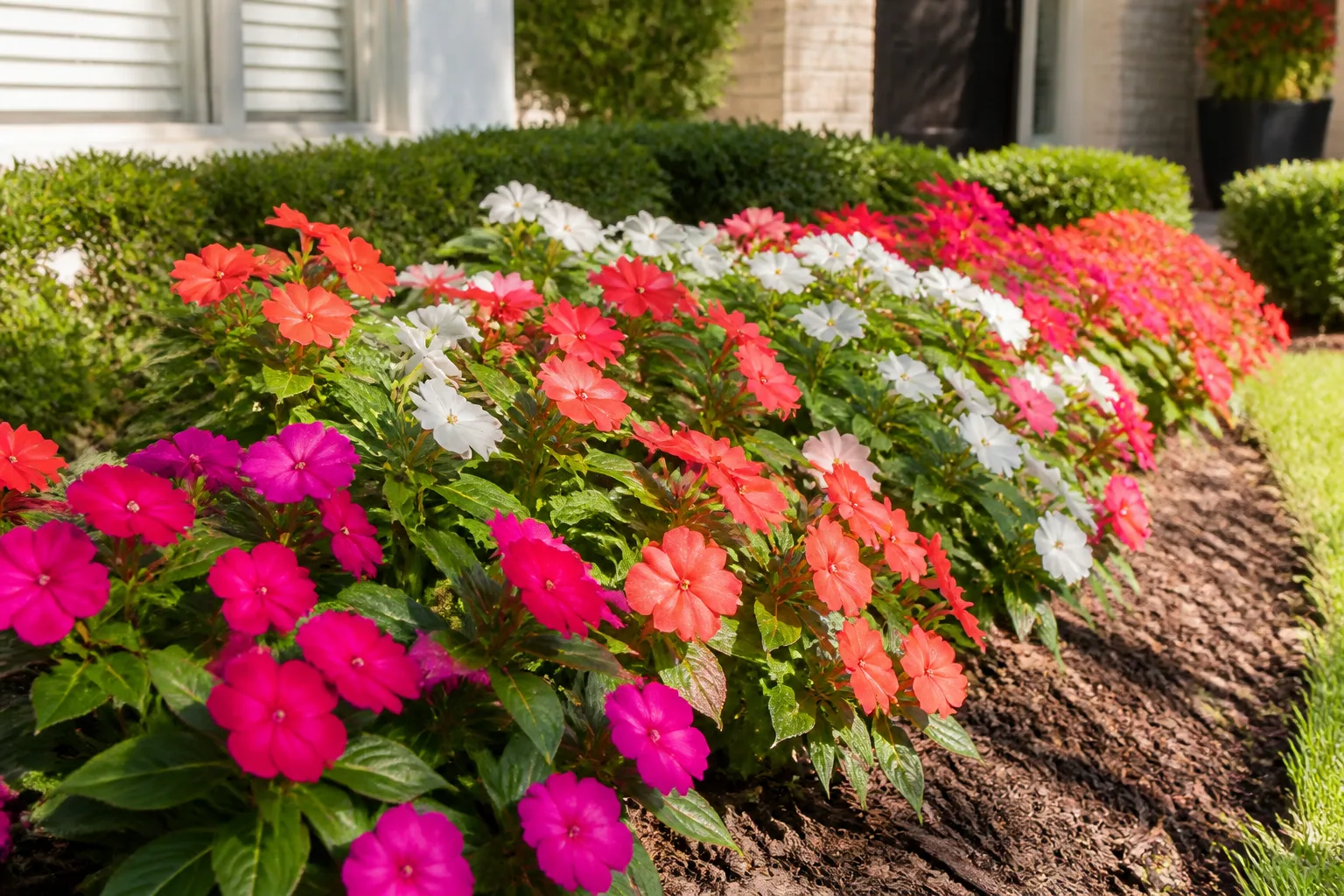
SunPatiens (Impatiens x hybrida SunPatiens® Group) are the impatiens hybrid that finally answers the question shade gardeners stopped asking once downy mildew wiped out beds of traditional impatiens: Can impatiens take real sun? They can—if you buy SunPatiens, match the series to your space, and water on a dry-down rhythm instead of a calendar.
Unlike classic Impatiens walleriana, which needs shade and collapses when impatiens downy mildew (Plasmopara obducens) arrives, SunPatiens were bred by Sakata from New Guinea impatiens and wild impatiens genetics for full-sun tolerance, heat performance, and downy mildew resistance. NC State Extension describes them as generally larger and bushier than traditional New Guinea types, with more blossoms over a longer spring-to-frost window (NC State Extension Plant Toolbox). In USDA zones 10–12 they can persist as perennials; everywhere else, treat them as frost-tender annuals you replant each spring.
This guide covers beds, borders, containers, and hanging baskets—the places SunPatiens actually earn their keep.
What SunPatiens Are (and Why Gardeners Switched)
For decades, flat beds of busy Lizzie impatiens were the default shade annual: cheap, fast, and forgiving in low light. Then impatiens downy mildew spread through North America and Europe, causing leaf curl, white sporulation on undersides, defoliation, and plant death—often returning in soil for years. SunPatiens are not affected by the strains that devastate I. walleriana, which makes them the practical replacement when you want impatiens-style color without repeating that failure (Savvy Gardening).
SunPatiens also behave differently in the landscape. They root aggressively, tolerate heat and humidity, and keep setting buds at warm night temperatures where New Guinea impatiens can stall. Sakata notes SunPatiens continue flowering when nights stay above 78°F, while New Guinea types may stop; SunPatiens also hold flower buds after drought stress, whereas New Guinea plants often drop buds once they dry out (SunPatiens FAQ).
SunPatiens vs impatiens vs New Guinea impatiens
Use this quick filter at the garden center:
Traditional impatiens (I. walleriana) — best for dense shade only; inexpensive; high downy mildew risk in regions where the disease is established. Avoid replanting where infected plants died unless you accept failure.
New Guinea impatiens — larger flowers and foliage; part shade to sun depending on cultivar; more heat-sensitive flowering; buds may abort after drought.
SunPatiens — sun-tolerant (minimum about four hours of direct sun daily for best bloom); downy mildew resistant; three distinct series habits for containers vs mass planting; trademark-protected—no seeds or home propagation.
If your site gets morning-to-midday sun on a porch or south-facing bed, SunPatiens are the impatiens class that will actually perform there. If the bed is deep shade all day, choose a true shade annual instead—SunPatiens will live but bloom thinly.
Quick SunPatiens Care Snapshot
Healthy SunPatiens need bright light (full sun to half-day sun), loose well-drained soil, and steady moisture without sogginess. They are low-maintenance once roots establish, but they are not drought-proof succulents.
| Care factor | Baseline target |
|---|---|
| Light | Full sun for heaviest bloom; tolerates half-day sun or filtered light with fewer flowers |
| Water | Daily first 7–14 days after planting; then water when top soil dries—containers check daily in heat |
| Soil | Rich, aerated, well-drained; pH neutral to slightly acid; never compacted |
| Feed | Half-rate slow-release at planting; light liquid only if growth pale—overfeeding burns tips |
| Spacing | Series-dependent: Compact 10–12 in.; Spreading 14–24 in.; Vigorous 18–24 in. |
| Hardiness | Annual in zones 3–9; perennial in 10–12; plant after frost when soil ≥60°F |
| Bloom window | Mid-spring through first frost; self-cleaning—no required deadheading |
NC State lists flower colors from white through pink, coral, orange, salmon, red, lilac, and lavender across patented cultivars in Compact, Spreading, and Vigorous series (NC State).
Choosing the Right SunPatiens Series
Every SunPatiens color comes in one of three growth habits. Picking the wrong habit is the main reason a container looks cramped or a bed looks empty by July.
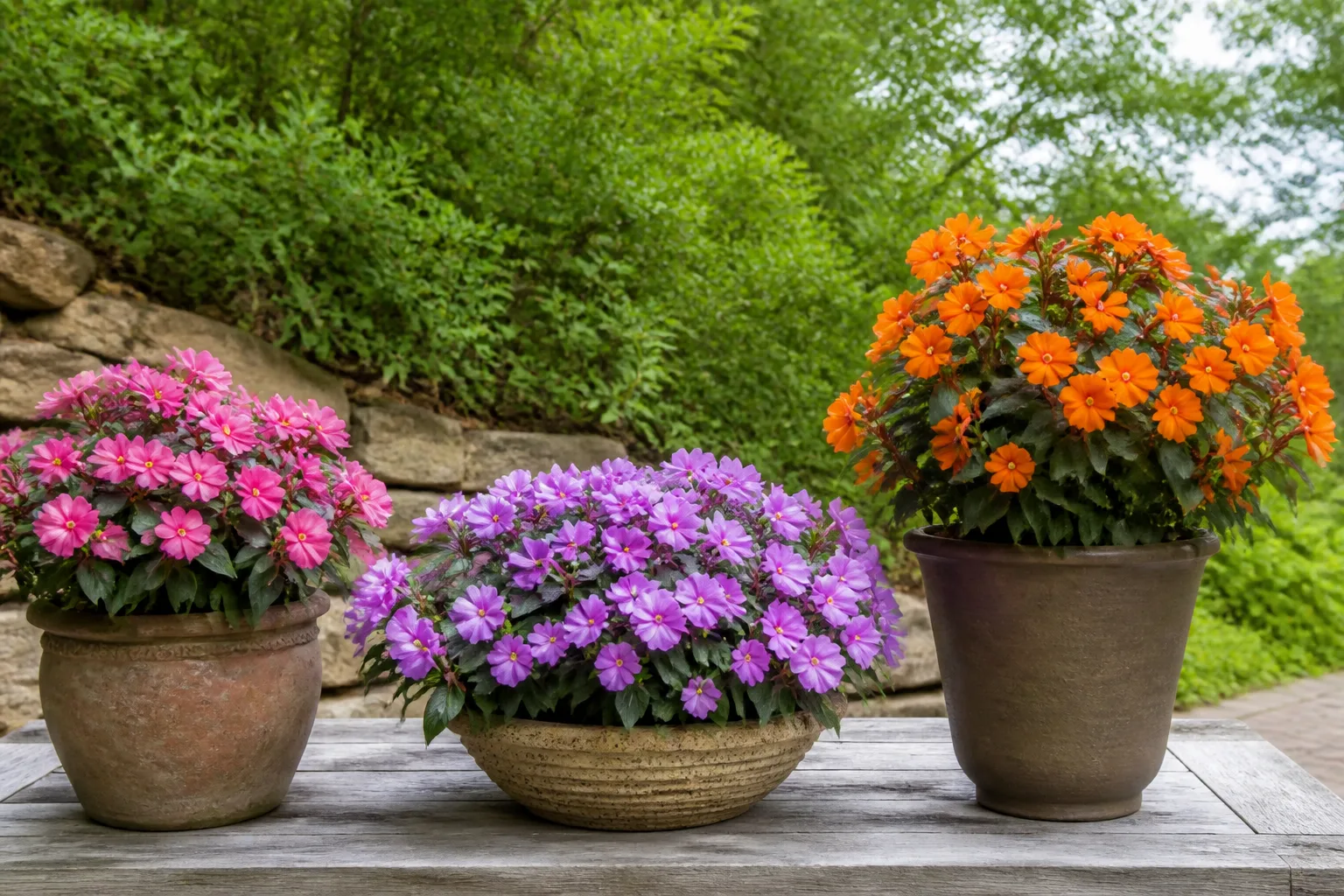
Compact, Spreading, and Vigorous habits and spacing
Compact Series — dense, bushy plants roughly 14–32 inches tall and 14–24 inches wide in the ground (SunPatiens FAQ). Best for 14-inch pots, window boxes, and small beds where you want an upright mound. Space 10–12 inches apart in mass plantings.
Spreading Series — mounding habit, 18–36 inches tall and 24–36 inches wide, with larger blooms (around 3 inches). Ideal for hanging baskets, premium patio pots, and quick groundcover. Space 14–24 inches apart so mounds merge without crowding stems.
Vigorous Series — upright vase shape, 24–42 inches tall and 24–30 inches wide, with sturdy stems for wind and rain. Choose for large landscape fills, slopes, and back-of-border color where one plant must cover more square footage. Space 18–24 inches apart; fewer plants per bed than old impatiens flats because each individual grows larger (Savvy Gardening).
Tropical cultivars (names including “Tropical”) add variegated foliage that shows well in part shade where bloom count may be lower—use them when leaf color matters as much as flowers (SunPatiens FAQ).
Buy tags, not memory: a Vigorous Orange in a 12-inch basket will outgrow the pot and dry out twice daily by August; a Compact White in a 6-foot bed may look lost unless you plant closer spacing.
Light and Placement for Maximum Bloom
SunPatiens earn the name: they bloom best with at least four hours of direct sunlight daily, and full sun produces the heaviest flower load (SunPatiens FAQ). Half-day sun or filtered sunshine works—especially for Tropical types—but full deep shade reduces flowers and stretches stems.
Midday heat wilt is normal and reversible. Plants may droop at peak afternoon heat even when soil moisture is adequate, then recover by evening once temperatures drop (SunPatiens FAQ). Do not flood the pot every time leaves flag at 3 p.m.—check soil first.
Sun scorch on wet petals
White or bleached patches on petals usually mean sun scald, not disease. Water droplets on petals in bright morning sun act like lenses and burn tissue (SunPatiens FAQ). Fix it by switching to drip or base watering, watering early enough for foliage to dry before intense sun, and avoiding overhead sprinklers on east-facing beds. Lighter flower colors show scald less than saturated oranges and magentas.
Afternoon reflected heat from walls and pavement counts as stress—pull containers back a few feet or group pots so roots stay cooler.
Soil, Spacing, and Spring Planting Time
SunPatiens want rich, loose, well-drained soil with organic matter—raised beds, amended borders, or quality potting mix in containers. They fail in heavy clay that stays wet, which invites Rhizoctonia root rot and Phytophthora (NC State). If your native soil clumps when squeezed, mix compost and perlite or plant in raised mounds rather than fighting drainage all summer.
Do not compact soil around roots by stepping on freshly planted beds. Foot traffic squeezes air out of the root zone and mimics the “hard garden soil” conditions Vigorous types tolerate better than Compacts.
Plant outdoors after all danger of frost and when soil temperature reaches about 60°F (SunPatiens FAQ). Cold, wet soil stalls root growth and yellows lower leaves. If nights still dip toward 50°F, hold pots in a sheltered spot or cover transplants—SunPatiens are not cold-hardy annuals.
At planting, hydrate root balls before backfilling, set at the same depth as the nursery pot, and firm soil gently without burying stems. Apply 2–3 inches of mulch to cool roots and suppress weeds, but keep mulch several inches away from stems to prevent stem rot (SunPatiens FAQ).
Watering: Beds, Containers, and Dry-Down Checks
The first 7–14 days after planting are establishment critical: roots are shallow and pots dry fast. Water daily unless rain saturates soil, keeping mix evenly moist—not muddy. After roots reach outward, shift to dry-down watering: irrigate when the top inch of soil feels dry in beds or when container weight lightens.
Containers and hanging baskets need more frequent checks than in-ground plants—often daily in summer, sometimes twice daily for small baskets in wind and heat. Drip irrigation at the soil line beats overhead spray for disease prevention and sun-scald reduction.
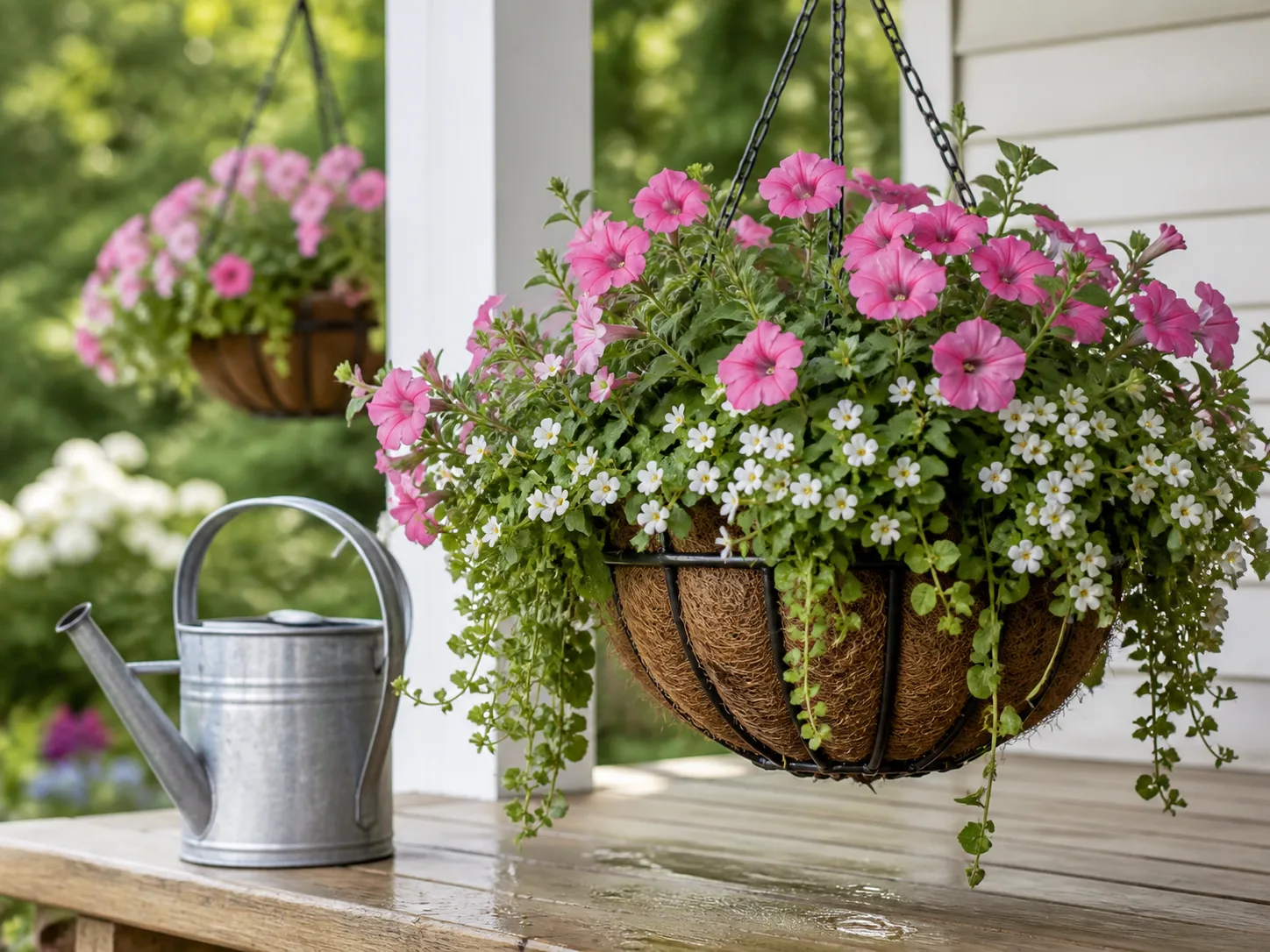
SunPatiens tolerate brief wilt better than many impatiens; mild stress can even promote deeper rooting if you do not panic-water at the first afternoon droop (SunPatiens FAQ). The failure mode is the opposite: constant sogginess causes yellow leaves, root rot, and collapse. If leaves yellow but soil stays wet, stop watering until the top few inches dry, improve drainage, and pull mulch back from stems.
Plants severely dried for several summer days may not fully recover. One deep soak in partial shade is worth trying; if stems stay crisp, replace rather than fight (SunPatiens FAQ).
Fertilizing Without Burning Leaf Tips
SunPatiens are moderate feeders, not hungry petunias. At planting, work half the label rate of a slow-release balanced fertilizer into the top inch of soil or potting mix (SunPatiens FAQ). Full strength often burns leaf tips and can reduce bloom.
If foliage looks pale midseason—especially lower leaves yellowing while upper growth stays green—a weekly liquid feed at one-third to half label strength can help (SunPatiens FAQ). Stop pushing nitrogen if plants become lush and flower count drops. Containers leach nutrients faster than beds; a light midsummer booster beats a single heavy dose.
Never foliar-feed in blazing sun on wet leaves; apply to moist soil in morning or evening.
Heat, Humidity, and Night Temperatures
SunPatiens were selected for warm, humid summers—typical Gulf Coast, Mid-Atlantic, and Midwest July weather. Strong drying winds can fade flowers and pull moisture from leaves; cluster containers or use temporary wind breaks on balconies (SunPatiens FAQ).
Night temperatures below 50°F stress plants; Sakata recommends protecting or moving containers indoors when nights stay under that threshold in spring or fall (SunPatiens FAQ). First frost ends the season in most regions—SunPatiens will not survive freezing temperatures in zones 3–9.
Containers, Hanging Baskets, and Repotting
Choose a 14-inch-diameter pot or larger for one Compact or Spreading plant to finish the season without daily root binding. Roots are relatively shallow, so depth matters less than width and drainage holes. Plastic or glazed ceramic often outperforms dry terra-cotta in hot climates because porous clay wicks moisture away faster than roots can replace it (SunPatiens FAQ).
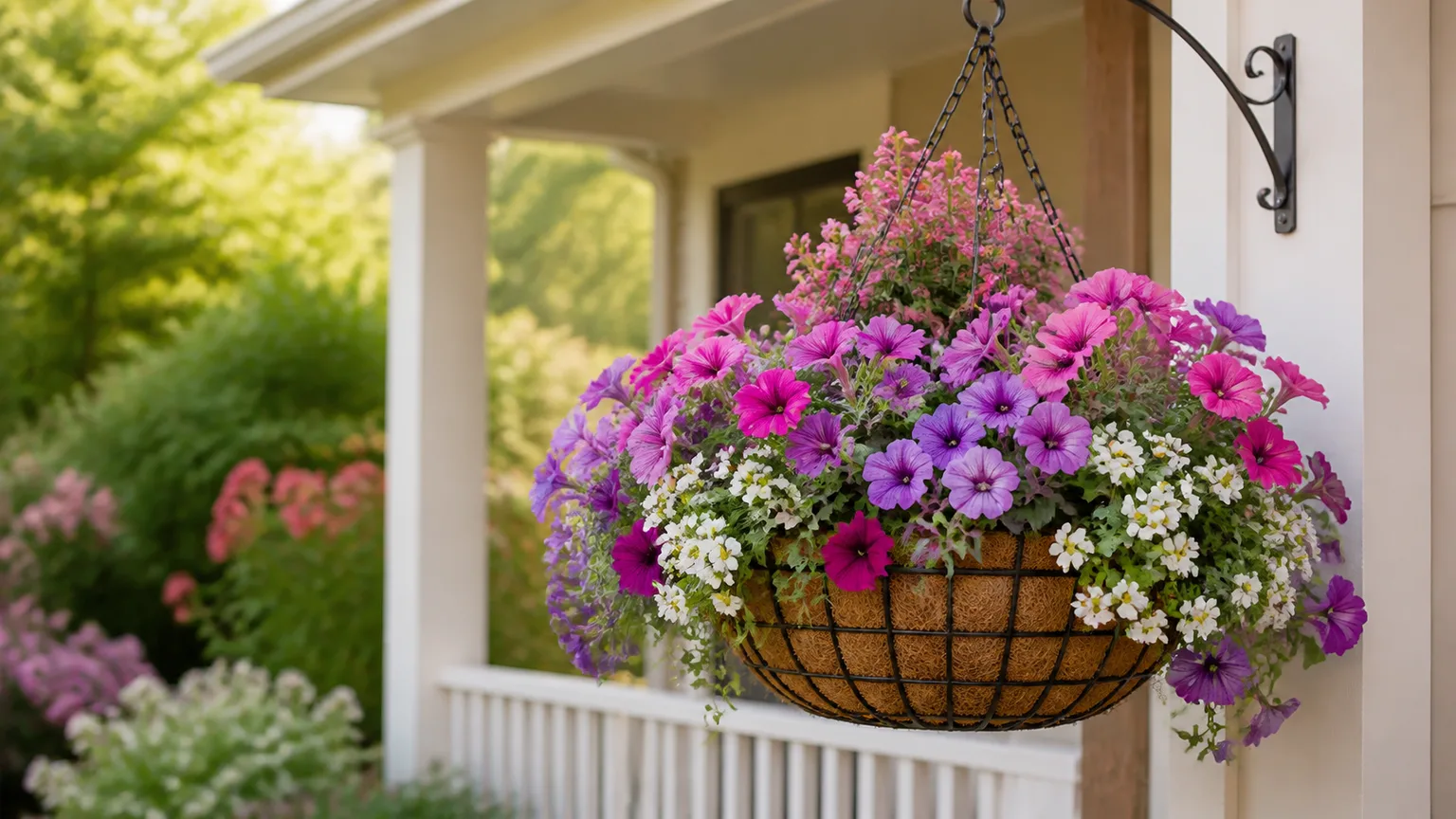
Use lightweight potting mix labeled for containers—not garden soil. Pre-moisten root balls before potting. For hanging baskets, Spreading types give a rounded cascade; Compacts stay tighter on small porches.
Repot when roots circle heavily or emerge from drainage holes, stepping up one pot size with fresh mix. Midseason repotting may pause bloom briefly—plan large enough pots at purchase when possible.
Why You Cannot Propagate SunPatiens at Home
SunPatiens is a registered trademark of Sakata. Home gardeners cannot legally propagate from cuttings, divisions, or saved plant material, and seeds are not sold to the public (NC State). Plants are produced from licensed vegetative cuttings.
If a tag promises “SunPatiens seeds” online, it is not authentic stock. Buy fresh plants each spring from reputable retailers.
Professional growers also do not pinch SunPatiens—it destroys natural symmetry and delays flowering (Greenhouse Grower). Home gardeners should not shear them like petunias midseason unless you are rescuing leggy plants with a one-third trim in extreme cases (SunPatiens FAQ).
Pests, Diseases, and Downy Mildew Resistance
SunPatiens’ headline advantage is resistance to impatiens downy mildew on I. walleriana. They are not immune to all problems.
NC State notes possible issues including impatiens necrotic spot virus, fungal blights, powdery mildew, and rots in poorly drained soil (NC State). Rhizoctonia and Phytophthora thrive where media stays wet and compacted—prevention is drainage, not spray alone.
Insects to watch: aphids, mealybugs, thrips, whiteflies, spider mites, plus slugs and snails on low foliage. Start with insecticidal soap or a strong water rinse for soft-bodied pests; repeat every few days until populations crash. For spider mites, increase humidity around containers and treat with labeled miticides or soap sprays per product directions (SunPatiens FAQ).
Scout new purchases before placing near other impatiens-family plants indoors—pests hitchhike on greenhouse stock.
Troubleshooting Wilting, Yellow Leaves, and Faded Blooms
Wilting with dry soil — water deeply at the base; plants usually recover without bud loss. If wilt happens daily despite wet soil, check root rot (pull gently on stem base—mushy stems mean replace).
Wilting at midday only — likely heat stress, not drought. Verify soil moisture; add afternoon shade for containers if wilting lasts into evening.
Yellow leaves — most often overwatering, poor drainage, or nitrogen deficiency (SunPatiens FAQ). Confirm mulch is not piled on stems. If soil dries appropriately and yellowing persists, apply weak nitrogen fertilizer weekly for two to three weeks.
White petal patches — sun scald from overhead water on sunny petals; switch irrigation method (see Light section).
Fewer flowers late season — check declining sun as trees leaf out, overfeeding, or root-bound containers. Trim surrounding branches or repot/fresh plant.
Pets, Deer, and Overwintering Expectations
SunPatiens are in the impatiens family, and the ASPCA lists Impatiens species as non-toxic to dogs, cats, and horses (ASPCA). SunPatiens are not separately listed, but parent impatiens used in breeding are considered safe; large ingestion can still cause mild stomach upset, and fertilizer or pesticides on the plant are separate risks.
Deer may browse SunPatiens; they are somewhat less palatable than traditional impatiens according to Sakata, but not deer-proof. Allowing slight dry-down between waterings can reduce tender new growth deer prefer (SunPatiens FAQ).
Overwintering is realistic only in zones 10–12. Elsewhere, SunPatiens are annuals—plan to replant. Bringing pots indoors rarely succeeds unless you have a very bright south window; plants etiolate, attract pests, and rarely match spring nursery quality (SunPatiens FAQ). Budget for new plants rather than a winter rescue project.
Conclusion
SunPatiens solve a specific job: impatiens-style color in sun, with downy mildew resistance and heat-season stamina traditional impatiens cannot match after the epidemic. Success is mostly shopping and placement—Compact for pots, Spreading for baskets and mounds, Vigorous for big fills—then planting after warm soil, watering on dry-down, and feeding lightly.
Watch for sun scald on wet petals, stem rot from mulching too close, and overwatering disguised as helpfulness. Get those right and SunPatiens deliver the continuous spring-to-frost show they were bred for—without sending you back to the garden center for a shade-only annual that cannot live in your sunny bed.