Trumpet Vine Guide: Plant, Contain, and Control Spread
Grow trumpet vine (Campsis radicans) for hummingbirds: planting barriers, pruning, cultivars, container limits, and step-by-step removal if it escapes.
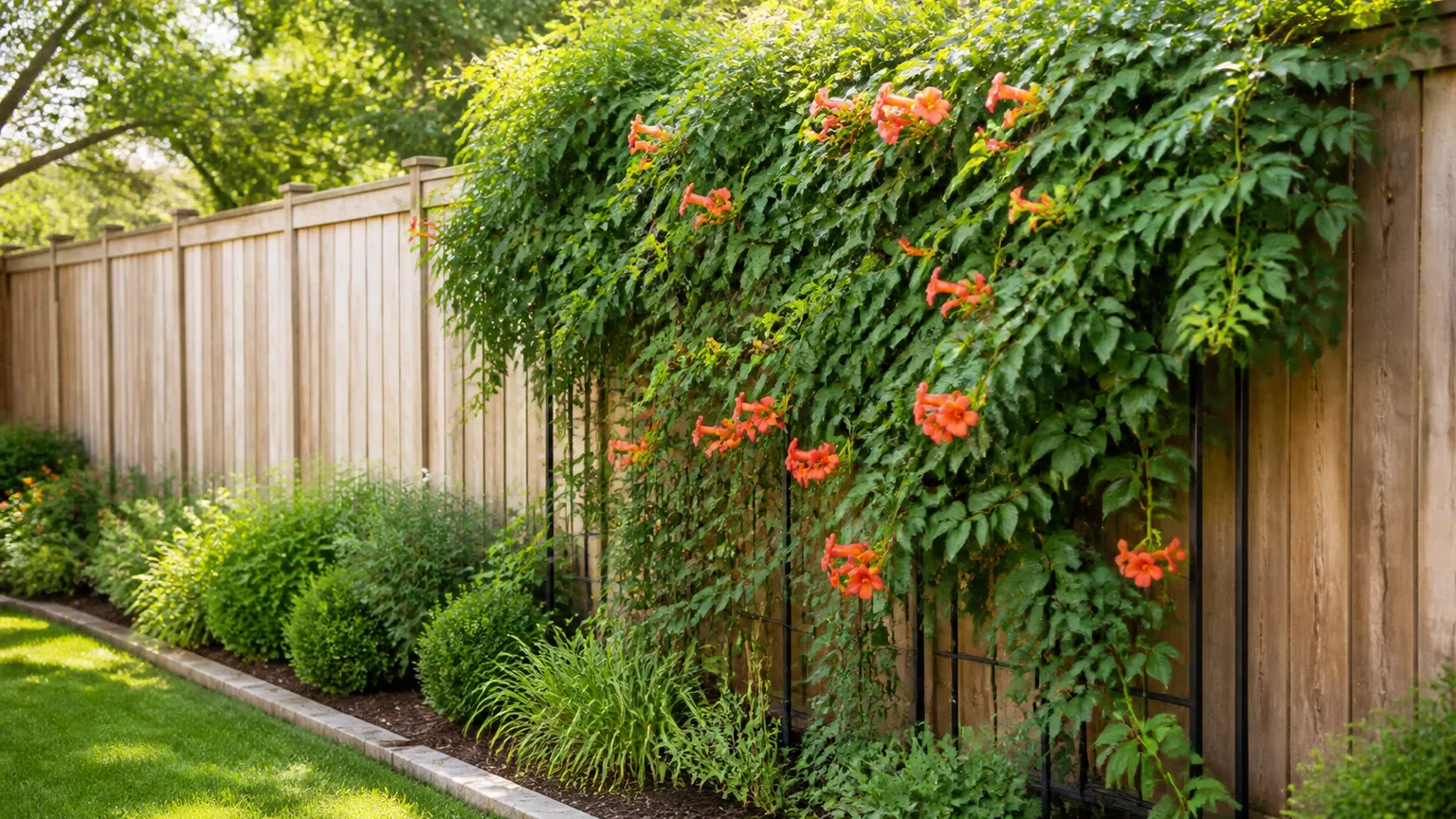
Trumpet vine (Campsis radicans) is the plant gardeners love in July and question by October. Native to much of the central and eastern United States, it produces clusters of orange, red, or yellow trumpet flowers that hummingbirds treat like a fuel stop. It also spreads by underground runners, self-sows from seed, and clings to walls with aerial rootlets that can lift paint and trap moisture against siding.
That combination makes trumpet vine a poor default ground cover and a strong candidate only when you have a plan to contain it from day one. This guide covers how to grow it for flowers, how to keep it from taking over the lawn, and what to do if an old planting has already crossed the property line.
Trumpet Vine at a Glance
| Feature | Details |
|---|---|
| Common names | Trumpet vine, trumpet creeper, cow-itch vine |
| Botanical name | Campsis radicans |
| Family | Bignoniaceae |
| Type | Woody deciduous perennial vine |
| Mature size | Often 30–40 ft. long; spreads wider via runners |
| Sun | Full sun to partial shade; best bloom in full sun |
| Soil | Adaptable; lean to average, moist but well-drained |
| Hardiness | USDA zones 4–10 |
| Bloom | Summer, typically June through September, on new growth |
| Wildlife | Hummingbirds, bees; seeds eaten by some birds |
| Toxicity | Low; sap may irritate skin (NC State Extension) |
The Invasive Plant Atlas of the United States lists trumpet creeper as native to North America, not an introduced exotic. Aggressive and invasive are not the same word. Still, when trumpet vine escapes cultivation it can form dense colonies that shade out neighbors, which is why many gardeners search for control advice after the flowers fade.
Should You Plant Trumpet Vine?
When trumpet vine earns a place in your yard
Trumpet vine fits when you want a fast vertical screen on a sturdy trellis or pergola that stands away from the house, you can mow a border around the planting to knock down suckers, and you are willing to cut the vine back hard every year. It shines on rural fence lines, large pollinator gardens, and structures you own—not on a shared fence you cannot prune from both sides.
Hummingbird gardeners often accept the maintenance trade because few native vines bloom as long or as loudly in full sun. If your goal is a single-season annual vine with an obvious end date, compare options in our climbing perennial vines guide before committing to a woody plant that can outlive the trellis.
When to choose a different climber
Skip trumpet vine—or remove an existing patch—if any of these apply:
- The only support is your home’s wall, chimney, or a neighbor’s fence.
- You cannot reach the base yearly to prune and mow suckers.
- You live in a wildfire-prone region and need defensible space against the structure (dry, unpruned trumpet vine is highly flammable).
- You want a low-maintenance vine for small urban lots without root barriers.
- You already battle bindweed, wisteria, or Japanese honeysuckle and do not want another rhizome war.
For hot, sunny fences with less bulldozer energy, heat-tolerant climbing plants such as passionflower or coral honeysuckle may give you color with easier boundaries.
How Trumpet Vine Grows and Climbs
Trumpet vine is a woody deciduous climber that attaches by aerial rootlets along the stems. Those pads grip rough wood, brick, and bark. They do not twine like honeysuckle or grab with tendrils like clematis. Mature stems become heavy; NC State Extension notes that vines need sturdy structures because the plant’s weight is considerable once established.
Below ground, the real story is lateral. Species plants sucker from runners and self-seed freely, often forming impenetrable thickets that choke weaker plants (NC State Extension). Even a fragment of root left in soil can resprout, which is why half-hearted digging rarely ends an unwanted colony.
Flowers form on new wood. That detail drives every pruning decision: a hard spring cutback sacrifices little bloom potential, while late spring pruning that strips new shoots can remove the season’s flower buds.
Planting Trumpet Vine With Containment Built In
Spring planting, after the last hard frost, gives roots a full season to anchor before winter. Fall planting can work in mild climates if the soil stays workable and you water through dry spells.
Site, spacing, and root barriers
Place trumpet vine at least 10–15 feet from building foundations, trees you value, and property lines you cannot maintain. Short six-foot setbacks sound tidy on paper; in practice, runners laugh at six feet unless you mow the margin.
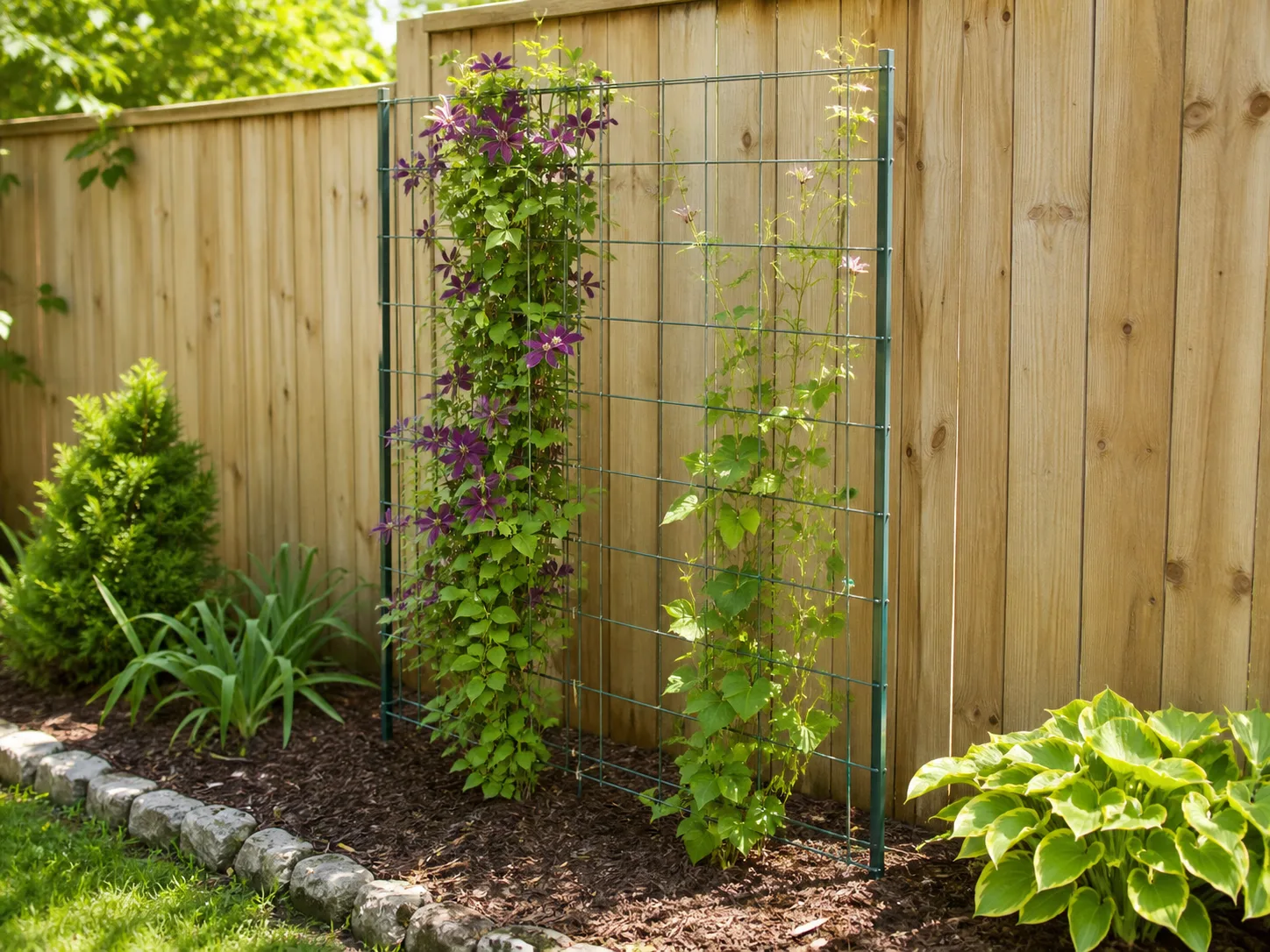
Install the support before the plant. Use a freestanding arbor, heavy cattle panel, or tensioned wire on posts—not a decorative lattice glued to siding. The RHS climbing guide recommends planting climbers about 18 inches from a wall so roots are not in the rain shadow; trumpet vine still needs a gap for airflow because trapped moisture plus aerial roots is how paint fails.
For serious containment, sink a root barrier at planting time: a bottomless bucket, deep plastic edging, or commercial root-deflecting material in a wide circle around the crown. Container plantings use the same idea—a pot inside a buried sleeve—described in the container section below. Without a barrier, plan on mowing suckers in the lawn ring around the vine as standard care, not an emergency fix.
Dig a hole twice the width of the root ball and no deeper than the plant sat in the nursery pot. Backfill with native soil rather than rich compost; lean soil slows the jungle impulse. Water deeply at planting, then mulch only the planting circle, not the mowing zone where you want to spot suckers early.
Light, Soil, Water, and Fertilizer
Light: Full sun—at least six hours of direct sun on most days—produces the heaviest bloom. Trumpet vine tolerates partial shade; foliage may look fine while flowering thins. Shade also encourages lankier growth that reaches for light.
Soil: Sandy, loamy, or clay soils all work if drainage is reasonable. In nature it appears in thickets, forest edges, and moist roadside sites. Constantly soggy clay without slope is the main soil failure mode.
Water: Established plants are drought tolerant. Aim for about 1 inch of water per week from rain or irrigation during the first year; after that, water only when new growth wilts in prolonged dry spells. Overwatering lean soil rarely helps and can soften stems on heavy soils.
Fertilizer: Do not feed species trumpet vine. NC State Extension and every experienced grower agree: rich soil and fertilizer push vegetative growth and runners, not better flowers. If leaves look pale yellow on truly starved sand, a single light spring application of balanced slow-release food is enough. More is not better.
Pruning and Daily Containment
Pruning is not optional décor work with trumpet vine. It is how you keep the plant a garden citizen instead of a property manager.
The annual hard cutback
Prune in late winter or early spring before buds swell. Cut last year’s stems back to a framework 1–3 feet above ground, leaving a few strong buds on each retained stem. Trumpet vine blooms on new growth, so this hard cut does not sacrifice the summer show—it resets size.
On structures, train the first stems horizontally along wires to build a fan; shorten side shoots in summer if they reach gutters or rooflines. Never let the vine cap a chimney or weave into soffit vents.
Suckers, seedlings, and deadheading
Suckers emerging in lawn or beds should be mowed, cut, or dug while young. NC State specifically suggests planting near concrete or mowable edges so runners meet a blade regularly.
Deadheading spent flowers prevents some seed drop but is labor-intensive on a large vine. Skip deadheading if you want maximum bird food; keep it if seedlings appear in beds you mulch lightly. Pods turn brown in fall—remove them before they split if you are fighting spread.
During summer, you may shorten wayward shoots that block paths. Expect to lose a few late flowers on pruned tips. That is cheaper than letting stems layer onto shingles.
Cultivars That Are Easier to Manage
Species Campsis radicans is the most aggressive form. Named cultivars are often less rampant, though none become tame hosta companions:
- ‘Apricot’ — apricot blooms; more compact; commonly recommended for containers (NC State Extension).
- ‘Indian Summer’ — yellow-orange flowers; relatively hardy; smaller habit than species.
- ‘Flava’ — golden yellow trumpets about 3 inches long.
- ‘Judy’ — yellow with orange throats; good frost tolerance.
- ‘Crimson Trumpet’ and ‘Atropurpurea’ — strong red tones; still vigorous growers.
- ‘Madame Galen’ (Campsis × tagliabuanа) — larger salmon-orange flowers on a hybrid often sold as slightly restrained compared with species, though it still needs space.
Buy labeled cultivars from nurseries rather than digging wild runners unless you are prepared for unknown aggression. For a non-radicans look, Campsis grandiflora (Chinese trumpet creeper) is sometimes grafted; hardiness and spread depend on the rootstock—ask locally.
Growing Trumpet Vine in Containers
Containers are the best way to enjoy trumpet vine on a patio or rooftop without surrendering the yard. Use a minimum 20-gallon pot—half-barrel size—with drainage holes and a heavy trellis lashed to the pot or wall.
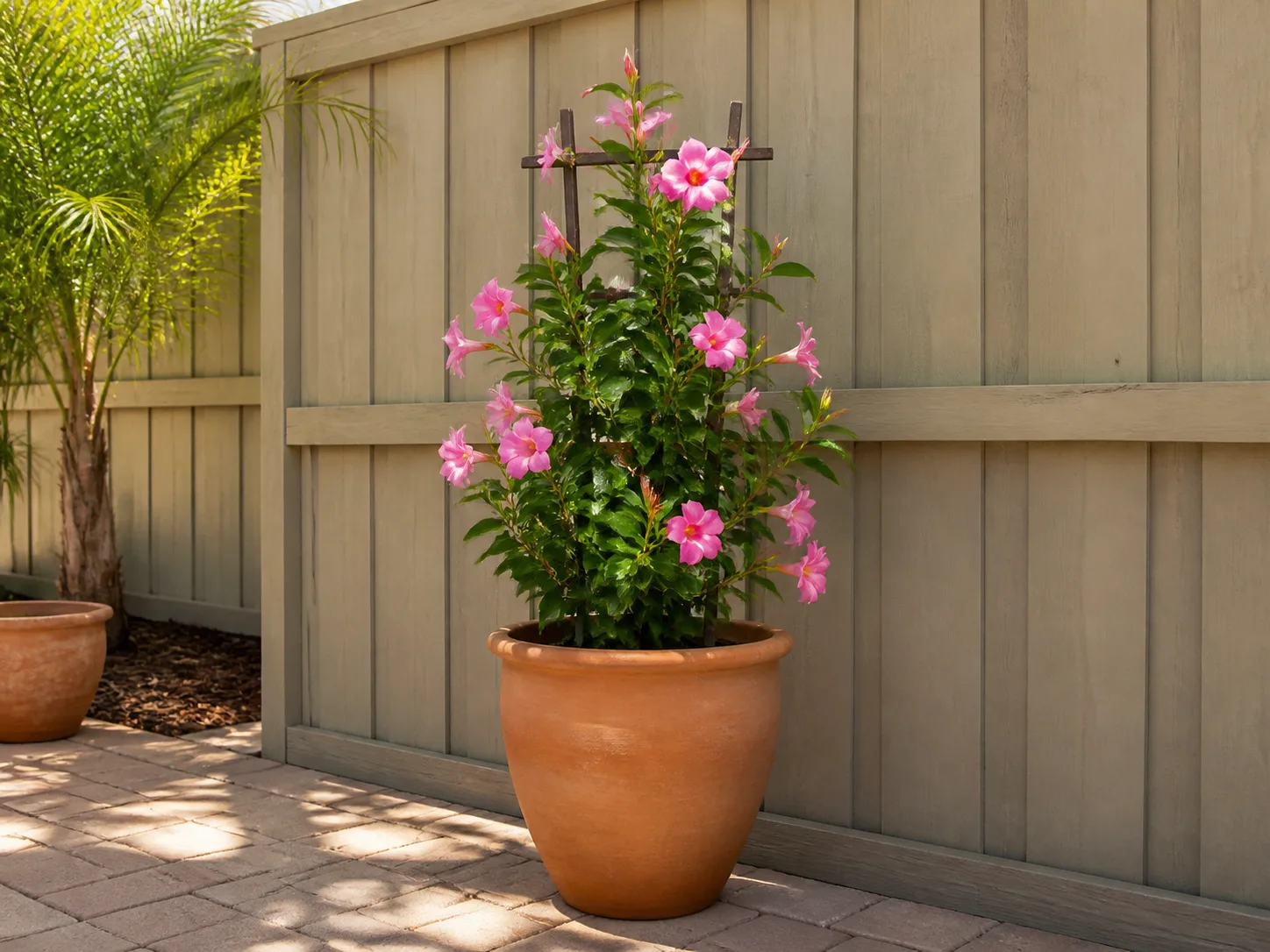
For in-ground adjacent beds, sink a bottomless bucket or root barrier wider than the pot so roots cannot exit the drainage hole into soil. Fill with quality potting mix, not garden clay. Water when the top inch dries; pots dry faster than ground plantings.
Expect to cut the vine to a few inches above soil each fall or spring. ‘Apricot’ and ‘Indian Summer’ are the usual container picks because their stems stay shorter between prunes. Even in pots, watch for roots escaping over the rim or through drain holes—lift and root-prune every three to five years if growth explodes.
Blooms, Hummingbirds, and Fire-Smart Placement
Trumpet vine flowers from roughly June through September in most climates. Each trumpet is about 3 inches long, orange to red in the species, without fragrance.
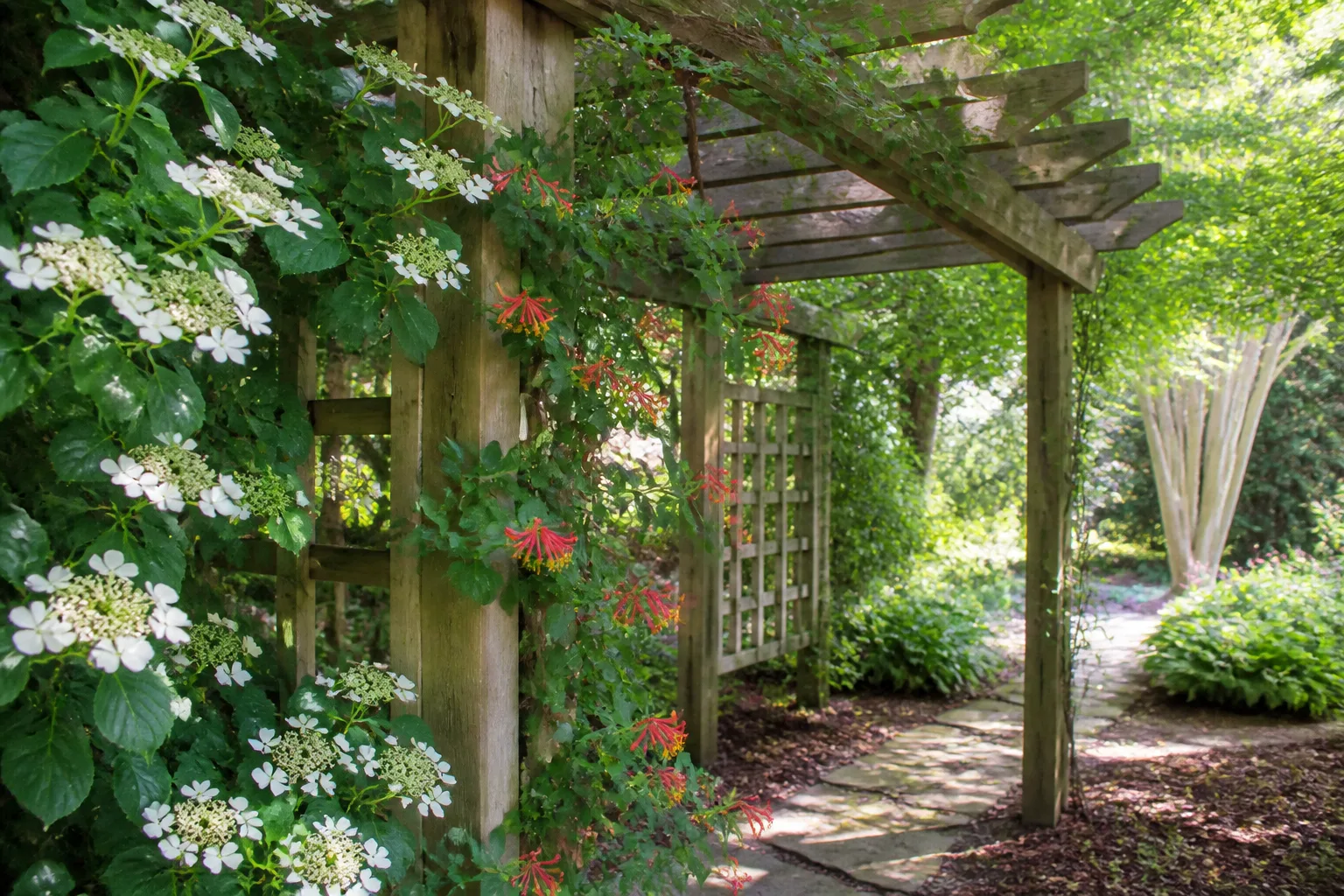
Hummingbirds are the headline pollinators; the vine is often called hummingbird vine in older garden books (Gardening Know How).
Because blooms form on new stems, the worst bloom mistake is waiting until May to prune and accidentally removing soft new shoots loaded with buds. The second mistake is feeding the plant into leafy oblivion.
In wildfire country, treat unpruned trumpet vine on structures as a hazard. Dry vines against wood siding or within five feet of the foundation belong in the “remove or relocate” column, not the pollinator garden column. A freestanding trellis in an irrigated bed, cut back annually, is a different risk profile than a vine weaving under eaves.
Wear gloves when pruning. Sap causes minor skin irritation in sensitive people (NC State Extension). Cow-itch vine is not folklore—the contact reaction is real but usually brief.
How to Remove or Control Escaped Trumpet Vine
Regret is common. Removal is a season-long campaign, not a weekend chore, because rhizomes store energy and resprout from fragments.
Mechanical removal and cut-stump treatment
- Cut all stems to the ground in late summer or early fall when the plant is still moving sugars—or repeat cuts every time shoots appear.
- Dig the crown and major roots with a mattock or fork. Remove as much root mass as practical; follow lateral runners outward until they thin.
- Mow or string-trim every sprout in lawn areas weekly. Persistence exhausts small reserves faster than one heroic dig.
- For large trunks you cannot dig immediately, use cut-stump treatment: paint freshly cut surfaces within five minutes with a glyphosate or triclopyr product labeled for woody brush, following the label for rate, weather, and nearby desirable plants. Never treat near water unless the label allows aquatic use.
- Bag seed pods before they split if the vine flowered before you started removal.
Solarization—clear plastic over moist soil for several hot weeks—can weaken new seedlings in open beds but rarely kills established rhizomes alone. Combining dig, mow, and targeted herbicide on regrowth is the approach most land managers report success with.
If trumpet vine is climbing a tree you want to keep, cut stems at the base and peel stems downward only where you can without ripping bark. Leave aerial roots to die and crumble; pulling living stems off trunks causes more damage than patience.
Conclusion
Trumpet vine rewards gardeners who treat it like infrastructure, not wallpaper: sturdy supports, wide mowing margins, annual hard pruning, and honest spacing from buildings. Give it sun and lean soil, skip the fertilizer, and you get a summer-long hummingbird display on a native plant that shrugs off heat.
If you cannot mow suckers, prune yearly, or keep it off the house, choose a different vine from the start—and if trumpet vine is already winning, combine cutting, digging, mowing, and labeled herbicide on resprouts until the bank account of root energy runs dry. Flowers are spectacular; containment is the skill that keeps them spectacular instead of stressful.